Game Studies reports and market data
Documents

Avatar 'n' Andy: The Colour Blind Ideology in Video Game Voice Acting
The video game industry frequently relies on a color-blind ideology that treats the human voice as a neutral, universal tool, a practice that effectively masks systemic racial inequality.
- Digital blackface in video games refers to the practice of casting White voice actors to portray characters of color, a phenomenon that perpetuates racial stereotypes and limits professional opportunities for BIPOC actors.
- The industry relies on 'color-blind' rhetoric to justify casting choices, framing the voice as a 'universal' and neutral tool while simultaneously privileging White sonic norms and meritocratic arguments that ignore systemic racial inequality.
- Historical precedents in radio, such as the 1920s and 1930s, established a White supremacist standard for 'proper' elocution that excluded Black voices and normalized White male speech as the default, a legacy that continues to influence modern game development.

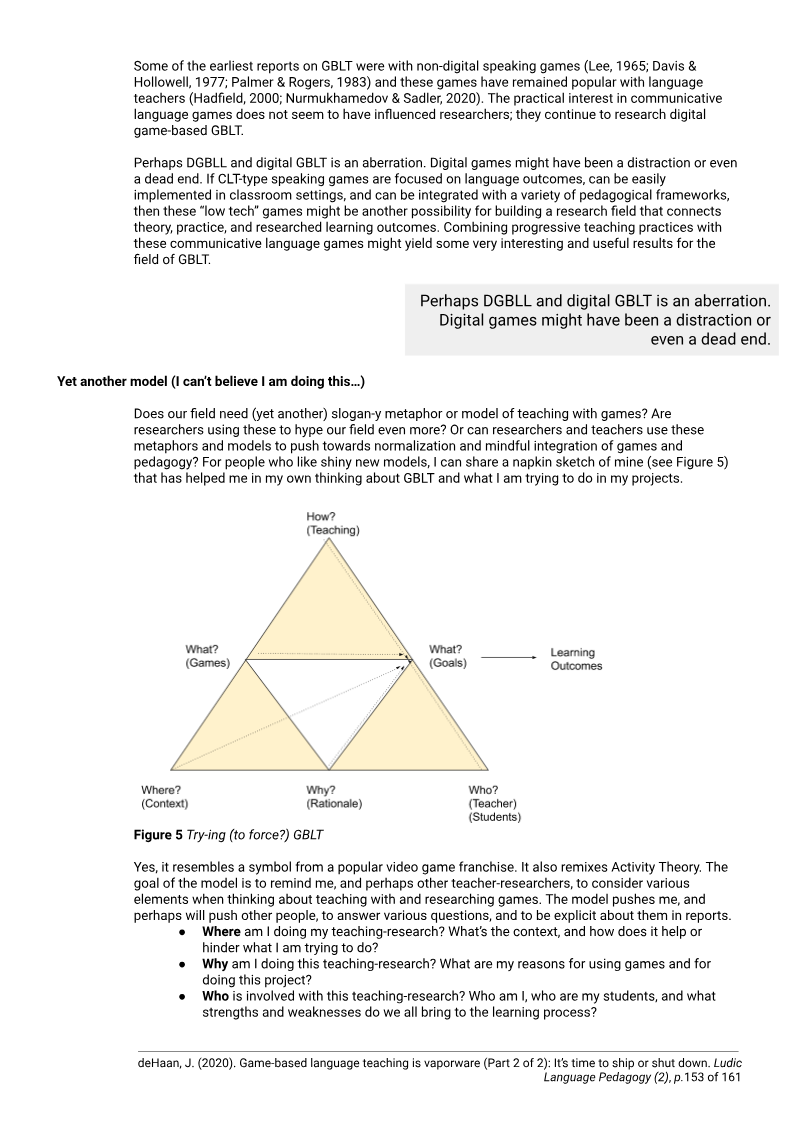
Game-Based Language Teaching Is Vaporware (Part 2 of 2): It’s Time to Ship or Shut Down
Game-Based Language Teaching (GBLT) currently exists as a form of academic vaporware, characterized by an overabundance of theoretical speculation and technological hype that fails to translate into mature, classroom-tested pedagogical outcomes.
- Game-Based Language Teaching (GBLT) is currently characterized as academic vaporware, suffering from an excess of theoretical speculation that lacks mature, classroom-tested pedagogical outcomes.
- The field must shift its primary focus from tech-centric experimental designs to a praxis-oriented model that prioritizes teacher mediation and student interaction.
- Sustainable implementation requires moving away from isolated, one-off academic studies in favor of collaborative, iterative projects that address the practical realities of institutional education.


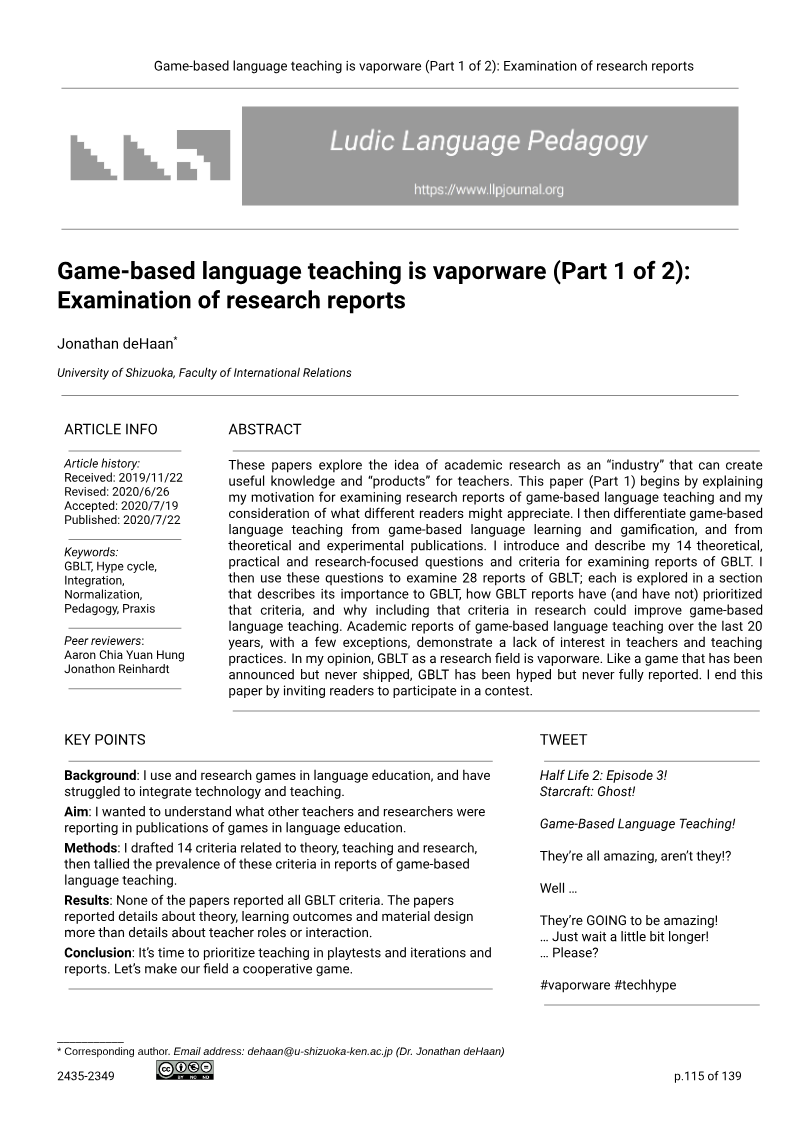
Game-Based Language Teaching Is Vaporware (Part 1 of 2): Examination of Research Reports
Game-Based Language Teaching (GBLT) currently functions as a form of academic vaporware, characterized by significant hype that fails to translate into sustainable or practical classroom implementation.
- Less than 10 percent of the 28 research reports analyzed qualify as true Game-Based Language Teaching (GBLT), indicating a significant gap between academic hype and actual practice.
- Current GBLT research prioritizes theoretical frameworks and technological novelty over the practical, long-term pedagogical integration required for classroom success.
- Most existing studies function as isolated, laboratory-style experiments that fail to provide actionable guidance or evidence-based strategies for real-world educators.
Measuring Fun: A Case Study in Adapting to the Evolving Metrics of Player Experience
Traditional usability metrics, such as efficiency and standard satisfaction scales, fail to capture the core objective of video games: the subjective experience of fun.
- Traditional usability metrics designed for productivity software are insufficient for gaming because they fail to capture the subjective, entertainment-driven experience of fun.
- Designers should adopt mixed-methods approaches that triangulate verbal feedback with observational data, such as physical movement patterns and in-game performance metrics.
- Iterative, small-scale testing provides more actionable insights into player enjoyability than broad, static usability assessments.



It's Your Mooooove: Why Teaching with Games Should Be Like Vaporwave
This analysis explores the integration of games into language pedagogy, advocating for a shift away from superficial, short-term game use toward a more deliberate, iterative, and reflective approach.
- Current classroom game-based learning is characterized by 'disposable' pedagogy, with the average in-class game session lasting only 20 minutes.
- Effective Ludic Language Pedagogy requires moving away from short-term, high-speed activities toward an iterative, reflective model that treats games as complex artifacts for deep study.
- Pedagogical strategies should shift from 'McEducation' efficiency models toward intentional, student-centered approaches that prioritize task repetition and post-play analysis.



A Serious Game to Improve the Verbal Resilience Against Doorstep Scams
The primary objective of this initiative is to enhance the verbal resilience of elderly individuals against doorstep scams through the application of serious gaming technology.
- A tablet-based serious game successfully trains elderly users in verbal resilience against doorstep scams using six expert-validated, branching scenarios.
- The platform utilizes a voice analysis module powered by a support vector machine algorithm to classify user assertiveness with 86.56% accuracy.
- The system provides a responsive feedback loop by dynamically adjusting scenario outcomes based on both the content and vocal delivery of the user's responses.


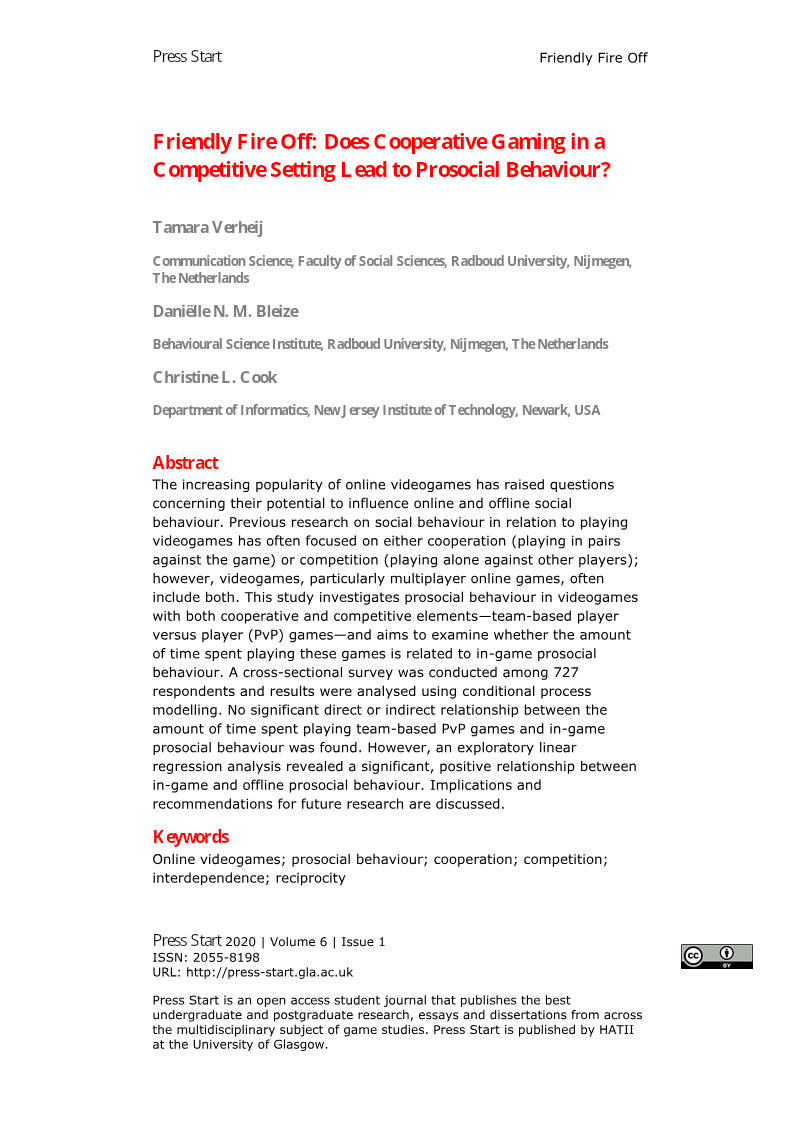
Friendly Fire Off: Does Cooperative Gaming in a Competitive Setting Lead to Prosocial Behaviour?
The relationship between competitive team-based gaming and prosocial behavior is more nuanced than traditional narratives suggest.
- Prosocial behavior in competitive gaming is driven by the expectation of in-group reciprocity rather than the total amount of time spent playing.
- A survey of 727 competitive gamers reveals a strong positive correlation between prosocial actions performed in-game and those exhibited in offline, real-world settings.
- Total gaming duration has no significant direct or indirect correlation with the frequency of prosocial conduct, challenging the stigma that competitive environments are inherently antisocial.
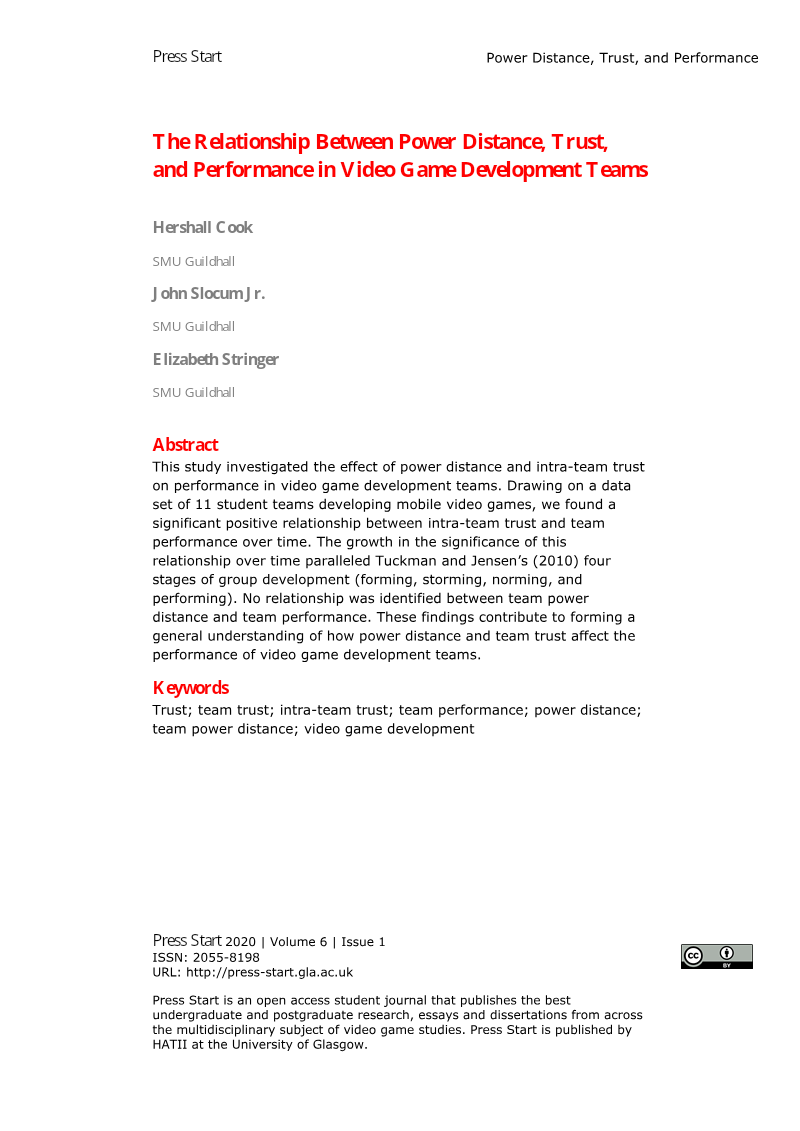
The Relationship Between Power Distance, Trust, and Performance in Video Game Development Teams
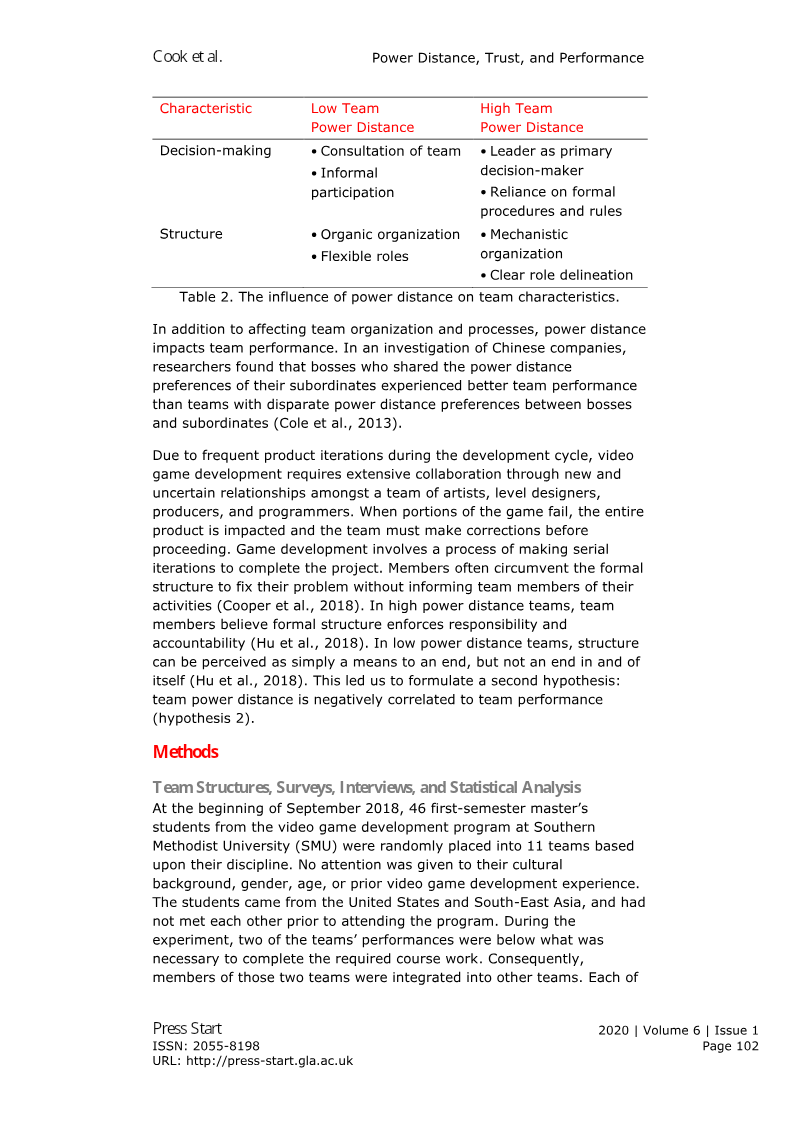
Effective video game development relies heavily on interpersonal dynamics, specifically the interplay between power distance and intra-team trust.
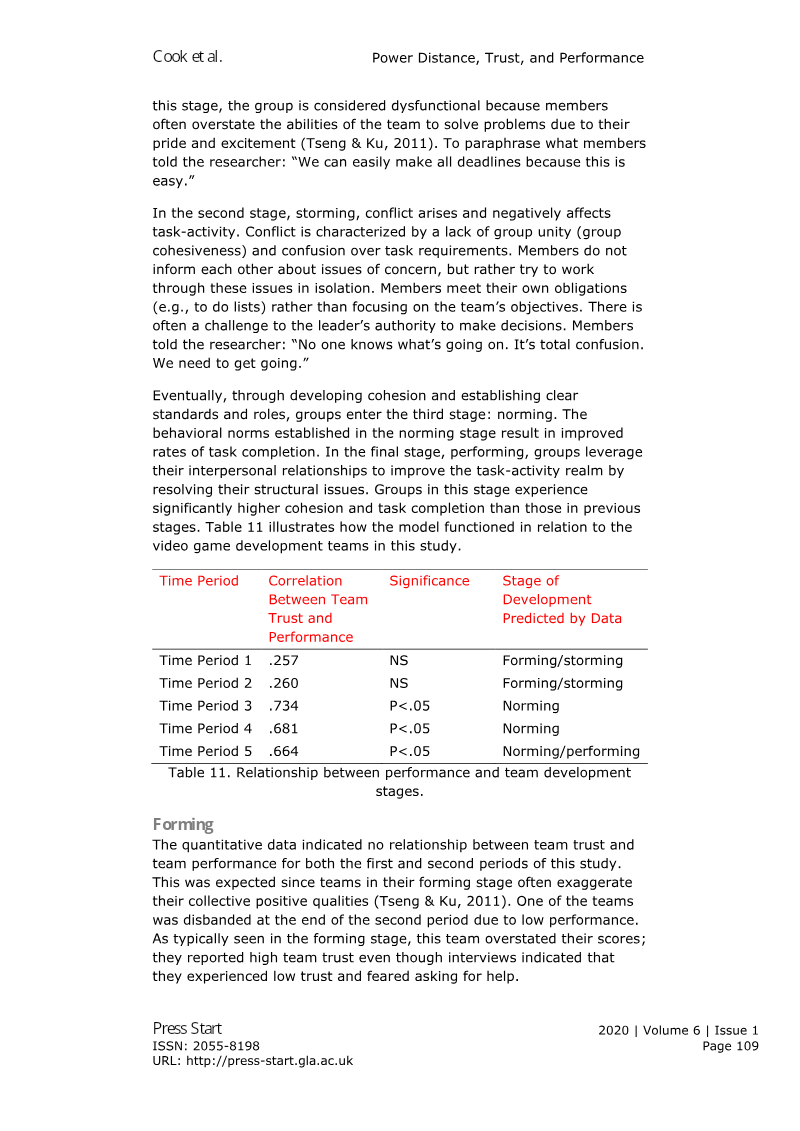
- Trust is the primary driver of high-level performance in game development, serving as a critical substitute for formal organizational structure.
- High power distance within a team exerts a negative influence on the development of trust, which can ultimately hinder a project's potential.
- Performance gains derived from trust are not immediate and typically do not manifest until the third project milestone, following the initial forming and storming phases.
Illuminating the Spectre: Challenging the Assumed Power of the Controller-Holder
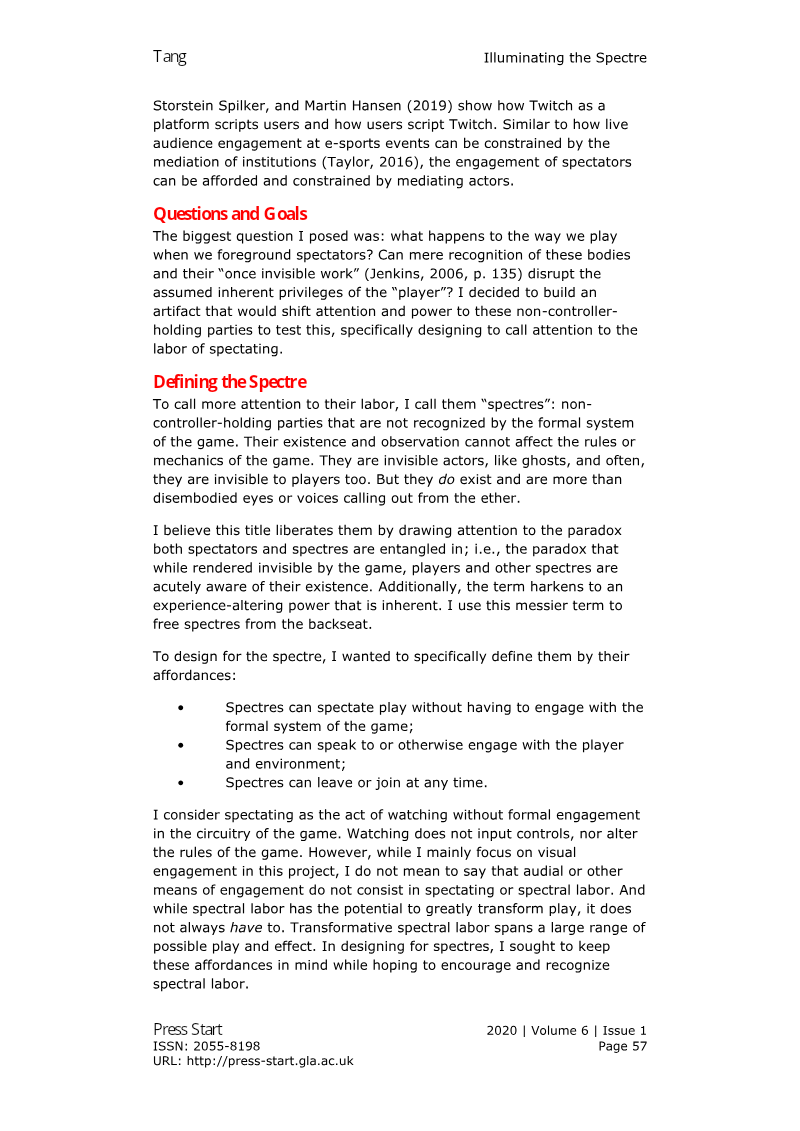
This analysis challenges the traditional binary between active players and passive spectators in video games, arguing that spectators perform essential, often invisible labor that contributes to the meaning-making and success of gameplay.
- Spectators, termed 'spectres,' perform active, valuable labor by generating knowledge and providing guidance, yet they are traditionally relegated to a passive 'backseat' role due to power imbalances in gaming contexts.
- The 'Watch of the Spectre' software overlay experiment demonstrated that by granting spectators control over screen visibility via interactive 'spotlights,' their labor can be integrated directly into the gameplay loop.
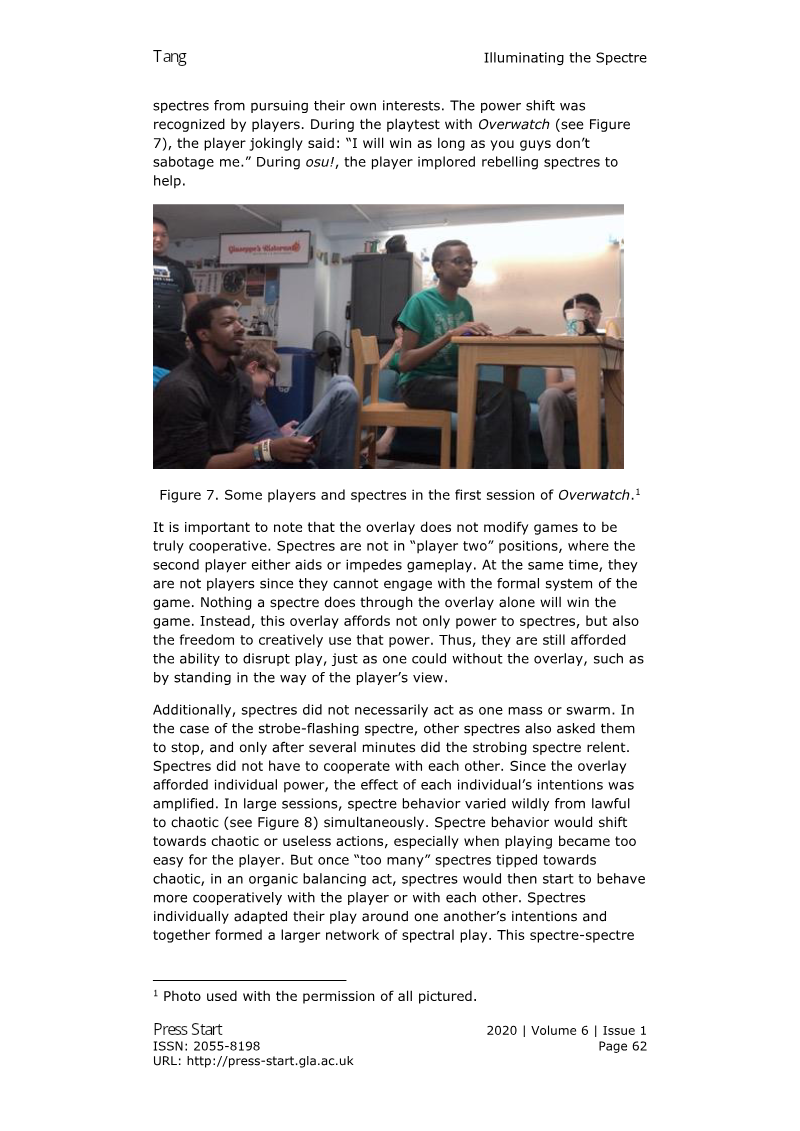
- Playtesting showed that spectators naturally form cooperative networks to assist players, such as highlighting threats, managing UI elements, or coordinating collective strategies to improve performance.
Tekken's Mokujin and the Disjunctive Synthesis of Gender Performativity
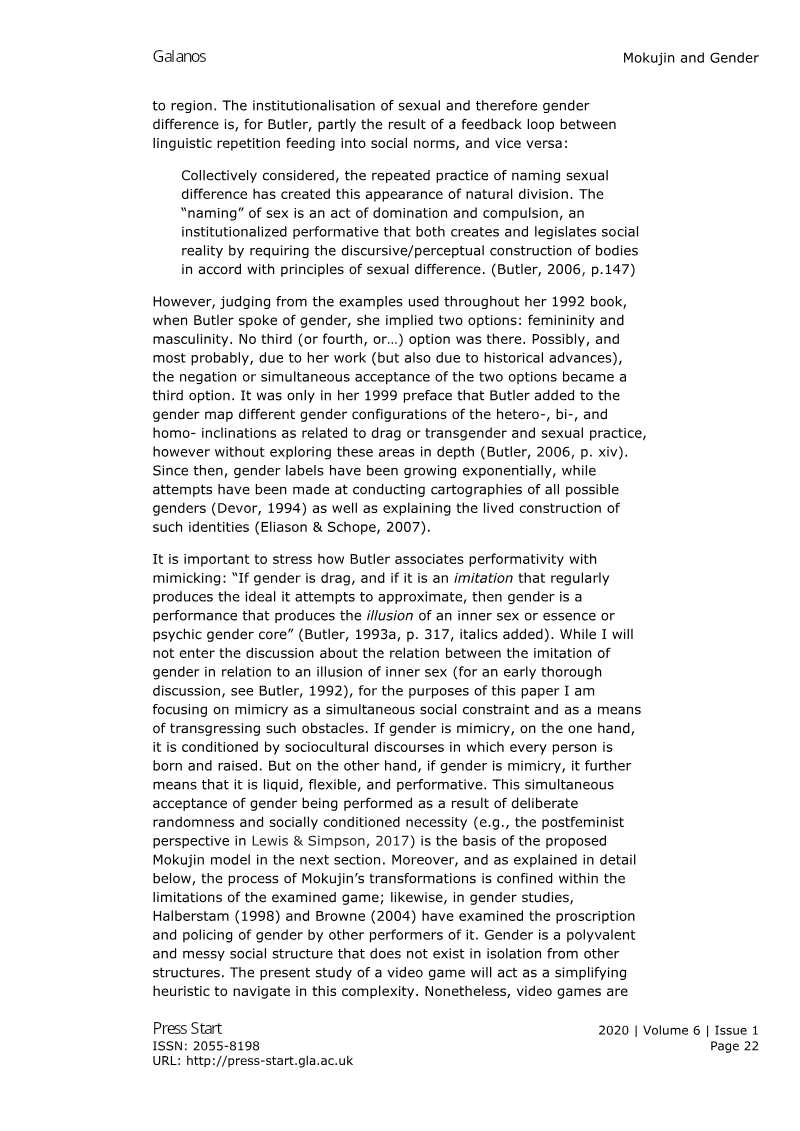
The Tekken character Mokujin serves as a potent heuristic for understanding gender performativity, functioning as a metaphor for the fluid and unpredictable nature of identity.
- The character Mokujin from the Tekken franchise serves as a metaphor for gender performativity, as its algorithmic ability to randomly adopt different fighting styles mirrors the fluid and unpredictable nature of selecting gender identities.
- Gilles Deleuze’s concept of 'disjunctive synthesis' is applied to explain how individuals navigate a spectrum of gender options, framing the selection of a specific identity as an affirmation of a broader, univocal existence.
- The number of available gender options has grown significantly in recent years, with a 2014 ABC News report identifying 58 categories, a list that has since expanded through further research and the emergence of platforms like the Nonbinary Wiki.

Stasis and Stillness: Moments of Inaction in Games
Video games are traditionally defined by constant interaction and high-velocity progression, yet moments of inaction serve as a critical counterpoint to these industry norms.
- Inaction in games functions as a critical tool that challenges industry norms prioritizing constant interaction and high-velocity progression.
- Stasis is defined as a mechanically forced cessation of agency used by developers to emphasize narrative impact or expose the rigid boundaries of game design.
- Stillness is a voluntary, aesthetic practice where players treat virtual environments as spaces for contemplation and respite rather than obstacle courses.
Nano-Games for Cultural Venues: The HEAL Game
Nano-games represent a strategic solution to the pervasive challenge of visitor disengagement and time constraints within cultural and educational institutions.
- Nano-games effectively communicate complex scientific concepts like Hadron Therapy to diverse audiences through short, intuitive, and gesture-based interactions.
- Evaluation of the HEAL game at CERN’s Microcosm exhibition showed that 80 percent of 221 participants successfully internalized the presented scientific information.
- Learning outcomes occur rapidly, with data indicating that users grasp core concepts within the first minute of interaction.