1 free read left. Create a free account for unlimited reading + AI research.
Create free accountWhitepaper Ludic Language Pedagogy
1 free read left. Create a free account for unlimited reading + AI research.
Create free accountWhitepaperLudic Language Pedagogy
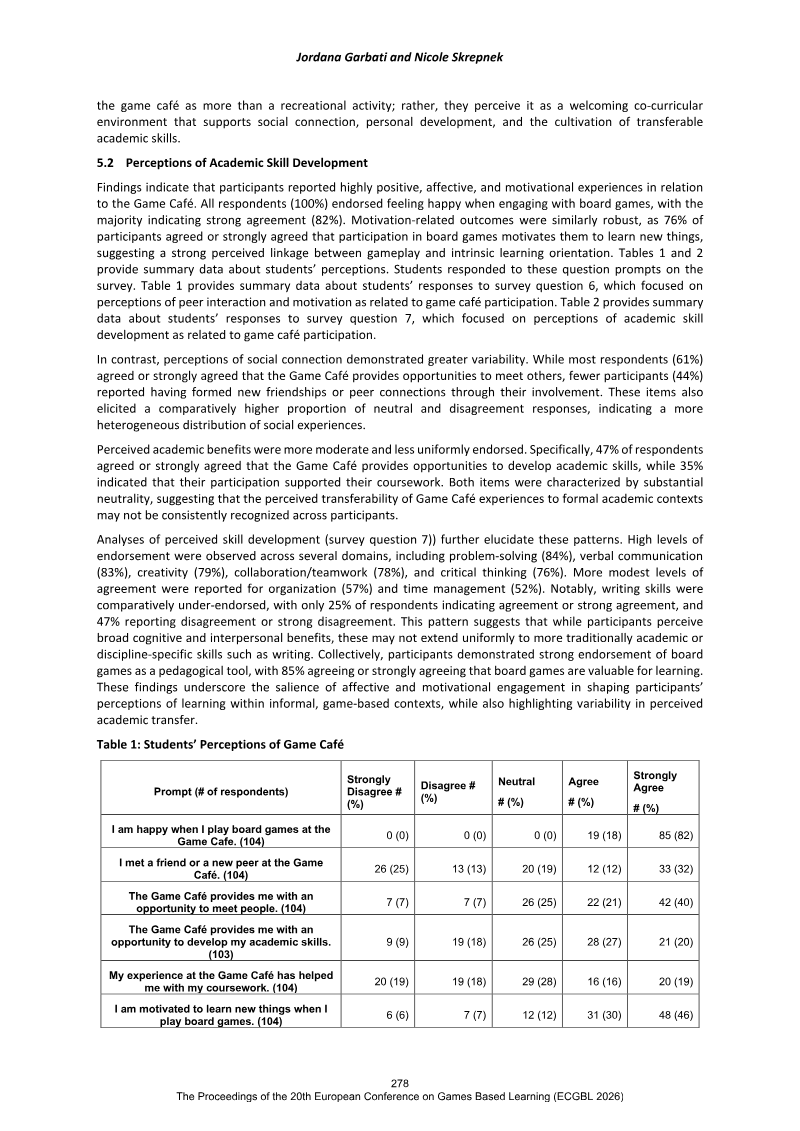
The Explore, Examine, Extend (EEE) framework facilitates the transition from initial gameplay to producing formal, strategy-based informational texts.
It's like learning to drive by first exploring the car, then examining traffic rules, and finally extending that knowledge to navigate the…
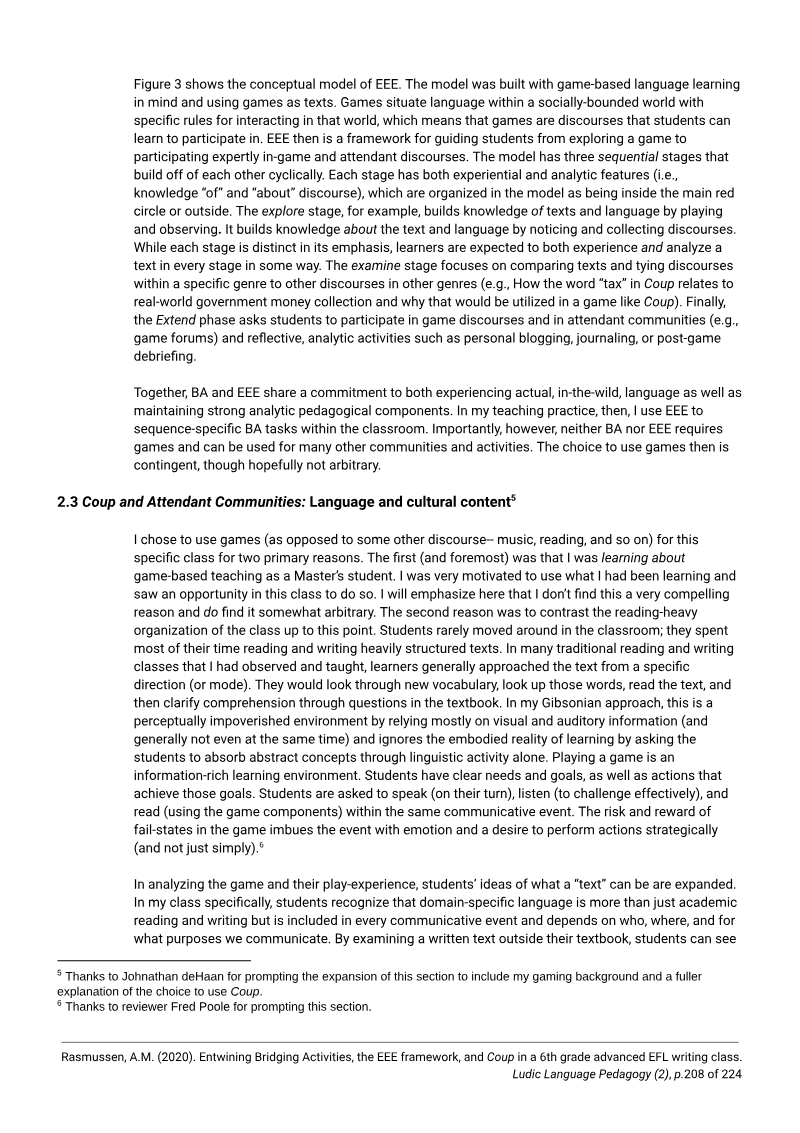
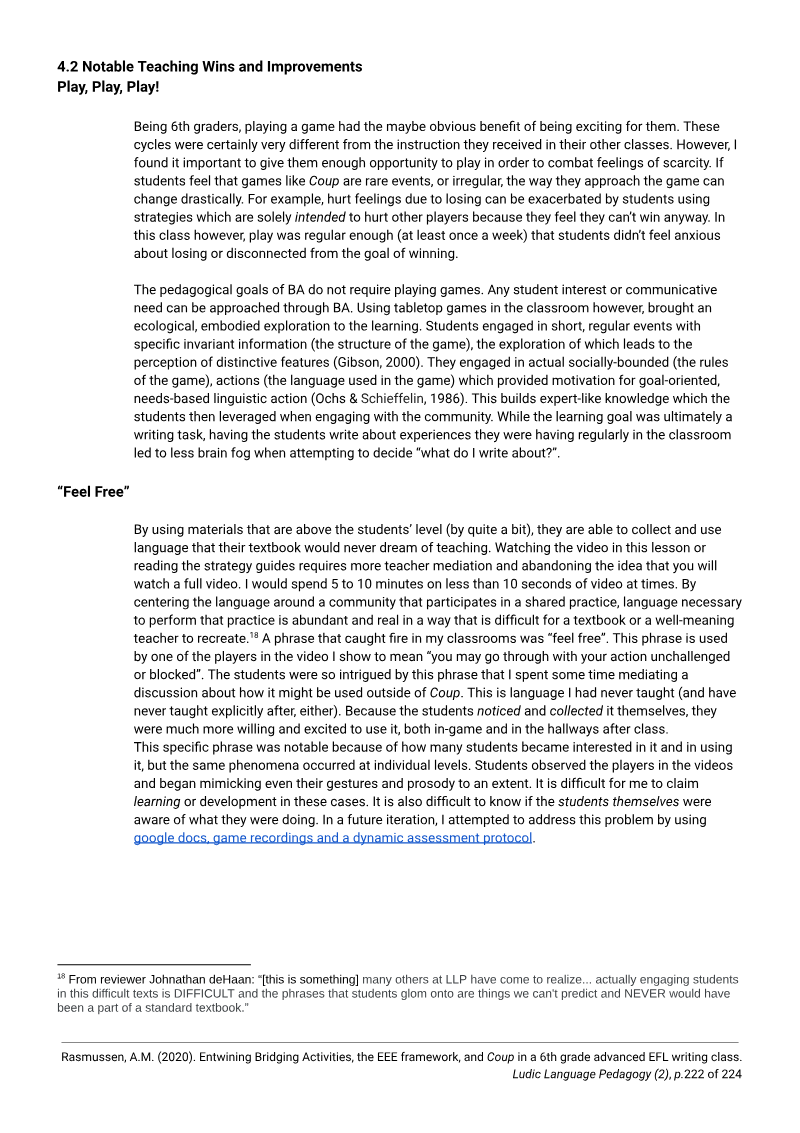
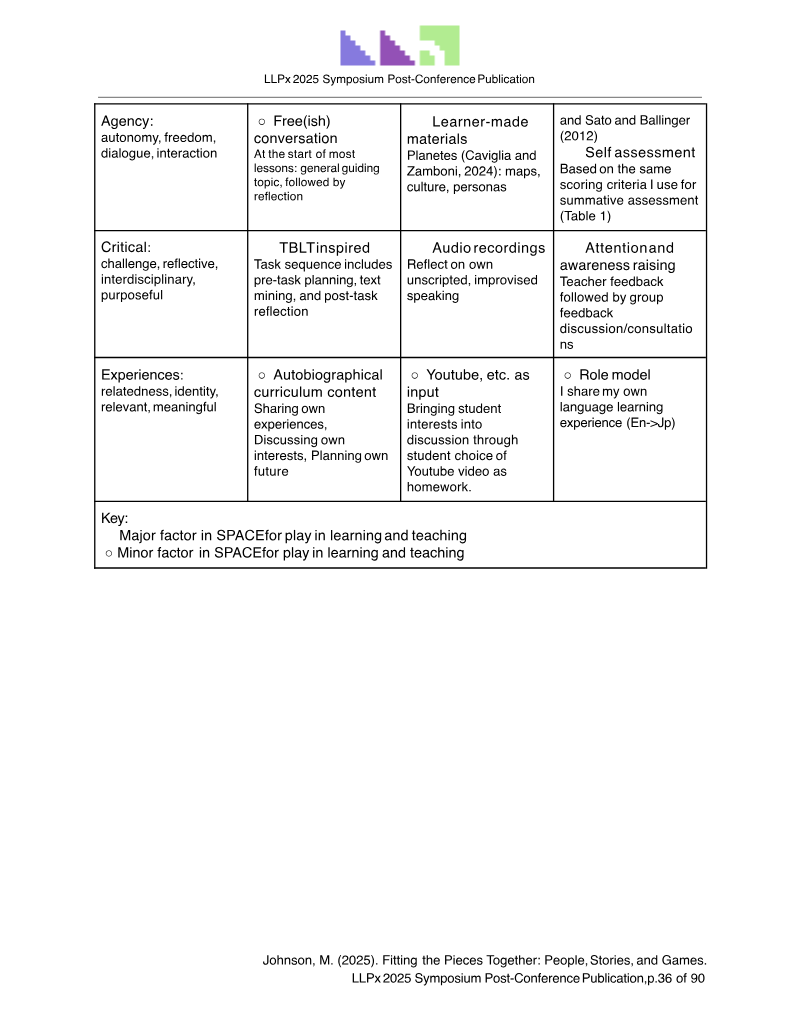
Integrating the tabletop game Coup into a 6th-grade English as a Foreign Language (EFL) curriculum in South Korea offers a transformative pedagogical model for moving beyond traditional, textbook-bound instruction. By utilizing the Explore, Examine, Extend (EEE) framework alongside targeted bridging activities, educators can create information-rich, ludic environments that foster authentic language acquisition. This approach encourages students to engage with situated discourses, effectively bridging the gap between classroom-based learning and the dynamic, goal-oriented communication found in broader gaming communities.
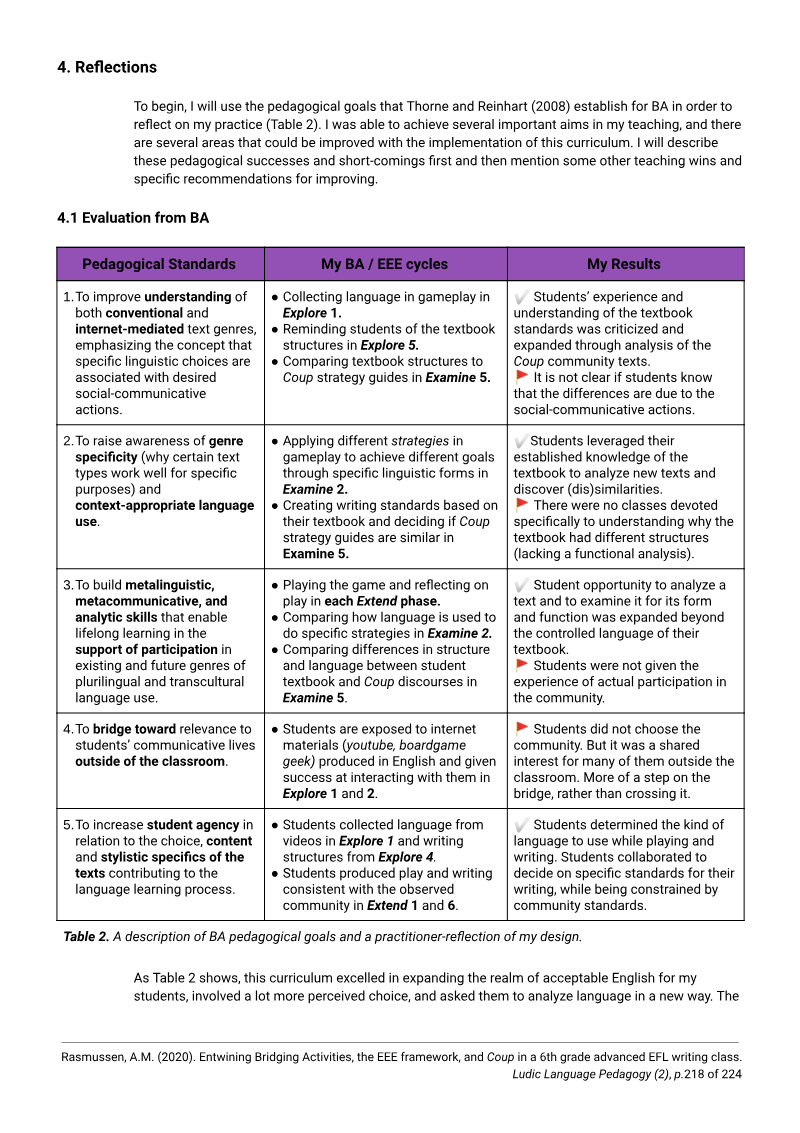
The pedagogical process functions through iterative cycles that guide students from initial gameplay to the production of formal, strategy-based informational texts. Students analyze game mechanics and external strategy guides to develop metalinguistic skills, allowing them to synthesize their strategic experiences into structured writing. This method not only increases student motivation but also provides a scaffolded environment where learners negotiate linguistic standards and participate in meaningful, student-led discourse. The framework successfully aligns these creative, game-based activities with institutional academic requirements, proving that experiential learning can coexist with formal curriculum standards.
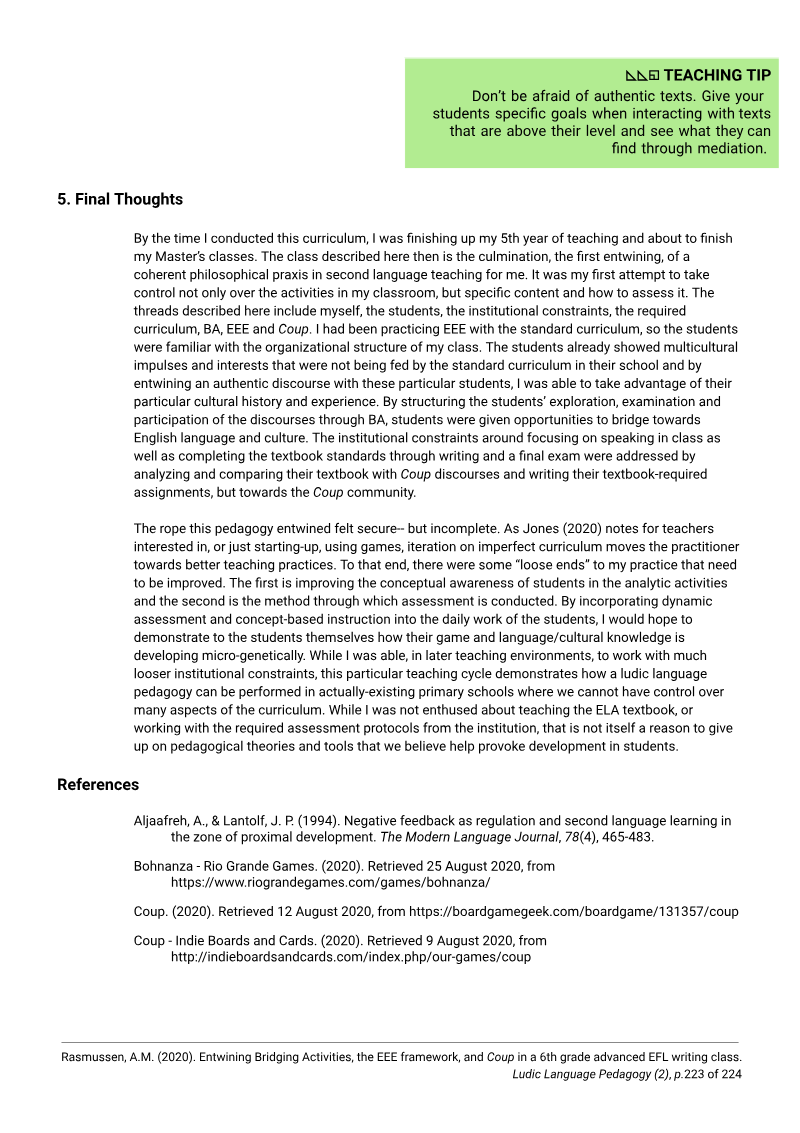
While this integration significantly expands the linguistic repertoire of young learners, the findings suggest that further refinement is necessary to maximize impact. Future iterations of this model should incorporate Concept-Based Instruction and dynamic assessment techniques to better track student conceptual awareness and facilitate deeper community engagement. Ultimately, the use of tabletop games as a primary pedagogical tool demonstrates that educators can successfully navigate constrained institutional environments to provide students with genuine, high-level language practice that prepares them for real-world communicative demands.
Ludic Language Pedagogy · 2026
Ludic Language Pedagogy · 2026
Ludic Language Pedagogy · 2026
Ludic Language Pedagogy · 2026
Ludic Language Pedagogy · 2026
Ludic Language Pedagogy · 2026
Ludic Language Pedagogy · 2026
Ludic Language Pedagogy · 2026
Ludic Language Pedagogy · 2026
Ludic Language Pedagogy · 2026
Ludic Language Pedagogy · 2026



Ludic Language Pedagogy · 2026
European Conference on Games Based Learning (ECGBL) · 2026