Game Studies reports and market data
Documents
Toward a Digital Companion to Monitor a Mixed Reality Game
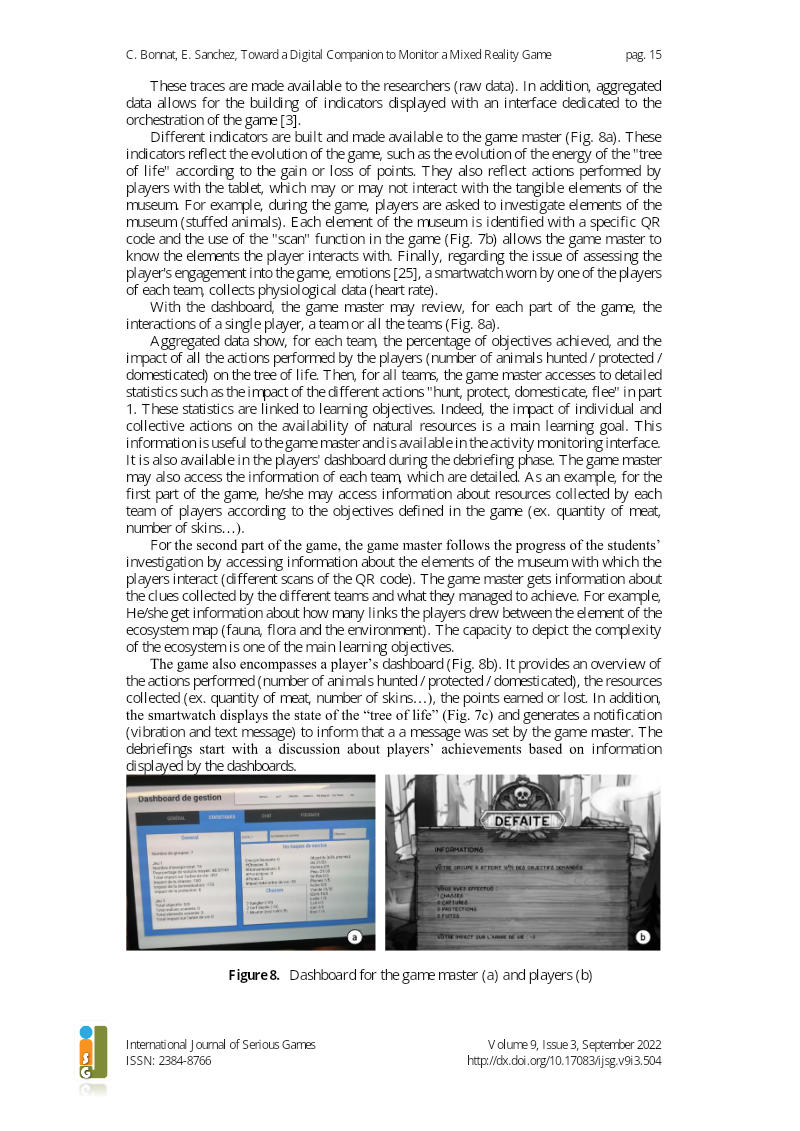
The development of DigitComp addresses the critical challenge of orchestrating mixed-reality educational games within museum environments.
- The DigitComp system successfully integrates multimodal data—including tablet activity, physical object scanning, and physiological metrics—to track student learning in mixed-reality museum environments.
- Empirical testing revealed that game masters frequently underutilized the digital dashboard, preferring traditional manual mediation over the system's automated insights.
- The primary barriers to adoption were technical complexity and a desire by facilitators to maintain direct, intuitive control over the museum experience.
The Contribution of Branded Games for the LEGO Ninjago Brand Narrative
The study examines how branded video games contribute to brand narratives, arguing that prior research has treated such games mainly as vehicles for placement or persuasion while overlooking how game design itself embodies brand values.
- The study argues that branded games have been studied mainly as placement or persuasion tools, overlooking how game design itself embodies brand values, and proposes a three-layer framework (mechanical, semiotic, referential) that extends Aarseth's mechanic-semiotic model with a referential layer.
- The central concept, "additive comprehension," describes how players accumulate meaning across these layers rather than from any single one.
- Applied to The LEGO Ninjago Movie – The Videogame, the analysis finds the game works as a standalone Ninjago title, yet its layers ultimately subsume it under LEGO's broader narrative of creative construction.


Pixel Art for Game Character Design
Pixel art remains a vital and enduring aesthetic in contemporary game design, transcending its origins as a byproduct of hardware limitations to become a deliberate stylistic choice.
- Pixel art has evolved from a hardware-constrained necessity into a deliberate stylistic choice used to create distinct visual identities in a market saturated with high-fidelity 3D graphics.
- Effective pixel art character design relies on the strategic use of silhouettes, dithering, and iconic representation to convey personality and narrative depth within low-resolution constraints.
- The abstraction inherent in pixel art encourages player engagement by requiring users to project their own imagination onto simplified avatars, which enhances immersion and gameplay clarity.
Worker in Video Game Industry: The Gap Between Indie and Incorporated Video Game Developers in Indonesia
This study examines the human resource composition and operational differences between incorporated and independent (indie) video game developers in Indonesia.
- The Indonesian game industry is heavily male-dominated, with men comprising 81% of the total workforce and women primarily restricted to administrative or art-related roles.
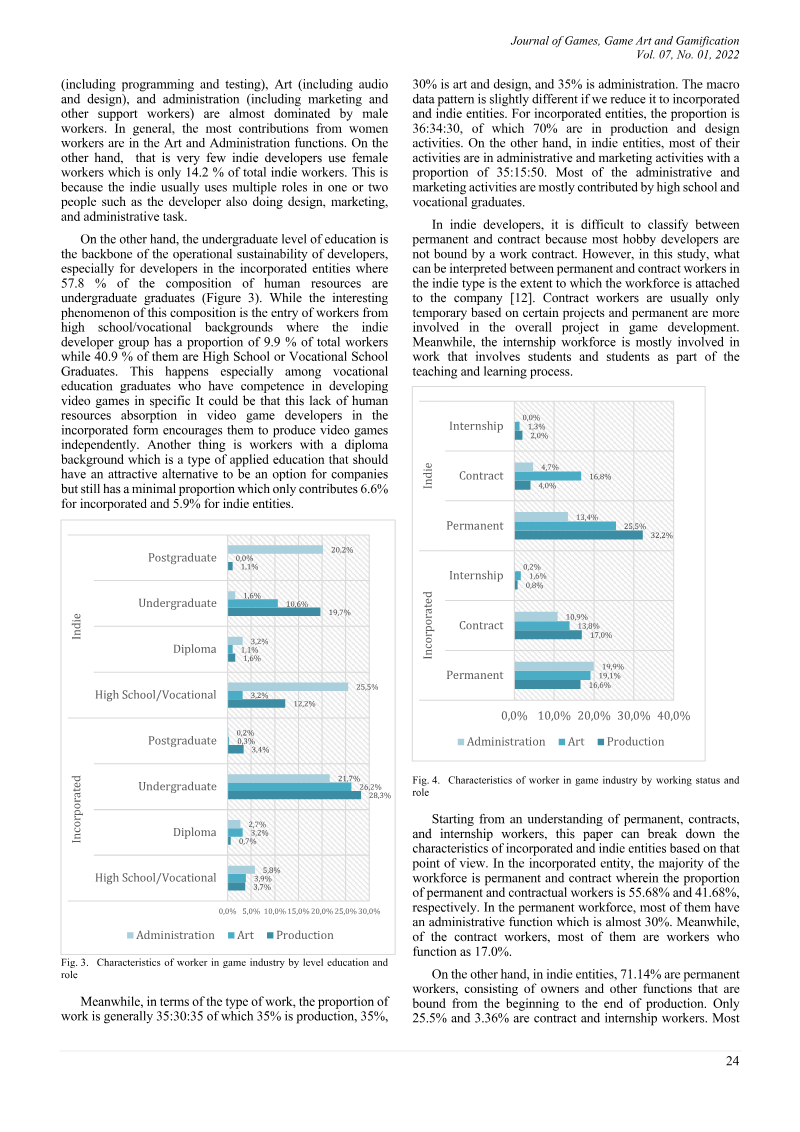
- A significant educational divide exists: 57.8% of incorporated firm employees hold undergraduate degrees, while 40.9% of indie developers are high school or vocational school graduates.
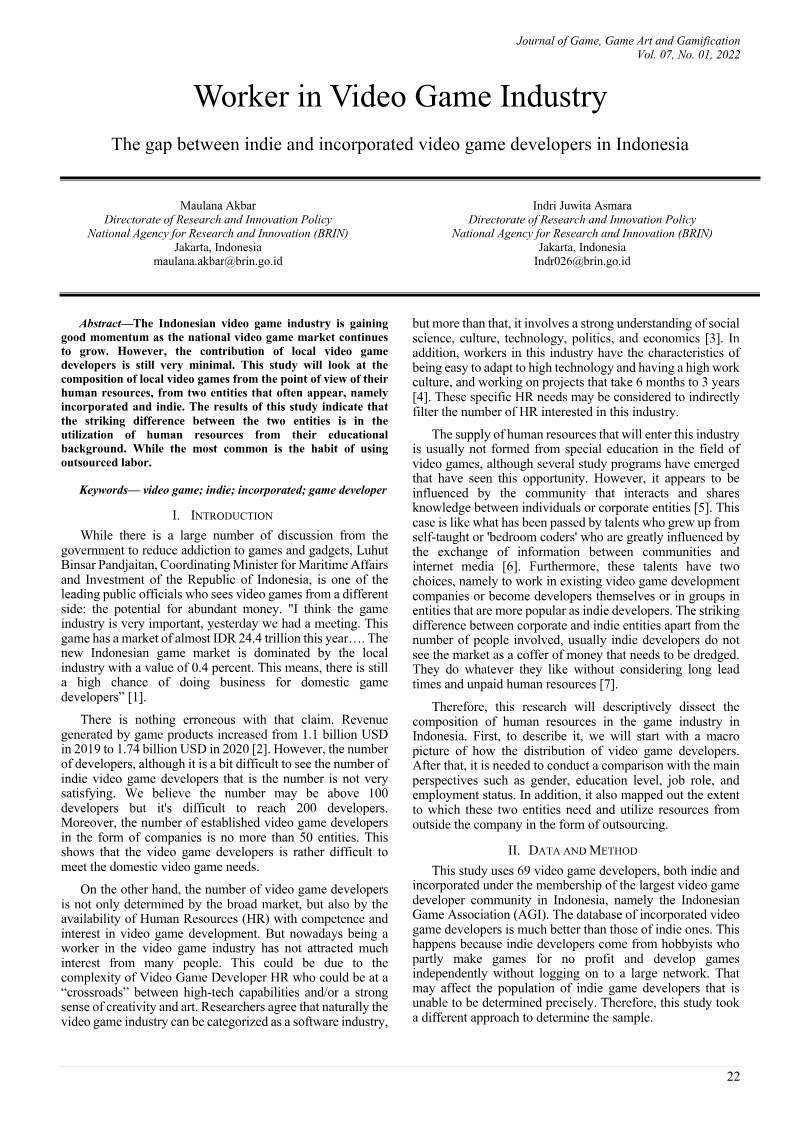
- Approximately 60% of both incorporated and indie developers utilize outsourced labor, primarily for art, design, and technical production roles.

An Empirical Analysis of Ergonomic Gaming Peripherals Improving Gaming Performance
This study investigates the effectiveness of ergonomic gaming peripherals in enhancing player performance, specifically examining how hardware features related to vision, hearing, and touch influence gameplay.
- High-end gaming peripherals provide tangible performance benefits, but these advantages are primarily realized by competitive gamers with over 2,500 hours of experience.
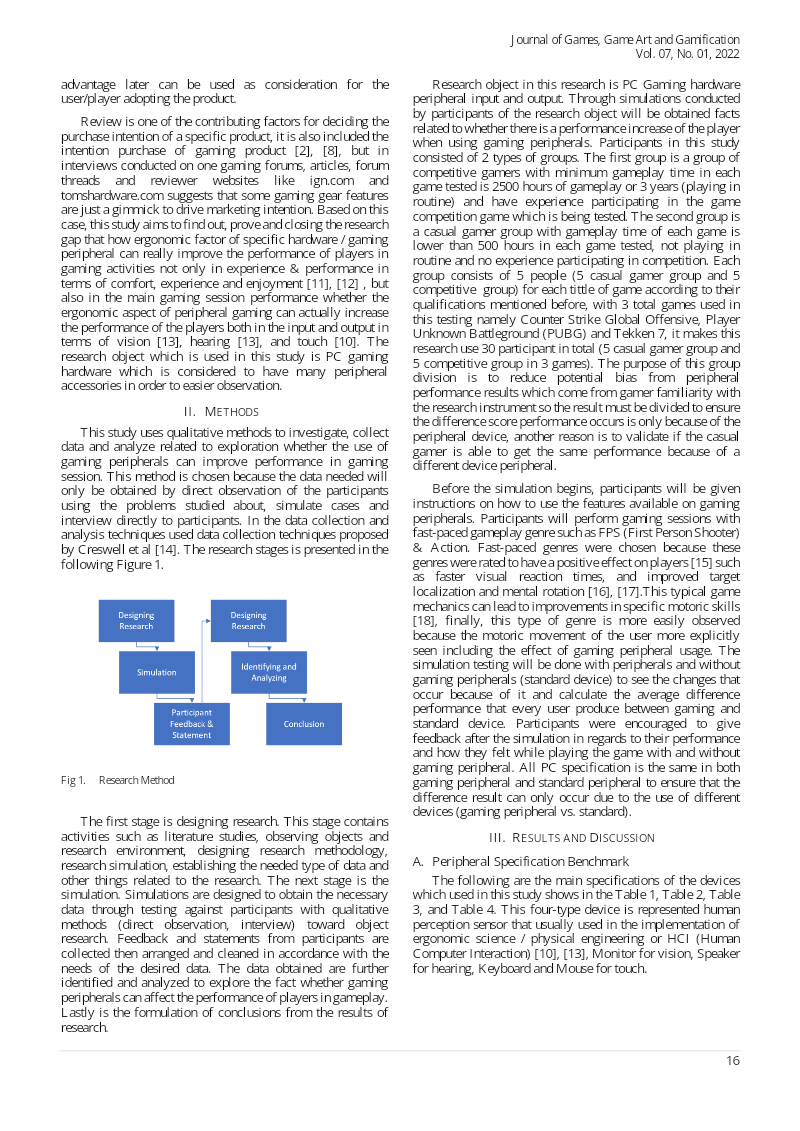
- High-refresh-rate monitors, spatial audio headsets, and mechanical keyboards offer the most significant performance gains in reaction time, accuracy, and input efficiency.
- Hardware utility is highly dependent on user skill level, as casual gamers with fewer than 500 hours of experience derive less measurable benefit from advanced specifications.


Board Game Design for Conservation Organization: A Study on the Campaign for Javan Hawk-Eagle
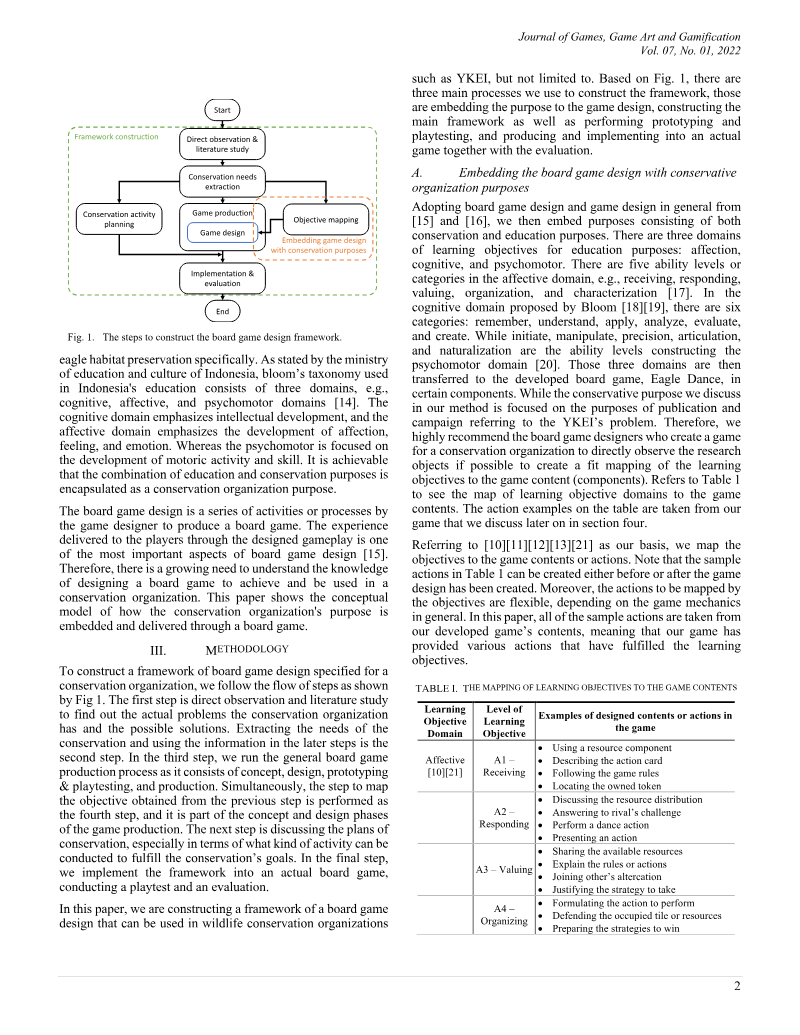
This study establishes a formal framework for designing educational board games to assist conservation organizations in their marketing and public awareness campaigns.
- Board games function as a highly effective educational tool for conservation, with participants in the 'Eagle Dance' study showing a 22.2% increase in knowledge retention, rising from 53.3% to 75.5% average test scores.
- A formal design framework maps specific learning objectives—categorized into cognitive, affective, and psychomotor domains—directly to game mechanics to ensure educational goals are met.
- The 'Eagle Dance' board game successfully simulated complex environmental challenges for the Javan hawk-eagle by integrating card drafting, dice rolling, and resource management mechanics.


Gamification Impact on Human Aspects of the Organization: India
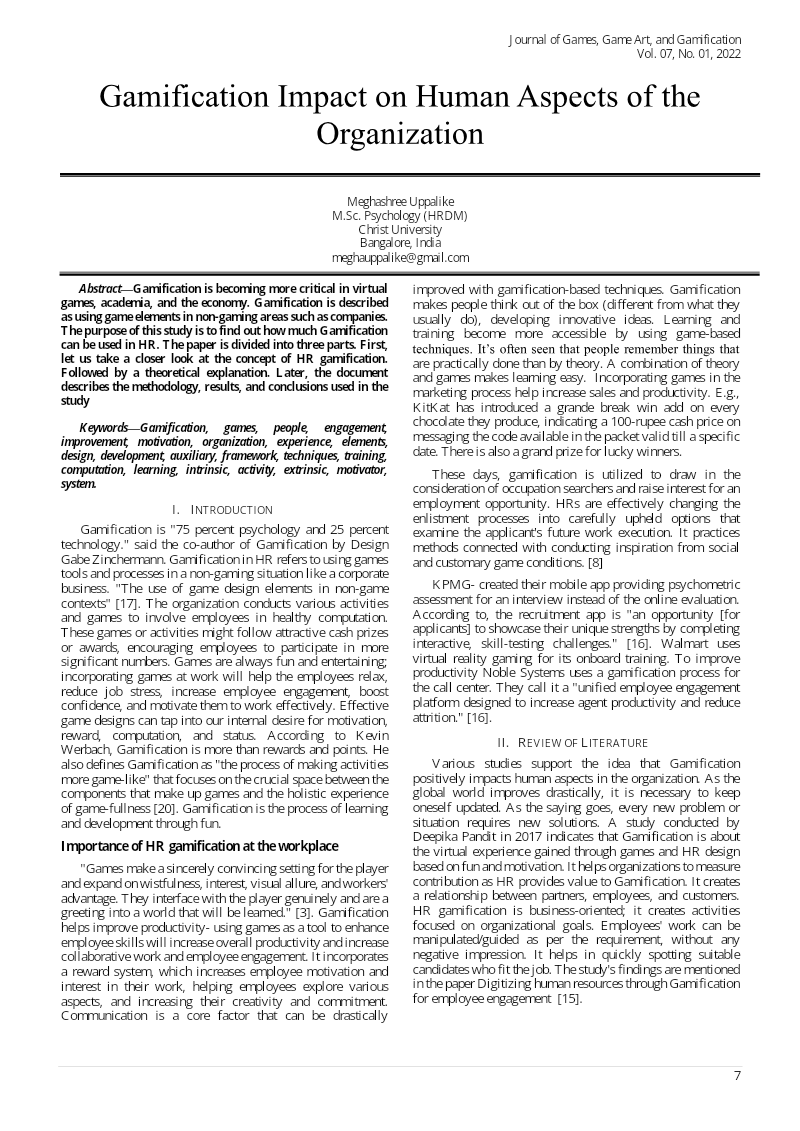
Gamification serves as a transformative tool within the Indian corporate landscape, functioning primarily as a strategic mechanism to enhance human resource management, recruitment, and marketing efforts.

Serious Games in Spatial Planning: Strengths, Limitations and Support Frameworks
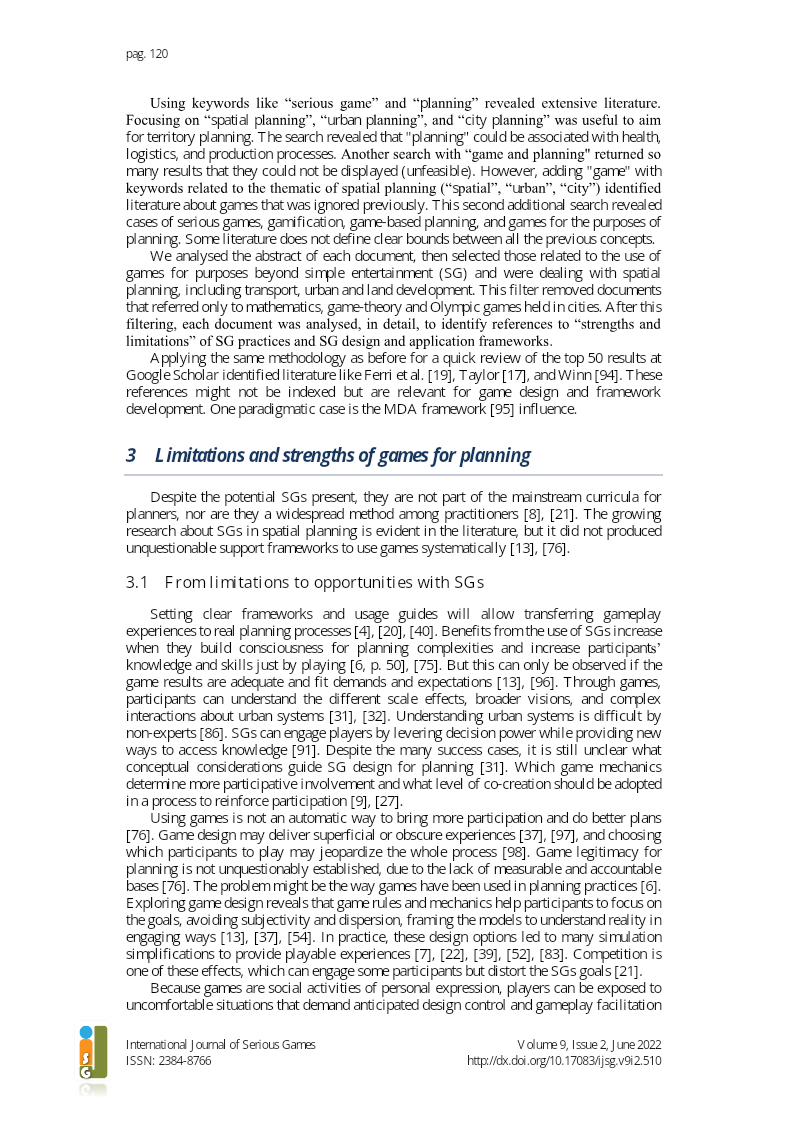
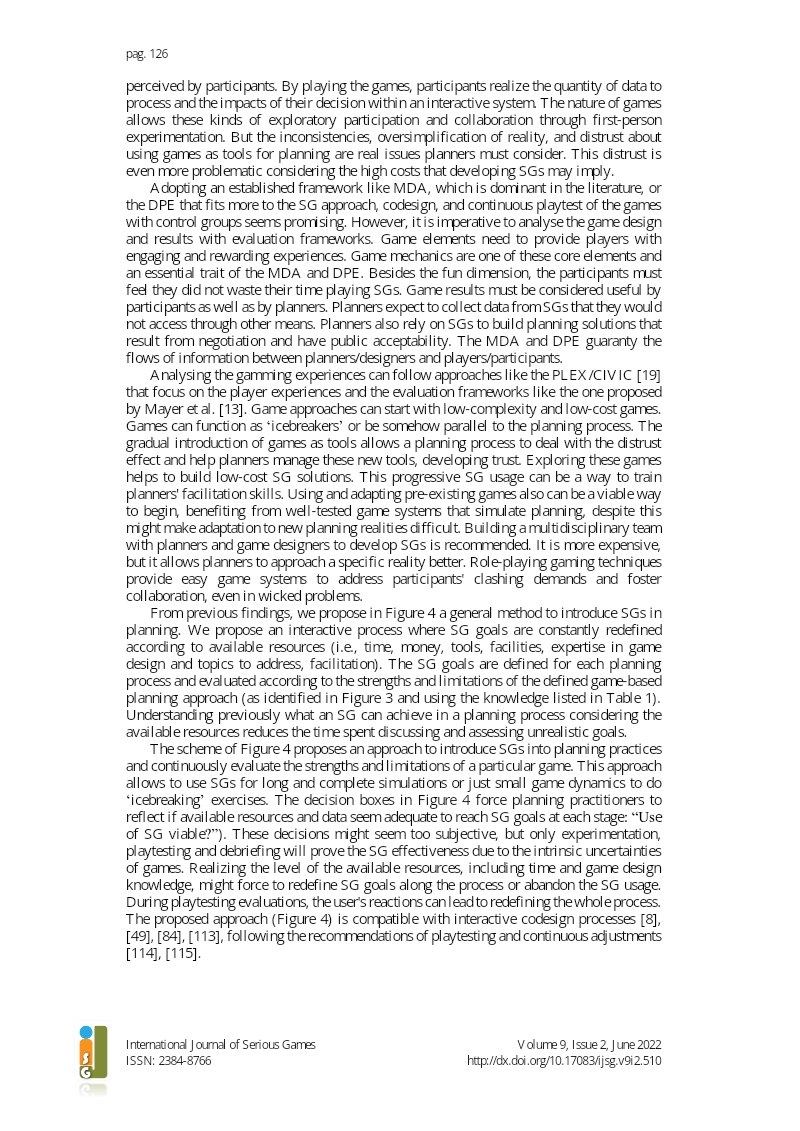
Serious games function as transformative instruments within spatial planning, bridging the divide between technical expertise and civic participation.
- Serious games serve as critical tools for bridging the gap between technical urban planning expertise and civic participation by fostering collaborative learning and stakeholder empathy.
- The efficacy of these tools depends on a precise balance between engaging gameplay mechanics and the realistic simulation of complex urban systems.
- Professional adoption is currently hindered by practitioner skepticism regarding the legitimacy of gamified processes, high development costs, and the risk of oversimplifying urban challenges.


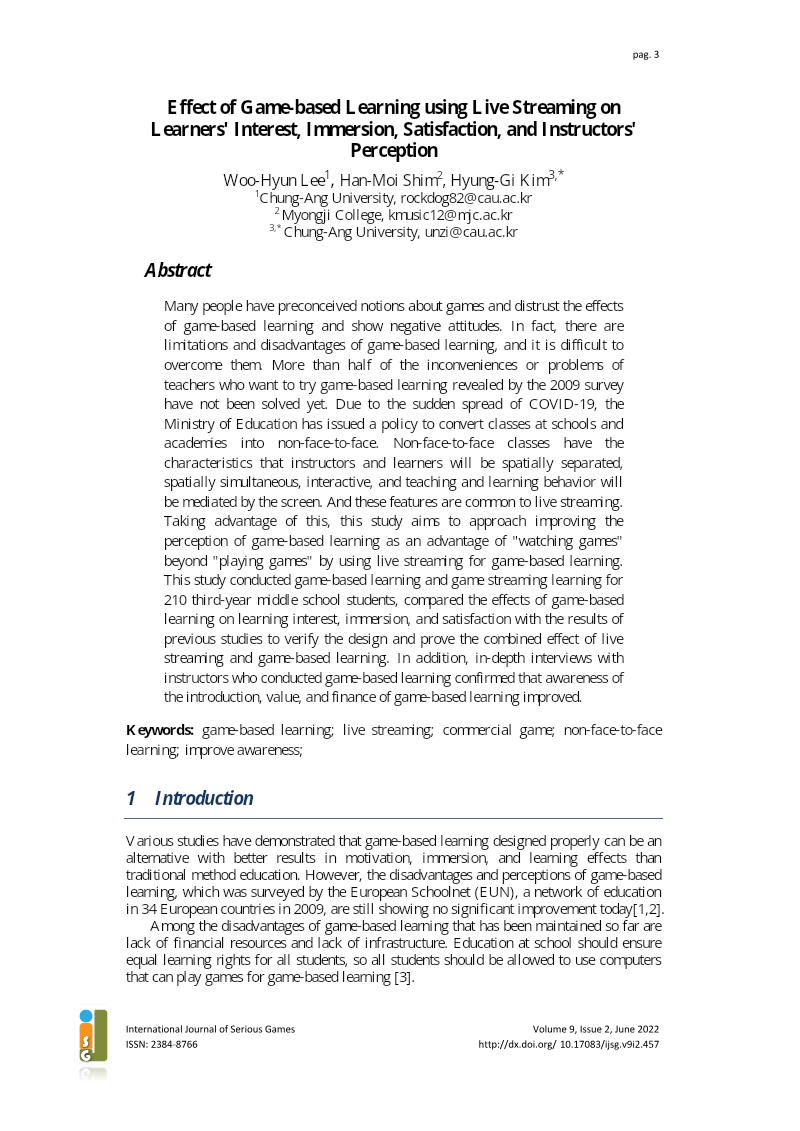
Effect of Game-based Learning using Live Streaming on Learners' Interest, Immersion, Satisfaction, and Instructors' Perception
Integrating live streaming into game-based learning serves as a viable, scalable solution to the persistent challenges of high implementation costs, inadequate infrastructure, and institutional resistance within educational environments.
- Live streaming game-based learning is a viable, cost-effective alternative to traditional classroom instruction, effectively removing barriers related to high implementation costs and inadequate infrastructure.
- An eight-week study of 210 middle school students using 'Valiant Hearts: The Great War' on Twitch showed that streaming-based instruction achieves student outcomes comparable to traditional in-class game-based learning.
- Quantitative analysis using paired t-tests and MANOVA confirmed significant improvements in student interest, immersion, and satisfaction metrics for those using the streaming model.


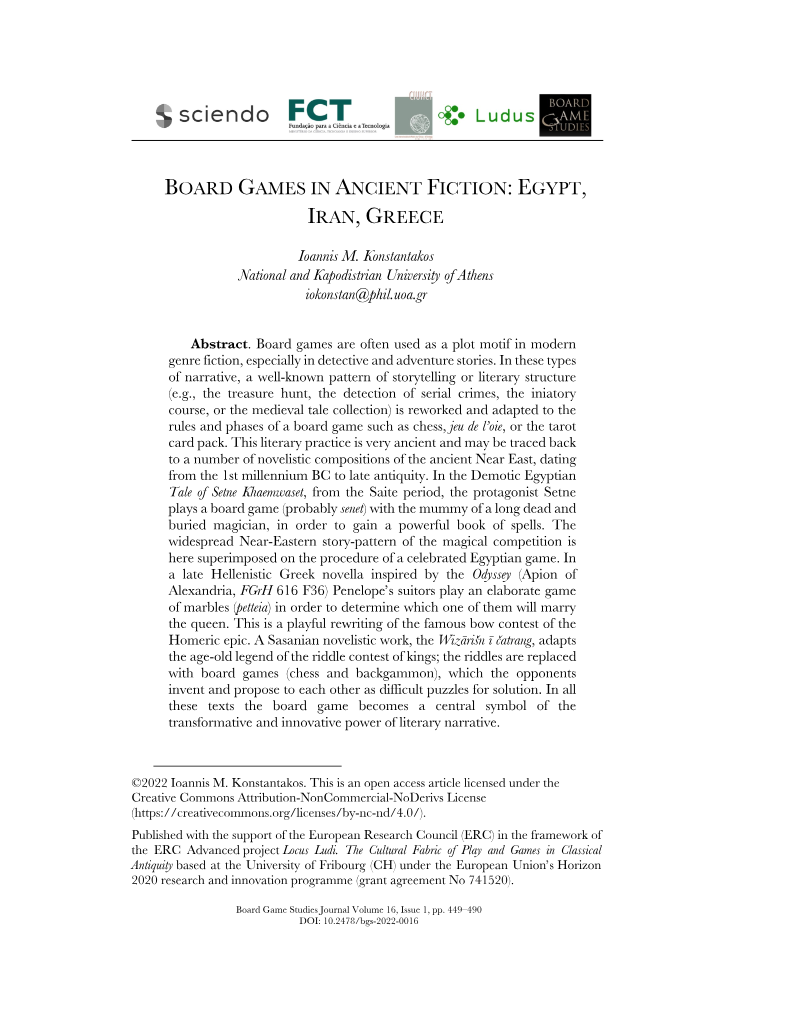
Board Games in Ancient Fiction: Egypt, Iran, Greece
Konstantakos's study argues that board games have served as a structuring device in narrative since antiquity, and that this relationship between games and literature has long been mutually productive.
- The essay argues that board games have served as a structuring device in narrative since antiquity, a relationship between games and literature that has long been mutually productive, with the board game becoming a central symbol of narrative's transformative and innovative power.
- The central case is the Egyptian Tale of Setne Khaemwaset, where a contest between two wizards is staged as a game of senet (likely, though not explicitly named), and winning a round enables a damaging spell so that the game's mechanics directly drive magical attack and mirror the protagonist's fate.
- The author reads the Setne tale as fusing the ancient Near Eastern contest-of-magicians folktale with a board game while stripping away political stakes, leaving self-interested rivals whose irresponsible magic brings personal ruin; the senet's funerary and netherworld symbolism reinforces this reading.


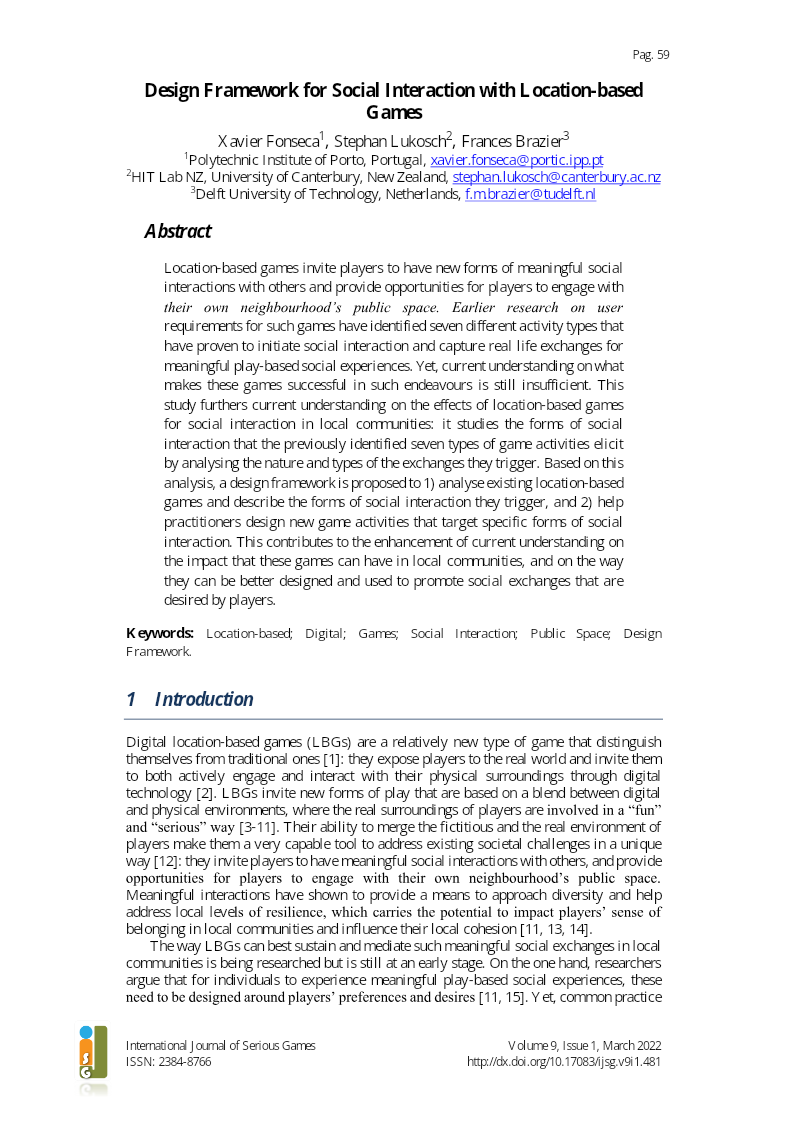
Design Framework for Social Interaction with Location-based Games
Location-based games (LBGs) possess significant potential to foster social cohesion within local neighborhoods, yet developers often lack a cohesive, player-centered methodology to intentionally design for these interactions.
- A new design framework for location-based games (LBGs) categorizes activities into seven archetypes, such as the Explorer, Athlete, and Volunteer, to intentionally foster local social cohesion.
- The framework maps game activities to either focused or unfocused social exchanges, providing a structured methodology for designers to move beyond isolated, non-social development models.
- A co-design study with 64 adolescents in Rotterdam generated 56 unique game concepts, revealing that 41.1% of player-generated ideas prioritized social interaction while 58.9% focused on intrapersonal experiences.
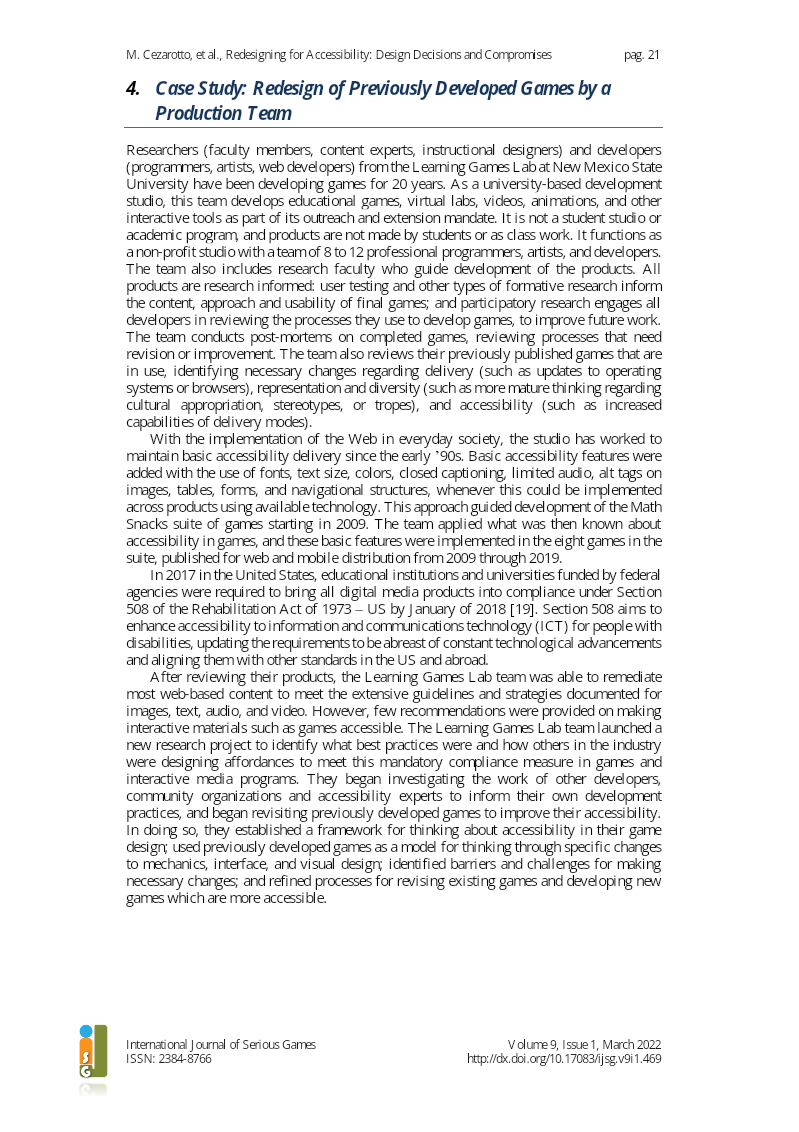
Redesigning for Accessibility: Design Decisions and Compromises in Educational Game Design
Educational game design requires a deliberate balance between pedagogical objectives and the diverse needs of players with visual, auditory, motor, and cognitive disabilities.
- Integrating accessibility as a core design philosophy throughout the development lifecycle—rather than a post-production technical requirement—results in a more intuitive and polished user experience for all players.
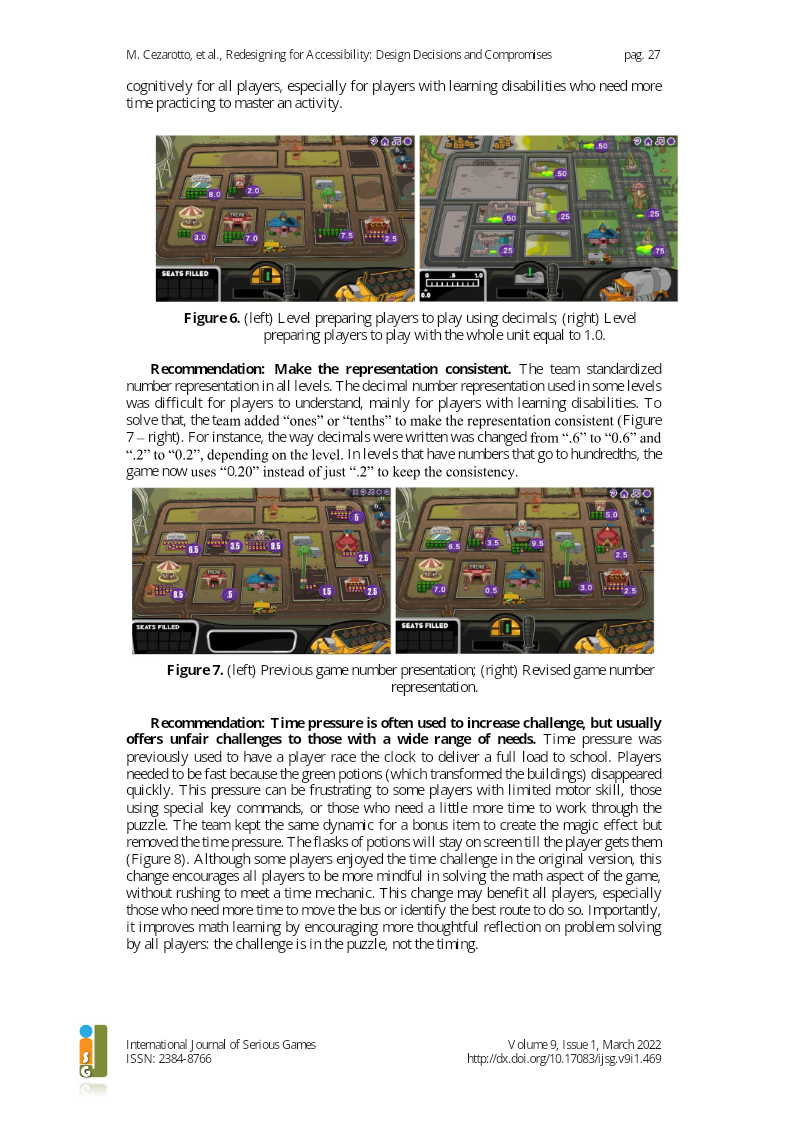
- Removing restrictive time pressures and implementing remappable controls are critical design modifications that resolve accessibility barriers while simultaneously improving core gameplay mechanics.
- Educational software benefits from flexibility features such as open-level selection systems and literal visual cues, which allow diverse learners to engage with content at their own pace.