1 free read left. Create a free account for unlimited reading + AI research.
Create free accountWhitepaper International Journal of Serious Games
1 free read left. Create a free account for unlimited reading + AI research.
Create free accountWhitepaperInternational Journal of Serious Games
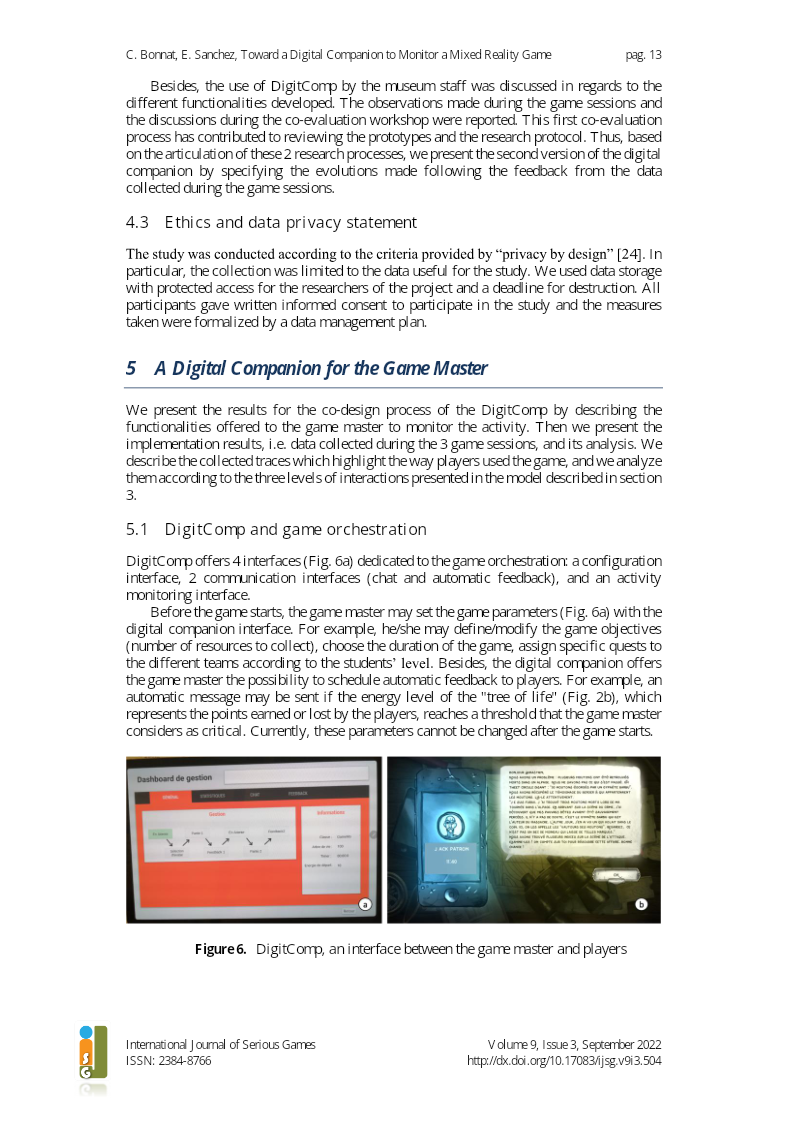
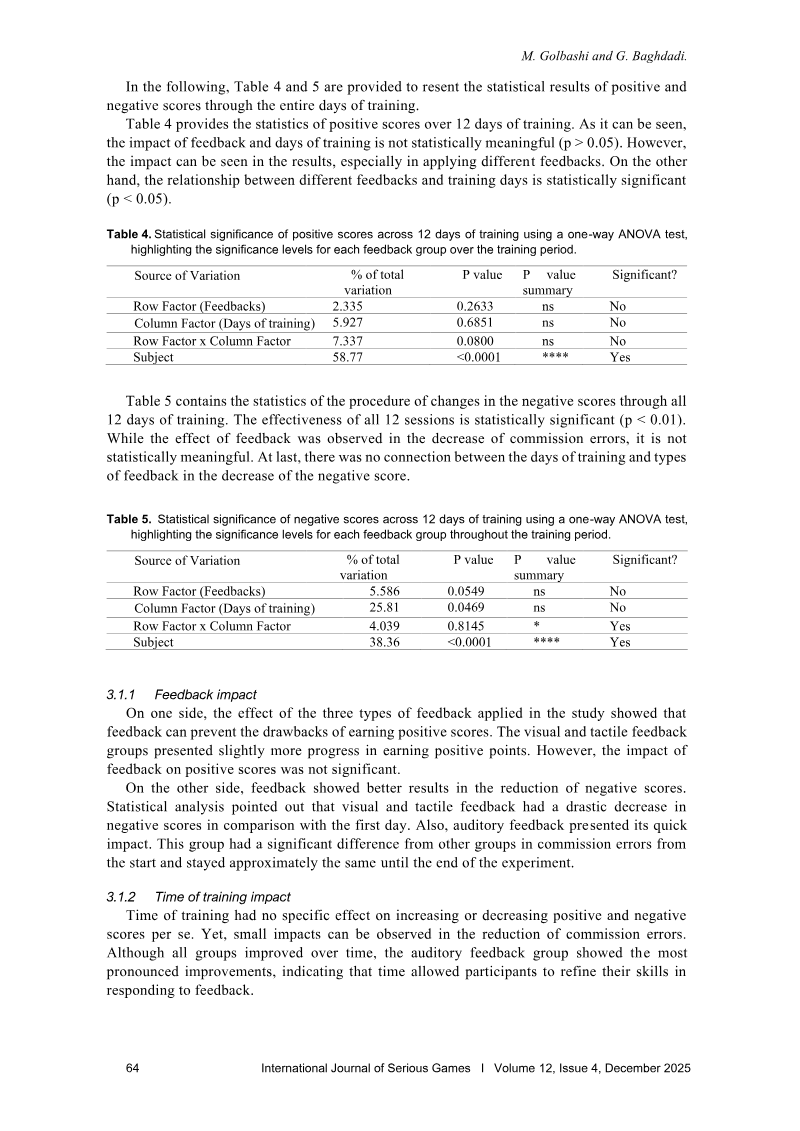
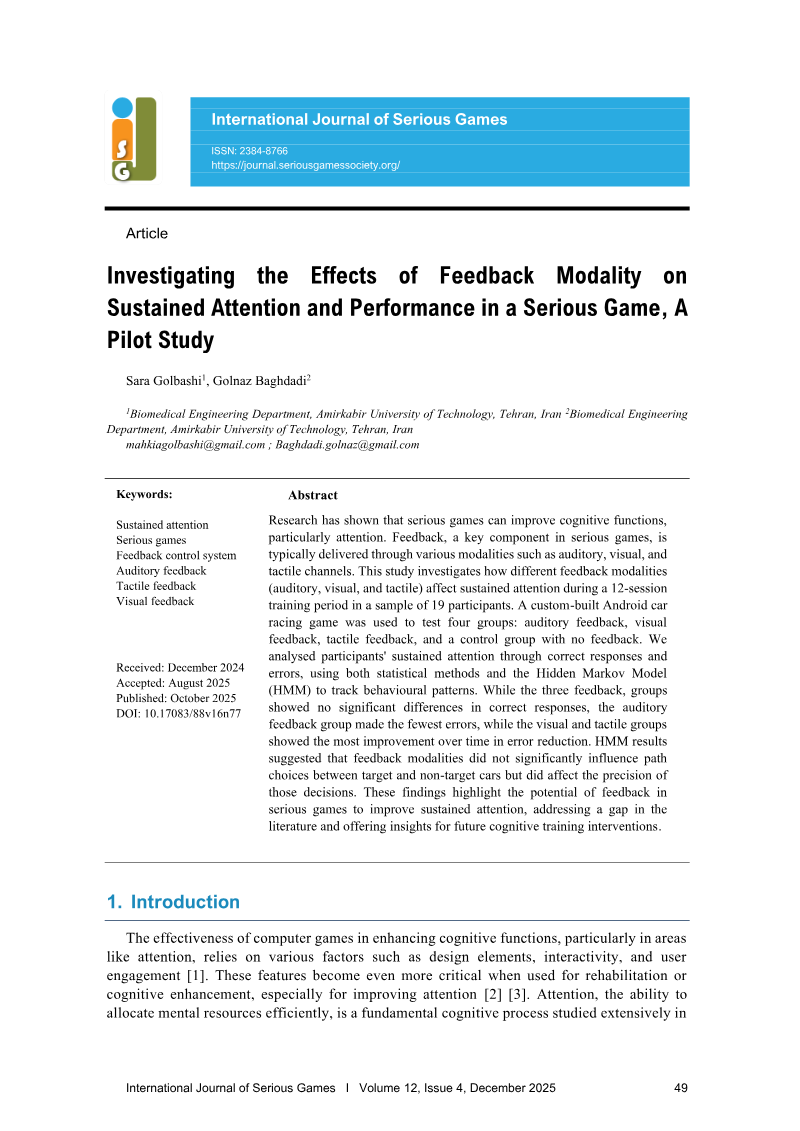
The system combines tablet activity, physical object scanning, and physiological metrics. This provides real-time insights into student learning progress.
The development of DigitComp addresses the critical challenge of orchestrating mixed-reality educational games within museum environments. By utilizing a design-based research methodology, the project aims to bridge the gap between complex player interaction tracking and the practical needs of game masters. The system integrates multimodal data—including tablet activity, physical object scanning, and physiological metrics—to provide real-time insights into student learning progress. This approach emphasizes a privacy-by-design framework, ensuring that the collection of activity traces, audio, and video remains secure while facilitating a more responsive pedagogical environment.
Despite the technical success of the system in capturing and modeling player behavior, empirical testing reveals a significant disconnect between the tool’s design and its real-world application. Game masters frequently underutilized the digital dashboard, opting instead for traditional, manual mediation practices. This preference stems from technical barriers and a desire to maintain direct, intuitive control over the museum experience. The findings suggest that while digital companions can effectively monitor complex interactions, they often fail to integrate seamlessly into the established workflows of human facilitators.
To address these limitations, the research is shifting toward re-engineering the interface to better align with the practical requirements of game orchestration. Future iterations focus on refining behavioral indicators and improving the usability of the dashboard to ensure that data-driven insights actually support, rather than complicate, the game master’s role. By prioritizing the human element of game-based learning, the project seeks to transform digital companions from passive monitoring tools into active, intuitive assistants that enhance the educational impact of mixed-reality museum experiences.



International Journal of Serious Games · 2026
International Journal of Serious Games · 2026

International Journal of Serious Games · 2026
International Journal of Serious Games · 2026
International Journal of Serious Games · 2026



International Journal of Serious Games · 2026
International Journal of Serious Games · 2026
International Journal of Serious Games · 2025
International Journal of Serious Games · 2025
International Journal of Serious Games · 2025
Serious Games Society · 2025
International Journal of Serious Games · 2025
European Conference on Games Based Learning (ECGBL) · 2026