Tabletop reports and market data
46 game industry reports, presentations and talks about tabletop from writers such as Game Developers Conference, Extra Credits and Naavik, newest from 2026. Every document has a summary and key insights with the page they come from.
Documents
Universes Beyond comes to Dungeons & Dragons | Design Club
Wizards of the Coast is aggressively pivoting the Dungeons & Dragons brand to meet the high-growth revenue expectations set by parent company Hasbro.
- Wizards of the Coast is shifting Dungeons & Dragons toward a high-volume product model to meet Hasbro’s aggressive revenue growth expectations.
- The strategy mirrors Magic: The Gathering by integrating external franchises into the fifth edition ruleset through the Universes Beyond initiative.
- The World of Warcraft expansion serves as the flagship for this model, providing modular toolkits of species, classes, and dungeons designed to overlay onto existing campaigns.

The Present & Future of Digital Tabletop RPGs
The tabletop role-playing game market has evolved into a robust $30 billion industry, currently experiencing an 11.8% annual growth rate fueled by a post-pandemic resurgence in social, unplugged entertainment.
- The tabletop RPG industry is currently experiencing a growth rate of 11.8%, outpacing the video game industry as players increasingly seek social, non-isolationist entertainment.
- Successful digital TTRPG platforms must integrate five core functionalities: character sheets, rulebooks, encounter builders, support for user-generated content, and a virtual tabletop (VTT) interface.
- To avoid cannibalizing physical sales, publishers are adopting hybrid models where digital subscriptions provide basic functionality while physical products remain premium, collectible items that offer a tactile experience.
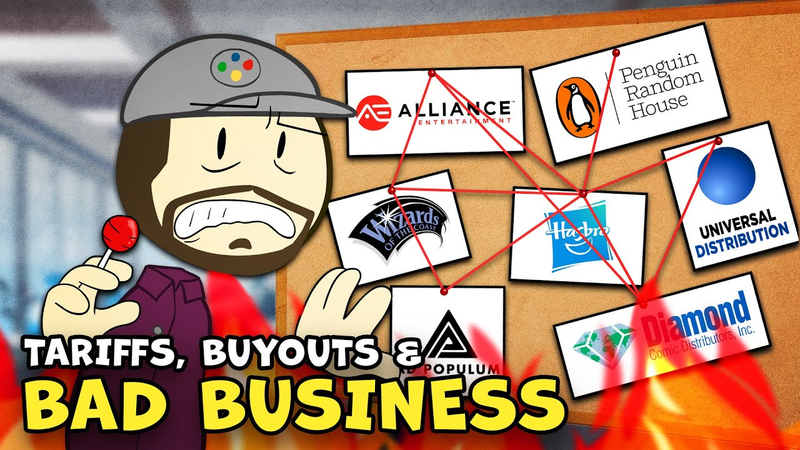
Board Games are in Trouble, and it's NOT Why You Think | Extra Credits
The board game and tabletop RPG industry is currently facing a systemic crisis driven by corporate consolidation, fragile global supply chains, and volatile trade policies.
- The board game industry is facing a systemic crisis driven by supply chain fragility, corporate consolidation, and volatile tariff policies that threaten the viability of publishers.
- The bankruptcy of Diamond Comic Distributors and the subsequent collapse of its subsidiary, Alliance Game Distributors, has created massive instability in the U.S. tabletop game distribution network.
- Modern board game production relies on 'just-in-time' supply chains that distribute manufacturing across multiple countries, making the process highly susceptible to border-crossing costs and tariff fluctuations.
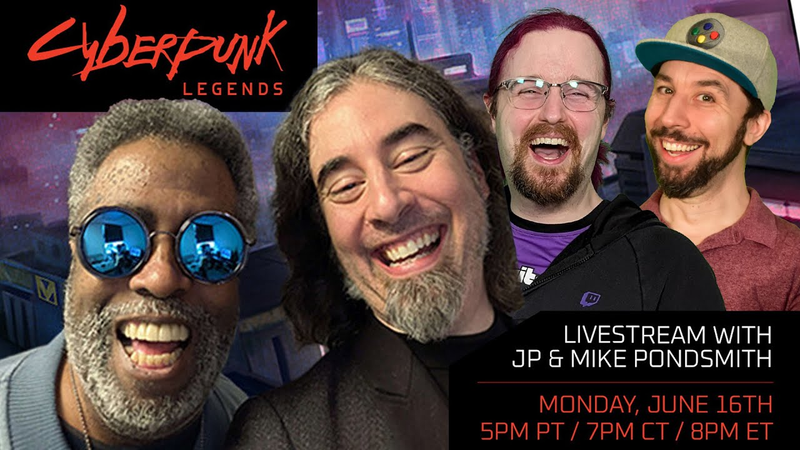
Cyberpunk: Legends FIRST GAMEPLAY LOOK with Mike Pondsmith and James Portnow
Cyberpunk: Legends represents a strategic effort to translate the high-stakes, narrative-driven essence of the Cyberpunk tabletop RPG into an accessible, cooperative card game.
- Cyberpunk: Legends is a cooperative card game for one to four players that utilizes poker-inspired mechanics and restricted communication to emphasize team synergy over individual heroics.
- The game is developed through a partnership between Talsorian and CD Projekt Red to ensure strict adherence to established franchise lore and the master timeline.
- The design features a modular, scenario-based structure that supports non-linear storytelling and long-term character progression without the need for a game master.
Why Tariffs Are Killing Tabletop Gaming | Design Club
The tabletop gaming industry is currently navigating a precarious financial landscape defined by thin profit margins and a heavy reliance on overseas manufacturing, primarily in China.
- The tabletop industry relies on a fivefold markup from production cost to retail price, meaning minor manufacturing cost increases have a compounding effect that threatens the viability of small-to-mid-sized firms.
- Tariffs are forcing publishers to adopt defensive strategies, shifting investment away from experimental game design toward safer, established franchises and reprints.
- The lack of specialized domestic manufacturing infrastructure makes onshoring a capital-intensive, long-term challenge rather than an immediate solution to current import cost crises.
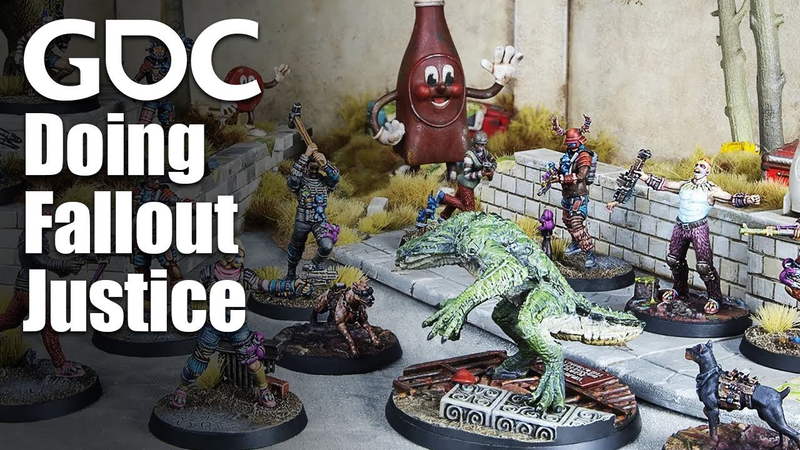
Making 'Fallout' for Tabletop (or How to Be Different but the Same)
Adapting the Fallout video game franchise into the tabletop miniatures game Fallout: Wasteland Warfare requires a delicate balance between honoring established lore and creating a functional, tactical skirmish experience.
- To adapt a video game into a tabletop experience, designers must rescale numerical data rather than porting it directly, as video game values are rarely balanced for physical play mechanics.
- The game utilized a 20-sided die system to ensure that low skill values remained viable, providing a 25% success rate for a skill value of one, while maintaining a non-guaranteed success ceiling for high-skill characters.
- To avoid the 'negative spiral' where winners become exponentially stronger, the settlement system rewards players with structural upgrades that provide tactical options without increasing the point-value of their units in future matches.
Internet Killed the Board Game Store - Extra Credits Gaming
The tabletop gaming industry has undergone a significant transformation since 2012, shifting from a model centered on independent hobby shops to one dominated by digital platforms, big-box retailers, and specialized cafes.
- The tabletop industry has experienced massive product saturation, with new annual game releases surging from 880 in 1990 and 1,265 in 2000 to 4,677 by 2019.
- Traditional Friendly Local Game Stores (FLGS) are struggling to compete with large online retailers that utilize superior bulk-buying power and exclusive distribution deals to undercut local pricing.
- Digital platforms like Magic: The Gathering Arena have contributed to the decline of physical retail by migrating significant segments of the player base away from in-person play.

The Best and Most 'Stealable' Mechanics from Tabletop RPGs
Tabletop roleplaying games offer a wealth of innovative design frameworks that can significantly enhance digital game experiences by prioritizing player agency, emergent narrative, and meaningful resource management.
- Tabletop RPG mechanics like 'stress' in Blades in the Dark can be adapted into digital games as a tangible, finite resource that forces players to choose between character health and pushing beyond normal limits.
- Quest logs can be transformed from simple checklists into dynamic 'clocks' that track multiple, interconnected narrative threads, allowing designers to manage complex state-based events without writing exhaustive rule sets.
- Character beliefs and instincts—such as those in Mouse Guard—can be integrated into RPGs to reward players for roleplaying specific traits, creating meaningful character arcs where internal values impact gameplay bonuses.

Script Murders: The Form and Design of the Most Popular Tabletop Genre in China
The Chinese script murder industry, known locally as jubensha, has matured from a niche adaptation of Western whodunit mysteries into a sophisticated, immersive social phenomenon.
- The Chinese 'jubensha' (script murder) market is driven by social interaction, with a core demographic of 18-to-25-year-olds (Gen C) who prioritize group activities and immersive experiences.
- The market is segmented into three primary design patterns: traditional 'whodunnit' mysteries (50% market share), supernatural themes (20%), and new mystery genres (30%).
- Operational success relies on four pillars: physical layout/cosplay, high-quality script writing, the role of the Dungeon Master (DM) to guide narrative flow, and the use of NPCs to enhance immersion.
The History of D&D Hasbro Refused to Learn From
The history of Dungeons & Dragons (D&D) is defined by a recurring cycle of legal disputes, licensing shifts, and fan reactions that have fundamentally shaped the tabletop role-playing game (TTRPG) industry.
- D&D’s commercial success is historically tied to open licensing models, most notably the Open Game License (OGL) introduced in the early 2000s, which fostered community growth and third-party content.
- Restrictive licensing policies consistently trigger market decline and fan alienation, evidenced by the 2008 transition to the fourth edition's Game System License (GSL), which directly led to the rise of the competitor game Pathfinder.
- TSR’s aggressive legal strategy in the 1980s against third-party publishers and fans fragmented the market and incentivized competitors to develop original gaming systems.
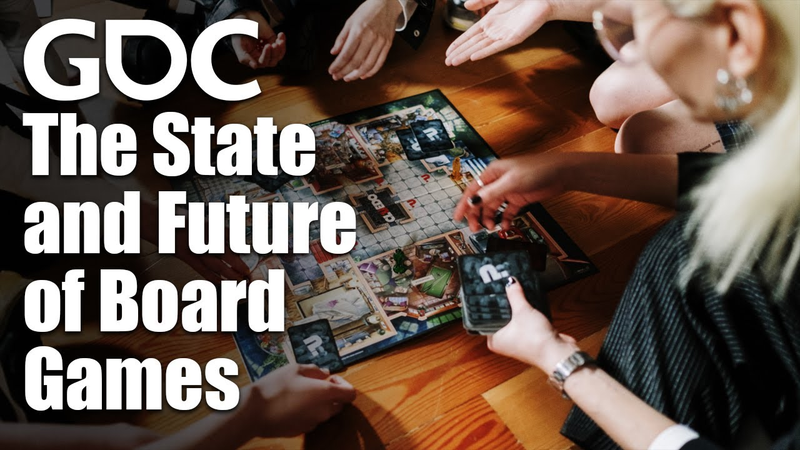
The State and Future of Board Games 2023
The tabletop gaming industry is currently undergoing a fundamental transformation, shifting from a model of static product sales toward a dynamic, service-oriented ecosystem.
- Designers are increasingly prioritizing ecological sustainability to reduce greenhouse gas emissions while simultaneously lowering production costs to combat a softening economy.
- Rapid prototyping tools like Tabletop Simulator have become essential for hybrid development, allowing designers to iterate quickly despite the limitations of digital physical interaction.
- Game designers are leveraging community-driven platforms like Discord to treat games as evolving, collaborative projects rather than static products, often supporting players with alternative gameplay modes instead of traditional expansions.

The Tabletop Renaissance
The tabletop gaming industry is currently experiencing a significant renaissance, driven by a widespread consumer shift away from digital fatigue toward the tangible, social rewards of in-person play.
- Tabletop gaming is experiencing a renaissance driven by a consumer shift away from digital fatigue toward the tangible, social rewards of in-person play.
- Tabletop studios are becoming prime acquisition targets for entertainment conglomerates due to their high-margin, evergreen business models that avoid the costly live-ops infrastructure required by video games.
- The industry prioritizes high-quality physical production and unboxing experiences to create a competitive moat against the ephemeral nature of digital entertainment.