1 free read left. Create a free account for unlimited reading + AI research.
Create free accountWhitepaper International Journal of Serious Games
1 free read left. Create a free account for unlimited reading + AI research.
Create free accountWhitepaperInternational Journal of Serious Games
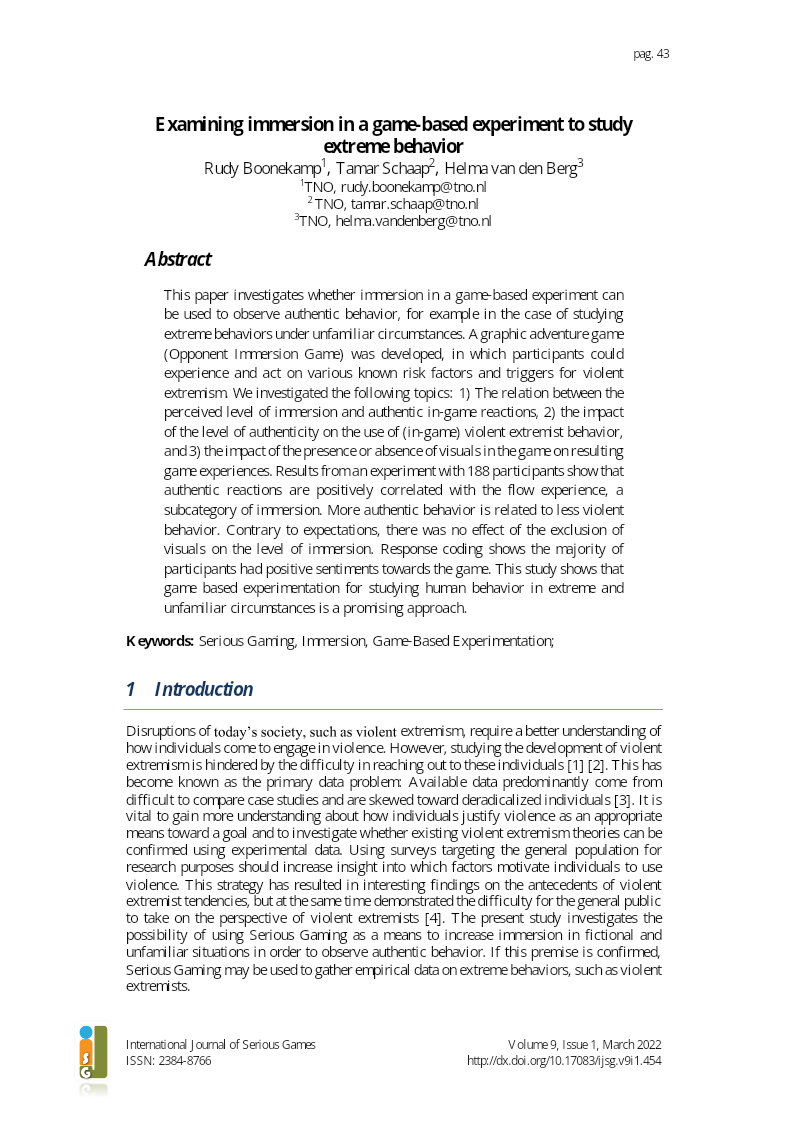
Serious games function as transformative instruments within spatial planning, bridging the divide between technical expertise and civic participation. By utilizing interactive simulations, these tools foster collaborative learning, empathy, and a nuanced understanding of complex urban systems. The primary thesis posits that while serious games offer a unique environment for experimentation and stakeholder engagement, their efficacy is contingent upon rigorous design, skilled facilitation, and a precise balance between engaging gameplay and realistic simulation.
Despite their potential, the integration of these games into professional planning practices faces significant hurdles. Practitioners often express skepticism regarding the legitimacy and unpredictability of gamified processes, which are further complicated by high development costs and the risk of oversimplification. Current methodologies, including the MDA, DPE, and PLEX/CIVIC frameworks, attempt to address these challenges by aligning game mechanics with specific learning outcomes and civic empowerment goals. However, the absence of standardized evaluation metrics remains a barrier to widespread adoption across the industry.
To maximize impact, planners must adopt iterative, codesign-based frameworks that prioritize continuous playtesting and clear objective setting. Serious games are not a universal solution for urban challenges; rather, they require a strategic assessment of resources and specialized design knowledge to ensure meaningful outcomes. Future progress in this field depends on the development of robust assessment tools and the systematic evaluation of existing applications to ensure that these digital environments serve as reliable, evidence-based supports for modern urban development and participatory decision-making.
International Journal of Serious Games · 2026
International Journal of Serious Games · 2026
International Journal of Serious Games · 2026
International Journal of Serious Games · 2026
International Journal of Serious Games · 2026
International Journal of Serious Games · 2026
International Journal of Serious Games · 2026
International Journal of Serious Games · 2025
International Journal of Serious Games · 2025
International Journal of Serious Games · 2025
Serious Games Society · 2025
International Journal of Serious Games · 2025
Serious Games Society · 2026