Game Studies reports and market data
Documents
Embodied and Enactive Imagination in VR
Journal of the Philosophy of Games (2024) 1 https://doi.org/10.5617/jpg.10633 Published online: 30.
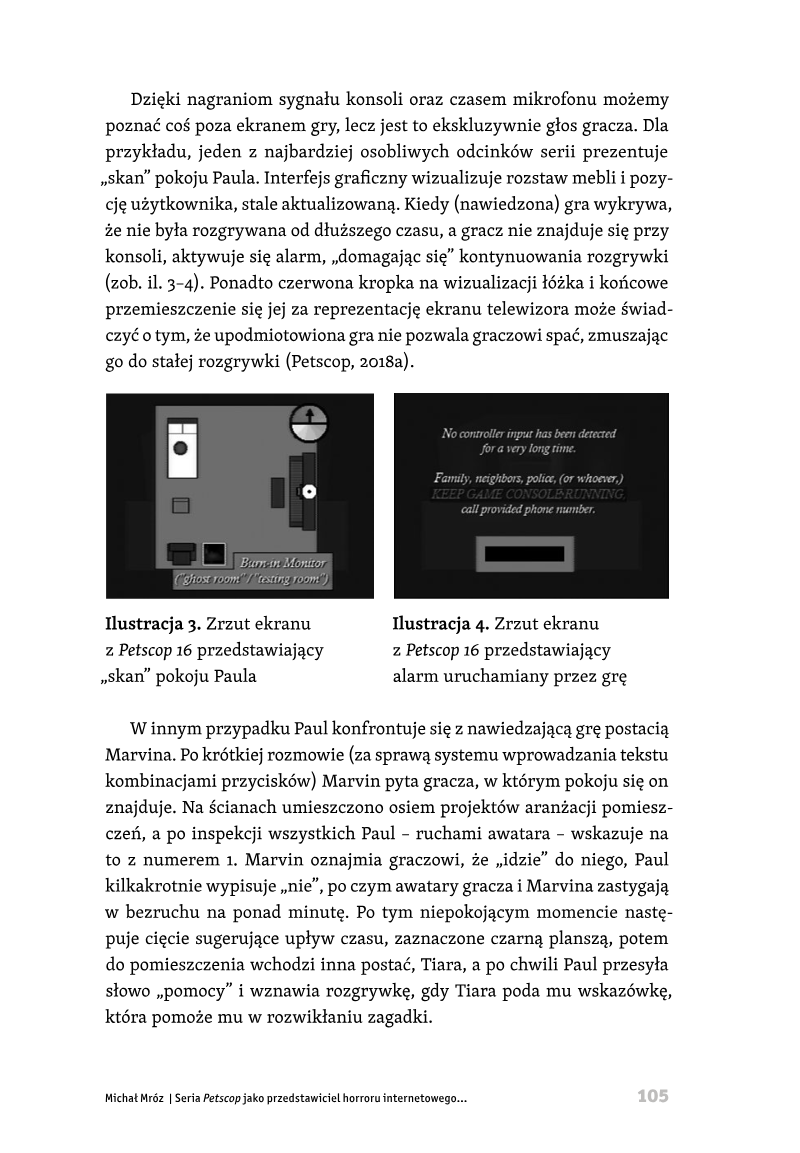
Web Series Petscop as an Example of Internet Horror: New Means of Narrative Expression
Michał Mróz's article in Homo Ludens (2024) examines Petscop, a multi-part YouTube web series that imitates let's play gameplay videos with player commentary while being a fully scripted fictional narrative.
- Michał Mróz's 2024 Homo Ludens article argues that Petscop, a fully scripted YouTube web series imitating let's play videos, is a narratively complex example of internet horror whose effect depends on video-platform conventions, documentary styling, and decentralized distribution.
- The series builds an illusion of authenticity through PlayStation-era visuals, a fictional studio, and a family-run channel, then disrupts it with "deviation points" such as the hidden-level entrance in the first episode.
- Its horror draws on subverted 1990s nostalgia, particularly Pokémon-style mechanics and console aesthetics, using silence, ambiguous character design, and the uncanny (das Unheimliche).
An Analysis of Poetic and the Evolution of the Subgenre of Soulslike Games
The analysis examines the soulslike subgenre of action role-playing games, tracing its development over more than a decade from its origin in Demon's Souls (2009) and its principal reference point, Dark Souls (2011).
- The soulslike subgenre originated with Demon's Souls (2009) and was shaped by Dark Souls (2011), and the study traces its development over more than a decade.
- The analysis uses Wittgenstein's family-resemblance model and Chandler's prototype model to treat soulslike games as a loosely connected group sharing core traits rather than a rigidly defined category.
- The subgenre's core poetics combine a punishing dark medieval-folklore aesthetic, demanding third-person combat, checkpoint and failure mechanics, and oblique narrative exposition.
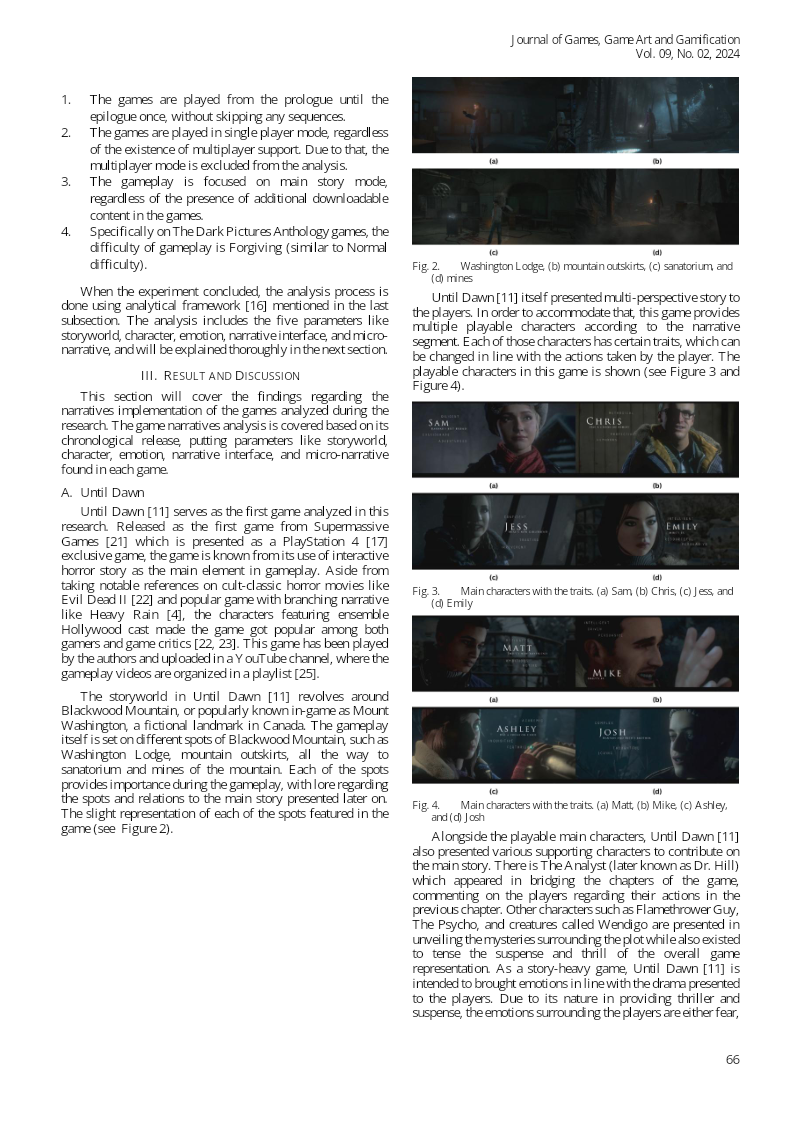
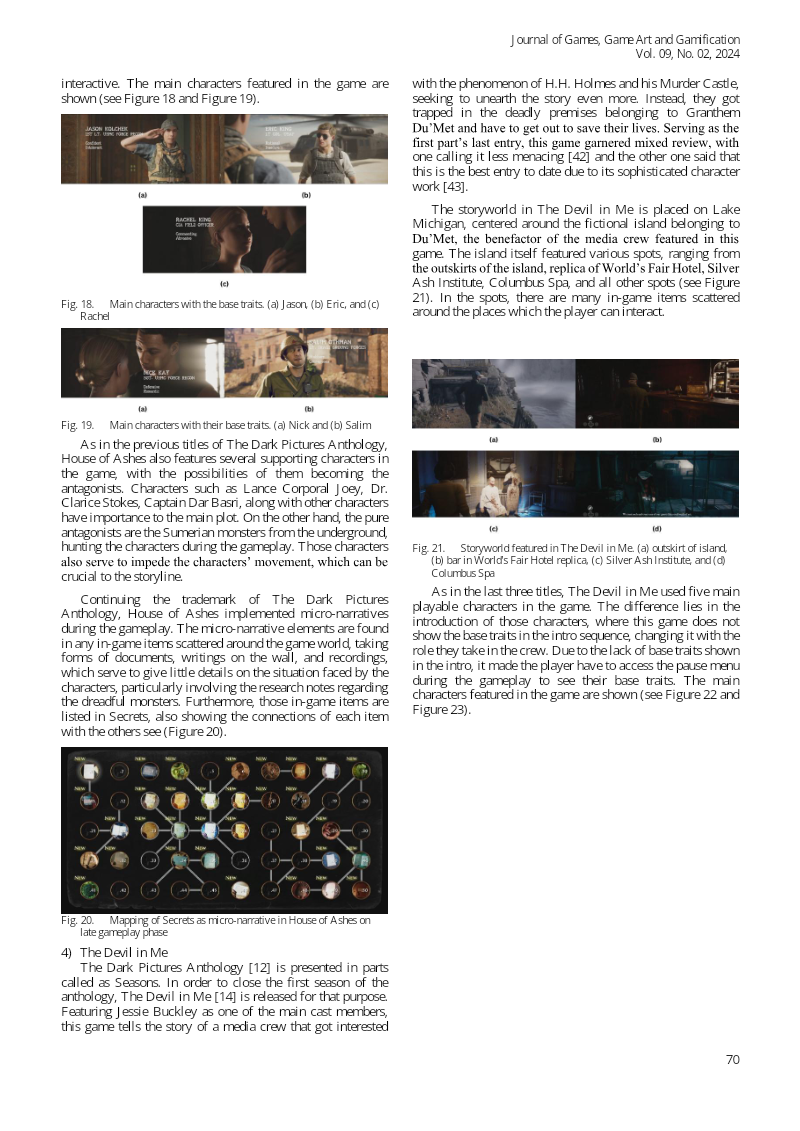
Interactive Horror Story and the Narratives Implementation: Case Study on Supermassive Games
Supermassive Games has established a definitive blueprint for interactive horror by integrating branching narratives with complex emotional triggers.
- Supermassive Games maintains a consistent structural blueprint for interactive horror by balancing player agency with cinematic tension across titles like Until Dawn, The Dark Pictures Anthology, and The Quarry.
- The studio’s narrative efficacy relies on the interplay between environmental micro-narratives and high-stakes decision-making to elicit player fear and curiosity.
- The Dark Pictures Anthology utilizes a recurring narrator and a fixed set of playable characters to provide a stable foundation for diverse thematic exploration within the horror genre.

Gamevironments Revisited: 10th Anniversary Issue
Ford's work, building on Radde-Antweiler's revised gamevironments concept, examines how digital games and datafication reshape community.
- Networks revealed by gamevironments, linking human and nonhuman actants such as data, hardware, and distant cobalt miners, are not necessarily experienced as connections or communities, so affordances of digital infrastructure determine which relationships people actually feel.
- Drawing on Benedict Anderson's 'imagined community,' the analysis argues that some communities must remain unimagined to sustain exploitative or unsustainable systems.
- Datafication produces alienation by abstracting digital subjects from real people, and networked technologies can isolate users even as they connect them, with internet connectivity coinciding with rising loneliness, though the effect depends heavily on how platforms are used.
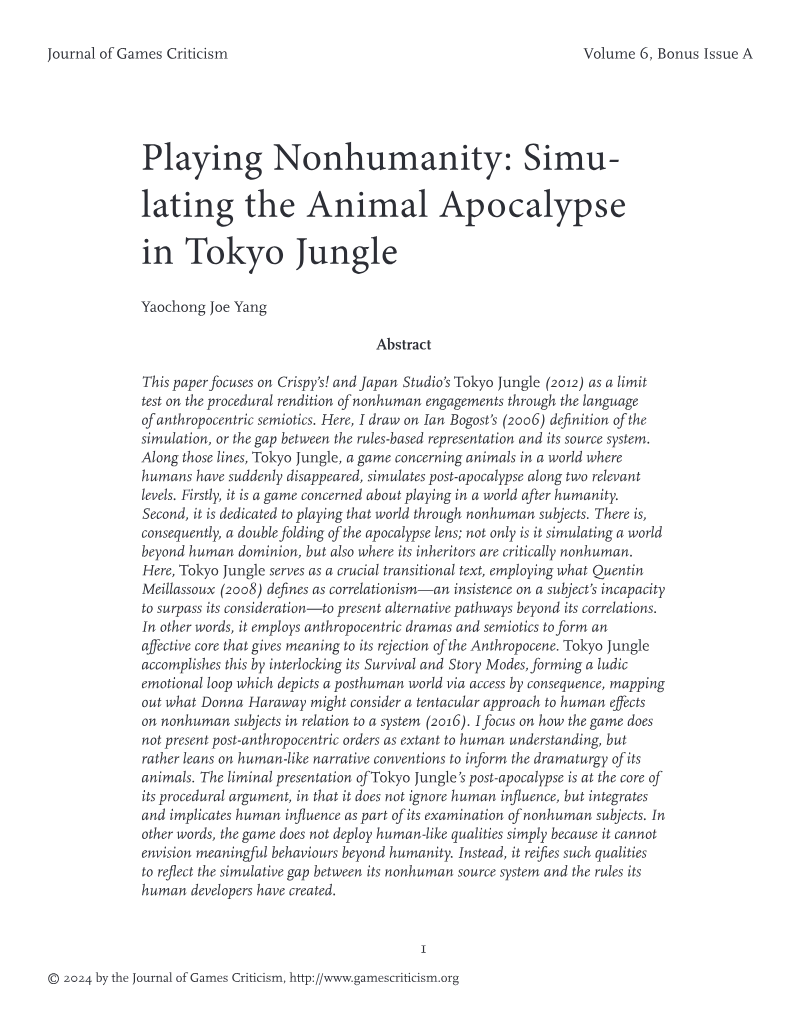
Playing Nonhumanity: Simulating the Animal Apocalypse in Tokyo Jungle
Tokyo Jungle functions as a critical exploration of post-humanity, utilizing the simulation of a post-apocalyptic urban environment to challenge anthropocentric perspectives.
- Tokyo Jungle frames the post-apocalyptic world not as a clean break from humanity, but as a space where human-influenced structures and physical ruins continue to dictate the survival logic of animal successors.
- The game utilizes a dual-mode structure—Survival Mode and Story Mode—to contrast the harsh, systemic realities of animal existence with anthropomorphic narratives that project human concepts like hierarchy and honor onto nonhuman subjects.
- The use of human-centric narrative conventions in Story Mode serves as a deliberate meta-critique, highlighting the inherent gap between human-designed systems and the reality of nonhuman subjectivity.
Gamification of a College Course: A Case Study
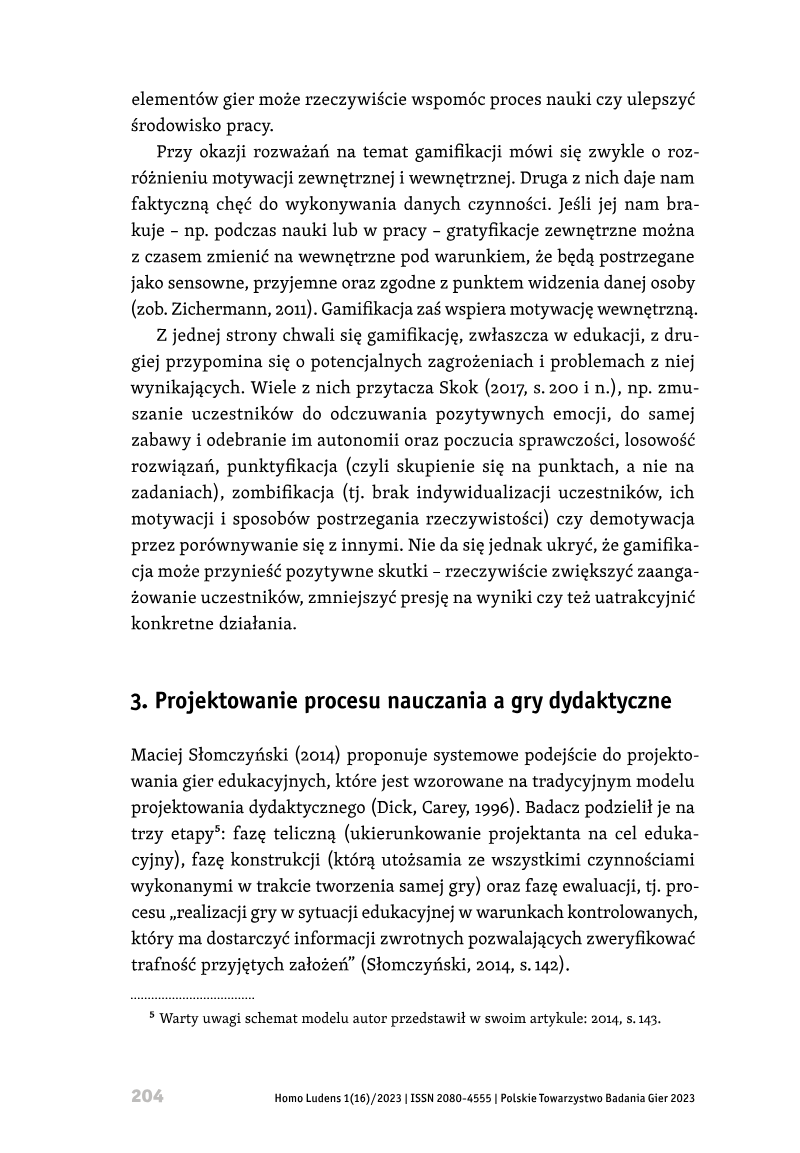
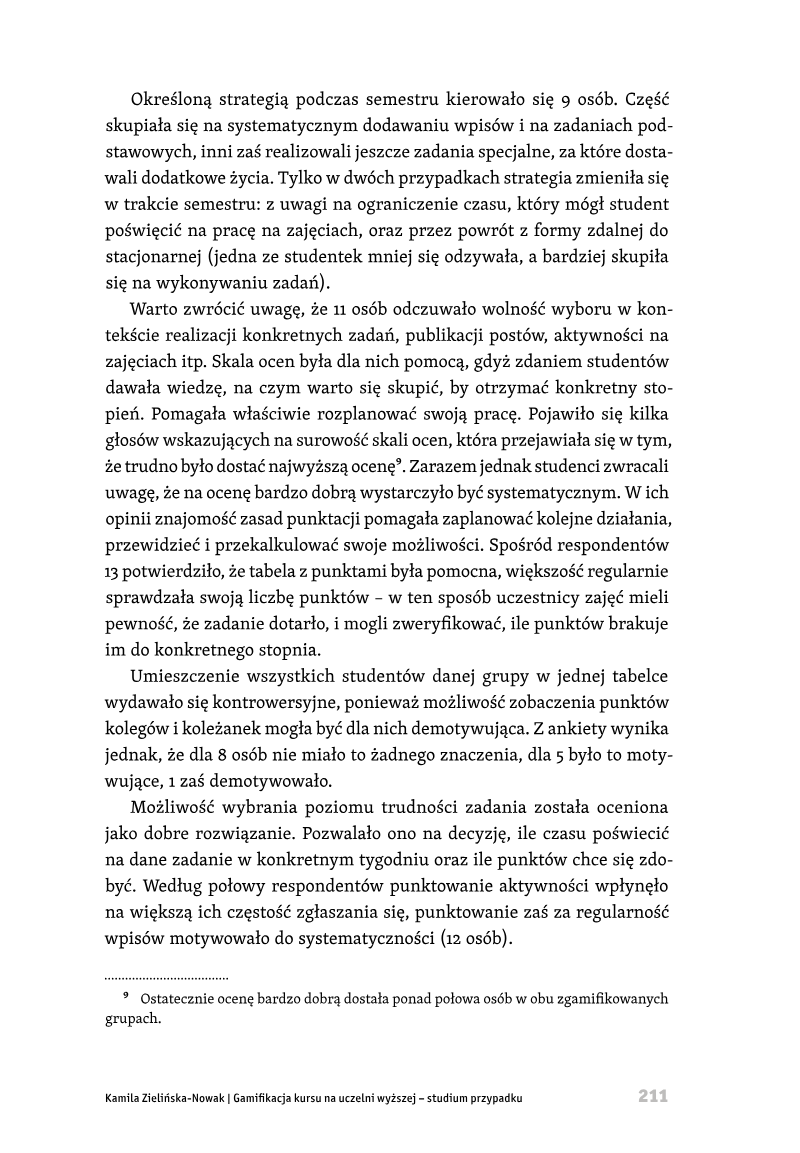
A 2021/2022 case study conducted at the University of Wrocław examines whether gamification can improve student engagement in a university course on internet texts.
- Gamifying a University of Wrocław internet-texts course (2021/2022) changed how students interacted and were assessed, but not the course content or intended learning outcomes.
- Students in the two gamified groups submitted 19 and 22 special tasks versus 9 in the traditional control group, though the authors caution that pre-existing student predispositions may explain part of this gap.
- Of the 14 students who answered the post-semester survey, half said they did not regret the gamified format, citing higher motivation, transparent assessment, and greater learning autonomy.
Ludonarrative Dissonance and Metanarrative Dissonance: Case Studies of Selected Examples
Michał Figoń's article sets out to provide a coherent definition of ludonarrative dissonance, building on Clint Hocking's 2007 coinage, and to distinguish it from a new concept the author proposes, metanarrative dissonance.
- Ludonarrative dissonance describes a conflict between what a game's mechanics reward and what its story asks players to feel or believe, with BioShock's altruistic narrative clashing against its selfish, reward-driven combat as the foundational example.
- Metanarrative dissonance is proposed as a distinct concept in which a player's prior expectations, shaped by marketing promises, promotional material, or real-world knowledge of depicted locations, clash with what a game delivers, undermining immersion even when the internal logic is consistent.
- The article's central case study is CD Projekt RED's The Witcher adaptations, compared against Andrzej Sapkowski's novels, including altered characterizations of Triss Merigold and a redesigned gwint card minigame whose polished cards clash with the impoverished, war-torn economy of the source material.
A Case Study in Increasing Empathy towards Deaf People Using the Role-Playing Game Sign: Japan
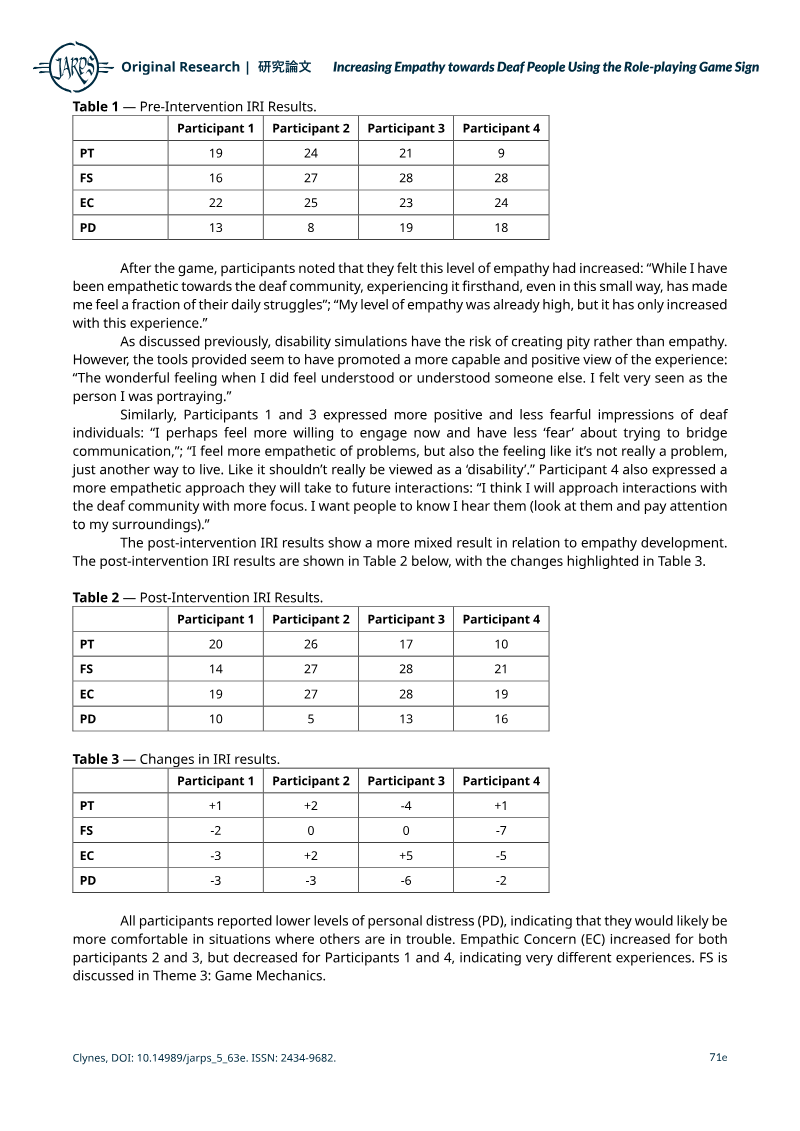
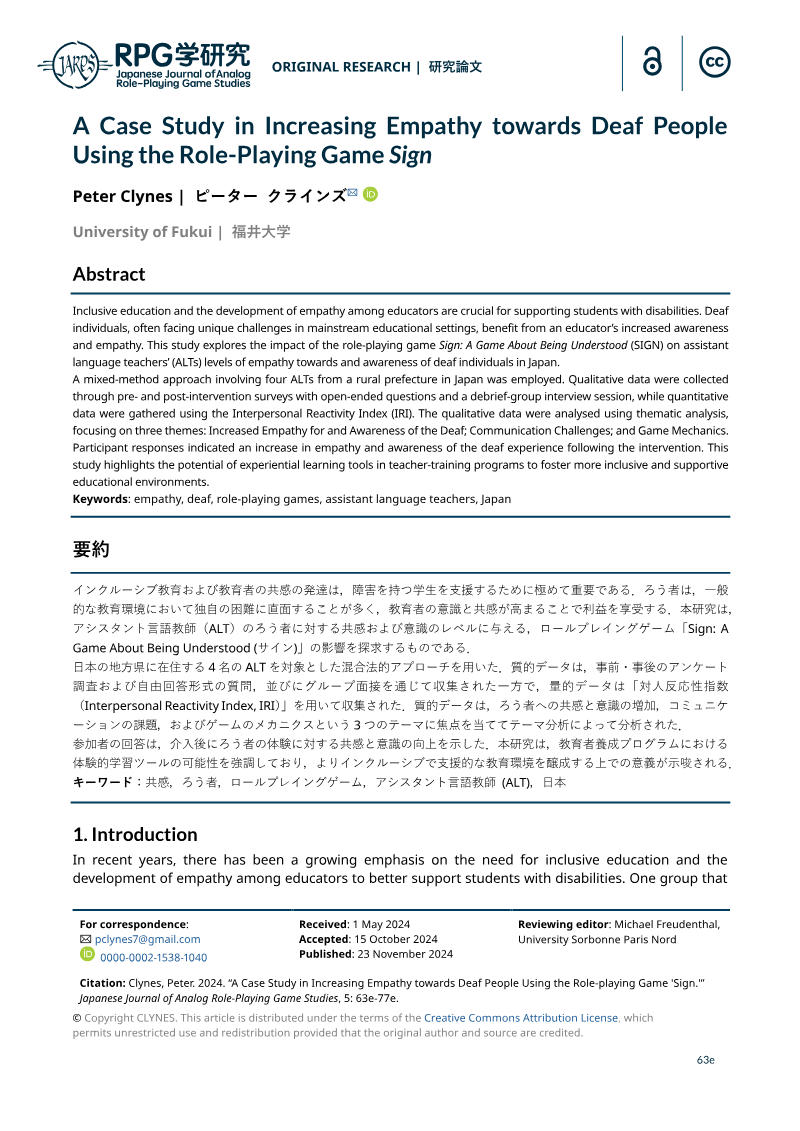
The role-playing game Sign serves as a potent pedagogical tool for fostering empathy and awareness toward the deaf experience among educators.
- The role-playing game Sign functions as an effective pedagogical tool for educators in Japan to build empathy and navigate the challenges of a hearing-centric environment.
- Gameplay shifts educator mindsets from feelings of pity or fear toward a more nuanced appreciation for visual communication and interaction mechanics.
- Structured debriefing sessions are essential to the efficacy of the game, as they allow participants to process the complexities of the simulated experience.
Enjoy the Silence: A Discussion Around Players' Experience and Emotional Accessibility in Alice is Missing
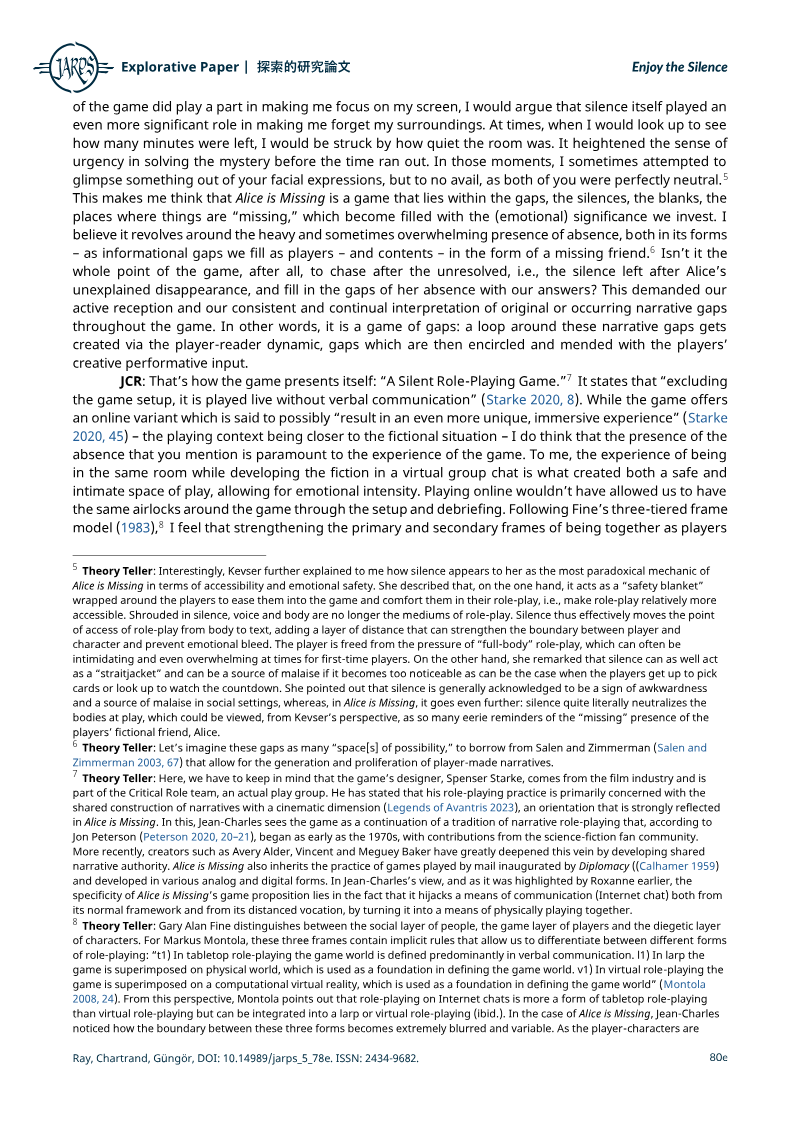
Alice is Missing redefines the tabletop role-playing experience by replacing traditional verbal interaction with silent, text-based communication.
- Replacing verbal interaction with text-based communication functions as both a narrative tool to heighten tension and a psychological safety mechanism that lowers the barrier to entry for diverse players.
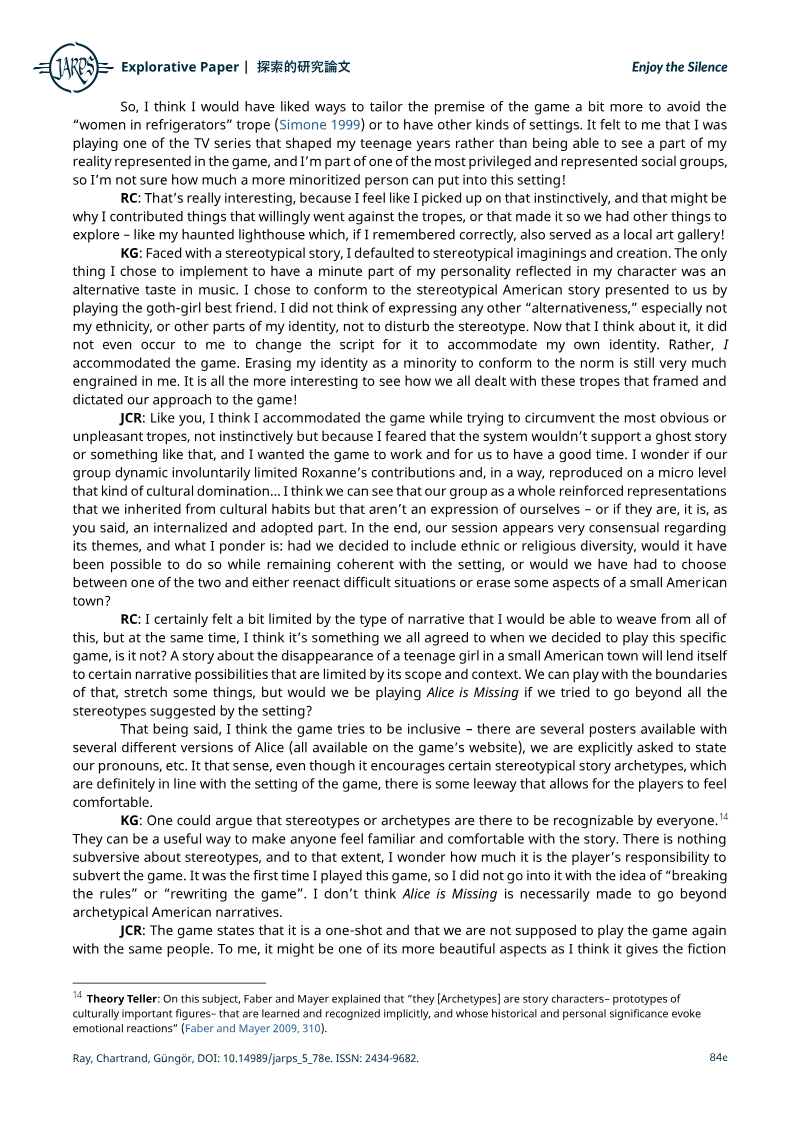
- The reliance on established narrative archetypes and card-based mechanics enables rapid player engagement but risks reinforcing culturally hegemonic norms that may limit the exploration of diverse identities.
- The game’s design creates a 'fruitful void' where the absence of spoken dialogue forces participants to co-create meaning through interpersonal performance and narrative gaps.
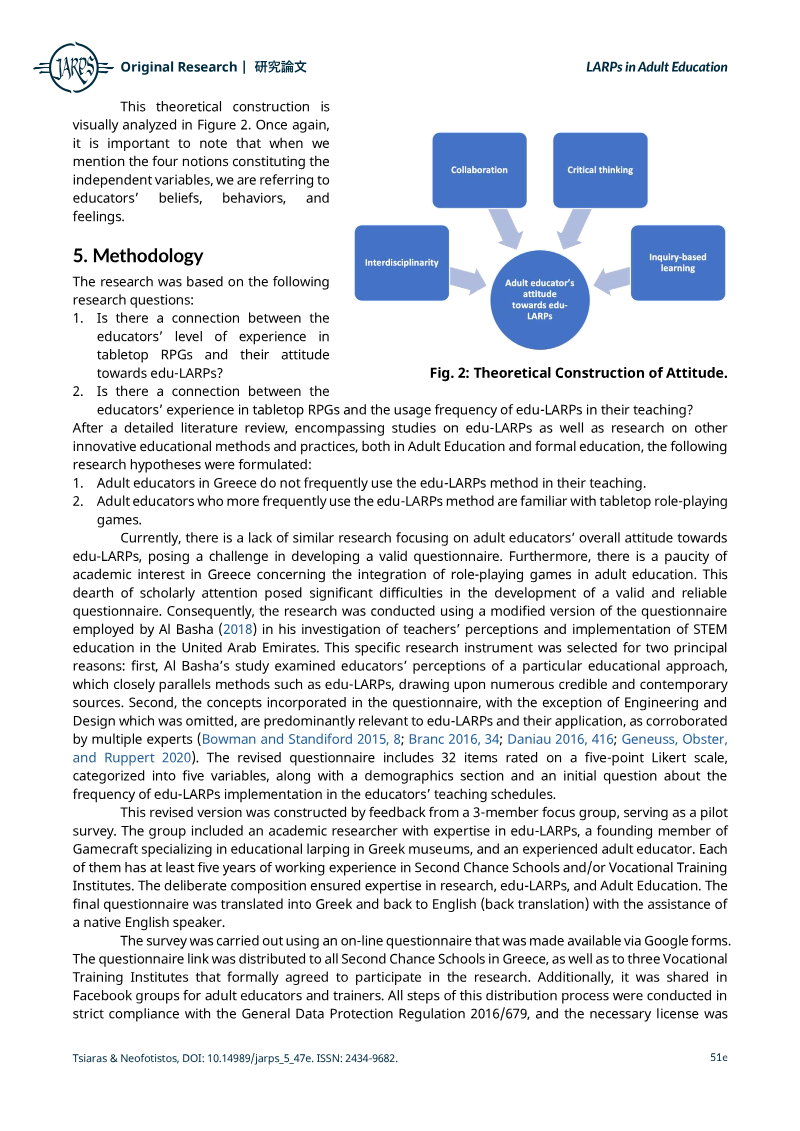
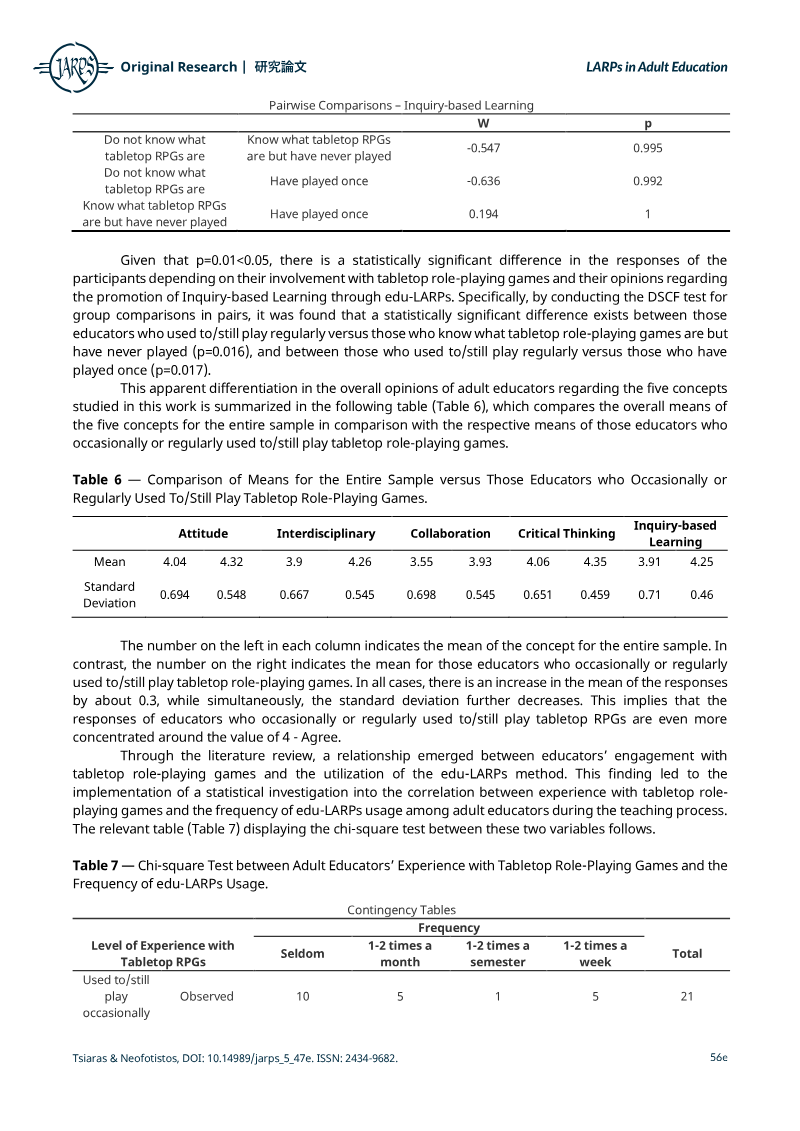
The Influence of Educators' Tabletop Role-Playing Games Familiarity on the Implementation of LARPs in Adult Education: Greece
Tabletop role-playing games serve as a foundational predictor for the adoption of educational live-action role-playing games within the Greek adult education sector.
- Prior experience with tabletop role-playing games is a primary predictor for the adoption of live-action role-playing (LARP) methodologies in Greek adult education.
- A survey of 113 Greek adult educators confirms a statistically significant correlation between analog gaming familiarity and the frequent implementation of experiential learning techniques.
- Educators with tabletop gaming backgrounds exhibit a more favorable perception of game-based learning and possess the confidence required to facilitate complex, inquiry-based live-action simulations.


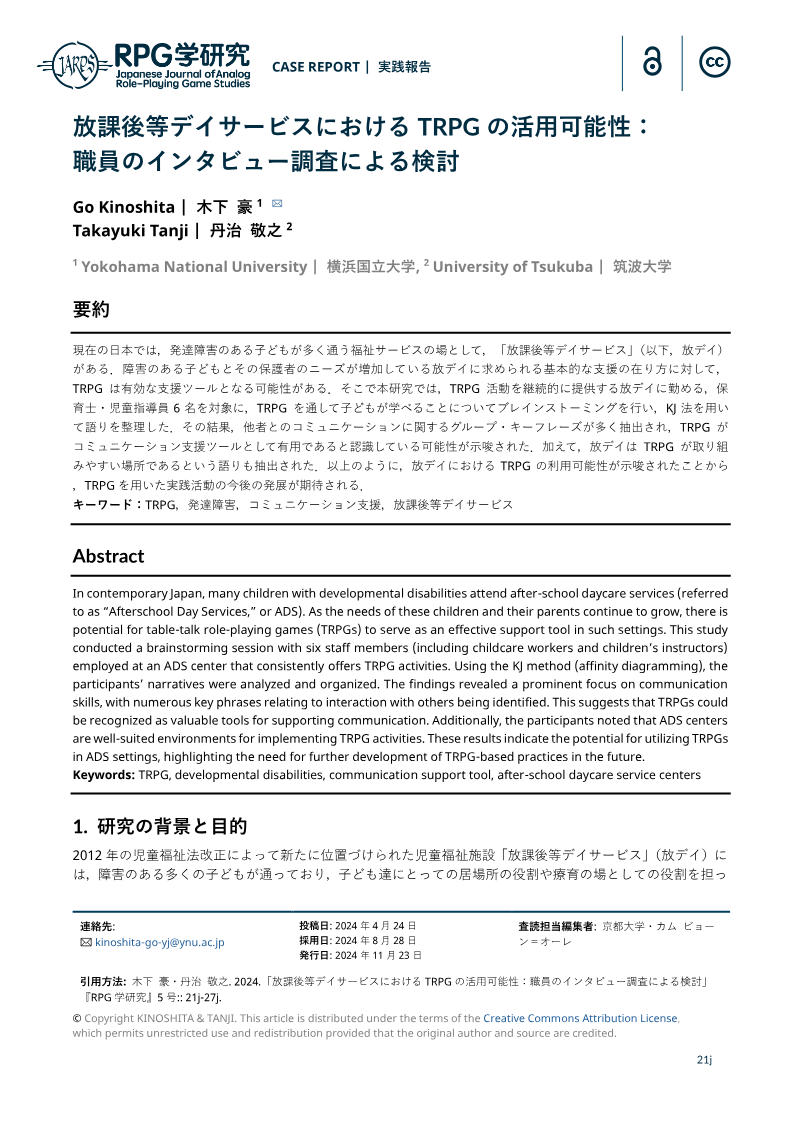
Possibility of Utilizing TRPG in After-School Daycare Services: An Interview Study of Staff
This study examines the potential of table-talk role-playing games (TRPGs) as a therapeutic and educational tool within Japanese after-school daycare services (ADS) for children with developmental disabilities.
- TRPGs serve as an effective therapeutic and educational framework for developing communication, cooperation, decision-making, social skills, resilience, academic basics, and imagination in children with developmental disabilities.
- Staff at after-school daycare services report that TRPGs provide a safe, virtual environment where children can practice social roles, manage stress, and exercise personal agency.
- The study identified seven core developmental benefits of TRPG integration: communication, cooperation, decision-making, social skills, resilience, literacy/numeracy, and imagination.