1 free read left. Create a free account for unlimited reading + AI research.
Create free accountWhitepaper Jagiellonian University
1 free read left. Create a free account for unlimited reading + AI research.
Create free accountWhitepaperJagiellonian University
It describes a conflict between what a game's mechanics reward and what its story asks players to feel or believe. BioShock's altruistic narrative against its selfish, reward-driven combat is the foundational example.
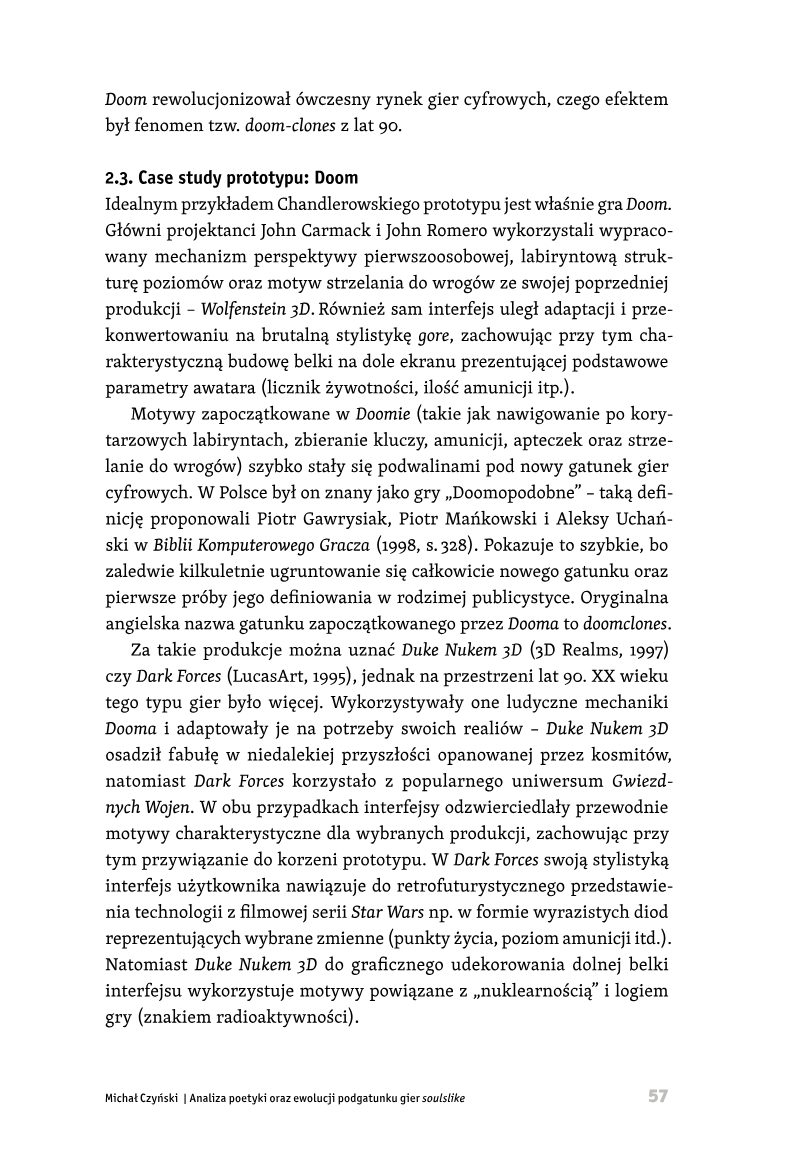
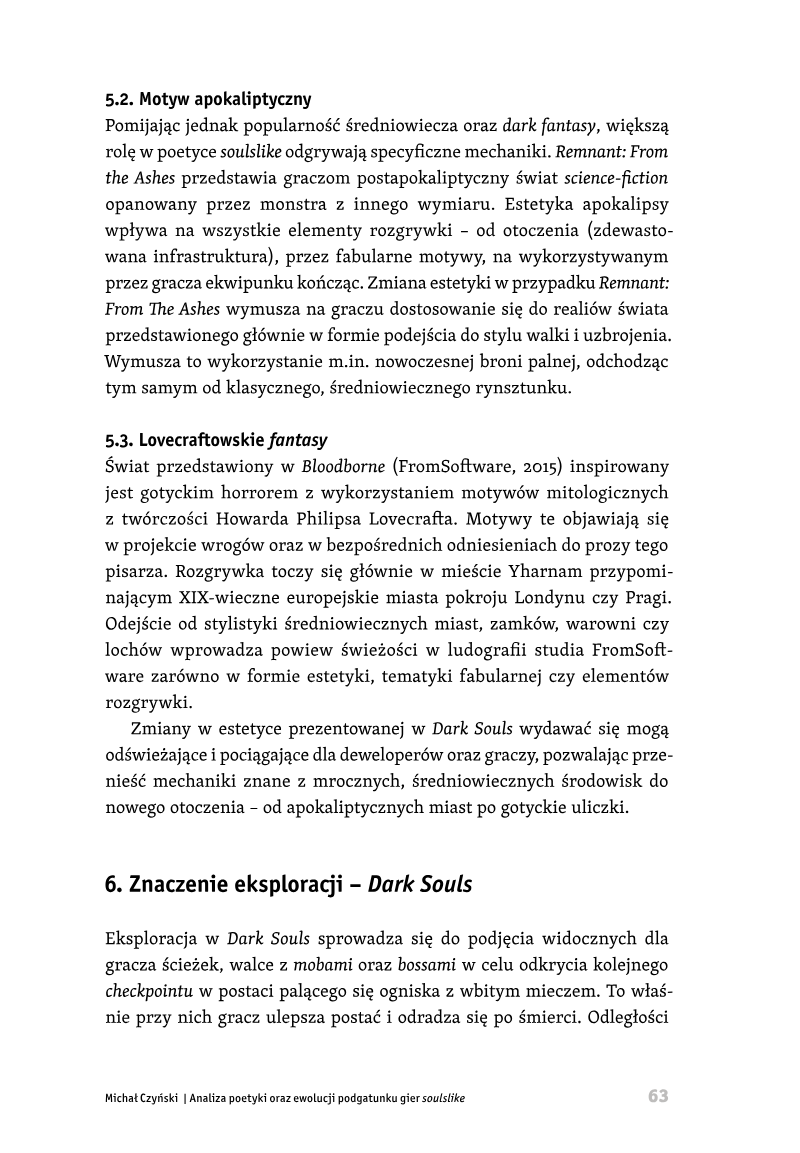
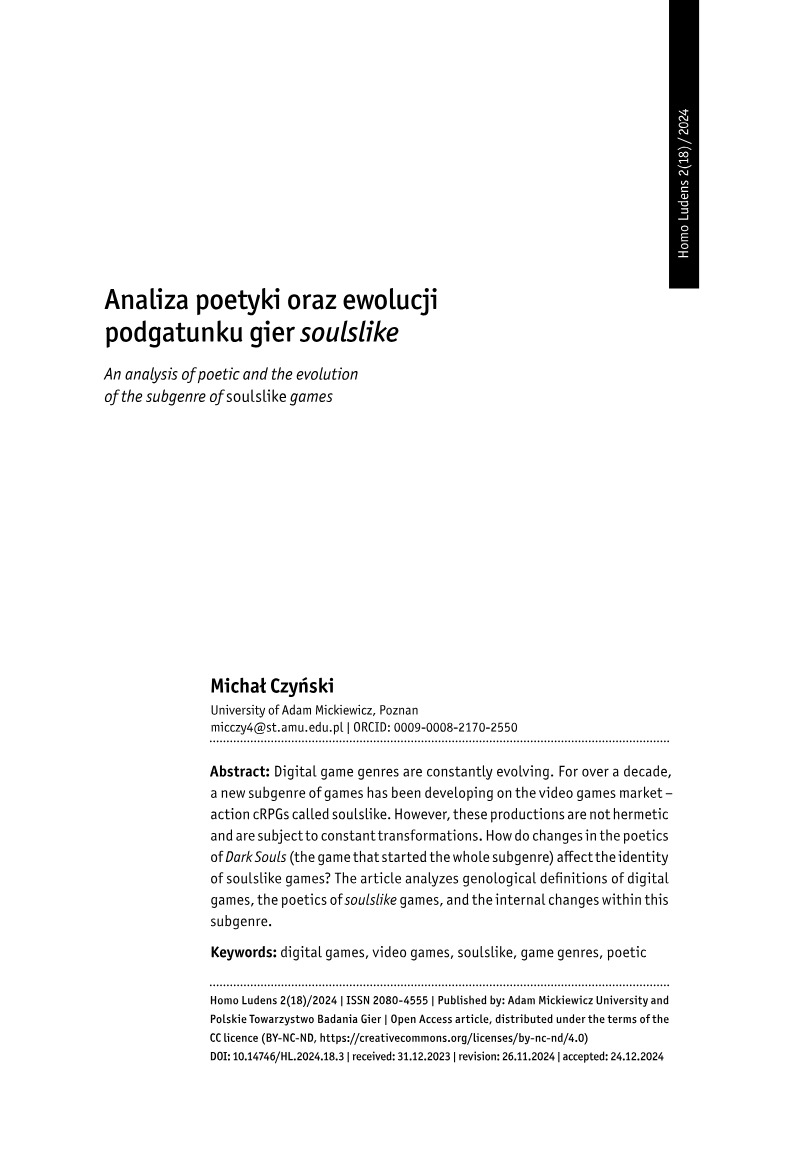
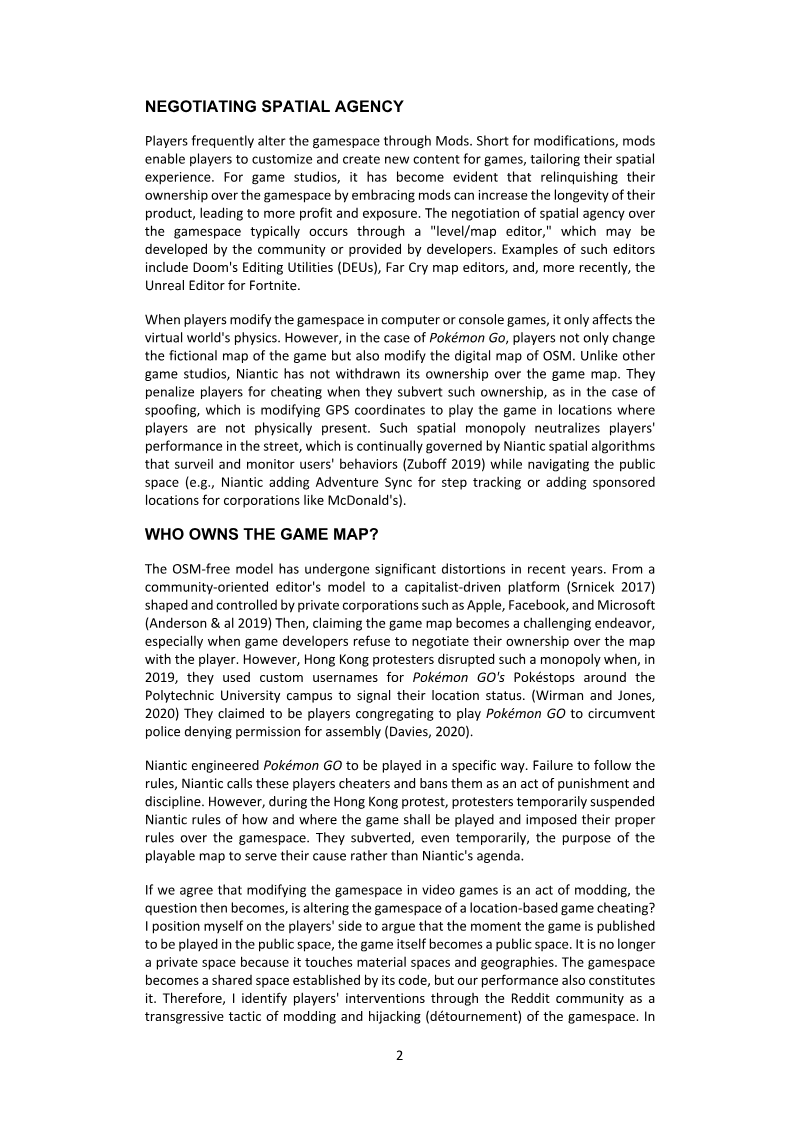
Michał Figoń's article sets out to provide a coherent definition of ludonarrative dissonance, building on Clint Hocking's 2007 coinage, and to distinguish it from a new concept the author proposes, metanarrative dissonance. Ludonarrative dissonance describes a conflict between what a game's mechanics reward and what its story asks the player to feel or believe, with the altruistic narrative of BioShock opposed to its selfish, reward-driven combat serving as the foundational example. The author extends this framework through the notions of the ludic contract and narrative contract, and reviews subsequent refinements, including the idea of ludonarrative harmony, as a way of assessing how well a game's systems and story cohere.
Metanarrative dissonance is presented as a distinct phenomenon arising when a player's prior expectations clash with what a game delivers. These expectations may be created by marketing promises, by a title's promotional material, or by a player's real-world knowledge of the locations a game depicts. Examples drawn from Spider-Man, Resident Evil, and Cyberpunk 2077 illustrate how such gaps can undermine immersion even when the game's internal logic is consistent. The article's central case studies, however, emerge most clearly in its treatment of The Witcher series, where the author compares CD Projekt RED's adaptations with Andrzej Sapkowski's novels, from altered characterizations of Triss Merigold to the redesign of the gwint card minigame, whose polished, high-quality cards clash with the crude, impoverished, war-torn economy the source material describes.
Across its analyses, which include The Last of Us, Cyberpunk 2077, and roughly two dozen further titles such as Red Dead Redemption 2 and Heavy Rain, the article concludes that greater player freedom tends to heighten the risk of ludonarrative dissonance across genres. Its scope is primarily contemporary, focused on major console and PC releases from the late 2000s onward, and its intended contribution is a defined conceptual vocabulary that can anchor further research into how narrative intent and interactive design align or diverge.
 Cyberpunk 2077Game · CD Projekt RED · 2020 · 311 documents
 The WitcherGame · CD Projekt RED · 2007 · 264 documents
 Red Dead RedemptionGame · Rockstar North · 2010 · 159 documents
 CD ProjektCompany · Poland · founded 1994 · 137 documents
 Red Dead Redemption 2Game · Rockstar Games · 2018 · 108 documents
 BioShockGame · 2K Boston · 2007 · 83 documents
 CD Projekt REDCompany · Poland · founded 2002 · 64 documents
 Heavy RainGame · Quantic Dream · 2010 · 13 documents
Each row is a game or company this document names, each column a document, oldest first. A mark means that document names it. Select a row to see those documents.
Jagiellonian University · 2023
DiGRA · 2026