The analysis examines the soulslike subgenre of action role-playing games, tracing its development over more than a decade from its origin in Demon's Souls (2009) and its principal reference point, Dark Souls (2011). Its central aim is to understand how the subgenre's poetics have shifted while retaining a recognizable identity. The study frames this question through two genre-theory approaches, Wittgenstein's family-resemblance model and Chandler's prototype model, which allow soulslike games to be understood as a loosely connected group of works sharing core traits rather than as a rigidly defined category. Doom and its clones serve as a comparative case for illustrating how such genres form and evolve.
At the core of the subgenre's poetics is a punishing, dark medieval-folklore aesthetic built on demanding third-person combat, checkpoint and failure mechanics, and oblique narrative exposition. Dark Souls blends medieval European imagery with horror and moral ambiguity, and its structural conventions, including exploration-driven design, indirect storytelling, and death as a resource, form the subgenre's enduring foundation. The analysis contrasts these features with more direct narrative approaches, such as those in Star Wars Jedi: Fallen Order, and with variations like Sekiro's additional revival system.
The subgenre's evolution is charted across a range of titles that experiment with setting, perspective, and structure. Bloodborne introduces Lovecraftian and Victorian-era urban motifs, Remnant: From the Ashes adopts post-apocalyptic science fiction, and Elden Ring expands into an open-world model with fewer shortcuts. Perspective has also been varied, with 2D platformers such as Hollow Knight and Blasphemous and isometric titles such as Death's Door adapting the formula. Across these experiments, the study finds that the subgenre's aesthetics and mechanics change considerably while its shared structural features persist, which the analysis identifies as the source of its sustained popularity.
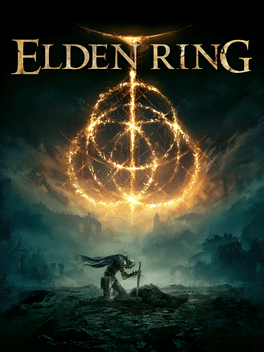 Elden RingGame · FromSoftware · 2022 · 271 documents
 Hollow KnightGame · Team Cherry · 2017 · 86 documents
 BloodborneGame · FromSoftware · 2015 · 25 documents
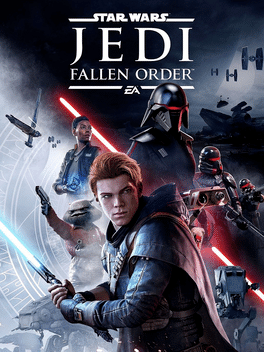 Star Wars Jedi: Fallen OrderGame · Respawn Entertainment · 2019 · 8 documents