Game Studies reports and market data
Documents
Neocolonialism in Video Games: The Social Discourse of Call of Duty 4: Modern Warfare (2007)
Call of Duty 4: Modern Warfare (2007) is examined here as a case study of neocolonial discourse in video games, with the central thesis that the game's Western-centric narrative reinforces militarism and legitimizes interventionist policy.
- The study argues that Call of Duty 4: Modern Warfare (2007) reinforces militarism and legitimizes interventionist policy through a Western-centric narrative, using postcolonial and neocolonial theory (including Edward Said's work) as its framework.
- The game is said to frame the United States as a global peacekeeper while portraying Middle Eastern and Russian factions as irrational, homogeneous "others," a binary structure the authors say recurs across contemporary military shooters.
- The analysis contextualizes the game's narrative against the 2003 Iraq War, arguing that its nuclear-attack storyline parallels the justifications offered for that war.
The Politics of Care: The Possibilities and Limits of Video Games for Political Campaign
This article examines two 2022 mobile games, Lugawan ni Leni and Let Leni Lead, released during the Philippine presidential campaign to support Leni Robredo's candidacy.
- The article introduces the category of "propagandistic advergames," arguing that political games sell a candidate the way commercial advergames sell products, drawing on Ian Bogost's concept of procedural rhetoric.
- Two 2022 mobile games supporting Leni Robredo's presidential campaign, Lugawan ni Leni and Let Leni Lead, express the "Robredo style" of politics, which combines public service performance with personal approachability.
- Lugawan ni Leni uses the lugaw (rice porridge), a humble campaign symbol, to frame serving others as inherently rewarding, while Let Leni Lead adapts the campaign's house-to-house volunteer strategy into an infinite-runner format.
Exploring Compatible Interaction Preferences with a Puzzle Video Game
This study examines whether pairing players with complementary interaction preferences improves teamwork in Alien Bar, a cooking puzzle game, arguing that task-directed preferences, modeled along Focus (self versus others) and Challenge (facilitate versus complicate), have been understudied relative to personality-based…
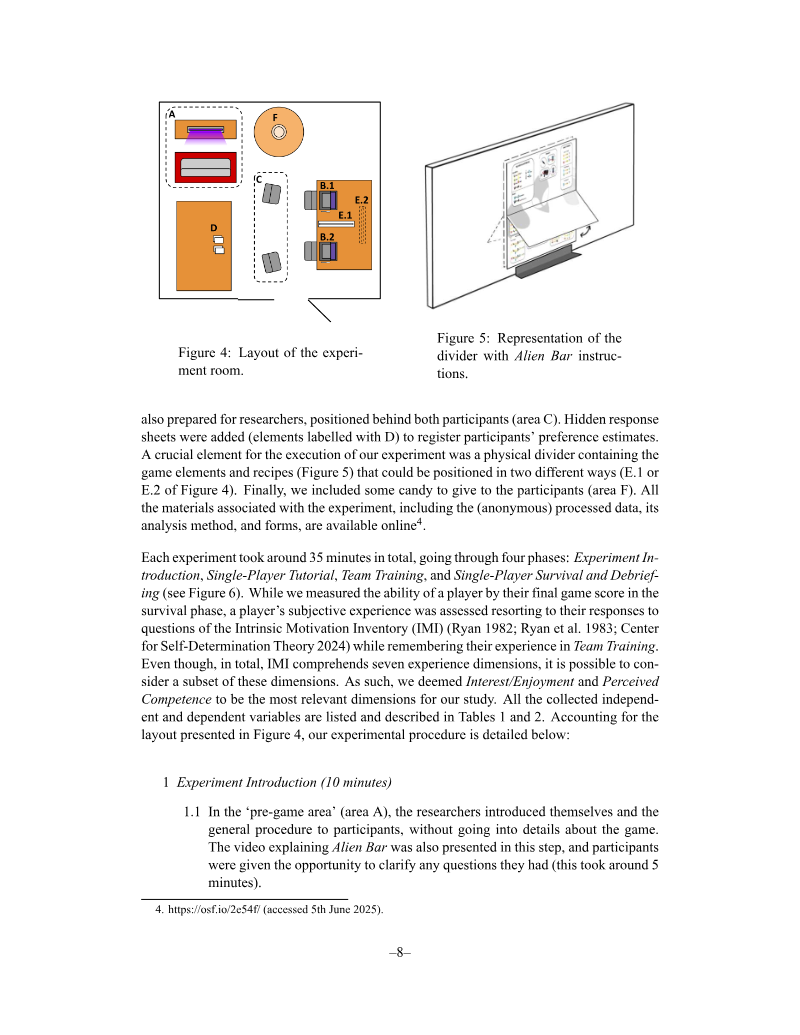
- Thirty-one pairs (62 participants) played Alien Bar, a cooking puzzle game, through a roughly 35-minute four-phase procedure, testing whether complementary task-directed interaction preferences improve teamwork.
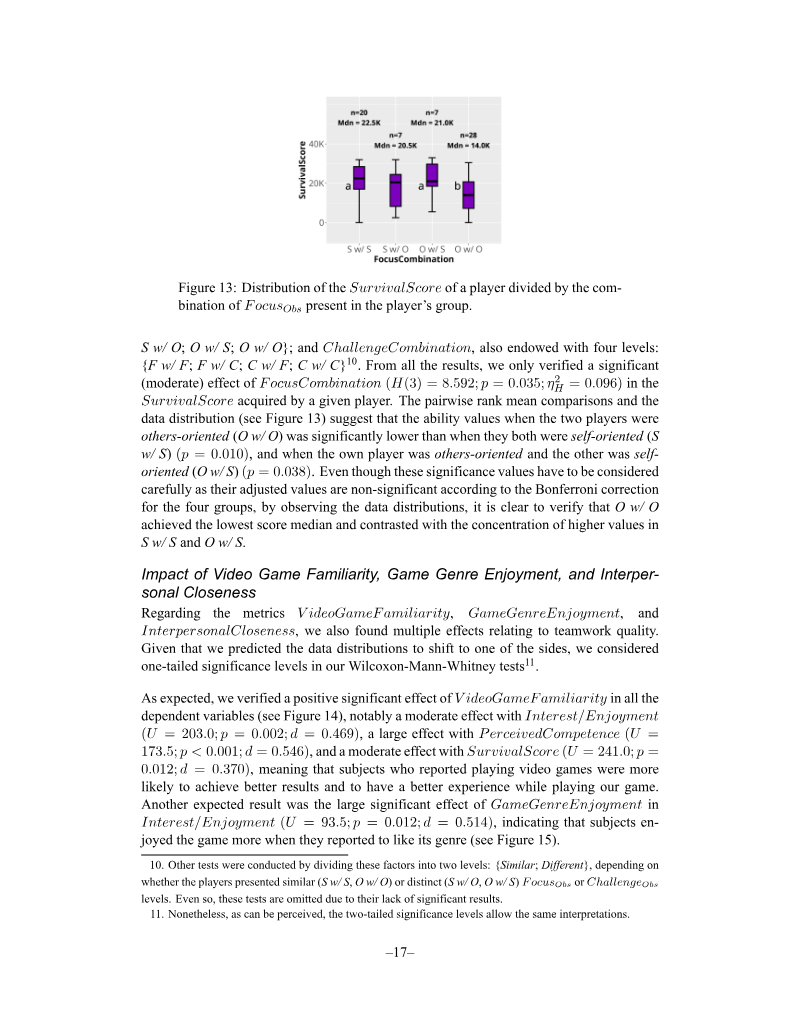
- Self-Challenger players achieved the strongest survival outcomes and helped their partners succeed, while Others-Facilitator players reported elevated perceived competence and Others-oriented pairings showed lower ability.
- Only one pairwise comparison, against Others-Facilitator partners, survived Bonferroni correction, so most of the preference effects should be treated as tentative.

Death at the Crossroads of Subjecthood in Happy Wheels
Happy Wheels (Fancy Force, 2010) is examined as a case study in how its death mechanics, built around ragdoll physics and cartoon gore, turn each character's demise into a deliberate visual spectacle.
- The analysis frames Happy Wheels (Fancy Force, 2010) death mechanics, built on ragdoll physics and cartoon gore, as deliberate visual spectacle, positioning digital corpses between subject and object.
- The paper reads the game's absence of a level-complete screen after death and its unlimited retries as design features that encourage repeated consumption of failure, which it calls "ludic pornography."
- Drawing on Agamben, Mbembe, and Butler, the work argues that bodies designed for destruction risk normalising the idea that some lives are expendable and unmournable.


Ludus Triumphorum: A Ludological Introduction to Tarot
Ludus Triumphorum argues that tarot originated as a ludic object rather than a divinatory one, emerging in central-northern Italy around 1410–1420 and serving primarily as a game for roughly four centuries before esoteric card-reading practices appeared during the Enlightenment.
- Tarot likely originated in central-northern Italy around 1410–1420 as a game rather than a divinatory tool, and served primarily as a pastime for roughly four centuries before esoteric card-reading emerged during the Enlightenment.
- The work frames the triumph sequence through game-studies theory (Roger Caillois, Brian Sutton-Smith), reading it as either regression or progression, with the central contrast being the anonymous Sermo perutilis de ludo's 'ladder to hell' reading versus Francesco Piscina's 1565 Discorso's view of the sequence as a constructive moral ascent.
- Sixteenth-century Italian sources show tarot as a contested social pastime, with preacher condemnations, Alberto Lollio's satirical 1550 Invettiva, and Vincenzo Imperiali's 1554 defense revealing divided opinion on its links to gambling, vice, and social identity.

Enhancing Children’s Insurance-Related Knowledge and Learning Attitudes Through Digital Game-Based Learning
Digital game-based learning serves as a highly effective pedagogical framework for introducing complex financial concepts, such as insurance and risk-sharing, to elementary-level students.
- Digital game-based learning using the role-playing game Knight Arthur outperforms traditional teaching methods in educating elementary students on complex financial concepts like insurance and risk management.
- The study, conducted with 58 sixth-grade students in Taiwan, demonstrates that interactive game mechanics significantly boost student motivation, self-efficacy, and engagement with financial literacy curricula.
- Female students and low-achieving learners experienced the most significant improvements in both knowledge acquisition and learning attitudes through the game-based approach.

D2.2 Workshop Report: Games, Heritage, Arts, & Sport
The GAMEHEARTS D2.2 Workshop Report sets out to strengthen the European video game industry ecosystem (EVGIE) within the broader creative and cultural industries.
- The European video game sector is valued at over €23 billion annually, and European player numbers grew from 222 million in 2019 to 246 million in 2023.
- Women make up only 22% of the European video game workforce (2020 figure), highlighting a persistent diversity gap across the industry.
- Stakeholders widely criticised grant systems as film-oriented, bureaucratic, and lacking game-specific expertise, and called for milestone-based payments, plain-language applications, and greater developer involvement.


Black Sun in the Land of Shadow: DLCs and Textual Depletion in Shadow of the Erdtree
Shadow of the Erdtree functions as a critical intervention in the structure of downloadable content, challenging the industry standard that expansions must necessarily extend or complete a base narrative.

A Thinly Veiled Formalist Temptation: A Critique
Antunes's critique examines Johan Huizinga's Homo Ludens (1938), which elevates "play" to a foundational element of culture.
- The critique argues that Johan Huizinga's Homo Ludens (1938) amounts to a "thinly veiled formalist temptation" by abstracting play into a metaphysical, universal essence and treating it as the foundation of civilization rather than analysing it historically.
- The author faults Huizinga for conflating "play" with formalized "game," importing rule-governed structure into all of cultural life.
- The critique identifies reliance on Platonic and theological interpretations, such as the notion that man is made God's plaything, as a weakness that displaces socio-cultural and historical analysis.


From Play to Prediction: Assessing Depression and Anxiety in Players Behavior with Machine Learning Models
Machine learning models offer a highly effective, non-intrusive method for identifying depression and anxiety by analyzing behavioral patterns within serious games.
- Machine learning models, specifically NuSVC and Gradient Boosting Machines, achieved 93.75% accuracy in identifying depression and anxiety through gameplay analysis.
- Gameplay-based assessment provides a non-intrusive, objective alternative to traditional self-reporting, which is often hindered by social stigma, respondent fatigue, and subjective bias.
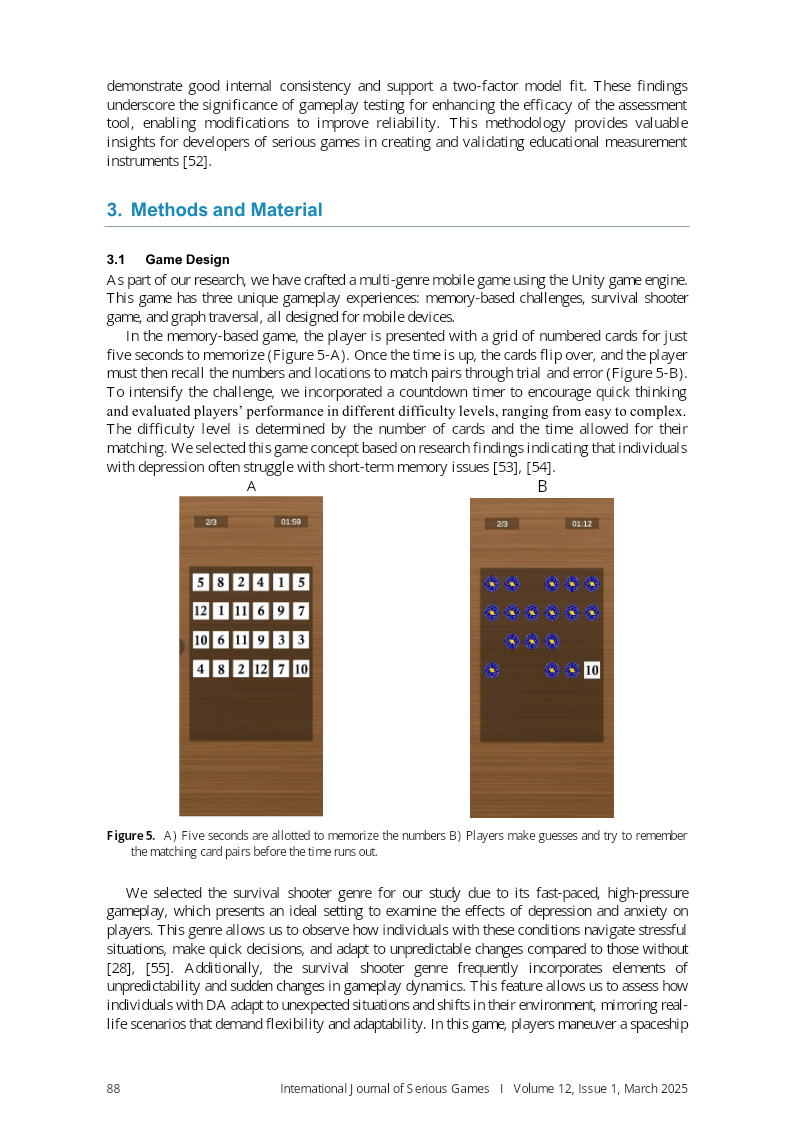
- Researchers identified approximately 127 distinct behavioral features from a custom mobile game suite involving memory, survival, and traversal challenges.
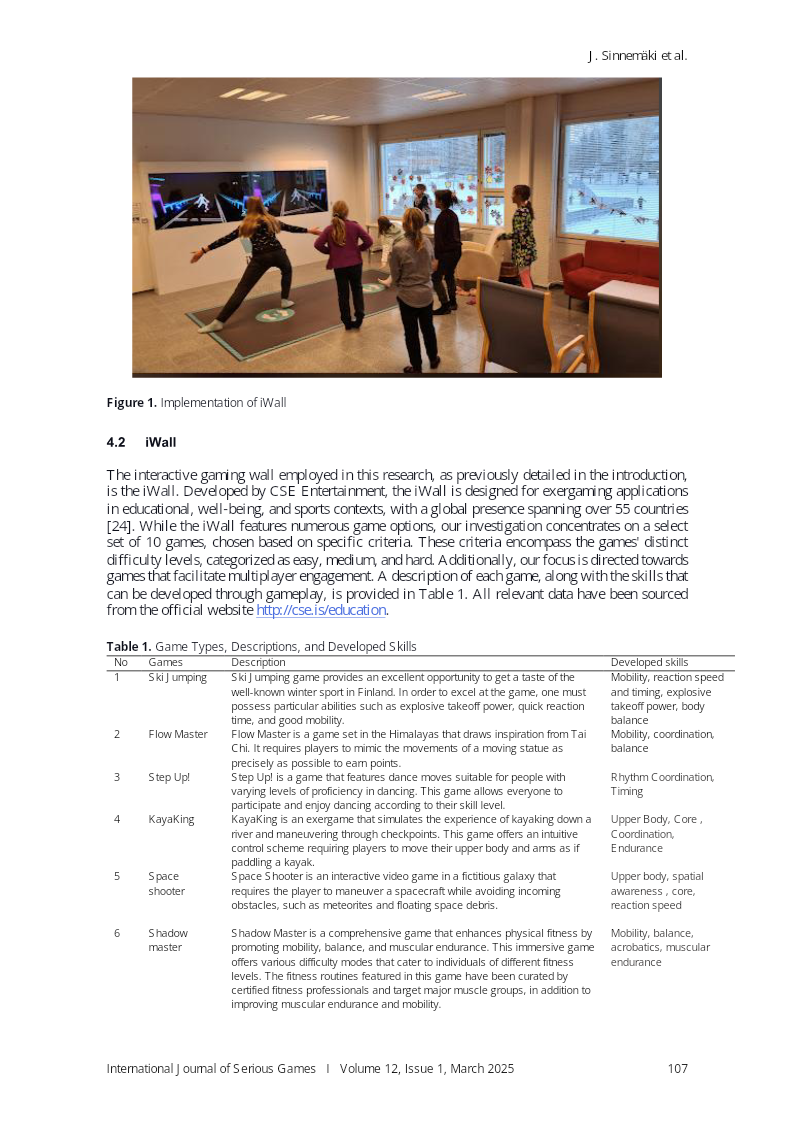


Exploring Educational Exergames in Well-being Education: A Study in a Finnish Primary School
The integration of interactive gaming systems into primary education serves as a critical mechanism for enhancing student well-being through physical activity.
- Multiplayer modes are the primary driver of sustained engagement in exergames, consistently outperforming solitary play in student preference.
- Analysis of 1,707 sessions using the iWall system confirms that collaborative play combined with medium-difficulty settings creates the most effective environment for student participation.
- Game mechanics that emphasize physical endurance and rhythmic coordination, such as parkour-style movement, result in significantly longer play durations.
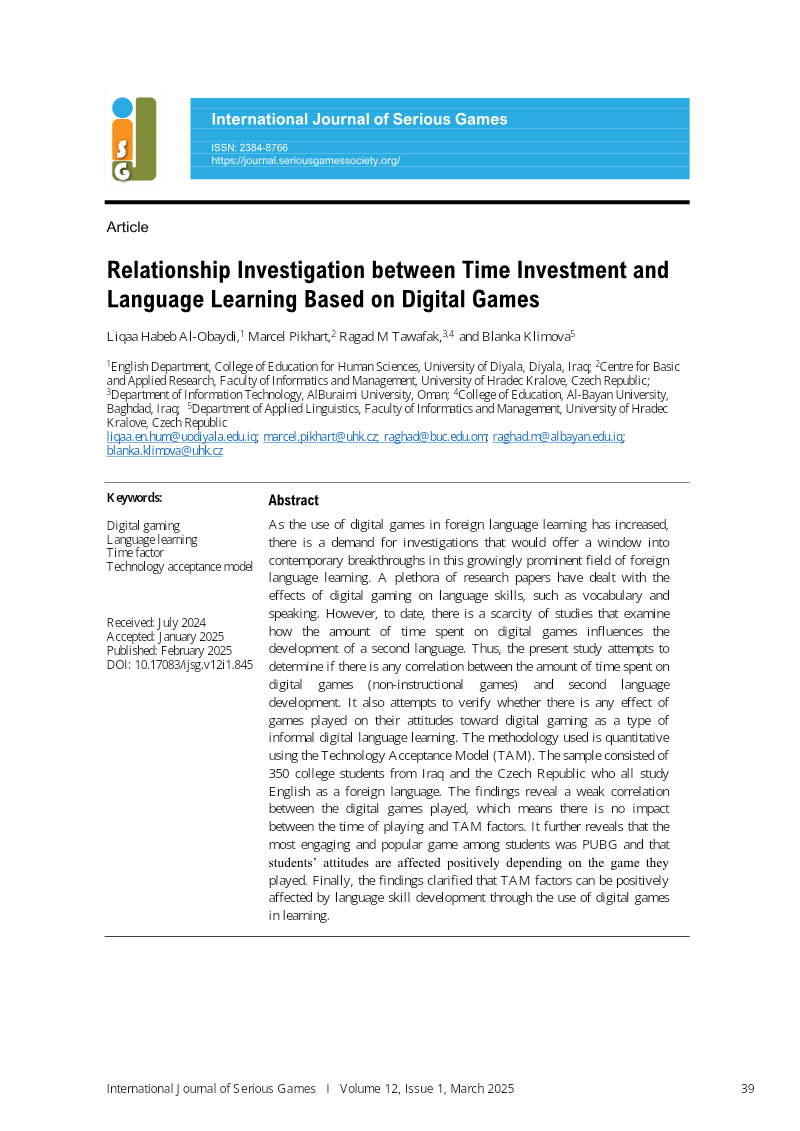
Relationship Investigation between Time Investment and Language Learning Based on Digital Games
Digital games serve as effective, informal tools for second language acquisition, though their educational value is determined by qualitative factors rather than the sheer duration of engagement.
- Total time spent gaming does not correlate significantly with second language acquisition, indicating that duration is a poor metric for measuring educational progress.
- The effectiveness of game-based learning is driven by qualitative factors, specifically the learner's perceived usefulness of the platform and the game's interactive, narrative-rich mechanics.
- Research involving 350 university students in Iraq and the Czech Republic confirms that meaningful interaction and specific game design are more critical to language development than frequency of play.