Games and companies in this document

Connections
Each row is a game or company this document names, each column a document, oldest first. A mark means that document names it. Select a row to see those documents.
More on Game Studies
View all
Whitepaper
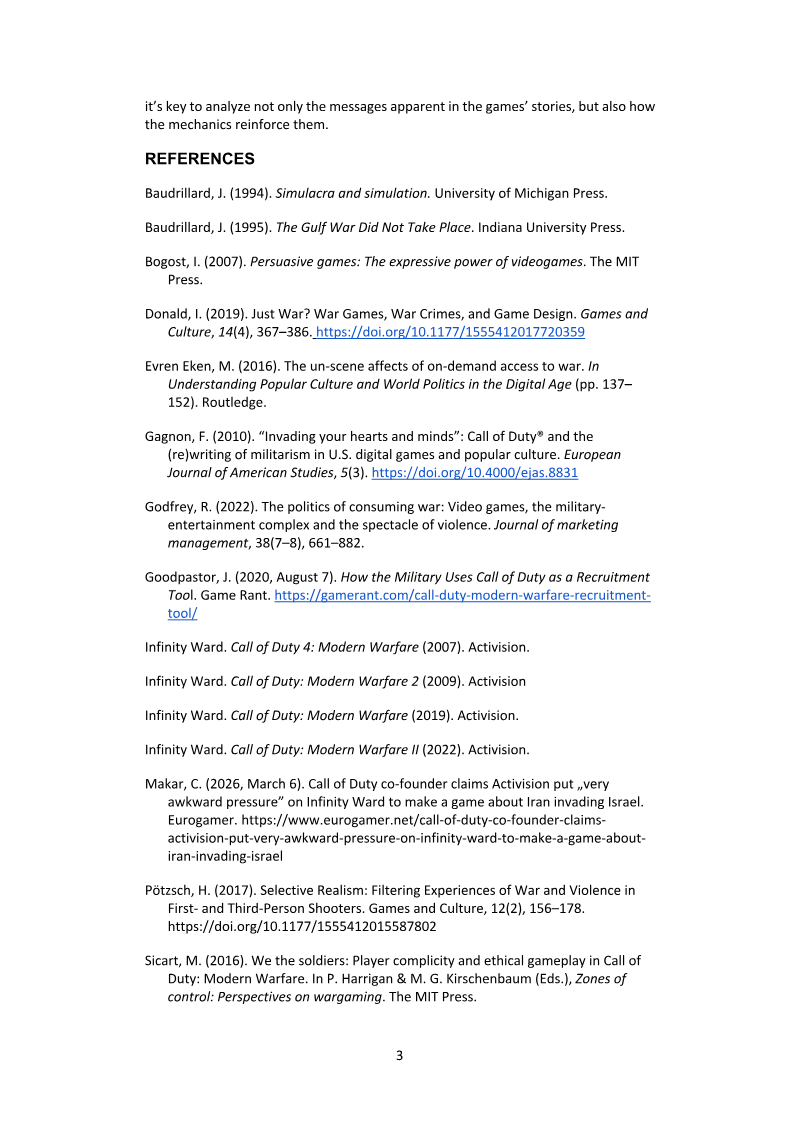
Right Click to De-escalate: Call of Duty and Turning Propaganda into Pleasure
DiGRA · 2026



Whitepaper
Modernities of Authenticity in Recreated Online Digital Games: A Comparative Case Study
DiGRA · 2026
Whitepaper
Steam and the Platformization of Virtual Goods: An Analysis of the Weapon Skin Economy in Counter-Strike: Global Offensive
Spiel|Formen · 2022
Whitepaper
Valorant and the Platformization of Free-to-Play Games: Framing the Work of Content Creators as a Cultural Commodity
Press Start · 2022
Whitepaper
First-Person Shooters: Immersion and Attention
Eludamos: Journal for Computer Game Culture · 2011
Whitepaper
Danger Close: Contesting Ideologies and Contemporary Military Conflict in First-Person Shooters
DiGRA · 2011
Whitepaper
Imperialism in the Worlds and Mechanics of First-Person Shooters
Journal of Games Criticism



Whitepaper
Digital Resilience, Health, and Harms: The Digital Convergence
DiGRA · 2026
Whitepaper
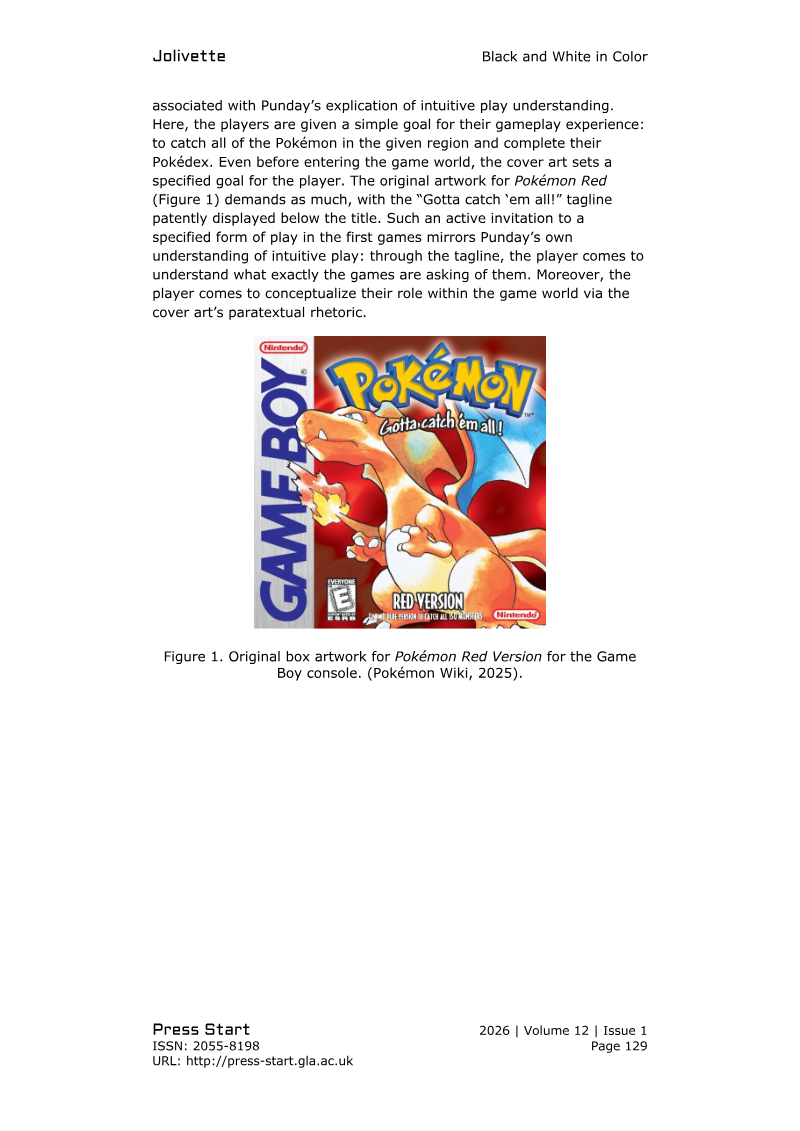
Black and White in Color: Ludonarrative Deconstruction and (Anti-)Monomyth in Pokémon (2010)
Press Start · 2026
Whitepaper
Tworzenie „przestrzeni dyskomfortu” jako narzędzie zarządzania afektywnego: przypadek marki Pokémon
Replay. The Polish Journal of Game Studies · 2026



Whitepaper
Beyond Play: Towards a Non-Gaming-Centric Gaming Research
gamevironments · 2026



Whitepaper
Bleed as Intrapersonal Conflict: Understanding Bleed Management and Resilience
International Journal of Role-Playing · 2026