Key insights
5 slides
Current methods
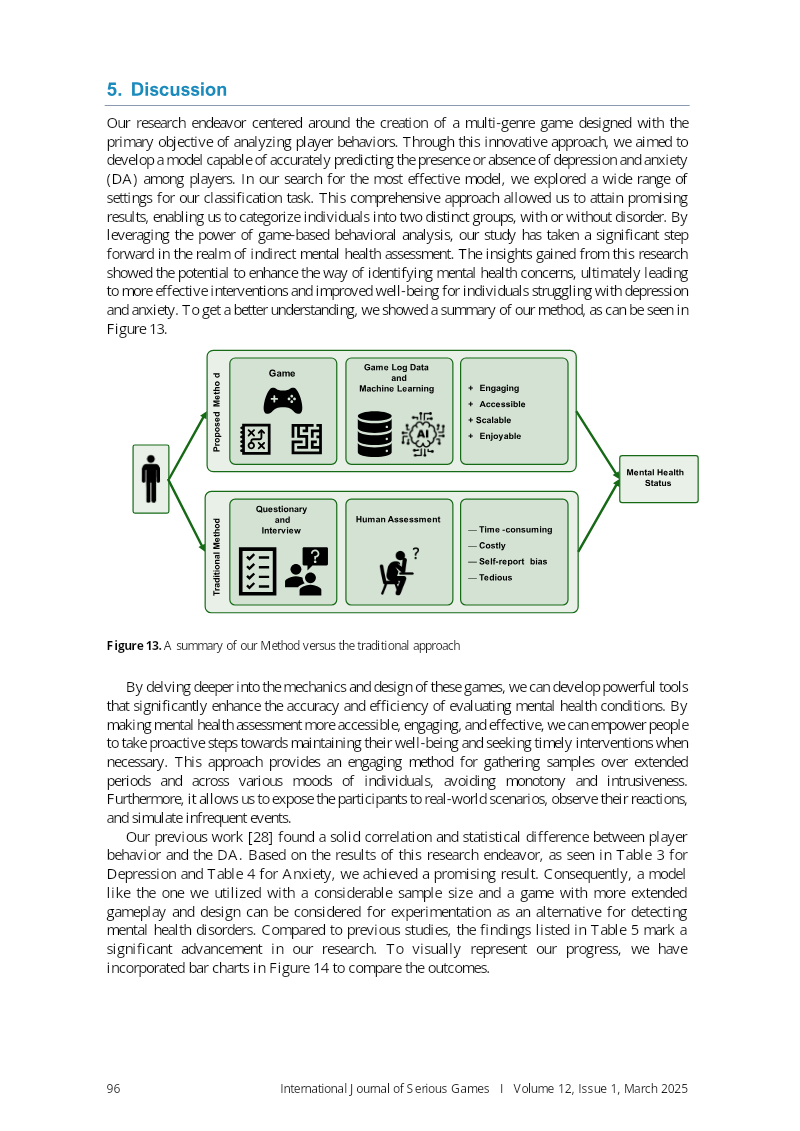
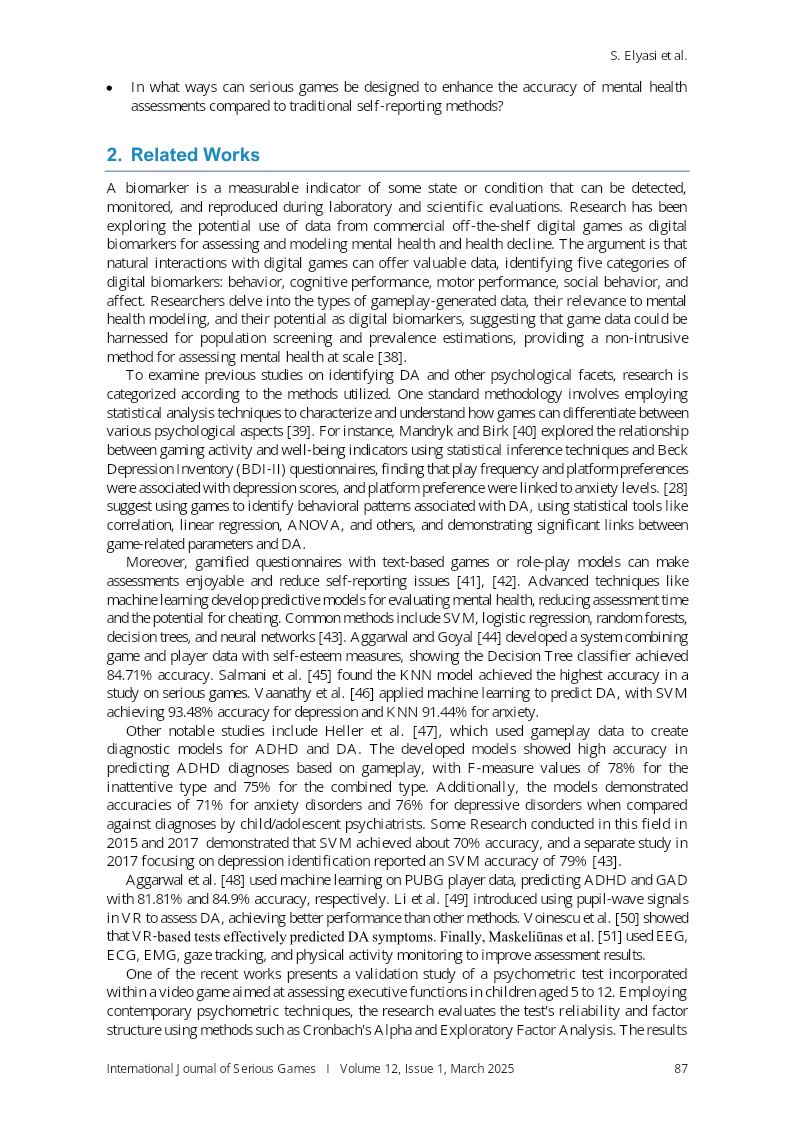
Traditional self-reporting for mental health assessment faces significant limitations.
Social stigma, respondent fatigue, and subjective bias often hinder the accuracy and effectiveness of conventional self-reporting methods.
It's like trying to get an accurate weather forecast by only asking people how they feel about the sky.
1 / 5
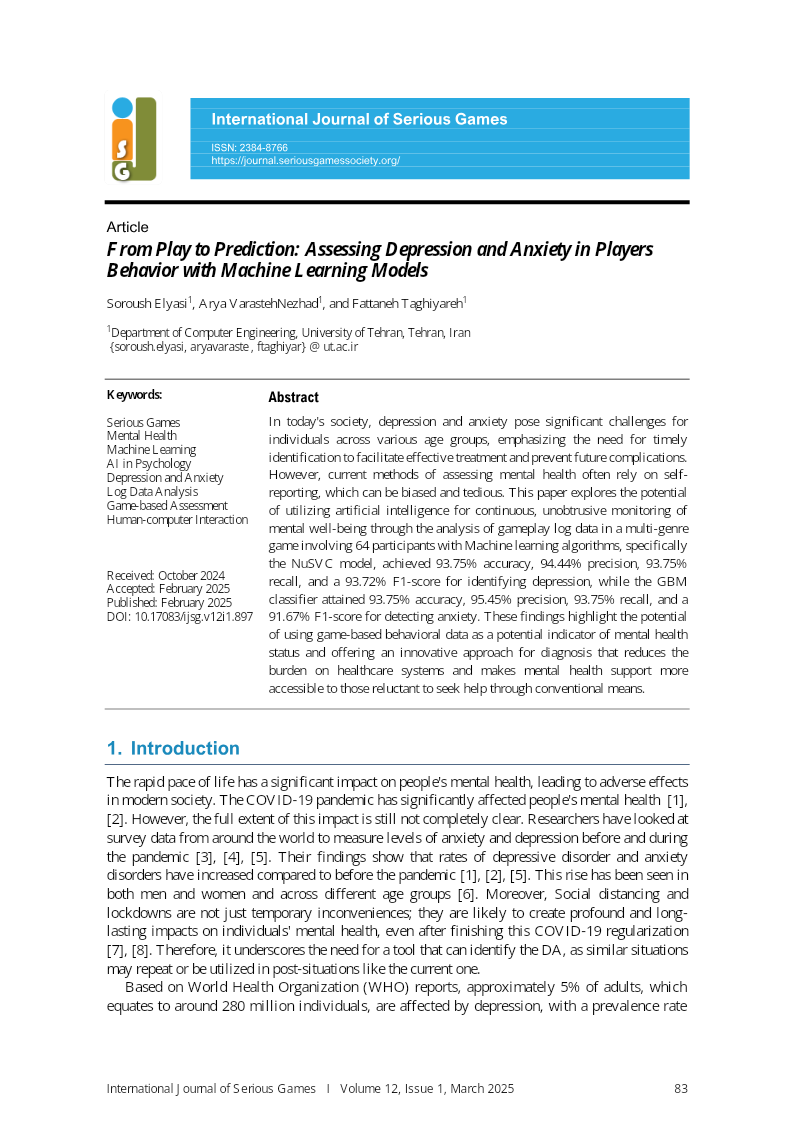
- 01Machine learning models, specifically NuSVC and Gradient Boosting Machines, achieved 93.75% accuracy in identifying depression and anxiety through gameplay analysis.See it on page 1
- 02Gameplay-based assessment provides a non-intrusive, objective alternative to traditional self-reporting, which is often hindered by social stigma, respondent fatigue, and subjective bias.See it on page 14
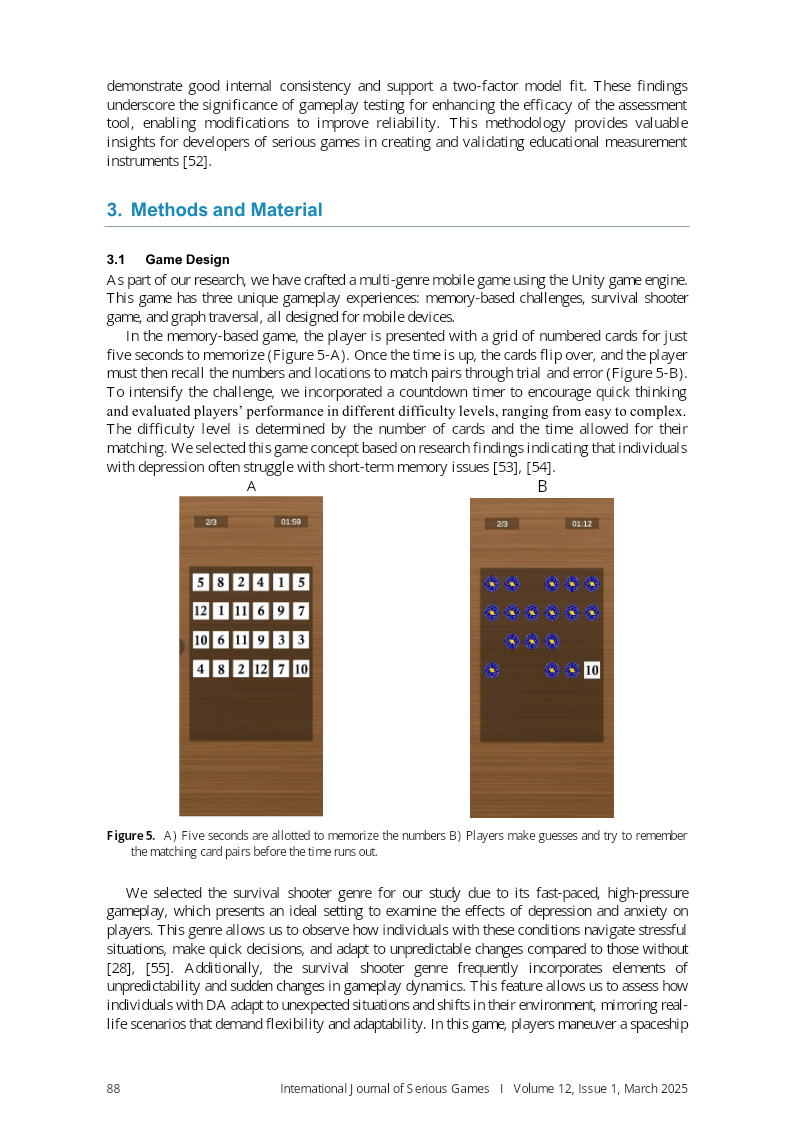
- 03Researchers identified approximately 127 distinct behavioral features from a custom mobile game suite involving memory, survival, and traversal challenges.See it on page 6
- 04The study utilized a balanced sample of 64 participants to validate that digital biomarkers within naturalistic gameplay are highly predictive of psychological states.See it on page 5
- 05The integration of predictive algorithms into gaming platforms offers a scalable method for facilitating early, cost-effective clinical mental health interventions.See it on page 16
- 06This research confirms that digital environments can serve as reliable diagnostic tools, enabling the seamless integration of mental health screening into daily user habits.See it on page 16
Ask AI about this report
Summary
Machine learning models offer a highly effective, non-intrusive method for identifying depression and anxiety by analyzing behavioral patterns within serious games. By shifting away from traditional self-reporting, which is frequently compromised by social stigma, respondent fatigue, and subjective bias, this approach provides a scalable and objective alternative for mental health assessment. The integration of these predictive algorithms into gaming platforms holds significant potential for facilitating early, cost-effective clinical interventions.
The methodology relies on a custom mobile game suite featuring memory, survival, and traversal challenges to capture nuanced behavioral data. Researchers extracted approximately 127 distinct features from gameplay logs across a balanced sample of 64 participants. Through the application of rigorous feature selection and five-fold cross-validation, models such as NuSVC and Gradient Boosting Machines (GBM) achieved an impressive 93.75% accuracy in detecting both depression and anxiety. These findings suggest that specific digital biomarkers embedded within naturalistic gameplay interactions are highly predictive of underlying psychological states.
This research contributes to a growing body of evidence supporting the use of digital environments as diagnostic tools. By validating that gameplay logs can serve as reliable indicators of mental health, the study bridges the gap between interactive entertainment and clinical psychology. The success of these models underscores the viability of using unobtrusive digital monitoring to track psychological well-being, suggesting that future mental health screening could be seamlessly integrated into the daily digital habits of users across diverse demographics.