1 free read left. Create a free account for unlimited reading + AI research.
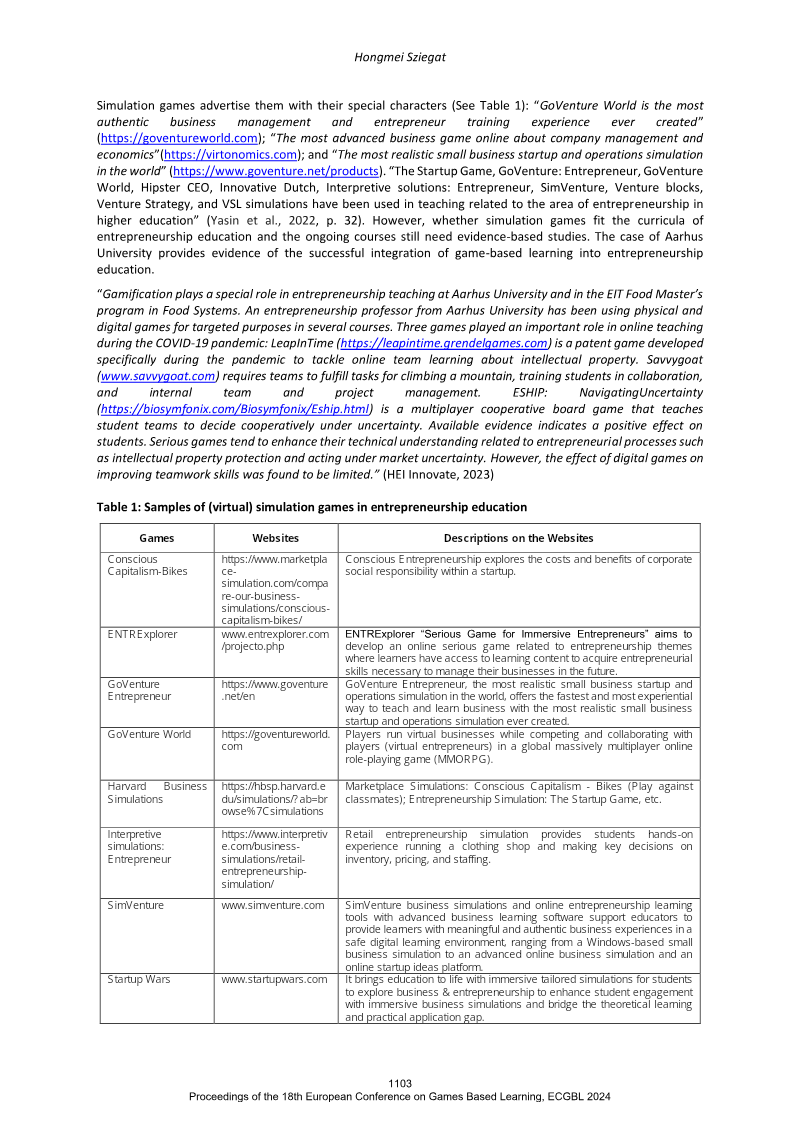
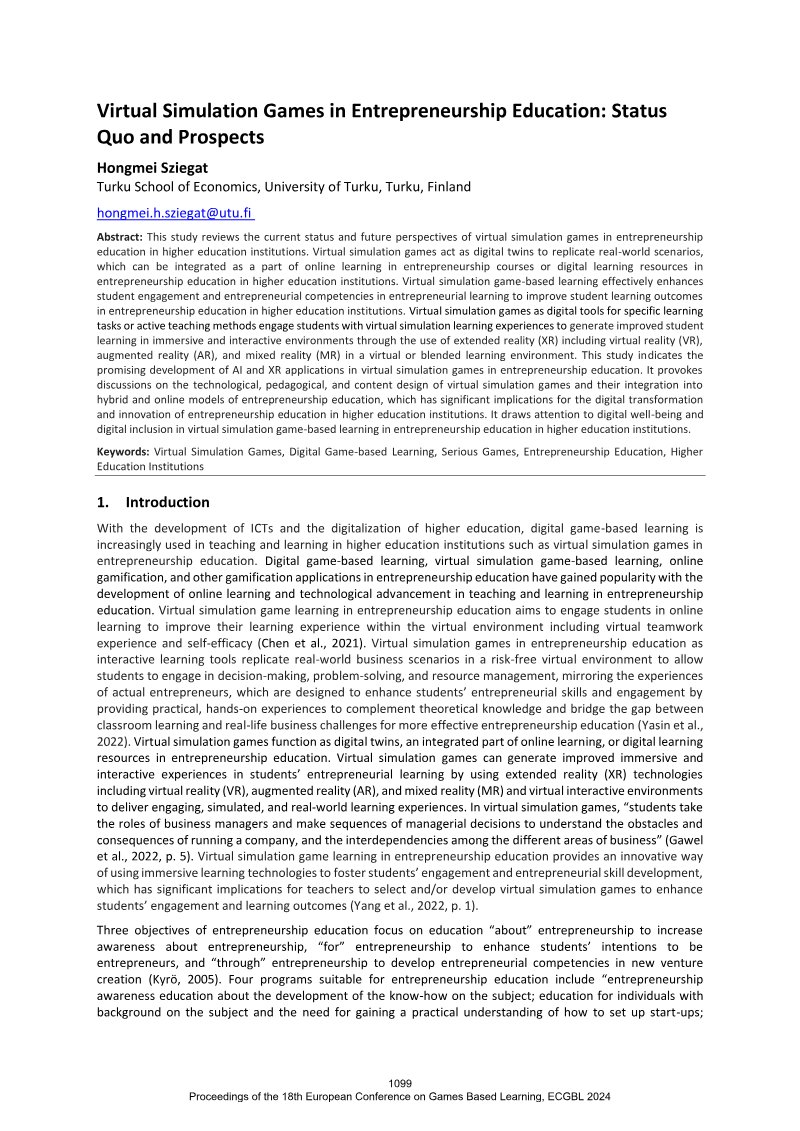
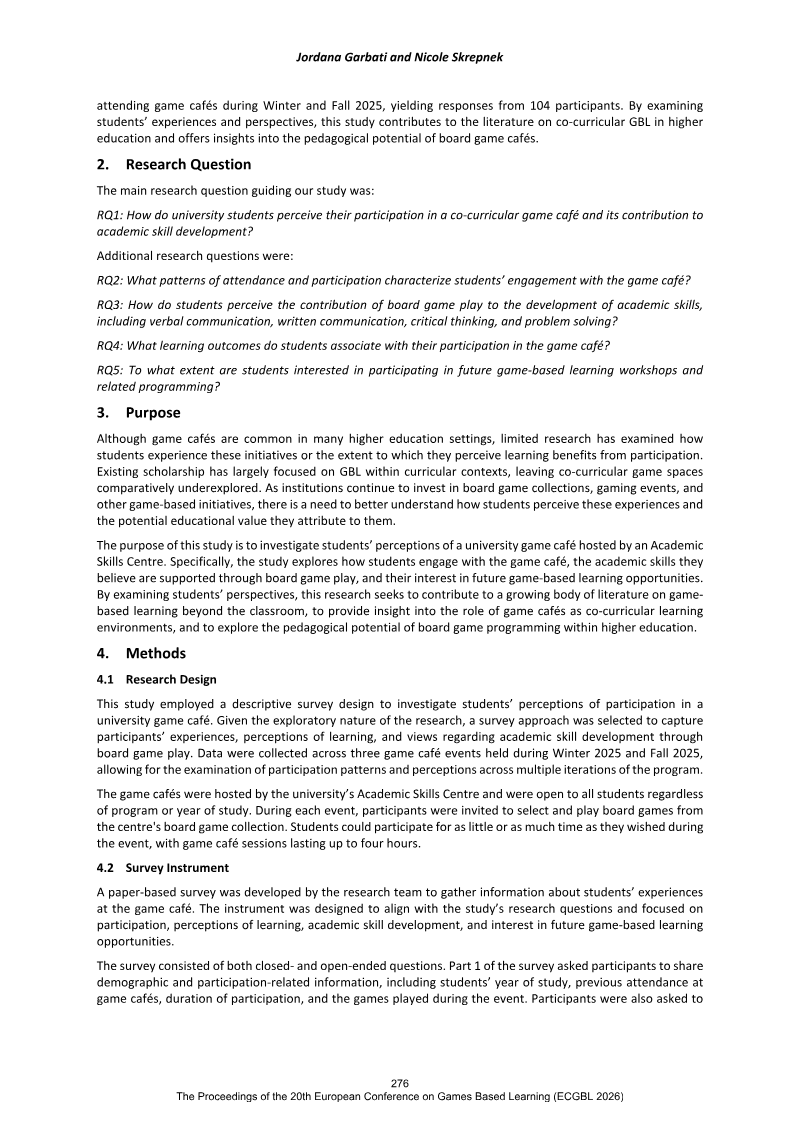
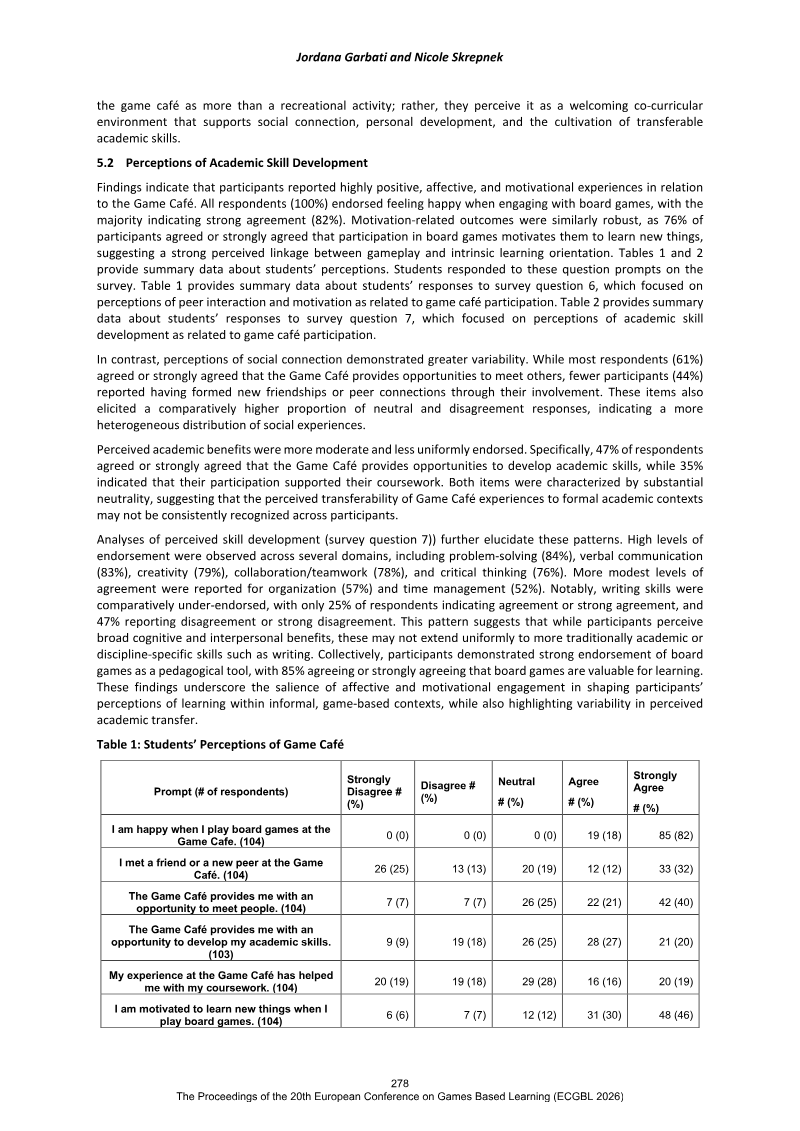
Create free accountWhitepaper International Journal of Serious Games
1 free read left. Create a free account for unlimited reading + AI research.
Create free accountWhitepaperInternational Journal of Serious Games
Students consistently prefer multiplayer modes over solitary play.
Like a team sport, playing with others keeps students more interested than playing alone.
Engagement driver. Multiplayer modes consistently outperform solitary play in student preference, driving sustained engagement.
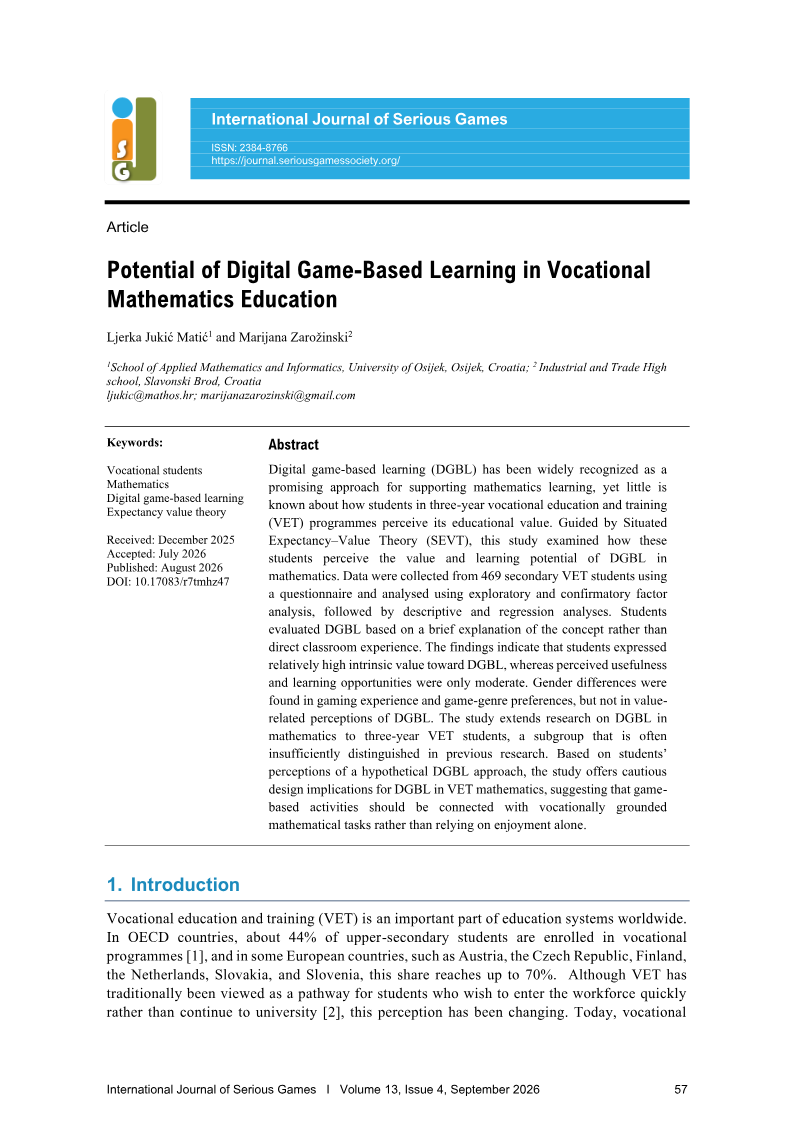
The integration of interactive gaming systems into primary education serves as a critical mechanism for enhancing student well-being through physical activity. By applying Self-Determination Theory, this research evaluates how specific game mechanics—including difficulty levels, collaborative modes, and rhythmic coordination requirements—influence student engagement and motivation. The primary objective is to identify design strategies that effectively balance cognitive challenges with physical exertion to foster sustained participation in school-based wellness programs.
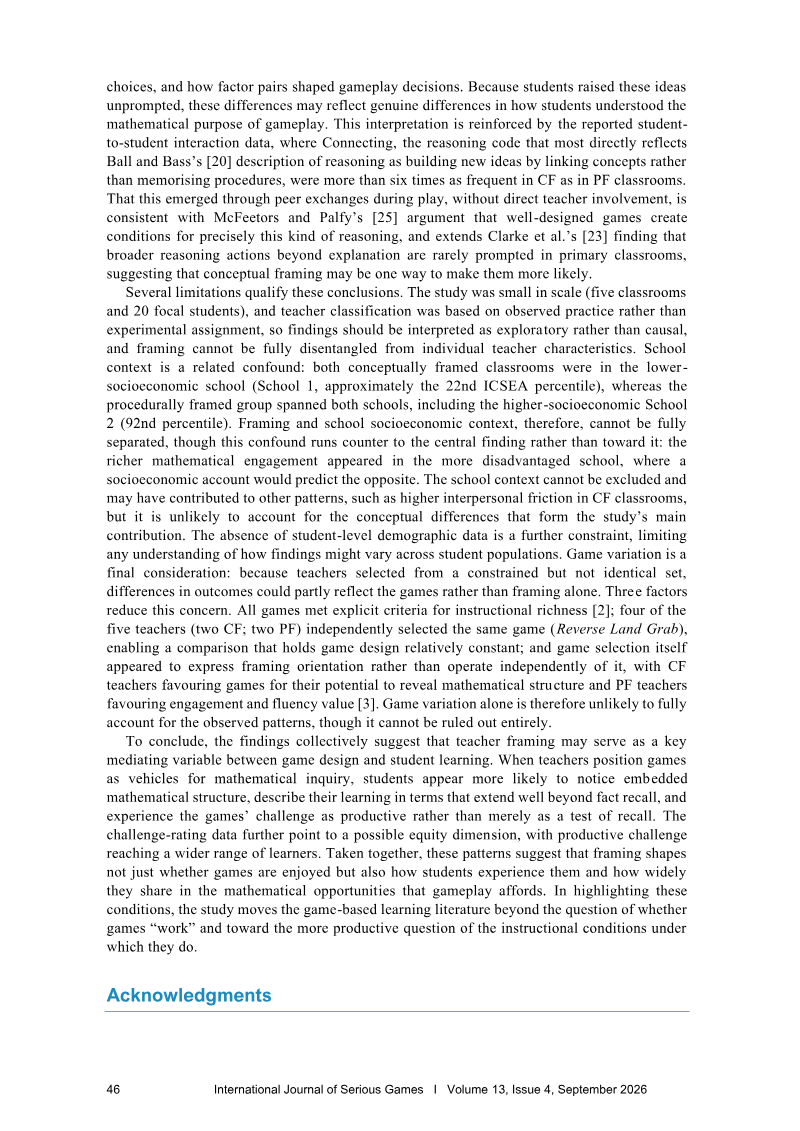
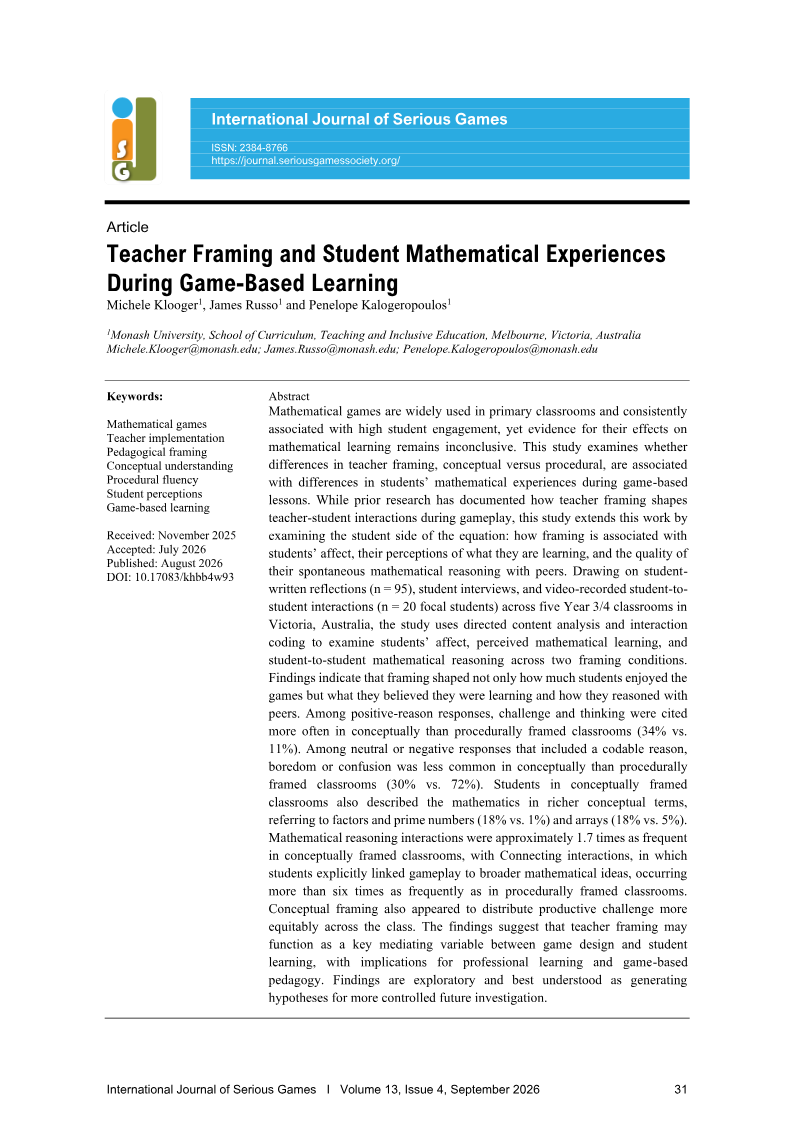
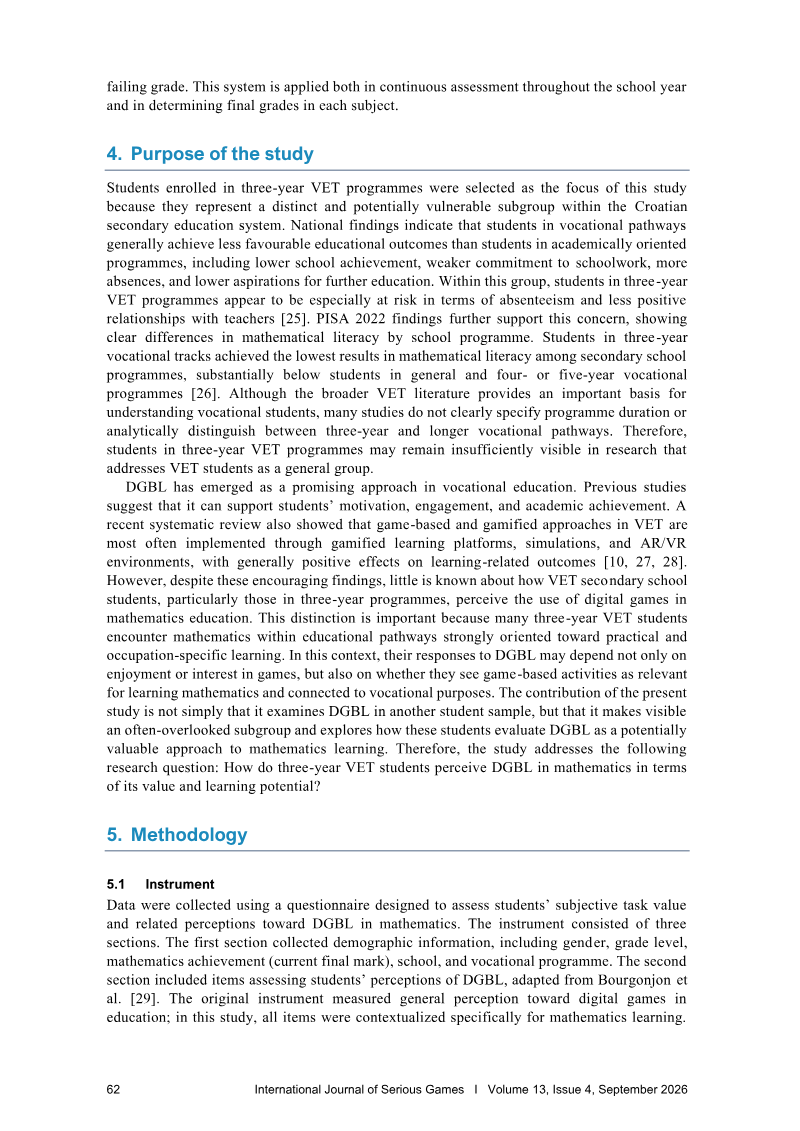
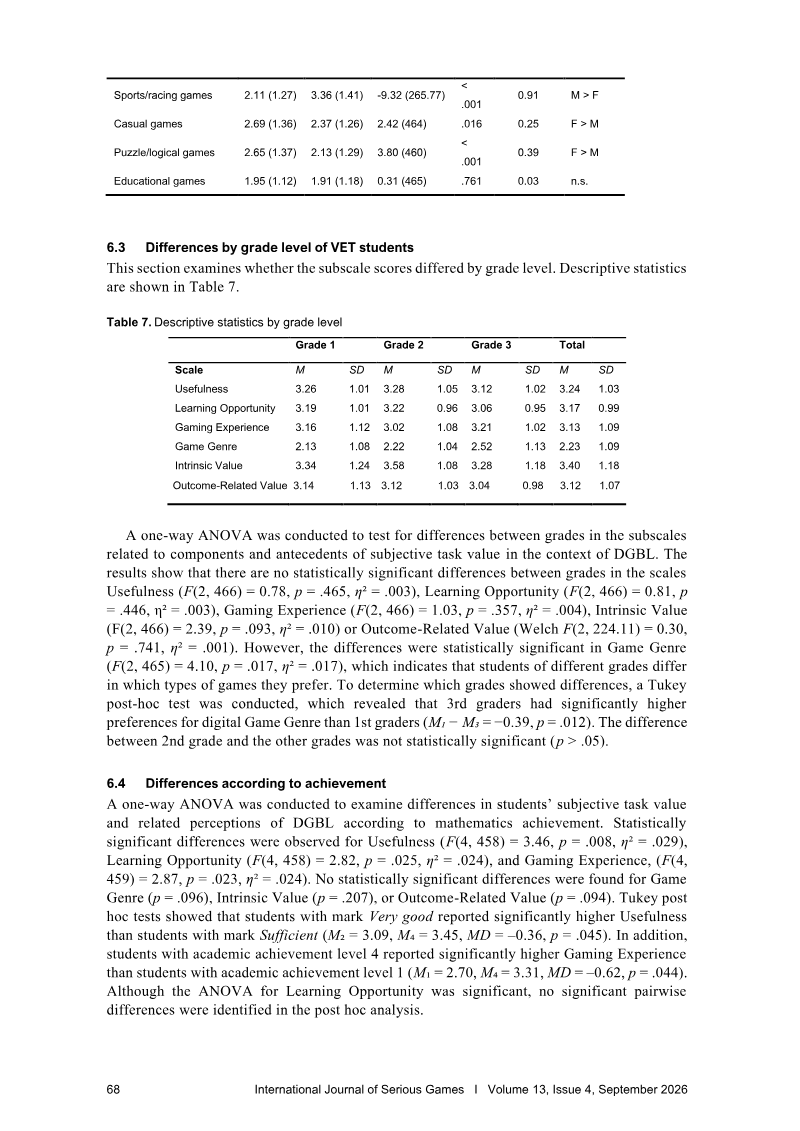
Analysis of 1,707 sessions conducted at a Finnish primary school using the iWall system reveals that student engagement is heavily dictated by social and physical factors. Participants demonstrate a clear preference for multiplayer modes over solitary play, suggesting that social connectivity is a primary driver of sustained interest. Furthermore, games emphasizing physical endurance and rhythmic coordination, such as those featuring parkour mechanics, consistently yield longer play durations. Statistical modeling confirms that game type and difficulty settings are significant predictors of session length, with medium-difficulty settings combined with collaborative play providing the most effective environment for engagement.
These findings underscore the necessity of prioritizing social interaction and balanced challenge levels in the development of educational exergames. By aligning game design with the psychological needs for autonomy and competence, educators and developers can create more impactful tools for holistic well-being. Ultimately, the research establishes that successful exergame implementation requires a nuanced approach that treats physical activity as a social and cognitive experience rather than a purely mechanical one. This evidence-based framework provides a roadmap for future interventions aimed at improving student health outcomes through technology-enhanced physical education.



International Journal of Serious Games · 2026
International Journal of Serious Games · 2026

International Journal of Serious Games · 2026
International Journal of Serious Games · 2026
International Journal of Serious Games · 2026



International Journal of Serious Games · 2026
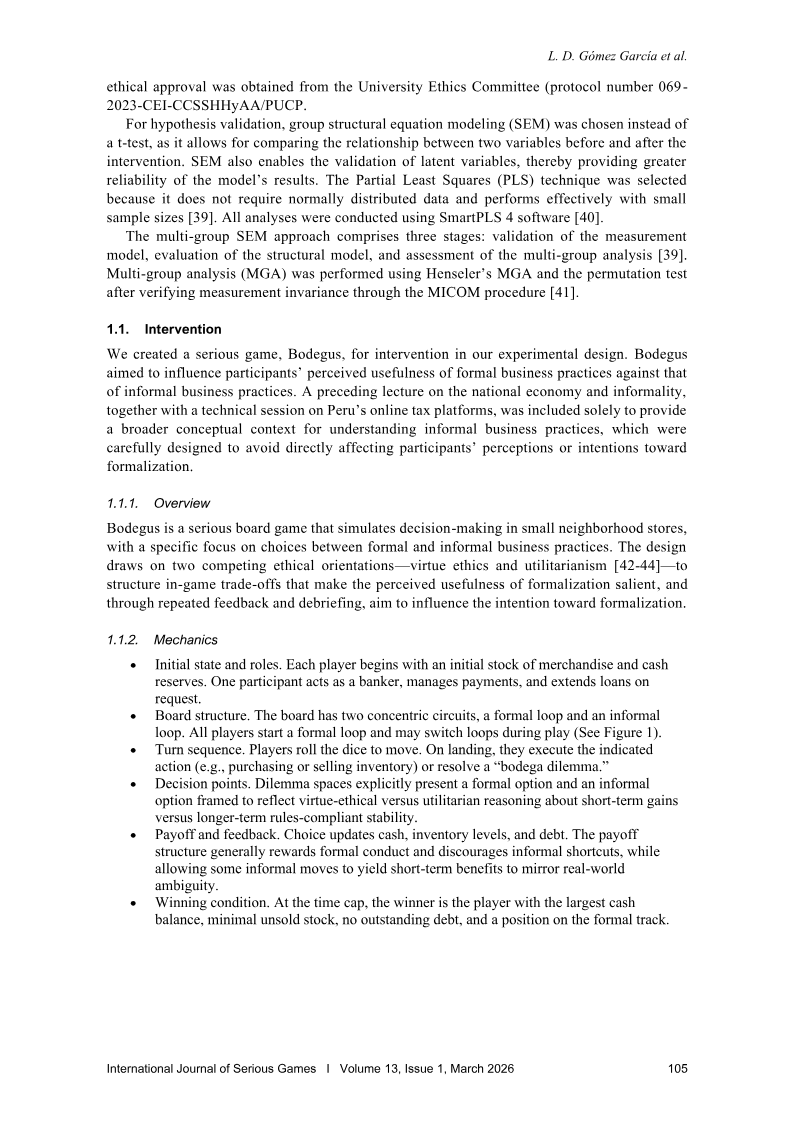
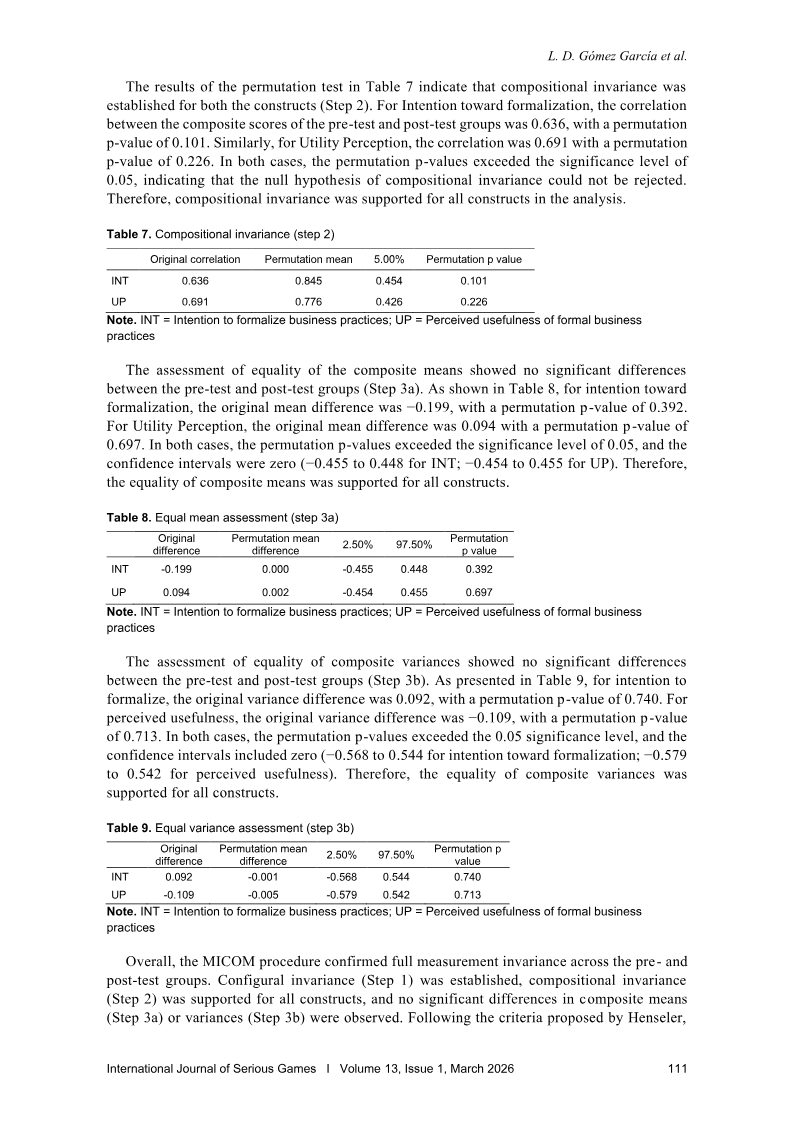
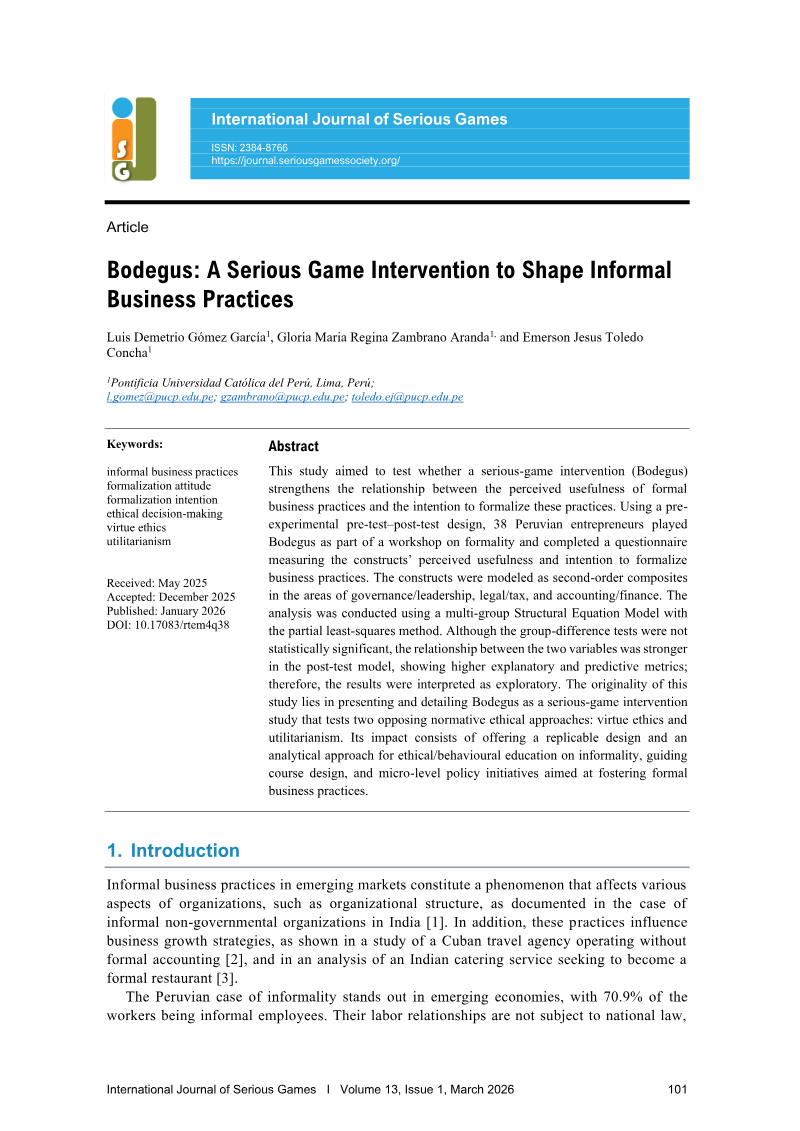
International Journal of Serious Games · 2026
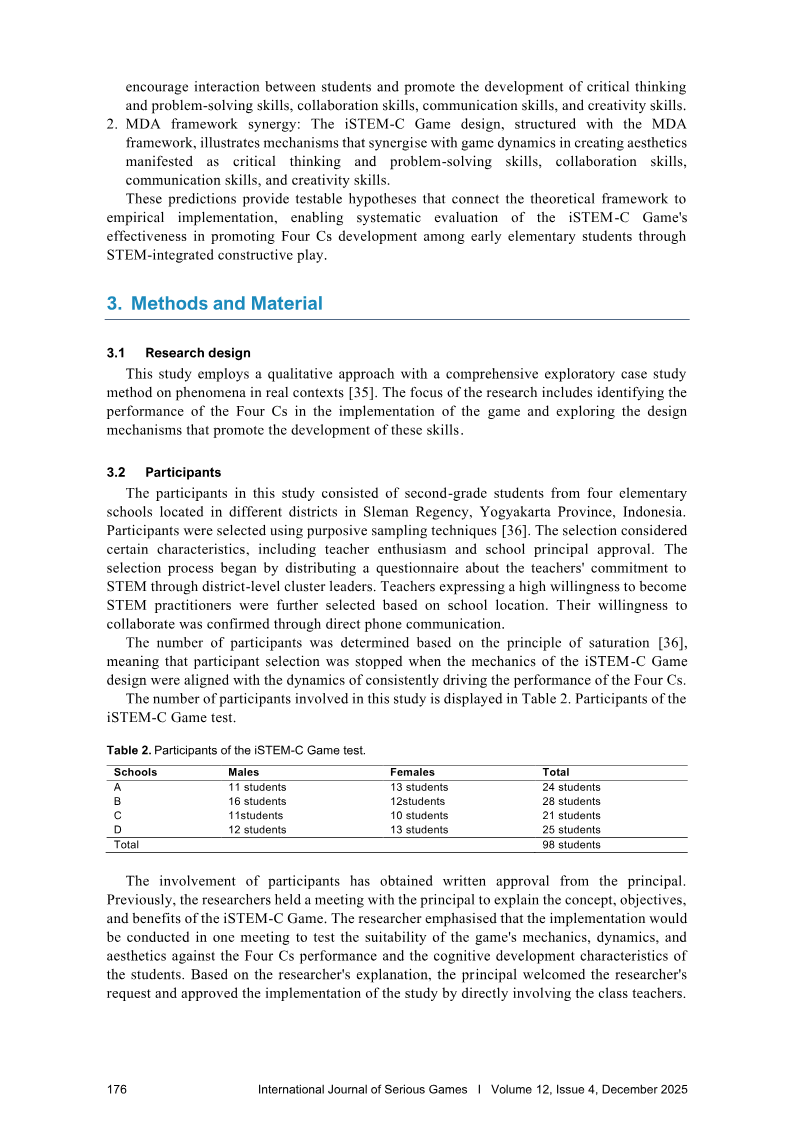
International Journal of Serious Games · 2025
International Journal of Serious Games · 2025
International Journal of Serious Games · 2025
Serious Games Society · 2025

International Journal of Serious Games · 2025
University of Toronto · 2026