Game Publishing reports and market data
Documents

Know Your Market: Making Indie Games That Sell
This analysis examines the factors driving commercial success for independent games on the Steam marketplace, drawing on data-driven insights to challenge the assumption that game quality alone dictates sales performance.
- Average playtime is a primary driver of commercial success on Steam, with data showing an exponential correlation between longer engagement times and higher revenue.
- Genre selection significantly impacts market performance; for example, action RPGs generate a median revenue 24 times higher than puzzle platformers, while roguelikes and Metroidvanias earn 3.5 times more.
- Games featuring mod support are highly lucrative, with the 'moddable' tag associated with median revenues nearly 140 times higher than those of puzzle platformers.

How To Launch An Indie Game
The launch of an indie game is a high-stakes, emotionally taxing milestone that requires meticulous preparation to ensure long-term viability.
- The initial launch window on platforms like Steam is the primary opportunity for visibility and positive reviews, making immediate product polish critical despite the ability to patch post-release.
- Indie titles typically have a predictable sales shelf-life of approximately three years, necessitating a consistent release cadence to maintain long-term studio viability.
- To mitigate financial risk and avoid the complications of revenue-sharing models, studios should utilize project-based contracting for specialized tasks rather than hiring full-time staff prematurely.
Fortnite: An Unconventional Launch
Fortnite represents a fundamental shift in game development and distribution, moving away from traditional, long-lead retail cycles toward an agile, community-driven model.
- Epic Games successfully pivoted from a niche, paid early access model to a mainstream cultural phenomenon by developing and launching the free-to-play Battle Royale mode in just two months.
- The transition to an agile, community-driven development model allowed Epic Games to treat the game as an evolving conversation, prioritizing iterative feedback over the traditional, long-lead retail release cycle.
- Marketing strategy shifted away from cinematic trailers toward digital-first campaigns and influencer partnerships, utilizing short video vignettes to maintain consistent player engagement.

Making the World Give a Damn About Your Game in 2018
Success in the 2018 gaming market requires a departure from passive strategies, demanding that developers actively engineer visibility through precise market positioning and community cultivation.
- Steam wishlists typically convert at a rate of 7% to 12% during the first month of a game's launch, making them a critical metric for predicting initial sales volume.
- Marketing strategies should prioritize building a dedicated Discord community early, using tactics like team-based challenges and exclusive rewards to foster long-term engagement before the game is even playable.
- Influencer coverage from YouTubers and Twitch streamers rarely causes immediate sales spikes and should be viewed as a tool for long-term visibility rather than a primary driver of launch-day revenue.

Intensely Practical Tips for Growing an Indie Studio
Sustainable growth for independent game studios requires a departure from the high-risk, rapid-scaling models often associated with Silicon Valley.
- Prioritize financial stability and operational realism over high-risk, rapid-scaling models by aligning business practices with specific design pillars and actual revenue projections.
- Maintain operational efficiency by avoiding corporate bureaucracy, focusing on individual accountability, and leveraging the inherent advantages of small teams like rapid iteration and low overhead.
- Mitigate future conflict and ensure long-term retention by formalizing all business agreements, including compensation and IP ownership, and implementing sustainable structures like profit pools.

How To Get Screwed By A Game Publisher
Navigating game publishing agreements requires extreme caution to avoid predatory practices that can strip developers of their intellectual property and revenue.
- Prioritize gross revenue deals over net revenue models to prevent publishers from eroding profits through vague overhead deductions and recoupment strategies.
- Retain full ownership of intellectual property and merchandise rights by granting publishers only a license to sell the game rather than selling the IP outright.
- Mandate that the only allowable deductions from gross revenue are the standard platform fees charged by storefronts such as Steam, PlayStation, or Xbox.
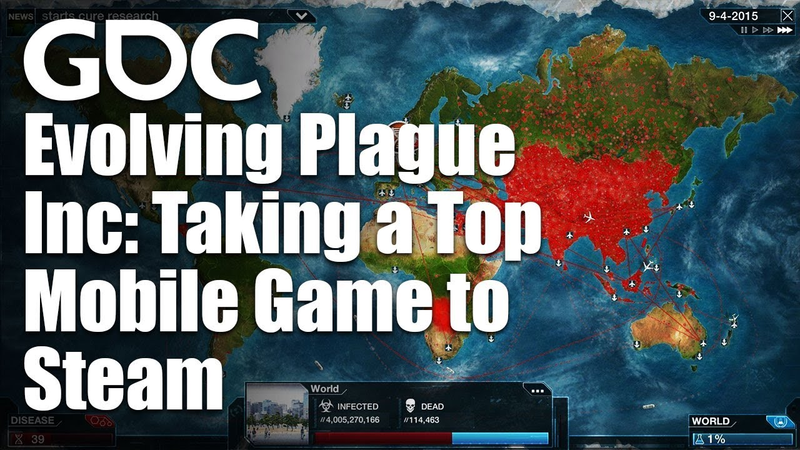
Evolving Plague Inc: Taking a Top Mobile Game to Steam
The transition of mobile titles to the PC market requires a strategic departure from simple porting to avoid the pervasive mobile stigma that often alienates desktop players.
- Plague Inc: Evolved achieved a 95 percent positive review score and sold 500,000 units in its first year on Steam by prioritizing a comprehensive rebuild over a simple mobile port.
- Successful platform expansion requires replacing mobile-style monetization with a premium pricing model that aligns with PC gaming community expectations.
- Developers must implement platform-specific enhancements, such as bespoke user interfaces, upgraded 3D engines, and features like multiplayer and custom scenario creators, to avoid the 'mobile stigma' on desktop.
Let's Be Realistic: A Deep Dive into How Games Are Selling on Steam
This analysis examines the current state of the PC game market on Steam, focusing on the financial realities for independent developers in the post-Steam Direct era.
- Approximately 82% of games released on Steam fail to generate revenue equivalent to the American minimum wage.
- Only 7% of developers earn enough revenue from their titles to fund the development of a subsequent project.
- For viable commercial titles, the average game generates roughly $12,500 in revenue during its first month and approximately $30,000 in its first year.
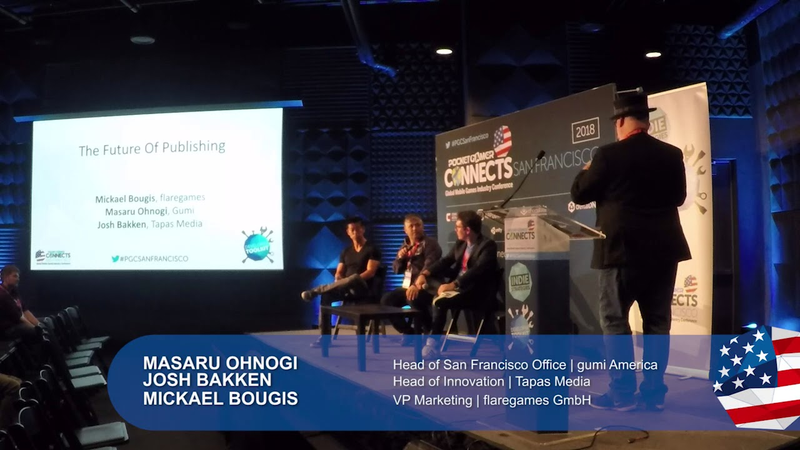
The future of games publishing
Game publishing has transitioned from a traditional marketing-focused model into a multifaceted partnership defined by technical infrastructure, strategic curation, and long-term operational support.
- Modern mobile game publishing has shifted from a 'no publisher needed' model back to a reliance on publishers due to the increasing complexity of marketing, live operations, and the integration of numerous SDKs—sometimes as many as 26 per game.
- Publishers now prioritize long-term sustainability, often asking developers if they are prepared to commit 4–5 years to supporting a single title, as games with long-term live operations often maintain revenue levels similar to their launch period.
- Publishers are increasingly cautious about funding development for unproven teams, preferring to sign established studios or projects with high market potential to mitigate the high risks associated with mobile free-to-play development.
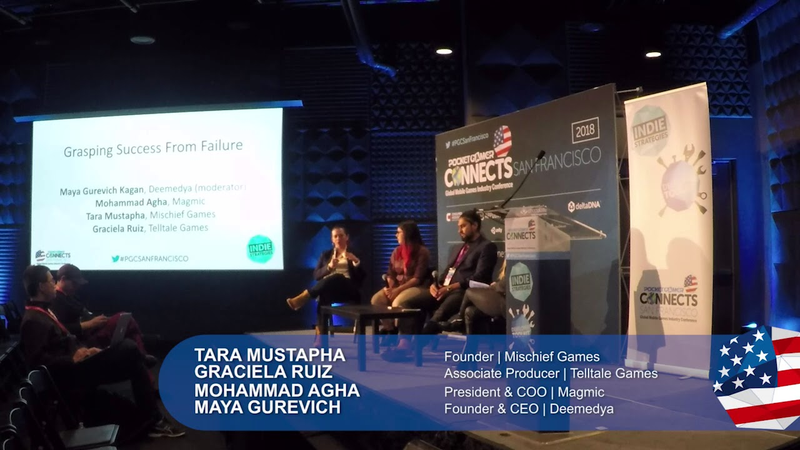
Grasping success from failure
The mobile gaming industry faces significant hurdles regarding user acquisition, development scope management, and the emotional difficulty of abandoning underperforming projects.
- Adopt a data-driven methodology that treats project failure as an inevitable part of the creative process to optimize production workflows and decision-making.
- Utilize regional soft launches to rigorously test core game loops and identify churn triggers before committing to a global release.
- Integrate monetization models during the earliest stages of development, as these choices fundamentally dictate the design of the core game loop.

Selling live games – A new strategic option for studios
Selling live game assets has emerged as a sophisticated strategic alternative to traditional corporate acquisitions, allowing studios to raise capital, pivot their focus, or divest from aging titles without the friction of equity dilution or full-scale restructuring.
- Selling live game assets provides a strategic alternative to corporate acquisitions, allowing studios to raise capital or divest from titles without equity dilution or full-scale restructuring.
- Asset viability for sale is primarily determined by data transparency and the predictability of revenue streams, which buyers use to forecast long-term profitability.
- Successful asset transfers require a rigorous operational audit that covers infrastructure, ad-buying accounts, revenue-sharing obligations, and personnel management.

GDPR – How to be compliant and what that means for your company
The General Data Protection Regulation (GDPR) serves as a comprehensive framework designed to protect the personal data of European Union citizens, regardless of their physical location or the nature of their interaction with a service.
- Non-compliance with GDPR carries severe financial penalties, reaching up to 20 million euros or 4% of a company’s total global annual turnover.
- GDPR applies to any entity handling the personal data of EU citizens, meaning companies incorporated outside the European Union are still legally obligated to comply.
- Personal data is defined broadly under the regulation to include any identifiers such as IP addresses, device IDs, and social identity markers.