Game Publishing reports and market data
Documents

Game Market Oversaturation | Unchained Report
The modern video game industry is experiencing unprecedented levels of market saturation, characterized by a high volume of new releases that complicates discoverability for both developers and consumers.
- Steam is currently experiencing extreme market saturation, with the platform frequently hosting over 170 new game releases per week.
- Lower barriers to entry have democratized game development, leading to an influx of content and increased opportunities for underrepresented creators.
- Success in the current crowded landscape depends on strategic resource management, effective marketing, and the cultivation of a transparent studio brand.

Games Industry M&A: Keys to Success with Chris Petrovic (Zynga, Kabam)
The gaming industry’s approach to mergers and acquisitions has shifted toward a model prioritizing long-term sustainability and the cultivation of forever franchises.
- Successful M&A in the gaming industry has shifted from volume-based acquisition to a disciplined framework focused on long-term sustainability and the cultivation of 'forever franchises.'
- The 'city-state' model is the preferred operational structure, balancing corporate-level infrastructure and user acquisition efficiencies with the preservation of studio creative autonomy.
- Strategic integration now relies on long-term relationship building, often spanning years, to ensure cultural alignment and strategic fit before a transaction is finalized.

Remedy Entertainment: Insight into Our Commercial Operations
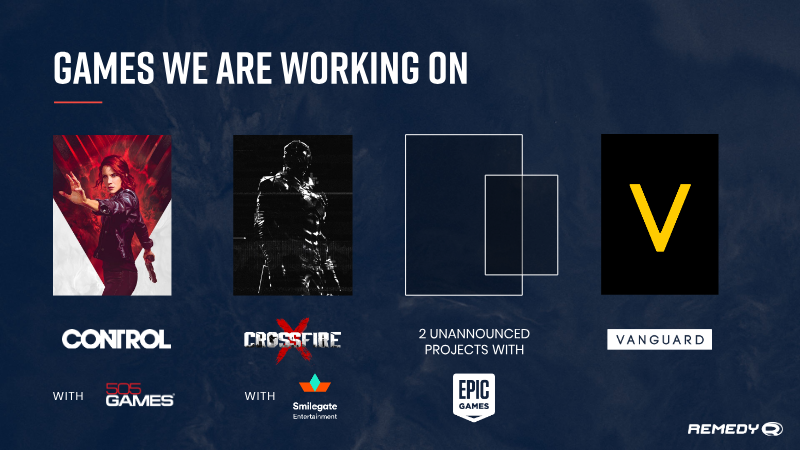
Remedy Entertainment’s commercial strategy centers on strengthening its market position by building a robust internal publishing infrastructure while cultivating strategic partnerships with industry leaders.
- Remedy is transitioning from a pure development studio to a self-publishing entity by building internal infrastructure for market research, forecasting, and community management.
- The partnership with Epic Games serves as a strategic model, featuring a 50/50 net revenue share while allowing Remedy to retain full ownership of its intellectual property.
- Digital sales for the title Control grew from 60% in 2019 to over 90% in 2020, driven by post-launch expansions and strategic digital promotions.


Remedy Capital Markets Day 2020: Our Next Growth Phase
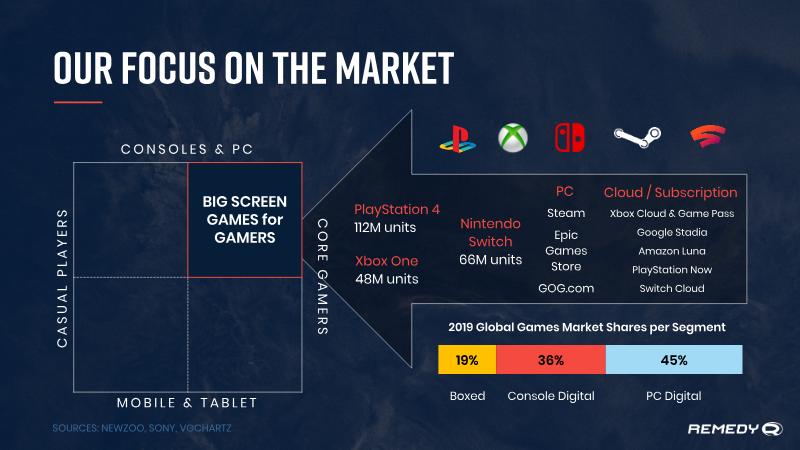
Remedy Entertainment outlines a strategic transition from a single-project studio to a scalable, multi-project developer focused on creating long-term, category-defining gaming franchises.
- Remedy is transitioning from a single-project studio to a multi-project developer, aiming to manage at least three expanding game brands and achieve one major global hit.
- The studio has scaled its operations to 274 employees and established four concurrent development teams to support simultaneous production of multiple AAA titles.
- The company is shifting its business model away from subcontracting toward greater brand ownership and flexible commercial partnerships to capture more value in the $159.3 billion global gaming market.
Future of PC Gaming | David Brevik, Sean Haran, Tim Morten
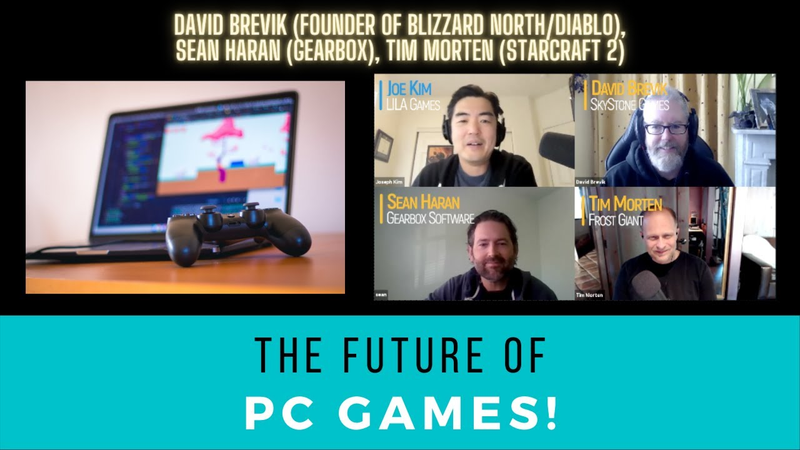
The PC gaming industry is currently defined by a hyper-competitive, globalized landscape where success hinges on the adoption of games-as-a-service models and the strategic use of modern, cross-platform development engines.
- The industry is shifting from multi-year development cycles to continuous, iterative content delivery, necessitating that live-service elements be integrated into core game design from the start.
- The democratization of development tools like Unreal and Unity has lowered barriers to entry, resulting in a saturated global market that demands high-quality production and effective marketing to achieve viability.
- Publishing models are evolving toward developer-led structures that prioritize transparency and favorable economic terms over traditional legacy agreements.

Steps for Effective Localization
Effective localization in the modern gaming industry relies on the integration of centralized asset management systems to harmonize translation, audio, and quality assurance workflows.
- Centralize asset management systems to harmonize translation, audio, and quality assurance workflows, ensuring consistency and immersion across global markets.
- Engage localization experts during the earliest stages of development to select optimal pipelines—whether waterfall or iterative—that align technical processes with creative goals.
- Implement automation to shift teams from manual labor to high-level validation, using API-driven integrations to enforce technical constraints like character limits and subtitle timing.
SWATTING Around with Ubisoft | Roundtable News | Episode 242
The gaming industry is currently navigating a period of significant technological and structural transition, defined by the launch of next-generation hardware and evolving monetization strategies.
- The gaming industry faces a significant technical bottleneck as high-fidelity game file sizes frequently exceed 200 GB, creating friction between next-gen hardware storage capacities and consumer performance expectations.
- Consumer preference has shifted toward 60 FPS performance over ray-tracing, forcing developers to prioritize frame rate stability to meet modern user experience standards.
- Premium titles, particularly in the sports genre, are increasingly integrating free-to-play monetization mechanics like microtransactions and in-game currencies despite maintaining a $70 retail price point.

IDFA:How the Right Publisher can Help Choose Tools, Partners & Prepare Data to Avoid the Apocalypse.
The deprecation of the Identifier for Advertisers (IDFA) marks a fundamental shift in the mobile gaming industry, signaling the end of granular, machine-learning-driven user acquisition.
- The deprecation of IDFA has rendered traditional, granular machine-learning-driven user acquisition and legacy Mobile Measurement Partner (MMP) attribution models obsolete.
- Developers must transition to privacy-centric frameworks like Apple’s SKAdNetwork, which complicates the ability to distinguish between organic and acquired user segments.
- Internal data infrastructure is increasingly insufficient, necessitating a shift toward advanced lifetime value (LTV) prediction algorithms and diversified monetization suites.

Panel: How to Spot a Bad Publishing Deal?
Publishing agreements function as strategic partnerships rather than simple vendor-client arrangements, requiring developers to balance the need for external marketing, analytics, and user acquisition support against the preservation of their studio’s long-term value.
- Developers should prioritize retaining intellectual property ownership, as it is the studio's most critical long-term asset.
- Revenue splits for premium titles typically range between 30% and 50%, with the specific percentage determined by the publisher's investment level and scope of services.
- Agreements must include clearly defined performance KPIs, termination clauses, and rights of first refusal to ensure interests remain aligned throughout the project lifecycle.

Panel: Working with Publishers from Different Cultures
The global gaming industry, currently valued at approximately $170 billion, is defined by rapid expansion and increasing fragmentation across diverse geographic territories.
- The global gaming industry is valued at approximately $170 billion, with the COVID-19 pandemic driving a 30% surge in engagement that necessitates a shift from simple translation to deep culturalization for long-term retention.
- Partnering with local publishers is a critical strategy for developers to navigate complex regional regulatory environments, manage attribution, and overcome technical barriers in diverse markets.
- Emerging high-growth regions like India and Africa are mobile-first landscapes that require developers to account for unique infrastructure constraints and a strong preference for free-to-play models.
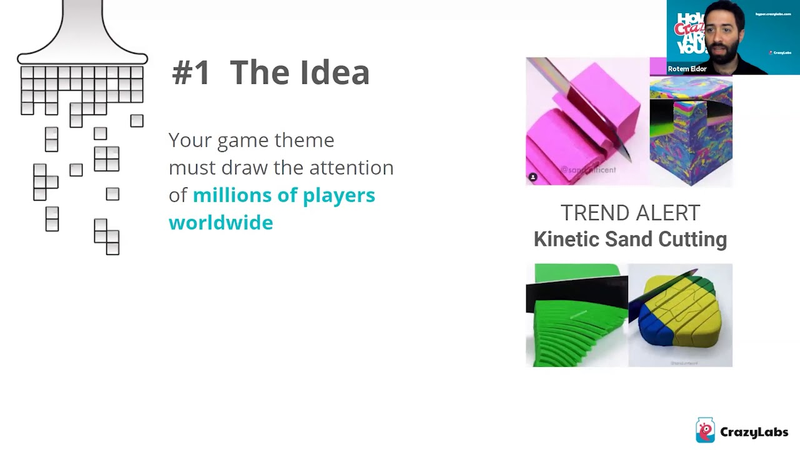
Superstar Session: Do not Resuscitate - Why Publishing Managers are Life-guards, not Undertakers
Hyper-casual game publishing functions as a rigorous, data-centric enterprise where success is predicated on objective performance metrics rather than subjective creative intuition.
- Hyper-casual publishing prioritizes objective performance metrics over creative intuition to mitigate financial risk through early prototype testing and market analysis.
- The development lifecycle is highly compressed, typically moving from initial ideation to full market launch within a seven to twelve-week timeframe.
- Paid user acquisition is the primary engine for scaling, as organic growth is insufficient to maintain the performance benchmarks required for profitability.
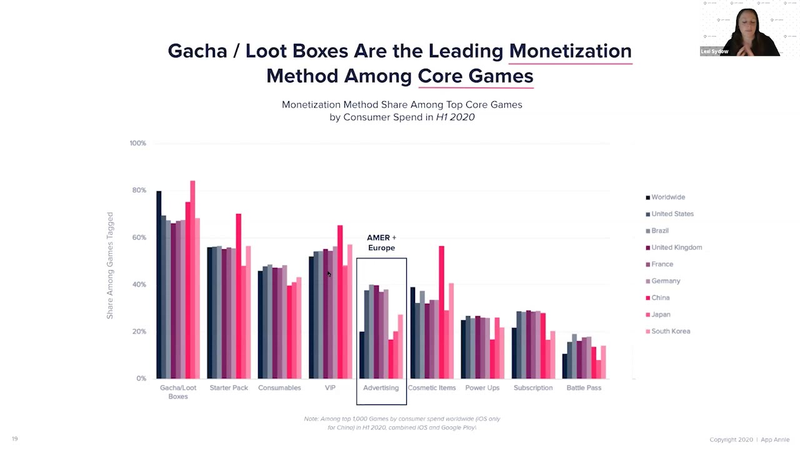
Superstar Session: Uncover Opportunities & Expand Your Portfolio by Understanding Gamer Preferences
This session explores how granular market data and refined game taxonomies enable developers to identify growth opportunities and optimize portfolio expansion.
- Core games, specifically strategy and RPG titles, generated nearly 50% of global consumer spending during the first half of 2020.
- While hyper-casual games lead in total download volume, core games command the majority of total time spent by players.
- Battle royale titles maintain significant engagement depth despite accounting for only a small fraction of total mobile game downloads.