1 free read left. Create a free account for unlimited reading + AI research.
Create free account
Future of PC Gaming | David Brevik, Sean Haran, Tim Morten
Key insights
6 takeaways- 01The democratization of development tools like Unreal and Unity has lowered barriers to entry, resulting in a saturated global market that demands high-quality production and effective marketing to achieve viability.
- 02Publishing models are evolving toward developer-led structures that prioritize transparency and favorable economic terms over traditional legacy agreements.
- 03Western publishers are increasingly seeking strategic partnerships with Chinese developers to remain competitive as high-quality titles from the region gain international success.
- 04Cross-platform connectivity is becoming a standard expectation for player-centric experiences, despite ongoing technical challenges related to control schemes and conflicting business interests.
- 05The industry is shifting from multi-year development cycles to continuous, iterative content delivery, necessitating that live-service elements be integrated into core game design from the start.
- 06The industry is stabilizing into a hybrid ecosystem where premium single-player titles coexist with free-to-play models that must prioritize long-term player value over predatory monetization.
Ask AI about this video
Transcript
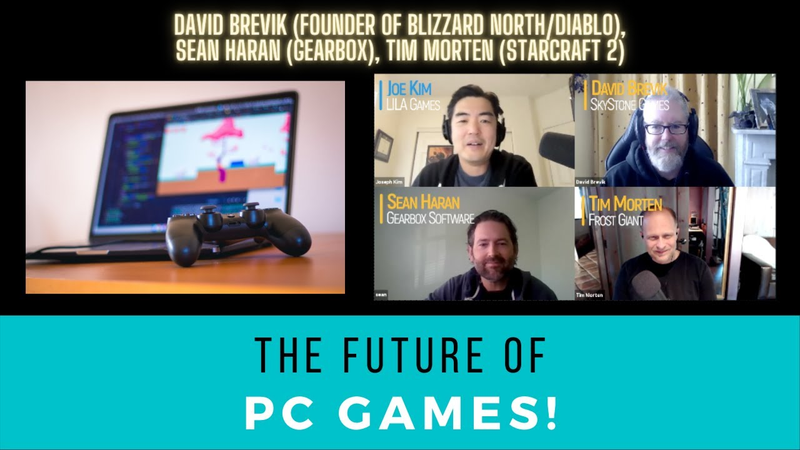
hey everybody and welcome today we'll be speaking about the future of pc gaming and here with us to talk about this we have three incredible speakers first we have david brevik famous of course for founding blizzard north and for the little game known as diablo but then also founding a bunch of other game studios including gazillion and now president of skystone games second we have sean haron who's held senior executive roles at 20th century fox marvel riot and now as chief business officer at gearbox sean i know you guys had a recent game launch as well so congrats on that thank you and finally we have tim morton who was at activision with ceo of savage entertainment held exact positions at ea santa monica and blizzard before starting frost giant as ceo welcome guys and again thank you all for jumping on to this panel discussion
i am actually very very excited and happy to have you all here with me today thanks for having me that's awesome so just kind of jumping right in i thought we could start with the first question i have which is really around you know so each of you have either started a new game studio or publisher or are publishing new games in ip and so what are like the specific opportunities you're seeing in the pc market and maybe starting with you david sure uh well uh yes i have both my own indie game studio as well as i'm started a publisher just recently skystone games uh where we're funding all sorts of different projects i think one of the big things that we're seeing is a trend uh in the video game industry especially in the pc space is the kind of emergence of teams worldwide uh there's been much more like we've signed games with skystone uh from all over the world from brazil from el salvador from
uh from spain from uh china you know and so the uh the the fact of the matter is that more so now than any time ever before uh the pc market development market is more of a global market than it's ever been and there's just so many uh so many teams out there and so much talent out there that like uh that didn't really exist years ago and so uh it's really kind of amazing how how many teams there are out there making games which is a good thing and a bad thing i mean it's obviously the good thing is that you get a lot of really diverse games and some really interesting perspectives and new ideas and uh and that's fantastic but obviously uh but with all those development teams comes a lot of games and it makes it super competitive so uh it's a it's a kind of a strange time in the video game industry for pc for sure and what about you sean um yeah so we're we're a developer and a publisher um
you know gearbox software has been making games for 21 years and we've always been on pc you know dating back to the half-life of titles that we worked with with valve so um i think in that space the big opportunity is just more platforms and more opportunities to reach new gamers you know the epic game store is a great example of uh how pc can grow and find new audiences and you know i'm excited to see how you know tencent and other chinese game companies are able to launch platforms that kind of cater to more premium experiences which is kind of what we're known for and on and on the publishing side both for our titles and for third-party games the the opportunity really is significant for publishers because there's just more places to bring games and more gamers to reach and it kind of creates an opportunity for what i call like mid-market publishers to find exciting teams globally like like david said that could create disruptive experiences that can you know shake up the game uh the game space and create great experiences for gamers and they'll need publishers more than ever
um and and i think i think we're well positioned to take advantage of that and you know games like godfall and tribes of midgard and we've got a few others that we're really excited about that kind of manifests from that all right and tim and maybe tim you could also speak to like not only opportunity you see but also in terms of why did you start a new company to go after the opportunity that you're seeing yeah absolutely um clearly there's a need for more great real-time strategy games so so that's one very specific opportunity but i was i was actually gonna layer on because i i think great observations uh already but the importance of user-generated content and just the impact that user-generated content has had on pc and games as a whole really seems to be escalating you know you look at moba as a genre you look at battle royale as a genre you look at auto battlers as a genre like there are so many significant trends in gaming that have come out of mods um and certainly the
popularity of roblox of minecraft like user-generated content um it's kind of been a little paid attention to it but ultimately it has had just this massive impact on the direction of popular genres so uh rts in addition to being my favorite genre and clearly something that i want to see more of um has always been intertwined with user-generated content and uh tools to create user-generated content for warcraft 3 for example um you know facilitated the creation of the defense of the ancients mod and the creation of moba so that's definitely something um that we're gonna try to continue with our game but so but yeah just uh i you know real-time strategy as a genre is one of those early pc genres that has continued to stay popular but um has been underserved and so we're uh starting a new team and a new
endeavor to to try to build the next great rts all right and maybe just as a somewhat of a follow-up question we could actually dive a little bit deeper into whether it's specific emerging trends or even emerging technologies that are going to potentially unlock new opportunities so you know in the past it you know there could be like some new 3d technology that enables a new type of game or you know maybe tim you could also speak to why you believe that rts is a new genre that will be repopularized but if you guys could speak to and you know or even like the the emergence of frameworks like unreal or or unity things like that are there any specific trends or technologies that we should be kind of keying in on that would potentially unlock a broader market of some kind uh maybe starting again with you david uh yeah i think that obviously engines like unreal or uh unity and
things like that have allowed people to make games easier than ever before uh and that's you know again good and bad uh it's good because we're getting i think in a lot of ways we get a lot of high quality products it used to be like i remember 15 20 years ago like it used to be the the mantra was like if you make a good game it'll sell well because uh there were so many technical disasters back then that like a good game is just a game that ran uh so the uh the you know i think that we've come such a long ways now that most games are technically proficient they they run well they install well they they you know they're easy to kind of use they have decent interface and direction and stuff like that so that kind of mantra of if you make a decent game it'll it'll it'll sell well uh is gone simply because with the engines and all of these kind of technologies
almost everything is at least decent at least runs and um so i think that that's changed a lot of the industry and i don't see that ever going away i see that as just being a kind of a focus even more so in the future there are just too many conveniences uh associated with an engine one of the big things is that uh being able to develop your game and put it on multiple platforms is just so paramount so important these days uh because it just increases your revenue so much that uh having an engine that does a lot of that for you is a huge time saver and trust me because i have my latest game that i made called it lurks below i made my own engine like a dummy and uh and and it was a big pain in the butt to make it work on all these different systems so uh you know i don't really having that uh to you know in the bag or just having that capability right out of the gate has really helped the industry
expand and a lot of people make new games and new types of things so i don't know if that's really an emerging thing that's been it's been more it's more important now than it's ever been and when you get new technologies like ray tracing or something like that and these engines instantly have the ability to use these technologies uh it'll bring them to the forefront even faster and i think that uh that will you know these kind of things will propel new types of experiences that we haven't seen so far and sean uh this is probably not news but uh cross-play cross-platform cross-progression um i i think the game treating games as community and having the technology to facilitate that is the future um i think we've seen a lot of you know fortnite is probably the most visible example of that but gation impact and there's i think 50 60 some odd games that are taking advantage of that and i think it'll be table stakes in the future um we have a technologies team and suite of services called spark i think the manifestation of that externally is
called shift but that is something we built for our developers to create those connected experiences and now it's enabling us to kind of create connective tissue between all these desperate platforms and try to create one unified experience and i think that's just the you know the ability not only to reach more gamers but engage them and then ultimately you find paths to monetize them and i think that's that's the trend that will be something that will be necessary for any game company to be competitive got it in tim those were both great answers i um this is another one that maybe isn't new is an emerging trend but i think games as a service um certainly from a developer perspective has been hugely impactful and is still something that we're figuring out how to best take advantage of and best service players through that model i when i was at blizzard we pivoted starcraft 2 from more of a box model to constant content delivery and i can say for a production team
that's a shift that is very challenging but i think for players um the rewards are meaningful um and that's definitely something that we're gonna continue to explore at frost giant and i think the industry as a whole there's still a lot of innovation and player value that's yet to be discovered there yeah tim 100 we've called the games as a hobby it's been something we've been doing for over a decade it's kind of the more consumer-facing friendly version of that term and like borderlands 2 still has over a million monthly active users and you know we've we haven't it doesn't have a traditional gas model but we've you know continually fed content i think they're like 16 dlc packs so so having the ability to engage players over time and then ultimately find paths to monetize them is i think table is also going to be something that most companies need to figure out just the manifestation of it is loot boxes or subscription services or whatever i think it's depending on the customer you're trying to serve right you're you're looking at rts customers we're creating home rule three
uh you know which is a you know space rtfs that are you know comic franchise so you know they're gonna react differently than say you know a fortnite van to to those types of mechanisms so you're really going to be thoughtful about who your customer is when you kind of deploy those models but when you have an engaged fan base that loves your game they want more of it and you just want to find a great way of feeding that content in a way that's economical yeah i think it also goes beyond just that though is that because the uh industry is just so competitive right now uh when there are if you look at across mobile console pc everything or whatever there's a thousand games released a week yeah and so it's hyper competitive and uh and because of that once you have customers uh you got to cling on to them for dear life simply because they're you know it's just so hard to get customers because of the competition so having more games as a service having these kind of content updates that
or things reasons for people to come back to your game over and over and over again ensures your ability to have a customer to sell to whatever and monetize in some kind of way and and uh it's a lot easier to to do that than it is to get new customers and so it's a lot less risky and uh and so it's really important to make sure that in today's kind of game that if you have a hit that you have ways to kind of keep those people coming back uh because it's a lot easier and a lot more economical to uh to focus on that than it is to try something new yeah and maybe sean and tim sounds like both of you guys are working on rts is there can you guys speak to why we haven't seen like a big new rts in a while like and tim what are what are you specifically seeing as like the the opportunity right now all right i'll jump in first it's fascinating to me uh the perception around rts i guess um having seen the back end numbers at
blizzard um you know there's this tremendously engaged player base around rts uh and they didn't go anywhere like they have stayed with rts um but what did happen is other genres came along that surpassed the popularity of rts and so um by comparison there's a perception that rts declined when it really didn't like there is still an audience there that loves this genre and that still today like starcraft 2 is a 10 year old game and it has this amazingly engaged player base um but what did happen was the popularity of these other genres um it distracted publishers and developers to a great extent um there there is a phenomenon of chasing the latest hot thing and you know we've just seen it with battle royale we see it with every new genre that crops up or even every new successful title that really breaks out um so i think what's needed is somebody to make another great rts and i think that same attention and excitement will come back um and we see that sort of cyclical
nature with all kinds of other genres so i i absolutely think there's an opportunity there for rts and then in terms of genre oh sorry sean do you want to also comment on that uh it's hard to argue at that point i i concur you know i think i think uh publishers will fall in love with the kind of big and sexy trends when there's you know really large and significant engaged fan bases and genres that that are left left untapped i mean those from a business perspective actually sound really smart um but with homeworld it was something that you know most of the studio played back when it was you know created by relic and and something we wanted to continue on and one when one blackbird and our us got together and thought of what homeworld three could be it got us really excited so it made a ton of sense and and we know that fan base is there and they're still playing the classic title so hopefully we're able to bring something to the market that will justify its existence and and hopefully we'll be able to continue on that franchise and we're also pairing it with a mobile title free to play mobile title which is a new
experience so we're not we're trying to give them that premium experience that they're going to get from you know particular pc title but also give them something new that they can take in with their on their phone so um so i agree with tim his points were just spot on so nothing more to add than that is blackbird also doing the mobile sku no no we're we're you know we have a mobile first studio out of germany called stratosphere that we're working with there and they're huge home rule fans you'd be surprised how many there are so uh they were passionate about the ipsw as well as we were and we thought uh you know setting up the the homeworld three with a free-to-play game that can kind of lead into it could bring broaden the audience and potentially uh you know get people excited about the the launch for the the the sequel and in terms of genres are there any other sort of emerging genres like you know certainly it seems like mafia is starting to get a little bit popular but maybe other genres that'll come back as well uh besides rts i think uh what's going on with
star citizen is it's it's been playing out for a long time but i think space sims uh are are a thing that's on the way back uh i i i'm eager to see adventure games come back in new forms and certainly stuff has happened here and there but uh yeah what else tactical strategy games uh xcom style i think there's tons of opportunity there there's so many great genres like this that are fertile um for updates and for growth yeah i don't think this would be kind of the genre but more narrative based experiences ones that kind of lean on lean forward on story and and that that pillar i think it's kind of left behind with a lot of the trends around you know free-to-play gas games that have kind of very light meta and it's really about the gameplay i think i think there's games out there that can really win with with story engaging people with with with that i think that uh it reminds me a little are talking about you know the the oh rts is dead which is
kind of a joke it reminds me a lot of the a long time ago when i was pitching diablo to a bunch of publishers and they say rpgs are dead uh so the uh you know and it only just takes the right title to come around to make a genre kind of merge or become popular again uh and uh so i think that there's a lot of great genres out there that are untapped and maybe we've experienced in the past for people that have been in the industry play games for a long time basically the old people in the industry and uh and they that that we remember a lot of these titles that uh that had just great creativity and uh and great and great reach by dara kind of untapped these days and i think that uh that it's again it just takes one title to make up to make something super popular and uh and that uh we see it happen all the time right and so i thought the next question i can ask you guys and especially uh dave and sean since you guys are also
on the publishing side but you know in certainly on the mobile side mobile game publishing has been all over the place and hasn't been very successful but on the pc side could you talk about how the model has changed the current model and what is it like in terms of the key value or why you would want to work with a publisher maybe david and sean you guys could talk about what you guys are doing and then after that maybe tim you could talk about what would it take for you to go with a publisher instead of self-publishing but maybe starting with you david sure uh i think that uh publishing in general is really important these days uh because like i said earlier there's so many games released every week it's really hard to stand out it's really hard to get any kind of coverage it's really hard to uh because a lot of the websites and a lot of the press coverage and things like that revolve around their numbers and uh you know they have to do something
that's popular and the popular things are the things that generate revenue so trying to break into that popular stance is really difficult as a small developer an indie developer or things like that uh doing something you know having a publisher that is behind you that allows you to uh to get to break through the noise and be able to hear you know be able to get attention on your game is just so so important there are so many great games that are that are kind of hidden gems uh because they're because nobody knows about them uh and that uh that happens all the time so i think publishing right now uh as a as a game developer publishing looks great because it i believe that with publishers information you know their help that they can sell more copies than the cut that they're gonna take or whatever that's that that's the the hope at least um and so i think that right now it's uh it's really important uh also with our
the publishing company that i created skystone uh we're not just doing the regular traditional publishing things which are very helpful and really great i'm not saying that but also uh we're doing something a little bit more we're making it kind of it's first off it's kind of a developer-led publisher so that's very different than a lot of publishers i've been there i go through it i've been through it many times i know how it works i know you know i can give you and that's really the biggest thing is that i can give you tips right i i go in and i get into the nitty-gritty of the game and give feedback and know through my vast experience of just being in the industry so long uh like pitfalls and things like that that especially younger developers run into uh and i think that that uh that's something that i think could separate a lot of publishers in the future is their ability to have done that before and understand the entire process uh has a strong upper hand versus people
that are that are maybe just looking at numbers and things like that which happens a lot john yeah um i think you probably stole a little bit of my thunder there but yeah the amplification is a big part right cutting through the clutter um you know gearbox the brand carries some weight with it and people pay attention to things we bring to market and for example when we announced homeworld uh risk of rain two along the launch of that along with borderlands three we were able to sell a million units in the first month and that game was already in incredible shape when we met the hopu guys and they absolutely could have gone it alone because the first game was such a success but they realized that we could help amplify their efforts and kind of reach more players and the next piece is the reach it's like getting into all the places where gamers are you know smaller publishers can't do that they don't have the ability to put a game on a box on a shelf anymore and we can so that's huge and the second piece that david said it's is we're we're a publisher born of developers like our core team are all guys who have
shipped aaa games over the last three to five years we have the ability to provide guidance and mentorship to these smaller younger teams so they could focus purely on the game and then help and help guide them through that process um since they've done it and you know a lot of publishers have folks that used to have done publishing you know making games but they've been in in those seats not too long ago and that's a huge differentiation and having that credibility and connect you know with the develop with other developers is help us win uh the hearts and minds of small small of great teams that could have gone with bigger publishers um so i think those that that's a huge win win for us and a differentiation factor and it and ultimately helps them focus on what they're great at and we're able to to help amplify their efforts and bring it to other places and do port work and all the things that they don't need to worry about so those are the two big pieces so really just echoing a lot of what david said all right and then tim for you like what would it take for you to work with the publisher or what would you be
looking for i i had a prior stint uh at an independent studio that was primarily uh advanced against royalty funding so publishing deals and i still have ptsd from that i won't lie but the the world has changed and i i think the rise of developer led publishers is a tremendous thing um you know both these guys are doing it epic is doing it dreamhaven was just announced like uh it is a new approach and thought process for publishing um to have developer led publishers so i'm really excited about that i i also think the rise of venture capital funding for game studios which is a relatively recent thing uh has changed the landscape a lot that a lot of deals are they're almost more distribution deals than traditional publishing deals in that the product gets substantially finished before a publisher gets involved
but at the end of the day like my core competency is as a developer it is not doing go to market and i'm used to working inside of big publishers where we have brand management we have pr we have uh crm you know we have qa localization customer support like all of these services that a publisher provide provides typically and those are not quick to build they're not inexpensive to build they're hard to build well so i see a lot of value at the go to market phase from a developer perspective in working with a publisher particularly with how global the market is now so it's not a tough sell to convince me that there are benefits to working with publishers i think the nature of those deals and frankly the economics of those deals have changed to be more developer favorable both because of developer-led publishers like these guys and because of the rise of venture
capital funding for game studios so i think it's headed in a really good direction but it is still kind of in a state of flux and in transition so we're interested to see how it evolves in the next few years while we're still in development yeah it's spot on tim yeah we're we're you know we get the benefit of having games that we can actually touch and play and you know when we the team puts their dev goggles on not me but other people they could see where the big 10 game is trending and and really realize what you know what they think that could be and then they'll lean in and since we've worked with a lot of publishers historically you know we're trying to give the developers better economics dollar one than they would find in any other place because we just think incentivizing the team and having them feel the the success of their titles early is massively important you know we feel that you're a gearbox every day when we create a title with 2k is you know feeling the success of our game sooner means a lot for the talent and so and then ultimately more transparency in the process and sales and everything um you know we're not a black box or
you know an open book in that regard so i think all those things as you said really create a great opportunity for publishers and and finding great games and teams and hopefully giving them the upside they deserve from the creations that they make and do you guys have any thoughts in terms of some of the other kind of third-party publishers out there whether it's epic and increasingly i'm hearing a lot about actually chinese publishers who are pretty from what i hear aggressively funding is that a way should we be thinking about that as a potential way of unlocking the chinese market or i don't know if you guys have any thoughts on any of the other guys out there we're not i guess but yeah from my not gonna go first yet again uh it's so hard to map out the landscape in other regions and you know we we just did our studio announce uh a month ago and um we've been reached
out to by various players in different regions and just learning the landscape and learning how things are evolving because it things aren't just evolving here in the us they're evolving around the world we're taking a very agnostic approach though because i i think for example um streaming the streaming services that are competing with each other right now probably have some long-term impact on game distribution understanding what that looks like understanding how this console generation is going to shake out you know there's so much that is constantly changing but reaching markets like china southeast asia uh middle east north africa you know brazil india all of these markets that are exploding right now does take partners who have expertise in those regions and understanding that
and understanding those landscapes like who are the best partners to have it's difficult for a small developer like us so we're trying to be circumspect and thoughtful about how we approach that but yeah it's uh it's definitely a challenge stephen or sean i'm trying to parse with part of the question i should answer um uh you know i think i think when we think of asia and other markets it's similar right we don't have boots on the ground there and that's crucial even even as a publisher in the west and i actually i think chinese uh you know dominant con you know game companies like tencent and netties are looking looking at our market and saying should they build it or buy it or rent it or what's the best path to tapping into our audience because you know capital doesn't necessarily mean success and um so we're you know we're we're happy to partner with them and find you know uh win wins and we've found games that have been funded or partially funded from chinese companies that unlock that region
that we get to participate in and they and they get a team here in the west that's going to help realize their investment with those teams so there's a lot of win-wins there you know so but we're not you know we're not sitting there and seeing them as competition it's just really finding the the optimal path per product and seeing and and so we're evaluating as it comes because as tim said it's the landscape is changing there was a minute there where every chinese publisher had a platform and they're looking for content and they're trying to fill that pipeline and then that pipeline got shut down and then everything stopped for a year so it's uh it's it's always changing you just kind of have to just roll with it i guess yeah i think that in general the uh chinese publishers have been here for a long time they uh you know they've been funding things for years and years and years and so you know i don't think that it's really any news the i mean the big thing for me about chinese game development in general is
the fact that it's finally starting to make some traction here in the us i mean uh there are now some hit games coming out of china which hasn't happened before and i think that uh that's more of an emergence out of china than any kind of funding or anything like that the fact that uh there are going to be i think a wave of of games that come out of china that are high quality fun games that uh that everybody is going to enjoy playing similar to the what we've seen come out of early very early in the 80s from japan and then eventually korea and now uh i think china is just on the edge of really kind of breaking through and making a bunch of hit games here that are kind of worldwide hits and tim you mentioned the streaming platforms and kind of these cloud-based gaming platforms as having potentially having an impact on the pc gaming market so could maybe all of you but maybe starting with you tim talk about
what are your thoughts in terms of whether it's google stadia or amazon luna what do you guys think is it because it doesn't seem like at least currently that any of those guys have seemed to have gotten any traction but if you have any general thoughts on that and then to your point tim what would be the potential impact of pc gaming if these things do become successful yeah i think it's it's too soon to call um and and obviously with uh on live and guy kai like there have been some some past efforts in these directions but you look at the players who are in this now uh they have the necessary capital to deploy the infrastructure in many cases they already have the infrastructure there but they also have enough necessary capital to play the long game um and i think they will do that uh and i know there's been some skepticism especially voiced by take two on um just future of streaming as uh being impactful but i i wouldn't
count these guys out um i i also look at some of the assets that they have um you know amazon with twitch uh google with youtube um there there are so many interesting uh connections that they can make and kind of seamless transitions from places where the community the fan community around games are already inhabiting um to seamlessly get into games from those platforms feels powerful to me um so i you know i think the the days of uh disc with a game demo coming with pc gamer or uh computer gaming world i mean we're entering an era now where you could watch a streamer who's just exposed you to some interesting new game and immediately transition into trying that game that's powerful so i i think it will be very impactful um who who the winner
is and exactly what's the business model that strikes the right cord with consumers because that that seems to be a big part of what stadia hasn't figured out yet um i don't know the answers to those but but i think they will get answered um so it'd be fascinating to see sean yeah i think tim your your assessment is pretty spot-on with what the way we think about it um we're we're on stadium we're you know we're already kind of experimenting in that space with borderlands 3 and and and i think we'll continue to to as a as a developer want to understand how what it means to be on those platforms um in terms of our like business attitude towards it's too early to tell i think thinking them as a replacement for you know consoles and pcs today is probably the wrong thinking um in the long term as you said their ability to potentially bring in new customers in a frictionless way through some of the unique attributes of their ecosystem is really exciting like the ability to try a game and then
and then decide if you want to buy it or not on the fly instantly without having to have a rig is pretty powerful and once they figure that part out um i think the mistake is you know thinking of it as a replacement for kind of the current gen and next-gen hardware and because gamers are going to ultimately critique it that way but i think it has a long-term benefit to the entire industry so we definitely want to understand it and be ready to take advantage of it as that kind of match arises and maybe if you could also like you or others are there any additional capabilities as well that streaming provides i know tim you mentioned kind of youtube or whatever but you know i've heard of maybe like having like a thousand person battle royale or something like that but if you have any thoughts on that as well david yeah i think that that's what i was going to say is that uh i think that one of the things about the streaming services the thing that's going to separate it is the same kind of things that happen with like mobile games you don't you
can't bring a console game exactly to mobile game you know it they they have they have a different way that you use your mobile phone and so the streaming services i don't know if there's been a game yet that really takes advantage of it being a streaming service and uh so if there is something out there that can be designed so that you can take advantage of the cool parts of a streaming service to make it integrated with the gameplay in such a way that hey i can take it from my desktop to my phone to you know whatever i want to do and i you know without any kind of downtime or downloading or anything like that there's like all sorts of things that maybe that are have this untapped potential uh that creates a new type of experience that makes streaming a different way to deliver games to people and that that i think uh is one way that it could succeed if uh besides the traditional hey we're
just gonna you know not have your games installed uh you know which is a benefit that's that's for sure but creating an experience that specifically takes advantage of some of the parts of uh a streaming service i think is uh the key to making it really kind of a long-term business opportunity for game developers in general yeah very curious to see how what stadia and amazon do with first party titles and and right how they leverage that technology to create something truly unique and that would then spur on other developers to to take on the mantle yeah i look at um just from developer perspective access to potentially more compute than a player has on their desk um there are interesting things with respect to ai and machine learning that could come out of that if it's a closed ecosystem streaming game where all the players are on a streaming service it takes away client hacking as a risk
for a competitive esport like an rts for example there's real value there uh client server model or even peer-to-peer model networking where all of the computers are in the same rack like the low latency that you get out of that and the high bandwidth that you get out of that creates some really interesting game design um potential so i i think there's a lot that can come out of this down the road there's thinking to do about how exactly to take advantage of all those assets yeah we'll see what mail.ru does you know i think i think that's an intern that market might be the first to get some traction there so yeah we'll see and david one of the things you mentioned earlier was cross platform so i thought we could talk about that next in terms of you know how should whether it's as a publisher as a developer how should we be thinking about cross-platform opportunities certainly
there's kind of market expansion but also the potential of you know one for some multiplayer games by being cross-platform you could potentially increase ccu help matchmaking and things like that but in terms of like where you see the the opportunities or how we should be thinking about cross-platform if you guys have any specific thoughts on that that would be great maybe starting with you david since you first brought that up earlier uh yeah well i think that was shawn that did it but the uh the uh maybe i'm just trying to push off my answer because i don't have one but the uh uh but again it's really important obviously i think that uh the big problem always with cross platform has been getting all these different publishers to agree to each other right you know how who's gonna get the money how that's that's what it comes down to so uh uh as gamers we all want this right but the uh but then the businesses need to work out how it actually happens and that that's the
biggest challenge i think that technically it's not that big of a challenge because a lot of times like in a client server game it doesn't matter you know how the clients what your client is whether or not it's uh you know a console or whether it's pc or mac or a phone or whatever it's like the same kind of packets are coming in and out uh then then it's not really that big of a deal but the uh the it really just comes down to the business and uh how how that works and that's been the biggest prohibitive thing uh in the past traditionally um i think i already did my little diatribe on uh you know i i i think it's crucially important for the industry to figure this out it's you know like as david said there's a lot of business considerations but this is great for gamers and it's great for game makers and publishers so i i can't imagine it not being something that gets figured out in the near term where matt we're assuming it is going to be so we're investing in more tools and technology on our end to make our
experiences as connected and as possible in the future like that's for us it's it's it's a it's going to happen and we have to assume so in the future right and tim maybe for you and also maybe to the point about if you're creating a competitive rts like how actually viable is the cross-platform play just given the you know the amount of control and stuff you have against the different platforms yeah i'm in kind of a crazy genre when it comes to cross-platform because rts has such uh a tie to the way that you control the game uh and if you take away mouse and keyboard it's not clear that the experience is as compelling and i think you know there were similar feelings about first-person shooters back in the day and clearly shooters have successfully made the transition but i don't think anybody's truly cracked um the best way to adapt
rts to other platforms and certainly there's been you know halo wars 2 and our ea had several titles that also came out on console but just the performance relative to pcrts hasn't been the same and i think player perception uh hasn't been as positive so so i'm not sure what the answer is um in terms of the best way to adapt rts but from a player perspective of course and even from a developer perspective just wanting to have the best experience uh it's clearly ideal to be able to connect across platform and have a fun experience without having to think about whether my friends own an xbox or a playstation or any other platform great and so it the next question i want to ask you and hopefully it's not too sensitive but just as a you know really die-hard old-school blizzard fan uh some of the folks i
talked to and i've got some friends that work at blizzard but there has been it seems a lot of concern about blizzard and just to be clear i mean i am a die hard fan there there isn't another company's games i've played more than blizzard so the concern kind of comes from a good place but you know in terms of like uh you know david and tim both of you guys have worked and have history there could you guys comment in terms of like what are your current thoughts in terms of blizzard future prospects things like that and then maybe sean i know you've worked it right maybe we can get your perspective in terms of riot but uh in terms of the blizzard part maybe starting with you david since you are the og yeah well uh uh first off i haven't i haven't worked there in 20 years so it's the uh you know it's a little bit weird uh but uh the company itself is changed dramatically uh and that's just what happens oftentimes over time uh companies change uh most of the
people that were there when i started the company were are gone right there they it's everybody from mike morheim to you know et cetera et cetera myself like everybody all kind of the og people a great majority of them are gone there are still some but there are very few compared to the people that were there so the company's changed a lot um is that a good thing is that a bad thing i don't know i i think that obviously there is concern uh i would say that uh that fans are concerned uh but that's mainly because i think of the recent track record of blizzard and the products that they put out the warcraft 3 expansion did not go well it was not received well it did not perform well it did not uh the consumers were really unhappy uh and uh so i think that that you know
being the last kind of taste in their mouth with what happened at blizzard uh and you know just kind of reinforces this opinion of why of all these people left uh and uh why are you know when what's coming out now and how can you know this is kind of a mess and they've made some missteps you know between the you know diablo immortal announcement to uh to the warcraft 3 expansion you know the remaster i'm sorry not the expansion the remaster uh that those have been uh those have been some missteps that uh that we'll see whether or not they can recover i i would imagine they can they're a massive force so i wouldn't come out and they got a lot of talented people over there but uh can they learn some of the lessons and uh and put a better foot forward i would guess they can but uh but we'll time will tell em yeah worth uh calling out that i'm a more recent uh blizzard person and left more recently so i didn't even get
to see um from the inside the era that david did um i i actually started my career at activision and an activision owns blizzard now um and so i i had a chance to experience how activision approaches game development and activision has had incredible business success and made really great games so i i take nothing away from activision they definitely do approach development differently um than blizzard and even over the period of time that i was there i think there were some changes um and those changes they weren't good they weren't bad they were just changes blizzard is uh evolving like any company does and so um i think it's fair to say that it is a different place but it is still absolutely a place that has incredibly talented people um you know just this legacy of great
universes legacy of building player experiences that inspire fandom like very few other companies can i don't think that's going to change and i think the next diablo i think the next overwatch you know the future of hearthstone world of warcraft these these are things that excite me as a player and i think that there will absolutely be home runs there so um i it's totally fair to say that it's different um and there's there's good and bad that comes with that um certainly mistakes have been made and i think everybody you know over the course of the evolution of their companies or their careers for that matter makes mistakes the important thing is to learn from them and i think blizzard is trying very hard to do that um i really have just tremendous affection for blizzard as a company and that hasn't changed with me being on the outside i'm looking forward to playing everything they make
and before kind of jumping to you sean with ryan maybe while we're talking about blizzard and tim to your point about the differences between blizzard and activision this is just kind of one question i have maybe maybe this is a dumb question but it seems like part of the activision formula is to create a more repeatable predictable process in terms of revenue and game products and so and they've done that for example with the call of duty franchise right and they've got like they had three studios i don't know if it's now like two and a half where you know they're working on three-year pipelines basically so that every year you've got you know call of duty modern warfare cold you know uh cold war whatever so every year you have something like that but on the blizzard side is this is it a dumb question or kind of dumb way to think about a franchise like diablo where you could have you know diablo uh modern warfare black magic one two three four and having like a new diablo every year or every other year or something
like that or why would that not be the right way to think about it or i don't know if you guys want to comment on that it ties a little bit to the games as a service conversation too i think um and and i don't know the right answer here but it is interesting that the activision model um does annualize new releases to a certain extent wow does that not quite annualize but maybe 18 to 24 month eyes it you know is that better than one thing that evolves more granularly i i don't know the answer but um they are distinctly different approaches i know david was going to say something well i was just going to say that uh that the kind of traditi blizzard still is working in kind of the traditional model in a lot of ways that they have the hey let's make the the game and then we're going to sell an expansion or a second expansion and that's kind of like the way that they they go about their business uh
and i think that the industry has changed a lot uh and that that most modern companies don't go about it that way anymore they do oh we're going to have all sorts of dlcs or we're going to have you know a game more of a game of as a service kind of thing and have quarterly updates and they've kind of done that with some of the things like having seasons and diablo and stuff like that but i think that that will definitely be a guide for the way that they make the game make games in the future that it's gonna be the things are gonna be different uh and i think that uh that uh they can see that and uh everybody everybody can see the way that the industry is changing and so i think that you know i don't necessarily expect them to kind of go about the business the same way they did in the past where it's been hey we're going to have this one game and it's going to take us 10 years to make the next game or whatever uh the uh i think that uh that things will change but i don't think they'll ever get to the point where they're gonna do it annually so uh i mean maybe they will but it'll be a
long time from now if they if that did happen so uh the more likely it's doing things like like having diablo 4 and diablo immortal where they're giving different experiences on different platforms and things like that is is more of kind of the direction i see them going but this is all speculation because i don't work there and haven't worked there in a long time and then sean in terms of future prospects for riot what are your thoughts and then maybe you could also speak to like this it seemed like from whether it was this year or last year there was a change right where before you didn't see i i know wright was working on a lot of new game new games in terms of having them in development but now they're finally seeing like they've caught their stride in terms of launching stuff but if you have any thoughts on on riot yeah i i i was there a handful of years ago and i wasn't there very super long but when i was there i saw a lot of the products that that are now on the market so you know we're very happy for my friends there they put the ass in riot games and and i i think it was just a matter of time
they're just so incredibly talented and passionate gamers that it was just a matter of time before they figured out you know what it would take to get one of those games out and once they realized okay that wasn't so bad let's go do it again and now they've got a bunch of new products in the market and the league on mobile and so many great ways in which they're kind of expanding their brand and tapping into new genres so um you know i think they're just getting started right now you know i think i think they now figured out what it takes to create new ip create new games and get it through you know their processes to get it get into market right it took us like five years to do borderlands 3. you know making games is hard and especially when you're trying to innovate and uh and top what the the prior game was in our case was borderlands 2 which was a massively successful game and and expectations are incredibly high so all those things are being factored in not only from a business perspective but like you know the people who are making the game which is the most important part and so um yeah i think i think riot is on masano tear right now and i just
expect them to continue to be so it's such a great and talented place so i'm i'm rooting for them i'm rooting for blizzard as a fan as well right the growing pains in the transition they're going through i think it's i think they have to and some of that's going to be painful but ultimately hopefully it leads to more great games for for the industry so definitely fans of both companies and root them on right i want to echo that positivity about riot as well riot's one of the investors in frost giant and i've had a chance to interact with some of the guys running their r d group specifically uh tom cadwell and john david perry and those are just incredibly smart and circumspect people i have a lot of belief in the future of what riot's doing i'm excited to see what comes from all of the work that they're putting in awesome and i thought like maybe the next topic to talk about would be this conversation that you kind of mentioned tim in terms of the games as a service live operating model
and associated with that typically and i'm coming from more of the mobile side is the kind of free-to-play model and just speaking honestly having worked at you know when i was at steak before and meeting a lot of the more the pc console the hd guys you know at least in my experience the kind of pushback i got a lot was that free to play was a little bit of a dirty word like have that model in terms of um you know like if if i mention that oh yeah there are players that spend a thousand dollars or actually there were games i've worked on where players spend a hundred thousand dollars in a month and it's like oh my god that's you know it's like get away from me you dirty free to play person but i i thought maybe we could talk about that in terms of and especially since we've seen uh games like gentian impact and games from china that embrace the free-to-play model more what are your thoughts in terms of both the the shift in terms of pc games to more of a live operating model and uh just the just whether
pc developers can embrace that or how they would be viewing free to play and since tim you brought it up maybe we could start with you definitely yeah i have thoughts um so i i had the uh experience of transitioning start to from traditional box model to free to play and there was so much debate um inside the company and inside the team over whether that was a desirable thing to do i think there is negative baggage with free to play because there are some practices to encourage monetization that are not necessarily positive introducing player frustration so that they're encouraged to monetize to get past that frustration um you know taking advantage of gambling mechanics is something that's uh inspired a lot of debate i i don't think i have a strong opinion one way or the other but i think it's clear that
you have to approach these things very sensitively pay to win is a topic that you hear a lot about in the context of free to play when we transition start to over amazingly the community was the source of the suggestion like they felt that lowering the barrier to entry would bring more players into the game and it turns out they were right because absolutely the number of players in the game went up after we went free to play so are very good things about free to play there's even uh a theory that the um success of games like warcraft 3 um was driven to a great extent by piracy which effectively is the precursor to free-to-play um so just you know players being able to get access to your game as a game creator is desirable it's a thing that we want um we tried to approach the transition in a way that didn't introduce new mechanics that
created frustration it just took content that you used to pay for made some of it available for free and some of it available for purchase and i'm not sure that's the exact best model for every game or the right way to approach free to play but i i think the key takeaway for me is it's possible to implement free to play in a way that doesn't feel bad to players and trying to approach it from the outset optimizing for the best player experience seems really important clearly we still have to make money and it's not in the player's best interest if the game isn't financially viable because they're going to stop getting support and stop getting content but there are ways to balance these two things and yeah we're trying to be very thoughtful about that as we consider the business model for what we do next john yeah i i i think we're you know we're in the entertainment business not the addiction business so
so free to play gives us the ability to to entertain more players and if you're player-centric and player-focused that gives our creators the opportunity to ultimately achieve their goals which is to have more people playing the games they create and hopefully enjoying them and so i think there's a there's a nuance to to how you go about making those experiences great we ultimately want to over deliver where people they do buy something we create they feel like they can they got the better end of the bargain you know and i think we've historically done that with our you know dlc packs and all the things we've done with the games we have where we put put in way more value into the things we deliver and we're going to continue that ethos as we kind of explore new business models but you know i i don't think we're allergic to it i i think you know at the end of the day i think we're we're embracing it and we're excited for the opportunity to tap into new audiences and new gamers be here at the us or globally that that that business model provides as long as we do in a way that doesn't feel icky as tim said it's uh which there are great examples out there and if you're testing your game and
being player focused you're you're gonna find a path there and um you know thankfully we're you know a company that's driven primarily to enter for entertainment purposes not for like pure profit purposes or you know stock price share etc so we're able to kind of have a better balance there where we don't feel too much pressure to be exploitive right so if i'm hearing you guys correctly sean and tim it's not so much free to play but the specific mechanics and the way that you execute your free-to-play monetization just so long as it's in a friendly way not like an addictive bad way then you guys are kind of fine with that who wouldn't want millions and millions of people playing their game i mean that's that's awesome i think we all want that right you know the friction that you create with premium games limits that potential so if you're able to create a bigger funnel where more people can come and play your game and that's ultimately the metric we care about it's like how many people do we reach and how many do we gratify by by doing that and that just gives us more opportunity to do so so definitely
not allergic to it it's just just really about implementation of it got it and david and maybe like in terms of like how you might perceive monetization in like a fortnight or uh clash royale by supercell i mean are those okay for you or are those kind of more on the too much uh this is a really complicated question uh because there are two hats here uh well three there's one as a consumer one is a developer and one is a businessman uh and the fact of the matter is unfortunately the revenue the the the one that makes the most money is the worst uh in terms of like it has the most you know the things that are the reason that these models like the gambling ones exist is because they're making a ton of money and uh and people are literally making billions of dollars a
year off of these kind of practices and they aren't going to go away as long as they're making billions of dollars and uh and so i went through this i went through this with i created a game called marvel heroes it was free to play uh and it uh you know it we came out when we came out people perceived us as being unfair it was too expensive uh and so we went through and we changed everything we changed our prices we listened to audience we made all these different ways to to earn the characters and things like that and in the end everybody felt like hey you guys really reached a great balance it was uh you know it was you could play the game you could earn the characters we got a lot of support our actual conversion rate was really high uh for people that were paying versus just free users uh was really high our lifetime value was really high and things like that and but in the end
we didn't make all that much money right and eventually the company went out of business because uh because maybe our practices weren't good enough they're trying to find that right balance is really really really difficult uh how much do you charge how much do you listen to your audience how much do you and like if you make it an unpopular decision oh this this character is going to be 20 you're going to get tons of outrage oh my god it's 20 that's an outrage blah blah blah and then you know if it sells well then what was the lesson learned there you've maybe pissed off some of your audience but you've made a ton of money and there's like this weird it's a very difficult thing to do and there's a ton of pressure uh running a free-to-play game because it is you know under a microscope every day it's like how we doing on our revenue you know what's the what's this month what's what do we what are we doing what are we doing to make sure that there's something new for people to buy in a you know the next month or the next week or whatever it is to try and keep this train going and keep it as a
games as a service so it's a it's a very difficult thing to do uh and the balance is is almost impossible and i'm not really sure whether or not if you make a game that's really friendly to players you're really hurting your business and then if you make something that's really helps the business you're really hurting your player so i don't i don't really know the the balance is very very tricky and it sounds in theory like you can do it uh but in practice it's a very fine line that uh that you either have a upset audience or you have a maybe not a business so it's uh it's it's tough you just got to accept that you're not going to make everyone happy just have that conclusion already made and then it's just really about like where is that balance and i think each company and each product has to kind of make that call and at the end of the day if you're not making enough money you're not going to be able to create content which the gamers want so you have to have weight on that side of the equation maybe we could dig a little bit deeper in terms of the
kind of the shift to a live operating model and uh you know uh that aspect of this and and tim did you mention there was for you before there was more of a cultural shift in terms of like whether it's like capabilities or how you think about live operations versus kind of you know units sold model can you talk about whether because it does seem like a lot of you know hd game studios are trying to make that shift we haven't seen a lot of great success cases except for maybe i don't know warframe but i i don't know if tim you have any thoughts on that yeah i i i would talk about it first maybe from a production site just that imagine a culture that took seven and a half years to launch the original game and then two years to launch a couple of expansions each two years moving to delivering a new piece of content every month uh like the production processes the
team structure um the strategic planning the qa the localization pipelines like the amount of change that has to happen to accommodate going from traditional box model to continuous delivery of content they're massive the live operations aspect of providing a high quality of uptime and service and not having to take the service down with every update for long i mean there's just there's so much involved in making this transition but the benefit to players is palpable um you know we i i love that i hadn't heard games as a hobby but i i love the uh the spirit of what's captured in that i mean we've all of us i think on this call probably the reason we're making games at all is because games are our hobby and so this is fulfilling that in a way that we haven't been able
to fulfill it before for players by giving them the ability to just constantly engage with content so i i think it's really powerful it's also just really difficult and we had a lot of learnings on the way i've talked to other teams who have gone through this you know there's some techniques like leapfrog development having small sub teams that leapfrog each other to produce new content um having smaller content drops and then tentpole moments over the course of a year that are sort of reacquisition points but bigger pieces of content or features that happen um it does take a lot of strategic planning and it also takes a belief in the long-term viability of your game and i look at i think riot to call riot out in a positive way again deserves a lot of credit um for the evolution of league of legends i mean that game from when it started to what it is now it's just radically different and radically better and
this incremental iterative approach of constant improvement obviously constant content updates has really made something that probably couldn't have been made any other way like i i don't think you could uh just raise funding and build league of legends as it is today i think it took that feedback loop of being out in the market and the time to observe how players are engaging with the game to get it to the point that it is today so i i see that as really beneficial and really powerful not just on the business side and clearly riot has done fantastically on the business side but also from a qualitative perspective from a player experience perspective joe i'll push back a little bit on your first comment like there's great examples of hd companies that have been able to make that transition i mean rockstar is probably the biggest example of how they've been able to create hyper premium experiences and then have a gas model and both be extremely successful
respawn with apex legends call of duty or you know they now they have premium skus and a free to play sku that then feeds more consumers into their premium experiences so they're and all of them have to have you know different approaches to doing it and you know we made a conscious decision that borderlands 3 was not going to be a gas game there was a ton of pressure just from the industry to say well that has to be that's the trend but the expectations of what we thought our core fan base was for at least for that particular product was hyper premium traditional model and you know and in terms of introducing something new to them you need to be conscientious of the customer and then ultimately you have to have the team that was ready to pull it off and and i think tim kind of articulated what what those challenges are so i don't need to repeat them but um but you know the transition from my console players become console developers mobile developers i think the industry's experienced those transitions and pain multiple times but they ultimately came up with with better teams and better solutions so i'm confident you know that trend will continue that you know traditional hd companies will be able to
find their way to exploit different business models in a way that feels good to them to the consumer enchanted your comment about pressure in terms of focusing on the live operated model is there a bias or preference right now for live operated versus kind of units shipped more like the you know kind of single player experience type of game uh at gearbox or the industry at all just both um no we don't have a bias i i mean we're we're still making hyper premium games like homeworld three and you know borderlands 3's a great experience but we're but we're you know our aspirations to go beyond that and entertain more people so we're going to find new ways of doing that like with homo mobile is a great example of kind of trying out new business models and we're not allergic to any of those things um you know that the pressure obviously is to create profitable projects that then feed into new profitable projects and reward our our teams along the way so that that's really our kpis and and at the end of the day if we don't have a team that's motivated to create the
product doesn't matter what metric you use so um so they're the pressure is to evolve and constantly grow but not to to drop what we're doing and move on we think are there's going to be a premium audience forever and we're going to try to serve them through you know those types of games and then we're going to find new ones through different bottles and we'll hopefully have a find a balance there between the two but we're definitely not abandoning uh those premium consumers because they're there and and i think it's going to continue to grow i mean we talked a bit about like you know asia and other markets like there's more gamers being born today that are evolving into more premium experiences like we found that our back catalog on steam china is like you know our borderlands games are i think the second biggest markets china and those are premium games right so there's doesn't mean you abandon things you just i think there's more audience just from the you know rising tide photo votes so we're there's no strong there's no one overriding a preference for us right great david yeah i'm i agree i think that it comes down to
individual games like if the game is designed to be a kind of a games as a service type of game then those are the ones that fit the best right trying to transition something is the most difficult it's possible but it's uh the most difficult thing to do is to try and transition from a box product to a to a games as a service kind of thing uh but i think that i think a lot of a lot of teams now or a lot of development companies a lot of publishers things like that they're thinking about hey before we get too far down the road with this project what is the kind of the the the grand vision for whether or not this is going to be kind of a games as a service style game or not and again i think that there's an audience for for any of these types of things and it's just like i don't know it's a little bit like um uh the movie industries that you're gonna make games for your streaming service and you're going to make games for the cinema and then this you know that that's okay there's an audience there for for both and uh and so uh making sure that you
have that that the the whatever model fits the game the best uh that's that's the important thing yep all right guys final question i want to thank you guys for hanging out with me uh this long but i wanted to talk about actually some of the new games coming from china probably most notably black myth wukong and gentian impact and there's kind of like this narrative now and kind of this discussion in the industry about a new age of high-end console and pc games coming from china and the advantage that china has because of you know lower cost structure crunch culture things like that can you guys speak in terms of you know how are you guys viewing the rise potential rise of pc console games coming from china and then can you also make a case for us here in western studios as well uh and maybe starting with you david uh sure i think that as i stated before that like the rise of
the chinese game is going to be is here and uh and they it they've started to get their first hits and it's going to continue uh there are going to be a lot of a lot of games coming out of china and uh and i don't know if they necessarily have an advantage or disadvantage over other there's lots of other countries it's not just china that the kind of the game community is emerging uh game development out of brazil or out of eastern europe or like there's a bunch of other places that have lower cost structures and have uh and are gonna have um you know emerging titles and it's largely because you have things like it the unreal engine or the unity and things like that that they're able to kind of like leapfrog in their development timeline as to how fast they can get things up and running and they don't need to be as you know technically savvy is we had to
be like making our own uh development machines and making sega genesis cartridges so the uh the uh you know i think that uh that because of this that uh that you're going to see an emergence not just out of china but out of everywhere and we're going to see different types of games we're going to that we've never seen before we're going to see different perspectives and different kind of experiences uh we're going to see uh maybe we'll see new business models uh who knows there's going to be a whole bunch of things that kind of come out of this and it's really going to be more of a global market than it's ever been that said we do have a lot of advantages and name recognition and things like that here in you know in the us in particular in the last the uh where we have games in blizzard and riot and like all these giant companies have been around for a long time uh that have this advantage of uh being able to reach an audience that isn't going to go away is continuing to grow here in the u.s and
all around the world and that are kind of pillars of the industry and they'll have a lot to lean on for a long time all right great sean um yeah i think the i think the opportunity is i don't see much as a challenge but an opportunity they still need to find audiences and then markets outside of the ones that they're you know being created from so it gives gives companies like gearbox and and others to the opportunity to help realize you know new games from new markets and yeah we've got a couple in the pipeline that are not you know from north america that we're excited about from markets that david's mentioned that they're having you know talents popping up everywhere i just see it as an opportunity of course it's gonna be competitive i mean i think that's just a given but um but at the end of the day it's you know i think it's an opportunity to and and the more reps they get at creating content the better they're going to get at it you know we just have a head start but but i can imagine they'll catch up pretty quickly all right yeah i i feel like
a lot of things we touched on access to engine technologies um in particular kind of speak to the democratization of being able to create games and i i think that's great for players and that content is going to come definitely from china but really from all over the world um but you look at film um ultimately the films that resonate in any given region have to do more with cultural sensibilities and just resonance than they do about differences in labor costs or you know any of these other factors and i think you know sometimes you get these crazy surprise sparks like starcraft in korea for example like that wasn't planned blizzard wasn't you know doing market research to figure out how to make the intellectual property that resonated
the best in korea just it happened and um sometimes you get lucky like that and and so i think some content from china really um you know is starting to resonate here which is awesome and as a player i'm excited to see these things happen but it's never going to be a consistent you know one country dominating another country's market from a cultural sensibility perspective it's uh there's there's a little bit of magic there so i i think we know our players the best and so we have an inherent advantage china absolutely has that advantage for their massive player base as well um but i you know i think the democratization creates the potential for crossover and that's really exciting both as a player and and from a business perspective all right well gentlemen thank you very much for your time do you have any final words or if someone wanted to reach out to you any way that people can get in touch with with you guys
sure oh sorry david go ahead son you're first okay excellent i win um gearboxes are hiring check out our website we're we're you know super ambitious we you know wanted to entertain the world and we're looking for folks that want to take that journey with us both on the software side and on the publishing side um you got to always find me on linkedin sean herron and or just look on our websites but you know great to have this opportunity to david to see you again tim awesome meeting you and joe thanks for inviting me david yeah i uh you can reach me through a variety of ways but probably the easiest way is on twitter uh david brevik and uh and uh you know that i have websites and all sorts of stuff for both my graybeard games uh company as well as skystone and uh so you know you can get a hold of me there uh and we can talk about anything thank you again it's good to see you again sean and nice to meet you tim and thank you so much joseph for for this no problem and tim and by the way can you mention when your
game is coming out is it going to be a while or we're literally just at the beginning so we're we're years out still from from launching uh but yeah anybody who's interested in our game or frost giant as a company we have a newsletter that you can sign up for at frostgiant.com we've also got a pretty active community on the frost giant subreddit uh but for any business stuff for to reach out to me directly linkedin is the best way to do that but yeah sincere thanks to you for hosting all this and getting it organized and really great to meet you guys look forward to keeping in touch in the years to come awesome all right thanks again gentlemen thank you very much for your time thank you [Music]
Summary
The PC gaming industry is currently defined by a hyper-competitive, globalized landscape where success hinges on the adoption of games-as-a-service models and the strategic use of modern, cross-platform development engines. As the barriers to entry lower due to the democratization of tools like Unreal and Unity, developers are increasingly shifting away from traditional multi-year development cycles toward continuous, iterative content delivery. This transition requires a fundamental cultural and operational evolution, where live-operated content is integrated into the core design of a title from its inception rather than retrofitted as an afterthought.
While the market is saturated, specific genres like real-time strategy remain viable and ripe for revitalization through high-quality production and effective marketing. The publishing landscape is simultaneously undergoing a transformation, moving toward developer-led models that prioritize transparency and favorable economic terms over legacy agreements. This shift is occurring alongside a broader industry push for cross-platform connectivity, which, despite lingering challenges regarding control schemes and business interests, is becoming a standard expectation for modern, player-centric experiences.
Global competition is intensifying as developers from regions like China produce high-quality, internationally successful titles, prompting Western publishers to seek strategic partnerships to navigate these evolving markets. Furthermore, the rise of free-to-play models serves as a powerful tool for expanding player bases, provided that monetization strategies remain ethical and prioritize long-term player value over predatory mechanics. Ultimately, the industry is settling into a hybrid ecosystem where premium, single-player experiences coexist with live-operated titles. While technological advancements and cloud gaming offer new opportunities for frictionless access and enhanced gameplay, long-term success remains tethered to the ability to foster genuine community engagement and achieve cultural resonance in an increasingly crowded global marketplace.