Game Publishing reports and market data
Documents
Confessions of a Licensed Video Game Developer - Extra Credits
The development of licensed video games—often referred to as tie-in or transmedia games—presents a complex set of challenges that frequently result in products failing to meet fan expectations.
- The success of a licensed game depends on the developer's ability to identify and translate the core appeal of the original property into meaningful gameplay mechanics.
- Aggressive corporate timelines and short licensing windows frequently force developers to prioritize production speed over the creative nuance required to satisfy fans and license holders.
- Designers face significant friction when gameplay requirements conflict with established canon or the specific preferences of the intellectual property owners.
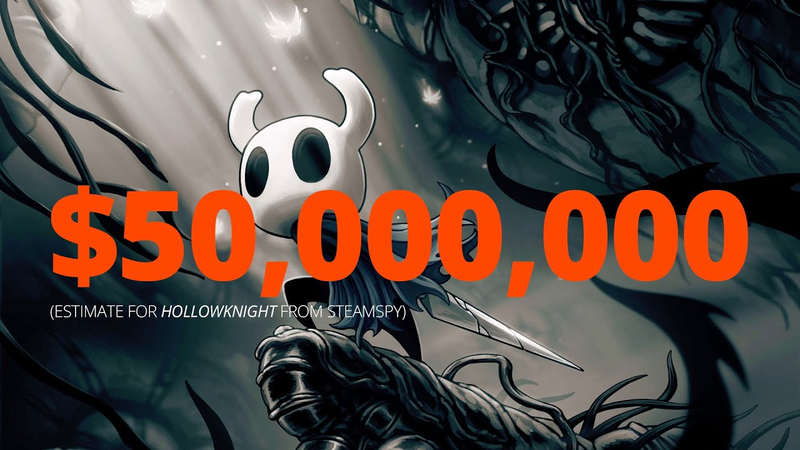
how much $$$ is your little indie game worth?
Securing funding for independent games requires a strategic approach to pitching that emphasizes transparency, visual proof, and realistic financial planning.
- Publishers evaluate potential partnerships based on three core requirements: high-quality visual assets, a clearly defined and itemized budget, and a functional game build.
- A detailed financial plan must account for all project-related costs, including marketing, public relations, and porting, as vague or inflated budgets undermine developer credibility.
- High-quality imagery or trailers are mandatory for establishing emotional resonance and allowing publishers to visualize the final product before committing capital.

TWIG Episode #174 Daddy's BACK!
The gaming industry is currently navigating a period of significant financial volatility, characterized by a stark contrast between massive capital inflows and a necessary market correction.
- The gaming industry is experiencing a significant financial divergence, where nearly $2 billion in new private funding contrasts sharply with the declining valuations of publicly traded gaming entities.
- Speculative ventures and metaverse-focused projects are currently struggling to justify their valuations, as the market shifts away from hype toward fundamental profitability.
- The industry is undergoing a necessary consolidation phase, characterized by the failure of unsustainable business models, particularly within the blockchain and 'play-to-earn' NFT sectors.

The Secret Sauce of Scaling Successfully with Joshua Wilson, CEO of SciPlay
The social casino market, currently valued at approximately $7 billion, relies on a sophisticated blend of live operations and monetization expertise to sustain long-term player engagement.
- SciPlay maintains long-term engagement in the $7 billion social casino market by managing titles like Jackpot Party and Goldfish Casino as enduring franchises rather than transient products.
- To preserve culture while scaling to over 600 employees, the company prioritizes cultural fit over raw technical ability using a hiring ratio of 51 percent culture to 49 percent skill.
- The organization utilizes a servant-leadership model that emphasizes executive accessibility and cross-studio collaboration to maintain cohesion during its transition from a private startup to a public company.
6-FIGURE PUBLISHING DEALS Before Finishing Your Game (a chat with Zhenghua Yang)
Securing six-figure publishing deals requires a strategic blend of creative vision, financial transparency, and professional relationship-building.
- Securing six-figure publishing deals requires presenting a polished, genre-appropriate vertical slice or narrative demo that demonstrates a clear business opportunity.
- Financial transparency is mandatory, requiring developers to provide comprehensive budgets that explicitly account for marketing, porting, and public relations costs.
- Publishers prioritize developers who demonstrate flexibility and a willingness to iterate on project scope to align with market needs and platform requirements.
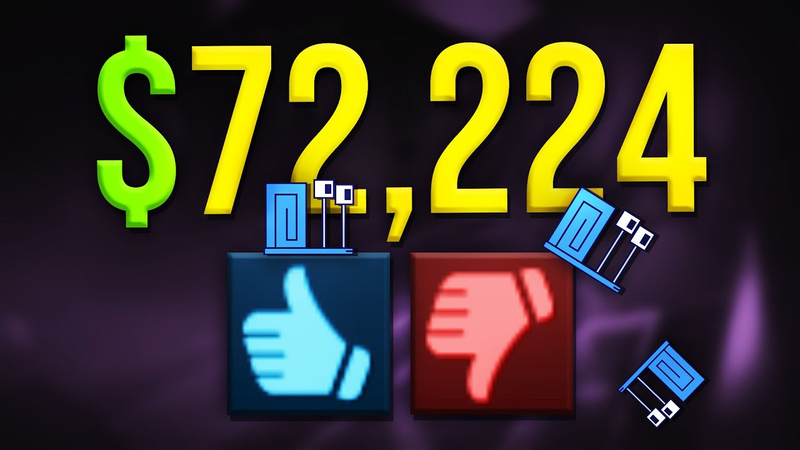
How my Game Launch Went on Steam
The launch of the indie game Will You Snail? on Steam provides a case study in the financial and operational realities of independent game development.
- The game generated $72,000 in gross revenue from 7,500 units in its first week, resulting in approximately $25,000 in net earnings after Steam fees and taxes.
- With total development and marketing costs between $30,000 and $40,000, the project reached near break-even status immediately following the launch window.
- The developer anticipates that future console ports will generate only 30% to 40% of the total revenue volume achieved on the Steam platform.

Creating in-game ads that better suit players with Harriet Hughes from Playstack
Playstack, a mobile and console game publisher, has introduced Interact, an ad-tech solution designed to replace intrusive, full-screen mobile advertisements with organic, integrated brand experiences.
- Playstack has launched Interact, an ad-tech solution that replaces intrusive, full-screen mobile advertisements with native, organic product placements within the game environment.
- The platform functions like film and television product placement, allowing developers to embed brand assets such as logos on equipment or environmental structures to avoid disrupting the player experience.
- Interact prioritizes high-quality, genuine engagement over volume-based metrics, enabling players to opt-in to interactions like saving brand vouchers for later retrieval.
Superstar Session: Tired of the Hypercasual Publishing Model? Then Become Your Own Publisher!
The transition from a traditional hypercasual studio model to self-publishing offers developers greater control, transparency, and long-term sustainability.
- Self-publishing allows studios to retain full intellectual property ownership and eliminate revenue-sharing requirements, lowering the financial threshold required for a game to be considered a profitable 'hit'.
- Transitioning to self-publishing shifts the full burden of user acquisition, data analysis, and marketing operations from the publisher to the developer.
- The self-publishing model supports long-term sustainability by allowing studios to move away from high-churn, hit-driven hypercasual cycles toward building a diverse, stable portfolio of games.
Still Flying High: Sunset Games 101
The concept of sunset games represents a specific sub-genre within the hypercasual market, characterized by a core loop focused on continuous progression, exploration, and incremental improvement.
- Sunset games are a hypercasual sub-genre defined by a single, expansive world and continuous meta-progression rather than discrete, level-based stages.
- The core loop centers on using earned currency to purchase character and equipment upgrades that enable further exploration and progress without punitive failure states.
- Design principles prioritize accessibility through one-handed controls, light decision-making, and high visual polish to ensure consistent player satisfaction.
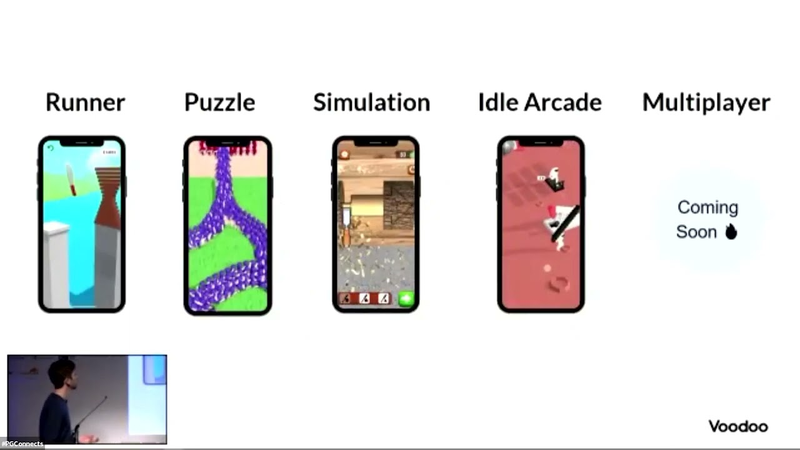
Voodoo's Secret to Reaching Repeat Hits: A Unique Game Ideation Process
Voodoo maintains a leading position in the hypercasual gaming market by prioritizing a methodical, collaborative approach to game ideation and studio partnerships.
- Voodoo prioritizes repeatable hits by focusing on core game mechanics rather than meta-progression or secondary systems to navigate the volatility of the mobile gaming market.
- The company has scaled its infrastructure to support over six billion total downloads across its portfolio.
- Voodoo is actively diversifying its portfolio beyond hypercasual titles into hybrid, multiplayer, casual, and play-to-earn gaming segments.

Keynote: How to Monetise Mobile Games Beyond the App Stores
The mobile gaming industry faces a significant limitation in revenue growth due to its reliance on closed ecosystems, such as the Apple App Store and Google Play Store.
- Reliance on closed ecosystems like the Apple App Store and Google Play Store excludes approximately 260 million potential paying players globally who lack access to standard payment methods.
- Implementing alternative payment methods in Europe could expand developer reach by 40%, capturing an additional 3 million paying customers.
- Major growth markets including Brazil, China, South Korea, Russia, Japan, and Turkey rely heavily on local payment solutions like Pix, Boleto, digital wallets, and cash-based systems that are currently unsupported by major app store infrastructure.
Scaling Blockchain Games: The Fundamentals
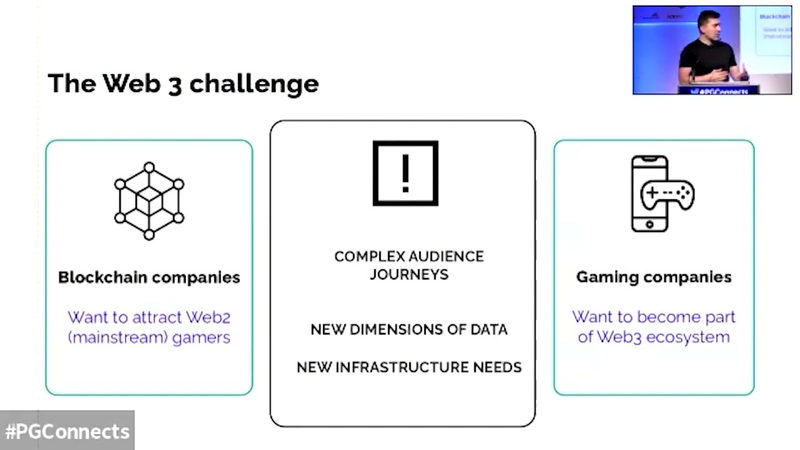
Scaling blockchain games requires a shift from relying on organic hype to implementing performance-driven growth strategies similar to those used in the mobile free-to-play market.
- Sustainable growth in blockchain gaming requires shifting from speculative hype to performance-driven strategies modeled after the mobile free-to-play market.
- The sector has demonstrated significant momentum, evidenced by a 100x year-over-year increase in active wallets and a high concentration of total blockchain transactions originating from gaming.
- Developers must integrate traditional gaming audiences with crypto-native users by creating high-quality, accessible products that prioritize genuine utility over speculative asset models.