1 free read left. Create a free account for unlimited reading + AI research.
Create free account
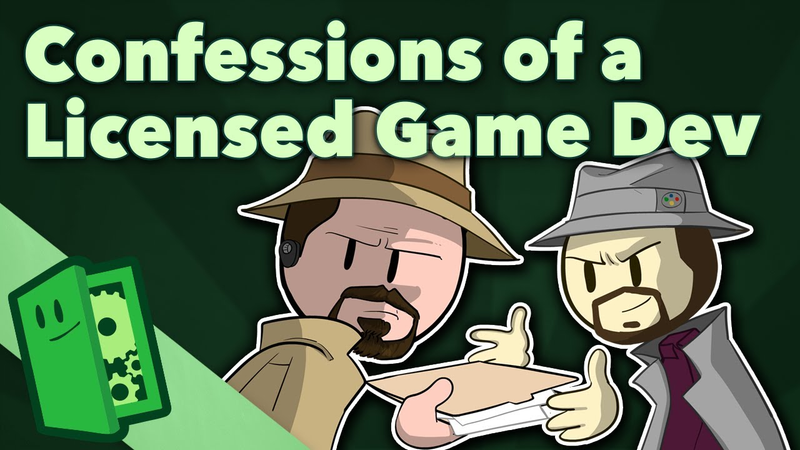
Confessions of a Licensed Video Game Developer - Extra Credits
Key insights
6 takeaways- 01Developers must navigate the challenge of updating older properties to modern cultural standards while ensuring sensitive topics are handled without alienating the existing fanbase.
- 02Designers face significant friction when gameplay requirements conflict with established canon or the specific preferences of the intellectual property owners.
- 03Forcing established characters into inappropriate genres often results in a disconnected product that fails to honor the source material.
- 04The success of a licensed game depends on the developer's ability to identify and translate the core appeal of the original property into meaningful gameplay mechanics.
- 05Aggressive corporate timelines and short licensing windows frequently force developers to prioritize production speed over the creative nuance required to satisfy fans and license holders.
- 06Successful titles like Insomniac’s Spider-Man demonstrate that high-quality results are achievable when design teams effectively bridge the gap between passive observation and active participation.
Ask AI about this video
Transcript
Has this ever happened to you? You're super hyped to play a new game based on a novel, TV series, or film you love, but as soon as you load it up or roll it out on your table, the experience is just kind of meh. Ooh, what happened? I mean, that cool world and all those awesome characters are all right there. What went wrong? Well, our designer friend, Eddie Web, having worked on converting a few existing franchises into licensed games in his time, is going to walk us through the challenges he's experienced trying to give us the games we wanted and let us know why sometimes those weren't the games we got. Thanks so much to HelloFresh for helping us figure out what's for dinner. When we talk about a licensed game, we're using a very broad term. I mean, technically, anytime one company lets another company use their intellectual property, that's considered essentially licensed. But here, we're going to focus our conversation specifically on games that convert a fictional universe from a different primary media into an interactive experience. But two quick notes before we begin. One, Eddie being
a gentleman of a certain age, as they say, thinks the older terms like tie-in games or transmedia games are more accurate descriptors than saying licensed games, but that's neither here nor there. And second, we should point out that there are more and more really good licensed games coming out these days. But for every Arkham Asylum, there seems to be a Batman Forever. Because the truth is, there's so many additional challenges designers face when converting a media property into a game. The first challenge being balancing callbacks and novelty. Of course, we all want to see the things we know and remember fondly. So, designers really need to nail the pre-existing tone and characters. But we also want games to present something new and exciting. And these new pieces still need to feel like a natural outgrowth of what's already established. Turns out, it's really hard to walk that line of new, but not too new. So, it takes longer to write narrative, record dialogue, and create art assets that work as both part of the game that's being made and within the licensed universe. Really, it's more of an art than a science. For example, Eddie worked on a mobile game called Futurama: Game of Drones. And when
writing dialogue about Bender's obsession with pornography, he was surprised to learn that the Apple Store wouldn't allow a game that had the word porn in it. Luckily, the word smut was allowed, but it involved several rewrites to get the new word to feel like a natural part of Bender's dialogue. Similarly, there was a new robot character introduced into the game named Rusty. And while Eddie worked with the lead writer from the original show to get the tone across, Futurama fans were, let's say, less than receptive to the new addition. Seriously, I read the comments once and my eyeballs will never recover. Also, adapting older properties adds an additional layer. We are not living in the Victorian era, for example, and while you can create new cases for Sherlock Holmes, how you present certain topics changes because what we consider acceptable has changed. For instance, cultural awareness around drug use and child labor have modified a little bit since those times, and Holmes does use both in his cases. So, designers need to adapt the material in ways that align with what we expect from media now, while also not dismissing what came before. An additional
balancing act to contend with. Another factor is canon. Now, Eddie has a whole rant on canon, which we are not going to get into right now, Eddie. Okay? Up up up. All right. But some games benefit from barely touching canon, while others need to dig into the details, and both directions have pros and cons. On one hand, building on established canon means the designers have a starting point to work from, but on the other hand, you can't easily change any canonical details that make gameplay inconvenient. And if the license holder catches a mistake late in the process, it's costly and time-consuming to fix. But then on the other other hand, sometimes this means the game can contribute to the canon, standing alongside the rest of the universe's rich tapestry. So, it is crucial for the design team to determine how much canon they're using, how much they're adding, and how much they're ignoring. A great example of this from Eddie's portfolio was a tabletop game for the WWE. Specifically, when he wrote a chapter about the various title belts and their histories. However, when the manuscript was sent to the license holders, they
scrapped the whole chapter because, and I quote, "We don't talk about the history of the WWE." Now, that's fine. The license is the license holders after all. But, if Eddie had known ahead of time, it could have saved a lot of work from getting thrown away. Not to mention he would have changed the overall tone of the game much sooner. Finally, it's important to remember that people love stories for different reasons. So, it's critical for game makers to drill down into the specific aspects that cause fans to fall in love with the property in the first place. Respecting that and making something fans will enjoy should be a central part as to why a company licensed it in the first place. And I think many of the worst licensed games we can think of can be traced back to a misunderstanding of this key element. For example, why was there a Simpsons wrestling game? Because the one thing Simpsons fans want is for Homer to be a combat badass? Or in Kinect Star Wars, were fans really clamoring to be able to dance as Boba Fett? I mean, that's definitely not a scene I remember from the movies. Although, maybe it's in the next season of The Mandalorian, who knows. On the other hand, the Spider-Man games by Insomniac are fantastic because not only do they understand the
character's appeal, but also how interactivity changes the player's relationship with him. They understand that it's one thing to watch Spider-Man web sling on a screen, but it's another thing to be Spider-Man and crawl around New York for yourself. So, if we're portraying an established character, we expect the gameplay to make us feel like we're that person. And that can be a lot harder than making a completely new universe with no preconceived expectations attached. Okay, that's a lot of hoops licensed games need to jump through. But, a talented design team should be able to overcome all those, right? Oh, hey, didn't see you there, corporate executive. Oh, boy. Turns out most licenses are awarded to game companies for a comparatively short time, usually on a scale of a few years. So, designers have even less time than normal to navigate all of these challenges on top of their normal design concerns, especially if a publisher only has, say, a 3-year license and wants to get 2 years worth of sales instead of just one. They're going to want to make it to market as fast as possible to make the most money before the license expires, meaning the time span for design is probably going to get
truncated. So, callbacks versus novelty, canon consideration, company pressure, and high fan expectations, these all stack the deck against the design team. I mean, it's actually a wonder any genuinely outstanding license games happen at all as design teams have a massively uphill battle when it comes to making them. So, hats off to the devs on these licensed games because even though they don't always live up to our expectations, we can still examine and respect the hard work that goes into them. And would you look at that? We didn't even mention ET for the Atari 2600 once in the episode. I think we're growing as people. But, you know, man, cat, or alien, you can only live off Reese's Pieces for so long. Oh, thanks, HelloFresh. Didn't even have to phone home or anything. But, what's HelloFresh, you ask? Why, it's a tasty meal kit delivery service that can save you a bunch of time and keep your belly super happy. All while eliminating tedious trips to the grocery store and stressful meal planning. You get everything you need to prepare delicious meals, all delivered to your door, and you can be eating in a half hour or less. Ooh, and this week I was really burning to cook their firecracker meatballs. And while I don't want to sound like a certain celebrity chef, the
words flavor explosion did come to mind. And now that Zoe and I have had keys made to Jeff's house, don't worry about it, we got to join in his family-sized chicken sausage spaghetti bolognese. What? We'll do the dishes. Delectableness and non-digits aside, another thing HelloFresh gets right is their continued work on the sustainability front. Ingredients are pre-portioned, which means less food waste, and the carbon footprint of their service is actually 25% smaller than meals made from store-bought groceries. And now's a great time to try HelloFresh for yourself with this dynamite deal. All you got to do is go to hellofresh.com and use the code Extra Credit 16 for up to 16 free meals and three surprise gifts, including free shipping. Now, I'll just say that again in case your stomach was growling too loud, you can get free food while supporting the content you love, the environment, and not to mention your grumbly tummy. Again, that's 16 free meals at hellofresh.com using the code extra credit 16. Your time and taste buds will thank you, and so will we. Thanks. Thanks so much to Aurelius 1, Kyle Murgatroyd, Joseph Blane, Dominic Valenciana, Casey Newscha, Angela
Valenciana, Alicia Bramble, and Ahmad Ziad Turk for being awesome legendary patrons.
Summary
The development of licensed video games—often referred to as tie-in or transmedia games—presents a complex set of challenges that frequently result in products failing to meet fan expectations. The primary thesis is that designers must navigate a precarious balance between honoring established intellectual property and creating engaging, novel interactive experiences, all while operating under significant corporate and time-based constraints.
Key challenges include the delicate task of integrating familiar characters and tones while introducing new elements that feel authentic to the source material. Designers must also manage the constraints of canon, which can provide a useful foundation but often creates friction when gameplay requirements conflict with established lore or the preferences of license holders. Furthermore, developers must adapt older properties to modern cultural standards, ensuring that sensitive topics are handled appropriately without alienating the existing fanbase.
The success of a licensed game often hinges on the developer’s ability to identify the core appeal of the original property and translate that essence into meaningful gameplay. When developers fail to understand why fans value a specific franchise—such as forcing inappropriate genres onto established characters—the resulting product often feels disconnected. Conversely, successful titles, such as the Insomniac Spider-Man series, demonstrate that high-quality results are possible when the design team effectively bridges the gap between passive observation and active participation. Ultimately, these projects are frequently hampered by short licensing windows and aggressive corporate timelines, which truncate the development process and force teams to prioritize speed over the nuanced creative work required to satisfy both the license holders and the audience.