1 free read left. Create a free account for unlimited reading + AI research.
Create free account
Superstar Session: Tired of the Hypercasual Publishing Model? Then Become Your Own Publisher!
Key insights
6 takeaways- 01Studios should view traditional publishing as a source of foundational knowledge, eventually transitioning to independent operations to maintain the flexibility to pivot toward emerging sectors like blockchain-integrated gaming.
- 02Operational maturity is a prerequisite for this transition, as studios must possess the financial stability and internal expertise to manage the entire product lifecycle independently.
- 03Self-publishing allows studios to retain full intellectual property ownership and eliminate revenue-sharing requirements, lowering the financial threshold required for a game to be considered a profitable 'hit'.
- 04The self-publishing model supports long-term sustainability by allowing studios to move away from high-churn, hit-driven hypercasual cycles toward building a diverse, stable portfolio of games.
- 05Transitioning to self-publishing shifts the full burden of user acquisition, data analysis, and marketing operations from the publisher to the developer.
- 06Self-publishing enables more efficient development practices, such as the use of modular code bases to iterate on proven mechanics across multiple projects.
Ask AI about this video
Transcript
[Music] [Music] as any other kind of games things changed models change and now our next speaker is going to be talking how if you are tired of the hyper casual publishing deals you are going to create your own so please give a really warm welcome to hugo furna please give me a hand hi yeah my name's hugo furno and i'm ceo of adc games and play amber um and this is our talk on uh whether you're tired of the hyper casual publishing model why don't you become your own publisher this is a step we took about nine months
ago and we're really happy we did and we want to tell you our journey so just an overview of what we'll go through today who are play ember what we've done what we've experienced why the move away from the normal hyper-casual publishing model the challenges and the benefits of that move and then what is to come from us so we are um a team so playing but is the self-publishing arm of adc games uh we're a team of just over 10 now and over the last three years with adc games we've published over 70 million published over 17 million games we've um we've had over 70 million downloads and we've worked with all the leading hyper casual publishers um boom bit voodoo quality um and more and then in the last eight months we made the move to play ember uh where
we've had over 20 million downloads um and that's kind of focusing on longer term value games and moving away from the purely hyper casual to the casual games so what have we done so we've published around 10 games with industry experts so boom bit voodoo kwali line studios and boom hits with voodoo we were around right at the kind of the start of the hyper casual boom and we learnt a lot from them we published three games with them first one being idle flipper and that was back in the day where you could get a day one retention of i think like 85 it was pretty crazy but those those days are long gone um we learned so much from these guys from these publishers one tip i would give is to just ask loads of questions because they've got such a wealth of knowledge but after doing this for a few years really we really felt like
there was more to learn and we wanted a bit more control over the process and that's where play amber comes in um so through throughout the last nine months we've created kind of longer term value games so with hyper cards um kind of a card game which is notoriously high cpi and kind of good in-game stats we were able to rely on kind of a pack opening mechanic and a trading mechanic um and we could get a low cpi with a card game but high in-game stats and this is kind of a game that perhaps you wouldn't uh associate with a normal hyper-casual publisher and i think this is a game that probably wouldn't have got to the stage of publishing with a normal hyper-casual publishing model um but with self-publishing it did and it's our it's our best hit to date and it's a number one card game with superhero race it's kind of a really uh i suppose a normal hyper casual game uh
but because we are self public self publishers now um and we are kind of our own bosses we saw that there was a really nice runner mechanic where you changed the characters um and we thought okay we're gonna jump on that we think a superhero theme would be really really good um and from kind of ideation to publishing took about three weeks because we chucked everyone on it and that game has over 50 million downloads now with ralph life our kind of idle arcade baby one of the first idol arcade games um with the self-publishing we've kind of we feel like we've become a bit more efficient so we have two games in soft launch that use the same code base as this game uh because we built it in kind of a modular way um so yeah that's a tip i'd give if you can create any code kind of modularly that you can get multiple hit games out of one that's great we're also porting ralph life over to switch as
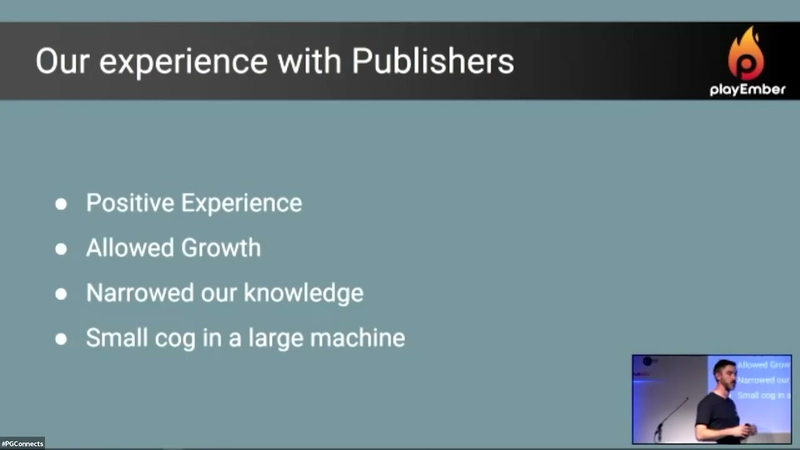
well which is quite exciting with slingshot crash one thing relatively new game so over a month old but has had over a million downloads we really tried to push the boundaries with what's possible um on unity and on mobile devices so there's kind of a real scale of mass defamation of kind of the car body works and we found anything that kind of pushes the boundaries and we did a previous game with lion studios called pressure washer with um really good water physics in tier one countries that seems to work really well because it's kind of hasn't been seen before and gets a low cpi so generally our experience with publishers um been a really really positive experience we've learned so much yeah they have an absolute wealth of knowledge we've asked loads of questions and it certainly has allowed us to grow to the stage we are now
um because we could kind of focus solely on our our core strength of game development um we have found though uh however that that has kind of narrow narrowed narrowed our knowledge set so we were kind of so focused on development and so focused on hitting black and white kpis that actually a lot of games that i think could have been hits over the last few years kind of fell by the wayside and another thing that became really apparent was that you are one of the mobile game studios that the publishers work with so you really are a small cog in a large machine um and i think it's kind of naive to think perhaps that you um you would have the same or your goals would be aligned with a large hyper-casual publisher for example a publisher may want to push the game to number one in the charts um
which may mean kind of scaling aggressively and those profit margins really really reduce um whereas as a smaller game studio you'd probably rather scale scale up to lowest level and keep those profit margins but when you are kind of in the normal hyper casual publishing model that's not really a call you get to make so why the move for us one of the big things was to own the games that we made um in this kind of gaming industry where there are lots of investments and m a's we really felt like we wanted to grow a portfolio of games and it was always a bit um kind of a bittersweet moment when you've got a game with good enough stats to be published but you are kind of giving it away and giving the ip away so we wanted to keep that we really wanted access to all the stats as i'll come on to later that has really helped us in the last eight nine months create what we think are
better games because we have um so much more insight into what works um we're not kind of ua superstars by any means but we wanted a bit more control over the ad creatives and see all the ad creatives that were run and we really wanted to kind of cement the move away from being a development studio that works with a publisher to a mobile game studio because we feel that's kind of a bit more sustainable going forward and finally we have learned so much from the hyper casual publishers but we kind of had got to a stage not that we learned have learnt everything by any means um but we thought it was time to kind of learn by doing um and really getting our hands dirty the challenges of the move um i would definitely not recommend it if you're a team under five or if you don't have a lot of experience in the space
because there is just a hell of a lot more to do um that does mean you're kind of less focused solely on development but as i'll go on to later i think that's actually better because a kind of a more holistic view i think produces better games in the end a huge benefit of the move was how much we've learned over nine months um we think kind of yeah we've learned everything from the ideation stage to uh to uh all the way through to launching launching a game um we found that kind of a holistic view of all the game projects has really helped to create more hit games with higher ltvs so for example um with hypercards we had a prototype with a good cpi um but the play time was really poor and the in-game stats were poor um and we
had another prototype that had um or the themes the theme of that prototype had a really really good ecpm and just kind of having access to all those stats we were able to merge them together and effectively create hypercards it's never overly talked about but the the kpis you need to get a hit publishable game when you are doing self-publishing are lower than that of the normal hyper-casual publishing model because you don't need to share revenues um and also uh big hyper casual publishers um i i think are looking for the like one in a thousand game that makes big big profits whereas a smaller game studio um can kind of live off those smaller games that make enough money to hire two three more devs each month and that's kind of how you sustainably grow
and one of the other really big bits was a freedom to follow opportunities so in this market that's kind of ever changing we really didn't want to be told to do a certain type of prototype or anything like that and that kind of freedom to follow opportunities has led us onto our largest project to date and that's a nft fully playable game called bunker buds play to earn and i'd love to show you the promo video for that now [Music] [Laughter] [Music]
[Laughter] [Music] [Laughter] so [Music] [Laughter] [Laughter] [Music] cool um so yeah we're really excited to announce bunker buds um so it's a game first because we're a game studio at heart nft project um and play to earn we've created 6 666 hand-modeled playable nfts um and when we looked at all the kind of other play-to-one projects around
staking seemed to be a bit of an afterthought so we've really kind of put that in the heart of the game and the gameplay loop so the more you play the higher your ap wise will get this is certainly a project that we would not have got to do if we were in a normal publishing model um so in conclusion um we would really really recommend a partnership model or a self-publishing model where your goals are aligned with each other if you're a really small team i'd encourage you to go to the hypercasual publishers in a kind of normal deal learn as much as you can and then when you get hits kind of grow sustainably from there and try and build up your team until you get to a point where you think you can take the next step another one is to weigh up your options
there is so much going on in the industry um and i'd recommend you to not get kind of any exclusive deals or um anything that won't allow you to follow certain opportunities and then that leads me on to if you would like any help kind of with the transition from um a team that is working with hypercasual publishers and you want to go into self-publishing a bit more we'd be happy to kind of answer any questions or any help so thank you very much [Applause] we have a few minutes for questions if you guys have questions to ask i always have to ask the first one because people are too shy for that i have a question what is your device to come for developers that want to doing
self publishing so they can compensate for the lack of funding for ui for user acquisition sorry i'm mr fassbend like that when you are self publishing it especially in hyper casual the best biggest problem they will have is user acquisition all the testing iteration and then the user acquisition so what what is your advice for people that want to go this route for self-publishing yeah but to compensate for these issues okay yeah and i suppose we've been in a lucky position that we um we kind of made this move when we have had hit games so we had funding kind of in the bank and if that wasn't the case then i'd recommend to kind of team up with a i suppose a partner and i think as long as your kind of goals are really aligned and perhaps you say that we really only want to push this if we keep project margins at this um because our main goal is to make profit rather than
the downloads mixers if they if you get don't get shy you can jump in otherwise i will ask another question you might hate me for this question afterwards yeah so sorry about this you said that you were doing a game with nfts we know there is a lot of back and forward positive and negative going around with nfts so if you would be so kind to say how are you dealing with it how is the audience answering to saying but i'm really curious to know how it has been the repercussion around in fts for you guys yeah so i think it's helped that we um it's a completely new game i think there's been a lot of kind of um a lot of negativity around kind of current user bases when the game is kind of changed to an nft um but no we've kind of had positive feedback um but it's it's something a
bit new but we're kind of really excited to to see where it takes us to be honest nice [Music] [Music] you
Summary
The transition from a traditional hypercasual studio model to self-publishing offers developers greater control, transparency, and long-term sustainability. By moving away from standard publishing agreements, studios can retain ownership of their intellectual property, access granular performance data, and align development goals with profitability rather than just aggressive, high-volume scaling. This shift is particularly advantageous for studios seeking to build a diverse portfolio of games rather than relying on the hit-driven, high-churn cycles typical of major hypercasual publishers.
Key findings indicate that self-publishing allows for more efficient development, such as utilizing modular code bases to iterate on successful mechanics. Furthermore, the threshold for a "hit" is lower in a self-publishing model because the studio avoids revenue-sharing requirements, enabling smaller projects to remain profitable and support team growth. However, this transition requires significant operational maturity. The model is recommended only for teams with sufficient experience and financial stability, as the burden of user acquisition, data analysis, and marketing shifts entirely to the developer.
The scope of this experience covers the mobile gaming industry, specifically the evolution from hypercasual to casual and play-to-earn segments. The methodology relies on the firsthand experience of a studio that transitioned from working with major publishers to independent operations over a nine-month period. The analysis suggests that while traditional publishing provides valuable foundational knowledge, studios should eventually pursue self-publishing or aligned partnerships to maintain the flexibility to pivot toward emerging opportunities, such as blockchain-integrated gaming. Ultimately, the transition transforms a studio from a development-only entity into a comprehensive mobile game business capable of managing the full product lifecycle.













Comments