Game Publishing reports and market data
Documents
Marcin Świerkot - How to iterate and use crowdfunding / Early Access
Crowdfunding and Early Access serve as fundamental mechanisms for modern indie game development, shifting the focus from internal assumptions to data-driven design.
- Crowdfunding and Early Access are essential tools for indie studios to self-fund development, as demonstrated by Awaken Realms growing from a five-person basement startup to a 200-person company over 10 years without external investors.
- Steam visibility spikes are highly dependent on platform-driven traffic; reaching 'Popular Upcoming' or 'New and Trending' categories can generate thousands of wishlists that are otherwise prohibitively expensive to acquire through paid marketing.
- The most reliable validation of a game's 'fun factor' is financial commitment; players voting with their wallets provides more accurate data than focus groups, which are often skewed by cultural differences in feedback.
Patryk Grzeszczuk - Reality-proof planning - how to prepare to survive on the market
Modern game marketing requires a fundamental shift from linear release schedules toward a dynamic, level-design approach that treats the promotional journey as an interactive space for player exploration.
- Adopt a dynamic, level-design approach to marketing that treats the promotional journey as an interactive space for player exploration rather than a linear release schedule.
- Establish quantifiable objectives—specifically wishlist targets, traffic metrics, and conversion ratios—well before product launch to serve as real-time benchmarks for performance.
- Utilize a reverse-engineered planning methodology that breaks high-level KPIs into modular, manageable tasks to ensure campaigns remain grounded in core value propositions.
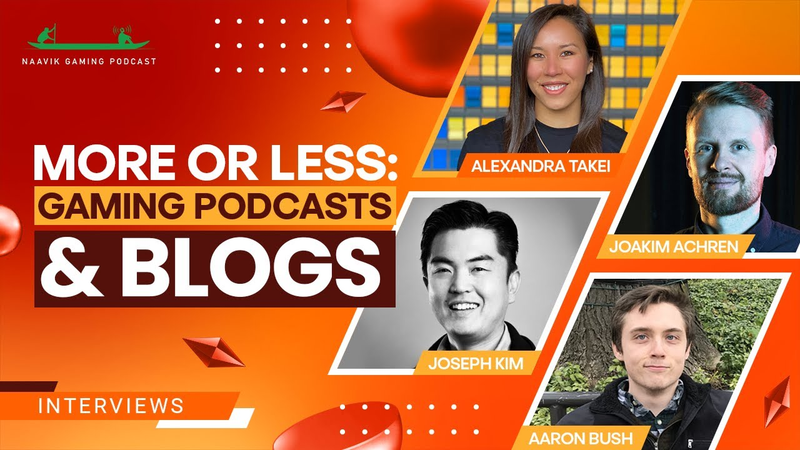
More or Less: Gaming Podcasts & Blogs
The gaming industry’s professional content landscape, encompassing approximately 300,000 to 500,000 individuals, operates primarily as a B2B ecosystem rather than a traditional media sector.
- Gaming industry media platforms like Naavik, GameMakers, and Elite Game Developers function as B2B marketing funnels rather than traditional media, using content to drive consulting, recruiting, and deal-sourcing revenue.
- The professional gaming content ecosystem targets a specialized audience of 300,000 to 500,000 individuals, prioritizing high-value industry authority over mass-market consumer reach.
- Maintaining a consistent publishing schedule is the most critical factor for long-term audience retention, as the recurring nature of newsletters and podcasts mitigates the impact of individual content failures.
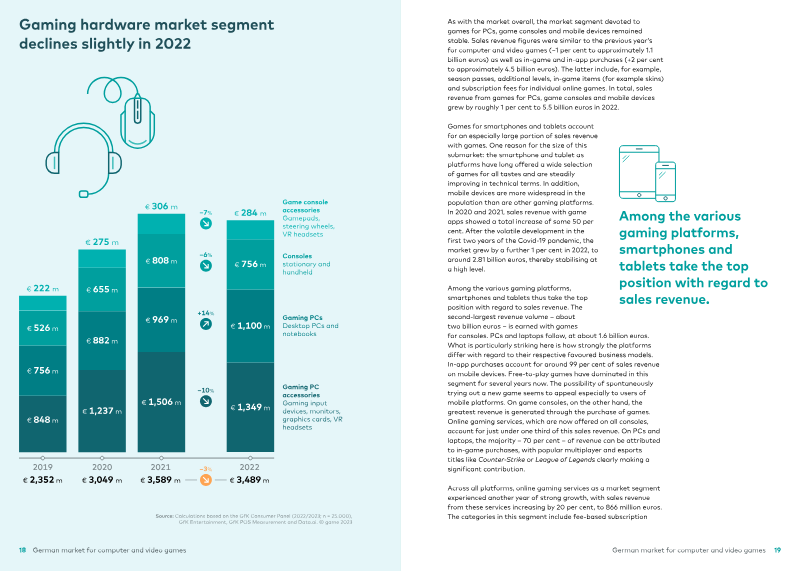
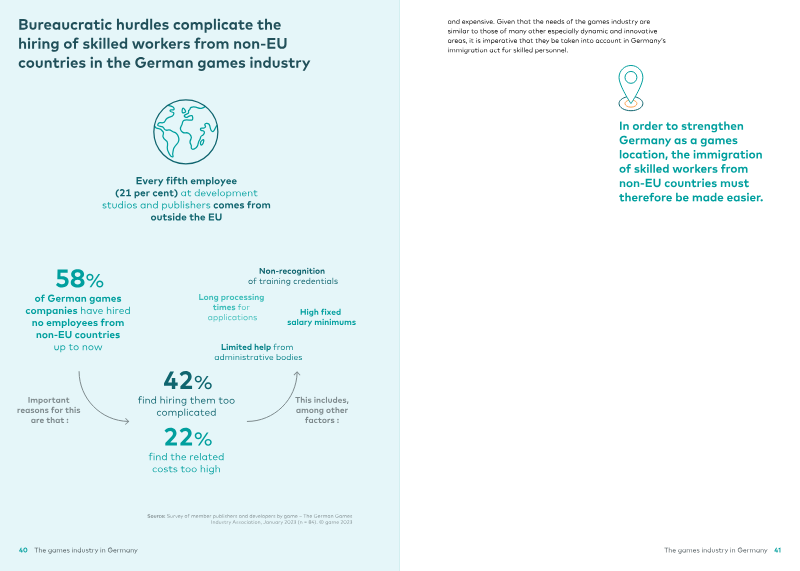
Annual Report of the German Games Industry 2023
The German games industry demonstrated remarkable resilience throughout 2022, maintaining a stable market valuation of 9.87 billion euros despite global economic headwinds, inflationary pressures, and hardware supply constraints.
- The German games market remained resilient in 2022 with a valuation of 9.87 billion euros, achieving 1% growth despite global economic pressures.
- The industry saw significant structural expansion, marked by a 15.5% increase in the number of companies and a 7% rise in the total workforce.
- Mobile gaming remains the primary revenue driver, while digital distribution has become the standard purchasing method for PC users and younger demographics.
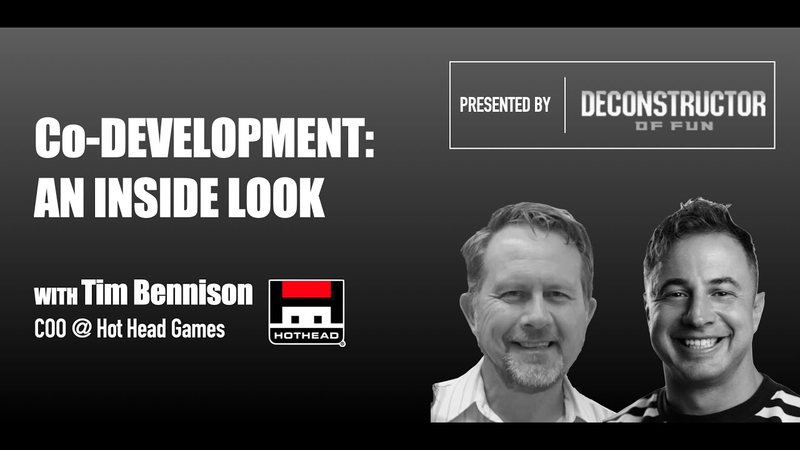
Co-Development: An Inside Look with Tim Bennison, COO of Hot Head Games
The mobile gaming industry has undergone a significant strategic shift, moving away from a reliance on self-publishing toward a hybrid model that emphasizes co-development and work-for-hire partnerships.
- The mobile gaming industry is shifting from self-publishing to a hybrid co-development model to mitigate financial volatility caused by rising user acquisition costs and complex privacy regulations.
- Co-development partnerships provide studios with the stable, long-term contracts necessary to maintain a consistent, full-time workforce and preserve institutional knowledge.
- Top-tier clients prioritize speed, quality, and geographic alignment over low costs, requiring studios to act as strategic, transparent extensions of the client's own team.
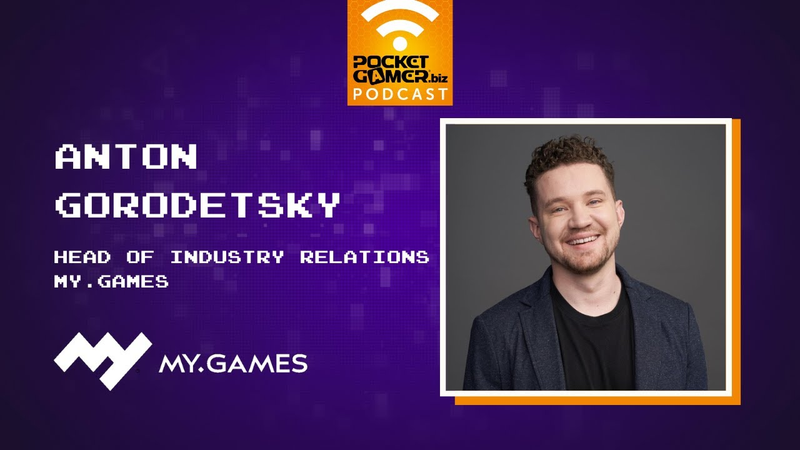
MY.GAMES’ Anton Gorodetsky On Brokering Mutually Beneficial Business Relationships
The global gaming landscape requires a sophisticated balance between centralized strategy and localized execution.
- The gaming industry is experiencing a significant capital market contraction, with 2023 deal values falling substantially below 2021 levels, necessitating a shift toward internal marketing ecosystems and proprietary analytics.
- Strategic influencer partnerships can drive measurable growth, as evidenced by the collaboration between Rush Royale and Jake Paul, which resulted in a 20% increase in daily active users and reached 6 million monthly active users.
- Modern game lifecycle optimization should prioritize brand loyalty and the long-term expansion of existing intellectual properties over aggressive, short-term user acquisition strategies.
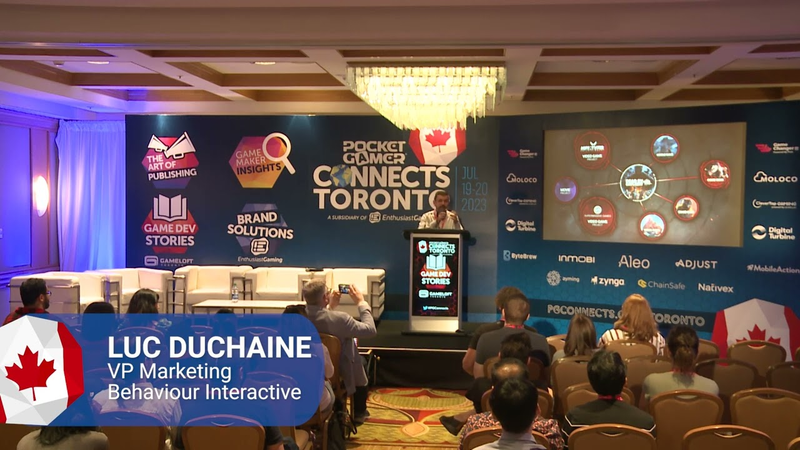
How Canada’s Biggest Independent Studio Went Global - Luc Duchaine, Behaviour Interactive.
Behaviour Interactive, Canada’s largest independent video game studio, has successfully transitioned from a work-for-hire service provider to a global publisher of original intellectual property.
- Behaviour Interactive transitioned from a work-for-hire service provider to a global publisher by launching the original IP Dead by Daylight in 2016, which has since reached over 50 million players.
- The studio maintains a dual-revenue model that balances original game development with a work-for-hire division, providing financial stability and opportunities to refine technical expertise on global brands.
- Founded in 1992, the studio has scaled to over 1,200 employees with a physical presence in Montreal, Toronto, Seattle, and the United Kingdom.
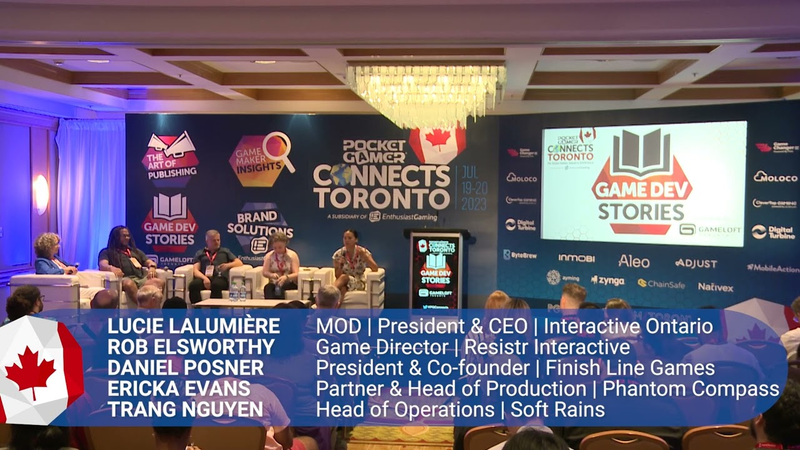
PANEL: The Path to Indie Success & Sustainability.
Achieving long-term success in the independent game industry requires a fundamental shift from viewing creative output as the sole metric of viability toward a model that prioritizes financial sustainability and operational discipline.
- Indie studios must transition from a creative-only focus to a model that prioritizes financial sustainability and operational discipline to avoid the risks of relying on single-hit titles or perpetual grant funding.
- Developers should adopt a diversified revenue strategy by balancing the creation of original intellectual property with external service work to ensure consistent cash flow.
- Strategic business planning, including rigorous financial management and realistic project scoping, must be integrated into daily operations from the inception of the studio.
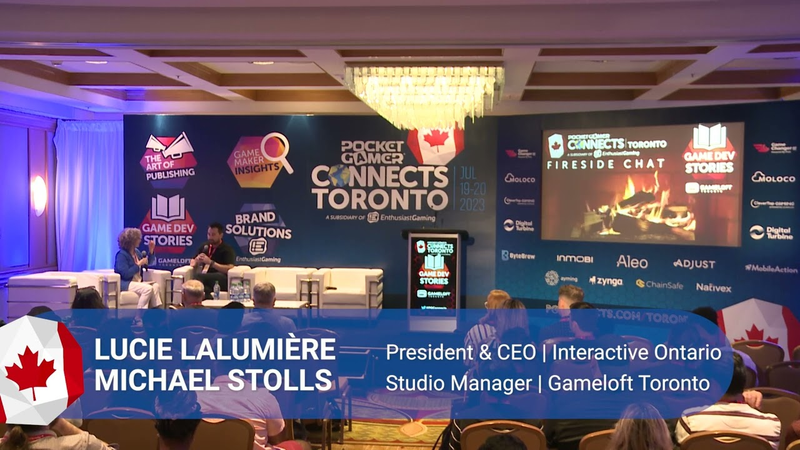
Maximizing Your Player Reach by Building for Different Platforms - Lucie Lalumière, & Michael Stolls
The transition toward cross-platform development represents a strategic evolution for studios traditionally rooted in mobile gaming.
- Transitioning from mobile to cross-platform development requires a fundamental shift in design philosophy, moving from short, frequent mobile sessions to the longer, immersive experiences expected by PC and console players.
- Successful multi-platform expansion depends on early-stage research and focus group testing to ensure that monetization models—whether free-to-play or premium—align with the specific expectations of each platform's audience.
- Developers must optimize user interfaces and experiences to balance the technical constraints of mobile hardware against the higher performance capabilities of consoles and PCs.
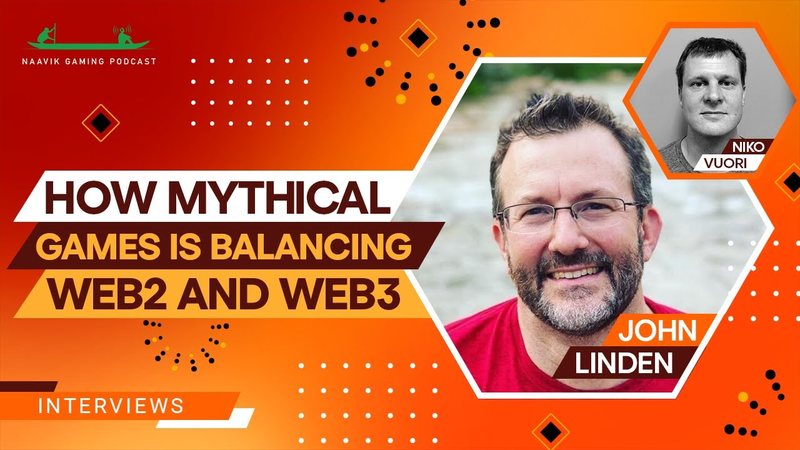
How Mythical Games is Balancing Web2 & Web3
Mythical Games is navigating the transition between traditional gaming and decentralized economies by prioritizing high-quality, accessible gameplay over overt blockchain mechanics.
- Mythical Games prioritizes mass-market appeal by keeping blockchain mechanics invisible, focusing on high-quality gameplay rather than technical complexity.
- The company has shifted toward a mobile-first strategy, evidenced by NFL Rivals achieving nearly 2 million installs through arcade-style mechanics.
- To mitigate token volatility, Mythical Games uses the Mythos token as a centralized ecosystem currency rather than issuing individual tokens for every game.
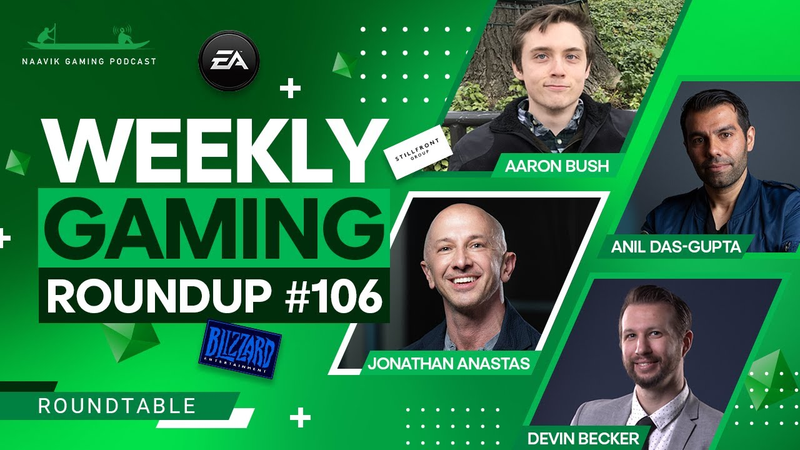
Blizzard On Steam / CD Projekt Cuts / EA Post-FIFA / Earnings Reports
The global gaming industry is currently undergoing a significant structural transition, moving away from the aggressive, growth-at-all-costs expansion that defined the 2021 market.
- The gaming industry is shifting from 2021's growth-at-all-costs model to a focus on operational efficiency, free cash flow, and the prioritization of core intellectual properties.
- Major firms are implementing workforce reductions and portfolio optimization, exemplified by CD Projekt's layoffs and the sunsetting of underperforming titles to maximize margins.
- Electronic Arts is actively reducing overhead by transitioning from the FIFA brand to EA Sports FC, effectively eliminating burdensome licensing costs while maintaining audience engagement.
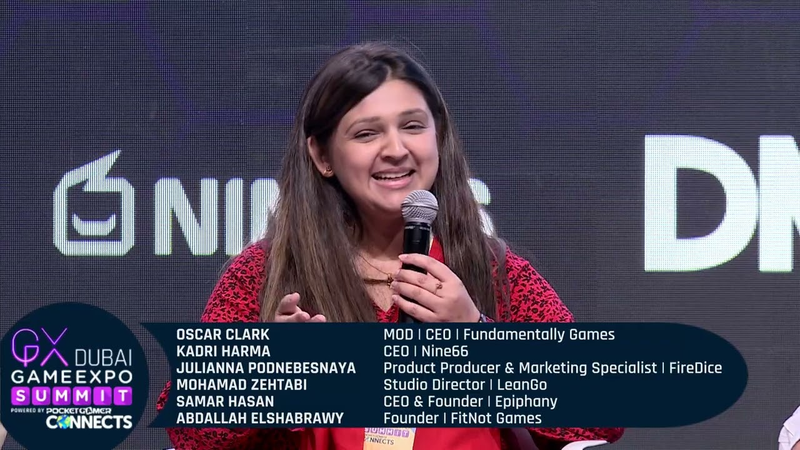
Panel: State of Play for Indie Developers - How to Survive & Thrive in the Modern Ecosystem?
The modern indie game development landscape demands a fundamental shift in perspective, moving away from viewing game creation solely as an artistic endeavor toward treating it as a disciplined, entrepreneurial business.
- Indie developers must transition from viewing game creation as purely artistic to treating it as a disciplined, entrepreneurial business to ensure long-term survival.
- Success requires prioritizing smaller, manageable projects over overly ambitious titles to maintain development momentum and ensure consistent output.
- Studios should adopt a data-driven approach by integrating objective audience feedback into the development cycle to refine products and build a loyal community.