VideoDeconstructor of Fun
Co-Development: An Inside Look with Tim Bennison, COO of Hot Head Games
8 Aug 202348 min video
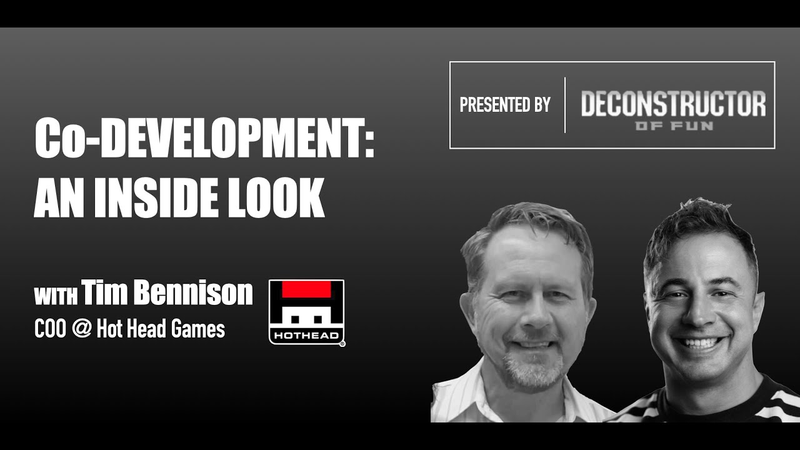
foreign [Music] podcast I'm your host Mishka katkov and I'm a fantastic guest for everybody um Tim bennison experienced technology company leader with unique makes of creative technical management skills and technical management skills you have over 25 years in game development visual analytics computer Graphics VFX production creative product development building production capacity and increasing Revenue you clearly have a sharp focus on Innovation and efficiency you have a passion for building great teams and great technology and you've driven a lot of results 7 million video games sold 200 million in Revenue via greenlit pitches 3D VFX for over 20 feature films and in addition Timur a board member for several technology companies and associations I think I've um I think this is a correct way to introduce you to the show so Tim welcome thank you thank you thank you glad to be here so so Tim
um you're currently a chief operating officer at Hot Head Games and you've been at Hot Head Games for nearly three years what what led you to join Hot Head Games uh pretty simple my former boss Ian Wilkinson who is the CEO of Hot Head uh phoned me up one day I was on a beach in Northern Vancouver Island looking for orcas and uh you know I was actually retired for one year I'm that old um and he said why don't you come back and I'd love to work with you again because we had spent 15 years working at radical entertainment uh here in Vancouver which is a company he founded in in the early 90s so it was my second go around with him so I said yes Vancouver has quite the uh the game development scene right absolutely it's a pretty big scene probably second biggest in Canada after Montreal used to be the biggest um and very tight-knit you know like uh everyone knows about recent rounds of layoffs everywhere happening there's there's been some in Vancouver everyone comes together and makes sure people land on their feet and it's pretty heartening and everyone knows everyone I
mean it's probably similar to to Helsinki I'm guessing yeah you know just just much much much more beautiful I don't know I mean I've never been where you are but I mean well you know here is good things I've been in both let's let's just say that uh that you take you take the cake all right okay that's true I mean I I'm lucky enough to live in the North Shore North Vancouver and I do a lot of mountain biking even though I'm old and it's like the mecca World Mecca from mountain biking great you're you're not that old uh you know if you're watching this YouTube you'll see it and and if you're listening he's not that old it looks mighty fine okay man I feel I used to be the youngest kid in the tech companies and you look no other unit no older than 45 okay that's very nice of you to say that I love it which companies have you worked at in Vancouver like Capcom and right uh well in Vancouver I started at radical in 95. I guess that's the start of my video game career um went worked there 15 years background
in Tech uh EP on various products uh we got sold to vivendi and then we were part of the Activision Blizzard merger and uh so I the last game I did there was Prototype I was EP on that uh for Activision um then I spent seven years in the movie industry which is like a different Beast than games that's for sure um and then yeah I I ran Capcom game studio Vancouver for a couple years um and then and then after that I retired and then I ended up at hot hit so that's kind of my Trek so I guess that's three game companies in Vancouver over the over the years nice and then for folks who don't know hothead like maybe maybe they don't know hot head but for sure they've played the game so it's a 17 year old developer PC console mobile again as we know based out of stunning and uh some would say stunningly expensive Vancouver and uh known yeah again I've been there I know
uh node for mobile games such as sniper game Sniper grab Kill Shot Bravo and this this uh I haven't played kill show Bravo that much but I really like I played a lot of the squad RPG slash like cover shooter hero Hunters I think it's currently operated under under Deca games that take a lot of uh older titles in their portfolio but the quality on that game stunning like the uh the the art the design I think it was it was really really beautiful game and um as of as of late as I was researching hard-headed games a little bit um it's gone to become more compact so we've gone from over 100 developers uh to to a little bit over 50 strong so can you perhaps Tim talk a lot about like the last three years as you've been in the company and you know those are of course the the booming Kobe years and the transformation of hothead games yeah so you're right we're well I guess we're best known for Kill Shot Bravo and hero Hunters which are various variations on Shooters and yeah those
are kind of mid-core games with I'd say mid-core to high mobile budgets of the day you know like four or five years ago anyway and so the quality shows through the guys did a great job on that um when I arrived we we were moving into idle we we tried to launch several idle games we launched uh box office Tycoon um and we were looking at other we went through a period where we're looking at all sorts of different genres we really tried to expand our Horizons um so but one of the results was we ended up doing a lot of interesting uh co-marketing co-publishing Arrangements uh we had one with happy on super hit baseball uh we're now working with voodoo on super baseball um and we're you know basically looking at ways to thread the needle on the self-publishing side which we still are definitely into um but not take the whole load on ourselves in terms of the publishing we do we definitely do all the dev still so
that's our kind of self-publishing side and that's how I've kind of engineered that change in the light of all the you know the Privacy changes we all know about and all the difficulties with UA and Performance Marketing I think the theme uh I think the theme of this this this session I think we're getting into is is work for hire so I think the the idea is um to manage risk but as a CEO your your Chief obstacle remover that's that's what I call myself or and a chief risk manager right and one other thing things that that's happened over the years as many of your listeners will know is self-publishing you know free to play mobile games has gotten a lot riskier and it's a lot of more heavy lifting versus the early days when hot had started you know we probably started a mobile 12 13 years ago right it's a lot different uh so work for hire offering your services to other people IP holders Publishers to do co-development deals or full development deals suit To Nuts we can do it all or even small pods you know where you're helping out um is a way to diversify your risk and
and get some really solid revenue and build and build relationships so we decided to mix it up so we're still self-publishing in fact we recently had an internal game storm where we solicited ideas from our employees who are the best sources of ideas and there's a lot of excitement about that so we've got we've got a lot of things going in early what we call 0.1 you know early early pre-beta uh but the you know we we wanted to mix it up and add in work for hire so that's that's generally the strategy right now that I brought in interesting I have two questions regarding this so one is pretty straightforward and that is you said you looked at idle games which for me just sounds so weird giving the other capabilities of the studio um you know I think anybody can do an idol game I think very few can do a game like hero Hunters so so uh so how did you how did you evaluate different genres when you were doing that and when you're still doing it well it seemed like there was a there's a there's a I guess a phase three or four years ago
where those kinds of games were having a moment shall we say and there was there's lots of success stories in that area so we we decided to dip our toe in there it was it was part of the diversification I mean I'm only I'm only telling you about one genre we we moved into away from Straight Shooters um and sports which is the other thing we're known for but that's that's the one we kind of took about three or four dips into uh you know it's I'm not sure if it's having a moment anymore that's the thing I mean well there's some incumbents there's some successful companies who specialize in it but it's it's like anything else like east side yeah yes they're doing really well they do some good stuff so the thing is just like any genre that grows up and it becomes like uh incumbents learn how to do it really well and then they build moats either through performance or through you know scale or through pricing or whatever they want to do and it becomes hard for for entrance to come in like slightly after the fact so um I think the idea is to find find the blue pawns I call them you know and and
we're having some success I can't talk about it can't give you Scoops uh but success is enough you're having success right now in all sorts of different different areas that will come to light in the next you know year or so I'd say yeah so yeah I'm asking because um normally like normally when I was thinking about you know making new games inside of a studio that the diff the most difficult balance was having a balance between the three elements and that is the the type of games you want to make as a as a development team as a studio uh the type of uh games that you can actually make as a development Studio like everybody would like to make a A League of Legends but not many can do and and the third part is the market you know looking at the market as you said like there was a moment where Idol games were kind of popping and and you're looking at that and and my kind of hypothesis and always the approach is that that the the best
route for each Studio aligns in the middle when when you're making the type of game that that you actually want to make uh when there's an appetite in the market and when there's a capability to actually make a good game in this genre and not only make it but also publish it then then you're hitting it the uh the bullseye but that's only my um approach to it like like how did you approach the these these different genres well I think you're right I I mean overall philosophically I totally agree with you I would add one extra element when when it comes to work for hire it also be has to be the type of game you can convince your client stakeholders that you can make um you could have the other three things you just mentioned when you're dealing with work for hire but if you can't convince them that that you could be you know King Of The Hill in that particular genre you're not going to get the job I wanted to talk to you about heroic labs building a successful game is hard enough without worrying about building your own game Tech as well heroic Labs provides a comprehensive game stack to help you get your game into Market
faster and scale beyond the competition with their uni game framework hero you can cut development and prototyping time in half and quickly add social economy and reward system to grow your game Satori the liveops platform built specifically for the games industry lets you run Live Events a b tests deliver Dynamic content to players and always keep your game growing nakama the industry's leading open source game server lets you develop locally providing all social and competitive features for your game and then seamlessly transition to their heroic Cloud hosted service and easily scale to meet the largest of audience demands find out how to get started at heroiclabs.com this episode is brought to you by data AI yes they were called app Annie back in the day but let's not talk about that let's talk about how data AI is the first company to combine consumer and Market data with the power of artificial intelligence and data AI does this to unlock unique consumer and Market insight to accelerate competitive advantages across all digital channels
worldwide what we here at deconstructor fund really like is data ai's game IQ tool it's this fantastic market and competitive intelligence tool for mobile gaming that allows Publishers to really get to the feature level of the game without doing a full-on deconstructing first using this tool your team can quickly tie features to Performance kpis which will help you make difficult roadmap decisions it's also a great tool to identify hidden growth opportunities as you can analyze games on a scale as you well know there are hundreds of thousands of gaming apps in the App Store and thousands of new mobile games released each month and while we don't want you to stop reading and listening to deconstruct or fun the fact is we can't cover it all with data Ai and especially their game IQ tool you'll be able to efficiently determine what features provide a lift make roadmap decisions based on accurately modeled expected outcomes discover how competitors lifted performance through feature releases Benchmark performance against your competitors focus with confidence on The Highest Potential genre for a new game release we here deconstructor fun are huge fans of data Aon so what are you waiting for go to data Ai and try the service for free
that that's true with everything that's true if you're a part of a larger Corporation and that's true if you're independent because then you're talking to investors so you have to always convince that's actually a fourth fourth element but that's usually like outside the team and more on the uh the uh the executives to uh to do that that selling yeah but unfortunately for me I I have a foot in both worlds so yeah I know I know same thing I consider myself a Dev at heart you know I've gone to the dark side too yeah for a long time now um and and so so let's talk a little bit about uh actually no the second question the second question was something that when I worked with co-development or uh work develop different development Partners uh one of the things that we always looked at is are they purely co-development or are they doing something of their own because on on the back of your mind you're always thinking that if I was doing um both then I would put my premium resources in
them in the beginning and then I would off-board the other premium resources off the project to do something of our own because of the uh you know bigger return on that project and and the things are rolling so I can kind of train more Junior people on on the uh the existing project like is that the right type of a thinking or from from a client perspective or like how do you you know how is absolutely not absolutely not it's not the right way I think if you're going to work for hire you have to be transparent with your client you have to be honest and open and if you're booking you know a certain crew of people you're giving resumes and bios to the client and you're doing a bait and switch you're you're not going to be in the business in the long run word gets around pretty quick right so I think the the the goal is to to understand what the requirements are be honest you might mix it up uh with some Juniors and some experienced people on the client team and you might mix it up on your own IP development same way but
as long as you're open and the client understands what they're getting and you stick with it uh everyone wins right um yeah I I think my theme I think terms of proper and good relationships with clients is is honesty and and transparency and communication it's it's pretty old school but it works uh I mentioned I worked at radical for 15 years with Ian Wilkinson you know who's the CEO of Hot Head um we did work for hire for most of that time and we learned the hard way to do it the way I just described and not any other way and that's how we fostered some long-term relationships we had repeat customers um we ended up getting acquired by one of our Peak customers and so that's how you win in the long run and that's that's a perfect way of putting it it's again like working on the on the client side those are the stories that always come up and that's something that on the client side you're constantly watching for those type of risks uh but since you were mentioning of of basically the characteristics of a good
co-development studio um can you kind of like dive deeper into it like you know what what are those those elements and and what makes a really good sort of a development partner um both in both in terms of um as a business and and as a development partner so as a as a client or service provider but also as a business for the shell shareholders well I think it starts with the things I just mentioned transparency communication honesty um being reputable um but then it every every relationship's different every Project's different like it depends on the scale of your involvement sometimes we work with IP holders like big media companies and they don't have any development capacity or a publishing capacity and there's a sort of a three-part deal they have the IP and they want you to develop a game so you're you're providing all the services that you'd expect as a as a developer of your own products um sometimes we're just an embedded few engineers in a giant Enterprise and sometimes we're doing live Ops we're
taking over live Ops of a large running game that's been around for five years and makes lots of money um depends on the relationship but I think the biggest thing besides the fundamental principles is ask lots of questions ask lots of questions don't do a lot of talking you find out things that are surprising and uh and I and I'm I'm talking about even in the initial relationship phase the even the initial pitch phase when you don't even have a business relationship and you're just like angling for work you've got to talk to them and listen to their uh hopes and dreams obviously about the product what is what is division for the product but then there's also ask questions about their organization their process their relationship with first party publishing platforms their relationship with their IP stakeholders if there are some in the mix and you know understand what they're up against because you're you're direct partners that you're dealing with the sort of publishing the development relationship side of the VIP holder for
example if it's that relationship they've got a lot of struggles too and you can help them out and you can you can um you can be be their Ally and that obviously helps you as a service provider get the deal and get the work it also helps them and everyone wins so I think I think understanding the nuances of not only the the the the creative brief of the product but also the the corporate situation that they're embedded in and how you can help them actually is really important and and how about from the shareholders perspective because if you're a shareholder at a independent publisher it's pretty easy to understand what the uh what uh you know the goal is usually they get acquired or IPO which is you know in a form of acquisition if you will and it's a it's a high risk High reward type of a situation but if you're um if you're a shareholder in um in a co-development studio what is what makes you know how do you make that type of a
business attractive to shareholders well there's a couple of ways first of all uh the the revenue is and the profitability is much more predictable than uh taking big swings all the time and going for home runs and failing and then succeeding once in a while um you can you can bake in profit from day one of a project right that's how work for how it works so from a from a stability perspective investors like that um but the other way that investors can cash out and have a liquidity event and whatnot if you're primarily work for higher Studio which is basically what happened to radical entertainment I should mention um is that you become a it's an essential service to a IP holder or a publisher whoever your your big client is um you might sign eventually sign a master development agreement where you're doing multiple products and you become such a key driver of product and
therefore revenue for the for your partner that they angle to acquire you and then there's a a nice event for investors of the of our company for example um so it's it's not necessarily uh bad news to an investor that that a previous you know self-published pure you know take swing for the fences type studio is actually mixing in work for hire it it actually I think increases the types of exits that they can have right and I'm from just having the big hit yeah and and you're probably looking at a different type of investor because if you're looking for a VC they need the uh the companies to swing and understanding that most of them will miss and most of them will go bankrupt uh but but in in in these case you're probably looking for a little bit more conservative investors who are perfectly happy with with the with the dividend producing company that does have uh an exit scenario in mind but it's not going to
be as as uh as big but it's most likely good like if everything works as it should be uh it's it's it's uh it's still uh more likely to happen if you will yeah it's more likely it's perhaps not you know a billion dollar exit but it could be you know multiple nine figures right like is that a billion dollars I don't know I I don't fly in those in that Stratosphere maybe you could look it up on a calculator but you know it it's uh it happens right I live through it um and it's I wouldn't call it small it's yeah it's it's a nice chunk of change right so I think I think um you're right oh it's not we're not talking like you're not necessarily Silicon Valley VC money or anything like that but there's there's a lot of there's an ecosystem of investors out there you're well aware of that so exactly exactly it just just takes different investors as it should be there should be different investors for different type of companies and and um and yeah uh totally totally understandable um you actually you mentioned a few things that makes a really good co-development Studio you said honesty
transparency I missed a couple of two uh communication I mean yes just both ways and I think um it's the job of the the vendor that you know us to Foster the communication um because it's not you you can't just sit there with your arms crossed and be told what to do and exactly you've got to really try to build Bridges and and you know there's lots of when you're dealing with larger usually the clients larger much larger and you know they they have their own issues the people you're working with inside a corporate environment as you're you may be well aware you got to be understanding of that it's easy to be oh those guys you know like I wish you know they need to get a clue right no there's a lot of different things going on you may not even understand a lot of them yeah and um you just have to try to yeah it wins that it so everyone wins both sides win and not even think of it
as as sides um communication though goes It goes deep like it also factors into the the contracts um the the the details um we've learned the hard way I mean back in back in the day at radical I'm really talking um if you don't pay for the the deal properly uh it's sadness all around eventually because um there's all sorts of ways that things can screw up that are nothing to do with the talent of the team or its results and they're in they're in the business terms the mistakes made in the business terms and so you have to get that right as well yeah honest transparent and communicative that's a that's a that's a really really important three pieces for for every Studio but but yeah totally understand and um what uh what are then the other the challenges of running uh um development for horror Studio like again in addition to the execution which I assume is the uh you know the most important part in the communication it's probably the deal flow and making sure
there's no quiet periods that's always the big the big one right because you the way the games industry works or at least at least our type of company all of our employees pretty well are full-time permanent we we we have some outsourced contractors but I'd say it's important to us that we have a culture and so you got to have full-time permanent people and they and they want to be part of our culture and the only way you're going to get that is if they're full-time permanent so you have mouths to feed you know and everyone takes a salary every two weeks right so your deal flow the money earning side of of your business the projects you're working on for clients has to be constant has to be well thought out um you know that I don't know if you ever saw there's a play Glengarry Glenn Ross um you know about some real estate salesman it's a sort of satire always be closing is what they say always be closing right like well that's true and work for her but also always be pitching you know uh we we you always have to be
out there looking for work is what I'm trying to say and um that is one of your mitigation strategies for for getting making sure this deal flow is is smooth now that's an in it of itself a challenge pitching these days I'm I'm finding out um because you know we only flipped to this hybrid model about a year ago uh is a different Beast than you know two decades ago when I was doing it radical um clients are very Savvy especially the big media corporations and they're very demanding in their requirements uh for for pitches and it's very competitive too there's a lot of people doing it in the industry now um so you have to really put your best foot forward which means you're doing a lot of free work with very high powered talented people in on your side um and in short time frames ridiculous time frames like you know designing games um doing get coming up with their pillars their business models how they fit in with an IP showing you understand the IP at an intimate level and get it all done in one week and compete with 20
other Studios yeah yeah it's a tough so it's a tough that's a tough part of of the whole thing as well uh back in uh back in the days like a few years ago I was actually uh contracted for uh for for a good time I think maybe over for two years for a Hollywood um Studio no Studio Hollywood publisher I don't know what they're called a media conglomerate to uh to review those pitches coming in from uh from different outsources for their different uh IPS as they were pitching them around the world of can you make us a game and I was I was the one going through here not These Guys these guys yeah we're learning the game a little bit I mean it's a game of chess right but one of the techniques I mean for this free advice out for your listeners is um have a lot of meetings early in the pitch process with the people who are going to be approving you know green lighting your your pitch right throw them something throw them a bone and then
triangulate and they'll say no no not this this yes we like that not that come back to them again worry about this this no no not that zero in on it and long before the due date and then when you hand in the thing you've gotta you've got a sense because you've triangulated with the people who are actually making the decision rather than just like you know standing on the mount sitting on the mountain top and coming up with your grand vision and you know handing it in and it and it misses the mark completely it wasn't what they wanted yeah pretty obvious but yes but but I would say having a having a great reel is is super important as well because again working on the client side sometimes you're just seeing something you're like this this but with rip can we do this this this this thing that you guys did that is in the real like it can be as easy as that and then it goes into you know personally like like having work with co-development Studios it was a lot of the time was like the time zones are really important um you know the type of games that they've done before and of course who do you know so so it's like if we have
mutual connections then those are sometimes you know The Winning Side and due diligence is just like oh we know those and those let's let's give it a month let's let's kick it off even as fast because they came in as a recommendation from somebody who's a source already in the company or an investor or so forth so so having that roller decks uh is is quite important as well yes absolutely in fact we're finding we're often pre-qualified by both the IP holder the the potential client of ours and if there's a first party platform involved by them as well they'll have already done their due diligence on us so we're not actually having to convince them about hot head as a good developer or good standing and able to do this genre because they can see our track record everywhere yeah um it's more about now let's talk about the team you have available let's talk about the idea you have that marries with rip and let's let's if it's a three-way deal let's go to the first party and see if they like that combination so yeah you don't even
get in the door if if they if you don't have a reputation like yes that's that's and that's one of the advantages we have because we've been in the business for so long and we've you know quite a few good games um and across different genres too we we do get invited to to participate in some of the bidding these pitch exercises I I can't imagine what it'd be like if you didn't have a track record if you're a bunch of new guys trying to get together a company that's doing work for hire really tough really the games industry is experiencing unprecedented growth with global revenues projected to reach a staggering 268 billion by 2025 but with more players than ever connecting across platforms and devices how can your game stand out against the competition apps flyer has created apps flyer for games to help you unlock your players true LTV by providing a wealth of game measurement Solutions unique industry insights and proven best practices our dedicated Hub is packed with Innovative products industry Partnerships and unrivaled expertise to ensure your game brand adapts and
thrives we understand that every game is unique and apps Flyers data-driven insights allow us to cater to your specific needs we know that in today's evolving landscape staying ahead of the curve is crucial trust in amps fire for games to guide you through this exciting Journey we have the tools the knowledge and the passion to help you succeed in this ever expanding landscape together we'll conquer new worlds both real and fantasy break records and create gaming experience that leave a lasting impact get in touch with appsier for games today and Unleash Your game's true potential apps Fire for games supercharging the gaming landscape hey game devs are you tired of dealing with complicated payment processes all over the world well exola's got your back with exola pay station it has a simple user-friendly interface that makes it easy for players to pay for your games and in-game content however they want and because the exola pay station user interface is adaptive and accessible on smartphones tablets and PCs your players will have a seamless experience no matter their preferred device players can save their favorite payment methods for future purchases and
on mobile even charge purchases directly to their phone carrier built on the back end you can customize your checkout with game specific integration options like sidebars and iframes as well as change colors fonts and images to make PlayStation look and feel like a natural part of your game ready to see exola's pay station in action visit exola.pro payments Dash dof or visit the link in this podcast description yeah quite often times like what happens is as a company self-publishes and you know doesn't see much success in what they were doing but the quality is good and then they move into co-development and they're actually finding a lot of success in in co-development side or work for development because they've essentially proven that they can do great quality but they might have been issues with product design in terms of like modernization publishing elements like all these things that are not really how well you can make a game we're not even having an IP but more like you can clearly execute against a design and and against gameplay and against the art and and against budgets and timelines but it seems like you're
missing you know the key business uh sources whether it's the product marketing or monetization or whatnot or even live operations so so that's that's something that I've seen happening quite a lot yeah you're right or it could be as you just hinted earlier um it's the perfect game it just needs an IP that actually is going to drive it and and break through the noise and the publisher has that obviously that the client has that and boom you've got a good combo yeah I I no wonder you're you're you know in the door like pre-approved because again as I said I've actually played hero hero Hunters quite a lot and there was a I think the fantasy game was before or after that like the reskin of that so it kind of shows the quality that you can do the character design was really nice the animations everything was like really high quality of a game and then it also shows that you can totally change a setting and a theme and uh and and everything and kind of like launch a game again uh that that looks very different but plays the same so that kind of like is a Testament of the uh of the maneuverability and flexibility of
the studio as well as the execution power so so no wonder uh you're uh you're pre-approved in that sense I'm glad you're saying that that is that is one of our Hallmarks we we've done several internal big projects that haven't seen the light of day yet with major uh clients in the last sort of six months and those two things flexibility of applying our character design our animation skills the the flavoring that you saw in in our own products but translating it to a completely different genre that the speed we were able to do that and the speed we were able to execute was pretty astounding to the to the client and I think that's another you know as a work for heart Studio you got to be fast you got to be fast in every way fast and not just good not just great in your execution but fast and how about um so fast and and cost effective I would assume is the other part like a lot of the time you're looking for co-development because not only are they proven they give you the more manpower they give you you know you don't have to scale your own organization which is incredibly difficult both in terms of culture in
terms of time it takes to hire people uh but it also is quite expensive to run your own recruitment process so so how is the uh the cost structure I mean you guys are based in Canada and again Vancouver I know what's up it's not as cheap as Helsinki like well we we have again we're across Canada we have crew in the maritimes crew in Montreal uh some people scattering in the provinces in between we're not all in Vancouver and plus Vancouver you you haven't been to the the parts that aren't quite as nice um I've been to the Chinatown I've been to Chinatown in that area um you have a little piece of San Francisco in the city so yeah we do but what I'm saying is there are at night and pretty nice and way cheaper places to live further out of the city that uh that a visitor would not go to like no you have to be a Gaslight District or no no no no no no um yeah I mean cost it's interesting um many of the the clients we have or or prospective clients as well they're not that sensitive to cost they're more
sensitive to Quality and ability to execute and and speed and yeah they could they could go to cheaper markets which probably have a cheaper you know man month rate than us but they're going to have time zone issues they're going to have they're going to have quality issues can they execute those kinds of questions are not so the real big clients aren't super worried about about the cost structure and we we kind of come in I don't think we're we come in down the middle I think on cost yeah it's not our intention to overcharge but we're not the cheapest game in town We're Not Gonna gonna claim that but you know you get what you pay for right um yeah I think that that's a huge value that you are essentially in the west coast not essentially you are in the in the in the West Coast time zone uh so that helps a lot because the uh the biggest you know American Publishers are based out of there so essentially it's the straight line same time zone and in the cost structure like that that's actually true I've seen the same thing happen in the sense that is not the important part
but I've also seen you know talking again out of Finland being here seeing the uh the different Studios it has helped them to be very profitable because they are operating under the uh the West Coast um budgets and we do not have West Coast budgets over here we have uh we have Calgary budgets or whatever Albert well I don't know that that's not a cheap place either but yeah I I don't know I'm just I'm just trying to find the Winnipeg like something now you're talking now you're talking I just know the hockey teams that's the thing I'm just gonna throw around hockey teams until it sticks all right let's try Ottawa I'm from Ottawa you got to mention the other Senators come on well you know it is a team uh let's leave it at that oh come on yeah I mean Ryan Reynolds might buy it so that would be awesome I think it's too too good for him I think he needs to be something that is in the junior teams yeah whatever is their farm league but uh but yeah that so that's that's actually a a big uh competitive uh element that you
guys have is is the time zone um so like turning the uh the tables around because you talked a lot about like how the the code development Studio needs to be honest transparent communicative really understanding their clients and being proactive uh in in all the ways they're working like being the perfect partner uh that leads of course to the long relationships the master agreement and eventual potential exits but what is a good client like you probably worked with all kinds of different clients like what is your expectation of a perfect client perfect client well nobody's perfect so you'll never see a perfect client but but I mean ideally uh I think the one of the biggest ones is uh decision making process and structure is clear to the client and to us right so we've had cases where we thought we were talking to the the stakeholders and decision makers and we were given a certain direction we went off and did a bunch of work and then it
turns out oh no in the background there's another stakeholder could be could even be an actor or it could be a movie director or it could be an IP Creator who doesn't sign off on the direction and so you've wasted a lot of work and it's very frustrating for everyone and it's just not cost effective so that's one thing the structure of the decision making is very clear and another one is you know let us do what we do you know like we're professionals we know how to run a team we know how to do development we sometimes we deal with with people who on the other side who are micromanagers and they and and yet they don't have the experience we have and that's that can be very problematic because they're they're sticking their nose in everything and they're telling us how to you know not hire this junior person because they're Junior and we don't want junior well but yeah but this is the top person in computer science at their University we know they're a genius can we please hire them and put them on our project for your benefit no we only want people with five
years experience well I mean that's that's a small example of how meddling from a client can can cause problems generally we don't see that though I mean I'm painting worst case scenarios yeah of course um generally people do have clear decision structures and they do they are hands off they they know that they're hiring us because we know how to build games so don't tell them how to build games instead remove obstacles give them the overall Vision tell them as much as as we can about the business you know case in the business uh prospects of the of the of the project so that in another if it affects you know design for example we need to let them know and and handle handle the site the part of the business that's that's not Dev those are the best clients um okay I wrote a lot of things down so clear decision making process that's totally understandable um you're in a pitching business a lot of the time and
understanding who are the stakeholders yeah that that's good because then you can talk directly to the key stakeholders rather than being having this broken telephone or even functioning telephone between them uh autonomy over micromanagement I can totally relate to that um Vision like Community like understanding the vision in the business case so you're really like not just doing the development but you're understanding the end product and what is going on here so that's important and then uh overall acting them as a as a meat Shield slash obstacle removal so basically just giving giving the the autonomy and and the um the peace and quiet to execute rather than focusing on useless reporting or pivoting or changing the timetables because now we need to present to some Executives this wasn't actually the case can we quickly make a little demo and your timetables are suffering and now everything is in in the sort of a chaos mode because even the small asks usually harm a well-oiled
machine so yeah absolutely I mean although I would say it's the you you've chosen to play the game of work for hire so you should expect to always be pitching uh and that includes after you've gotten the deal and you're working on the project there could be on the client side a new executive you know changeover I've experienced that and you need to re-pitch the project on behalf of the so you're working with a certain layer of people in the client they're still on board they love what you're doing you're halfway through but a new layer of Executives comes in above them and they need to be convinced this project should continue so the team has to almost down tools and do a demo or whatever internally that's never going to see the light of day just to keep the project going that's okay you should expect that especially with larger scale projects and it happens all the time and it's not I don't know it's it's just the price of doing business is a work for horror Studio it's not like some annoying thing I wish they would get out of our our way it's some it's something that any Studio has to do you have to focus on managing
up that is that is the the number one thing for the uh for the executives that you have is is to manage out the relationship and as you said there's different type of leaders that might be like they will change and they might be changing and they have different types of goals and agendas and ways of leading and you have to just figure out and and the the most important thing is just having great relationship whoever is in charge and if somebody changes that that's no no Factor you just go there and establish again a great relationship with the next person uh so so I think it happened to me I mean the best example that I I did a game called prototype for Activision and it started out it was greenlit by vavendi um it was a three and a half year development you know a big console development and uh I I had to pitch that thing many many times after I pitched it to get the green light for years to keep it going um and I just realized this is the game this is this is what you sign up for so you know get with it you know stop stop feeling grumpy about it exactly so it's an attitude question you can't be like
oh I hate this or this company is so disorganized I have to do this like no it's a it's part of the job they're spending a lot of money on developing it and you have to reinstate the belief because eventually like the the executive who is in charge is on the hook for what you're making and that's why he needs to be or she needs to be uh reassured that that the money spent is is smart because otherwise they're going to be like oh uh they're going to lose their jobs so it's serious for them as well and um and kind of like putting yourself in the uh in the other person's shoes is super important in in all kind of situation and and in in this one as well so uh people just need to kind of get over themselves and then understand what other people are kind of going through as well so empathy empathy that's the word yes empathy yes empathy that's true that's a that's a that's not a that's a you know there's not too much of that in the world so no so um kind of like looking forward like what do you see the future of of uh development for hire or co-development uh Shops and and how do
you see hothead games standing in in this future well I definitely think as a trend in the industry as you've hinted it's happening it's it's uh you know more more and more people are getting into it so I mean that's cool and it's also there's more competition um in terms of Hot Head we so we are diversifying from straight free to play mobile obviously that's our core core skill we have a track record in that but uh some of us at the studio also have a fairly decent track record in AAA console so now we're a registered console developers on all consoles so that's that's pretty cool and so we're taking on some projects in that area we've also Diversified I think in terms of I don't know what you call them verticals Market verticals uh we've done some metaverse stuff we continue to do that um it turns out that some of the skills I'm free to play and some of the skills in open world game design actually matter in metaverse so that's interesting we've also done web three stuff we continue to do that um you know obviously there's a downturn
in that area but I think it's it's still a going concern so there's still work there and we've even you know because of I mean I started out my my goal when I started out in the 80s was drawing pictures with computers as long as I'm drawing pictures with computers I'm I'm cool and so we've branched out into real-time uh visual effects for film and even real-time visual effects for super high-end uh you know VR AR stuff we have we have some people with some very interesting skills at our studio that aren't just mobile free-to-play developers and we're able to leverage that a little bit so we're getting into all sorts of different things and we'll see what sticks all right so I think that's a that's good to end on that hot head games honest transparent and communicative Studio who understands their clients who has a diverse fed portfolio on all platforms working on all the different business models and most importantly if you're in the US or North America anywhere there'll be in your time zone
that's a good summary right that's a good summary we're not we're not leaving Vancouver so yeah time Zone's good all right um I mean Tim thank you so much this was uh very enlightening on for a lot of listeners who are thinking about co-development perhaps going themselves or who are recurring co-development or who are working with co-developers or Developers for hire so thank you so much for sharing a lot of insights from your really impressive career um very nice for you to say that I'm not sure it's that impressive but it was very nice to to meet you and be on the on the podcast and uh yeah um good luck with what you're doing I hope you get some vacation time you're supposed to be on vacation you're in Finland come on it's July yeah it's it's July nobody I'll I'll go next week uh and then everybody if you're in a deconstructor fund slack Channel there's about 200 2 000 of you uh Tim is also there so if you want to ask him any questions talk about co-development paying him directly on the slack so thank you everybody for listening and
I'll catch you in the next episode thank you [Music] thank you for listening to the whole episode if you like this podcast please do leave a comment and share the episode if you want to access the deconstructor of fun Community with hundreds of Senior Games folk go to our website and apply to the slack group and if you want to get notified of all the new content we have coming out every week do subscribe to the weekly deconstructor of fun newsletter finally do remember we love you guys and we appreciate you guys catch you next time foreign
Auto-generated captions from YouTube — names and numbers may be misheard.
The mobile gaming industry has undergone a significant strategic shift, moving away from a reliance on self-publishing toward a hybrid model that emphasizes co-development and work-for-hire partnerships. This transition is primarily driven by the escalating costs of user acquisition and the complexities introduced by evolving privacy regulations. By diversifying revenue streams, studios can mitigate financial volatility while leveraging existing technical expertise to secure stable, long-term contracts. This approach allows developers to maintain a consistent, full-time workforce, which is essential for sustaining high-quality output and fostering the institutional knowledge required for complex projects.
Success in the co-development landscape is predicated on more than just technical proficiency; it requires a proactive, partnership-oriented mindset. Top-tier clients prioritize speed, quality, and geographic alignment over the lowest possible cost. Consequently, studios must act as strategic extensions of their clients, demonstrating empathy for the corporate pressures faced by stakeholders and maintaining transparent communication throughout the development lifecycle. Navigating organizational changes and effectively re-pitching projects are considered standard operational requirements, necessitating a high degree of adaptability and professional maturity.
To remain competitive in a saturated global market, studios are increasingly expanding their capabilities beyond traditional free-to-play mobile titles. Current growth strategies involve diversifying into AAA console development, metaverse infrastructure, Web3, and real-time visual effects for film and immersive technologies. By positioning themselves as versatile technical partners capable of executing across multiple verticals and platforms, studios can capitalize on their North American time zone advantages and proven track records. Ultimately, reputation serves as the primary currency in this sector, enabling firms to secure the partnerships necessary for long-term growth and potential exit events.

Deconstructor of Fun · 2026

Deconstructor of Fun · 2026

Deconstructor of Fun · 2026

Deconstructor of Fun · 2026

Deconstructor of Fun · 2026

Deconstructor of Fun · 2026

Deconstructor of Fun · 2026

Deconstructor of Fun · 2026

Deconstructor of Fun · 2026

Deconstructor of Fun · 2026

Deconstructor of Fun · 2026

Deconstructor of Fun · 2026

CD Projekt · 2026

Deconstructor of Fun · 2026

Everplay Group · 2026

Take-Two Interactive · 2026

Deconstructor of Fun · 2026

Deconstructor of Fun · 2025
Deconstructor of Fun · 2025
Deconstructor of Fun · 2025
Deconstructor of Fun · 2025
Deconstructor of Fun · 2025
Deconstructor of Fun · 2025
Deconstructor of Fun · 2024
Comments