Game Publishing reports and market data
Documents
If You're Making Your First Game, LISTEN To This 20 Year Veteran...
The primary objective for independent game developers should be building a sustainable, long-term career rather than chasing viral hits.
- Building a sustainable career as an indie developer does not require a viral hit; instead, focus on releasing a consistent catalog of solid, profitable games that build a loyal fanbase over time.
- Diversify revenue streams beyond a single platform like Steam to mitigate risk; successful developers often combine income from multiple sources such as Patreon, console storefronts, consultancy, and writing.
- Manage financial risk by calculating your 'runway'—the specific date your current funds will run out—based on predictable income and bank balances to avoid the 'feast or famine' cycle.

"Bringing your games to other platforms is how you’re going to win"
The global gaming industry is currently defined by a strategic pivot toward multiplatform accessibility as the primary driver of commercial viability.
- Multiplatform accessibility has replaced hardware exclusivity as the primary strategy for commercial viability in the current gaming market.
- The industry is experiencing a shift toward ubiquity, as publishers increasingly rely on cross-platform releases and remasters to reach players within their existing ecosystems.
- Long development cycles, often spanning four years, are causing major publishers to struggle with adapting to rapidly shifting player habits, leading to frequent title unlaunches.
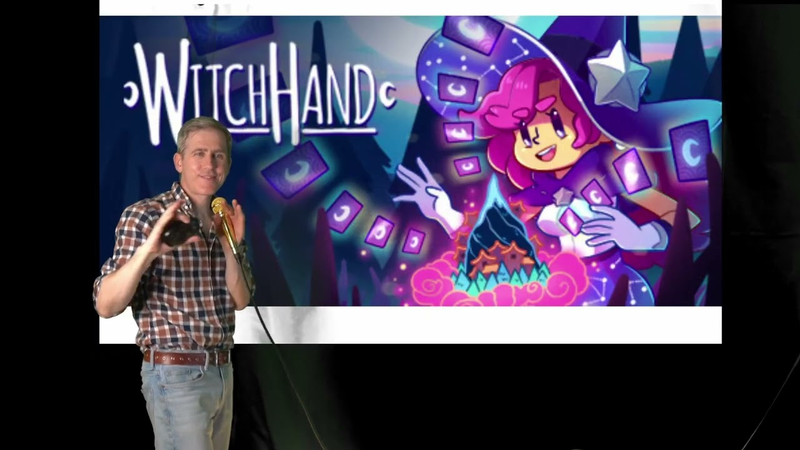
How to Work With An Artist to Get a Good Capsule Artist
Steam capsule art serves as a foundational marketing asset that directly influences player conversion and streamer engagement.
- Steam capsule art is a critical marketing asset because it serves as the primary visual hook for potential players and is often repurposed by streamers for their own video thumbnails.
- Professional capsule art commissions typically cost between $500 and $1,500, though high-end fantasy illustrators with experience on major titles like Blizzard games can command $3,000 or more.
- To find a suitable artist, developers should browse Steam for games within their genre that feature appealing art, then identify and contact the studios or artists responsible for those specific assets.
Subnautica 2 Drama Explained in Simple Terms!
The conflict surrounding the development of Subnautica 2 centers on a dispute between publisher Krafton and the leadership of developer Unknown Worlds.
- Unknown Worlds co-founders Charlie Cleveland and Max McGuire, along with CEO Ted Gil, were ousted following a breakdown in their relationship with Krafton, which acquired the studio for $500 million in 2021.
- The ousted leadership claims their dismissal was a strategic move by Krafton to avoid paying a $250 million performance-based earnout, while Krafton maintains the delay of Subnautica 2 to 2026 is a necessary quality-control measure.
- Krafton internal documents indicate the game lacked the content and polish required for a successful launch, citing ineffective management by the previous leadership.
“It was amazing to have PlayStation behind us”
Innovation and team culture serve as the primary drivers of success in the gaming industry, outweighing the influence of rigid business models or hardware specifications.
- The gaming industry should shift from a AAA-focused model toward a double-A development approach, prioritizing small, agile teams to foster innovation and creative ownership.
- Studio closures are frequently caused by a misalignment between a team's creative identity and the shifting strategic demands of large corporate partners like PlayStation and Meta.
- The industry's reliance on hire-fire staffing models and commoditized development cycles is actively undermining the collaborative environments required for long-term stability and genuine innovation.
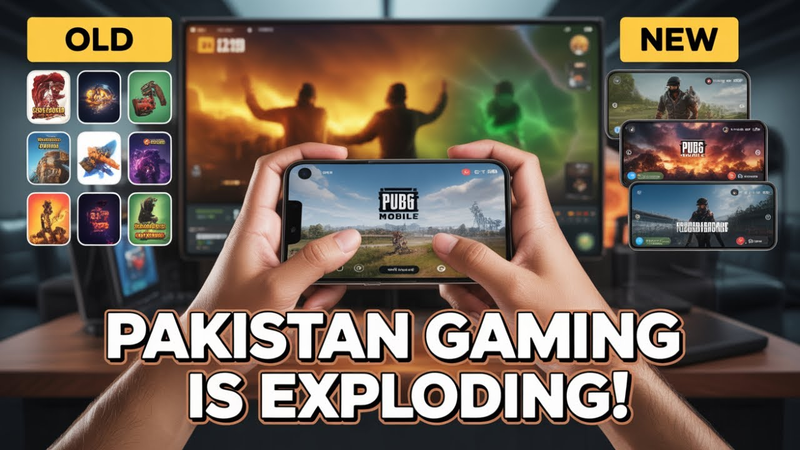
Why is Gaming Industry on the Rise in Pakistan?
Pakistan is emerging as a significant player in the global gaming ecosystem, driven by a large, English-speaking IT workforce and a growing interest among Gen Z professionals in creative game development over traditional enterprise software.
- Pakistan is emerging as a global gaming hub by leveraging a large, English-speaking IT workforce that is increasingly pivoting from traditional enterprise software toward creative game development.
- The industry is maturing from early mobile successes like 2010's 'Tap Fish' to modern, high-quality product development, exemplified by the recent success of titles such as 'Hexa Sort'.
- A critical shortage of experienced, top-tier leadership talent remains the primary barrier to scaling local studios and mastering sophisticated global monetization strategies.
Week in Mobile Games E61: Zynga's successes and failures, and Moon Active takes the fight to Scopely
The mobile gaming industry is currently defined by a strategic shift toward hybrid-casual models, the dominance of 4X strategy titles, and the ongoing evolution of direct-to-consumer monetization.
- Whiteout Survival has become a dominant 4X strategy title, generating over $3 billion in gross player spending in less than 30 months.
- Rolic successfully transitioned to a hybrid-casual model, with its top title Color Block Jam earning over $100 million by leveraging a challenging difficulty curve to drive retention.
- Publishers are increasingly shifting away from pure hyper-casual mechanics toward hybrid-casual models that prioritize long-term engagement and in-app purchases.
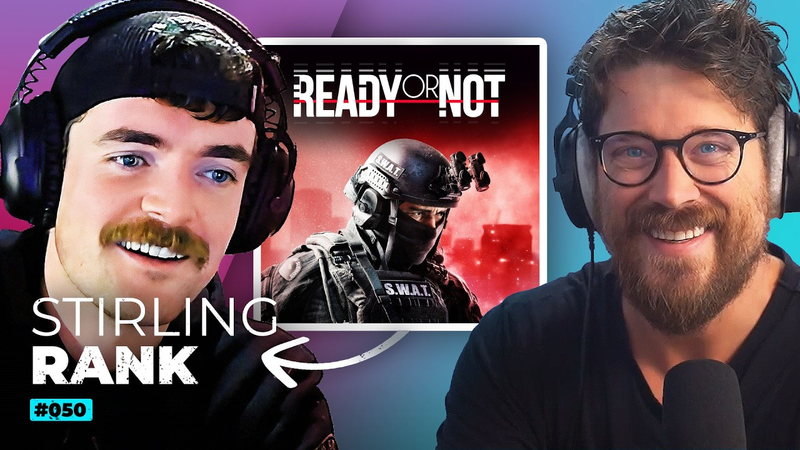
Stirling Rank: How He Sold 9 Million Copies Of His Game, 8 Years Of Dev, Unity v Unreal | Ep. #050
The development of a successful tactical shooter requires a delicate balance between maintaining artistic integrity and navigating the pragmatic demands of the global gaming market.
- Stirling Rank’s tactical FPS game, Ready or Not, has achieved 9 million copies sold after approximately eight years of development.
- The game’s success is attributed to its 'offensively honest' approach, incorporating controversial themes like drug trafficking and violence as core narrative hooks.
- Rank advocates for using Unreal Engine over Unity, citing concerns over Unity's historical royalty structures and tracking algorithms.
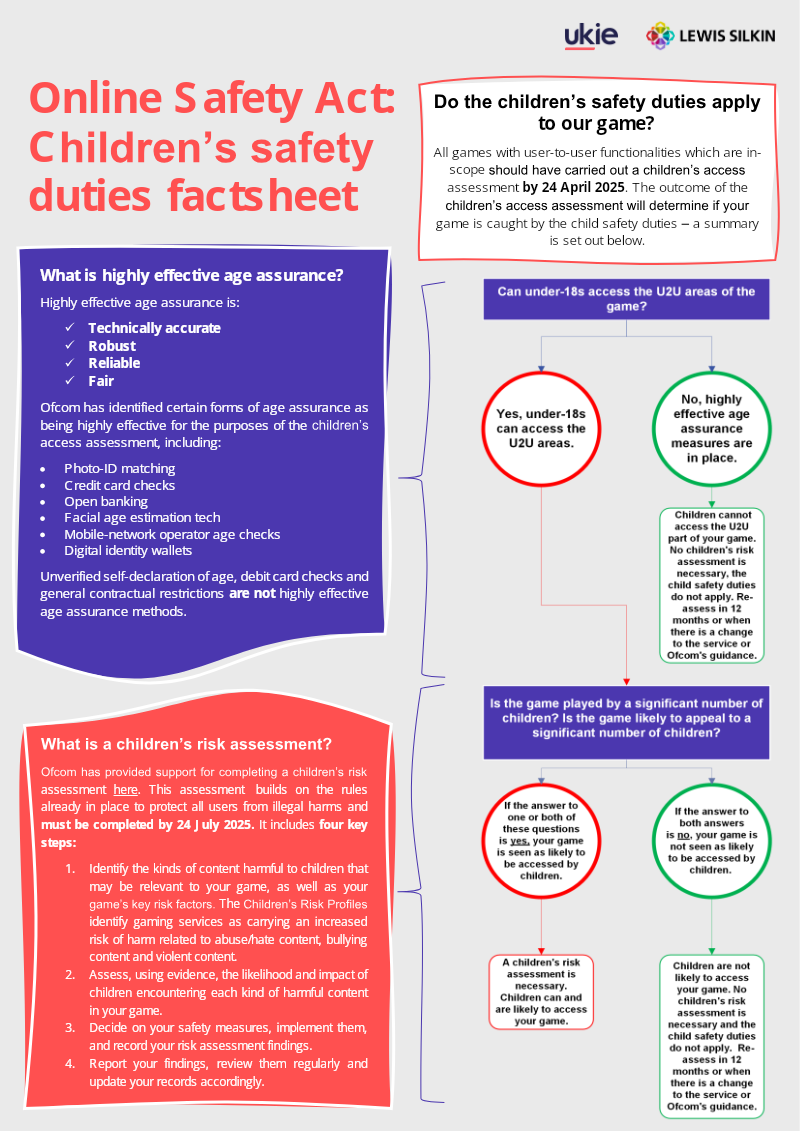
Online Safety Act: Children's Safety Duties Factsheet
The Online Safety Act establishes a regulatory framework requiring gaming services with user-to-user (U2U) functionalities to assess and mitigate risks posed to children in the United Kingdom.
- Gaming services with user-to-user features must complete a comprehensive children’s risk assessment by July 24, 2025, if their platform is likely to be accessed by a significant number of minors.
- Ofcom requires the implementation of highly effective age assurance methods, specifically citing photo-ID matching, facial age estimation, or digital identity wallets as the standard.
- Basic age verification methods, such as unverified self-declaration or simple debit card checks, are explicitly excluded from meeting the regulatory compliance standard.
TWIG #340 Scopely Goes to War, Roblox Gambles on IP and Turkey Rises
The mobile gaming industry is currently defined by an aggressive arms race in user acquisition, particularly within the coin-battler genre.
- The mobile coin-battler genre has become a 'red ocean' where market dominance is driven by industrial-scale user acquisition spending by giants like Scopely and Moon Active, creating high barriers to entry for smaller developers.
- Corporate friction is intensifying over performance-based earn-outs, exemplified by a dispute between Krafton and Unknown Worlds involving a $250 million earn-out and allegations of strategic project delays.
- Major publishers are increasingly integrating AI-driven development tools to streamline production, leading to staff reductions in design roles at companies like King.
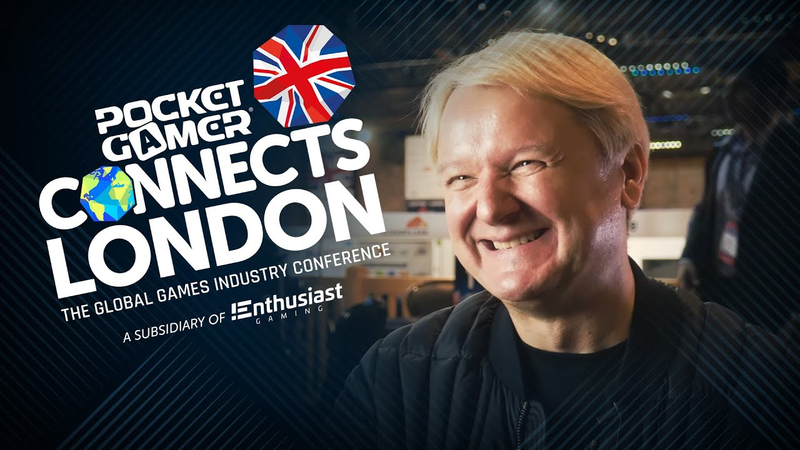
Becoming a cross-platform company - Mihai Pohontu from Amber
Amber, a global game development agency, has successfully navigated recent industry volatility by prioritizing cross-platform diversification and a flexible workforce model.
- Amber, a game development agency, grew from 200 employees to 850 over the last three to four years by diversifying across platforms and genres to mitigate market volatility.
- The company successfully pivoted away from a mobile-first strategy starting in 2017, with PC and console projects now serving as the primary revenue drivers.
- Amber maintains a 'variable workforce model' by combining its 850 internal staff with a network of 3,500 external freelancers and partner companies to scale capacity based on market demand.
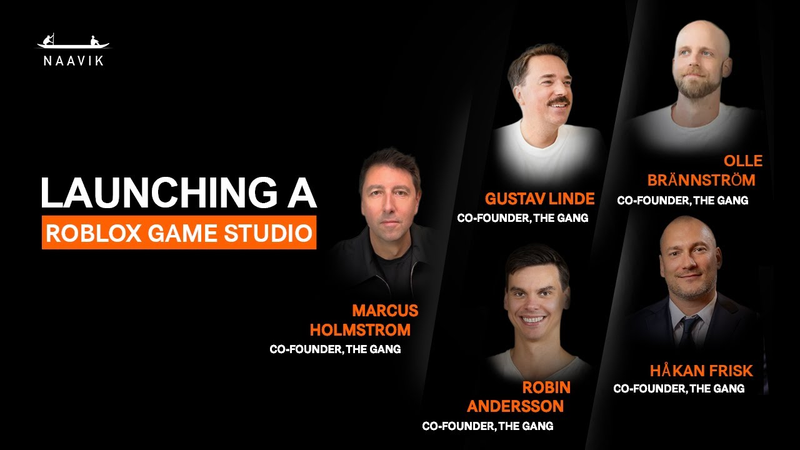
Launching a Roblox Game Studio with The Gang
The Gang has evolved from a five-person startup into a 220-person organization by capitalizing on the rapid development capabilities of the Roblox platform.
- The Gang scaled from a five-person startup in 2020 to a 220-person organization by leveraging the rapid development cycles of the Roblox platform.
- The studio employs a dual-track business model that balances revenue-stable branded experiences for partners like Netflix and the NHL with the development of original IP.
- Operational strategy mandates a strict separation between client-facing brand work and original game development to maintain focus and discipline.