Game Publishing reports and market data
Documents
Sony Reigns in Bungie, Battlefield’s Beta Booms, Nintendo Stays Nintendo | Games For Breakfast
The gaming industry is currently navigating a period of significant strategic realignment, marked by aggressive corporate consolidation and shifting consumer sentiment.
- Sony has officially ended Bungie's independent status, signaling that the developer will no longer receive the special elevated treatment it was granted following its acquisition three years ago.
- Sony's live-service title Concord reportedly cost between $200 million and $400 million to produce but generated only $1 million in revenue, leading the company to downplay its live-service portfolio during recent shareholder meetings.
- Nintendo is surveying customer sentiment regarding its new 'game key cards,' which function as physical license keys rather than containing actual game data, requiring users to download the full software.

EA Mobile is Suddenly Worth Watching Again
Electronic Arts is currently experiencing a resurgence in its mobile gaming portfolio, driven primarily by the sustained performance of EA Sports FC Mobile.
- EA Sports FC Mobile is currently generating approximately $20 million in monthly revenue, marking a record high for the company's mobile division.
- EA has shifted its mobile development strategy by outsourcing product management to specialized teams in China, a move that has proven more effective at monetization than previous North American-led efforts.
- The company is testing the expansion of its sports IP through spin-offs like EA Sports FC Tactical, which integrates squad RPG mechanics into the Ultimate Team framework.

Major AAA start-up ProbablyMonsters has revealed its first games… and none of them are AAA
ProbablyMonsters is fundamentally restructuring its operations after nine years, moving away from a primary focus on AAA development to embrace a more agile, diversified business model.
- ProbablyMonsters is abandoning its original AAA-centric business model after nine years to pivot toward a more agile, diversified strategy.
- The company is shifting its development focus to a mix of short, mid, and long-term projects to mitigate the financial risks associated with long, high-budget development cycles.
- The studio's new portfolio includes a roguelike action game for Nintendo Switch and a psychological horror title for PC, marking a clear departure from large-scale AAA productions.

The Business of Esports at EA
Electronic Arts leverages its esports division as a strategic marketing engine designed to deepen engagement among its most dedicated player base rather than serving as a primary profit center.
- EA positions its esports division as a strategic marketing engine to drive player engagement and title longevity rather than as a primary profit center.
- The company utilizes a 'couch-to-champion' model that creates a structured progression path from casual gaming to professional competition.
- EA maintains internal creative control over its competitive ecosystem while outsourcing production to ensure responsiveness to fan feedback and gameplay trends.
Oops 1 MORE Hour Answering Questions about Steam (Watch only after 1 hour of solid dev time)
Indie game success on Steam is primarily driven by aggressive outreach and strategic visibility management rather than passive marketing or perfectionism.
- Steam success is driven by aggressive, direct outreach to journalists and content creators rather than passive marketing or product perfectionism.
- Marketing expenditures like PR agencies and paid ads only act as multipliers for games that have already established organic momentum; they cannot compensate for a lack of foundational wishlists.
- Developers should prioritize Steam’s built-in playtest functionality to refine titles and build wishlists before releasing a full demo.
2 Hours of answering Steam Questions (Please don't watch this you have games to work on)
Achieving commercial success on Steam requires a strategic shift from passive development to active, data-driven market engagement.
- Steam's algorithm promotes games by testing them with small audiences; if early performance metrics are strong, the platform automatically expands the game's reach, but if initial engagement is low, the algorithm stops showing the game to new users.
- A Steam demo launch is a 'one-shot' opportunity to leverage the 'Trending Free' section and the single email blast allowed to all wishlisters, so developers must coordinate these efforts to maximize concurrent player counts.
- Developers should avoid live-streaming their own development process on platforms like YouTube or Twitch, as it distracts from core production and rarely yields meaningful marketing results compared to focused development time.
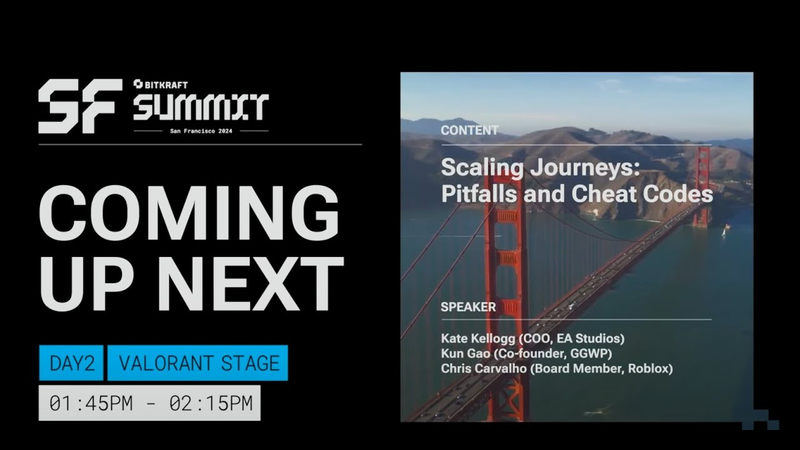
Scaling Journeys: Pitfalls and Cheat Codes
The panel discussion, titled Scaling Journeys: Pitfalls and Cheat Codes, explores the operational and cultural challenges inherent in growing game studios and digital media companies.
- Founders must maintain direct involvement in hiring for the first 50 to 100 employees to ensure cultural fit and preserve the company's core vision.
- Transitioning from a startup to a global enterprise requires shifting from informal communication to formalized systems, such as biannual happiness surveys and structured recognition programs.
- Incentive systems should be designed to reward behaviors that align with core values, creating a cultural 'mythos' that guides decision-making in the absence of direct leadership.

Ubisoft’s Big Miss Explained
Ubisoft is currently facing a period of significant corporate stagnation and financial underperformance, characterized by a reliance on formulaic franchises and a failure to adapt to industry trends.
- Ubisoft is experiencing significant financial underperformance, with recent quarterly earnings missing expectations due to struggles in major franchises like Assassin’s Creed and performance declines in Rainbow Six Siege.
- The company’s long-term stability is threatened by a sparse release pipeline that extends until 2027, leaving the publisher without a clear competitive advantage after failed investments in NFTs, mobile, and experimental genres.
- Entrenched leadership and systemic nepotism, specifically the Guillemot family's control and the appointment of family members to key intellectual property roles, have triggered a talent exodus and operational chaos.

"We didn't believe Space Marine 2 could hit seven million unique players"
Pullup Entertainment, a European-based federation of studios and publishers, has achieved significant financial growth by focusing on the AA and indie game segments rather than the AAA market.
- Pullup Entertainment reported annual revenue of 390 million euros, a 100% year-over-year increase, with an EBIT of 60.3 million euros.
- Warhammer 40,000: Space Marine 2 exceeded 7 million unique players, validating the company's strategy of scaling niche titles through high-quality execution.
- The company manages a pipeline of 50 projects, split between 20 owned or co-owned intellectual properties and 30 licensed or third-party titles.

Why the Games Industry Might Triple (Despite Its Challenges)
The global games industry stands at a pivotal inflection point, poised to expand into a $600 billion market by leveraging historical growth patterns and emerging technological shifts.
- The global games industry is positioned to triple in size to a $600 billion market by shifting away from high-stakes, traditional development models.
- Leadership should categorize games into four distinct quadrants based on casual versus immersive experiences and offline versus online play to better align developer skill sets and operational focus.
- The traditional AAA greenlight process is becoming obsolete, necessitating a shift toward a barbell strategy that balances stable 'forever games' with small, autonomous teams focused on iterative experimentation.

Steam Censorship, Live Action Zelda, and King’s Candy Crush AI | Games For Breakfast
The contemporary gaming industry faces a complex intersection of corporate consolidation, technological disruption, and external regulatory pressure.
- Payment processors like Visa and Mastercard are exerting de facto censorship on digital storefronts such as Steam and itch.io by threatening to revoke transaction capabilities for content flagged by advocacy groups.
- King has implemented layoffs following the automation of level design and monetization tasks, signaling a shift in how AI integration is impacting industry labor structures.
- Krafton is currently involved in litigation with the founders of Unknown Worlds regarding earnout payments for Subnautica 2, highlighting the critical importance of legal rigor in M&A deals.

TWIG #341 Ubisoft Tries “Succession” while Battlefield Attempts a Comeback
The global gaming industry is currently navigating a period of intense volatility characterized by structural financial challenges and shifting consumer behaviors.
- Ubisoft faces significant financial instability, including declining quarterly earnings and a sparse release pipeline through 2027, making it a potential acquisition target for Tencent.
- Standard cosmetic-based monetization models are failing to support games with low daily active user counts, forcing many studios into a cycle of unlaunching and re-releasing titles.
- Electronic Arts is attempting to revitalize the Battlefield franchise to exploit Call of Duty fatigue, though success depends on overcoming persistent issues with live service execution and matchmaking stability.