VideoThe Game Business
"Bringing your games to other platforms is how you’re going to win"
24 Jul 202564 min video
Hello and welcome to the game business show. This week, Donkey Kong is back and impressing critics. Ubisoft has delivered disappointing results. The Outer Worlds 2 has gone down in price. Freetoplay due to Splitgate 2 is unlaunching and the Chinese room has gone independent. But our big topic today is about the US games market uh and looking at the market data for June um which was a big month for video game launches. And who better to guest host this episode than Mr. Sakana himself, someone we've wanted on the show pretty much from day one. Executive director and video game analyst at Sakana is Matt Piscatella. Hello, Matt. Welcome to the show.
Hello. You know what? This is a This is going to be one for the real sickos. Like, if you're a real sicko video game salesperson, have we are are we here for you?
It's Yeah, it might put off everyone else. Certainly one for the data nuts. I mean, technically, this isn't your first appearance on the show. you were our opening speaker at the Game Business Live uh event in Los Angeles back last month. That was actually available to watch on our YouTube channel. So, if
people want to cover that, we've also covered it in our news show as well. It wasn't the happiest of conversations. Um and you've been sounding alarm bells over the economic uncertainty in the US market now for a few months. Yeah, it's it's I I mean the US is going through a moment right now, particularly when it comes to the area of affordability, incomes, the tariff situation, which changes on a momentto- moment basis. There is just a lot of uncertainty and consumers are reacting to that uncertainty. And so there's a lot of concern about where uh consumer mindset is and the decisions they're making in terms of their purchasing and and they're having to make some very difficult choices. It's certainly a difficult scenario. But like before we delve into June, which was a really big month for video games, um I actually wanted to bring up a game from last week, um which was Donkey Kong Bonanza for for Nintendo Switch 2. Matt, have you played it? Have you seen much about the game? Have you engaged in the game very much?
I have played it. It's been very cathartic to smash all of the things.
Well, I think it's brilliant. I'm a Donkey Kong fan. I in fact last year in London I reunited the Donkey Kong Country dev team as a like the 1994 game to sort of talk about that. I'm big Donkey Kong fan so I'm very excited about it from a personal point of view but actually I was really excit interested in it um from a business point of view because I actually more interested in this than the launch of Switch 2 because this is what really Nintendo is about these days. They're more than ever an entertainment business. They're an IP business and they've always been that, but nowadays they're making movies and theme parks, museums, alarm clocks, Lego sets, and they're invol they're getting themselves involved in all of those things. They're not just licensing that stuff out there. They're sort of taking that um internally to a degree. And we've seen them do that with Mario and we've seen them they're doing that. They've turned their attention to Zelda with a Zelda movie out in in a couple of years. But I would argue probably their most recognizable character outside of Mario and if we discount Pokemon because it's not it's not technically theirs. I think their most recognizable character outside of Mario is Donkey Kong. It's
iconic brand well established character but as a games franchise it's by Nintendo standards pretty small right I mean is the the big la relaunch of the series in 1994 uh that Rare did. I mentioned that a second ago. There was a brief stint with Bongos on the Gamecube but not many people had a GameCube. um the um Donkey Kong Country Returns did really well. Actually, it did in the UK. I don't know. I'm assuming it did in the US as well. That's the 2010 game, but it's followup Tropical Freeze Wii U game. Nobody had that either, so I didn't do huge numbers. Switch era though, we've barely seen Donkey Kong, and there's been a handful of remakes and ports. There was a really good Donkey Kong expansion to the first Mario and Rabbits game, which I thought was brilliant, but nothing sort of standalone, nothing original. And so the biggest D is actually the biggest DK moments in the last, you know, say 3, four or 5 years has been the theme park expansion at Universal Studios Japan. It's been the appearance in the Mario movie. For me, this is significant. I I felt this is, you know, I I'd argue this is as important, you know, redesigned the character as well, so it feels as significant as the 1994 relaunch. So I
was really fascinated by how well it was going to do. and and we're not going to know from the launch sales because it's it's it's a long, you know, it's only been a month since the console came out and it's not Mario, right? It's never going to do Mario numbers in in week one, but it it seems to I mean, I only got the UK figures, Matt. Maybe you've got something a little bit um more US, a little bit more current, but it it seems to have got to, you know, comparing it to a Mario game, it's never going to do those numbers, but in terms of Donkey Kong games, it's it's towards the top end.
I mean, imagine it would be. I mean, it's great to see Nintendo making games. I like when they actually put out big games. Uh, like you said, their focus is, you know, more broad now and trying to bring the IP far more mass market, which they've done a absolutely brilliant job of, but getting a big new video game, that's pretty fun. Uh, that's a good thing to see. And and you're right, like DK has had uh its place in the market. bigger than
Metroid, not as big as Mario, a really solid performer, and even, you know, games like Tropical Freeze HD on on Switch have done pretty darn well over time. But yeah, it's really fun to see them lean into this type of game with this type of experience, which is new, unique, different in a lot of ways, uh, but staying, you know, true to the core of what makes a Nintendo franchise game kind of great. It's it's it's really fun to see the reactions from players, too. They people seem to be really having a good time discovering like it's a big discovery game, right? You smash all the things. Hey, look at this.
Um, and that's that's pretty fun. So, it's just really great to see it.
It feels like a cross between it's got the Mario Odyssey influence. You can see that. But it also feels a bit Sputuni in a way in the way that you sort of it's a bit chaotic, but it's also feels a bit Tears of the Kingdom. Like the first thing I did in that game was complete a a mission objective. What wasn't how I was supposed to do it. I found that out later. I created a bridge rather than
raise some water. And it has that sort of vibe to it. I actually I asked Dorian Block over in the UK who runs um Neielson IQ. Before that they were GFK Entertainment. Before that they were Chart Track. Before that they were Gallup. So he's got market data that goes back to the 80s. And um okay, it gets increasingly less reliable the further back you go. But um the only games missing from his list from Donkey Kong is the NEZ Donkey Kong from 1986 and Donkey Kong Classic also on the NEZ and that's from 1988. So he's basically got every Donkey Kong game. He's got some data on every Donkey Kong going back to 1994. So I wanted to know like what was the biggest week one for Donkey Kong games and in classic Dorian Block fashion he didn't give me a direct answer. Um he did give me a chart. So in turds are the best week one ever for Donkey Kong. That is technically by the data he's got Donkey Kong Country returns on Wii. It was a bigger week one launch than Donkey Kong Bonanza, but he doesn't have Nintendo eShop data and he doesn't have Nintendo Direct Store data. He and it's only a few thousand gap between the two. So I think we can
safely say that in terms of week one launches, Donkey Kong Bonanza was the biggest ever launch for a Donkey Kong game. But he didn't just give me that. He gave me the best weeks ever for Donkey Kong. So like Donkey Kong Country Returns best week was week two of that game's launch and that was actually a lot lot stronger. Donkey Kong Country's best week was week six. That was so just before Christmas. Donkey Kong Country 2's best week was week two. So but anyway, regarding that Don even so the way the data Don is definitely the second biggest week for a Donkey Kong game. It's probably the biggest launch for a Donkey Kong game we've had of all time. Um, what I love the most about Dorian's chart, which annoyingly I've not stuck in front of me, is the fact that all of the top five are different platforms. The biggest, number one, Donkey Kong Country Returns for second week on sale, Don Kong Bonanza, Nintendo Switch 2 to Don Kong Country Returns as Wii, Don Kong Country, SNES, Donkey Kong Country, Donkey Kong 64 was number four. That's from week 50, 1999. And then Mario versus Donkey Kong is the biggest launch basically for Donkey Kong game.
That's a Switch game that was from um last year. So yeah, it's all different platforms for Donkey Kong, but I I think you know, Don Kombatan is going to be a lot. It's about the long term. Now, assuming there is a movie, there's talk of another a Donkey Kong movie down the line, and with this continued investment in that IP, I suspect it'll hover around doing a a good few hundred thousand a quarter, if not a million. So, it's uh yeah, I hope it does well. Uh it's certainly an unusual game to have as an early launch title for Switch, for a Nintendo platform, but it is a game that, you know, it's a franchise that's been sort of missing for a little while. it. You know what? Total confirmation that this is really going to be an episode for the sickos since we're getting into weekby- week sales rankings. Oh, this is great. This is my element. Um,
yeah. I mean, back in the day, week ones weren't what they are now. Week ones were, hey, the the game might be at the retailer. It might not show up until next week. Who really knows? Who really cares? Like, there wasn't this urgency for day one that we have now. So, I mean, you often see that where weeks 2, three, four are actually better because
the stores actually put the games out finally.
Yeah.
Not so much a problem now. And you're right with the eShop share, which is I mean, ballpark, you're looking at 45 to 55% generally of sales are going to be digital um for games on the eShop that also have a physical component.
Really?
I mean, yeah, that's what we're looking at now in terms of the base uh estimates for some of these games. Some are a little bit higher, some are a little bit lower according to our research. So yeah, you're looking at a a record launch for probably looking at a record launch for this game as well. Um but yeah, unfortunately with the eShop digital restrictions, which uh you know are tough for everyone in this line of work, uh you know, you do what you can with what you got.
Yeah. Yeah. I remember on Switch One when the GSD data for Europe, I obviously couldn't. Nintendo never shared their data despite the fact that Walter very famously said that he was going to share all of their digital data so that we knew how to react. They've never really done it outside of their own financials.
Yeah.
When it was like third party games, I
used to look at things like Monster Hunter and Marian Rabids and Just Dance and Lego games, you know, they sort of told us to do well on Switch. In the in the Europe, it was like, you know, sometimes less than 20% of sales were digital. But obviously with Switch 2, I didn't know if that was so that number is that generally or was that just like the Switch 2 you're predicting estimating?
Generally generally or Nintendo platforms. I mean in 2012 or oh gosh 2012 it was like less than 2% and that rate's been growing steadily over time for the market as a whole.
Wow. So yeah, I mean that's the the core assumption when you really start, you know, digging into the financial reporting and doing a bunch of assumption math. That's kind of the range you get to. But of course, like it's it's imperfect to say the least. The error bars are large.
But it's most likely a record setting launch. But yeah, with anything Nintendo first party, the launch period doesn't
Yeah. really matter because these games will sell forever at a premium price
point, further separating what Nintendo does from what just about everyone else can do. Uh, and good for them for for maintaining that kind of brand equity.
Yeah, I like the story before about how, you know, the first week wasn't always that big a deal. Uh, Ocarine of Time, I don't know if it was ever like this in the US. In the UK, we had like what was the big what's the Christmas number one music album? So, we tried this for a period of time. I thought it was going to be Christmas number one in games. because we didn't have Black Friday till the last like I don't know 10 years or so.
It's still weird that it's a thing there. Like that just shouldn't be all right. But we'll leave that alone. That's just a weird deal still.
Yeah. But we didn't have Black Friday. So our biggest week was always the week before Christmas and our first sales period around that time was the week after Christmas. That used to be the case. So Christmas number one used to be a story in the UK games industry. And so and Chart Track sometimes or GFK or sorry Neilson, I've lost track. and they would put out what was the number one game every Christmas and standing out it was always FIFA or Call of Duty and the one stuck out like I saw from was Zelda Ocarine of Time from 1998 and it's
because when it first came out which was like two weeks earlier nobody put it on shelves there wasn't enough stock there wasn't enough shipments and then they just went oh hang on people want this and they stuffed it all in shelves and suddenly uh the sales spiked
yeah that box back on the floor Johnny go get it it's been sitting there for a week you maybe we should put it out for sale I don't know like yeah there's a lot of uh you know People have a lot of concerns about the digital marketplace, but actually being able to get the game you want when you want it, uh, it makes digital makes that a lot easier. So,
yeah. Yeah.
And and an ehop that actually functions on the Switch 2 the way you wanted to, uh, certainly won't hurt.
Yeah. Well, if you had a bad experience, Matt,
well, the Switch One eShop was uh could be challenging to navigate, we'll we'll say.
Yeah. Well, yeah, certainly. Well, let's talk about uh the June market figures from it's a big month for the uh the games industry generally June there was a lot of games some of them that aren't even in this data but and there's some great numbers here uh from Sakana US games market up 22% in June 2025 versus June 2024 games content so that's games
DLC all that sort of stuff up 6% accessories up 29 cent but the big one games hardware up uh 249% driven obviously by the launch of the Nintendo Switch 2 which is the biggest launch for a game console in US history. 1.6 million units sold by the end of the month. That's half a million more than the previous best, the PS4 back in 2013. Can we conclude much from the Switch 2 launch other than the fact that they had stock? Yeah, we can conclude from the high sales of Switch 2 at launch that they made a lot of Switch 2 units available for sale at launch. Uh, and unfortunately there's not I mean great start, not taking anything away from it. They were super confident. They put the money where their mouth was and said, "We believe we're going to be able to sell this. We're going to take the knees out of the scalper and secondary market. We're going to make sure that if people want a switch to they're going to be able to get one from us at MSRP or thereabouts." And for the most part, they succeeded in doing that. And that's
fantastic. That's wonderful. But ultimately, as you know, the launch sales of a hardware device don't often correlate to the lifetime sales. We've had devices that have come out with incredible early sales that have fallen off and other consoles and devices that have come out with weak sales at launch that end up being some of the bestselling systems of all time. So, we really can't take a lot in terms of long-term or long tale about what this is going to look like. But hey, a record setting launch like this, I don't think anyone's going to be upset with that or say that's a bad thing. just it's just it's tough right now to come away with any long-term conclusions or projections based on the early read. Although this is a hell of a good early read.
Yeah, I think it's I think somebody told me uh it took four months for the Switch one to hit the same number. Again, that's obviously that's all stock related. Are you sticking with your 4.3 million projection for the year?
Yeah, this is this is basically where I
wanted it to be. Um probably a little bit better than I was hoping for. So yeah, sticking with that and we'll see what happens. I mean, the price point, the content slate, not a problem for the day one buyer, but that mass market gift buyer in the holiday window could be a different story. And of course, in the US market in particular, all of the uncertainty around pricing, the tariff situation, uh, and just where people are financially is going to play into that as well. So, we're going to have to see. The range of error on any forecast now in the video game space and the US in particular is the highest it's ever been. And it's always been high. It's always been a very difficult market to project.
And now given all the the the particular factors impacting the US in particular, it's even more unpredictable. Um, but so far, so far, great start. The enthusiast audience definitely showed up day one. Now we have to see if they can successfully transition to the mass
market gift buyer. Uh and that'll be that'll be the next test.
Yeah, they've just announced a Pokemon bundle which should probably have some effect.
Put some Pokemon cards in there and you'll sell out in no time, man. They'll have people running over each other at the Costco.
I love the stat uh that a third of Switch 2 owners, almost a third of Switch 2 owners bought one of those pricey pro controllers.
Yeah,
I guess that's Mario Kart multiplayer there. But those are though, you know, particularly as the controllers from the previous Switch, you know, run work with them. I thought that was a I thought that was an impressive number. I I thought it was anyway.
It it is. And I I included that in particular because I think it says something about the average Day One Switch 2 buyer. Like
historically, people have considered the Nintendo buyer to be more family, more kids. And I think this is one of those data points that suggest that perhaps the Switch 2 day one buyer is more enthusiast gamer and like very much enthusiast player uh rather than family.
Now I don't know that for sure but I think that that is a data point that would suggest that we have a you know that audience could be more enthusiast gamer than mass market at this point. What also backed up that for me, and it's a really small one, was that the attach rate for Mario Kart World, and it doesn't include digital, you've got it as 82% with the bundle, which is super high on that's super high, but it's not as high as Zelda was, right? If I recall, if I recall, uh Breath of the Wild back in 2017, that was like over 100% attack rate. It was a bonkers a bonkers thing. So, and Mario Kart is more of the mainstream family kids Zelda IP. At least I don't have the data to back that up. That's just my my theory on it. And even though it does appeal to hardcore gamers, obviously, um I do wonder if um you know, there's a bunch of people that bought a Switch and Ach 2 and actually um bought it for, you know, better versions of Pokémon and Zelda and and that kind of thing. Um there's clearly some people that did, but even though the 80% seems high, I actually
thought it'd be higher.
So, in terms of the splits in the hardware, uh the bundle was the the the primary skew purchased. it was the the majority of sales of Switch to hardware. Um, and with the physical standalone, getting to that 82%, you add the standalone digital, you're probably in the 90% attach range. You know, it helped that this was the showcase game. Not dissimilar to when the Xbox 360 launched and Call of Duty 2 was the showcase game for that system. Um, every once in a while you get a new hardware device where one game is the game. Um, and that's kind of what we're seeing here. But you're right, like the appeal of this box is also that it it plays some of the past games the way you'd want to play them if you were really into them, you know, with higher frame rates and better resolutions and all that fun stuff. So, there's there's a little bit, you know, it there's been a lot of chatter online about how the slate wasn't super compelling and that there weren't enough games. Um, which
you know, if you're a traditional buyer looking at it in the framework of new box, new games for the box, I don't care about anything else because that's not going to be good enough for this new thing. Then I guess I can see that criticism. But when you look at in the total package and the total content library available,
yeah,
it's tough to say that this is a system that has a light slate of things to play.
And I I I have I have I again I understand the argument that it was a weak lineup. In fact, I sort of agree with it. I felt there wasn't a hero title for it. Even though Mario Kart World is is it is one, but I I for me because of the audience is more hardcore. I think they would much rather have had a Zelda even a Metroid.
Sure. The reality is, you know, what's the is the lineup strong enough? That's a question that matters at like Christmas, right? That's when you're trying to reach people who where that's going to matter more than, you know, we Nintendo fans, we we buying it anyway. Yeah. You're showing up day one no matter what. And they could have priced the system even higher and would have
sold out because the very core enthusiast Nintendo fan will show up. They won't care. They'll be there. But yeah, it's it's month three, four, five, and the holiday. That's when things get uh more interesting and everything starts mattering more and and we'll see what happens.
Yeah. Um well, let's talk about some of the games that came out. Um so, yeah, Mario Kart. Um, I'm trying to I didn't save your chart, man. It's absolutely outrageous. You think I'd be prepared for this?
I got I got a lot of charts. I am just covered in charts all the time.
Elder Ring Night Rain is number one, which I thought actually surprised me even though I know it came at the end of May, so it's right at the end of the previous the previous month. So, I can see why most of the sales is pushing to June, but when people not many people are talking about that in terms of the media, but to see it come out as the number one game of June, I was surprised to see that even though it's Elder Ring is a massive IP and uh it's obviously got a lot of mass uh mass appeal as a
concept, which I think speaks to me paying to much attention to the media and not enough attention to where gamers are these days. Yeah, it it was really helped by PC. That was a particularly strong platform for Night Rain uh in month two. Um PC is kind of just a fun environment right now to begin with. Uh you go back and look at something like Hell Divers 2 and just how strong it was on PC. People, especially like uh enthusiast players, enthusiast console fans, think of Hell Divers 2 as a PS or PlayStation game, but really it's a PC game. like it's primarily paid and has played and has primarily been bought on PC.
And you know, some of these games that, you know, people consider as part of the console ecosystem are doing so well on PC that it could have a a knock-on effect on something like the bestselling titles chart like we saw in June with uh with Night Rain. I mean, of course, like com looking at the comparative slate or the titles it was competing with, especially when cart doesn't include standalone digital and was so heavily bundled kind of skews that a bit. And
you know, Death Shredding 2, while being a big game, that is very much that enthusiast niche audience. That's not a big mass market title.
Yeah, I was going to ask. Yeah. Okay. So, he didn't he didn't have he didn't have the competition really. I mean a Marikott maybe may have been there if we
it certainly would have been.
Yeah.
Significant margin.
Yeah.
But just at the peculiarities of how the the charts were constructed.
So Death Stranding 2 worried me a little bit. Not I mean didn't worry me. I wasn't losing sleep over it. I'm sure Kajjima would do very well. But um the first game had a mixed reception and although this one had reviewed very well and was seen as a little bit more accessible, I did worry that the sort of Marmite reaction the first game would got would probably hurt the launch of this one. I feared it might do. The chart placement seems positive, but it sounds to me like wasn't one of your Mega PS5 launches.
And it's top 30 year to date, which is fine. You know, I don't look at it and go, "Well, that's disappointing." Or I don't look at that and go, "Well, that actually did really well." Or, you know, better than expected. It's fine. Um,
it's fine. It's I don't Sometimes the game comes out, you look at and you go, "That's what that did." Yeah. Right. And that's kind of how I look at at Death Stranding, too. It's fine.
Yeah. Yeah. It's like people asked me I I did a I did a tweet yesterday about the Donkey Kong Bonanza earlier in the week about that about how that well that did in the UK based on physical sales. And as people commented, was it good? Was it bad? And I'm like um it was like it was it didn't do as well as Mario, but I didn't expect it to. It did. It was better than most Donkey Kong games, but I expected it to be.
It's the framework of the internet conversation, right? Like it's either this is the biggest thing ever or this was a huge failure and everything in between just gets kind of muddled these days because you know you look on YouTube or anything like there's no there's like this did okay. There's none of that.
Can't just say yeah it did all right.
Meeting expectations isn't an option anymore. It's like it's
no it's got to be this is the biggest
hit ever and saves the industry or this was a huge failure and everyone's getting f like yeah it can be exhausting but yeah so it's cool it's fine I don't there's not really a lot to say about its performance it it did fine it reviewed well the people that like the game really like the game and it's going to appeal to that audience and maybe not much more beyond that
it certainly doesn't seem to be a breakout mass market hit at the moment But uh you never know.
Kajjima did say that he was he made some changes to the game to stop it being too which is classic Kajjima. And also well done. You succeeded. Um
you know the cool kids like the game and all of us non-Fedora wearing people I guess we don't. That's fine.
Yeah. Uh I actually am impressed by Forza Horizon 5. I mean I say I'm impressed that franchise never never ceases to surprise me actually. It is the hero title. If you discount Bethesda and Activision, it's just the king on Xbox and obviously now it's on PlayStation. Still in the top five,
creeping up in the in the in the in the annual chart as well. That's Xbox's multiplatform strategy really, you know, paying off. We've seen like CF doing really well initially on on PlayStation as well. So, and this one seems to have some real legs. It feels like a proper fit for the you know racing games are popular on all franchises but on all platforms but um it's and it is different to the Gran Turismo as well as an IP. I you know my I have to caveat this. My brother works for Playground Games so I'm obviously very pleased to see a Playground Games title do very well on the charts but um uh it although he's working on Fable but um uh yeah it seems to done very well seems to show that that strategy is working. Yeah, we've been seeing this now for, you know, about a year or so now where these, no matter who makes them, the cross-platform ports are generally, you know, you every month you're seeing some new game pop up that's been gone for a while and you're like, well, how'd that happen? Well, it it came out on another platform. You look at Stellar Blade at
number five on the month,
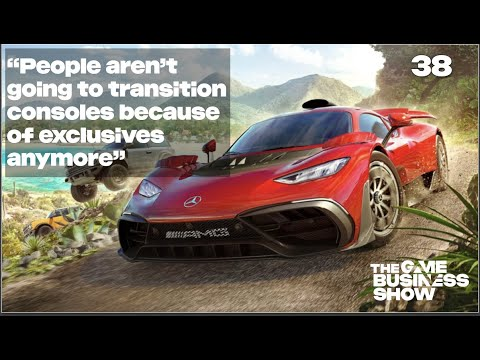
came out on PC, was 185th on the May chart, jumped to fifth because of the PC release. So like there there's these opportunities for everyone um you know to bring their content to more players. I mean people who buy a hardware system these days they're doing it because of the ecosystem because of their friends list. Like you're not going to get people to buy or transition boxes because of exclusives anymore. That's just we're way beyond that point. Like people are entrenched into their systems. Um and you know bringing the content to them is the only way to win. Yeah,
and that's what everyone's doing except for Nintendo. They kind of do their own their own thing, but even they could benefit from it. But of course, like they won't. That's not their that's not their mo. So
yeah, for them it's um it's interesting. You know, you've got uh what I love the most when you talk about PlayStation, Xbox is all about going to PC and every time I talk about Nintendo, it seems to
be the mobile. So it's a Pokemon Friends game. Yesterday it's mobile and and Switch too. There's a lot of that. Um, but it's it's yeah, I I it's it's what it's interesting. People talk about them being entrenched into the digital ecosystem and their communities and I think that's probably true, but I think what's also true is we've got so much stuff to play and watch and listen and read with so much stuff. even if there's a game I like that's on a platform I don't own it or I'm really interested in playing that I can't really justify buying that device because the current device I've got I've got like a hundred things I've not played I also really want to play so even if I was tempted to switch to it has to be an incredibly good reason for me to go to something else as a as a gamer not because I'm it's because I've just got I I'm not short of entertainment I think there was a time there was scarcity of things to play and and now there just isn't There certainly isn't. And now with everything playing Fortnite, Minecraft, Roblox, which is the baseline expectation that, you know, the the main someone's main
live service game, uh, all of the other games are basically frosting on the cake at this point. Um, you know, the the in the US at least, the top 10 live service games suck up half of all gaming time every month, and every other game's got to fight for the remainder of that. So, like, yeah, this is all nice to have stuff when you look at it at the most fundamental level, especially on the PlayStation and Xbox platforms. Um, and so bringing that content to where people are is the only way you're going to be able to win uh in an environment like we're looking at right now. So, yeah, for being this strong, I mean, that's great. if they come out day one across systems, uh, that'll that really bodess well for its next iteration and every game finding its way to multiple storefronts and ecosystems. I mean, that's that's how you're going to survive and win.
Yeah. Yeah. And not even just to other
platforms, but to cinema, to um other forms of products and Lego, whatever. Um, you also did a full year chart which I mean Monster Hunter Wilds was at number one which didn't surprise me
and I knew it did really well when it launched. I saw it did but Elder Scrolls Oblivion number two ahead of Assassin's Creed well ahead of everything really. Um, that's tremendous for for a remaster. I mean, incredibly, the studio behind it did some layoffs this this last month, which, you know, I understand these things aren't always directly related, but for me, it's it's but mad cuz what that game's done, but just goes to show the demand for a new Elder Scrolls that that might be out there. It
it does, and it also is another just reminder that people love playing the games they love, and if you give them an opportunity to return to a game that maybe they haven't played in a decade or more, they're going to show up. Um, especially if you do a decent job on the remaster or the remake. There was some conversation online yesterday about how the remasters and remakes are making it
so new games can't be made, which is just not at all how it works. Like, but this is another example of a market of a market demand for this type of content. Um, and so people are trying to meet it.
It's the maturity of the industry. If you look at film and TV and you look at um in the 80s, right, Back to the Future, one of the biggest movies, the 80s set in the ' 50s, right? This idea of going back 20, you know, it's a modern thing. It appeals to modern people, but if you idea of sort of going back 20 years, 30 years in some cases really can work because you've got, you know, you've got people who are now in their 30s or 40s who are nostalgic for their youth that are interested in playing that. They're interested in maybe showing their kids that. You've got that sort of thing. In the '9s, it was Austin Powers in the 60s, right? You've got these sort of trends. It happens in other forms of entertainment. The XFiles reboot happened, you know, all these sort of things. The Jurassic World coming back, all those sort of things are all speaking to that. They bring in new audiences to speak to older audiences. We are now in the sort of early naughties revival for video games
at the moment. We're seeing a lot of that. And so, um, uh, you know, I it fits and and that's part of the audience getting older. And when we're talking about, we talked about it last week on the show, people aging out of video games, particularly console and PC games. And um actually, you know, having a bunch of handhelds, which gives people a little bit easier for people to play that play System Shock 2 or um you know, Oblivion or stuff like that. I I think that's brilliant. It certainly certainly I'm playing a lot more games as a result of it and it hopefully keeps people in gaming a little bit longer. Yeah.
Um,
and on the console ecosystems in particular, you know, we're seeing the average age and average income level of the console player actually growing while we're seeing uh younger people and and people uh on the lower end of the affluent scale, as we like to say, choosing more readily available devices like PCs and mobile devices. So, we're, you know, we're actually seeing an aging
up of that console audience. And it makes sense, right? If you got a N64 under the tree as a kid, you're probably still playing consoles. If you're playing video games, you still think that's really cool. If you're a 12y old, consoles are kind of for old people at this point. So, like there's a little bit of that happening, too. But yeah, re reselling someone someone's youth, it's never been a bad way to try to uh make a buck. So,
yeah,
and fortunately, the game is pretty good and people really seem to like it. So that being that high, a little surprising, sure, like especially for a shadow dropped game that kind of came out of nowhere if you're not really dialed in to the internet conversation. Uh, but seeing that do so well, uh, that's it's pretty cool.
Interesting. Okay, this makes I want to ask this question. There is a connection here cuz you've pointed out some real good growth for subscription, right? A really big jump. You said you said before you've been seeing it every month this year, really. Um, what's drove that in June? Was it Nintendo Switch Online?
So, Nintendo Switch Online, but a general increase. Um, another one that was a bit of a surprise that that I had to remind be reminded the game existed. Star Wars: The Old Republic had a nice bump uh in subscribers the month. You know, we've been coming off of this uh in the US in particular. I don't know if this has been the same case in Europe, uh, but in the US after the re the Revenge of the Sith 20th anniversary release in Andor, Star Wars Battlefront 2 started to pick up. In fact, that was what was that number 17 on the May chart. Star Wars Battlefront 2.
Oh, wow.
We've had this whole Star Wars kind of resurgence in the US and the Old Republic also saw a bit of a resurgence. So, it wasn't the biggest factor of what that spending increase was, but it was there and that was been interesting. I think what we're seeing, you know, for years subscription spending in the US was flat
for three to four years. Then when Call of Duty showed up on Game Pass, we got a
bump. We were expecting it. Wasn't as big as we thought it was going to be. I mean, obviously the entire strategy of Xbox has shifted. Um I don't know if that was the cause, but probably wasn't not an influence. Um and then it started to come back down again like, okay, you know, it'll have a bump. It'll set a new level. Fine. But instead, what we've started to see are increases every month in subscription spending. And I think I don't know for sure, but I think this is partially being driven by consumers looking for value uh as things like housing and utilities and food in the US continue to show these pretty significant increases. And so I think people are looking for value a little bit as well. So they're they're turning to subscriptions to try to find more value for their gaming dollar. I don't know if that's true, but that's that's my hypothesis at least.
Well, yeah, and I think you're probably right. And also mixed with the fact that particularly on game pass, we've had a really strong run since that call of duty. So there was Indiana Jones and then there was Vow and South of Midnight
and okay that may not be the biggest thing in the world but Expedition 33, Oblivion as we've just talked about Doom um with Tony Hawks a couple of weeks ago. There's been a really just a consistent slate of actually AAA games going into that service probably had a hope maybe had a bit of an impact certainly on Game Pass. Anyway, I the reason why I mentioned Nintendo Switch online um was because we're talking about nostalgia and of course the big thing with the Nintendo Switch online on Switch 2. Apart I imagine most of it's people who just want to get the Zelda, you know, improvements um including having to pay for the upgrade path, but obviously the Gamecube games coming to um uh Switch 2 might have uh had some connection there with the sort of nostalgia play. Um
yeah, I mean I I'm subscribing to it so the better half could play Dr. Mario. But yeah, I mean the content library on the Switch online is actually really great and um especially with all the bundles that happened with Switch 2.
Oh wow.
Yes.
You know, you're going to see a big uptick in Switch Online subscribers and
uh yeah, and they're they're they're more incentivizing that service. You know, Nintendo like they're never going to be a first mover. They're going to wait years, but eventually they're going to catch up. And they're also offering incredible value while also offering differentiation to support the premium purchasing. So they're they're kind of taking the best lessons from everyone else and applying them as they tend to do.
I did have one question from a from a reader by the way because you did this obviously big chart for the year to date. Somebody wants a chart. I think used to do them. 1995 to date is what the uh the mega chart of the biggest US games of all time. So, uh there's a there's a clamor amongst uh amongst your fans, Matt, for uh for an update on that.
Uh I I can do that. Number one will be Grand Theft Auto 5 forever
permanently.
For years at least until I'm dead, then maybe Grand Theft Auto 6. We'll have to see. But uh yeah, it's
worth noting there were a few games. June was quite a busy month for video game launches. We we're talking about a
lot of the the big sort of console and PC titles there, but there was also June Awakening um came out which did a million copies globally. Kepler launched Rematch which also found found a pretty pretty big um audience. And then there's also other games like F I think FBC fire I always get FTC Fire Break. I think I'm thinking about the uh uh the the uh the the um uh the US body, but no um um uh didn't that didn't do very well. Well, I think that's been a bit of a disappointing launch, but then the game indie game on Steam Peak also did incredible numbers. And then there's Splitgate 2, which we'll come back to, I think. Um, that hasn't as a free-to-play game, that didn't that didn't deliver what was needed of it uh from from the sounds of it. So, it was a really mixed month. And I was talking to somebody else's using the example of the games that missed as an example to say that the market's in trouble. Last week, it was Jacob from um Agend. But I I think it's the games industry's always been like this.
Always. So every time you have a busy month with lots of releases, you have some games that do really well and some
games that miss. And I think what different today is that games that do really well can do really well. And the games that miss can really miss. Like we can see, you're starting to see that there can be quite a a low you saw with Concord and and other titles like that. Um but uh I still think, you know, I still there's clearly an appetite for games because there's big games doing well as well as those games that aren't doing very well. I know that we can get caught up in the negativity, but there were some clear hits in June.
Yeah, I mean, we tend to forget about the failures. We remember the successes like just as people, we tend to do that um generally, but yeah, the industry's always been like this, but I don't know what you think on this one, but you know, I keep kicking around. You see it every time. You see it on on the internet or in commentary. Every time a big game does great, someone will comment, "Okay, when are the layoffs?" Right? And this is a obviously tremendous challenge. um or every time I put out a number and it says the market grew, it's like, okay, well, why are there so many layoffs then? Well, it's because the winners are winning more and
the pie is shrinking for everybody else. The Fortnite, Minecraft, Robloxes of the world, the biggest hits, the biggest games are taking more and more share of that market. So, even if that market is growing a bit, it's all going to this very small, very small, tiny uh group of biggest titles. and everyone else is scrambling for the rest of the market. So, I mean, I don't know if that's your read on on it as well, but you look at some of these things and you go
like the the hits, you look at it like a peak and you go, well, see, indie games can be a hit,
but the number of those types of games being released is exponentially growing and that's only going to get worse. It's also worth noting that okay, a lot of layoffs happen because they've missed the deadlines, the money hasn't come in, they need to cut costs, but the big organizations, they cut before the things go down, right? So they, you know, there used to be this thing I used to get Brendan Sinclair, who's a friend of the show and will probably be on the
show again in a couple of weeks. Um, he um he used to write this thing about Activision Blizzard laying staff off. They'd have record numbers and then it would lay off a load of people from their publishing division. And the reality was they didn't need the people in the publishing division, right? It wasn't that they they're not a charity. They weren't going to keep a load of people working on in public relations and marketing just because they made load of money or we can keep them on. They they're they're a big vicious in a in a in a business way um organization that goes we don't need we're not going there's no point. We'll and you make the cuts early. There's um an investor said it to me. You can you can always rehire. What you can't do is get the money back.
So if you and so and don't get me wrong, it's a very it's different depending on the market. You know, I'd argue that having a team that knows each other and works well together is is valuable. You can't just lose them and then bring them back again or bring different people back again. I think I don't think that is as clearcut as that. But there is an element of sometimes cuts happen not because their last game flopped, but because of where the market's heading
and what they need. You know, Activision, Blizzard were at that time when they were cutting out loads of things in publishing, they were reducing their slate. they only had like two or three games a year now and they didn't need a glo international publishing organization with tons of people in every territory to release three games. It wasn't necessary and so they made cuts like that. So there's that element to it as well like you know Microsoft may have made loads of money but those cuts were more about where things are heading rather than where they think things are heading rather than um uh the fact they need to save money now. Um but then also but as you quite rightly point out a lot of the cuts are you know some of the stories that come out this week you know from the cuts and we've got a couple of studios that made some days it's because actually things got difficult for them we can in fact let's move on to some other actually before I move on to other stories Matt there's so much in the data I'm I I had a we recording this quite shortly after you released it was there anything else surprising for you or interesting to you in your in your figures that I we we should talk about
I mean the entire story is about you know what switch was doing in its
launch. I mean, the the hope coming into this year was that a combination of Switch 2 and Grand Theft Auto 6 would help get the market back to growth. Um, a market that hasn't grown in terms of its overall size since 2021 because of course it 2021 was as high as it was for all the conditions. Losing Grand Theft Auto 6 out of the year was painful. Um, it likely means we're not going to get back to growth overall. So I think um the good news out of the story beyond just the initial success of Switch 2 is that everything else from a market perspective, from a consumer demand perspective is where we want it to be in terms of maintaining market size. Now that doesn't mean that everyone's going to benefit equally. That doesn't mean that the same dollars are available to everyone because they're certainly not. Um, but we're not seeing a pullback in demand as as much as I feared we may given all of the crazy market conditions in the US right now. So, from that respect, feeling pretty good about where
we are in terms of the market. Um, but we're going to have to see how we continue over time. So, I think, you know, looking at from more macro perspective, the consumer is here, the enthusiast player is here, they're spending. that leaves opportunity for people who were able to to m to capitalize on it and I think that's uh that's the big takeaway I take away at least.
Yeah, I'm good. I was quite I was relatively pleased when I saw the numbers. I thought that was um I know a lot of it was switched to but I felt it was it was it was positive. Well, let's talk about some other stories quickly before we we wrap up. I love to do the little bit of a roundup. One of them just came in just as I was about to record this episode is. So, the Xbox has reduced the price of their unreleased upcoming Q4 title, The Outer Worlds 2. Um, this is the sequel to Obsidian's Falloutlike RPG. It was going to carry the higher $80 price point. Microsoft's going for this game. It's you had a big focus for it during its Summer Game Fest showcase that it put on, but Microsoft has changed its mind re after reviewing current market conditions. And I'm guessing this is something you'd approve
of, Matt.
Yeah. Um, there must have been some really interesting conversations that happened. Uh, I imagine the team's calls for a little bit were were colorful and fun. Um, fly on the wall of the teams combo would have been a good time. But yeah, uh, this is um I think it's a smart move. Um, will it make a massive difference? I don't know. Um, but I think it is reacting to consumer feedback and perhaps some pre-order volume and saying, "Okay, well, maybe we should think about this again." And then um and we'll see if there's a bump in we'll see if there's a bump in pre-orders or whatever about that. But yeah, it's uh super interesting. Uh the timing is super interesting. Um just everything about it is interesting. But um don't know what to say beyond that other than man, I bet there's some really cool teams call transcripts floating around.
Well, Borderlands 4 obviously was expected to be $80 and then it wasn't. And that's, you know, they still forget The Outer Worlds 2 is in Game Pass. So on Xbox, it's going to be mostly a Game Pass title on on so it's a in terms of console, it's a PS5 play. And when your other big PS5 competitor of that period is Borderlands 4 is $10 cheaper and certainly a bigger brand as in terms of terms of brand recognition. Um, I guess also it doesn't stand up competitively. And actually, we did do a piece uh last week where we looked at the biggest two weeks ago. So, we looked at the biggest games still to come out in in in in the year. And The Outer Worlds T featured on a lot of lists, but relatively low down on the list. I you know, it's not it wasn't in the top five for a lot of on a lot of the lists. So, um yeah, your pre-order volume might be a good um might be a good bit.
Yeah. You know, it's interesting these days, you know, as opposed to say 10 years ago, like the the price points were the standard price points were much more locked in. these days like we have
so much variability in not only base pricing of a game but also with all the collector's editions and gold editions and silver all these additions that come out too like the the the ways in which a game can be creatively priced
are like more than ever been right so like it makes it interesting that we're seeing these kind of swings um as everyone's trying to figure out what the right way to go forward is
it's about making that value I always think Nintendo lost the value argument around Switch 2 I mean online whether they in real life. I don't know because actually I think the Switch 2 with Mario Kart bundle wasn't actually I thought that was quite a reasonable deal. In fact, I found it quite attractive. And when you if you have Nintendo Switch online, you've got all of those games that have been nicely updated. And I thought actually for me, I bought a Switch 2 with the Mario Kart bundle. Got all of my old Switch One games or the big ones updated for free cuz I'm a member of Nintendo Switch online too. And I thought this is a good deal.
But the argument online was actually if you wanted Zelda, you didn't own Zelda. you didn't have the DLC, it was going to
cost you $90. And if you you bought the G Switch 2 and you didn't get it with Mario Kart, that was going to cost you $80. And that's when and that over that noise overrided the the positive value. But as you say, it's flexible pricing as people calling it. There's there's I think there's a way of you getting quite a good deal on games if you look around.
Yeah. But what day one buyer of Switch 2 didn't already have a Switch in Zelda? Like I get the argument, but in reality that's not it's talk to me in November and December when people may be buying their first Nintendo Switch device, whether one or two, then the value proposition becomes more important, right?
Yeah,
it's tough to have that argument with a core consumer base that played that thing day one and was part of that 103% attach rate of Zelda to Switch back in the day, right? But I I get it. Like people are concerned about the value. Of course they are. Um, but brand equity and brand loyalty adds a price premium. It just does.
Whether it's video games or sunglasses or cars, right? It's the same idea of a luxury good. Um, being able to carry a luxury price point and and I think that applies in this case, but you know,
I I hope the L2 does good. I think it looks great and hopefully at that price point, it gives it a bit of a bit of a boost.
And you can always bring the price down, right? So testing that price point probably not the worst idea because you'd always bring it down. You sure as hell can't take a price up.
Well, you can on consoles by the looks of it, but
I mean if you have if you have certain cover in the ind like in the overall macro environment that lets you do that um by not saying it's because of a thing but probably being justified because of a thing like terror. Who knows?
Yeah, who knows? Well, let's talk about another story. Um, this is a UK studio story. This is my home. It's the Chinese room. They're the team behind Still Wakes the Deep. If you remember, go back in time. It's Dear Ether and everybody's gone to the Rapture. They've gone independent. It has acquired itself from
parent company Sumo Group, which is Sumo Group shifting away from they did a period of time where they had a publisher doing a lot of original games. They're shifting away from that. They're to they're back on work for hire and co-development and things like that. Uh, the management buyout was backed by VC uh firm Hero Capital. Uh, the Chinese room is still working on original properties alongside uh, the game Vampire the Masquerade Bloodlines 2. Some layoffs were made as part of the shift. Uh, they didn't actually specify how many people were laid off, but they did say they're now a team of 55 employees. I'm a big fan of the studio, but they did, this isn't they almost basically died a little while ago before Sumo bought them out. They were they really downsized the studio um um, a little while ago. Sumo bought them out and then they sort of scaled back up again. So, it's nice that they're still sort of surviving. Um, Matt, I don't know if you saw the story.
I did with some very interesting quotes from everyone involved that uh carried a lot of video game industry language subtext. That was pretty entertaining from a uh
like, oh, okay, that's what I see what they're saying, but I kind of see what they're saying. Um, like when the quote here, we had been working on new IP that needed investment and that was no longer possible with Sumo's new model. Okay. Like, uh, that's pretty clearly saying like, yeah, we needed to get away from these cats because they were just going to to stifle anything we wanted to do.
Yeah.
Good for them for getting out. Um, we'll see. You know, anytime a VC firm gets involved, it it makes things a little interesting in terms of what the expected return is. Uh, but yeah.
No, indeed, it is Hero Capital, which is Ian Livingston vehicle. So, there is a they are games people.
Oh, that's good. But obviously they do need they're not looking for some small upside. They're looking for something a bit more significant than that. Speaking of uh uh well I'm not even sure small upside is the right way to say this. Ubisoft uh results came through and they delivered earnings that were below expectations. I have to say Ubisoft's press releases do fascinate me. It's caused by lower than expected performance for Rainbow Six Siege. Um an
unfavorable foreign exchange rate and a partnership that won't materialize until the next quarter. I love how mysterious they are. The firm said that player spending in Rainbow Six Siege faced temporary but significant disruption due to technical pricing issues. The first time I think I've ever read our numbers are down because of a technical issue. Uh that has since been resolved. Um one of the strategic changes in their release is that Ubisoft is reorganizing into creative houses. Um the first house is the one it's launched with Tencent which encompasses Rainbow 6, Assassin's Creed, Far Cry, and Tom Clansancy. Basically the house there's a house that has all the big games in it. And then there's I'm assuming there's going to be other houses. They haven't announced those. Those houses are designed to enhance enhance quality, focus, autonomy, and accountability while fostering closer connections with players. I imagine there's one for Just Dance and there's one for So, it's the thing. There's a bit of a I know that Eve Gillamone and his calls often talk about um live service and big open world games. Ubisoft do make games that aren't that. Um they don't talk about very much in shareholder calls because
shareholders don't care about them. They do do things like Splinter sales and Prince of Perses and stuff that has perhaps smaller margins and and things like that. So that's um that's uh that was part of it. They did announce that Assassin's Creed Shadows has now has five million players. I think most of those are probably sales cuz I know they have a Ubisoft subscription service, but I I can't imagine it's the um the bulk of that number. Um they um uh uh they they they didn't announce it was coming to Switch 2, but sort of did. and uh perfume
more of that video game language you're like okay yeah it's coming to okay sure yeah
it's coming to other platforms which which other platforms could they be is it coming to Switch too I can't possibly comment okay it's coming to Switch too
a week before they let slip they're working on a Ghost Recon game I I you don't normally get this from the big publishers you get smaller companies just let sort of sneakily letting you know that something's coming up but it's nice I didn't mind any of that um uh it's tough for Ubisoft they are a big organization they make a lot of stuff I don't know how I mean I I actually I
mean I know that they've gone through really tough times for many many reasons. I actually quite like them. I think we we focus too much on the big games. If you look at some of their art house stuff and some of their retro stuff and they do some interesting things. I was a big fan of the Marian Rabbits games um for instance.
But um uh this I think they've had to sell the soul they sell their crown jewels effectively to a degree to 10 cent. you know, I hope, you know, there's there's a survival at the end of this for some of these IPs. There's a lot of people that work there. Um, and a lot of great games.
It's a fundamentally different company moving forward than it was in the past, right? With the the new structure and the folks running the new structure, particularly the division that holds the Assassin's Creed IP. Um, those are folks who have, you know, background in web 3. their their their their background isn't big singleplayer experiences that don't try to monetize ex like to an excessive degree right
so I think what we have to expect moving
forward is a is a very different company with different output um would be my expectation and different goals um you know and there's a lot I'm sure there's a lot of on the financial side allocation of uh allocation of debt, allocation of resources, and how all that's being worked out. Um, but I I don't know. I don't know if the Ubisoft that we Ubisoft, how you however you'd like to pronounce it,
Ubisoft, yeah,
is going to be the same. I think this is a fundamentally different thing. Now,
the thing is, we talked about this last week on the show. We talked about the fact that there's almost two industries. there's this live service industry which I I often associate more with like going to the pub or and playing snooker or pool whatever or or going bowling than where and you got this sort of single player or some of it's throwaway games some of I I feel like there's almost two different there's these are different consumer behaviors and needs that they they they obviously you know time is limited but I do feel they solve serve different purposes and I talk about Microsoft they've got Call of Duty and
Minecraft they probably don't need much else Candy Crush as well but they still invest in keeper and they're still investing in the outer worlds and I'm glad they are and I do hope that these companies still do both those things. I hope Ubisoft is as well but obviously that shouldn't be the focus for them. Those games need to be made at a reasonable budget with a reasonable team size um because um and they can't where and they have to survive by their own means and I think they can. Um, it's just whether or not Ubisoft want to, you know, if you're a big company and you want to focus all your energies on Assassin's Creed and Far Cry and those sort of things, you have to ask, they have to ask themselves, is Prince of Persia a distraction? Is Beyond Good and Evil 2 a distraction or actually, is that okay for them to continue supporting? Um, I'm hoping the answer is the latter. But, um, I with you, I expect a different um, outcome. I don't know if the big publishers are nimble enough and can move fast enough to make some of these more story-based experiences or or narrative experiences um at a budget and in a time window that
a smaller studio can or one that's just dedicated to that kind of craft. And I don't even think if they would want to spend their time there as much when the potential return um you know is tough to it's tough to say that you know our risk or our investment in this game is worth this potential return when some of the other potential return they may be looking at
could be considerably higher at a higher risk rate right but that's the quintessential problem with AAA or quadruple AAA whatever uh games these days right
I I mean, it's interesting, you know, it's a point, it's point to say that, you know, Xbox awaiting all these single player sort of adventures alongside their big live service games. But you have to say that one of the biggest hits they've had on their platform outside of Oblivion has been Expedition 33 as a Game Pass title, which was a third, you know, should they not just be supporting independent studios that are doing this rather than necessarily going after themselves when actually they better play maybe
um uh Minecraft and Call of Duty. I look, not my problem. Um, but I do hope
um, you know, I hope everyone comes out of it happy. Um, I'll end with one last story which isn't a happy story unfortunately. It's developer 1047 Games who's unlaunching Splitgate 2. The live service game has suffered some negative feedback since launch. I mean, I saw the early player numbers. I thought they seemed all right, but it doesn't appear to have sustained. So, the title is returning to its beta state to work on the game further and react to fan complaints as a result of rebuilding the core experience. and um it is laying off a number of employees and taking the original Splitgate offline because that that is that was costing the firm a considerable amount of money. Um uh yeah that's again that was another that was not a that's a that that just shows how the thing is with live service games even if you have a big launch that you know we saw Rex defiant last year there's almost two challenges with live service games one somehow convincing people to put down the games they're playing and playing your game that's hard and then it's really hard to stop them going back and um and you know we saw X defiant I think lots of Call of Duty players probably put down their
controllers well I'll give that a go that seems interesting played did it for a bit and then ended up going back to the game that they've spent, you know, thousands of hours and have their communities in and went back to it and then ultimately that game ended a Splitgate 2. It seems to me like, you know, it did an okay job at attracting people day one, but it hasn't been able to um uh keep them and now it's got a bit like remedy with FTC, FBC fire, and now they're trying to rectify that. And the good thing about live service games, you can do that, but it's so hard. Um
so hard.
Yeah.
Like Siege was able to pull it off back in the day. Um, but it gets harder and harder over time as people become more and more tied to the games that they regularly play, right? That's like the that's why it's so risky to even play in this space. But let me ask you, um, what what term do you like more, unlaunch or negative growth? I'm I'm I'm torn between which more ridiculous term I like more because they're both so just dumb as
terms. But okay,
two more ones. Yeah. Yeah.
What are we doing? Unlock it. The game's out, man. Like, you can't un agree with him, though. Many mistakes were made. Um and unfortunately, you know, some people had to uh pay the price for that that uh wasn't the CEO that made the mistakes. But uh you know
I think they did was it this is the studio where actually they did stop taking the salaries the leadership team actually did I think this is one of those rare instances I might be wrong I might need to check this I might check this live on the podcast um uh where the uh the actual leadership team did they didn't lose their jobs obviously um uh but I think they might have um um uh they not take yes they've not the leadership have have stopped taking salaries which is you know not the claim is losing their jobs, but they they at least uh uh uh there's something there. But yeah, um it it's it's unfortunately the uh the way of things, but
hope hopefully it comes out and it finds an audience. Although I I don't know. I I'd be terrified backing a live service game this year, you know, even when something like Bungie and Marathon has to suffer pro whether that comes out or not. I I hope it does, but it's, you know, truth is success in this industry. Also, if I'm I'm a big company, I'm terrified because the reality is, you know, the one of the big games that the big the game that's getting more traction and more exciting than the Sony owned Bungie developed Marathon is Arc Raiders, which admittedly isn't being made by a small team that's, you know, never made a game before, the experienced established team, but it's not exactly that game is really trending high on it. And that's another extraction shooter. I just I'm I'm I'm It's success can come from anywhere and I think that makes it scary for big companies when you know in mobile the big the big companies win.
Exactly.
And in PC and console it's it's not quite so I mean you know obviously live service wise but
on the live service yeah on the other side it's different. I mean, with the
big companies, the big ships turn slow. And so, anything you're seeing now is a result of decisions made 2 years ago because, you know, you you start investing in a game like you look at Suicide Squad. Suicide Squad was the last game I did the P&L for at concept in 2016. And that game took a long time to come out. And you know, eventually it changed over time. But you you greenlight a game, especially a big live service game that requires a lot of investment. You greenlight a game for something that might come out in two three to four years. And so, you know, once you've dumped a year or two of everyone's time and money into a project and you see the market conditions change, it still takes you a year to course correct at a big company because so much is already invested. Um, and I think that's part of the problem we're seeing is like people are going, you know, why are people why are these companies still coming out with these games? Like these games have been in the pipe for four years. Like this is this has got to come out in some
way, shape, or form.
Um, and the reaction to what market conditions are expected to be that take place now, you're not going to see for two, three to four years in the future, right? It's a it's an impossible, highly risky game to play. Um, and I'm glad I don't have to do it anymore cuz I'm no longer in publishing.
No, but they are looking at you for answers. Um, but Matt, I've taken up way too much of your time. We've gone over time and I absolutely love talking to you though. Um, uh, I would have you on every week if I could. Um, so, um, if if you if you would come on every week if you weren't so busy. But, um, um, but thank you so much for your time today.
That was so kind. Thank you very much. Pleasure. I hope all the sales sickos had a good time. Um, and feel free to yell at me on the internet about it. Uh, like you do everything else, but I I love you and appreciate you.
Uh, yeah, you don't yell at me. Um, that's it for today's episode of the Game Business Show. Again, thank you to
Matt for guest hosting this week. We will be back on Tuesday for our next feature show, but we're taking a oneweek break from the new show next week as it's our summer holidays in the UK, but we are back to normal the following week. If you want to make sure you don't miss a post or an episode, head to the gamebus.com and sign up to our newsletter. Alternatively, subscribe to our YouTube channel or via your podcasting platform of choice. Until next time, thank you for tuning in.
Auto-generated captions from YouTube — names and numbers may be misheard.
The global gaming industry is currently defined by a strategic pivot toward multiplatform accessibility as the primary driver of commercial viability. The market is experiencing significant volatility, characterized by a concentration of revenue among a few massive live-service hits and a growing reliance on nostalgia-driven intellectual property. While hardware sales remain a notable indicator of consumer interest—evidenced by the record-breaking launch of the Nintendo Switch 2 in the United States during June 2025—long-term success is increasingly decoupled from platform exclusivity. Publishers are finding that reaching players within their existing ecosystems through cross-platform releases and remasters is essential to overcoming the challenges of a polarized market.
This shift is occurring against a backdrop of structural instability, where major publishers are reorganizing into creative houses to address financial underperformance and the inherent risks of long development cycles. Because these cycles often span four years, many current releases struggle to adapt to rapidly shifting player habits, leading to high-profile setbacks and the frequent unlaunching of titles that fail to maintain retention. This environment has created a divide where smaller studios are increasingly seeking independence to regain creative autonomy, while larger entities grapple with the difficulty of competing against established, long-term player preferences.
Ultimately, the industry is moving away from the traditional model of hardware-locked exclusives toward a strategy of ubiquity. The resilience of consumer demand remains high, but the concentration of success has led to widespread corporate restructuring and layoffs. To remain competitive, developers must navigate the tension between leveraging legacy intellectual property and the high-risk nature of the live-service sector, where the ability to pivot quickly is often hampered by rigid, long-term production pipelines.

The Game Business · 2026

The Game Business · 2026

The Game Business · 2026

The Game Business · 2026

The Game Business · 2026

The Game Business · 2026

The Game Business · 2026

The Game Business · 2026

The Game Business · 2026

The Game Business · 2026

The Game Business · 2026

The Game Business · 2026
The Game Business · 2026
Naavik · 2024
Naavik · 2023
Koei Tecmo · 2019
GREE

The Game Business · 2026

The Game Business · 2026

The Game Business · 2026

Deconstructor of Fun · 2026

CD Projekt · 2026

CD Projekt · 2026

Naavik · 2026
Comments