Transcript
Business impositions often times go against the quality of what you're trying to build, right? It's like you can't be driven by a business model. That is not what this industry is. You're driven by ideas. You're driven by amazing gameplay. I would say the VR industry is kind of not innovating as much as it's trying to deliver what the players want today. And what we need and what we wanted to be part of Meta for was to innovate, to do something that nobody had done.
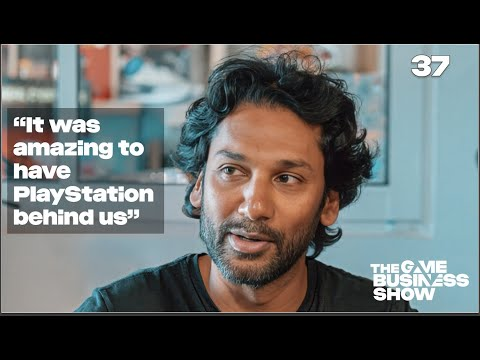
Hello and welcome to the game business show. Today we are joined by Ru Wuraseria. He's perhaps best known for his studio Ready at Dawn, which worked with Sony on iconic brands including God of War before moving into VR development with games such as Loone Echo. Ready at Dawn was acquired by Oculus/ Meta in 2020 and was closed in 2024. But Ru is back with a new team based in the south of France called Atlantis. And to discuss the new studio and his journey so far, I'd like to welcome Rue to the show. Hello Rue. Welcome. Hello. How are you?
Hi Grace. I'm fine, thank you. And you?
I'm doing very well today. And I hear you're in sunny Switzerland, which is where you're from.
Yeah. Yeah. Back phone.
Well, before we dive into the new studio, I thought it might be worth looking back a little bit of your career because there might be a few younger folks listening who are not familiar with you and ready at dawn because for a period you were this hugely well reggarded PlayStation developer working on God of War games for PlayStation Portable. There was Daxter as well on the same console. You developed the original PS4 game, The Order 1886. You worked on the Wii version of Aami. I remember writing about them in interview at the time. But since then, Ready at Dawn became this VR studio uh with Loone Echo, Echo Arena, and Loone Echo 2, highly regarded VR titles, and you became part of Meta and Oculus, which I know that didn't end well, but looking back on all of that journey and of course before then you were at Blizzard and places like that. What are you most proud of of your story so far?
Wow. Okay, good question. Uh what am I most proud of? I mean, honestly, I would tell you, you know, there's so many things that we've done, you know, in our careers. is I mean in my career between like you said Blizzard Radio Dawn and and joining Meta but thing I'm most
proud of is the team we built over time. You know one thing I've always said about our studio and any game that you make and what I believe in about this industry is that games are good. They come and go, but the reality is that the power is in the people in this industry. And we built what I would consider, I mean really like I know everybody says this, but one of the best teams this industry has had
and we've proven it actually. I think with with the games we've done over time, you know, at Radio Dawn, collecting these type of people actually together and giving them the chance to prove themselves is something I'm really kind of proud of.
I find it quite remarkable when you see a studio like yours who've just constantly reinvented. Right. you were doing portable games, then console games, and then VR games, which I guess with your people requires a certain willingness to learn and challenge themselves, which you need a good culture and a good team to be able to deliver that.
Yeah, it was my promise to the team. I mean, when they came in, my goal as the head of studio was to make sure that they were always challenged, that they always had something fun to work on, something that they were passionate about. We did that very early on, you
know, with Daxter, of course, you know, when we signed that. But even going from Daxter to God of War, I think everybody expected us to make a sequel. We were excited about doing other things on PSP. So we went to God of War. Then you know again a second God of War game. We move on to the order. In the middle of it, we actually did a few original IPs that we developed internally that didn't see the light of day yet because you know those were the things that we did internally. We kept on and the goal was really like give ourselves the chance to innovate. And there's a good side and a bad side to that. The good side is that you get to do something fun every single time. New technology, new IPs, new art, new everything. Sometimes the bad side is sometimes your team looks at you and goes, "Hey, could we just build on what we did in the past and do it once more?" We did it with God of War, we did it with Lone Echo. But one thing I'm proud of again is that over a period of 20 years, I think we worked on I want to say about eight or 10 different genre of games as a studio, which is kind of very very unique for this industry.
Yeah. You mentioned um The Order there, which I think it's the thing. I remember the order 1886. I remember very vividly.
It felt like a big moment. I remember it being revealed. You've worked on big franchises before obviously, but this was your big budget PS4 original IP exclusive. And I know it got mixed reviews, but I actually remember loving it at the time. I think I love the fact it was it was quite a short game, which benefited me quite a bit. I'm going to pick on that one for a little bit. How do you feel about that game now looking back?
There's no way a developer doesn't look back and think I could have done something differently, right? And the same goes for the audio. I think we innovated on so many things. I would tell you that today the order still looks relevant visually and that's a game that's already 10 years old.
I've seen reviews of games done now in 2025 where people played it for the first time and go like, "Oh my god, I can't believe this is a PS4 game." So, we did do things that I think really kind of pushed the boundaries of what was possible. There are things again as a first game that we uh consciously made decisions on to not do. For example, a lot of people dinged us for the fact that we didn't have a multiplayer in the game, which I understand, but at the same time, we did do a multiplayer in
the first year of development. We also realized we didn't have the budget and the time to do it. And together with Sony, we decided to kill it in year two, kill the multiplayer and bring it back hopefully in a sequel later. And we had a functioning multiplayer also. It was a lot of fun. But again, two different games to make with one team.
Yeah.
People talked to us about the game length. And I know that that's something that a lot of people talked about at the time it got released. I mentioned in the past we cut about I want to say 30% of the game a few months before the game released
because we had a lock date to release it and I understand why Sony wanted something on PS4 in that first year of release and and there's competing you know um you know needs I think from the studio side and from the publisher side and in the end we made the decision it had to come out in the time allotted and you know were we to do it again I would have probably you know try to figure out a way to extend and the the the the development for longer cuz the game only I think it was 3 and 1/2 years to make the game from scratch
wow
and there was new technology new IP and you know Chris I mean from the industry new IPs new technology take a minimum of 5 years if not six sometimes seven years
certainly now
yeah exactly and even back then I mean you look at Uncharted which was big under the code name big under Naughty Dog Uncharted was like that God of War reboot took years to make even though it was an existing IP So, it's tough because we were an external studio kind of working first party and Sony as as I understand it like you know needed that game to come out and and we made some sacrifices but we really hope to make a sequel after that cuz I had in my head you know the story for the second one the third one we had all of that like you know kind of prepped to to go on
but you know unfortunately what happened happened. It's interesting. We had um IO Interactive on the show recently and they took a they take this franchise approach to things, right? Where every time they made another game, they're able to make it more cheaply because it's not a new IP or anymore. They've got all the assets and they've done a lot of the building and a lot of the foundation, but also they could do it a lot better. And this used to be back in
the old days, even the early naughties, it used to be that it was quite normal. You put out a game that was, you know, showed a lot of potential, but it was the second game that really delivered on it because all the ideas you couldn't have time to make in the first game, you and all them and all the things you could tweak in finesse and is historically I always think the second game is always the best game. So, it's a shame that you never got a sequel because I really enjoyed it genuinely. I I remember being surprised at some of the scores. I thought it was a stronger game and I'm glad it's been reappraised a little bit. We'll come on to the new studio in a moment, but you went from there into the world of VR and then became part of Meta. So, what made you want to get acquired by by Meta in the first place? Well, originally we didn't want to get acquired. We that wasn't the goal of the studio. We were quite happy independent. We've taken very different meandering paths, different platforms and all. And as a matter of fact, uh back in 2019, we were working on uh PS5. Actually, we have dev kits. Uh we had dev kits at the studio. We were trying to get back to PS5. One of our goals was well VR was going one way. We had hunger
to do PS5 work again. And that's kind of what I communicated to uh to Meta also at the time. I said like look guys, I don't know where VR is going to go truly because we don't know the long-term plans. But we have a hunger to do great things in VR, but we also have like hunger to do great things on the on PS5 at the time. We hadn't shipped on PS5 yet. So like, you know, that's kind of our path after Lono 2. Loco 2 was supposed to be our last VR game. And those discussion led to them coming back and talking about the future about the plans they had about the social platform that Mark was trying to build. You know, the future of what VR could be, which I was excited about. As a matter of fact, I I talked about it with Jason Rubin, you know, when we talked about the metaverse back in like 2017 when the first document was written about the metaverse. We jived on on like how the experience was going to be. Actually, he wanted to pitch a version of it that actually included us building the technology from the ground up and all. It was really fun. It was like it was going to be amazing and we talked more about it with them and we seemed to align. They came back a couple of times,
talked to us and end of 2019 they approached us with this very strong vision about you know again breaking the boundaries just like Lono had you know for for for the first game on VR that we did. We did things that people said oh my god don't ever do that. If you if you move in VR you're going to you know make people throw up. They're going to be nauseated. Don't do that. And we broke those boundaries and we proved that it could be done. So we wanted to do more of that and that was the reason why we got acquired because they came to us they said hey we'll build a stronger partnership you guys will get to do cool stuff and we'll follow this path of innovation that you follow that you set and I gave them a full you know road map of the next next years of what RAD was going to do and uh and that's how we started it was a really amazing relationship we were working on that you know back and forth during co even they were amazing during covid I mean we were we were all working from home we had a lot of facilities working for meta And um and we continued on that path and unfortunately I feel like we you know over time we uh you know as much as I I
saw this acquisition as being like you know this 5 10 15 20 year plan of building the metaverse potentially and being part of it. I I felt as at least as a studio for what we wanted to do. I kept our studio on that path. That was always my goal. And like I told you at the beginning of the interview, I promised the team that we were going to do something and deliver something and that I would always keep that promise that we'll always do something cool and innovate. And I kept that promise to the studio while we're part of Meta. And I and I kind of had kind of held steadfast to that idea even within Meta said like this is what we want to do. And even when we were trying to be veered off to something else, I was like no no we we need to stick with this. I believe in this. uh we were actually working on something that had you know a longer time range like five years you know five five seven years it was both technology and and software and and I I was fighting to keep that going and I we kind of felt as you know the last years of of meta went by that that wasn't
quite aligned you know with where meta was taking things and and you could see that and and that's the reason why kind of unfortunately from that acquisition four plus years later, you know, we should have done this studio because once you don't have that alignment, Radio Dawn can't become something else. It was built for something. It has something as a DNA. It has a character and you can't turn that studio into anything else but what it was built for. And unfortunately, that's kind of how the whole thing was shut down. Um, the VR industry, we don't talk about it very much anymore. At the time, it was all everyone was talking about it all the time. And we I haven't actually had a featured on the show yet since we launched the game business. it does seem to have stalled. How how do you how are you looking back and obviously looking at the VR industry now that you're sort of not in it dayto-day. How do you view it?
VR actually, you know, has had many lives, you know, in the last decade in different versions. The difference this time, I think, and when we joined, there was something different about VR. It wasn't just a visual thing. It was about immersion. It was about being in the game. It was about, you know, this
tactile feel of the game where it was no longer about looking around and feeling like, "Oh my god, I'm in a different world." He was touching something that was virtual with those, you know, controllers. For us, that journey started actually, funnily enough, before we joined Meta. It started with Morpheus, uh, PSVR1, uh, you know, the first first iteration. Sh Yoshida demoed it actually at a GTC, the the Sony kind of, you know, tech conference that we do at at GDC.
Like he was so excited about it and actually it's contagious when you hear him, you know, talking about it. I was like, "Oh my god, this is going to be so cool. I want to be involved in it." and we kind of kept you know a breast of what it was turning out to be for a few years while we were working on the order. I was kind of always interested in it and even before we shipped the order I contacted Jason Rubin who had just joined Oculus at the time before they were quad Meta and he he and I discussed the potential of working together. I think this was 2014 and I had ideas he was like gung-ho about it and what the future could be. I think
those ideas merged. actually why in some ways when we didn't make the sequel of the order we already kind of had it everything lined up for what we wanted to do on VR already and we started working with Jason actually kind of literally the month after we moved away from the the sequel and I will tell you from then to now I still believe in what he can achieve it's something that other medium can provide right now there's an immersion factor there's an emotional factor there's a connection factor that doesn't exist in console games and PC games that you get in VR you play a character character in every other game. You are the character in VR and you do truly feel that we we saw it with the first Loone Echo and and the reviews that uh you know we got for Lone Eko in 2017. Now the fact that the the industry has has kind of started a little bit you know uh in the in the last years I think it's just a question of of not having enough players in the industry I think Meta truly believes in it. U Meta actually understands what the long term of VR could be and what the platform could be and that social platform that the future could be. It's just that in
order for this industry to grow, it'll need a lot more players coming in. You need competition. You need innovation. And right now, I would say the VR industry is kind of not innovating as much as it's trying to deliver what the players want today. And what we need and what we for example wanted to be part of meta for was to innovate to do something that nobody had done. And that's actually, as a matter of fact, what we were kind of like trying to achieve before we uh we shut down the studio was really not about serving the VR industry today. It was serving the VR industry in like 5 to 10 years. And there are still ideas floating around. There are still things that haven't been done that we truly believe and I believe should be done in VR. I think that it's a matter of time. It it really is more for me a matter of time more than like whether or not VR is going to survive. It's just that they'll stagnate a bit, but I have a feeling that it's going to be there in a much better form and bigger form in in another 5 to 10 years.
So, what's the secret to getting in more players into the world of VR? Is it is it the hardware or is it the innovation
that you were talking about?
It's the software. It's always the software. I mean, look, I'll say that as a developer and and I know that other people will go like, you know, well, the hardware needs to get better. I don't always believe that the hardware needs to improve that much to basically make experiences that are amazing. Again and again, we talk about like improvement in PS4, PS5, PS6, you know, whatever the the next iteration is going to be. But then you look at Switch and there are games made on Switch that just amazing pieces of software, amazing gameplay mechanics, amazing immersion. They don't need that technology. And I think VR right now needs amazing software. And amazing software will take risks. It'll take some hits and misses, right? I'll use the example of the order. I will tell you that some of the things that were unappreciated about the order of 10 years ago, as you said, are appreciated now because of the changes in time and what people want and what people expect out of game. Software should be kind of this breadth of the choice of things that players want to have. And I fear sometimes that the industry kind of like feels like they they got to silo themselves because that's what's
successful. And the industry needs to have everything in it in order to be successful. things that are going to be, you know, like cult hits that are going to be appreciated way later, things that are not going to work today, but that somebody else will pick up and improve on in the future. And unfortunately, because of the economics of it, it's not always the way, you know, we we make decisions in the industry.
Yeah, I can certainly see that. My job, I spend a lot of time talking about distribution channels and business models and and and hardware and all that kind of thing, but I know that's only about 5% of it. 95% of it is the games, right? And you know, we talk about, you mentioned Switch One, which I think is a brilliant example. Switch One is a game where people buy things on cartridges from shops and then put them into a machine. Like this, the oldest business model in games, right? And love it. And yet it's one of it's the one of the most successful platforms in the world. And Mario Kart sold 60 million units. The reality is it did very well because they made some really good games.
Yeah.
And yes, the form factor and the hardware and the and the flexibility of the device helped. I'm not denying that.
But it's like it was it if the games weren't there, they wouldn't have mattered.
And I think that's true of of platforms overall. If you look at the history of our platforms, I mean, of the game industry, there's always been certain games that moved the needle. There are games that actually are unbelievable entertainment that you play again. And sometimes you want what you expect out of the game, right? Like I I will play something that I know what I'm going to get if I buy a certain game. But there are certain things that open your eyes to what things could be. And I think that that's what we need a lot more of in gaming. And I think that you know across the board you get like smaller teams basically every generation doing cool things that I think bigger teams then you know adopt and we love to learn right as as a studio I've always said even with radon we love to innovate but we love to see innovation that we can kind of borrow and learn from and and share and and that's how the industry actually truly grows and and to the point that we're talking about earlier that's how we increase the user base of any platform whether it's VR or anything else is invite more people into something that they connect with and not
everybody connects with kind of a singular experience. We're still such a small, you know, consumer base compared to the population of the world compared to, you know, TV, movies, music and all that. We have still so much to go to tap into what makes people what makes a certain people actually want to play and and get into games.
Yes. What Jim Ryan said to me once, he said, "Video games may be the biggest entertainment medium in the world, but it's not ubiquitous."
Yeah.
And I thought that was um something that I'd like to remind people. you know, we are we make a lot of money, but not everyone plays games. Everyone watches TV, everyone listens to music.
Yeah.
Let's talk about your new studio, um, Atlanta studio. How did it how did it come about?
That's an interesting one cuz so while I was in Meta and when the decision was taken to shut down the studio, it happened Oh god, it's been more than a year. Although the studio shut down in August, I don't think most people know that. I was already discussing with the higherups at Meta the windown of the studio back in, you know, early 2024. Unfortunately, I didn't share it with the team because those kind of things
are not things that you can share. You can't tell the whole team, hey, we're thinking I'm doing this, you know, in a few in like 6 months or 8 months, whatever it was. So, I kept it to myself. Uh, I worked with some of the higher-ups over there to do that. And frankly, you know, uh I I consider myself sometimes to be a little bit of a dinosaur in the industry purely because, you know, when I look at the the the young people, younger people I should say, that come out industry with so many cool ideas, I'm there to listen to them now. Now, I feel like, look, I've done my time. I've I've done amazing things and I want to see like cool stuff come out of all these people that are now getting in this industry, things that we've never thought about, the same type of passion that we have in the past, but you know, for the present generation. So my transition was going to be, hey, we shut down the studio. I'm just going to go and take a long sabbatical or, you know, take my time, figure out what I want to do next. And in between all of that, a mutual friend of of one of the people that started the studio with me, Atlantis, with me, we got reconnected. And I've known this person for 10 years. Actually, my friend I've known for about
20 years, actually. He used to work for for us. He worked for PlayStation France in PR. he contacted me and just said like, "Hey, I don't know what you're thinking, but do you want to get involved in something that's happening or would you like to at least advise on this to see where it could go?" And the chance was there to not only advise, but uh but also kind of give some money and and fund the the studio and give them a start. And I was in a place in my life where I was like, "All right, you know what? I can I don't need to do anything or work. I can kind of seed the studio and see where it goes." uh and you know in the long term maybe help once I left Meta and that's what I did. I kind of seated the studio. I let them do what they wanted to do. And around like the end of 2024 I decided all right well I'll just you know give some money see how that uh that project goes. I was excited about the the group that they accumulated. Uh so uh between the people that I knew from a few years ago uh to the people they assembled from studios in France there was something exciting. There was that feeling that I had when
we started the studio like you know like a you get a little spark a little little excitement because you figure out that there's a DNA inside the studio and they have something in them that they want to put out and they spent the better part of the first 6 months finding that DNA that's kind of the only advice I really gave them was look don't dive too deep into what you think you want to do today give it time and uh slowly they started actually experimenting finding their DNA finding what made them click And by the time I had left Meta early this year, I kind of like, you know, started working a little bit bold with them. And we decided, all right, why don't we announce this and hire people and and yeah, it was it was it was organic. That was the best part about it. It wasn't just a decision. I love the fact it was organic. It just kind of came to be because all these the the right people connected.
It was the same thing as Radio Dawn, the way Radon started. It was kind of organic the way we we connected and we started our first game. Does the fact that it was in the south of France, did that appeal to you over investing in like a Californian group or anything
like that?
Yeah, I mean I would tell yes it did kind of uh you know interest me because California notoriously has been extremely expensive to make games.
Mhm.
That's just the reality. Costs of making games have gone up and up you know over over decades. You know this. I mean it's like you know you look at budgets from 20 years ago to today. I mean it's like it's just astronomical what what some games cost today.
Yeah. And we thought, you know, at the time, at least I thought if I, you know, the idea of doing something that actually required a smaller budget in the beginning at least was kind of exciting. But beyond that, I think that there was something about like being closer to where I come from, Europe, you know, it was I was excited about the fact that it was a culture that I understood really well as much as I understand, you know, the the American culture. And it was a new challenge. So there was a little bit of that excitement as well, you know, where I thought, all right, well, that's going to be kind of cool to be, you know, closer to home. uh being able to kind of connect with people back again, you know, in Europe and and see where it goes.
It's certainly a bold time to launch a new studio, you know, video games.
Actually, entertainment as as a whole is is going through a bit of a challenging moment. What makes you confident, I guess, is is is the question. As confident as I guess you can be.
Uh confidence, yeah, I mean, confidence again doesn't come from the money or anything. And and you're right, the the industry is at a at a kind of an inflection point. There's been a lot of layoffs happening in year in the last years. Uh there have been a lot of u you know negative things I would say as much as you know there were positive things. The launch of the switch 2 was amazing for example and and and hearing the first 24 hours of sales.
Yeah. Yeah.
You know there there's some good and bad things that happen but it is true that right now it is tough to start a studio. It's tough to land a project. It's tough to publish something. Get get a publisher actually to be behind you. For me I would tell you what makes me confident is again people. I've always been confident in people. I've never been confident that a certain IP is great because it's, you know, it's a known IP or, you know, that the right partnership with a publisher is going to
work out. We've seen like, you know, traditionally really strong relationships with publisher developers kind of take a turn for the worse in the last few years as well. You know, publishers that I would have imagined, oh my god, that they're never going to abandon a game suddenly, you know, start shutting down games. So, my confidence have never come from this. It's come from people. It's come from ideas. It's come from people putting that little spark together and coming up with something, giving it time. And right now, that's really what happened with with Atlantis. It was having those 6 months of them just toying around with things that we just threw away that they went, "Wow, that doesn't work." The game actually, if you saw the game at the very beginning uh the way it was, it was nothing to do with the game right now, right? It was something that, you know, we departed on a first person, we're on a third person. It was really allowing them to see whether or not they truly had it in them to find something that they loved. And when you see that team doing that rather than being dictated something, you you you start figuring out that everybody owns a piece of the game that you make. That's what success has been for RAD in the past. It's it's
everybody taking ownership of something in the game and they feeling like it's their game. And seeing that happen made me confident that at least we had what I would say really like you know 60% of what you need to make a game successful. It's a good team that actually believes in the idea owns that idea and comes up with a good gameplay loop that that you feel all right there's some magic in here. It could work. We could just basically keep iterating and it's going to it's going to become something cool.
You compared it to RAD ready dawn but how does it differ? How does your approach with this one differ to to what you've done in the past? Uh one big difference I would tell you is that uh you know when I started RAD the hunger that I had and the the the time that I put in was you know completely different than what what we do right now. Uh the three of us DJ myself and Andrea we were working when we started right from home 24 hours a day 7 days a week. It was like you know I mean when I say 24 hours seriously like sometimes it was like sleep for a few hours get up uh you know try to basically maximize your time all the time. That is different. uh right
now today it's kind of a new role. I can step back. I can see things from a little further out. I can almost be like a pseudo publisher. Uh you know looking at the game rather than being like full-time in development. I always keep reminding that team that it's their game as as much as like I'm involved that that first and foremost it's their game
and that I can always come in and act as a as a consultant publisher. I spend I spend a lot of time on the game but at the same time it's not you know every single day. The other difference I would tell you is, you know, it's the, you know, we started RAD with with Sony behind us. It's it's it's amazing to have that. You know, uh, the moment we started RAD a few months in, we went up to Foster City, we went, we met with Shu, all we had was a little document, 20 pages, uh, for what Daxter was going to become, an idea of like, you know, a spin-off of like a sidekick on a sidekick platform. That's kind of like how we we we pitched it.
It was it was cool. like it was like the PlayStation 2, PSP, and here you have Jack and you have Daxter. And I still
remember that meeting. We walked in. It was uh I want to say like an hour and a half, two hour meeting. It was uh Shu, Grady Hunt, Connie Booth, and the three of them sitting on one side of the table. We pitched. We're like, "All right, we're done. We're walking away. We're walking to the elevator. The elevator doors open. As we walk into the elevator, Grady runs behind and say like, "Okay, I think we're good." You know, that was the industry back then. It was amazing to have that feeling of like they just heard it, they were good to sign. Today, uh, we're kind of more in a, you know, in a stealth mode. It's it's not the same. I don't think you can just, it's not as easy to walk up to publishers. There are only a few that work that way. You know, that there are some people that I know in the industry that are still driven by that passion. But today, I think there it takes a lot more to land a project. So, there's a little bit more fear of like, you know, how that that start is going to happen. Is is the aim with the studio to be AAA or do you share this sort of vision everyone seems to be sort of following at the moment which is that actually maybe being focused and a little bit
smaller is is the way to go.
Yeah, I think it's a sign of the time. I Yeah, we're a little more little more focused on the on the let's say double A uh you know uh type game and budget.
You know, remaining a small team. I don't think we want to grow beyond like 25 30 people. We want to make games that actually, you know, kind of have impact and but at the same time doesn't feel like we're over overwhelmed. Uh take the time to ship them rather than being rushed to ship. I think, you know, uh uh Kobe, you know, in in Mobile did an amazing job, you know, with Expedition 33, for example. They're like only like an hour away from us. Same similar kind of vibe. They were they're a small team. They they did something amazing, you know, that, you know, kind of a bigish game, but but not with the type of AAA budget that you that you need.
It's interesting. I really I struggle a little bit with the labels because one of my franchises I love is Resident Evil.
Mhm.
And Resident Evil is a focused game. It's not driving and open world and RPG mechanics. It's just a very very very good horror game. It does it thing very
focused. But we consider it a AAA horror game. And then you play something like Space Marine 2 or Clare Obscure which does similar things. It doesn't do the whole spectrum of what it could could be. It just focuses in and does something so well. And that thing it does well I would argue is of AAA quality. Right.
Agree.
You know it's a AAA experience there. It doesn't do everything. It's not not the 500 million billion whatever dollar budgets that is required to make an Assassin's Creed or Grand Theft Auto. But it does that one thing really really well better than other games. Like I think some of the mechanics in Space Marine 2 is is better than other games. It doesn't do the same thing as all action games. Do I actually struggle with double A because I think it kind of underells in a way that actually this game is as good as any game you'll play. It just doesn't do everything and and and I don't really have a question there. But it sounds like that's a sort of it's a sort of uh Yeah. Yeah. I agree with you Chris things I think the experience can be AAA still I think and and we need to start figuring out a way to differentiate that right that there are games that are just small like indie games or something like that they
deliver experiences that you just go oh my god like how in the world were they able to do this? you play a 50 hours, 100 hours of those small games sometimes. I do believe that yeah, you're right that that if you differentiate between the experience and the budget, it would be nice to actually truly have a separation between that so that we do have games that actually don't cost the same amount that actually deliver AAA experiences. But I think we're a little muddled now. Yeah.
And especially with IPs that that have been existing like Resident Evil, I think that's absolutely true. It is harder today for a new IP to actually call itself AAA if it doesn't have just everything. It's an expectation that the audience have often time.
This is allea. It's actually about how much money the budgets are being spent and it sort of spirals down to consumers talking about it that way. But I when I maybe it's just my memories wrong. When I grew up in video games, I didn't differentiate between,
you know, they were all just games. Didn't it didn't bother me how much money was spent on them or anything like that. And of course AAA games may have ended up being my favorite games because they had big money spent on them. But that didn't mean I devalued them in any way. I don't go to the cinema, right?
and I I go and watch, I don't know, A Quiet Place,
which has a fraction of the budget of of Avengers, and I think I'm getting a lesser experience in any way, or I think, oh, this is clearly an indie. Like, for me, it's just a different type of film, and The Quiet Place does stuff much better than the Avengers. Oh,
yeah.
Right. But it's it's but it's a different experience. Anyway, I'm I'm sort of getting in the weeds of characterization and and and I'm going to s a bit on this, but Chris, just if you don't mind me saying something like I think what you what you're talking about is extremely important for the industry. What your view and your vision of actually how you play games and how you view games is I I would hope the way the industry not just as a as a on the on the development side, but even on the on the audience side actually sees it that way. But I will tell you firsthand that I've seen games that we've made, you know, see that differentiation because of what quality is perceived to be. Right? If your game is not long enough, you often times are not viewed in like again I want to take the example of the order. If you make a 8 hour game
that actually just is amazing and like you know you you you're getting you know into and again there are faults to it. Absolutely. There are things that actually are not that could be better and all. It should be viewed in the same light without actually really saying like, "Oh, but I was expecting a game that rivaled the last game that I made." They're usually compared.
Yeah,
we often compare games that, let's say, you're a third person shooter, so you'll use another third person shooter. And I remember them saying like, "Well, it's not Gears of War cuz it doesn't have a multiplayer." And I was like, "But it's not supposed to be, and it's not trying to." We don't do that in movies. We don't do that in music. We don't do that in TV. We never say, "Oh, this is a series that I last watched and this is a fantasy series that I really love, like Game of Thrones, and and another fantasy one comes up." And we don't go, "Oh, well, I'm just going to ding it because it's not Game of Thrones." We don't see that happen often with the public and and the press. And I've seen that in this industry for a very long time where we see a game and we already categorize it because there are others to compare it to. and you don't really like, you
know, appreciate it for what it is and for what it was built for.
I do wonder if it's a unique problem to games because in TV and film, right, we watch those things because they're stories, right? And what we're looking for is good stories. And sure, special effects and al-ist actors all add into that. But really, we're looking for a good story. The story isn't good enough, then we're sort of the script isn't good enough, we're not into it. Whereas in games, there is two things. people, some people do play games for the story, but a lot of people play it for the experience, for the discovering a world or or just having fun. And that's where perhaps when we're talking about perception um of whether a game is AAA or not is sort of dictated by different measures than just the story or just the visuals. I kind of regret as an industry coining indie as a term. I think if we hadn't have done that, maybe we'd all just seen them as games and and and sure, we may see them as bigger games and smaller games, but it it wouldn't have I don't know, we wouldn't have siloed these experiences into different buckets.
Yeah. And there's still time for that to change. I mean, put it that way. You
know, we have years and decades ahead of us. Hopefully, we'll come to that point where we don't differentiate. It's entertainment in different ways. Interactive entertainment in multiple different ways.
I was going to ask you, I have a question here which is really broad. We have talked about it quite a bit in a way because you've we're in this prolonged period of industry stress, right? And they've been successes recently. You brought it up Switch too, but also Dune just did very well and and that rematch game from Kepler's done very well and expedition 33's done very well and Assassin's Creed did really well. Even AAA like Monser Wilds is very well. There's been lots of successes this year. It's not all misery, but also we are still seeing challenges and layoffs as a veteran of the business. Um I'm going to sort of ask J it's quite broadly, but how do you see it? How do you feel about um where the industry is today?
Um so a very broad question. I would tell you like okay so it is a broad question I I'm a little worried I think I'm I'm a little worried as as in where the value is putting into the industry I feel like more and more we are finding people to be replaceable uh you know in this industry and it goes back to what I
talked to you about about what I'm proud of you know in this in what I've done and and and what I'm proud of in in the gaming industry overall more and more I think that we have become a little bit more commoditized where we just feel that people are replaceable. You you use people you you have people on a project, you you don't need them, they go and then you feel like you're going to rebuild the team. It's okay. Things are going to be fine. But that's just not the way it is and that's not the way most other entertainment industry actually see that people value is again in people and and seeing like layoffs. I understand that you know layoffs need to happen uh when when there is a need and all that stuff but I've seen the industry go more and more into this kind of uh mode of uh hire fire when you need to. Uh it wasn't the case actually you know decades ago where it was more like no we're going to make the team go because that team together is going to do something amazing after they're done with this project. Even though at the beginning of a project you might not need like you know 50 100 150 200 people you just go like no we keep the team
together because that team is going to deliver again and you're going to basically be able to you know move uh 20 people in the pre-pro you know pre-production and then uh the other people will join and right now they'll just you know work work do other things. uh that worries me a lot that we are, you know, it's good that we're a bigger industry, but the feeling that we're all replaceable, it kind of sucks. I I would tell you it's uh it's it's bad for the industry overall. Um the other thing also is again like expectation. I've seen uh I've seen the industry at times you know even you know when we were independent like uh you know 10 years ago uh we were approached by publishers that you know came to us saying like well if you want to survive you have to do these type of games you have to do free free play you have to do this you have to do that that's what that that wasn't so much the case I remember in the 2000s like where everything kind of went and everything was good good and it worked in a different way uh often times you you a
lot of games or have been more and more pigeonholed into like if you really want to be successful, you need to make it free and then we'll figure out a way to monetize. Uh all of those kind of impositions kind of go against like business impositions often times go against against the the the quality of what you're trying to build, right? It's like you can't be driven by a business model. That is not what this industry is. You're driven by ideas. You're driven by amazing gameplay. And yeah, I will tell you that uh you know the way the industry is today, I mean I see a lot of games driven by by by business models where uh somebody or publisher will come and say like well we'll do this but only if we do you know season passes and you're going to have to do this. It's like well does the gameplay lend itself to that? Is was the game built from the ground up for that reason?
Yeah, it's what happens when the industry gets bigger, market cap gets bigger and money is driving a lot of things. I think this has always been true, but I think it's more true today and what you're saying. I completely agree with it. I think that um you kind of need to do what's right by the game, right? And audiences do everything. They
will buy things at premium prices. They will play free-to-play games and you've got to do what's right for the title. And I know that there's some companies Xbox been conversation a lot this week. And um and one of the conversations around Game Pass. I think Game Pass works really well for a lot of games, but I don't know if it works for all of them. And I think so therefore maybe think about what the game needs first and foremost. And then it's great that that's an option and it's great that you've got all these different types of business models and and platforms and things, but I think it's a matter of what works, what what's the game doing and who the audience is and doing what's right by that and letting that lead the way rather than the strategy the way. And it's all great you've got a strategy, but sometimes break the rules. Don't worry about it. You know, just do what's right by the game. That's my that's my uh that's that's been my for thinking this week.
Yeah, I love that. I think you know you know amen to that I would say because that's exactly what I think most of the developers you're basically saying what every developer would like to hear in a conversation about how do we basically
market this game it should be driven by that it's great that we have different distribution model not everything needs to fit in that I think even publishers are sometimes fighting what they want to do and what the market wants and what players wants I've seen games in the past you know come out that are you know good games but sometimes a vocal minority will come out against it's like oh my god I can't believe I have to pay for this. It should be free to play it. I'm like, but why should it be free to play if you like it?
You know what I mean? Like sometimes there are so many games out there that if you really want a freetoplay game, there are plenty for you to choose from and play.
Exactly.
That's the joy of a broader industry. And we're talking about getting broader, getting more ubiquitous, making more and more people understand, get into games that some people will want to buy their games the oldfashioned way and or the classic way, shall we say. And really, it's what works best for the for the title. And you don't want to you don't want video games to be compromised by business models or or or sometimes sometimes it fine it works and sometimes it doesn't. But anyway um I think we could probably be talking for ages. Um and I'm very conscious of the time. So I
ask one more question about the studio and yourself. Where do you see it in 5 years? I put an arbitrary number on it but where where would you like to be in in let's say 5 years time?
Again like I said I don't think we want to grow too much. Uh we want to be driven by passion. I think that DNA that we had at RAD about innovation and being driven by passion. I kind of want to inculcate that a little bit again to this studio. It won't be my place to make the decision to do that. But I would leave it to that team to decide whether or not they want to have a similar path. We want to keep on working on games that uh you know again don't take again too long and too big a budget. uh you know but that that pressure you know is is is definitely something that every developer feels when it gets very big again I can't say never say never because sometimes you get the opportunity to work on something so cool and the budget is there and the partner is there and you go oh my god how could how could I say no so never say never to any opportunity that's out there that would fit but at the same time I think that we have an idea in mind to say at the size that we do we
don't have a you know kind of a favorite platform uh you know I know that a lot of people in the studio love Switch, uh, you know, but a lot of people, a lot of other people play PlayStation, so we're not really driven by purely platform, but I've always told them, you know, it's pretty cool to be a first party or, you know, to be what what people call second party as well. Uh, uh, to be driven by, you know, with a partnership with a with a platform manufacturer. So, that would be really cool. As far as I'm concerned, honestly, I I don't know. Like right now I'm enjoying being a little detached because I feel like it's a different perspective uh to what the the studio bring uh that what I can bring to the studio. And lastly there is something that actually we are toying with and we'll see where it goes but one of the ideas when we started the studio was to kind of connect a little bit with the the academic side of the industry.
Absolutely. There are a lot of good schools out there. More and more have great degrees in in gaming, whether it's, you know, like USC in the States, but there are a lot of game games and
and I think UCI has a really good computer studies and gaming uh group actually in Irvine, California. But Europe, I mean, has a bunch of gamemies and uh we we've talked about the idea of like, you know, what if we were a little close to that? And one of the ideas of starting the studio was in the future to try and find that connection, try and find a way to to see whether or not we could partner up or actually work together with with some of those uh some of those institutions to give a chance to for both students before they come out to to see what the world is like, you know, out there. And at the same time for the studios to you know be able to you know benefit from ideas that come out of you know those those students like and I'll give you an example of like why you know excites me like I was at art center I I studied car design and notoriously art center has always been connected so closely with the car industry we had teachers all our teachers were from art center were from car industries uh car companies that would come and teach at art center and I
always felt that while I was studying I was so in tune with what the work was going to be in the future and I felt in academia like in the gaming side curriculums I don't see like a onetoone connection sometimes there's expectations that are not truly met and I would love to see more connection actually happening between schools and and game studios
I think we should dive into that at another point
you really really enjoyed talking to you uh today so thank you for joining us um it's been an absolute pleasure
same here
that's it for today's episode of the game business show if you want to make sure you Never miss an episode, head to www.thegamebusiness.com and sign up for our newsletter if you haven't done already. Until next time, thank you for tuning in.
What is the greatest movie trilogy of all time?
Oh my god. Uh, I'm going to say the original Star Wars the original trilogy because it influenced everything I did pretty much in my life.
Will Nintendo Switch 2 out sell Switch One?
Yes.
You have already answered this question, but ask it again. Will VR ever become
mainstream?
Yes. Console or PC?
Console. Always been a console player. Love PC games, but my god, console have given me like so much pleasure over time that it's hard to disconnect.
What is the most exciting games company operating today in your mind?
I will say this because they're close to where we are, but I'm I'm really excited about what Khobq is going to do.
And which video game has inspired you the most in your career?
Karate.
Oh, really?
Jordan McNair did something pretty amazing at the time with that game. And it was like the first time that I think Andreas said it actually in an interview in the past as well. It's the first time he felt there was a story behind something. Although the story was really tiny, you just felt like I'm doing something cool. There's a gold, you know, right from the beginning of the game.
Auto-generated captions from YouTube — names and numbers may be misheard.



















Comments