Transcript
[Music] Welcome to the Navit Gaming Podcast, where it is our mission to explore the business and future of video games. We bring together the industry's brightest builders, investors, and thinkers to keep a pulse on current events, dissect emerging trends and games, share lessons learned, and have a great time. This podcast is also part of Navik's growing ecosystem which ranges from free and premium research to consulting and advisory services. For more information, visit www.navic.co. [Music] This episode is brought to you by Leveler, the Discord community intelligence platform helping game studios cut through the noise. With powerful social listening and sentiment analysis, Leveler tracks millions of Discord messages to tell you exactly what your players care about. No more guesswork, just realtime insights into what's working, what's not, and what
your community wants next. To learn more about how Leveler can help your team unlock immense value from Discord, simply visit leveler.com or check out the link in the show notes. This episode is brought to you by Neon. For the first time in our industry, developers can finally have their own DTOC channels to save on app store fees and build closer relationships with players. But there's a catch. Selling direct means either building complex infrastructure yourself, or choosing among legacy providers whose inexperience in games or questionable reputations pose real risk to your business. Luckily, there's Neon, the DTOC platform built for games. As a merchant of record with customizable web shops optimized for conversion and modern APIs that let you use your existing live ops tools, Neon is trusted by some of the biggest names in gaming to help you sell direct without the typical overhead. To start selling direct and finally take control over your full player experience, simply head
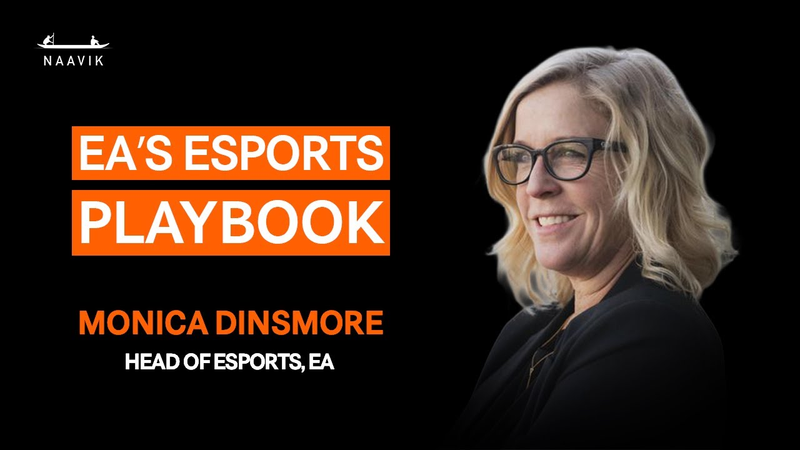
to neonpay.com or check out the link in the show notes. And with that, let's jump into the episode. Hi everyone, I'm your host Aaron Bush and today I am excited to be joined by Monica Dinsmore who is the head of esports at Electronic Arts. We'll be talking about all things esports at EA. We'll be digging into what's going on with the games a little bit and of course the present and future of esports at large. So Monica, thank you for being here. And I think the best place to begin is by going back in time a bit to to when you first got into the games industry because similar to me, you started your career in the finance world and somehow made it over here. So would love to learn about how that went and you know what you learned along the way that led to that decision.
Sure. Thanks. I'm happy to be here as well and super excited to talk about this. My journey is long and kind of weird and complicated. I started in tech
back in like the early 2000s, the first tech boom and then subsequent bust and started working in mobile space and apps before there were apps at a company called Livemind. So that was kind of my first intro into startup world, tech world. I loved it until it went away and I had a lot of operational background from from that experience when everybody was doing a little bit of everything. So I dabbled in HR and ops and finance and marketing and you know I was I was early in that in that space and so answered an ad to like do some accounting for an asset manager randomly just to figure out what I was going to do next after after the company closed and my second day on the job was 9/11. And so the nerd in me was fascinated by, you know, how an world event like that impacted the markets. And my financial adviser, the
this the that ran the small company that I was working for at the time, managed through that that turbulent time quite well and started pretty much getting a huge influx of clients. And so I got to put on my startup hat and helped that company build from like a hundred million to over a billion in a very short period of time. So then I wanted to play with the big boys in San Francisco. I was at a little a little firm in in Santa Cruz at the time and got hired by BGI to help run their hedge fund administration relationship management business. And again, very randomly just kind of started to get into hedge funds. Nerded out there. 2008 happened and I started to get into alternative investments and building complicated operating models and and things like that. Then we got bought by
Black Rockck. Uh and so that's where I learned about software development because all of those complicated hedge fund models needed to go onto the Aladdin platform. So I was doing that. I was writing, you know, business requirements and and running like dev cycles and things like that while I was doing my day job of of managing those hedge fund relationships and wanted to get back to tech and just missed that sort of startup vibe and and you know that that kind of freedom of of being able to be nimble and and try new things and and so at the time my husband had been asked to play in a band in LA and so we were trying to figure out where we wanted to live in Los Angeles. Fast forward, my sister's husband's best friend worked at Riot Games and they just happened to be looking for the perfect combination of finance, software development, and gamer nerd that would figure out how to get to
level 30 before they started. So, in League of Legends. So, I it that took a long time. It was League of Legends is a very hard game and and so 2014 I took a job with Riot Games heading up sort of the an operational finance kind of role that was working in the corporate strategy space and that's how I got started. And also just a quick note for our audience, we're recording this live at the Esports World Cup in Riad. And so if you hear random screaming or cheers in the background, that's because on the wall next to us is I think where the Valerant finals are taking place right now. So good vibes here. Hopefully hopefully not bothering the audio too much. But Monica, I mean, getting to the esports side of things. Maybe you can talk a little bit of what you did at Riot, but one of the things I know that you're like more known for doing at Riot was launching the LEC, which is the League of Legends European Championship League, which you know, of course, like
you know, like spearheaded all sorts of great competitions and I know you've put on great content productions that fans were a big fan of. would love to just learn a little bit about your time there and any lessons learned along the way or you know just things you learned about business about kickstarting something like that in the esports scene.
That was one of my most favorite times in in my my meandering career. I was lucky to one move to Berlin and live in Europe. Super high on my bucket list was was a stint in Europe. I didn't think it was going to be Germany cuz I had never been, but I loved it. And launching the LAC was was like I said, one of my most favorite projects. It was complicated, exciting. We learned a ton and you know I think we were bene we benefited by the fact that we were able to partner really closely with our colleagues in North America who had just done something very
similar with the NALCS and so we got to learn what to do and things to avoid. So we were really lucky that they they partnered with us and shared all of their learnings having just done it. We we spent a lot of time developing who we wanted to be because leading up to that launch we were EUL LCS and you know largely considered the ugly stepchild of of the NALCS. There was a ongoing meme about our production quality and you know how we were never better than NA. EA was always terrible compared to NA and and and so we had our work cut out for us to to kind of differentiate ourselves. So, we worked with a a firm called Design Studio that really helped us like figure out who we were, you know, who who are we trying to be, what are we trying to say, how do we want to differentiate ourselves, what's our tone of voice, what's our point of view, and they did some amazing
workshops with our some of our fans, our pros, teams, our talent, staff, like what what do you love about working in esports? What what gets you excited? what do you want to see? And so we feel like we did a pretty great job of capturing all of that. And probably one of the greatest moments in in my content career is that first tweet, EU greater than NA.
Yeah, I was a a big LCS watcher during your your tenure there. And yeah, I definitely remember when people started talking about the LEC, like why can't our broadcast be more like the LEC? I I eventually stopped paying as much attention because North America could never compete well at Worlds, right? But but obviously you know also during your time there is when co hit and obviously that was an event that rocked esports at large had huge implications obviously for the games industry as a whole like many industries but as someone who was
leading the operations of complicated esports operation what was it like going through that time and what did you learn from trying to manage all of that chaos I presume
it was chaos For us, we learned a lot about resiliency. I think we learned a lot about the adaptability of digital sport and almost kind of being on the precipice of something bigger. We didn't really know it at the time because we were just like, how are we going to put on our, you know, we were in the middle of a season and and we didn't want to jeopardize, we didn't know how long it was going to last. We didn't want to jeopardize our path to worlds or or any of our team's path to to uh championships. And so, you know, it was it was a huge effort and I certainly can't take much credit. The the ops teams, the league operations teams, you know, like literally just sprung into action and they were driving equipment to player player houses all over the city and testing and figuring out how we
were going to get, you know, competitive integrity with everybody playing in different houses and how are we going to officiate and where were the referees going to be. It it was very complicated, but I'll say we did it incredibly quickly and and I think we maybe missed a week or two and we were back on and it you know, it it was it was a really tough time to to not be able to high-five everyone in person at that time, too. But yeah, we we had no idea it was going to be as long as it was and as impactful as it was. But I think again it it was sort of the beginning of like how important digital sports are to the the sports ecosystem at large.
Yeah, I remember that period and being impressed by how quickly I mean all of the you know all of Riot's esports were able to kind of get back online and essentially not really skip a beat in
terms of like engagement. Everyone's still paying attention. everyone, you know, wants everything to continue and to still be rooting for their fans. So, thanks for sharing that context. Honestly, we could talk about your Riot days a bunch more, but obviously you're at EA now, so we should probably spend most of our time talking about what you're up to now, but maybe we can kick this off just with the story of like how you decided to move to EA. Riot naturally is more of a native esports company and EA is one of the behemoths in the industry where it has a bunch of other types of games, other types of priorities with its games that have esports. So, what made you think, you know, coming to EA and really leading their esports to a new era was was an awesome idea for you?
I think you kind of touched on it, right? is, you know, no one does sports games like like EA does. They're they're the best in the business and and they're the biggest and the opportunity to and
just kind of getting back to that like entrepreneurial spirit. Like I'm always looking for the next, you know, problem to solve or or the next opportunity. And sports, esports was something that I had never thought about before. and being, you know, a a lifelong sports fan, you know, myself, just figuring out how I can make an impact at that intersection of sports, gaming, esports, entertainment, you know, culture was just really fascinating to me and and so that, you know, I just really wanted to come and check it out and see like, okay, how does this work? Like, how how does FC work? at the time it was FIFA and how do you work with all of these different league partners and how do you work with the NFL and how do you think about sponsorship and licensing and all that stuff that that I had it you know we it was so contained at Riot and we had so much more freedom and so it was like how how can I learn to to bring the
best of esports into this sort of constrained environment and and like I said the the the draw of being at that intersection ction of of all of those powerful things was just really really exciting to me.
That's awesome. And I guess before we get too far deep in the details here, maybe you could just spend a minute telling us a bit more about what exactly you do dayto-day, like what all does your role encompass, what all does EA esports encompass? And maybe connected to that too, just like what is the goal? Like I imagine in the context of EA it's maybe not to drive revenue from esports and you're serving more engagement and other things but yeah hearing your view on what all you do and like what purpose it drives would be awesome and then we can dig into the details.
Yeah so head of esports at EA means that that I lead basically the business strategy of our esports programs. So that's right now inclusive of Apex
Legends, you're going to see later today, EFC, Madden, a little bit of college football. Those are our our main focuses right now. I hope to bring our esports expertise to other titles as they come up. But but yeah, so it's really EA thinks about esports as a very powerful marketing arm of the franchise. It's not meant to have while it does have revenue opportunities, it's not meant to be a primary revenue driver within the franchise. It's really meant to be the the sort of way to reach and engage that white hot center uh of of the player base. These are the people that spend the most time, you know, they they're the most franchise aware. They are evangelizing or, you know, shit-talking your game. They're they're the most vocal and they're the most valuable and that's regardless of franchise. So, so that our job is to keep them there, keep them engaged, give them platform. A lot of the a lot of the
most important creators and streamers are pros and so helping them amplify their own platforms and and helping them, you know, keeping them there is top priority for for EA. And that's that's really what our esports programs are designed to do.
Awesome. I just have a couple bigger picture strategy questions and we can kind of dig into more what you're doing with some of the specific games, but um you know obviously you come from Riot where Riot had you know was like fully in control of its esports operations end to end. Some other teams or games out there like CSGO from Valve, they outsource pretty much the full esports operations to teams or to companies like ESL or EFG these days. How does EA think about like what to do yourselves versus what to get partners for? Because obviously like we're at the esports World Cup. Like there's partnership dynamics here, but how do you think about that across your esports portfolio? Yeah, I mean I think I think
Riot takes a similar approach as well in that we we know our players best and so that's why it's important for us to keep the sort of strategy and strategic decisions and content decisions inhouse because we live and breathe what makes our players tick. And so we we believe that we know best and and you know certainly we have somewhat of an outsource model in the sense that we do outsource the actual production but when it comes to how we're reaching our players and and you know the look and feel and and we want it to be authentically ours and so that's why it's important for us to kind of maintain that level of creative control. But certainly we we partner with with companies like EFG and and now with Esports World Cup to kind of help bring that to life from a production perspective. But yeah, we spend an inordinate amount of time listening to our fans and in order for us to bring
that to life in an authentic way, we we like to keep it in house.
Cool. And obviously the games you operate for the most part are very different from each other, right? I mean, some of the sports games maybe have similar dynamics, but even then like FC soccer, you know, it's it's it's fully global when when Madden is more US specific and Apex is completely different from from both of those. So, when you think about like creating a strategy and working across these different game teams, how do you think about like what to do the same across all of your esports versus kind of like decentralize the the strategy and the tactics that go into like really bringing the unique best out of, you know, the specific games.
The games are wildly different, but I think that the motivations are largely the same. So our goal is to work very closely with each of these franchises to
show up in major moments in their life cycle. So we we're tightly integrated with the franchise leaders and you know we we spend time planning and strategizing really they almost brief us in a way where they tell us you know this is what this is where we're going one year three year 5 year this is what's important to us and then it's up to us to come back with with a strategy that says this is how we think esports should show up amplify those big moments this is how you can leverage our pro pro player base this is how you can leverage our partnerships trips and and then we collaborate to to to to build that together. It doesn't usually result in wild shifts, but you might see, for example, we take ALGS to a different region because that's a priority region for the franchise. Like we're not making those decisions solely for the benefit of the esports team. and and you might see us show up alongside, you know, the Euros um and
and try and make a tentpole moment out of that when you've got all of the world of European soccer together in one place. How do we make that leverage competition and leverage our footprint in a in a in a real life um activation? Bringing sponsors, you know, pro players, our pro players together all at once. those types of moments that are like I said before like kind of cultural phenomenons those are the places where we try and integrate.
So I have sort of a leadership question for you here. when I was early in my career, and I'm sure many people listening and or many people out there at least relate to this, is that um sometimes it's hard to navigate big companies, especially like if you're trying to work with a bunch of different teams and naturally in your position overseeing esports, you're working with a bunch of different studios, a bunch of different I'm sure like management leaders across the business to try to
both orchestrate like a good top down strategy that people at EA's leadership are happy about while also trying to do it in a way where the individual game teams feel good about what you're doing as well. So, you're juggling a lot of relationships and I assume you have to get a lot of buy in in different places to make things go smoothly for for esports and for everyone else. How do you go about managing those dynamics? And like what have you learned whether it's at EA or like elsewhere in your career about making succeeding across these cross team dynamics?
You're right. EA is huge and complex probably the comparable to Black Rockck in my experience and you know and I started during COVID and I was in the middle of Berlin where EA was not and so I think the most important thing especially when you're kind of coming in with
a purview that isn't solidly part of EA's sort selling game strategy, if you know what I mean. Like there's there's a lot of education that that needs to happen about what is this esports thing? Why does it cost so much? Like what are we doing there? You know, and um and and so it's building trust is the most important thing. Helping people understand why it's valuable to them. I think esports as within EA and within the industry has gone has gone through multiple identity crisis crises like is it meant to be a revenue driver? Is it meant to be a standalone business? Is it the new sport? Is it what are we doing with this thing? and publishers have struggled with that and the esports industry at large has struggled with that trying to figure out who we are and and when I came to EA in in the beginning it was meant to be a
standalone business and there were huge revenue targets and and and that was a scary proposition because we were seeing it start to not work at that time and and so we've reorged multiple times since then which is Another challenge that I will tell you about when you're trying to build trust and you're trying to build relationships and you get shifting and changing organizational structures and leadership, sometimes you have to start all over. And and so if you just you have your platform, you continue to be consistent with with the value that you're bringing and you get leaders to trust you and you prioritize those relationships. in a company like EA, you can you can build a brand that helps you helps you kind of like be 10 steps ahead when that happens. So, yeah, being being solidly part of the publishing organization structurally right now at
EA, I actually am peers with those franchise leaders. So, it's it's much easier for me and I think that's a testament to the good work that the esports team has done that EA has now organized us in a in a place where we can have an impact, a much more direct impact. We don't need to knock on the door. We're already sitting at the table.
Great. Yeah, appreciate the the thoughtful answer there. Let's go ahead and move forward the conversation and talk about the games, talk about the the fun stuff. So, we can start with maybe my favorite game of the mix, which is Apex Legends. Apex launched in 2019, I believe, which was a couple years before you joined, and that's when the Apex Legends Global Series, which is the ALGS that we're we keep referring to, got started shortly after. So, you came in and inherited what had begun, but obviously it, you know, it wasn't super old by then. So how did you when you were you know starting in this role think about taking it you know to the
next level or making improvements to it and what steps have you taken over the past few years to make the ALGS as best as it can be? Well, it's interesting because they kicked off their esports program right before COVID. And so when I joined was actually the very first like real land, like the first year that we had three lands. And so I was able to kind of see h, you know, where we started and and and kind of have a baseline of how we were going to run these like these live events. and and you know luckily that that type of a game was not necessarily the battle royale but but that type of a game and that type of an esports ecosystem was in my wheelhouse coming from Riot. So I I knew a lot about like motivations and fan experiences and and and things like that. So I think what I brought was that exact experience. Not
like, hey, well, at Riot, we did it like this and we should do it that way. But like, how do we take the learnings from such hugely successful programs that Riot runs and and apply those to to Apex Legends because, again, it was it was pretty much in its infancy and and so I got to make a a decent amount of impact, I think, but also, you know, leaning on the deeply passionate people that were already working there. So I think you know it's about how how do we better integrate with teams? How do we better integrate with sponsors? What does what does even sponsorship look like there? So things that we've done um creating like fan zones, creating opportunities for teams to show up and do meet and greets and and and show their ability to get closer to their fans and, you know, sell merch and whatnot. We've brought devs on site which was very successful. Having them, you know, do Q&As's with
with pros and with with fans and also do meet and greets was an incredible experience for them to actually get out and see how fans were experiencing their games or the gun that they designed or the map that they worked on or whatever. So, so I think we're seeing we're we're starting to evolve more into like a festival-like experience and also getting closer to Respawn and and helping them understand how they can leverage our live events to celebrate that game. So we've shifted the the schedule is another good example where our championship shows up at anniversary time so we can leverage you know what's really important for Respawn to talk about in terms of their content and and what they care about and bring everybody together in Saporro Japan for the next couple of years to really celebrate that game in a big big way. So, we'll be doubling down on on things like that fan zone and and the festival- like atmosphere that we saw in Sporro earlier
this year. So, I think those are the types of changes that we've really, you know, we've really tried to make it less of a competition and more of a celebration.
I also like the match point system that you guys have, which is pretty unique to Apex. I think you might be the only battle royale sport that uses it, which if you don't know what that is for anyone listening, that's when you have to do well across the course of games, but then still win a game, which is obviously what matters most in a battle royale. And so, you never exactly know how it's going to end until it does. But, you know, naturally, one thing that we talk a lot about with game teams, especially more on the development side, is about keeping games fresh. And Apex, it's been out for six years. Battle Royale has been out for for a good while at this point. And so there, like any any genre, there's conversations across all of these teams about like how to how do we keep innovating on this? Like how do we keep it fresh? Like we can add more champions, we can change maps, we
can do other things. But naturally, a lot of those same dynamics take place in esports, too. And so I'm curious how you think about, you know, 6 years into a game like Apex and even more for some other games. How do you think about keeping esports fresh? Both for new people who want to jump in and not be too lost, but also for people who have been paying attention a long time and want to still feel a new sense of excitement every time they watch.
Yeah, I think the motivation on the franchise side as well as on the esports side is to really give the fans what they want. So, I mentioned it before, listening is a really big part of what we do and try and make, you know, not wild adjustments, but incorporate fans ideas in and what they want to see. So, we we try we've been trying a lot of new things recently. We tried an open competition just this last land in New Orleans where we invited it was it's
probably the biggest open land that has happened since the inception of of esports I think with 160 teams which is an incredible amount of players and and a and a huge lift as far as a production is concerned. So experimenting with format, experience, experimenting with new maps, I think for a while, we were seeing, you know, we were only playing on a rotation of a couple different maps and we were seeing the same legends over and over and over again. And so we introduced legend banning and new maps and you know sometimes you get grumblings from the pros when you start messing with their with with their systems but it's overall been really really positive and and a great way to keep things fresh and exciting. And again, that tight integration with what's going on on the franchise side helps us know what's coming down the pipeline and what is going to be fresh and innovative from their perspective and then figuring out how we can take the best players in the world and help
amplify those types of things. So, that's always a priority for us, too.
Yeah. No, I'm I'm excited for the the finals tonight at the Esports World Cups. It'll be exciting to see, you know, all of these these dynamics at at play on a on a big stage. Let's shift gears and talk about EA FC a bit, which of course was FIFA over a year ago. And so, one aspect of FC and like many of your esports too is the grassroot dynamics that are at play where you have the the Pro Open which turns into the Pro League and, you know, ultimately leads to, you know, championships and and prize pools. And I know one thing that is different between esports leagues is how they they balance who is allowed to compete. Like how much of like a small franchise dynamic do you want to have versus like a very large grassroots effort which I imagine can just be different for different games.
And so I'm curious when you look across your game portfolio and you even just think about future esports that you might work with at EA one day. How do you think about what should have grassroots dynamics? How much grassroot dynamics? Just how do you how do you think about how open competition should be?
I really like the fact that all of our programs are open and anyone can win and it couch to champion is kind of a thing that we say a lot like and so you've got this constant opportunity to tell really cool stories of you know people coming out of nowhere and and doing amazing things. You see it on the stage on Apex all the time. And and and you know, Madden is another good example where we had a guy named Henry who picked up the sticks in in COVID and ended up being the first Madden millionaire like a couple years later. So those types of stories are incredible and you can't get those types of things within a closed ecosystem. you
can, you know, you can play with like feeder systems or or, you know, be leagues or whatever. But I really love that aspect of anyone can win. It's open to everyone. And I think that that's something that's also beneficial to the franchises because you've got this opportunity to drive people into the game and you've got this like natural like propensity to compete. And if you if you start to incorporate those levels of competition and the opportunity to go pro within your game, then people start climbing and grinding and and you know that that's what you want to see. You want to keep those those players engaged and you want to give them more opportunity to compete. And so I touched on this earlier. We try and build our programs around that. if if they're naturally competing, let's give them more. Let's give them more opportunity to do that versus, you know, trying to make it harder for for people to, you know, oh, I'll never I'll never make it to pro, so I'm not going to try. We want we want everybody to try.
Yeah. No, I love that, too. And
obviously, I'm not an expert in this at all, but one thing I've noticed, too, just like when there are more the the B team, feeder team type of system, like a lot of the incentive then falls on like the esports teams to to want that. And you know, if they're not making money, you know, from from the B teams as much, then it's a lot harder to for them to invest in it, which then, you know, leads to a trickle down effect of there not being as much talent growth in the industry and talent competing at a high level. So, so I like that you guys are doing that just as a fan of of esports at large. Another aspect of of FC has just been this big brand change which I'm sure was just a massive undertaking at EA because it's your largest franchise as as a business and I'm sure just touch so many aspects of everything including what you're doing in esports. Was this a big deal for you guys? I just kind of would love to hear like from the the operational mind that had to drive a
lot of the the change here. I'm guessing like what went into uh such a big brand change for esports?
Yeah, it was massive. It was it was you know on all fronts from from brand and marketing to operations to the the structure of the league and the and the structure of the program. The biggest sort of win I guess from our perspective on the esports team is this was the opportunity for us to own from start to finish the entirety of the ecosystem when we were FIFA. FIFA owned the championship and it it was we had like a an owned sort of open ecosystem that that we would run a tournament and crown crown a winner. all of our league partners would do something similar, but it never meant anything because it would culminate in a championship that we didn't have any control over. And so we had this opportunity to completely reset. Took a lot of cues from from fans
in that, you know, this is complicated. It's hard to follow. I don't know what to watch. So we were able to simplify everything. We made uh a very important decision to prioritize our relationships with our league partners because they all run their own programs as well. So we wanted to make it so that they had an opportunity to make their programs much more meaningful as well. So we collaborated with franchise leaders, every single one of our league partners to help build what we think is a really awesome ecosystem now. So we've got the open portion of the program. We've got a very dedicated window where the leagues activate their own sort of regional tournaments as well. And then the championship is this huge moment which is going to culminate here at EWC in just a couple weeks.
Yeah. And one other aspect of all of these sports games, FC, but all Madden, NHL, etc., is the the realworld partner dynamics that are at play, which I
honestly have no idea how this what that even looks like. So maybe you can just let us know like what kind of conversations and deals you have to have and like what's different across the different teams, but how does that play into esports? Cuz I also know that um sometimes like players will play under the brands of these different teams. So I don't know, maybe you could just kind of tell us how how it all works and you know kind of like what you've learned from having to deal with this because you didn't deal with these dynamics at Riot before.
Yeah. So those on the FC side, those league partners are are extremely important not just to esports but to EA because they're are, you know, it's it's about the license, right? And and so for us to be able to to have been so successful at that that rebrand and keep all of that IP, we we had to really lean into our relationships with those leagues. esports is incredibly important to them.
And so part of part of that sort of deal was you've got to run an esports program. And so we have varying degrees of of interaction. We'll we'll either consult or in some cases we run it ourselves. But it helps us help them using the expertise of a you know 60 plus person deep team on our side and and lots of really really deep experience. help them figure out what's best and how to best run their program. So, we were very very tightly integrated with them. They have, you know, sort of liaison on their side and in some cases full-blown teams. But, but it ranges from, like I said, a a consult a consulting relationship to we just run it and and and we have a certain budget and we make it happen for them. And you know, all of the changes that we made that I talked about earlier were made in collaboration with them because they're they're such extremely important partners of ours.
I would say similar to the NFL where,
you know, we we we take a similar approach with the NFL in that what's important to you? What are you trying to accomplish? What are your main goals? H and how can we show up? We showed up at some of their international games and ran some competitions this year because international exposure is very important to the NFL and starting to reach new audiences. So, partnering with them on how we can leverage our we've got teams all over the world and how do we help bring a presence of Madden and competition and and a younger more diversified audience to to that game as well. So yeah, it's it, you know, it's really about like how can we help it is the conversation that we have quite often and and yeah, it it really depends on what they want and we're here to help them.
Yeah, that makes sense. And I assume there are a bunch of similar dynamics and those discussions just between the different sports games, but obviously
like the games themselves are still different and you know who they serve around the world is different. So, are there any other like notable differences in how you think about managing sports of a game like Madden versus what you do for for FC?
The first thing that comes to mind is languages, you know, and and making sure that we have culturally appropriate programming. So, we really lean into all of our regional teams around the world to to help with, you know, content and and, you know, local language and and things like that. So, it's definitely an extra layer of complication. We have that in Apex Legends as well, but we have amazing teams, publishing and marketing teams all around the world that that help us make sure that we're, you know, evolving our programs in a way that is, you know, reaching as many folks around the world as possible. Yeah, I think there's surprisingly quite
a bit of interest in you know, Madden and college football around the world and and so as you know it's an important part of the growth of the NFL, we want to support that as well. So I think you'll see more opportunity for us to show up and build that audience. But it, you know, it's that's the the most the the biggest differentiator as I said was would probably be just leaning into like what's what does the culture want. Each each culture has different ways of like consuming content and and you know their own sort of things that they love about the game and so the the regional teams know it best and they help us make sure that we're you know checking all those boxes that the giving the fans what they want. So, in our final few minutes here, would love to just kind of chat about the future and just kind of how you're thinking about navigating the future of EA's esports. And I guess one place to start is just EA has a bunch of other games. Like, I think the games we talked
about are where most of your focus lies in esports, but EA has F1, NHL, college football now, which is new. And so I'm curious just how you think about when esports becomes worth doing or and like what do those first steps even look like? And obviously not all of your games will make sense for esports although I'd love to see you try to make Sims into esports for example but but maybe you could just kind of talk a bit about especially around these sports games like when does it become worth it and where do you even begin? Yeah, I think it goes back to that sort of listening uh foundation that we have and that is, you know, like you said, not every game is just h has a built-in esports ecosystem. So, we watch how the fans are playing. How are the fans the the fans are going to compete and they're going to organize and they're going to uh to show us how
competitive they really want this game to be. So that's that's one very important ingredient. The other important ingredient is that the game is built for you know ranked or and lobbies and and things like that so that the infrastructure of the game actually supports an ecosystem like esports and then you know then we work with the franchise like hey this this is obviously let's say competition comes becomes an important pillar of their strategy then that's our job to come in and say this is what it could look like. You could do a crawl, walk, run situation. You could do a full-blown ecosystem. It's usually like a test and learn kind of like what we're doing on College Football right now. We're doing some really cool activations with some brands. We did a a Heisman House activation with Nissan last year and and we did a an Army Navy activation with USAA. So, you start to see like, are the fans responding to this? Is was that successful? Do we want to do it again? Do the brands want to do it again? and
then talk to the franchise about, okay, let's talk about budget and funding. And if all of those things come together, then we'll build something robust around it.
Gosh. And just as a quick aside, when I made the joke about the Sims esports, you said you tried something. Was there something I missed? What What happened there? It was before my time and it was kind of like a Sims reality show but but had like an element of like competition in it. So it was considered like esports. I think it won some awards. Do you remember what it was called? I can't remember the name of it but it it it was a hot flash in the pan. But yeah
well if it comes back to us we can we can mention what that that was. But I guess bigger picture, like what are your your like biggest goals or priorities for for EA esports over the next few years? I mean, obviously continue having good engagement and things like that, but are there like certain games that
you want to take to the next level most or new games you want to like really get going or just in general like what are like the big the big things the team is working towards? I think I've I've I've said this multiple times and and I really believe it that we're sort of in this esports spring and and people are really getting excited about that phrase because we're we've just been in a winter
and and being here at EWC is sort of a big indication that the industry is starting to gain some momentum again. And so what I'm hoping is that we're much smarter, we're much more mature as an industry than we were during the winter or leading up to that winter. And and so we're seeing, you know, a lot of interest with big brands. We're seeing a lot of innovation and investment coming from places like esports World Cup. So, so I'm super excited about building on
that momentum and starting to see what what esports can be without sort of a lot of the overinvestment that we saw in the past.
Yeah.
So, I'm excited about that. At at EA, there's a huge focus on Battlefield um that's going to be launched later this year, and I'm super super excited about what the possibilities of of competition look like in that game. nothing to announce or anything, but when it comes to the next big opportunity beyond growing the ecosystems that we're already working on, I'm really excited to see how the fans react to that that game and and and as I said, taking that methodical approach to building around what they're doing in a in a competitive way is something that is is really exciting to me. So, I'm looking forward to that. It's coming up really soon. So, go out and play it. Uh, I will. And if you're listening, you probably should, too. I'm sure it'll be a bunch of fun. So, I mean, you talked about esports spring. Obviously, for the past, I don't
know, 2 3 years, there was a lot of talk about esports winter where a bunch of teams were having to just reset and shut down. And, you know, there's just been consolidation in the space and just a ton of change. And, yeah, I mean, just kind of echoing the esports spring point. I've I've heard that term said, you know, many times, even just while while while here at the Esports World Cup, which is great. I'm curious, like obviously EA is very focused on its own games, is very like in control of your own destiny to a large extent, but when you look across the esports space as a whole, is there anything you think is missing or like still needs to be done or improved to like really take the prosperity for everyone to to the next level? like just when you look across the space like what what could keep the spring going and turn it into the summer? I
feel like we're already in the summer being here in Riad. It's pretty hot. Um but yeah, I think uh I I touched on just
smarter business models. You know, let's not take this momentum and turn it into another, you know, space of overinvestment. Um, I think, you know, brands are smarter, publishers are smarter, esports organizations are smarter. And so, so what I'm hoping is that this sort of slow and steady sort of cautiously building together will will help maintain that momentum. I feel like we're I mean esports is almost like a small family anyway and we've been through some hardships together and so if we work more collaboratively together and and and you see it happening here when you're bringing all these publishers together in one place esports world cup you you have that opportunity to like how do we do this? How do we avoid this together in the future? So I I feel like, you know, leaving that
baggage behind and looking toward a a much more sort of mature and and methodical and deliberate future will will be sort of the key to the longevity of the space.
Yeah. Well, hopefully all of the the big companies and all the the big funders out there listen to what you just said and keep things step by step instead of going too crazy at one time. I guess just one final question for you as we close. I won't ask you what your favorite EA esport is, unless you really want to share, but you know, if you look over the rest of the year, over the next year or so, which esport event for EA are you most looking forward to? Uh well th this particular eight weeks of time I is super exciting. This is the first time that we've actually integrated our games within the EWC ecosystem. So these are EA owned competitions and and
integrated into our our normal schedule. So, I'm excited to see how the fans react and I'm excited to see kind of like how we can lay the foundation for what we do in the future in this space. We're we're actually playing our AFC Pro Championship here and we'll have a lot of really cool activations going on in in in the boulevard. And so, I'm I'm super excited about that. We just signed a two-year deal with the city of Saporro to go back to Saporro for our ALGS championship. That was probably the most incredible experience that I've had at at an esports event. Just what we just did in Saporro in in February. It was an incredible collaboration between the mayor of Saporro, the city of Saporro, the premise dome, the the esports association of Hokkaido, and and going back there. I just came back from a from
a contract signing with them and they're so excited that I just I just left there like flying on a cloud because of all of the possibilities that we we have in front of us to work with them and show up around their their winter fest and you know seeing how being there as a major esports championship for them has has shifted uh their ability to think of themselves as, you know, the the next big esports frontier for Japan. Just that impact is is just thrilling to me. So, I can't I can't wait to go back to Saporro. So, yeah, I I'm I'm And we've got, you know, Madden kickoff just around the corner. I'm huge huge football fan. I love that like anticipation of the launch of the new Madden, the the kickoff and and launch of the NFL season. Having that all come together is is just a super exciting time. So, I I feel super lucky because I
get to be excited about a lot of stuff. Yeah, sounds like there's a lot to be excited about and and you know, hopefully a fun job if there are all of these, you know, like fun events that are that are always around the corner. But anyways, Monica, we should probably wrap up here. It's been a real pleasure getting to to spend this hour with you. I I learned a ton and it's nice to to meet the woman overseeing all of these esports and that that I have enjoyed in in recent years. So So thank you for taking the time. And to all of our listeners, we'll catch you in the next episode. [Music] If you enjoyed today's episode, whether on YouTube or your favorite podcast app, make sure to like, subscribe, comment, or give a five-star review. And if you want to reach out, or provide feedback, shoot us a note at [email protected], or find us on Twitter and LinkedIn. Plus, if you want to learn more about what Navic has to offer, make sure to check out our website, www.navic.co.
There you can sign up for the number one games industry newsletter, Navic Digest, or contact us to learn about our wide-ranging consulting and advisory services. Again, that is www.navic.co. [Music] Thanks for listening and we'll catch you in the next episode.
Auto-generated captions from YouTube — names and numbers may be misheard.















Comments