Game Development reports and market data
Documents
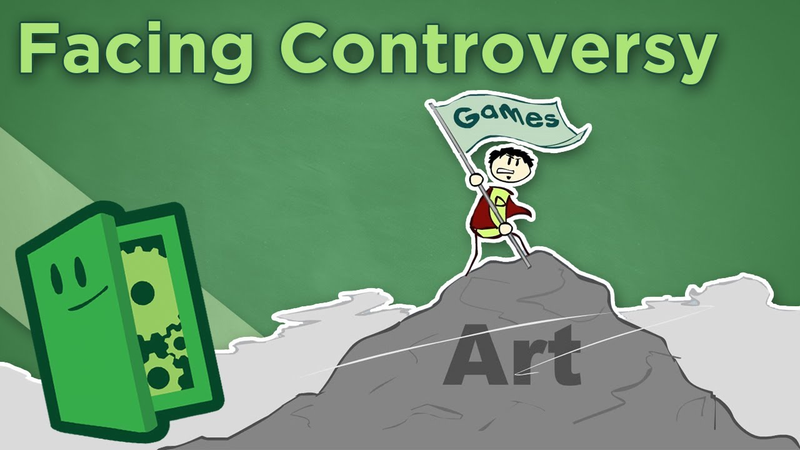
Facing Controversy - How to Stand Up for Games as a Medium - Extra Credits
The video game industry faces a recurring cycle of public controversy, often characterized by external criticism regarding themes of violence, social corruption, and historical sensitivity.
- The video game industry undermines its own legitimacy as an art form by frequently canceling projects or bowing to public pressure in response to external criticism.
- Prioritizing short-term brand safety over artistic integrity reinforces the public perception that games are trivial toys rather than serious cultural contributions.
- The cancellation of projects like the combat simulation 'Six Days in Fallujah' and the market exclusion of titles like 'Imagination is the Only Escape' serve as primary examples of this industry-wide pattern of retreat.

Mailbag 1 - Questions About the Game Industry - Extra Credits
This overview addresses common inquiries regarding the state of the video game industry as of late 2010.
- The dominance of first-person shooters in 2010 is driven by the commercial success of the genre and the availability of standardized development engines like Unreal, which lower entry barriers for mid-tier studios.
- The perceived decline of the JRPG genre is not a lack of innovation, but rather an over-reliance on a small number of major publishers like Square Enix.
- PC gaming remains a robust market segment when accounting for the growth of MMOs, social gaming, and indie titles, despite challenges related to high technical requirements and costs compared to consoles.
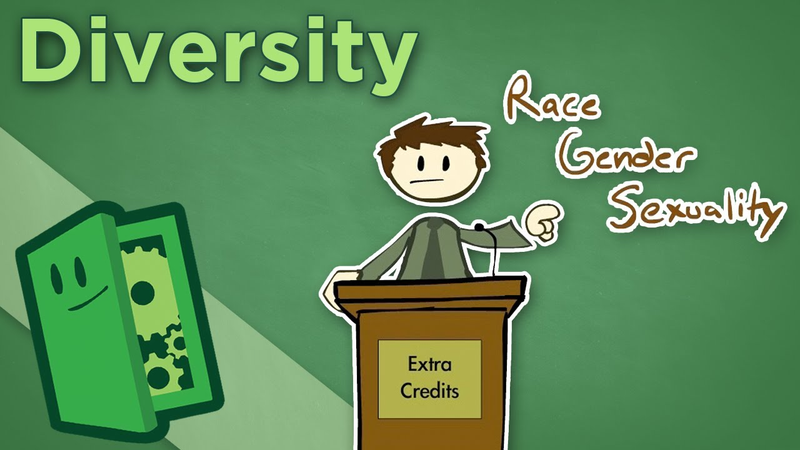
Diversity - Why Do Games Lack Diverse Characters? - Extra Credits
The video game industry faces a significant challenge regarding the representation of diverse characters, frequently relying on tired tropes and narrow archetypes rather than creating relatable, multifaceted individuals.
- The industry's reliance on a default white, straight, male protagonist is a form of lazy design that restricts narrative potential and prevents the medium from maturing.
- Lack of intentionality in character creation, rather than just team composition, is the primary driver behind the stagnation of diverse representation.
- Current gender representation often suffers from adolescent pandering and objectification, with many female characters lacking genuine narrative agency or failing to pass the Bechdel test.

Kinect and Move - Can Motion Control Ever Succeed? - Extra Credits
The introduction of motion control peripherals like Microsoft’s Kinect and Sony’s Move represents a strategic attempt by major console manufacturers to extend the life cycles of the Xbox 360 and PlayStation 3.
- Microsoft and Sony introduced Kinect and Move as strategic hardware upgrades to extend the life cycles of the Xbox 360 and PlayStation 3, aiming to avoid the high manufacturing costs of launching new console generations.
- The industry's push into motion control was primarily inspired by the Nintendo Wii, which proved the commercial viability of motion-based input and its ability to attract new demographics.
- A major barrier to adoption is the reliance on derivative software, as many Kinect and Move titles are perceived as clones of existing Wii games rather than unique experiences.
Video Game Music - How to Create a Timeless Theme - Extra Credits
The evolution of video game music from the 8-bit era to the modern age reflects a shift from technical limitation to sophisticated, multi-layered production.
- The memorability of 8-bit era game music stems from hardware constraints that forced composers to prioritize simple, hummable, single-line melodies.
- Modern game music successfully integrates complex symphonic arrangements and dynamic, adaptive audio with the foundational principle of melodic simplicity.
- Effective musical identity for new franchises relies on a strong, central theme that remains recognizable while utilizing modern production depth for immersion.

No Redeeming Value - Why the God of War Sequels Failed at Storytelling - Extra Credits
The God of War trilogy serves as a primary case study for the evolution and eventual decline of narrative depth in action-oriented video games.
- The original God of War succeeded by mirroring the structure of a Greek tragedy, using Kratos’s arc to explore themes of guilt and redemption.
- The sequels failed to maintain narrative depth, transitioning from a character-driven study of remorse to a spectacle of one-dimensional, unmitigated violence.
- The series’ attempt to introduce themes of hope and forgiveness in the final installment was undermined by immature dialogue and a total lack of character growth.
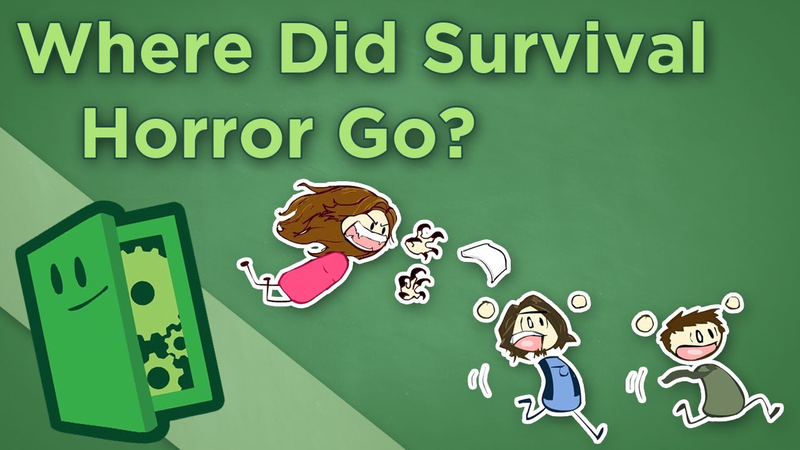
Where Did Survival Horror Go? - How Franchises Kill Mystery - Extra Credits
Survival horror has experienced a significant decline as a distinct genre, increasingly being supplanted by action-adventure titles that prioritize combat over psychological dread.
- The survival horror genre is declining as developers prioritize action-adventure mechanics to ensure the broad market appeal required to recoup high AAA production budgets.
- Technological advancements in high-fidelity graphics have inadvertently eroded horror by replacing the ambiguity of early hardware limitations with excessive visual clarity, which diminishes player imagination and tension.
- Long-running franchises suffer from narrative predictability, as players become overly familiar with established lore and monster designs, naturally shifting gameplay toward action rather than psychological dread.
Innovation - How AAA and Indie Games Can Learn From Each Other - Extra Credits
The video game industry currently faces a structural divide between independent developers and AAA studios, which hinders the medium's creative potential.
- AAA studios and indie developers operate in a structural divide where AAA prioritizes risk-averse, iterative formulas, while indie teams are constrained by limited funding and marketing despite their capacity for innovation.
- Publishers should establish dedicated indie-publishing divisions to provide smaller teams with essential distribution, funding, and technical infrastructure.
- This symbiotic model allows publishers to test innovative concepts in a low-risk environment, identifying successful prototypes that can be scaled into larger, mainstream projects.
The Future of MMOs - Why Are There So Many WoW Clones? - Extra Credits
The modern massively multiplayer online (MMO) market suffers from a cycle of failure driven by high development costs and a misguided reliance on cloning the industry leader, World of Warcraft.
- The $60 million to $100 million development costs for modern MMOs force studios to prioritize risk-averse, proven formulas over innovation to satisfy investors.
- The market is saturated because MMOs are time-intensive, perpetual experiences that lock players into established social bonds, making it difficult for new titles to displace incumbents like World of Warcraft.
- Developers should decouple the 'MMO' label from the RPG genre to create lower-budget, genre-specific titles like racing or strategy games that utilize shared hub spaces instead of massive 3D worlds.

Bad Writing - Why Most Games Tell Bad Stories - Extra Credits
The primary thesis regarding the perceived poor quality of video game writing is that the industry conflates narrative with dialogue.
- The industry's primary failure in storytelling stems from conflating narrative with dialogue, ignoring that true game narrative is an integration of mechanics, art, level design, and UI.
- Narrative must be treated as a core architectural component from the start of development rather than an afterthought used to bridge gaps between gameplay segments.
- Developmental constraints, such as bringing writers in late to reconcile scripts with pre-existing mechanics or technical limitations, frequently undermine narrative cohesion.
Game Design Tools: Time to Evaluate
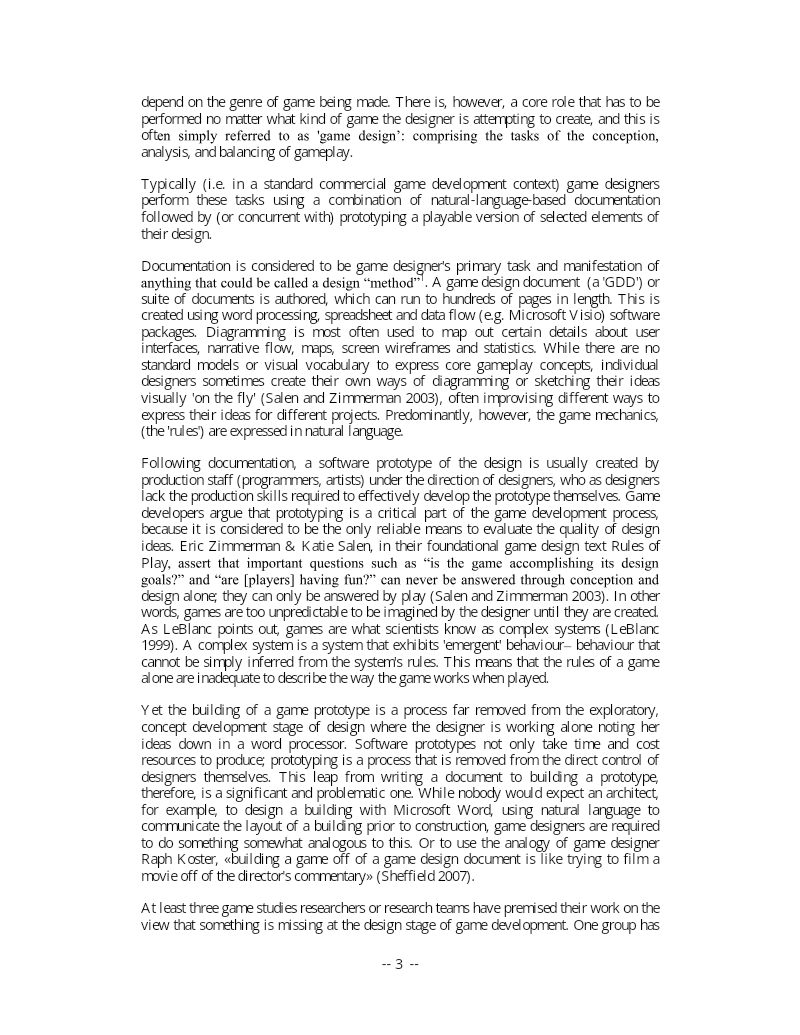
Game designers have long lacked formal tools for designing gameplay, relying instead on natural-language game design documents and physical or simplified production prototypes.
- Game designers have historically relied on natural-language design documents and physical or simplified prototypes, both of which struggle to capture the systemic, emergent behavior of games.
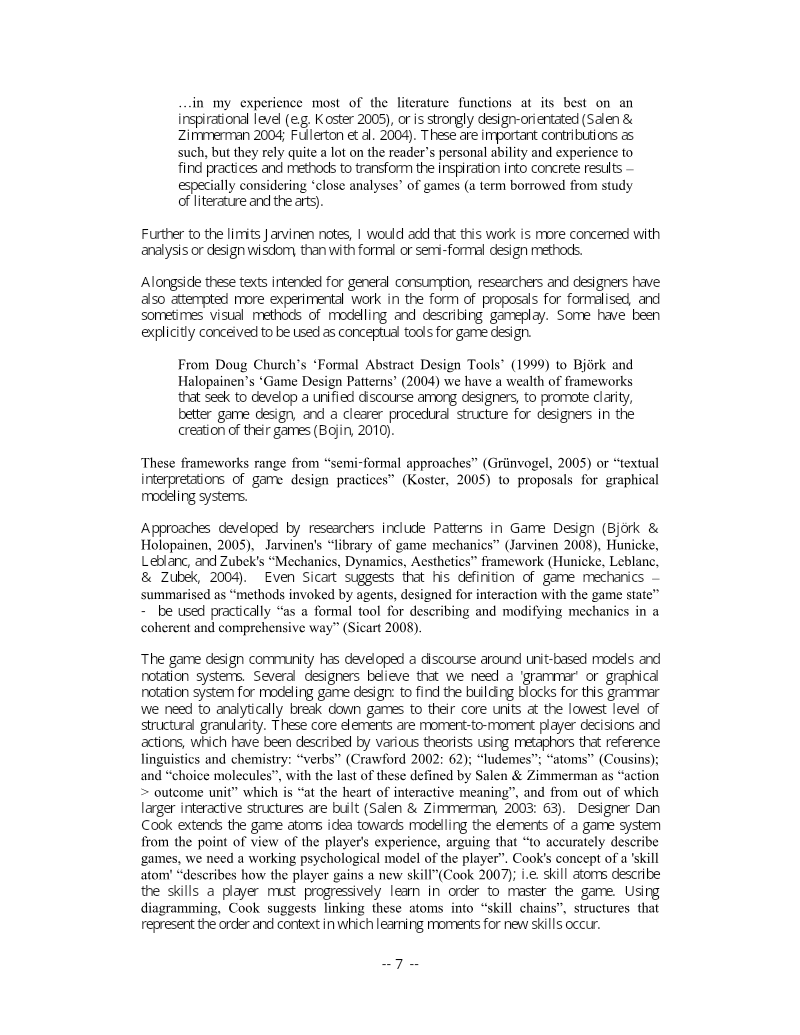
- The central claim is that numerous formal frameworks and software tools for game design have been developed (including Machinations, Ludocore, and Sketch-It-Up), yet none have been meaningfully evaluated in practical settings.
- The field has lacked a common formal vocabulary and standardized notation for game mechanics, and critics have long pointed to reliance on anecdote and intuition as a barrier to rigor.
Game Developer Index: Sweden 2011
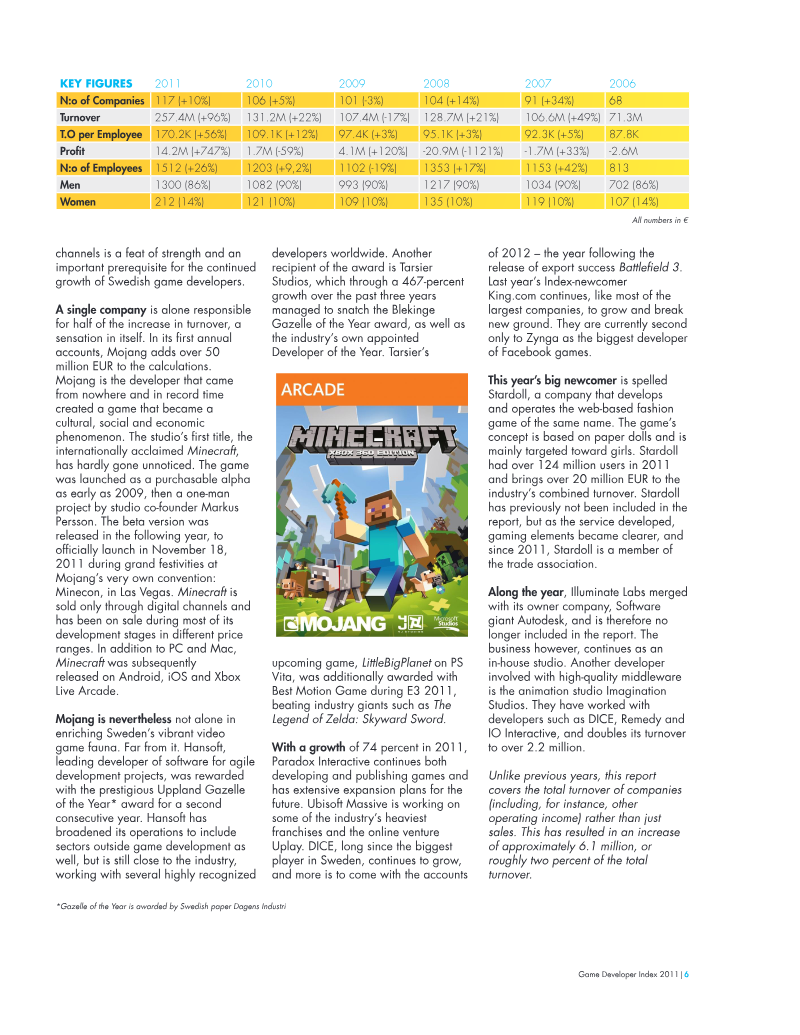
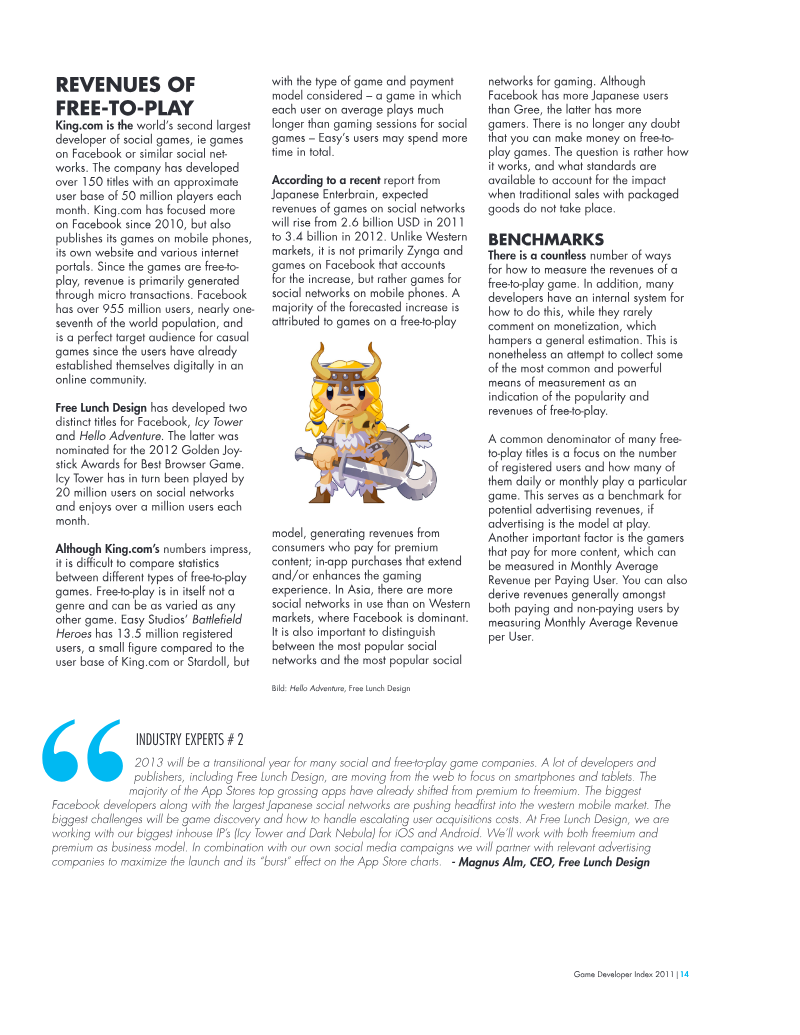
The Swedish game industry reached a pivotal milestone in 2011, characterized by record-breaking financial performance and a fundamental transition in business models.
- The Swedish game industry reached a turnover of 257 million EUR in 2011, reflecting a nearly 30 percent compound annual growth rate over the previous five years.
- The workforce grew by 26 percent to 1,512 employees across 257 active companies, anchored by major players like DICE and Mojang.
- Market concentration remains high, with the five largest firms generating 60 percent of the industry's total turnover.