1 free read left. Create a free account for unlimited reading + AI research.
Create free account
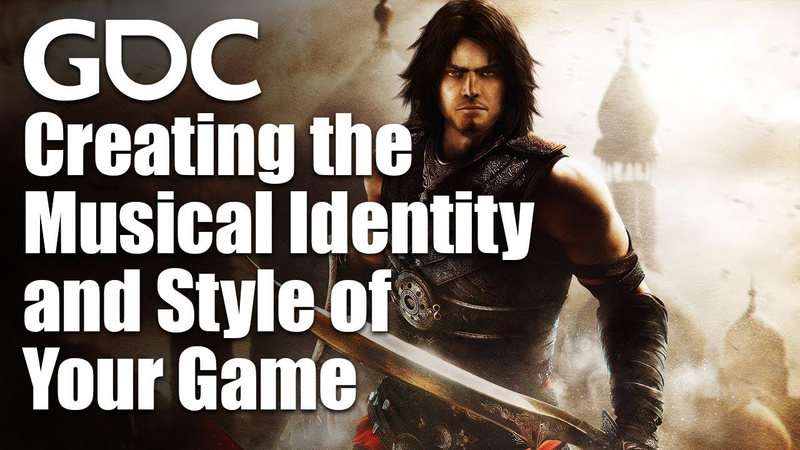
Video Game Music - How to Create a Timeless Theme - Extra Credits
Key insights
6 takeaways- 01The memorability of 8-bit era game music stems from hardware constraints that forced composers to prioritize simple, hummable, single-line melodies.
- 02Modern game music successfully integrates complex symphonic arrangements and dynamic, adaptive audio with the foundational principle of melodic simplicity.
- 03Technological advancements since the 1980s have shifted the focus from technical limitations to sophisticated, multi-layered production without diminishing the importance of core melodic structure.
- 04Effective musical identity for new franchises relies on a strong, central theme that remains recognizable while utilizing modern production depth for immersion.
- 05The role of game music has evolved beyond standalone memorability to include functional, atmospheric compositions designed to reinforce the game environment.
- 06The industry currently operates on a dual-purpose model that balances iconic, catchy melodies with mood-driven scores to achieve both emotional resonance and player immersion.
Ask AI about this video
Transcript
What happened to music in video games? Where did all those iconic tunes go? That question gets asked pretty often, so I guess it's high time we talk about it. So, music in games. Where did all those great theme songs go? They were so memorable. Like this one. Or this one. Or this one. Or this one.
We know them all by heart. And for some reason, most of them come from games made in the '80s. Why is that? Perhaps music was just better in the '80s. Well, hmm, well, okay, perhaps not. Well, there's got to be some explanation. What changed? Certainly sound quality has gotten better and music budgets are bigger. We've got access to entire symphonies now. We've got pop stars singing big theme songs. And game musicians have got high-tech gear to work with now. So, how come game music got worse? Trick question. It didn't.
Like I said, sound quality is way better and today's game composers have far more resources to work with. But at the same time, modern game music has become a lot less memorable. Why? Well, because of all the big expensive toys they have access to now. All the symphonies and quality gear have moved us away from that powerful element the old 80s chip tunes had to rely on, simplicity. Back in the 8-bit era, very few games could process more than three tones at once. For those of you unfamiliar with music terminology, three distinct tones are exactly enough to play a chord and nothing else. This means that the old school game composers couldn't write a tune with complex multi-layer melodies moving over big chord sections with a separate bassline. They had to write entire soundtracks using single notes or individual chords. That was it. This was a severe limitation, but it also ended up being a strength. Those musicians were forced to focus exclusively on the melody line.
A strong melody is what makes a song memorable. It's what makes a song stick in your head and keeps you humming that song years after you last heard it. You know what makes John Williams such an incredible composer? The man is a genius at creating strong memorable melodies, like this one. And of course, this one. And all of these.
You know every single one of those, don't you? That's what a good melody can do. Why do melodies stick in our mind this way? In part, it's because the human voice can only produce one tone at a time. Well, okay, well, that's not strictly true, but it's functionally true for like 99% of us. So, when a person tries to wrap their mind around a song, most of us think of it in terms of single tones. This focus on single tones or single chords, uncluttered by lots of competing tonal movement, is at the root of most iconic music. It's true from the Imperial March to Pachelbel's Canon in D, from Smells Like Teen Spirit to Changes. Tupac's Changes, not not David Bowie's. Well, you know what? David Bowie's, too. And this is also true of some of the most recognizable modern video game music. Take the Halo theme. I know you know that one. Everybody does. Listen to the male chorus here.
Strong, easily hummable melody, right? Now, listen to everything the strings are doing. There's a lot of layers in there, but they're all delivering strong, hummable melodies. And that kick-ass percussion sure doesn't hurt anything. Awesome thing. Does this mean we should turn back to our old ways? Should we do away with the
new tech and the fancy symphonies? Of course not. That would be utterly ridiculous. After how far game music has come, are you kidding? We've got a swarm of talented people working in game music now. Most of the old 8-bit veterans are still working. Lots of new talent has come on board. And we've even got high-profile composers like Hans Zimmer and Danny Elfman writing music for video games now. That is awesome. And today's technology allows music to be far more flexible than it used to be. Back in the day, games like Mega Man would just have a single theme playing for the entire level. And that was okay because Mega Man was basically doing the same thing the whole time, jumping, shooting, and running to the right. But today, sound and music programmers can crossfade between tracks, add and remove layers at will, and have the music constantly change to match the dynamics of the action on screen. And the music from long-running franchises like Mario, Zelda, and Final Fantasy have all benefited from leaving their 8-bit roots by adding extra layers and depth to the arrangements, while always staying true to the simple melodies at their core. Sure, the
original tunes are still great as ever, but would you honestly rather go back to the era of this when we've got this? I mean, think of Metal Gear. We started with music like this. All well and good and great for its time, but would you honestly rather cling to that when we've got freaking Harry Gregson-Williams writing gold like this?
Besides, we've come to realize that sometimes the most effective music in a video game are the tracks without the memorable melodies. Sometimes the best game music is the kind that functions only to reinforce the game itself. Artists like Akira Yamaoka have spent years studying the way that games and music interact, writing music that might not be all that iconic or even that good when listened to on its own. But play that track in the game, in the environment for which it was intended, and it takes the experience to new heights. It subtly brings the player's immersion to a whole new level. This is an incredible thing. This is exactly what a game musician should be capable of doing. Okay, I've seriously got to wrap this up or I'm going to keep on babbling about video game music all day. In the end, there's a place for both iconic theme songs and immersion-building mood music. They're by no means exclusive. But if you want to kick off a new franchise with a tune that'll keep players humming, then be sure that music is grounded in the
old-school simplicity of yesteryear, and then build from there. A memorable tune can build a strong impression. A great game is a great game. But a great game with an awesome theme song? This was a triumph. That's going to stick with people. I'm making a note here. Huge success. See you next week. It's hard to overstate my satisfaction. At Aperture Science, we do what we must because we can. For the good of all of us, except the ones who are dead. But there's no sense crying over every mistake. You just keep on trying till you run out of cake. And the science gets done and you make a neat plan for the people who are still alive.
Summary
The evolution of video game music from the 8-bit era to the modern age reflects a shift from technical limitation to sophisticated, multi-layered production. While early game soundtracks are often perceived as more memorable than contemporary compositions, this is not due to a decline in quality or talent. Instead, it stems from the constraints of 1980s hardware, which forced composers to prioritize simplicity. Because early systems could only process a few tones simultaneously, musicians were compelled to focus exclusively on crafting strong, hummable melodies. These single-line melodies remain the foundation of iconic music across all genres, as they align with the human capacity to process and recall individual tonal sequences.
Modern game music has gained significant advantages through technological advancements, including the use of full symphonies and dynamic, adaptive audio that shifts in response to player actions. Rather than abandoning these tools, the industry has successfully integrated them with the core principles of melodic simplicity. Successful modern themes, such as those found in the Halo franchise, demonstrate that complex arrangements can still be built upon a foundation of clear, catchy melodies. Furthermore, the role of game music has expanded to include atmospheric, immersion-focused compositions that prioritize environmental reinforcement over standalone memorability.
Ultimately, the most effective approach for new franchises involves grounding musical identity in the simplicity of a strong, central theme while utilizing modern production depth to enhance the player experience. The industry has moved toward a dual-purpose model where iconic, hummable melodies coexist with functional, mood-driven scores. By balancing these two approaches, composers can ensure that games remain both emotionally resonant and deeply immersive.
















Comments