1 free read left. Create a free account for unlimited reading + AI research.
Create free account
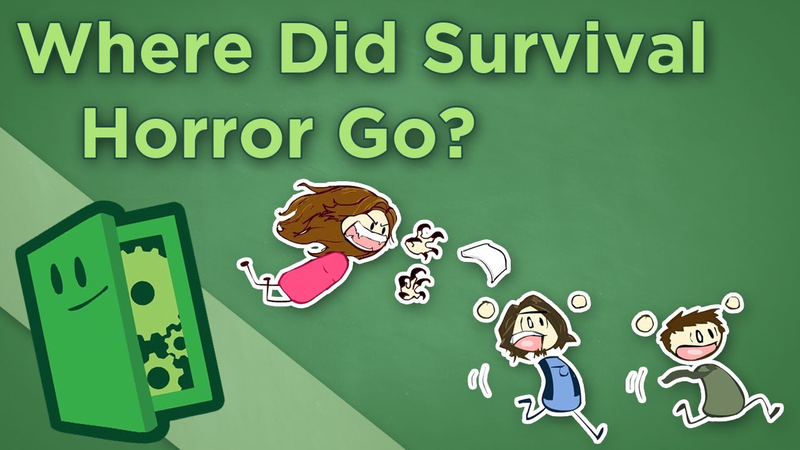
Where Did Survival Horror Go? - How Franchises Kill Mystery - Extra Credits
Key insights
5 takeaways- 01True horror relies on the simulation of powerlessness and the breakdown of logic, elements that are frequently sacrificed in modern game design in favor of spectacle.
- 02Technological advancements in high-fidelity graphics have inadvertently eroded horror by replacing the ambiguity of early hardware limitations with excessive visual clarity, which diminishes player imagination and tension.
- 03The survival horror genre is declining as developers prioritize action-adventure mechanics to ensure the broad market appeal required to recoup high AAA production budgets.
- 04Long-running franchises suffer from narrative predictability, as players become overly familiar with established lore and monster designs, naturally shifting gameplay toward action rather than psychological dread.
- 05To revitalize the genre, developers must move away from photorealistic aesthetics and instead integrate psychological mechanics that prioritize atmosphere and mystery into the core gameplay loop.
Ask AI about this video
Transcript
[Music] has anyone else noticed that survival horror seems to have almost disappeared as a genre yeah we've had a Resident Evil or Allan Wake here or there but those aren't really horror games they're more like action adventure games that happen to involve zombies recent Silent Hill games have been the same way just because you got boogey men and skeletons in there doesn't necessarily make it a horror game game so what is true horror then horror is about human psychology it's about understanding those Primal fears that have tormented mankind since its early history horror is about the irrational and the breakdown of our modern faith in logic and the fundamental order of the world horror is about all those things which drive us toward our darker impulses and justify our most beastial actions horror is about hopelessness and facing things so unimaginably greater than ourselves that for all of our self-importance and Assurance of our place in the universe we're nothing before
our fascination with horror is in understanding our rational impulses in looking past the everyday and embracing vicariously some element of our Savage animal selves in horror the villain's far more fascinating to us than the protagonist because the villain allows us to peer deep into some of the most repugnant yet tempting aspects of our nature horror is also cathartic because it allows us to explore all those unpleasant impulses and gives context to some of the unpleasant moments in our own lives we all experience a little horror now and then none of us go about our lives completely free of fear or despair we all cling to Little Secret superstitions and Tiny phobias and it is horror that lets us Purge those sentiments by exploring them as an interactive medium video games are perhaps the best medium ever created for experiencing simulated scenarios of dread so what happened where did all the horror games go well oddly enough one of the main reasons horror games aren't so much about horror anymore is due to how much technology has improved remember how foggy the environment in the first Silent Hill games were well that fog wasn't just there for atmosphere the
game was relying on it to hide objects in the distance because the PlayStation couldn't render more than a few hundred polygons at a time even PS2 era games like Fatal Frame were helped by technology limitations they could get away with indistinct character models and textures because the player's imagination helped to fill in the rest but today with the level of rendering power behind the PS3 and the Xbox 360 there's a great Temptation for Studios to render everything crisply and cleanly in order to provide a truly High Fidelity experience exposing every minute detail of every model in the game but horror relies on psychology and we will always scare ourselves better than someone else can if we're put in the right frame of mind which leads us to our next Point mystery the unknown is always terrifying and yet intriguing there is something incredible to that most human urge the urge to understand it's why we cover our eyes but peek through our fingers we need to know we're horrified by the powerlessness of not knowing so we're drawn in compelled to understand even if understanding is is only going to make things worse it's
a human Trope it's part of our oldest myth cycles and our earliest stories this desire was an essential part of early horror games they would set up an inexplicable situation and leave the player to make sense of it over the course of the game they would use the mystery of what's really going on to lure the player along leaving them to guess at the meaning of vague hints and innuendos by doing this they created an inherently compelling narrative and played on the tension between the player's desire to flee and the need to know more this tension plus the fear of something unknown and far greater than oneself which has turned the world on its head was quintessential to horror games but that seems to have almost completely disappeared in the most recent console generation what happened well sequels and franchises are what happened like I said mystery is one of the key elements of horror and it's really hard to maintain a mystery over a large number of titles I mean after a few Resident Evil games we've all figured out that umbrella Corp is not good people losing that Myster is part of what pushed established horror franchises into the action genre now that the horror is known and the monster has been scene there's really nothing
left to do but charge in their guns blazing and take it out but this brings us to another Point money unfortunately well-loved franchises often continue to sell long after they have jumped the shark Hedgehog I'm looking at you this makes it very tempting for Studios to keep milking an existing franchise because it's far less risky than trying to establish a new one but there's another economic problem afflicting horror games the unfortunate reality is the horror genre just doesn't sell as well as action adventure does and AAA games aren't cheap to make so a lot of horror franchises are trying to go for greater mass appeal to ensure a profit a decade ago with a little luck you could see a profitable return on a niche game but today when you're trying to recoup 20 to $40 million well it becomes very tempting to just aim for the broadest audience possible as Gamers if we want more real horror games we're going to have to show developers that we don't need the flashiest graphics and the most photorealistic characters to buy a horror game otherwise developers will be forced to keep diluting their horror games to reach a larger market they won't have a choice luckily for those
still interested there are still places to experience some of the elements of horror games like demon souls or the dear Ester halflife mod manag to tap into the same secret places that true horror titles do I know they don't really look like horror games on the surface but they still evoke that same sense of mystery and Dread just through the fundamental mechanics of the game so will horror come back maybe we may just have to look a little deeper to find it is all but if we consumers are willing to do the work to show that this genre is still viable the next generation of horror games will come and they'll come from designers who've had the opportunity to learn from the games being released today learned how to look past the Aesthetics of horror and incorporate psychological dread into the very mechanics of the game itself that's going to make for some very potent horror games let me tell you so as long as the genre doesn't die off completely the future of horror games looks pretty bright indeed well dark pretty dark indeed you know what I mean
[Music] oh [Music]
Summary
Survival horror has experienced a significant decline as a distinct genre, increasingly being supplanted by action-adventure titles that prioritize combat over psychological dread. True horror functions by tapping into primal human fears, the irrational, and the breakdown of logic, offering a cathartic exploration of the darker aspects of the human condition. While video games are uniquely positioned to simulate this sense of powerlessness and mystery, the industry has shifted away from these core tenets due to technological advancements, economic pressures, and the dilution of established franchises.
Technological progress has inadvertently undermined the genre by removing the necessity for ambiguity. Early horror titles relied on hardware limitations, such as fog and low-polygon models, to obscure threats, forcing players to use their imaginations to fill in the gaps. Modern high-fidelity graphics, however, demand clarity and detail, which often strips away the mystery essential to building tension. Furthermore, the reliance on long-running franchises creates a narrative problem; as players become familiar with the lore and monsters of a series, the unknown is replaced by predictability, naturally pushing gameplay toward action-oriented mechanics.
Economic factors further exacerbate this trend, as the high cost of AAA development necessitates broad market appeal. Because niche horror titles struggle to recoup massive budgets, studios often pivot toward action-adventure tropes to ensure profitability. To revitalize the genre, the industry must move beyond photorealistic aesthetics and refocus on psychological mechanics that foster mystery and dread. While mainstream franchises may continue to prioritize mass-market action, the future of horror lies in designers who can integrate fear into the fundamental mechanics of play, proving that audiences remain receptive to experiences that prioritize atmosphere over spectacle.












Comments