1 free read left. Create a free account for unlimited reading + AI research.
Create free account
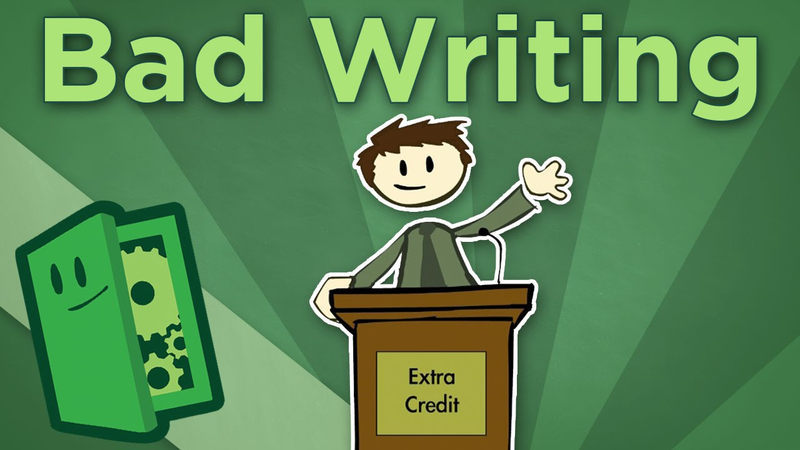
Bad Writing - Why Most Games Tell Bad Stories - Extra Credits
Key insights
6 takeaways- 01The industry's primary failure in storytelling stems from conflating narrative with dialogue, ignoring that true game narrative is an integration of mechanics, art, level design, and UI.
- 02Developmental constraints, such as bringing writers in late to reconcile scripts with pre-existing mechanics or technical limitations, frequently undermine narrative cohesion.
- 03Game writing often suffers because creators fail to adapt to the medium's unique requirements, such as the need for more compressed dialogue compared to film or television.
- 04Narrative must be treated as a core architectural component from the start of development rather than an afterthought used to bridge gaps between gameplay segments.
- 05Effective storytelling utilizes environmental cues and gameplay mechanics to teach players about the world, as seen in the environmental design of BioShock.
- 06Mechanical reinforcement of character traits, such as the vulnerability mechanics in Silent Hill, serves as a superior method of storytelling compared to relying on cutscenes.
Ask AI about this video
Transcript
Hey everybody, how's it going? We are Extra Credits and we are here to talk about these. In this series of weekly videos, we're going to be exploring the world of game design. I'll be doing the talking, James will be doing the writing, and over here is our new artist, Allison Theus, providing us with the visual aids. All right, enough with the introductions. Let's get down to business. Our first topic, bad writing in video games. It's a very common complaint. We all love our games, but we can't help but wonder, why is the writing in these things so terrible? Really, how hard is it to hire a decent script writer? Well, let's take a closer look. It's true, video games have told some painfully bad stories over the years. And there've been more than a few lines of dialogue that are just nails on chalkboard painful to listen to. In fact, I think we've all been downright embarrassed for this medium at times by some of the ridiculous things that come out of game characters' mouths. But before we can try to find a solution to this problem, I I think it's important that we understand something.
Video game storytelling isn't just about the writing and the dialogue. Because video games are an interactive medium, the gameplay and the mechanics of the world are just as important to telling the story. Narrative, not writing, is what we should actually be talking about here. All too often, even seasoned professionals talk about the writing as if it existed independent of all other elements that go into game creation. Well, it doesn't. And we aren't going to be able to create compelling narratives in games until we wrap our heads around that. So, first let's answer the big question. What is writing in a game? It's what the characters say in cutscenes and dialogue boxes. It's those little voice stabs that characters shout out during combat. It's also the background chatter that characters spout as the player passes by. It's the words in the options menu and the loading screens. It's the flavor text describing guns or equipment or alien species. Okay, so it's a lot of things, but I'll tell you what it's not. It's not the high concept. It's not the idea behind the game. Few games ever start with a fully baked story that the developer is itching to tell, much less a complete script. Most games begin with a mechanic or a piece of technology, maybe an art style, or in some tragic cases, a memo from the
marketing department. This means that a game's actual writing tends to be constrained from the start. Writers are often brought in pretty late in the development cycle, so they usually have to work around whatever developments come before them, and there are always plenty of obstacles they have to work around. Sometimes it's a game mechanic that complicates things. Consider those games that feature moral choice systems. If the game's designers decided to put a two-dimensional moral choice meter in the game, the ever-popular good or evil bar, then all the moral choices the writer writes have to fit within those two dimensions. Or sometimes a weird disconnect can occur if the plot and the gameplay conflict with each other. Consider games where characters can be revived during gameplay, but then they die in the plot line, and oh, awesome, my phoenix downs are worthless now. I'm sure you can all think of game mechanics like this that constrain a writer's options, but what other parts of development can act as roadblocks? The art is a big one. It influences the entire feel of a game. It establishes a mindset for the player and the personalities of the characters. You can't go writing a light fluffy script for a game with a gothic horror aesthetic. Actually, that could be pretty awesome. You get what I mean, though. But there are other elements of the art pipeline
that can get in the writer's way, too. Comparatively small things, like animating voice-acted cutscenes. Very few games are reanimated or re-lip-synced when localized for foreign countries, which means that the character's dialogue is automatically constrained to the length of the original sound file, regardless of what language you're localizing them from or into. Voice acting itself has an enormous impact on what a writer can write. We've all seen million-dollar cutscenes just ruined by bad voice acting. And we could do an entire episode on voice acting, and we probably will. Even programming and production issues can interfere with the writing process. How good is the game's dialogue parser? How good are the internal development tools for branching dialogue trees? Oh, and remember, you can't go writing storylines that the dev team doesn't have time or money to develop. All right, so it's clear that there are a lot of development issues that influence game writing, but trust me, that doesn't mean I'm letting the writers off the hook here. Let's take a look at what's going wrong on their end. First off, many game writers are actually hired from outside the game industry, and they don't really understand how to write for an interactive medium. This is all pretty new stuff, and they just don't have any experience with it. They don't understand that in an RTS
game, when you give an order to a unit, its acknowledgement should be maybe only a second long, tops. Or that nobody wants to read huge blocks of text in a game. These types of writers often come from a background where dialogue or text account for the majority of their audience's engagement with their work. But this simply isn't true of most video games. Consider a TV show, even an action-heavy one. In 1 hour of footage, you probably have at least 20 to 30 minutes of dialogue. But in 1 hour of gameplay, you'll often have less than 10 minutes. Our medium is enormously compressed, because we have so many other ways to convey narrative to the player. Which brings me to our last point. The general failure to create stories from an interactive perspective. Video games are a fundamentally different medium from all other mass media to date. You can't just write for it using old techniques from different media and expect it to work. You wouldn't write a movie script the same way you would write a novel. And you wouldn't write a newspaper column the same way you would a stage play. So why would you expect writing for video games to be the same as for any of these other media? Games can't tell their stories through disconnected segments of gameplay strung together by cutscenes. Games need to tell their story through the gameplay.
Narrative should drip from every texture and be integrated into every facet of the world. It should come through in the menus and in the interface and in every loading screen. But most importantly of all, it should come through in the mechanics of the game. The mechanics should teach us about the characters and reinforce the plot line. They should fundamentally attune the player to their character and let them explore their character's actions. I know it sounds like I'm asking a lot, but we've seen it done before. Consider the Silent Hill games, excluding the most recent ones. Their combat mechanics reinforced the weakness of their characters. Think about the Dawn of War series and how much flavor is packed into each race's voice stabs. You understand what it means to be an orc simply by hearing them go about preparing for war. Games like Shadow of the Colossus, Demon's Souls, or BioShock deliver a great deal of narrative through their world and the environments alone. Even the Katamari games delivered a new kind of whimsical narrative through their artistic style, mechanics, and use of sound. Look, here's the key to take away from this. The development team must be conscious of the narrative of their game from the outset. The game's narrative should be considered as all of the elements of the game are created and assembled because
every part of a game helps to tell its story. Well, I think that about covers it. Thanks for watching and see you guys next week.
Summary
The primary thesis regarding the perceived poor quality of video game writing is that the industry conflates narrative with dialogue. While critics often blame writers for subpar scripts, the medium’s storytelling failures stem from a fundamental misunderstanding of how interactive experiences function. True narrative in games is not limited to text or cutscenes; it is an holistic integration of mechanics, art style, level design, and user interface. Because games are an interactive medium, they require a distinct approach to storytelling that differs significantly from film or literature.
Developmental constraints frequently undermine narrative cohesion. Writers are often brought into the production cycle late, forced to reconcile their scripts with pre-existing mechanics, rigid moral choice systems, or technical limitations like lip-syncing and dialogue parsing. Furthermore, many writers lack experience in the medium, failing to account for the compressed nature of game dialogue compared to television or film. This disconnect is exacerbated when developers treat story as an afterthought rather than a core component of the game's architecture.
To improve, the industry must shift toward a model where narrative is embedded into every facet of the player experience. Successful examples, such as the environmental storytelling in BioShock or the mechanical reinforcement of character vulnerability in Silent Hill, demonstrate that gameplay itself should teach the player about the world and the protagonist. The conclusion is that narrative must be a primary consideration from the outset of development, ensuring that every texture, sound effect, and mechanic contributes to a unified, immersive story rather than relying on disconnected cutscenes to bridge gaps in gameplay.
















Comments