1 free read left. Create a free account for unlimited reading + AI research.
Create free account
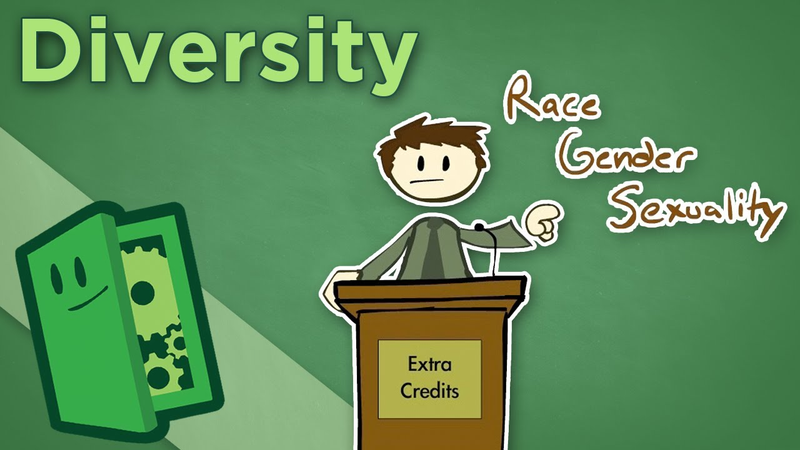
Diversity - Why Do Games Lack Diverse Characters? - Extra Credits
Key insights
6 takeaways- 01Current gender representation often suffers from adolescent pandering and objectification, with many female characters lacking genuine narrative agency or failing to pass the Bechdel test.
- 02The industry's reliance on a default white, straight, male protagonist is a form of lazy design that restricts narrative potential and prevents the medium from maturing.
- 03Lack of intentionality in character creation, rather than just team composition, is the primary driver behind the stagnation of diverse representation.
- 04The industry's approach to sexuality often relies on tokenism and caricatures rather than the nuanced development required for mature storytelling.
- 05Ethnic diversity is frequently undermined by the use of non-white characters as disposable enemies or stereotypical archetypes, which risks normalizing harmful biases.
- 06Effective progress requires prioritizing narrative integrity and depth over the inclusion of shallow, politically motivated token characters.
Ask AI about this video
Transcript
Oh boy, this one's going to be tricky. I'm going to give you guys a heads-up right now. This topic is going to be tough to cover in a single episode. It's like every third sentence seems to reveal a whole new topic we really need to discuss at length. So, I guess think of this episode as an introduction, a preview of several topics to come. There's just no way we can do all of these issues justice in just 6 minutes. How about this? Every time I mention some topic that we plan to devote a full episode to eventually, I'll pop up this image. Everyone with me? All right, disclaimer done. Let's dig in. There are basically three types of diversity available in games. Diversity of gender, diversity of sexuality, and diversity of ethnicity. Other types of diversity such as diversity of religion, or socioeconomic class, seem to be themes we don't touch on as often.
First, let's talk about gender diversity in games. Obviously, we all know the stereotype. Gaming is littered with Lara Crofts and Mai Shiranuis. This is a long-running trend in video games that needs to go. Seriously, enough is enough. This type of adolescent pandering makes us look juvenile as a demographic, and it alienates female players. On top of that, it only helps to reinforce society's damagingly unreasonable expectations of women. Yes, I know the same can be said of movies and advertising and TV and everything else. That doesn't give us the excuse to keep doing it. But, that one's an obvious problem and pretty easy to fight, right? If the game is ever advertised jiggle physics as a selling point, it probably belongs on my no-buy list. Piece of cake. But, there's a much deeper gender issue this industry has to confront as it grows and matures. There are some pretty strong female characters to be found in games. Samus, Alyx Vance, Heather, Jade, the boss. But, are they meaningful? Many of you may have heard of the Bechdel test. It's a simple test usually applied to movies to see if they contain
a female perspective. The rules are simple. One, it has to have at least two women in it. Two, who talk to each other. Three, about something besides a man. Let us think on this. How many video games pass this test? Maybe a handful if we're feeling generous. Now, the Bechdel test may not be the best metric to judge games by and Gaming's version would probably include four, has a female playable character or something of that sort. Still, the Bechdel test is at least a good way to eyeball where we stand as an industry. From where I'm looking, we've got some work to do. But, we said we'd tackle three forms of diversity today, so we better move on. Now, let's talk a bit about ethnic diversity in games. Take a second and think. How many strong non-white, non-Asian characters can you think of from non-sports, non-Square Enix games? I'll wait. Pretty short list, right? Now, eliminate from that list all the blatant stereotypes and bland characters. Not too many left, are there?
Embarrassingly enough, people of other ethnicities are much more common as enemies and target fodder in video games. The worst part about it is that we as an industry seem to do it unconsciously. We don't even think about setting a racial or religious group as the default enemy and then attach points or reward systems to killing them. If there is any merit to the argument that games can adversely affect one's psyche, this is certainly not helping. This is not a problem we can afford to ignore. So, what about the final category, diversity of sexuality? This one is especially tough because our industry isn't good at addressing sex maturely in general. So, trying to find diversity in this field is asking a lot. Let's just start by looking for any playable characters in video games that are openly homosexual or bisexual. And Shepard doesn't count. Haha, no, those guys don't either. Let's see. We've got Makoto, obviously a stereotype. Then there's Hana and Rain who are just an exercise in blatant pandering. Zevran, at best a ham-handed and stereotype-reinforcing effort at a
bisexual male. And Chihaya, maybe? I never got to pursue a relationship with her. I could never figure that out for sure. Oh, and then there's Kanji from Persona 4. You know, I think Atlus actually managed to address the issue of wrestling with one's sexuality with a remarkable amount of class and good taste here. Shame they backed off that story point as the game progressed, but whatever, I'll take my victories where I can get them. So, that's what? Five characters out of all the characters in all the games ever made, and only one of them actually delves into sexuality in a real and tasteful way. We're not batting a thousand here, guys. You want to know what's really shocking? There are social games out there that are much more open on these issues. FrontierVille lets you choose the gender of your spouse, regardless of your own character's gender, and not in a silly, trivializing Fable 2 kind of way. FrontierVille. How is it that Zynga is more mature about this than almost the entire mainstream game industry? So, video games, not super diverse. Okay. Why do we care?
We could talk all day about the social benefits of diversity and the fostering of common understanding. After all, games are a great way to make you walk 10 miles or kill 10,000 aliens in another person's shoes. But we're not going to argue that point. Instead, we're just going to say this. This industry is limiting itself. There are so many stories left untold and so many experiences missed or marred beyond repair because of our inability to create meaningful human characters outside of the demographic we've established. We can learn a lot about ourselves, regardless of race, gender, or sexuality, by stepping into a role that is foreign to us. So, why have we failed so spectacularly in these areas? To some degree, it's a lack of diversity in the game industry itself, but that's becoming less true every year. The game industry is actually a much more diverse group than you would think. The problem is really that we're still trapped in the idea that we're just making games. So, these sort of decisions often don't get a great deal of thought. Instead, the game creators simply make what they're comfortable with without stopping to reflect. That's just lazy design.
So, would we like to see more diversity in games? Yes, but there's a flip side to that that needs pointing out. Token characters aren't the solution. They are part of the problem. Don't just shove black guy, gay guy, or female into your game. Give them some meaning and depth and character. It insults everyone involved when you stick these sort of one-dimensional characters into a game to be politically correct or pander to a demographic. Just choose the characters that are best for your narrative and for your play. But, I expect if you do your homework, you'll find out that these characters turn out to be white, straight, and male slightly less often than you might think. Well, more on all of these later. See you next week. I love you. I love
Summary
The video game industry faces a significant challenge regarding the representation of diverse characters, frequently relying on tired tropes and narrow archetypes rather than creating relatable, multifaceted individuals. The core thesis posits that the industry’s failure to embrace diversity—specifically regarding gender, ethnicity, and sexuality—is a form of lazy design that limits the medium’s narrative potential and maturity. By failing to move beyond the default white, straight, male protagonist, developers miss opportunities to tell compelling stories and provide players with meaningful experiences outside their own lived realities.
Gender representation is often marred by adolescent pandering and objectification, with few female characters passing the Bechdel test or possessing genuine narrative agency. Ethnic diversity is similarly lacking; non-white characters are frequently relegated to stereotypical roles or used as disposable enemies, a practice that risks normalizing harmful biases. Furthermore, the industry struggles to address sexuality with maturity, often relying on caricatures or tokenism rather than nuanced character development. While some titles have made strides, the industry as a whole lags behind other sectors in fostering inclusive storytelling.
The primary driver of this stagnation is not necessarily a lack of diversity within development teams, but rather a lack of intentionality. Creators often default to familiar, comfortable character archetypes without critical reflection. The analysis concludes that the solution is not the inclusion of shallow, politically motivated token characters, which only exacerbates the problem. Instead, developers must prioritize depth and narrative integrity. By thoughtfully crafting characters that best serve the story, creators will naturally move toward a more diverse and representative landscape, ultimately allowing the medium to mature and reach its full creative potential.














Comments