Game Development reports and market data
Documents
Why indie devs use King's Defold game engine
King’s Defold game engine serves as a specialized development solution designed to address the challenges of multi-platform game deployment, particularly for developers targeting mobile and HTML5 markets.
- Defold is a specialized game engine originally built by King to optimize multi-platform deployment, specifically targeting high-performance mobile and HTML5 markets.
- The engine achieved significant early traction with over 30 independent titles released within the first year of its public launch.
- The platform supports complex game development by allowing users to integrate C++ extensions, replace core components like physics engines, and utilize a runtime extension system.
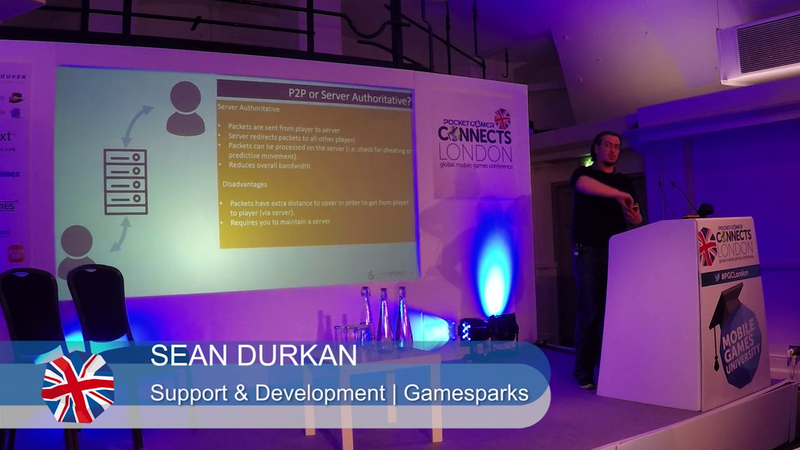
Race Kings port-mortem
The development of real-time multiplayer networking for mobile games presents unique challenges, primarily due to the inherent instability and bandwidth limitations of mobile networks.
- Hutch Games and GameSparks achieved a 60% reduction in packet size for Race Kings by utilizing an ordered UDP protocol instead of traditional TCP.
- The networking architecture prioritizes speed and flexibility by discarding outdated or late-arriving data, which is essential for maintaining synchronization in fast-paced mobile racing games.
- The platform employs a server-authoritative model to ensure robust cheat detection and centralized management of the game state.
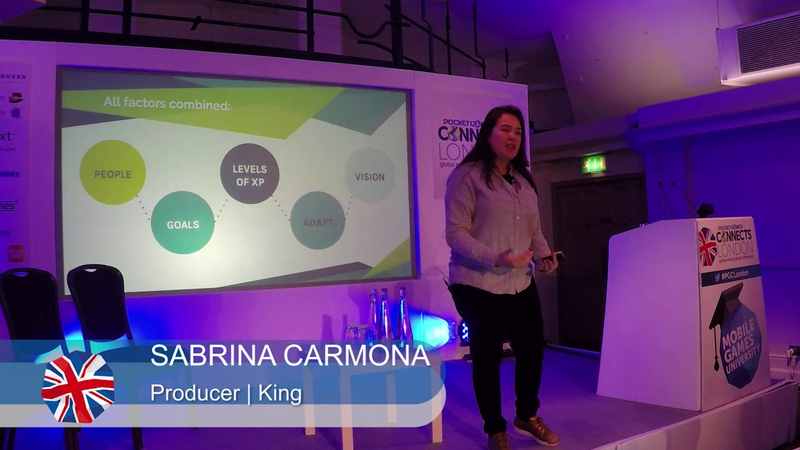
How to create agile teams and foster the culture of excellence while developing games
Effective game development requires a shift from managing individual talent to fostering a cohesive team mentality.
- Shift leadership focus from managing individual talent to building a cohesive, collaborative unit that functions as a single entity.
- Foster team ownership by ensuring every developer understands how their specific tasks contribute to the project's overall business success.
- Establish a culture of psychological safety to ensure all team members, including introverts, feel comfortable voicing concerns and identifying bottlenecks early.
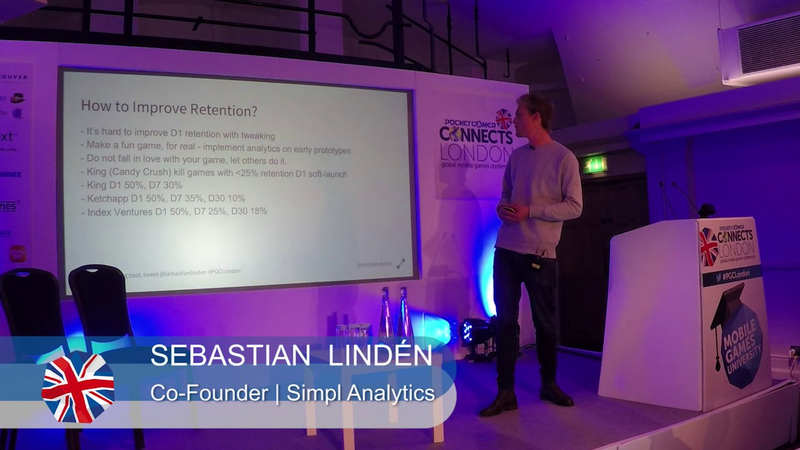
How indie games developers should look at analytics
The primary objective for indie game developers is to leverage data-driven insights to improve game quality, secure platform features, and build sustainable businesses.
- Indie developers can achieve commercial success with 20% to 30% day-one retention, provided they secure platform featuring, whereas major publishers typically require 40% to 50% to justify user acquisition costs.
- Securing an initial feature on the Apple App Store provides a 50% probability of being featured again, potentially driving between 100,000 and 2 million installs.
- Data from late 2016 to early 2017 shows that 70% of featured titles are free-to-play, with action, arcade, and puzzle games being the most frequently highlighted genres.

Classic Game Postmortem: Oregon Trail
The Oregon Trail originated in 1971 as a classroom simulation designed to transform history education through interactive technology.
- The Oregon Trail was created in 1971 by student teachers Don Rawitsch, Bill Heinman, and Paul Dillenberger to shift educational computing away from math-centric applications toward interactive history simulations.
- The game achieved significant commercial success after moving to the Minnesota Educational Computing Corporation (MECC), eventually accounting for one-third of the company's annual revenue.
- Developers enhanced the game's historical authenticity by integrating primary source materials from historical diaries, which helped facilitate its widespread adoption in schools.

UK games tax relief: How do you get it?
UK-based video game developers can access significant financial support through the creative industry tax relief program, which allows companies to recover approximately 20% of their core development expenditure.
- UK-based game developers can recover approximately 20% of core development expenditure through the creative industry tax relief program.
- The relief is calculated by applying a 25% rate to core development costs, which are capped at 80% of a project's total expenditure.
- To qualify, companies must obtain a 'British' game certification from the British Film Institute (BFI) by scoring at least 16 out of 31 points on a cultural test.
Why investors say “No” to game studios when they come asking for investment
Securing investment for game studios requires a clear understanding of the fundamental differences between equity investors and publishers.
- Equity investors prioritize the long-term scalability and exit potential of the studio as a company, whereas publishers act as royalty investors focused on the commercial viability of individual projects.
- Studios often face rejection by misaligning their funding requests, such as approaching equity firms for project-specific funding or publishers before a project reaches the beta or soft-launch phase.
- Equity investors view business models based on CPI arbitrage as unsustainable, preferring studios that build technical or IP-based advantages through a 'scaffolding' series of projects.
The growing challenges of monetising and retaining players
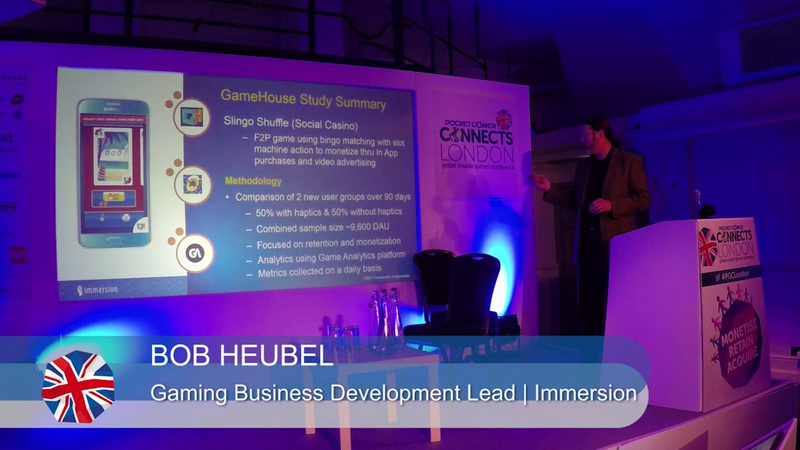
The integration of haptic technology into mobile gaming serves as a potent strategy for enhancing player retention and monetization.
- Haptic integration in mobile games correlates with a 20% increase in 14-day retention and a 4% to 13% rise in first-time payer conversion rates.
- While individual in-app purchase amounts remain stable, the combination of longer session lengths and higher engagement leads to an overall increase in revenue per install.
- Players are more likely to keep haptic feedback enabled than audio because it provides sensory rewards without the social or environmental drawbacks associated with sound.
Forging successful cross-industry partnerships
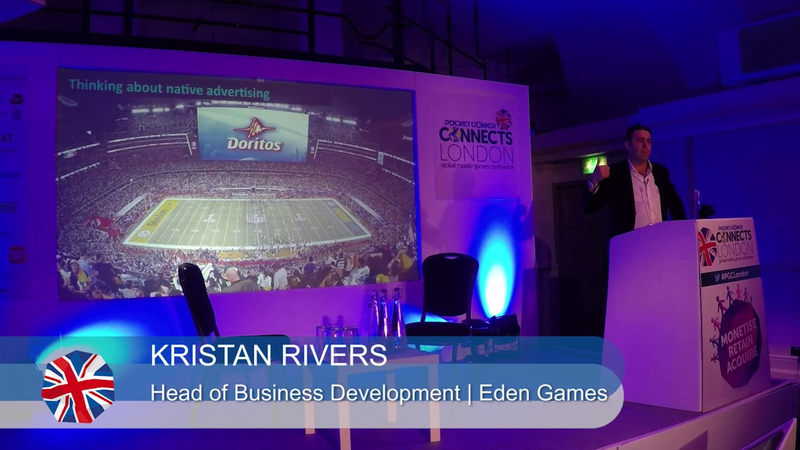
Eden Games, a French developer with two decades of experience in the automotive racing genre, utilizes cross-industry partnerships to offset the high costs of vehicle licensing and enhance the authenticity of its mobile title, Gear.Club.
- Eden Games is shifting from paying high licensing fees to a revenue-generating model where strategic brand collaborations drive user acquisition and offset costs.
- A successful partnership with McLaren demonstrated that leveraging a brand's social media reach to promote a game alongside a car's debut can fully offset the cost of the licensing agreement.
- Successful brand integration requires treating licensed assets as high-fidelity 'jewels' that strictly adhere to the manufacturer's brand identity.

Prompto's Facebook: How a Buddy-AI Auto-Snapshots Your Adventure in FFXV
The development of the photo system in Final Fantasy XV serves as a case study in integrating emotional artificial intelligence into open-world game design.
- The 'Prompto Snapshot' system in Final Fantasy XV was designed to serve as a core storytelling tool, documenting the player's journey to reinforce the narrative of brotherhood and emotional loss within an open-world environment.
- The system operates on three primary design policies: photos must serve as achievements, they must spark player imagination, and they must facilitate gameplay sharing by automating the process to overcome the friction of manual screenshotting.
- To manage the volume of content, the system captures over 20 photos per day but automatically curates and limits the final selection to 8–12 images to ensure the player is not overwhelmed during the daily review process.

The Law of Ideas in Game Development
Intellectual property management in the game development industry relies on a nuanced understanding of how legal protections apply to creative and functional assets.
- Establishing a clear chain of title through documented ownership, licenses, and work-for-hire agreements is the most critical operational requirement for securing insurance and facilitating future funding or acquisitions.
- Copyright law protects only expressions fixed in a tangible medium, meaning abstract game concepts and mechanics are generally ineligible for legal protection.
- Developers should prioritize the maintenance of trade secrets through rigorous internal security protocols and non-disclosure agreements as a cost-effective alternative to expensive patent litigation.
Free Range AI: Creating Compelling Characters for Open World Games
Creating compelling characters in open-world environments requires a fundamental shift from rigid, scripted sequences toward systemic, player-centric artificial intelligence.
- To maintain open-world longevity, developers should move beyond simple scripted events by using behavioral annotation, where level designers place objects in the environment that dictate AI positioning and actions.
- Avalanche Studios utilizes modular behavior trees that support 'external trees,' allowing game objects to dynamically load and execute specific logic or animations without hard-coding.
- External state machines enable developers to extend NPC capabilities on the fly by loading in new states, transitions, and animations, which can be disconnected once the specific interaction is complete.