1 free read left. Create a free account for unlimited reading + AI research.
Create free account
Why investors say “No” to game studios when they come asking for investment
Key insights
6 takeaways- 01Studios often face rejection by misaligning their funding requests, such as approaching equity firms for project-specific funding or publishers before a project reaches the beta or soft-launch phase.
- 02Founding teams are evaluated on their ability to operate in resource-constrained environments and their possession of an 'unfair advantage' rather than speculative revenue projections.
- 03Equity investors view business models based on CPI arbitrage as unsustainable, preferring studios that build technical or IP-based advantages through a 'scaffolding' series of projects.
- 04Equity investors prioritize the long-term scalability and exit potential of the studio as a company, whereas publishers act as royalty investors focused on the commercial viability of individual projects.
- 05A primary red flag for equity investors is the absence of a clear, scalable roadmap that extends beyond the success of a single game title.
- 06Investors prioritize the core composition and experience of the founding team over the quality of a specific game when evaluating early-stage studio investments.
Ask AI about this video
Transcript
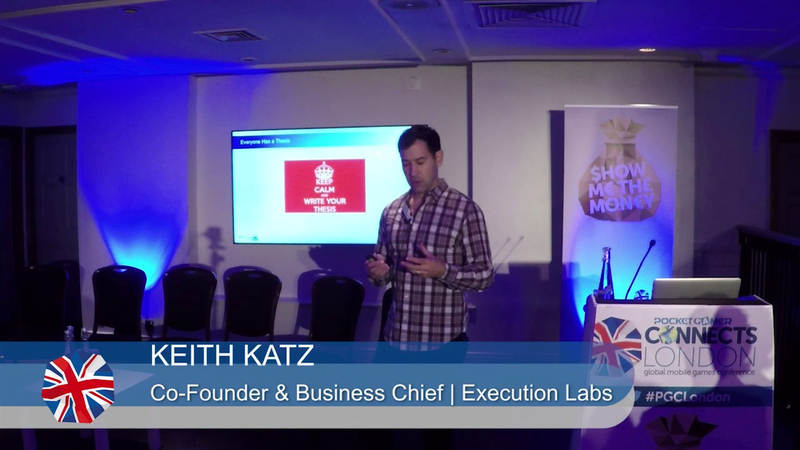
[Music] so my name is Keith and I am co-founder of execution labs execution labs has been around for five years or so for five years and hey Mike and so we started out as I guess what most people will call an incubator for early-stage game studios and then we sort of evolved a little bit more of an accelerator model plus a couple years more or less we've been an early stage investor a seed stage investor so we're very hands-on with studios we invest in we've only ever invested in game studios so we don't do tech or e-commerce or whatever it's just game studios right and only content so that's what we do and I wanted to start off sort of to dispel the notion that most investors I
mean but first of all how many people are developers in the room okay so pretty much everybody and is anyone looking for funding right now okay explain why you're here okay great so that get some business in context so you know I know it can seem when you're pitching investors that are you know dominant stances no you can't have any money but the reality is that investors trick the early stage investors have a really hard time deploying capital and game videos and so any excuse to do it we will so we really want studios to present well and provide a good business case for us to provide that capital so our inclination is to say yes right but there are a lot of things that Studios do especially early-stage game studios that are repeatable and are sort of automatic disqualifiers or at least make it a lot harder for you to get capital so what I want to do today was talk a little bit about what
some of those things are and then sort of end with a sort of a high-level well actually a bit of a meaty sort of thought process that hopefully will help you as you're and you're out there seeking capital so one of the first things I wanted to talk about which is really critical is the notion of stages and stages in equity investment right which is what we do and I'll talk a little bit about the difference in equity investment and royalty investment a little bit later but stages is really critical so in the traditional equity investor sort of framework stage refers to the point of a company's growth at which you will invest meaning there are you'll hear some labels thrown around so you'll hear seed investor and that usually means you're investing in a company or studio that hasn't made any revenue yet sea level and then you'll hear early stage which is an investor who invests past the first product but
not so far along the company's growth and then you'll hear growth investors and so on and so on and what's critical to know here is that you may read articles about investments or M&A or whatever that's happening in the games industry and you say oh I should go talk to that investor but the reality is if they are not if you're seeking capital for the first time that hope the only category that's going to be interested in talking to you or seed investors right because the growth and the early to investors aren't going to ever write you a check right so it may seem like they're within your target but they're really not so that will eliminate a lot of notice first of all it's sort of narrowing down who you can possibly talk to the second way stage is important is very specific to games right and so as you know as game developers we talk about game development in terms of things like pre-production production pre alpha alpha beta right and so these
are stages of production and publishers or royalty investors think about stages this way right so it's not about studio growth it's about where the project is and and similar to equity investors you can sort of automatically disqualify yourself from ever getting investment from a publisher by being at the wrong stage and it's really incumbent upon you to and we're different publishers invest and sadly for game studios there are very few investors publishers who will invest at design phase right like you will very rarely be able to walk into a publishers office with you know design Docs and some concept art and get a deal it does happen it can fewer they're still you know some people like us who will invest after a prototype but most investors particularly if you're doing
mobile is everyone here just mobile so there's little bit yeah my kiss yeah although I would argue that I mean you know it's you know so particularly mobile and free-to-play most publishers these days will only write you a check at or near beta meaning you're about to go into soft launch right which is kind of nuts right because you basically do all this work that you pay for but but understanding that going in will really change the way you think about how you're going after investment if you can't walk into most publishers offices with a free-to-play mobile game and say hey we have this great idea they'll say great come back when you're done right that's essentially the mindset for the vast majority of publishers out there right now so understanding that and understanding which publishers will invest at earlier stages is something that's going to be really critical for you if you think you're gonna go out and try to get money early on all right so that's stages another thing that's really can be a deal breaker is your
core and I don't mean core technology but I mean your core people and the founding core of your studio right so it doesn't when I say you know something is wrong with your core doesn't mean that any one of you is deficient in some way but it means that the core of your team is not up to the task or hasn't demonstrated that they're up to the task that they're pitching for so a prime example and this is one we get a lot is X triple a console developers right so let's say you're an extra play console developer you've been working for Ubisoft for 15 years and you've worked on Assassin's Creed 7 or whatever right so that's great if you're a designer you've been doing that fantastic but if your entire team is X triple a console and you're coming to me and you're pitching for seed stage capital there's very little in your core team that indicates you're going to be ready
to perform in a situation where capital and resources are extremely limited because sea state's capital doesn't mean you can have all the money you need to do everything you want it's gonna mean you're very capital constrained and resource constrained and typically what we see is those who have been working for EA Ubisoft or whatever for 15 years aren't used to having to sweep the floors themselves and all those other things so fundamentally if there's not someone in your core team who has shown that they can be scrappy and working limited resources that's a huge red flag for us now the flip side of that coin is let's say you are a successful indie right and you've been working scrappy for years you've got a couple of games out and your last game was a tiny little you know six hour platformer and it did well whatever that's great fantastic I like where you are so far but if you're telling me that what you really want to do is build a cross-platform MMO then my red flag goes up who on your core team has shown the ability to scale a game in a business right if there's no
one there chances are you're not getting that chance so when you think about what you're building as a studio think about who on your core team is capable of sort of checking that box for investors right that's really an easy way for us to say no this is all feeding into this notion of a thesis right and so yeah when a long time ago when I was in university when I was graduating I wrote a wrote a thesis when I was studying Middle English literature which is super helpful as an investor but so I wrote a thesis but it's a different kind of thesis when we talk about investor thesis we're talking about something else an investor thesis essentially is a framework that helps you an investor narrow the scope of possible investments they might make so just because we are game investors doesn't mean we will invest in all games so for example execution laps has been very vocal about the fact that we are looking for game studios who are really looking at community and social inspect
ation in a really interesting way that's effectively our investment thesis you know we also only invest in Europe and North America our cheque sizes are a few hundred thousand dollars right that those are the sort of the size issues we're looking for that's the kind of game it comes to do that's roughly our investment thesis and generally equity investors are very open about this kind of stuff in public because it makes it easier for us to get more people across the table who are pitching something that we may be interested in right so it's not this is not a secret that we keep like under our desk like you know in the glass box like this is something that's very easily pretty vocal about most investors are so the same thing applies actually - roar - roar - investors publishers they don't necessarily call it an investment thesis but it's pretty easy to figure out what kind of games they are focusing on so to use an example Paradox Interactive right chances are they're looking to invest
and systems driven strategy games right they'll say that hey that's our investment thesis but if you look around and see their portfolio the vast majority of them are strategy games right so if you have a really nice puzzle platformer and you go and pitch paradox chances are they're gonna say no because you're out of their investment thesis right it doesn't matter how good your game is our how could your studio is so trying to do a little bit of homework ahead of time if figuring out you know sort of the the general sort of thesis for those publishers it's gonna save you in them a lot of time and a lot of disappointment frankly now it doesn't mean that you won't get some of these meetings right because particularly larger publishers publishers and larger investors that have people running around whose job it is to take meetings right because just because you may be out of thesis now it doesn't mean that three years now four years for now five years now that you won't be out of their
thesis right and so they will interview they're in there like you know CRM tool and they will track you forever but you'll be in their little system right so you may get the meeting you may think great I'm getting a meeting but you're not getting a yes right so understanding their thesis is super critical another example that I've spoken about quite a bit is this notion of arbitrage specifically with mobile free-to-play game since this is a primarily a mobile conference the notion of CPI excuse me I'm for myself above water here so CPI arbitrage so the concept of arbitrage if you're not familiar is basically the idea that you can buy one good at one price turn it turn it around and sell it either in that same market or a different market for a higher price and make a margin right that's arbitrage you're selling the same thing you're buying something that's selling it again and so a lot of the the pitches that we've received in mobile over the last few years have essentially been what we
would call CPI arbitrage opportunities it's the notion that I can spend money on a CPI basis by a user and then monetize that user with an LTV that's higher than what I paid and make a margin on that right we have never once invested in a studio with that kind of game fundamentally we've always thought that CPI prices would rise it's not sustainable business model so you may have a neat idea great art great concept but if it's essentially CPI arbitrage we're always going to say no that's out of our thesis so I just hope that clarifies that that notion a little bit all right so I've hinted at the fact that that royalty investors and equity investors are different what I mean is the money that you get from equity investor is fundamentally different than the money you get from a publisher so
there are a lot of reasons for this but the core of the issue is equity investors as a rule a very long term focus particularly early stage investors right if you're if we're giving you money to seed stage we are not looking short-term we are looking at your studio seven years down the road more or less right any different equity visitors have different time horizons they will they look at but it's certainly not today is really not next year so they're not to you after that and critically we are not betting on your game we are betting on your company right that has a lot of implications and I'll get back to that royalty investors publishers as a rule don't care so much about your company they care about your game they're investing in your project right so their business is let me put some money into this game this project right I will make a little margin on
that hopefully everyone makes a little bit money and we do it rinse and repeat right that's their business model the equity investor of business model is quite different most early stage and even later equity investors VCS right we're not interested in bets that can yield a little bit of margin because the people who invest in us usually those are called LPS or limited partners they don't care about that either if they want to make a little bit of margin on something they can find other investment vehicles for doing that the reason they put money into VCS is because they want to see potentially huge bets right so the model for most equity investors is that listen every bet we take has to have the potential to be huge massive it doesn't matter if a lot of them go to zero but we're gonna offset that by the one or two that really go big so think about that what that implies from a studio standpoint
right you're out pitching and you go to a publisher and say hey we have this great game seems like there's a you know a niche to feel here fill here you know this game is gonna cost a million pounds we think we can make a million and a half how to repay the App Store's reach you know maybe make a little bit of money here right a lot of publishers say yeah okay some yeah that sounds pretty good I can I can live with that if you go to a equity investor with that pitch we can't do anything with it because the incremental hundred thousand two hundred thousand words it's not meaningful to the business right so it's really important to think about that from the core team standpoint because if you are taking money from an equity investor it means that you plan
to exit that business down the road so if an equity investor is looking at your business five six seven years later right there's only one way for us to get money out of your business well there's really a couple of ways one is if you IPO if you go public which almost never happens in games the other and the more likely scenario is that you get acquired right or someone buys majority of your company and I can cash out what I own so as a core team if you are not prepared to eventually sell your business and work for someone else for some period of time which is probably what's going to happen if you get acquired by a larger publisher you should not be talking equity investors because that's that's that's how we get paid now royalty investors um it doesn't you know publishers I'm not saying they don't look at your business in your studio and want to create a lasting partnership because there are a lot of commercial benefits to doing that right
they know who you are so if you make a game you have a good relationship you can make another game you know they trust you et cetera and you know that takes a list them a lot it do you rescue a lot you're comfortable you're happy but those are really individual decisions that they make each game is a new game this new game maybe you sign a two-game deal or whatever they don't care if you exit in seven years right they just want you to make more games now there's nothing in the world wrong with running a game studio built for that in fact most game studios are built for that you make the game you get some publisher money hopefully you all make money you have enough money to make another game it's pretty good life in some cases right nothing wrong with that but it does mean you shouldn't be talking to equity investors now there's a big caveat here which is that equity investors will look at your studio if you're making sort of smaller games they can make a little margin if there's a larger goal in mind so we talked about
that and the way we talk about constructing a building we talk about scaffolding so we always talk to our studios about scaffolding meaning what are you building today that provides scaffolding for a bigger business down the road so as an example you come to me and say hey you know we're just starting out we've got this prototype for this you know mobile platformer it's gonna cost five hundred thousand dollars and using capital I like your core team all those things that's fine assuming that there's another part of that story the other part of that story has to be okay we're building this platformer on mobile because we were building an unreal and we need to learn unity right make this up our next game is a free-to-play mobile game this is going to use the same IP or the same mechanics
but we're gonna add more staff we're going to scale the third game is going to be cross-platform PC mobile console and an image you know so that's what I'm interested in hearing that's the story that the equity investors need to hear so if that first game you're building gets you to that second game that's an equity story right but we're not making any money off that first game and by the way we don't want you to give us any because we want you to put that back into the studio right that's a very very different mindset so the key the key thing here is understanding what it means for your business and understanding how you tell your story is probably the biggest thing you can do before you ever sit across a table from an investor either on the royalties side the publisher side or the equity side and with that I'll open
forth of questions if there's anything I talked about today that you need sort of more clarification on send me a note I'm happy to reply there was some sort of media issues in here so feel free to poke me the questions now and I'll sing to the deck if you want although it's not super helpful because mostly just pictures and yes please interested whether the most one figures you to the counter from a potential I'm sorry could you repeat that question one of the most important stages the most important figures well you know we see stage investors right so you're normally there are no figures to look at and if you gave them to me I probably wouldn't believe you anyway we don't look at you know revenue projections and try to do some discounted cash flow based on that's not the way early stage investors work it's never about look every deck
has this is the overall market for you know first-person shooters and we think we can take 10% of this market and that like fine great I'm happy you've done your research but that's I just ignore that because it's all bs right like I like I wouldn't know what your core team is I don't know where your capabilities are and I want to know what what your vision for your your company is and like what your I mean this is not unique to us everyone use this term but what's your unfair advantage right like what are you doing that other people aren't doing what do you have a studio that allows you to succeed in this super hyper competitive market those are the things we look at it's not about your projected revenues over four year whatever and especially not what do I think my CPI is gonna be because as I said earlier that's a disqualifier for us we're not around investing in those businesses [Music]
Summary
Securing investment for game studios requires a clear understanding of the fundamental differences between equity investors and publishers. The primary purpose of this analysis is to guide early-stage studios through the investor mindset, emphasizing that funding rejections often stem from a misalignment of business models, team composition, or strategic vision rather than the quality of a specific game.
Equity investors, such as seed-stage firms, prioritize the long-term growth of the studio as a company. They seek teams capable of scaling and eventually exiting, typically through acquisition, and they require a compelling vision that extends beyond a single title. Conversely, publishers act as royalty investors, focusing on the commercial viability of individual projects. They are generally less concerned with the studio’s long-term corporate structure and more focused on whether a specific game can generate immediate, repeatable margins.
A critical finding is that studios frequently disqualify themselves by approaching the wrong type of investor for their current stage of development. While publishers often require a project to be at the beta or soft-launch phase, equity investors evaluate the "core" of the founding team. A common red flag for equity investors is a team lacking experience in resource-constrained environments or a lack of a clear, scalable roadmap. Furthermore, relying on business models like CPI arbitrage is often viewed as unsustainable by equity investors, who instead look for "scaffolding"—a series of projects that build technical or IP-based advantages over time.
Ultimately, successful fundraising depends on matching the studio’s goals with the investor’s specific thesis. Investors are not looking for speculative revenue projections, which are often dismissed as unreliable at the seed stage. Instead, they evaluate the team’s "unfair advantage," their ability to operate under pressure, and their strategic plan for future growth.















Comments