1 free read left. Create a free account for unlimited reading + AI research.
Create free account
How indie games developers should look at analytics
Key insights
6 takeaways- 01The ultimate objective for indie studios is to transition from a single-hit mentality to a sustainable business model built on iterative improvement and data-driven decision-making.
- 02Developers must move away from random development choices, using analytics to refine core gameplay, optimize monetization cycles, and conduct soft launches to identify target audiences.
- 03Indie developers can achieve commercial success with 20% to 30% day-one retention, provided they secure platform featuring, whereas major publishers typically require 40% to 50% to justify user acquisition costs.
- 04In a saturated market where over 6,000 games launch weekly, developers should present publishers and platform curators with concise, data-backed evidence of market research and game polish.
- 05Securing an initial feature on the Apple App Store provides a 50% probability of being featured again, potentially driving between 100,000 and 2 million installs.
- 06Data from late 2016 to early 2017 shows that 70% of featured titles are free-to-play, with action, arcade, and puzzle games being the most frequently highlighted genres.
Ask AI about this video
Transcript
[Music] do you guys hear me I think you do I'm selections from simple on a lake and puts the system works is it should I point that way or oh whoa now you got all my slides okay cool so yeah so why I listen to me yet and I'm I've been making my own game and start my own game studio and we launched about 10 games in a year and then we realized after that that we suddenly started helping more developers and we had started slack channel a called any help with all of sort of the developer relationships that we'd start and that led me to start
simple analytics and going a little bit deeper into the infrastructure so now today I'm going to talk a little bit about what I've learned and hopefully you've you guys can take something out of this otherwise it's I mean it's mobile games university so you should and so I'm going to separate this into three sections which is first how indie game developers in small studios they should look at analytics we could look at analytics and also then when is the right time to reach out to a publisher and then i'm going to give some examples of retention rate from top indie game developers and also show the importance of the relationship with apple and google's so when we first started we implemented everything for our games and we thought that was a great idea because then we would be able to see everything but then we ended up with actually just showing it up to investors and stuff and the situations where we needed to show
that we had something but for offsets at simple now it's all about actually given actionable insights and really understanding what to change in your game so when we launched our first game we we didn't have a great relationship with apple and we were not coming from the game sector ourselves so we really thought about guerrilla marketing new distribution channels and trying to figure out how you can reach out and we we got about five to ten thousand downloads a day and without any feature from Apple but we realized the struggle that we are not alone there like six thousand games launched every week and this is a hospital for for everyone so going into how to look at analytics and we realized that for us in the early phase it's only retention that matters if you don't have a sticky gameplay on retention on day one it's it you should
sort of scrap that game and of course if you're a bigger studio this is harder and and it's as an indie game developer you can afford to make things with lower retention rate which is also good in a way I'm going into that little bit later and then we see the launch space and where you need to identify what you've learned and really try to find markets and identify who you should target and then my game is still alive face and which is a good face then you can actually start to monetize and you can go into day 72 day 32 day 90 and actually start to improve that and you then know that you have a game that is live and you can constantly start that cycle of improving and monetizing so for you that most of you guys in here at probably no retention rate so it means that your plays are coming back which is a good thing and why this is really
really important is that if you don't have a great game and it would be really hard to make it to make it a great game so you should really look into look into this it started to as soon as you start and really try to to break it down like who do I want to be as a in developer do I want to send my games to catch up and get a good relationship with a with the best publishers for games that are alive for one week or do I want to strive for for being alive on day 14 2 day 32 day 92 beyond because if you're making a game with let's say lower than forty percent retention day one it won't be a chance for you to even have the the possibility to them to improve on that so and although if you have thirty percent retention that doesn't say that you have you will not
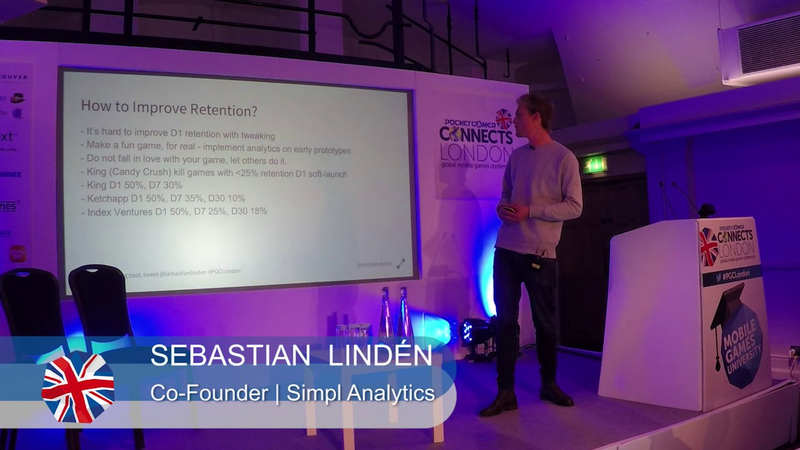
be featured by Apple because there are many indie game developers that I will show later that are sticking around a little bit over twenty percent thirty percent and still getting that feature so that goes into the question how can i receive attention and we realize that it's really hard to improve retention day one and if you if you don't have a fun gameplay so instead of adding all those notifications and all the things that later on can tweak your game you should really look into what is the core gameplay here and what do i what kind of retention do I have on the core gameplay and and then it's basically make a fun game for real and if you can make a fun sticky game place then you can work around that and work around that gameplay and so what we started doing later on was to start looking on analytics and really see like how can this help us and you should implemented all of your early prototypes and really try to see find your targets and really
try to understand on how they're playing your game in a really early face and we've been through this too throughout this time we've been talking with King we'd be talking with publishers we've been talking with a lot of indie game developers and we've got a lot of help from smart people and we've helped as much as we could and just once I'd notice that King they kill all the games in soft launch that are below twenty five percent retention day one they cannot afford to make those games there is what they spend on you a it is much higher and they will be a it will be not it would not be profitable for them to launch any game with lower than forty fifty percent of attention so that said also it leaves a gap to the indie game developers that you can also monetize on those 12 14 days and get a lot of in ads and you have a much shortest development cycle so you can really take that that chances in the Vantage and and then on the other
hand you have ketchup which is it really 2048 they had about ten percent retention day 30 which is really sort of a good case for them and which is a horrible case for index ventures or or King because that is not it's two really different type of game so let's say that we don't have fifty to sixty percent retention day 1 and we're all in that same boat and we're paying like praying for that feature and it's a it's it's really hard so now I'm going to go into a little bit about how you can build a featured where the game and show what I've seen from indie game developers making this really successfully so first of all and this is a little bit of an example of colin lane located based in stockholm great indie game developer having a really good relationship with apple also getting a lot of downloads and making great game and he's really
good example of having the relationship with apple giving him that that distribution channel and the consistency that they love and it is sort of a nice design and that they also love and and it's a great example and and then of course you should also focus although you can get featured with low retention that doesn't necessarily mean that you should just make a game that apple will love and hope that they will feature because if you can't monetize on day 30 day 90 you will still have to make a new game that will be featured and they're like 6,000 games out there and 15 get the u.s. featured it will be hard to for you to get that feature every week and every month so when should you reach out to a publisher and I encourage all of you to to try to self-publish we did it and we learned a lot from it and and I also encourage you to try to collaborate with a publisher and I think both things are really much to learn from and you should really try
to see it how will this help you as a sustainable business later on so a few questions to consider that I came up with from talking with a few of these guys is have you done your research what are they usually publish really dig into what kind of games do the published don't send an email to all the publishers that you think are cool and top crossing in and just think that they will like your game really look into why would they publish your game and also try to understand how can you make the game for that person and for that publisher and then involve that in your process in game development and not only why will they love your game it's the whole ecosystem so why would apple of your game why will Apple hate your game and just fix it and it's not that you will get that feature and then say like okay I'll fix it after after i launched them and when a teacher and when I have enough place because you will never get
that feature if it's not perfect and send then you can ask yourself do I have a feature where the game and so I talked with absolute games which have been there let's see I just need to know what okay that's time good because I have a tendency to ramble and talk and then somebody's time runs out so I'm fine I think and so I've talked with absolute games which have been the most sort of recurrence it features of best new games in in the last few months and on the best new game games we love section i think it's called and i talked with David there and he said that be really short and concise and as one to two sentences about the game and then it's great to include a screen shots or a gameplay and don't send like long long emails and all the why you why you have done this and it tend to be like I usually myself I see myself sometimes and write emails and then I build onto it and there's suddenly I have an essay
it's like wow and just try to see this sort of if they didn't know you what would you like to see if you were published where to publish this game yourself what would you like to see so this is an example email that I did it feel free to take photos of it and but it would be weird if all of you send exactly mean exactly games but it's just a different idea to to be short and concise and but also to show that you have something special and show that you based it out of data on their color palettes and you have done that you've seen that similar games of exactly what I did here and there is doing great and that's why I shows you this so basically based your ideas on data and not on random stuff and that's what what it all comes down to do your research and and do it well so we all know this but I think it's always good to remind everyone that there are 6000 games launched every week and they're only 16
of these or 16 to 20 of these that will get a u.s. that's new game feature and that's less than 1% so it's a tough market and it's getting tougher and we all know that so we just to give an example of how you can base your ideas of data and not random stuff it's that for example look into to the games that are featured and the games that you like that are getting featured one thing that we did a simple was that we have friday experiments and we try to see that we can come up with cool things that also will benefit and i'll set an analytics company so it is featured games at i/o where we sort of get down all the best new games from apple and also because i wanted to stand here and have some interesting stuff to show yourselves like OVI don't want to talk about stuff that I've done that doesn't really make sense if it can give some data that's interesting that's much more fun to look at so this is what we found out by looking at the games that we were featured from November 6 2016 to January
in January this year and we thought we saw that about seventy percent are free games and then Apple have a tendency to feature about 13% that are games onto 99 and then following followed by won 99 games so we will be I'm not saying maybe it's less people that are that are pushing out games 999 so that would maybe give you a higher chance but you can see that it's it's only about one percentage that of the all of the games feature the last few months that will have that price range so really look into this and and and make yourself a sort of a good decision and then we also looked into a different genres that are fed Apple teacher the same Kurt and we were actually thought that possible would be a little bit higher and we were we found out that action was actually the most featured genre at the moment
and with a twenty-two percent and followed by arcade and then powerful so and it's all about making great games but also keeping relationships with all of your stakeholders so what we also looked at here was that which of these game developers that have been feature the last few months have been featured more than once aleppo and we found out that absolute games have been featured most times and exactly fifty percent okay have been featured more than once so if you're featured within this paired it will be a fifty percent chance that you'll get teacher again and all those features will give you about I mean from my experience we got about you can get about hundred thousand downloads to three hundred thousand hours and depending on all the stores that you're featured in you can get up into two million installs so let's see Oh crack
time so this is another interesting trend absolute games and this is the type of thing that I mean by base where ideas on data you should look into okay I can see here new games recently games published or go into which 0 99 why are they doing this if this because of Apple or is it because of themself look into these type of things and try to find trends yourself so to summarize you can see that there are seventy percent of the games featured that are free and you can see that the at the moment actions is Apple prefer action / / arcade or coastal although they are following close and then don't don't price your game and by 59 98 99 or 999 if you don't really know that you can get it so I talked with a few indie game developers for this for this conference and they were happy to share some retention data and what what if I thought when I was said when I made
my own first games was that okay applecare all about retention I just need to make great games and then they will love my game and then once I had forty to sixty percent retention I saw that we didn't get feature anyway and we did some design but we probably did too much apple design so these games are great examples out there have all been featured at the last few months and you should really look into that how they've designed it and and and put up the structure for it to to get that feature and try to see how we can do this thing and but you also see that a various the retention day one really very you can get featured by Apple by having a game day one retention of twenty eight twenty percent twenty-two percent although you won't be able to monetize on them of day 90 you will still get that feature and you'll be able to monetize an ads and so I talked a little bit more with an indie game developers from Montreux it chris gibbs he launched his treat and he launched his game smartnumbers subconscious in october and then full
launch it in december this year and he got features in all the hundred fifty-five app stores and it which is doesn't really happen every day for every indie game developer and but he was really sort of consistent in soft launching in a few countries and then being really sort of data analytic driven of how we could improve the game and how he could really sort of understand everything about his players so and what one interesting thing here would that he saw was that the features that he got from the possible import a cardboard as not cardboard but the powerful game section was that he got much higher retention there then when he got more sort of general features police saw that he sort of really identified a certain sort of a target player by just looking on also the features that he got to see that that retention was much much better so this is a lot of text and it's horrible I think as a presentation but i wanted to have everything there because i think you can learn a lot from it and
i'm going to have everything on twitter and a SlideShare and what it is later on so you can read everything but a few of the observations that Chris did what I think was great and that he said that I don't really the localization I could improve the tutorials I could improve for for better retention day one also I had sort of a no localization later on for the full launch that I got featured in all countries and a canada and us i had toward the best sort of a possible scenario for the soft launch and that's why he thought that with this reasons and that they came from different features and came from different places that that retention could vary and so that's it i think i have actually two minutes left and I'm do I have extra questions after those two minutes so I can go back for like one minute and 57 seconds I may I don't know let's go here
because you can maybe see something yeah any questions clearly all set up how many guys have you in here are game developers in the game developers cool yeah yeah yeah for sure and feel free to email me and also i'm happy to help with what I know although that's not everything it's I guess it's impossible to learn everything in this industry but I will be happy to help with as much as I can and you can just yeah feel free to just get in touch output the presentation up on the slide share and connect with me on LinkedIn and i'll be happy to help and i didn't want to talk too much about analytics tool but it's great you should all get it that's me very much thank you [Applause]
[Music] you
Summary
The primary objective for indie game developers is to leverage data-driven insights to improve game quality, secure platform features, and build sustainable businesses. The central thesis posits that while retention is the most critical metric for early-stage development, developers must balance core gameplay quality with strategic market research to navigate an increasingly saturated mobile landscape where over 6,000 games are launched weekly.
Key findings indicate that while major publishers often require day-one retention rates of 40% to 50% to justify user acquisition costs, indie developers can achieve success with lower retention—sometimes between 20% and 30%—provided they cultivate strong relationships with platform holders like Apple. Data analysis of featured games from late 2016 to early 2017 reveals that 70% of featured titles are free-to-play, with the action genre being the most frequently highlighted, followed by arcade and puzzle games. Furthermore, developers who secure an initial feature have a 50% probability of being featured again, which can drive between 100,000 and 2 million installs.
Methodologically, the analysis relies on industry observations, comparative data from featured titles, and case studies of successful indie developers. The scope covers the global mobile gaming market, with a specific focus on the Apple App Store ecosystem. The guidance emphasizes that developers should avoid "random" development choices, instead using analytics to refine core gameplay, optimize monetization cycles, and conduct soft launches to identify target audiences. When reaching out to publishers or platform curators, developers are advised to be concise, provide clear evidence of market research, and demonstrate that their game is polished and data-backed. Ultimately, the goal is to transition from a single-hit mentality to a sustainable cycle of iterative improvement and monetization.
















Comments