Game Development reports and market data
Documents
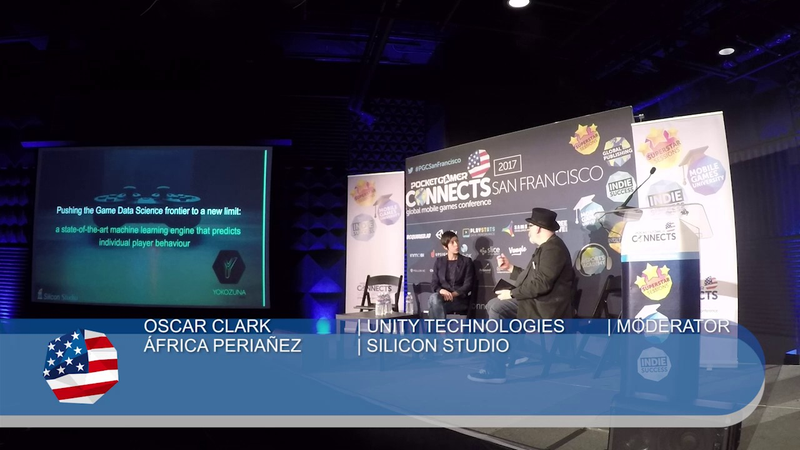
Design versus data in game development
The integration of data science into game design serves as a critical evolution for the industry, moving beyond simple heat maps toward sophisticated predictive modeling.
- Data science in game development is shifting from reactive heat maps to proactive, predictive modeling that anticipates player churn and purchase timing.
- Advanced statistical methods like survival analysis, traditionally used in medical research, are now being applied to accurately forecast individual player behavior.
- Effective game development requires interdisciplinary collaboration where designers define the intended player flow and data scientists apply algorithms to identify critical control points.
Quick to market – One game every eight weeks
QuickByte Games, a specialized unit within the independent studio Hybrid Interaction, employs a high-velocity development model to disrupt the free-to-play mobile market.
- QuickByte Games utilizes a high-velocity development cycle of eight weeks or less to produce minimalistic, arcade-style mobile games.
- The studio employs an aggressive prototyping strategy where designers create new concepts every two days, discarding 95% of them to ensure only viable projects reach production.
- To maximize profitability, the studio targets a 40% day-one retention rate and prioritizes rewarded ads over in-app purchases.
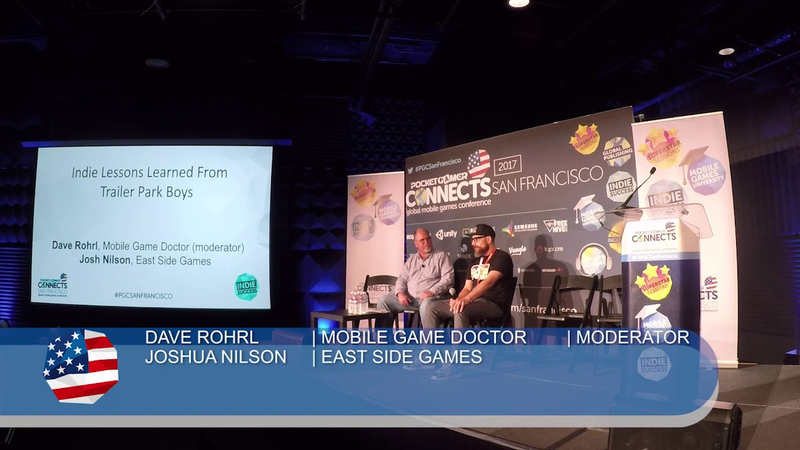
Eastside Games' indie lessons learned from Trailer Park Boys
The development of Trailer Park Boys: Greasy Money serves as a case study for independent studios navigating the complexities of licensed intellectual property (IP) in the mobile gaming market.
- Trailer Park Boys: Greasy Money achieved 2.5 million installs in its first 45 days and reached the top 100 in over 100 countries by pivoting from a mechanics-heavy design to a narrative-driven idle game model.
- The studio successfully balanced profitability and retention by utilizing a hybrid monetization model where in-app purchases generate 75% to 80% of revenue, supplemented by secondary ad revenue.
- Leveraging niche intellectual property significantly reduces user acquisition costs and increases project visibility with platform holders, provided the studio maintains creative control and agility.
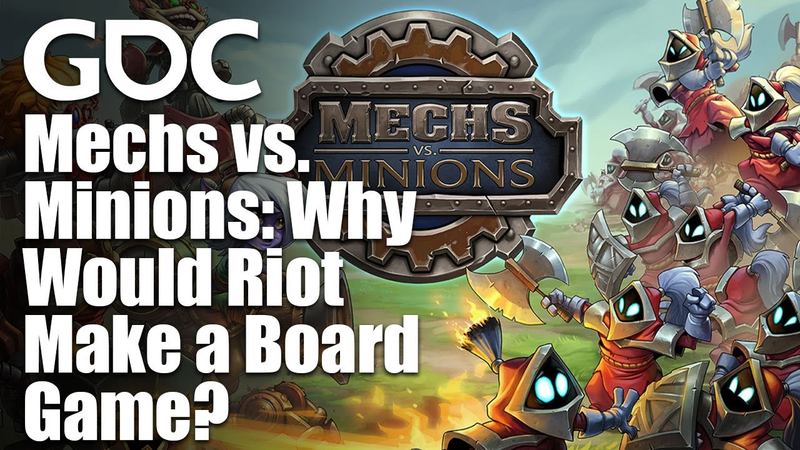
Mechs vs. Minions: Why Would Riot Make a Board Game?
Riot Games ventured into the tabletop market with Mechs vs. Minions to explore creative expression beyond digital platforms, utilizing the intellectual property of League of Legends to foster a unique, cooperative experience.
- Riot Games developed 'Mechs vs. Minions' not as a strategic market acquisition or user retention play, but as a passion project intended to explore their IP in a new medium and create a high-quality experience for their players.
- The project was driven by a small, internal team rather than a large studio mandate, allowing the developers to prioritize product quality over traditional profit margins by reallocating typical marketing budgets into high-end components and game tray design.
- The game design evolved from a competitive programming prototype called 'Weapons of Zombie Destruction' into a cooperative experience, as the team found that cooperative mechanics better suited the team-oriented nature of League of Legends players.
Animating Quadruped Characters in The Flame in The Flood
Animating quadruped characters in The Flame in the Flood requires a strategic balance between stylistic intent and technical efficiency.
- Achieve fluid quadruped locomotion by prioritizing grounded idle states and additive movement layers to minimize labor-intensive transition animations and foot sliding.
- Manage speed variations for stylized creatures like boars using linear blend spaces, while applying play-rate scaling and procedural spine rotation for more realistic entities like wolves.
- Ensure seamless directional changes by calculating the delta between a character’s facing direction and its movement vector.
Automated Testing and Instant Replays in Retro City Rampage
The development of Retro City Rampage demonstrates the efficacy of a deterministic game engine architecture in streamlining quality assurance and feature implementation.
- Implementing a deterministic game engine architecture by prioritizing input recording over state logging enables high-efficiency file sizes for features like instant replays and leaderboard playback.
- Deterministic design allows for automated cross-platform testing and precise bug reproduction, significantly reducing the time and labor required for manual quality assurance cycles.
- Achieving determinism requires decoupling the game loop from rendering processes, utilizing fixed update loops, and enforcing strict state sandboxing to ensure consistent gameplay across different hardware.

Playtesting: Avoiding Evil Data
Effective game design relies on the ability to distinguish between genuine usability friction and misleading feedback, often categorized as evil data.
- Prioritize observed player behavior over subjective player-suggested solutions to avoid 'evil data' that can compromise core design integrity.
- Conduct playtesting through direct, firsthand observation in environments that mirror the intended final context rather than relying on surveys or secondhand reports.
- Observe players without providing external guidance or instructions to identify authentic interaction patterns and the root causes of usability bottlenecks.
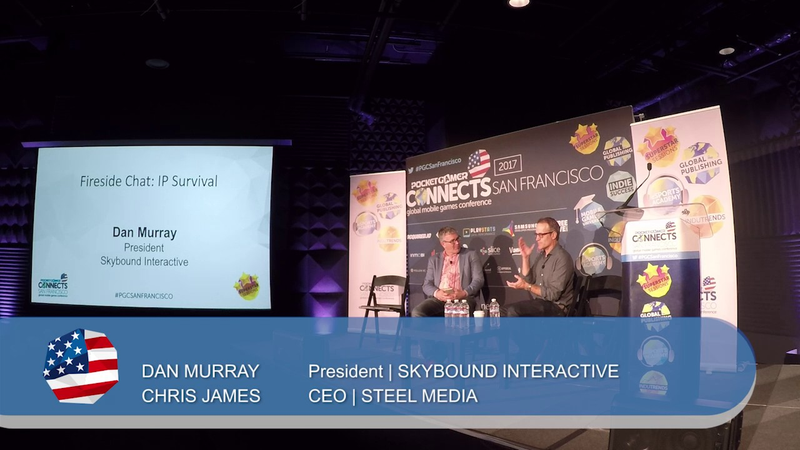
Skybound's Dan Murray on working with IP - Survival 101
Skybound President Dan Murray outlines the strategic approach to managing intellectual property (IP) within the gaming industry, emphasizing the importance of authenticity, creator-led business models, and deep collaboration between licensors and developers.
- Successful IP-based games require moving beyond superficial 'IP slaps' by ensuring mechanics and narrative spirit are deeply integrated with the source material.
- Skybound utilizes a 'wheel of awesome' business model, retaining core rights to properties like The Walking Dead to maintain control across film, television, and gaming adaptations.
- Licensing success relies on replacing siloed relationships with proactive, direct collaboration between IP holders and developers to ensure both narrative consistency and mechanical innovation.

Shigeru Miyamoto's 1999 GDC Keynote
The evolution of interactive entertainment necessitates a fundamental shift in how developers approach game design, moving away from purely technical engineering toward a discipline that balances artistic vision with hardware constraints.
- Game developers must balance artistic vision with a granular understanding of hardware constraints, such as memory maps and processing limitations, to ensure concepts are realistically implementable.
- Prioritizing functional, engaging gameplay over graphical fidelity or narrative complexity is essential to avoid common development pitfalls.
- The development of The Legend of Zelda: Ocarina of Time utilized a modular team structure to conduct targeted experiments in 3D movement, camera systems, and real-time processing.

Arts Funding - Helping Games that Help Us - Extra Credits
The video advocates for the preservation of federal arts and humanities funding in the United States, specifically targeting the National Endowment for the Arts (NEA) and the National Endowment for the Humanities (NEH).
- The National Endowment for the Arts (NEA) and National Endowment for the Humanities (NEH) receive a combined annual federal allocation of approximately $296 million, representing only 0.002% of the total U.S. federal budget.
- Federal arts funding is essential for the development of non-commercial, educational, and historical video games that would otherwise struggle to find support in the traditional commercial market.
- Projects like 'Walden,' which explores Thoreau’s philosophy, and 'The Pox Hunter,' which examines public health history, serve as primary examples of how government grants enable games to address complex, high-level subject matter.
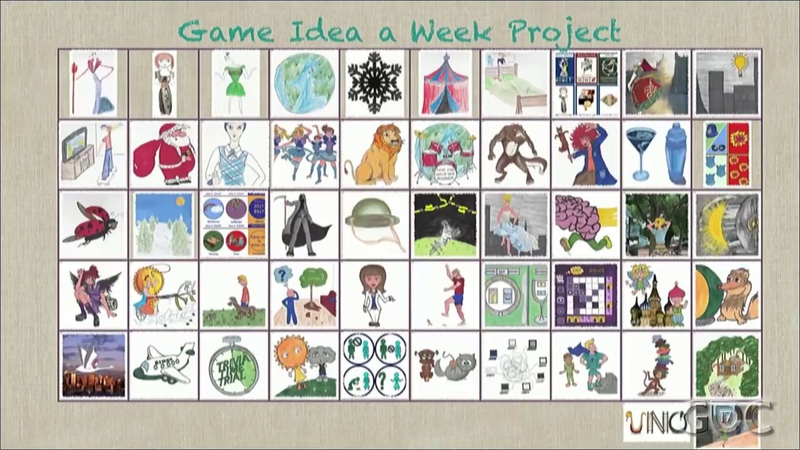
Friendship, Curiosity & Challenge: Focusing Your Career as an Indie Dev
The career of an independent game developer is often defined by a lack of structure, which can lead to professional stagnation or burnout.
- Independent developers should define a concise set of three core values to serve as a decision-making framework, preventing professional stagnation and burnout caused by a lack of structure.
- Core values act as a filter for all professional activities, including feature implementation, marketing strategies, project selection, and team collaboration.
- When evaluating potential projects or features, developers should discard any options that do not align with their established core values to ensure resources are focused on personally fulfilling work.
An Approach to Holistic Level Design
Holistic level design functions as a synthesis of gameplay, visual presentation, and narrative, moving beyond the traditional practice of treating these elements as isolated, additive components.
- Holistic level design integrates gameplay, visual presentation, and narrative into a unified system rather than treating them as isolated, additive components.
- Designers should prioritize player intentionality by using environmental affordances and consistent visual language to guide goal-oriented decisions instead of relying on explicit tutorials.
- World-building becomes a driver for engagement when environmental details, loot, and NPCs are specifically crafted to reflect core narrative themes and power dynamics.