1 free read left. Create a free account for unlimited reading + AI research.
Create free account
Quick to market – One game every eight weeks
Key insights
6 takeaways- 01QuickByte Games utilizes a high-velocity development cycle of eight weeks or less to produce minimalistic, arcade-style mobile games.
- 02The studio employs an aggressive prototyping strategy where designers create new concepts every two days, discarding 95% of them to ensure only viable projects reach production.
- 03To maximize profitability, the studio targets a 40% day-one retention rate and prioritizes rewarded ads over in-app purchases.
- 04The team maintains a lean overhead by utilizing internal staff and beta testers for quality assurance rather than traditional high-cost methods.
- 05The studio focuses on cumulative download volume through a consistent release cadence, often moving to new projects before the previous title has officially launched.
- 06The development model relies on an agnostic technology stack that integrates reusable code and features into successive projects to streamline production and improve KPIs.
Ask AI about this video
Transcript
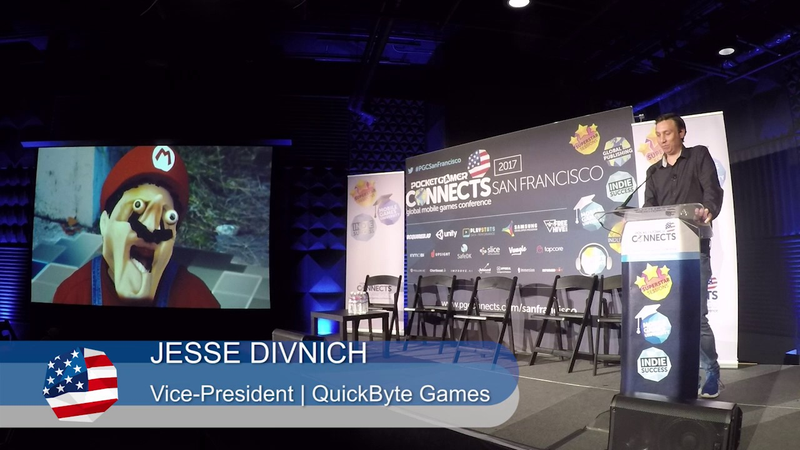
[Music] welcome everyone thanks for coming to my session today so I ran ten minutes over my dry run so I'm going to have to fly through this pretty quickly but always make my slides available after my presentation so what is a quick to market game a quick to market game is something that's done very quickly obviously they're simple minimalistic addictive they definitely long-term retention most games are deleted within seventy one percent of them are deleted within the first day we kind of call them arcade to death mechanics and what we're trying to do a quick bite game is really revolutionize that we're going to show you that a little bit so kind of think about catch-up in two types of games that they make we're trying to do this and take it to the next level so just quickly through in terms of who we are we're a team of three triple-a mobile developers that have worked on big triple-a mobile
games and what we have done is we've confined them and said okay you don't get a year and a half you don't get a three million dollar budget you get eight weeks will give you access to triple-a technology triple-a resources and triple-a expertise but you have to make a game in eight weeks or less and the idea here that we oppose upon the team is every game has to include a new agnostic technology stack in other words something that could be used for the game for the next game in the next game and next game so as we continue to build our games each one gets better and better includes more features that will help improve the major KPIs so just so you guys understand we actually powered by hybrid em so quick like games actually has no employees all of our employees are entirely a hybrid amore based in Montreal but 140 people been in business for a while we're most known for some of the games we did with Disney along with scope winning some of our own so that so that's where the Triple A technology in Triple A resources come is from hybrid em being an independent studio now for 11 years so let's just
talk a little bit about quickbuy games just you know just quickly our track record we released chas beginning of this year seven weeks of development we have surpassed a million download followed by Blacky bubs did much better better ARP thou better rewarded ads per user then we released Canyon crash again increase again in daily sessions increase in our Tao so each game is getting better and better better because we are taking this agnostic technology stack approach and then lapse which comes out very soon was done in four weeks I'm gonna give you guys I guess a sneak peek of what that looks like so let me talk about the process we take when we actually are making a quick to market game so I say okay it's eight weeks of development well yes it's eight weeks of development but it takes much much longer than that to actually release the game one we have a game designer that is constantly doing nothing but pumping out prototypes every two days so that when we are ready for our next game we have a prototype that we've all approved upon and we're ready to put into development because we are quick to market our QA is really quickly
or really done really quickly and I'll talk about that our soft launch is no more than three or four days and that leaves a little bit time for optimization what we have found is that for once in my career because I've done triple a console have done triple a mobile have done at all is that for once marketing can't keep up so when game development ends our games don't really come together until the last week we have to actually stop development and give marketing time to actually catch up to create the trailers create the screenshots work with our platform partners and that's when the second game is going into development so a lot of times when we actually launch which is sometimes four to five weeks after the end of development our team is really not that excited like I'll come running around like hey guys we got feature and all of our games have been featured worldwide they really don't show a lot of excitement because it's been four weeks they've moved on and they're already thinking about the next game yeah so some of the struggles we have a serious game design pipeline problem I think everybody here has game ideas I could
probably hold a whole session where we can all talk about some of the games we want to make no offence but most of them are horrible few or acceptable and really none are perfect and we're constantly prototyping at about 95% of them we cancel which gets to something that I've been saying my entire career which is bury the dead and bury the dead early so we put games into prototype we give them a week if it continues to pass the review process will give them another week if it doesn't we kill it and we move on and that's very important we talked about where Josh talked about a last time about how they're too close and attached to a project we have that same problem but you got to bury the dead very early move on right now I'm actually going to give you a demo of what our prototyping process is so this is stuff that is done in one or two days feel free to take notes steal some ideas here take a video but this is the with a wrestling game this one isn't interesting when we actually might do you throw toothpick in the air and get this was done in just a day this one was done today and you have to make a sandwich and yeah and then it turns back around and the idea is if he's
supposed to catch the bread there to finish the sandwich so he didn't do it so I don't think he's going to get a good score and then as you get closer to the end here this is where BAM dirty bacon melt and that's a product that's just something I was done in one or two days and then we kind of have to sit there and ask ourselves okay how can we actually envision this being a real game this is another game it was a modular game I really hate space games I don't recommend people doing space games and this was demo or this prototype was done in about a day and a half just by one person and he's just constantly pumping these things out and we're putting them into review we're getting people's feedback we're asking ourselves how can we serve ads where are we going to serve ads is this something that with done properly we can get featured by the major platform holders unfortunate I'm going to have to move on but this those are just some of the examples now this is what a finished product looks like this is Canyon crash featured worldwide launched four or five weeks ago as well 13 different characters the idea
is the fall as far as fast as possible collecting coins before a little red laser at the top catches you and ultimately brings it to your death and for for our four point seven stars again now featured we really like it really enjoyed it it was done in seven weeks and we really think that's amazing next I'll give you a sneak peak of our next game laps which was done in four weeks very elegant game we took kind of the three concepts really loved the game threes but no one's really evolved it no one's really blessed wounded they just straight-up copied it so this is where you match numbers if you do a match three with the same numbers that kind of evolves to the next set of numbers and this is looking to come out next week or the week after we haven't decided yet but right now the the retention and the monetization this thing is ridiculous I think we hit a 61% day 1 retention on this game and a game there's three people in four weeks so bugs right when
you're doing rapid development you have you just you really have to learn fast you're going to make mistakes and sometimes when you do make the most mistakes you really have to just move on if it's something we think it's going to impact 5% or more of the users then sure we have to go back and fix it but in within an eight-week cycle because of the budgets were working under and we know how much revenue we can make from it you just have to learn and move on it but it all does start with a solid game design document and game flow mock-up if you start with that and you have your core pillars in terms of how you plan to retain your users how you plan to monetize your users and how to keep them engaged while they're playing as long as you stick to that we have found it worked out pretty well and we always leave at least one week of rapid development so when we do finish at week six a week seven and we throw it in soft launch we get that data we do leave an additional week to rapidly develop the game and we always say that's not a bug that's a feature and we play a lot of
our games people have found certain bugs that actually make the game more enjoyable and as long as we come across a bug or something that's weird we ask ourselves is it funny this is something that people would actually share on YouTube on Twitter on Facebook and if it's a yes then we don't call it a bug we flag it as a feature I'm talking about rapid development so this is what we do we throw our games on a soft launch two three days that's it through a couple thousand dollars throw it in the Philippines we get the data back and then we get do 2 days of development this is our game blasty bub so at first not didn't look so hot name it was pretty horrible retention Road ads for users just across the board but within two days we were able to bring up retention to 31% which is still a little bit below our 40% objective but this was done in the Philippines and when we launched globally we were able to hit to think 42 or 43 percent but it does go to show you that you know with this rapid development process as long as you have the right mindset you can make these changes now we talked about monetization
what we have found now as consumers have gotten used to these quick to market games they can spot them they know that this is a game that they're only going to play for maybe an hour maybe a day at most seven days and what we've learned over the years is that when especially now when people are making in-app purchases they're viewing it as an investment you're saying to themselves Ivan's not I'm not spending five bucks just for now I'm making some spending five bucks so that I can build my character up and use them for the next week the next month or the next year so we found that in-app purchases for these quick to market games are actually they actually don't work and so we spend and we have a whole ROI process in terms of measuring development time but it has even been suggested and you'll see in some of our games we might not even do in app purchases the one that we found that works the best in terms of time to implement in QA is something that just unlocks all just have one in-app purchase unlocks the whole game unlocks all the characters we have found that actually works best the best of course is rewarded as rewarding the player to
watching that and afterwards they get some type of soft currency or some type of reward forced ads I know we're starting to move back past that but unfortunately it is kind of a necessary evil some people don't always want to partake in the rewarded ads some consumers are so addicted and hooked to your game even after day 30 that you can actually get away with serving ads every three and a half minutes to them and as long as you do it to the right cohort that are visiting the right behaviors it actually works in your favor so some of the best ads that we've kind of come across and I will say that right from prototype ii you put a game into prototype you always need to think how a rewarded ads going to be intertwined during the GDD in-game process as well as the retention engagement engagement all has to be thought out very early on but when it comes to the best rewarded ad types one is we found that when you give players in an incentive to keep playing to play the next game not the current game to play the next game or
actually found that converts better than any other one so examples would be I always use a burrito bison if you haven't played brutal bison it's a great game and exhibits a great example umbria bison while you're playing you basically can collect a pinata which is the ability to watch the ad at the end of the game that gives you a boost for the next game alright and that's an incentivize that reordered ad that encouraged the players to keep playing and we have found that that works best and I'm talking to Chris from tap tech earlier today needs only about a new interesting one that I just come to find out which was there's a game was called that's right blocky football where asks you to watch an ad and if you watch an ad you won't get an ad for another ten minutes and yeah and I find that very interesting I'd actually think that's a really unique year basically giving them the incentive to keep playing and that's the biggest problem we have with these quick to market games is that we need to get players hooked and we need to get players hooked early and from our research you got about 300 to 330 seconds if you can't get them engaged
and hooked to your game they're going to delete it so just something by the numbers here we're always looking for a blended eCPM about 17 dollars so since we typically do get featured worldwide we do have to deal with you know countries like India Russia Eastern Europe South America where the eCPMs are low if you're talking about tier 1 countries ideally you want to see something in the range at least 20 to 30 dollars but blended together $17 it's something that we're happy with and that's USD we want to vote for ads per engaged user per day so in other words an engaged user is someone who watches an ad so someone who actually watches an ad we want them to watch at least four ads and toll per day what we have found the threshold to be three and a half minutes in between AD viewing anything more if you force and try to force anything more we find that it significantly hurts retention or I should say less on the time and if you wait more time you're just wasting money or leaving money on the table and
ideally overall you want to serve about two ads per user per day and that's a good I would say medium to high average I've certainly seen games surpass that if they do it properly but that's what you should be shooting for when you talk about monetizing your game with advertisements it's all about retention you know whether you're making a triple a game or a triple eye game if you're making a mobile game especially if it's free-to-play everything is about retention for some of the bigger games you got about 10 15 even 20 minutes to get the player hook in these quick the market games you get one session and almost in some cases just one game 300 seconds that's it if they're not hooked or engaged we see about 60% of our players delete the app just after just after one session just after one session one game 300 seconds so we think of what we think our players all like goldfish we have to get their attention and get them hooked as fast as possible because if we don't keep their attention they're going to jump and go to different game and delete chores so let's talk about QA QA is very
expensive but it's something that is a necessity and we've done it well Shazzer first game was a 4.0 stars we made a couple of mistakes and learn from them our next two games 4.5 4 4.7 stars so we're doing it right and the way we do is we actually get the people in office to help us with QA without really letting them know they're helping us so what we do is we have daily high scores whether it's a high score or length or whatever the metric we're using to measure success in the game we throw it out to our employees every day we have a high score and we'll let our employees know who got the highest score and while we're doing that we're asking them to submit bucks along with that and that's a good way for us to get some freaky way we have beta testers so we have a list of 200 beta testers that we fished throughout the internet we wanted to you know touch our K forums and various mobile forums and say hey we need beta testers for our games and of course people love to play games before they come out and we use them and then we do a final QA process our QA hasn't cost us a penny it doesn't cost us anything at all and then finally what we do when we're
ready to say this game is done what we do is a final QA three-hour process which is the whole team our marketing team we have a pre-defined checklist of everything we need to go through and we all get three hours we each have different devices we each have different objectives and goals and that's it and then after that we basically log it into JIRA and we fix the bugs and then we move on for there so our QA costs us about three hours times six people so we keep it very cheap and I was speaking to a couple of larger publishers this week who are looking into this market and really laughed at me when I said our QA process was that short but I mean the it speaks for itself and then we have we have a four point five plus star rating across all of our games people love our games so we're obviously doing something right on that what we do and we do have a specialized list so that if certain devices or certain screen resolutions if it we believe it's going to impact over 5% of our users we definitely it's something that needs to be fixed anything less we generally let slide and
if it does become an issue then we'll obviously issue an emergency update which today we have not have been in the situation where we actually had to do that so let's just go in summary I'm making good tongue or actually might be able to do QA all right I will say I've done a lot of mobile games throughout the years I've as a research and analytics I've worked on over 200 games I published myself at least 15 at 16 games appliances closer to 20 doing these quick t'market games have by far probably been the most difficult games I've ever had to make because you can't if you make mistake you can't you don't have the time to really go back and fix it you kind of have to just learn and move on you know dealing with ad monetization was something that I think is a was new to me as I moved into this quick to market style of games and we really learned her allowing that we have to be deciding this stuff in prototype very much back in the day when we were thinking about when we're doing first for you to play games we would kind of
tack on the free-to-play stuff at the end well we obviously realize no we got to be thinking about that from the start same thing with AD monetization you need to be thinking about that from the start and then document everything I try to create as clean and crisp as documentation as you can at the beginning of the project and then from there you really just got to play it by ear we try not the way our team down too much with Jarra or Trello we do use it for bugs but we do find that taking the extra time to log in tasks and log in of various priorities it doesn't work so we've created our own slimmed down version that we use in Excel and sheets that is that is work exceptionally well now and I just understand how mistakes will happen in the Aptus it's really no time to fix them you really got to move forward I know that being in free-to-play for a while launch having a soft launch game usually you want a soft launch or at least 60 days if you still don't have the metrics you are desiring you keep going another 90 days 120 days and you kind of keep drawing out but the way the budgets work
the budgets on these projects are so small the revenue opportunities on these things are equally small we have to understand that we can't be spending time on this stuff we have to keep moving and move on and I know it sounds like a ridiculous assumption that okay what if our games make say a hundred ten thousand one hundred fifty thousand that's not a lot of money but when you're able to do that and launch new game every four to six weeks that kind of adds up over time and yeah I talked about okay Chazz our first game that we launched did a million downloads oh okay well great but if you're able to do that every four weeks and then you have this whole library for cross-promotion then that's in here you're talking about us having uh being able to just achieve anywhere from 12 to right now we're having 12 to 18 million downloads which for three people I think is a pretty spectacular job and whereas you know some of the bigger publishers want to invest you know and at high rent we work on a big games right we'll invest a couple of million dollars and takes two years to wait until we have to be able to recoup
that money what we're doing here is we're constantly spending and recouping so we find the model actually works out really well if you're organized and you know what you're doing so I guess lifetime from one question is that yeah alright anyone has a question there we go because we were holding it no no softball questions here like make them real a little curve on it to do it in French on you had mentioned that like you spent a day or two on prototyping and then it goes to committee and then in the committee you decide whether to develop it into a full featured game can you provide some insight so what's that process in that committee like what's the decision-making process in order to continue working on that yeah so we actually over the years we've built up so this is something even though we just sorted this year something to be very passionate but we've built up I guess you can say a correlation or analytic system and we basically go down a list of check boxes of BS or knows and some of the things I'm gonna build them all
but one it has to be played vertically has to be played with one hand has to be played with a without sound and we go through that and that basically ranks a score and that score correlates very well to successful quick to market games in terms of the committee we've just essentially every Friday we sit down we have usually one or two prototypes in front of us they go through the checklist really quickly and then we essentially do a yay or nay and then we do have the person who leads quick bites ultimately kind of has veto power over all that but generally goes I generally do go with the group but sometimes I don't especially if it's anything with next robots or outer space yeah I don't I don't make a lot of friends cuz I can't follow a lot of games like go ahead I think sure the talk is really informative what's the expected lifetime for these types of games for your players when you're talking about turn would in terms of retention yeah okay now our goal is 40% they won retention we want 20% de7 retention and then 3% date 30 retention
so basically but we only have so much time so we build a game that basically retains very well for seven days and then from there there's just not enough content now if a game like takes off like I think laps then we love that game if it takes off then we start adding more content and we start fixing it but I was we just move on No how has the triple a culture of hybrid 'im adapted to what you guys are doing they love it they well I mean it isn't this is a team organization where people are able to come in and do whatever so what a hybrid and we're so used to working on IP branded projects which we love to do this gives a lot of employees the ability to express a lot of freedom and creativity so we actually do have a process within the company and I know I'm over town the real quick we actually have a really great process where people can submit their ideas so there's a template they submit a prototype of screenshots answer a couple questions for the entire organization is actually able to participate in this process so
it's actually been extremely great for for morale all right well thank you Jeff [Music]
Summary
QuickByte Games, a specialized unit within the independent studio Hybrid Interaction, employs a high-velocity development model to disrupt the free-to-play mobile market. By imposing a strict eight-week development cycle—and increasingly shorter timelines—the team aims to produce minimalistic, addictive arcade-style games that achieve triple-A quality standards. The core strategy relies on an agnostic technology stack, where reusable code and features are integrated into each successive project to improve key performance indicators (KPIs) and streamline future production.
The development process is characterized by aggressive prototyping, where designers produce concepts every two days. Approximately 95% of these prototypes are discarded early to ensure resources are focused only on viable projects. Once a game enters production, the team utilizes a rapid soft-launch phase in secondary markets to gather data, followed by a final week of intensive optimization. Because marketing cycles often lag behind development, the team frequently moves on to new projects before the previous title has even launched.
Monetization and retention are prioritized from the initial design phase. The studio targets a 40% day-one retention rate and utilizes a hybrid revenue model, favoring rewarded ads over in-app purchases, which are often viewed as poor investments for short-lifecycle games. By maintaining a lean, low-cost quality assurance process—leveraging internal staff and beta testers—the studio keeps overhead minimal. This approach allows the team to maintain a consistent release cadence, building a library of titles that facilitate cross-promotion and generate significant cumulative download volume, effectively recouping investments through high-frequency, low-cost output rather than long-term, high-budget development.
















Comments