1 free read left. Create a free account for unlimited reading + AI research.
Create free account
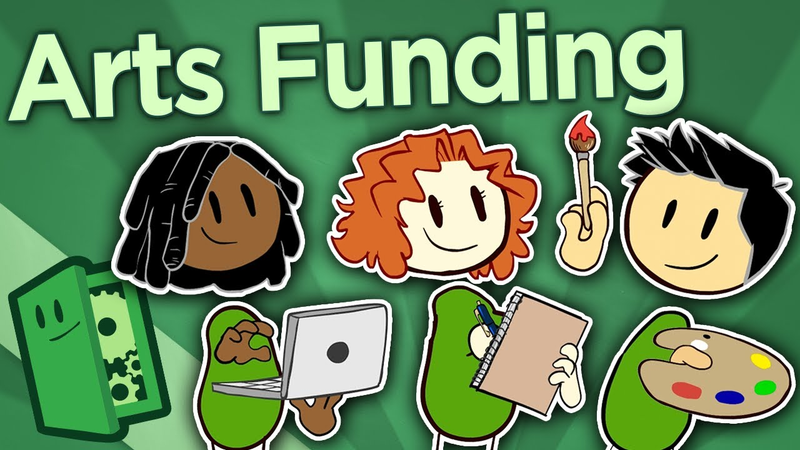
Arts Funding - Helping Games that Help Us - Extra Credits
Key insights
6 takeaways- 01Federal arts funding is essential for the development of non-commercial, educational, and historical video games that would otherwise struggle to find support in the traditional commercial market.
- 02These federal agencies play a critical role in legitimizing video games as a cultural and artistic medium by integrating them into broader public discourse and the creative economy.
- 03Projects like 'Walden,' which explores Thoreau’s philosophy, and 'The Pox Hunter,' which examines public health history, serve as primary examples of how government grants enable games to address complex, high-level subject matter.
- 04The National Endowment for the Arts (NEA) and National Endowment for the Humanities (NEH) receive a combined annual federal allocation of approximately $296 million, representing only 0.002% of the total U.S. federal budget.
- 05Proposed congressional budget cuts threaten the future of these programs, which provide foundational resources for the next generation of developers and creative professionals.
- 06Similar budgetary pressures on arts and humanities funding are currently impacting the gaming sectors in other nations, including the UK, Australia, and Japan.
Ask AI about this video
Transcript
The US government through the National Endowment for the Arts and Humanities decided in 2008 that video games were a medium worth supporting. Unfortunately, a new budget plan currently brewing in Congress is set to eliminate arts [Music] funding. The National Endowment for the Arts and National Endowment for the Humanities are two government agencies that were founded in 1965. Though these departments may seem like conjoined twins, they actually have different missions. The National Endowment for the Arts, often shortened to NEA, offers support and funding for projects that exhibit artistic excellence. Since its founding, the NEA has given over $5 billion worth of grants to art exhibitions, theatrical productions, and art programs across the country. The National Endowment for the Humanities, abbreviated as NE, supports research, education, preservation, and public programs in the humanities. Its purpose is to support the study of American
history and culture and bring that knowledge to the public. These, along with the Corporation for Public Broadcasting, which runs PBS and NPR, are generally what people mean when they talk about arts funding. In the last decade, an interesting new thing started happening at the NEA and NEH. They started providing grants to video game projects. Now, I don't mean video games in general. The federal government isn't investing in the next Uncharted or anything, but both agencies have supported interactive media that deals with topics in their area. For example, the National Endowment for the Arts has funded free performances of video game music as a way to get kids interested in the symphony. It also gave $15,000 to the annual UCLA Game Art Festival, which exhibits video games as art installations. It's not a lot of money in the grand scheme of government funding, but that money allowed the UCLA to provide stipens for visiting artists, print materials, and build an exhibition space that was more like an art gallery. And that's really important because
while most game exhibitions look like trade shows, removing corporate sponsorship helps the viewer to see the games as art and not just products. Then there's the National Endowment for the Humanities, which has cut checks for games that deal with everything from the history of religion to the Revolutionary War to a virtual exploration of the Giza Pyramids. It's given especially heavy backing to Walden, a firstp person survival game that explores the ideas of spirituality, seclusion, and self-reliance in Henry David Thorough's text. It also backed The Pox Hunter, a game about a Philadelphia doctor battling the 1802 smallox epidemic. The Pox Hunter has special relevance in today's world since along with the disease, the player has to battle public fears about vaccination, which was a new and unfamiliar procedure in 1802. And can we just take a moment to recognize how amazing all of this is? Many of us of a certain age still remember how in the '9s game developers had to go before Congress to argue for games having the same free speech rights and protections
as movies and books. Still more of us will remember a mere 6 years ago when the Supreme Court decided that games were protected by the First Amendment. And now here's the US government deciding that the medium has a positive enough cultural impact to warrant financial support. I mean, that is huge. That is a lot of huge victories for this medium in a pretty short span of time. But government funding for the arts has never exactly been secure. Since the 1960s, budget hawks have tried to reduce or eliminate those programs. And we are in the middle of another one of these pushes right now. The 2018 congressional budget currently calls for eliminating the NEA, the NE, and PBS, plus the Institute for Museum and Library Services, all in the interests of cutting costs. Now, we try not to delve into politics too often with this show, but these cuts have a direct impact on games, so we really can't not say something. Eliminating the NEA and the NE, as well as the Corporation for
Public Broadcasting, is pennywise and pound foolish. These programs represent a tiny sliver of our government spending and contribute heavily to our sense of cultural self as a country. Let's look at some numbers. Last year, the NEA and the NEH each received $148 million from the federal budget, and public broadcasting received $445 million. And I know that sounds like a lot, but that money makes up only .002% of the US government's $3.9 trillion budget. Put another way, if the US budget was $50,000, arts funding would account for only $10. And that comparatively meager sum does some tremendous good. NE funding is why we have Pulitzer Prizewinning novels like The Color Purple and beloved documentaries like Ken Burns's The Civil War. The agency also gives grants to educational programs and libraries. They're currently trying to collect and preserve an archive of early American newspapers, which is vital for historians of the future. And it might
seem like those initiatives don't really impact games, but art has this tendency to feed other art. Bioshock Infinite, for example, only exists because Ken Lavine watched a PBS documentary called America 1900. When Team Bondi sent artists to get photo references for LA Noir, two of the archives they used were NEH grant recipients. When we talk about arts funding, we are discussing the resources and future of our creative economy. And the great thing about arts funding is that it benefits everybody from the rich to the rural poor. For example, look at the Houston-based program called Writers in the Schools. They use games and game design as a way to teach writing. And they found that this is an especially good way to reach reluctant students. This year they received a grant to expand their workshops across the country and they hope to grow it further. And increasingly, arts funding goes to online projects so that students can access art and culture and humanities resources wherever they are. Initiatives
like that are important not just for society, but for the games industry. After all, the young people who go through these programs may become the industry's next generation of artists and writers and programmers. Providing opportunities like that is an investment in this medium's future. So, what can you do to help protect these programs? Well, you could call your congressperson, but put a pin in that for just a second. First, it might help to consider how arts funding, public broadcasting, and libraries have affected your life. We've included some links down below that'll help you see what sort of programs the NEA and the NE have sponsored in your area. Just put in your city, your state, and your congressional district, and you can get a list of NEA and NEH funded projects. Maybe play around with the search results a bit. see if any local programs have benefited from NEA and NEH money. This will give you some much more specific stuff to say when you do call Capitol Hill. And I know I've been talking about American agencies today, but this doesn't just apply to Americans. A lot of places, including
the UK, Australia, and Japan, are currently considering cuts to their arts and humanities programs. Some have already reduced those budgets. If you believe that these initiatives should continue, make sure that your representatives know. Don't like harass them or anything. Just make it clear that this is an important consideration for how you vote. Arts and culture are an inseparable part of citizenship. They tell us who we are and where we came from, and they show what we think is worth supporting. And since games have only recently been elevated to that circle, we should do our part to help defend it, too. For our medium, for the ideals of arts and scholarship, and for the young people who are one day going to be our peers. See you next week. [Music] [Applause] Hey,
Summary
The video advocates for the preservation of federal arts and humanities funding in the United States, specifically targeting the National Endowment for the Arts (NEA) and the National Endowment for the Humanities (NEH). The central thesis is that these agencies provide essential, albeit modest, financial support for interactive media and educational projects that elevate video games as a legitimate cultural and artistic medium. By fostering projects that explore history, literature, and social issues, these grants help integrate gaming into the broader creative economy and public discourse.
The analysis highlights that while the NEA and NEH receive a combined federal allocation of approximately $296 million annually, this represents only 0.002% of the total U.S. federal budget. Despite this small footprint, the funding facilitates significant cultural contributions, including game-based educational programs, historical simulations, and art installations that operate outside of commercial trade-show environments. Examples such as the game Walden, which explores Thoreau’s philosophy, and The Pox Hunter, which addresses public health history, demonstrate how government support enables games to tackle complex, non-commercial subject matter.
The discussion emphasizes that these programs are currently threatened by proposed congressional budget cuts. The argument posits that eliminating such funding is counterproductive, as these investments support the next generation of developers and provide foundational resources for creative industries. The presentation concludes by urging viewers to research local grant recipients to better advocate for these institutions, noting that similar budgetary pressures on arts and humanities exist in other nations, including the UK, Australia, and Japan. Ultimately, the protection of these agencies is framed as a vital step in securing the long-term cultural legitimacy and creative future of the gaming medium.
















Comments