Game Design reports and market data
Documents

Magicave: Building the Next Generation of Digital Toys - The Metcast by Naavik
Magicave is establishing a new paradigm for digital entertainment by developing modular digital toys that prioritize long-term hobbyist engagement over traditional, finite gaming experiences.
- Magicave is shifting digital entertainment toward modular 'digital toys' that prioritize long-term hobbyist engagement and functional utility over finite, speculative gaming experiences.
- The platform utilizes blockchain technology to provide users with provable ownership of interoperable assets, such as characters, tiles, and dice, that function across diverse digital environments.
- The company’s 'pseudo-physicality' model draws inspiration from physical construction sets like LEGO, aiming to provide creative freedom through modular, scalable digital components.
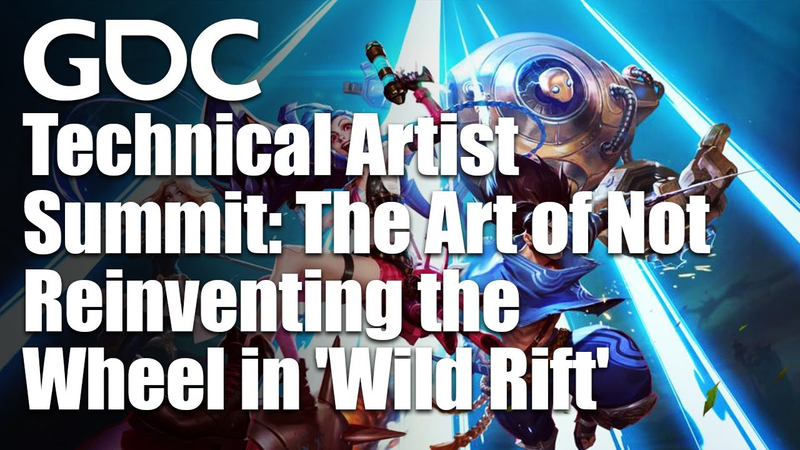
The Art of Not Reinventing the Wheel in 'Wild Rift' Asset Pipeline
Managing the complex asset pipeline for League of Legends: Wild Rift requires a sophisticated approach to oversight as the project scales from a prototype to a global live service.
- To manage the complexity of hundreds of champion skins and their associated animations, effects, and sound assets in 'Wild Rift,' Riot Games developed a custom asset analysis tool to establish a single source of truth for asset dependencies.
- The asset analysis tool was built using Python and designed to be standalone, requiring no Unity installation or project-specific dependencies, which significantly reduced iteration times and increased development flexibility.
- The tool functions by scraping the entire game project and ingesting JSON-based game logic files, utilizing Unity's native prefab and meta file systems to track character configurations and unique asset IDs.
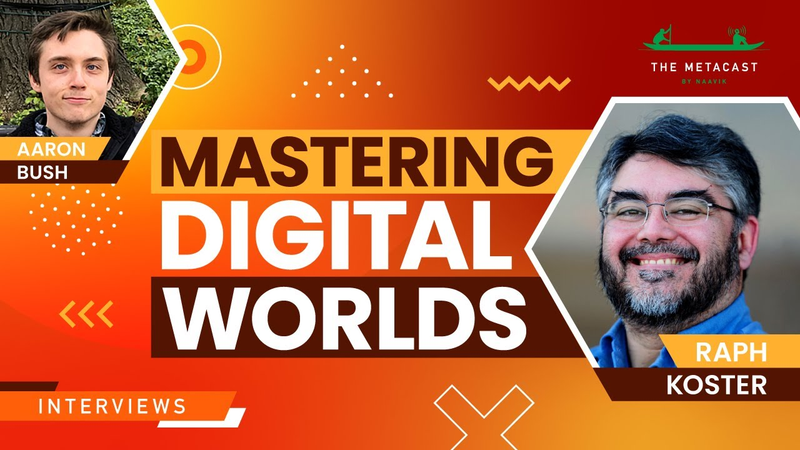
Raph Koster: Playable Worlds and the Metaverse - The Metacast by Naavik
Game design must evolve from a craft of static, handcrafted experiences into a discipline rooted in cross-disciplinary theory, drawing heavily from economics, network science, and psychology.
- Game design must shift from static, handcrafted experiences to systems rooted in economics, network science, and psychology to build adaptable, platform-agnostic virtual worlds.
- Technical architecture must transition from rigid, instance-based environments to dynamic, server-driven infrastructures that treat virtual worlds as flexible data rather than static meshes.
- True asset portability and interoperability in the metaverse are currently blocked by proprietary engine formats and the lack of industry-wide standards for digital ownership.
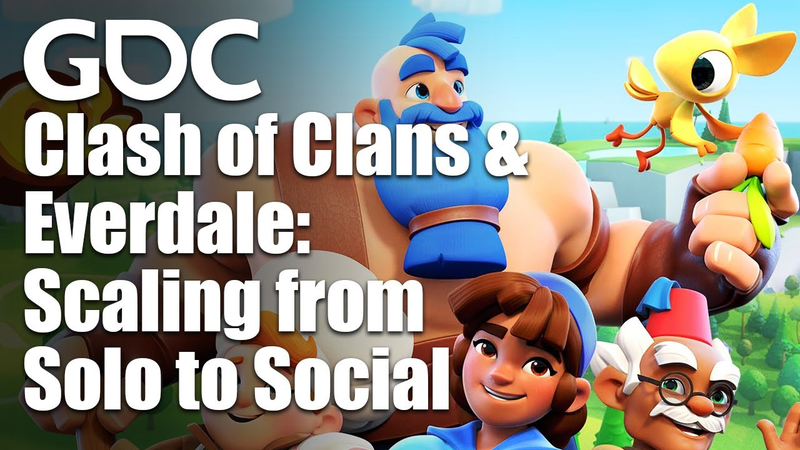
From Clash of Clans to Everdale: Scaling from Solo to Social
The evolution of mobile village-building games necessitates a fundamental shift from solitary, combat-oriented loops toward inherently collaborative, social ecosystems.
- Supercell transitioned from the single-player architecture of Clash of Clans to the social, multi-village model of Everdale by implementing a shared logic state that allowed multiple players to interact with a single, synchronized valley.
- To handle complex social interactions, the team moved away from hard-coded singletons toward a well-defined action object system that encapsulates player actions, validation checks, and rollback logic.
- By allowing objects to declare 'max fast forward ticks' and enabling systems to skip updates for hundreds of ticks, the team reduced server load by 80% to 90% compared to previous architectures.
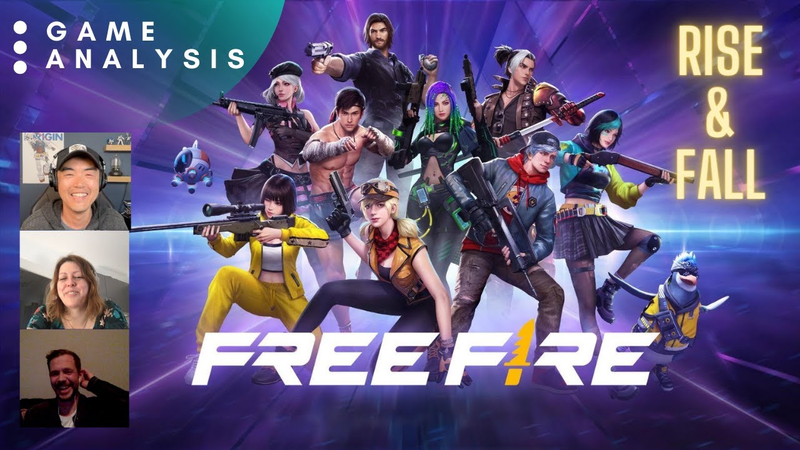
Garena Free Fire: Secrets to Success and Analyzing The Fall
Garena Free Fire achieved global prominence by pioneering a mobile-first design philosophy tailored specifically for emerging markets in Southeast Asia and Latin America.
- Garena Free Fire achieved global scale by prioritizing mobile-first design, specifically optimizing performance for low-end hardware and limiting match sizes to 50 players to capture underserved markets in Southeast Asia and Latin America.
- The game’s reliance on pay-to-win mechanics, specifically temporary weapon upgrades that provide situational advantages, has become a primary driver of player churn as users seek more balanced alternatives.
- Technical instability caused by aggressive, constant live-ops updates has led to significant player burnout, further exacerbated by market saturation and post-pandemic shifts in consumer behavior.

The Stuff Nobody Tells You About Game Development
The development of independent video games is characterized by significant psychological and technical hurdles that often lead to project abandonment.
- Building a direct email list by offering free demos is the most effective strategy for ensuring a successful launch, as it allows developers to bypass third-party platform dependencies and coordinate mass engagement.
- Indie game projects frequently fail due to 'feature creep,' where developers add unnecessary, complex mechanics to compensate for insecurity, leading to project abandonment.
- Game development timelines are inherently unpredictable because minor adjustments to internal systems often trigger cascading technical failures.

Leveraging Games in the Fight to Protect Local Cultures
The intersection of digital entertainment and cultural preservation serves as a powerful mechanism for combating the illicit trade and destruction of historical artifacts.
- The Cultural Antiquities Task Force, established in 2004, partners with federal law enforcement and international agencies to combat the illegal trafficking of cultural heritage, which is often exploited by organized crime syndicates and terrorist groups.
- Games are being utilized as a medium to raise awareness about cultural heritage protection by allowing players to experience the emotional impact of looting and the loss of identity that occurs when artifacts are removed from their communities.
- The Global Game Jam, which hosted 49,000 participants across 118 countries and 935 sites in 2020, serves as a primary vehicle for fostering collaborative, educational game development that highlights diverse cultural perspectives.

Collect Stepping Stones and Honor Interestingness - The Metacast by Naavik
Rigid long-term planning often stifles innovation, as the pursuit of predefined objectives frequently blinds organizations to unexpected breakthroughs.
- Innovation is more effectively driven by 'collecting stepping stones'—prioritizing small-scale, iterative discoveries—rather than adhering to rigid, top-down long-term planning.
- Significant industry advancements, such as the evolution of Dota 2 and Counter-Strike, demonstrate that decentralized, community-led experimentation often outperforms forced corporate consensus.
- Blockchain technology currently functions best as underlying infrastructure rather than a primary gameplay mechanic, as fully on-chain gaming continues to struggle with performance and user experience limitations.

Research on Visual Fatigue When Playing Games
Visual fatigue in mobile gaming stems from a combination of prolonged screen exposure and specific genre-based demands, particularly in fast-paced titles like first-person shooters and racing games.
- NetEase Games utilizes Critical Flicker Frequency (CFF) and contrast sensitivity as objective, psychophysiological indicators to measure visual fatigue, as these metrics reliably decrease or shift when players experience eye strain.
- Optometric measurements, including tear break-up time and anterior chamber depth, demonstrate that prolonged screen exposure—particularly in high-demand genres like FPS games—leads to measurable physiological impacts such as eye dryness and ciliary muscle fatigue.
- A/B testing using these visual fatigue indicators allows developers to identify environmental risk factors, such as playing in dim lighting or navigating low-light game areas, which can then be mitigated by adjusting in-game brightness or room design.

Approaching a Pedagogy of Game Writing
A robust pedagogical framework for game writing must prioritize adaptable, student-centered learning over the pursuit of fleeting industry trends.
- Effective game writing pedagogy should prioritize core higher-order thinking skills over specific software mastery, as technology evolves too rapidly to rely on tool-based instruction alone.
- Game writing curricula should be built upon established academic frameworks from fields like rhetorical genre studies and activity theory rather than relying solely on game-specific literature.
- Instructional design for game writing must emphasize the writing process—including multiple drafts and feedback workshops—to move students beyond the misconception that writing is merely about having ideas.
Your First Indie Game Should SUCK
The primary objective for aspiring indie game developers is to transition from hobbyist to professional by following a structured, iterative development roadmap.
- Prioritize completing a modest, low-stakes first project to build psychological resilience and technical skills rather than attempting a high-fidelity commercial debut.
- Limit the scope of your first project to a labor-time budget of $10,000 to $30,000 to ensure the game is finished quickly.
- Use industry-standard engines like Unity or Unreal and leverage asset stores to focus on core system development instead of creating basic assets from scratch.

He Quit His Job To Make A Game — Full Time Game Dev Podcast Ep. 001
Transitioning from a stable engineering career into full-time independent game development requires a disciplined approach to financial planning and risk management.
- Transitioning to full-time independent game development requires a personal financial buffer to mitigate the risks of project delays and the high probability that a title will not achieve profitability.
- Market viability should be validated before committing full-time by securing crowdfunding, publisher interest, or a dedicated social media following.
- Developers can build an audience by leveraging nostalgia and established genre aesthetics to create a recognizable identity for their project.