Game Design reports and market data
Documents

Help Game Designers Analyze Data: How to Develop an Online Pivot Table Tool
Game studios often struggle to balance the need for data-driven decision-making with the high resource costs of traditional data analysis workflows.
- NetEase and Thunderfire UX developed a self-service online pivot table tool that reduces the number of personnel required for a data request from three to one.
- The tool utilizes a '5W' model (Who, Whom, What, When, Where) to translate designer requirements into automated SQL queries, cutting data turnaround time to approximately 30 minutes.
- Custom development using Python Django and MySQL was chosen over off-the-shelf solutions to implement specific features like nested headers and frozen rows, ensuring the tool mirrors familiar spreadsheet functionality.

Autonomous Worlds and Digital Physics with 0xPARC- The Metacast by Naavik
Autonomous worlds represent a paradigm shift in digital infrastructure, moving away from centralized, admin-controlled gaming environments toward persistent, on-chain realities governed by immutable, physics-based rules.
- Autonomous worlds function as admin-less, persistent digital environments where rules are governed by immutable, on-chain physics rather than centralized server control.
- The MUD game engine enables this architecture by decoupling core, synchronous game rules from client-side interfaces, allowing for interoperable systems.
- By shifting from pre-packaged content to rule-based systems, developers can foster emergent social structures and collaborative, player-defined experiences.
Great Level Design is a Studio-Wide Effort
Exceptional level design functions as a studio-wide endeavor rather than the isolated output of a single department.
- High-quality level design requires integrating narrative, art, systems design, and technical teams from the earliest stages of development rather than treating it as an isolated departmental task.
- Studios should replace siloed operations with cross-functional strike teams and modular assets to ensure gameplay, visual storytelling, and technical performance remain deeply intertwined.
- Operational efficiency is maximized by developing ergonomic tools and procedural systems in parallel with feature creation to reduce manual, repetitive tasks and designer burnout.
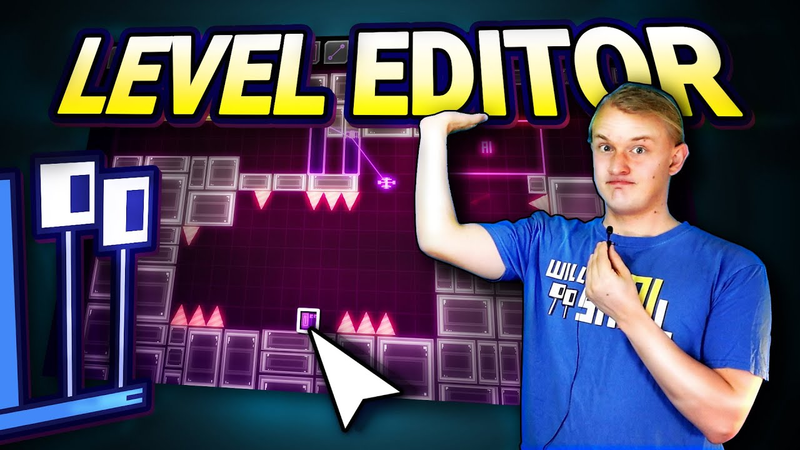
You Bullied Me Into Making a Level Editor (Lol)
The development of a level editor for the indie game Will You Snail serves as a case study in managing complex feature implementation under strict time constraints.
- The developer successfully compressed a planned six-week level editor development cycle into a 15-day sprint to accommodate other professional commitments.
- The project utilized an incremental, modular methodology, prioritizing foundational infrastructure like camera controls and grid systems before integrating complex UI and gameplay elements.
- A significant portion of the 15-day timeline was dedicated to debugging and refining the user interface within the GameMaker engine, highlighting the high time cost of UI development.
Keynote: Discovering the Why: Launching New Games & Features in 2022
The primary objective of this presentation is to advocate for a player-centric development strategy that prioritizes understanding the underlying motivations—the "why"—behind user behavior.
- Development teams should shift from surface-level demographic data to a four-step framework that integrates psychological profiling and ethnographic research to identify the 'why' behind player behavior.
- Voodoo increased day-one retention by 14% in the game Plantopia by identifying and addressing specific underlying player motivations.
- Tilting Point successfully pivoted the design of Linguinis after research revealed that their target audience preferred collaborative gameplay over the initially planned competitive leaderboards.
Design Land: Video Game Art Style - Extra Credits
Establishing a distinct art style is a critical phase in video game development that requires moving beyond superficial aesthetics to create a cohesive, recognizable visual identity.
- An effective art style must be instantly recognizable in a single screenshot and serve the game’s specific emotional goals.
- To avoid derivative work, developers should draw inspiration from external sources like historical art movements or animation styles rather than existing game titles.
- Teams must establish a shared visual language early by exchanging reference images to prevent misalignment between creative directors and art teams.

Panel: How To Design Your Game With Multiple Ad Formats in Mind
Effective game monetization hinges on a balanced integration of rewarded video, interstitials, and banner ads, with the optimal mix dictated by a game’s core loop and session length.
- For hyper-casual games, interstitial ads typically account for approximately 50% of total revenue, while rewarded video (RV) is preferred by developers who prioritize user experience due to higher opt-in rates.
- Developers can achieve 70% to 80% of their potential ad monetization efficiency with a minimal time investment of one to two hours for initial waterfall setup, while dedicated optimization teams can drive an additional 20% revenue growth.
- Maintaining a balanced in-game economy is critical; developers should treat advertising as a revenue supplement rather than a replacement for in-app purchases (IAP) to ensure long-term sustainability.
Keynote: Competition Boost Retention
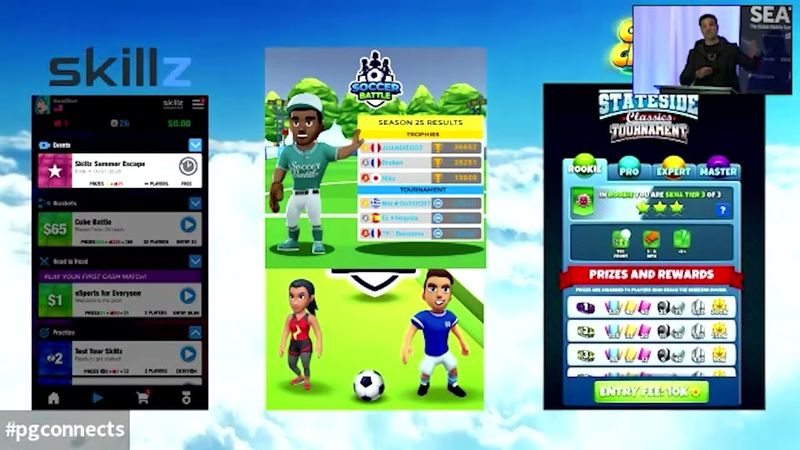
Competition serves as a fundamental driver of player retention and community engagement in modern multiplayer gaming.
- Integrating short-form, in-game tournaments significantly boosts daily retention rates by leveraging players' psychological desire for status and achievement.
- In Stumble Guys, a title with 90 million monthly active users, tournament participants demonstrate substantially higher retention rates, with the most engaged players reaching up to 90% retention.
- Tournament systems function as effective economic sinks by requiring in-game currency for entry, allowing developers to retain a portion of fees while distributing the remainder to winners.

'Visitations': VR for Ketamine Infusion Therapy
Visitations represents a specialized application of virtual reality designed to optimize the clinical environment for patients undergoing ketamine infusion therapy.
- Over two-thirds of clinical participants reported a preference for VR-assisted ketamine infusion sessions compared to traditional medical environments.
- The 'Visitations' project utilizes passive, 'lean-back' VR experiences featuring radial symmetry and binaural audio to reduce patient anxiety and cognitive load during treatment.
- Technical design focuses on three-degree-of-freedom headsets to ensure comfort for patients in reclined positions while avoiding the physical strain associated with interactive gaming.

Accessibility on a Shoestring
Accessibility in game development is defined as the removal of unnecessary barriers that prevent players from experiencing a game as intended.
- Accessibility is not about medical conditions but about removing design-based barriers, such as small text or inflexible controls, that prevent players from experiencing a game as intended.
- Considering accessibility early in development is the most effective strategy for small studios, as demonstrated by Naughty Dog's shift from Uncharted 4 to The Last of Us Part II.
- Developers should prioritize the five most common accessibility complaints: text size (avoiding anything smaller than 28 pixels at 1080p), remapping controls, background transparency for text, motion sickness triggers (camera shake/blur), and photosensitive epilepsy risks.
Genesis Noir: Bringing Jazz Improvisation To Gaming
The integration of jazz improvisation into interactive media requires a delicate balance between player agency and musical coherence.
- To simulate jazz improvisation in Genesis Noir, the developers implemented a call-and-response mechanic where the game mirrors the player's input, gradually increasing in complexity across three distinct stages.
- The team avoided complex real-time quantization by pre-composing improvised responses that adapt to the player's input, ensuring the game's musical output remained high-quality and coherent.
- Player inputs are captured as geometric paths in space using splines, which store both pitch (height) and temporal data, allowing the game to replicate the rhythm and duration of the player's performance.
Stop Getting Lost: Make Cognitive Maps, Not Levels
Effective game design relies on the creation of robust cognitive maps, which are the mental representations players form to navigate and understand virtual environments.
- Design levels based on the five elements of cognitive mapping defined by urbanist Kevin Lynch: paths, landmarks, districts, edges, and nodes.
- Use paths to catch lost players by providing linear channels that limit navigation choices, effectively reducing the player's potential movement vectors.
- Implement stationary landmarks to help players orient themselves from a distance and anchor new, unexplored areas to previously established locations.