Game Design reports and market data
Documents
We Went Undercover to Win a Massive Game Jam
This analysis examines the competitive strategies and outcomes of participating in the GMTK 2022 game jam, a high-volume development competition featuring thousands of global entries.
- The project achieved a 74th place ranking out of approximately 6,000 submissions, placing the entry in the top 2% of all participants in the GMTK 2022 game jam.
- The development team prioritized a rapid, iterative approach within the 48-hour time limit, utilizing 'hacky' but efficient code and placeholder assets to ensure core mechanics were functional before polishing.
- The game design focused on a grid-based puzzle concept centered on dice-rolling mechanics, featuring chain reactions, re-roll systems, and environmental hazards like lasers.

Why Web3 Needs Great Games
The gaming industry stands at a critical juncture as it integrates Web3 technologies, necessitating a shift from speculative financial models toward high-quality, human-centric game design.
- Long-term Web3 gaming success requires shifting focus from speculative financial models to high-quality, human-centric game design that prioritizes the player experience.
- With over three billion players globally, the gaming industry represents the largest entertainment segment, providing a massive potential user base for Web3 integration.
- Eighty percent of crypto-owning gamers express interest in using digital assets for in-game purchases, highlighting a strong alignment between younger demographics and Web3 utility.
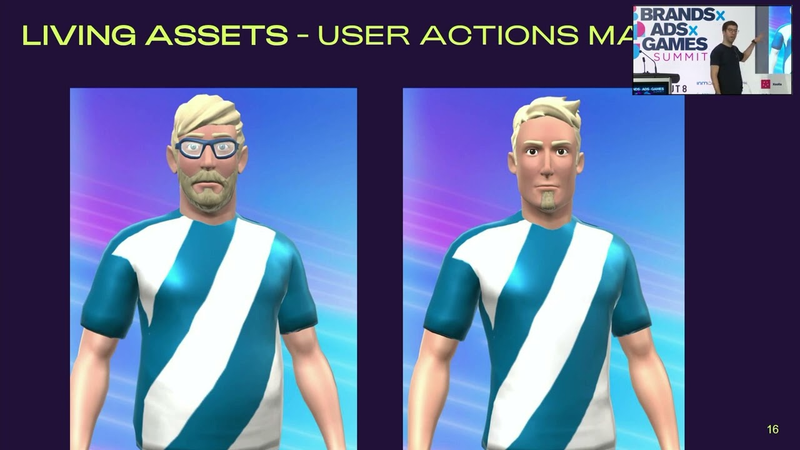
Living Assets: Evolutive NFTs for Playing Fair in the Metaverse
The current landscape of non-fungible tokens (NFTs) in gaming is heavily defined by speculative scarcity and pyramid-style economic models, which often prioritize short-term profit over long-term player retention.
- Living Assets replace static NFTs with evolutive digital items that change properties and market value based on direct player engagement rather than speculative scarcity.
- The model utilizes layer-two blockchain solutions to manage millions of real-time asset updates via API calls, effectively bypassing the scalability and high gas fee constraints of mainnet networks.
- By incorporating mechanics like performance degradation, developers can incentivize consistent player retention and mitigate the dominance of 'whale' investors who hoard static assets.
Design Land: Creating Great Design Docs - Extra Credits Video Games
Design documents serve as essential tools in the video game development process, functioning as repositories for information, communication vehicles for development teams, and early testing grounds for design concepts.
- Design documents function as critical communication tools that allow teams to identify and resolve logic flaws before expensive implementation begins.
- Effective documentation should be treated as a living, iterative asset rather than a static file to ensure the team can fail faster and maintain project alignment.
- Documents should be kept under 1,000 words to maximize readability and encourage frequent updates from the development team.

Bombay Play and Hyper Social Games ft. Mr. Oliver Jones
The Indian gaming industry is undergoing a significant transformation, shifting from a focus on rapid, intuition-based development toward a model defined by high-quality, long-term product sustainability.
- The Indian gaming industry is transitioning from intuition-based development to a model defined by high-quality, long-term product sustainability and rigorous, data-driven live-ops experimentation.
- Hyper-social gaming strategies prioritize network effects by embedding social utility directly into core gameplay, effectively turning games into social networks rather than isolated activities.
- Utilizing HTML5 technology and browser-based platforms allows developers to bypass app store friction, significantly reducing user acquisition costs and enabling real-time testing of product-market fit.
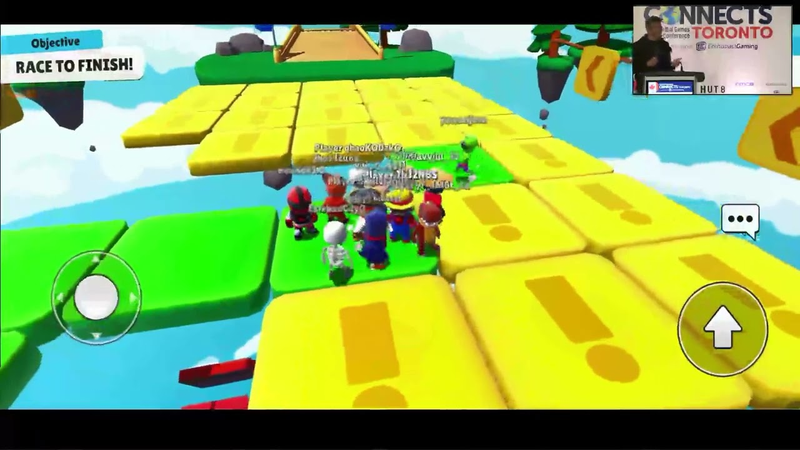
Cooperation Boosts Retention
The integration of collaborative mechanics into game design serves as a powerful driver for player retention and community growth.
- Collaborative mechanics significantly increase player retention by leveraging psychological social cooperation, which triggers dopamine responses that reinforce long-term engagement.
- The mobile game Stumble Guys achieved 22 million daily active users by utilizing real-time multiplayer infrastructure and tournament systems that facilitate both competition and collaboration.
- Players who participate in organized tournament systems exhibit higher retention rates compared to those who engage only in solitary gameplay.
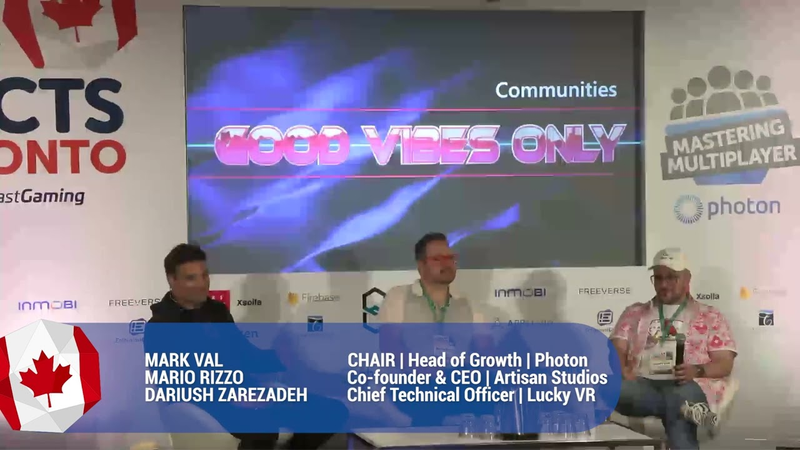
Panel: Mastering Multiplayer: The Super Session
Multiplayer gaming has transitioned from a niche segment into the primary driver of the modern industry, with 75 percent of the top 200 grossing titles now incorporating multiplayer components.
- Multiplayer gaming is now the industry's primary revenue driver, with 75 percent of the top 200 grossing titles incorporating multiplayer components.
- Developers are shifting from traditional single-player experiences toward persistent platforms that prioritize community agency and long-term engagement.
- To manage the financial and legal risks of real-time networking and data management, developers are increasingly using iterative, minimum viable product strategies and gray-box prototyping.
Creating Narrative Context for Store Cosmetics
The integration of narrative design into the development of in-game cosmetics serves as a critical strategy for enhancing player engagement and driving store performance.
- In-game cosmetics with strong, resonant narrative themes consistently outperform items that lack a defined player fantasy, regardless of visual quality.
- Development data from the multiplayer action game Spellbreak demonstrates a direct correlation between narrative clarity and the commercial success of store items.
- Studios should integrate narrative designers into the early concept phase to provide thematic prompts and personality traits before visual production begins.
Sparking Curiosity-Driven Exploration Through Narrative in 'Outer Wilds'
Outer Wilds functions as a masterclass in curiosity-driven game design, prioritizing player-led discovery over traditional linear progression.
- Outer Wilds uses a non-linear narrative structure to support its core design goal of curiosity-driven exploration, ensuring that no game content is permanently gated and players can freely investigate the world at their own pace.
- The game utilizes a 22-minute time loop to encourage experimentation and failure as a form of progression, allowing players to revisit information infinitely without the pressure of needing to memorize every detail.
- To make the long-dead Nomai alien species relatable, the narrative team iterated extensively on their voice and personality, creating distinct character arcs that provide emotional stakes for the player.

Magicave: Building the Next Generation of Digital Toys - The Metcast by Naavik
Magicave is establishing a new paradigm for digital entertainment by developing modular digital toys that prioritize long-term hobbyist engagement over traditional, finite gaming experiences.
- Magicave is shifting digital entertainment toward modular 'digital toys' that prioritize long-term hobbyist engagement and functional utility over finite, speculative gaming experiences.
- The platform utilizes blockchain technology to provide users with provable ownership of interoperable assets, such as characters, tiles, and dice, that function across diverse digital environments.
- The company’s 'pseudo-physicality' model draws inspiration from physical construction sets like LEGO, aiming to provide creative freedom through modular, scalable digital components.
The Art of Not Reinventing the Wheel in 'Wild Rift' Asset Pipeline
Managing the complex asset pipeline for League of Legends: Wild Rift requires a sophisticated approach to oversight as the project scales from a prototype to a global live service.
- To manage the complexity of hundreds of champion skins and their associated animations, effects, and sound assets in 'Wild Rift,' Riot Games developed a custom asset analysis tool to establish a single source of truth for asset dependencies.
- The asset analysis tool was built using Python and designed to be standalone, requiring no Unity installation or project-specific dependencies, which significantly reduced iteration times and increased development flexibility.
- The tool functions by scraping the entire game project and ingesting JSON-based game logic files, utilizing Unity's native prefab and meta file systems to track character configurations and unique asset IDs.
Raph Koster: Playable Worlds and the Metaverse - The Metacast by Naavik
Game design must evolve from a craft of static, handcrafted experiences into a discipline rooted in cross-disciplinary theory, drawing heavily from economics, network science, and psychology.
- Game design must shift from static, handcrafted experiences to systems rooted in economics, network science, and psychology to build adaptable, platform-agnostic virtual worlds.
- Technical architecture must transition from rigid, instance-based environments to dynamic, server-driven infrastructures that treat virtual worlds as flexible data rather than static meshes.
- True asset portability and interoperability in the metaverse are currently blocked by proprietary engine formats and the lack of industry-wide standards for digital ownership.