Game Culture reports and market data
Documents
Historical Consultants in the CEE Video Game Industry: Part 1
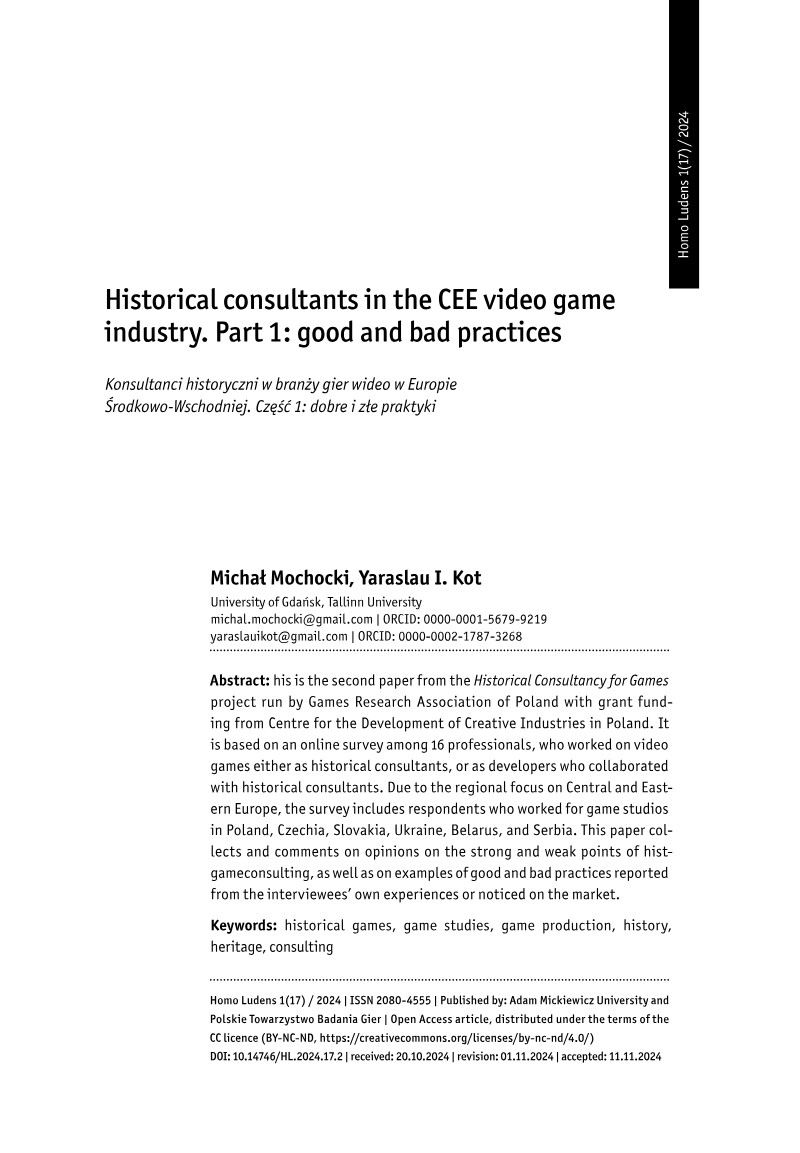
This study, published in Homo Ludens by Mochocki and Kot in 2024, examines how historical consultants shape video game development in Central and Eastern Europe.
- Historical consultancy in Central and Eastern European game development has matured into a distinct professional specialisation, and its value depends on clearly defined roles, early and continuous collaboration, and a deliberate balance between historical authenticity and gameplay.
- The study is based on an online survey of 16 professionals working as historical consultants or alongside them at studios in Poland, Czechia, Slovakia, Ukraine, Belarus, and Serbia, and it was published in Homo Ludens by Mochocki and Kot in 2024.
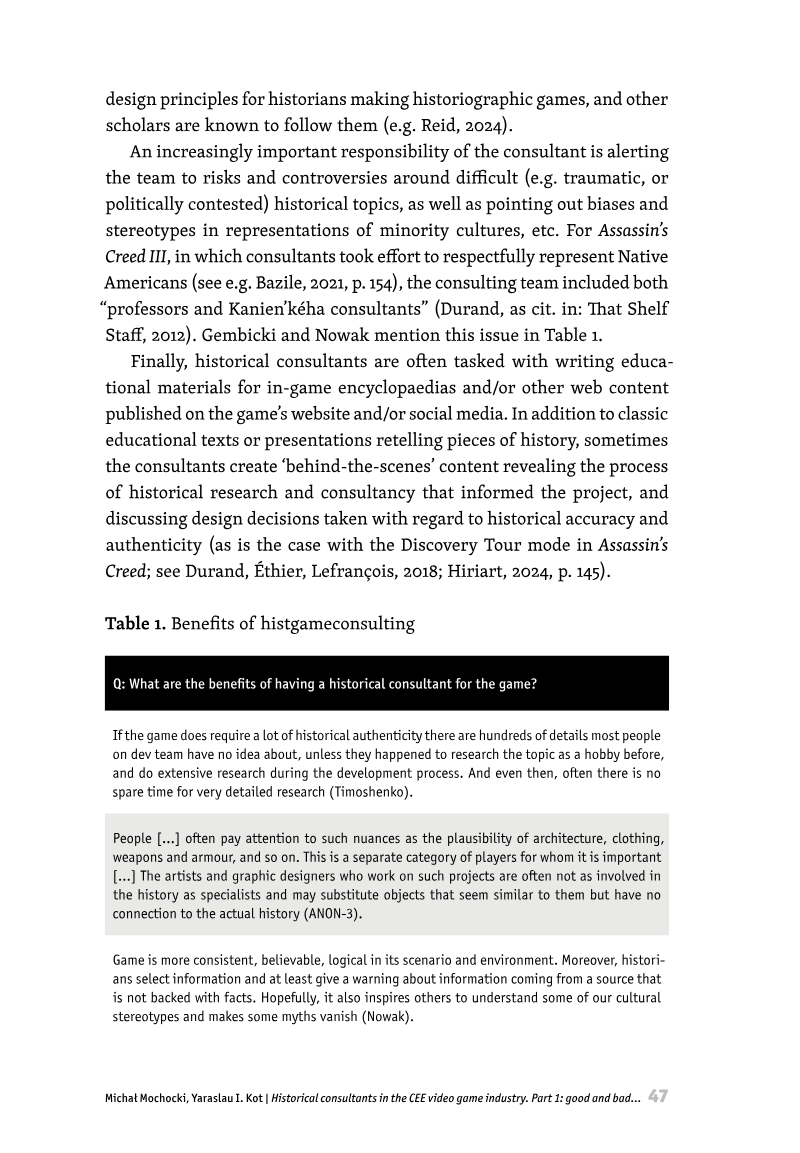
- Consultants are typically academics or enthusiasts hired temporarily per project, and their core duties include supplying reference material, teaching research methods to teams, and validating scripts, visuals, and mechanics for accuracy, often alongside productive writing or design work.
Historical Consulting for Digital Games: From General Reflections to CEE Game Industries
Historical consulting for digital games, the practice of engaging historians and other subject experts to inform game development, has moved from an informal and often decorative role toward a more established professional field.
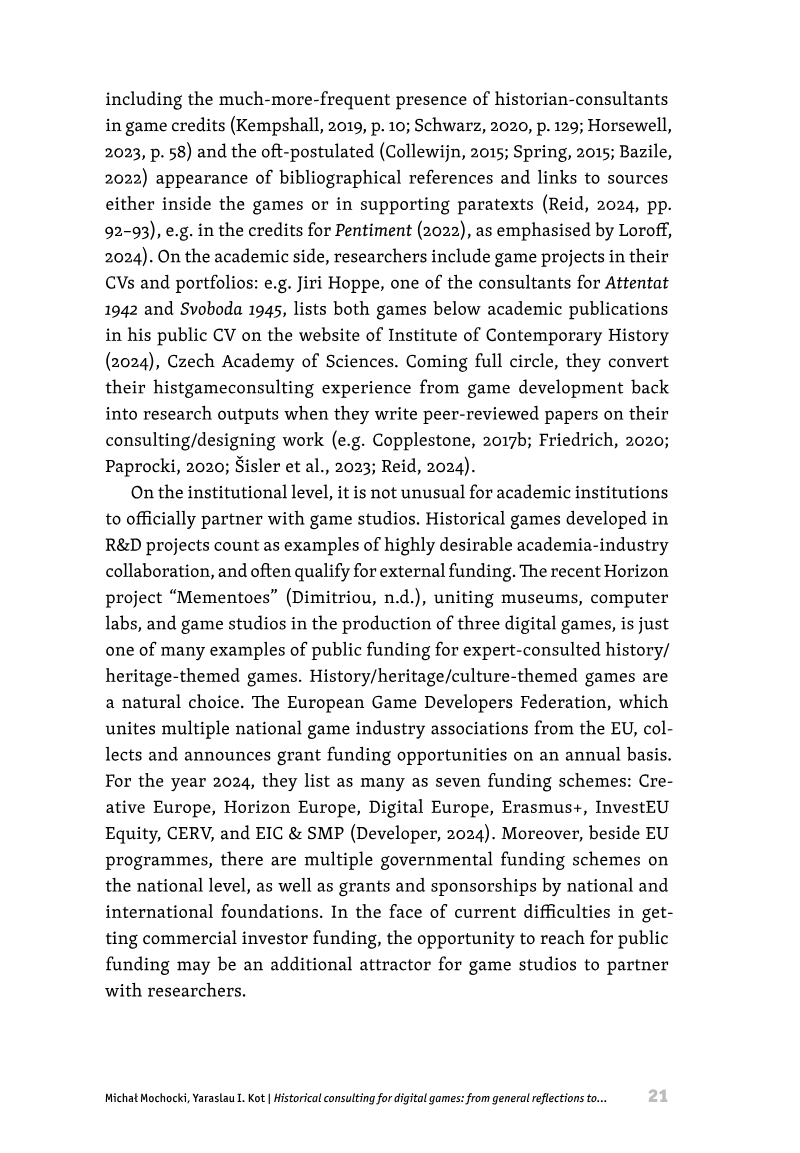
- Historical consulting for digital games has evolved from an informal, often decorative role, especially in the 2010s when it was frequently used for marketing value, into a more established professional field by the 2020s, with consultants more visible in credits and academic-industry partnerships growing.
- Prominent examples such as Ubisoft's Assassin's Creed series and Warhorse Studios' Kingdom Come: Deliverance show expert involvement becoming a central selling point, though the overall job market for historical consultants remains modest.
- Case studies of Warhorse Studios, Wargaming, Creative Assembly, Ubisoft Montpellier, and Charles Games found that academic historians are the most common consultants, while Wargaming favors military-technical specialists.
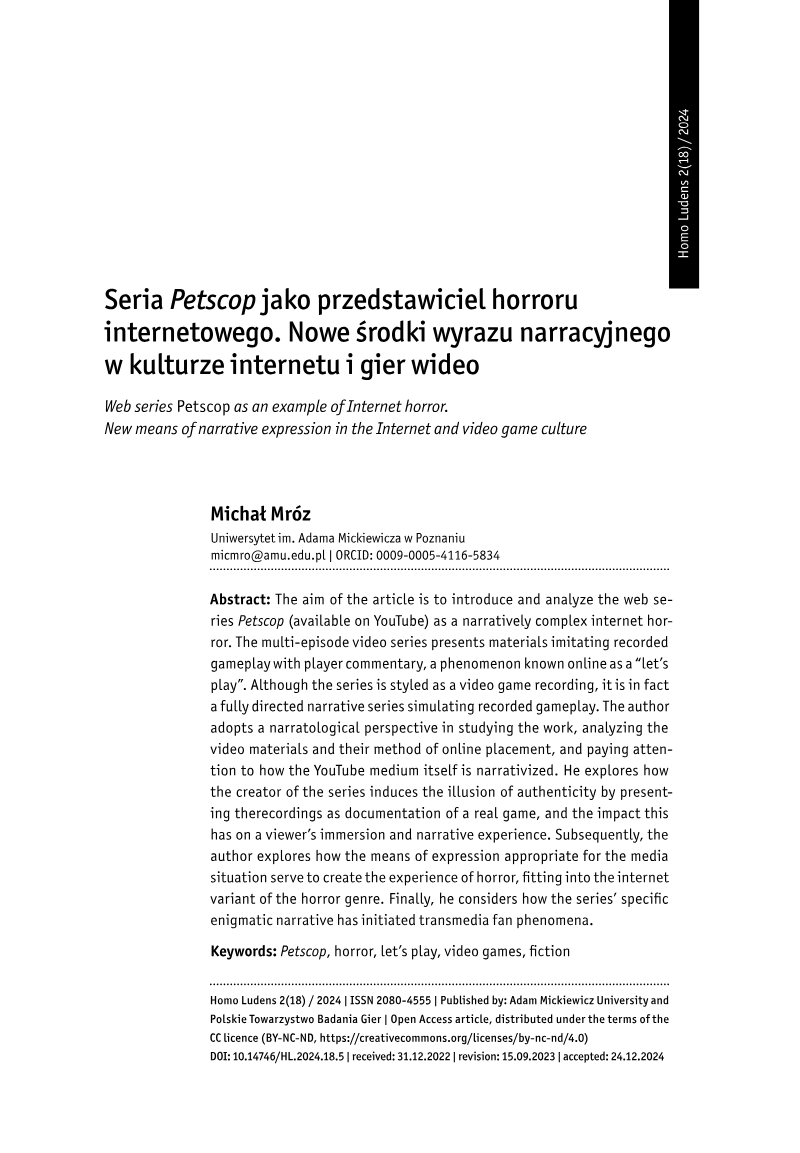
Web Series Petscop as an Example of Internet Horror: New Means of Narrative Expression
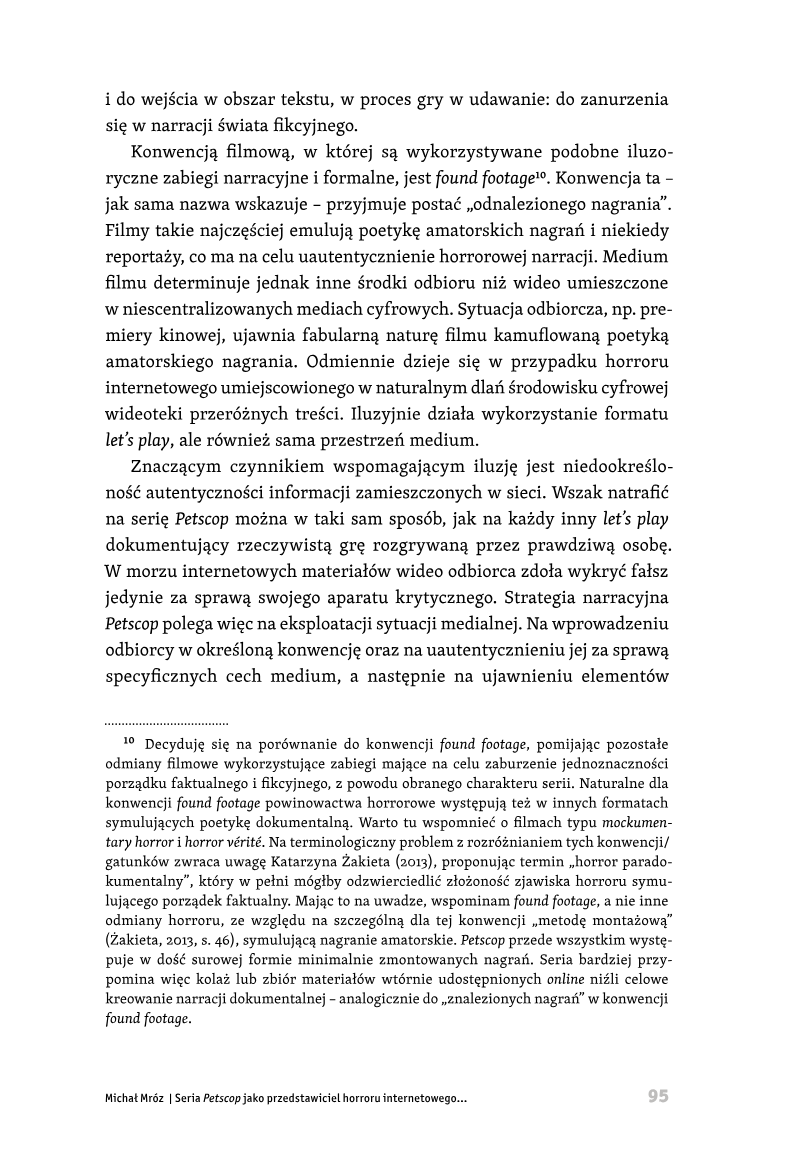
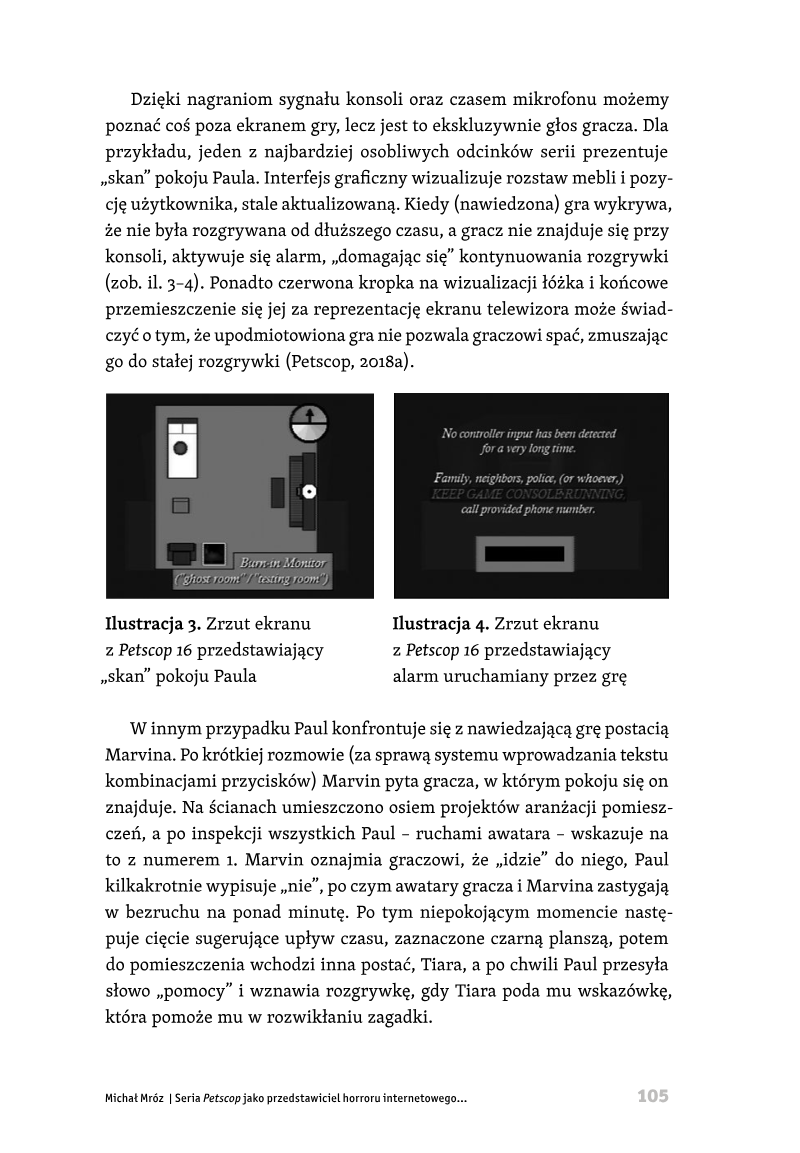
Michał Mróz's article in Homo Ludens (2024) examines Petscop, a multi-part YouTube web series that imitates let's play gameplay videos with player commentary while being a fully scripted fictional narrative.
- Michał Mróz's 2024 Homo Ludens article argues that Petscop, a fully scripted YouTube web series imitating let's play videos, is a narratively complex example of internet horror whose effect depends on video-platform conventions, documentary styling, and decentralized distribution.
- The series builds an illusion of authenticity through PlayStation-era visuals, a fictional studio, and a family-run channel, then disrupts it with "deviation points" such as the hidden-level entrance in the first episode.
- Its horror draws on subverted 1990s nostalgia, particularly Pokémon-style mechanics and console aesthetics, using silence, ambiguous character design, and the uncanny (das Unheimliche).
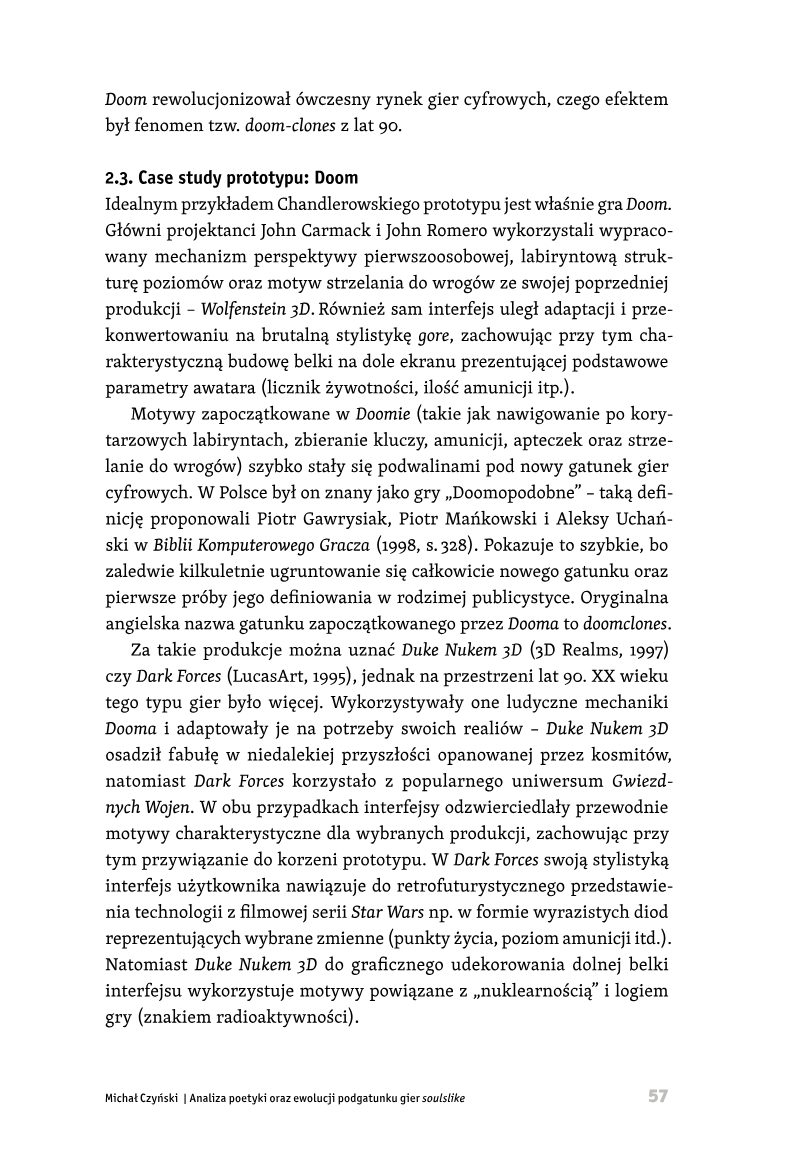
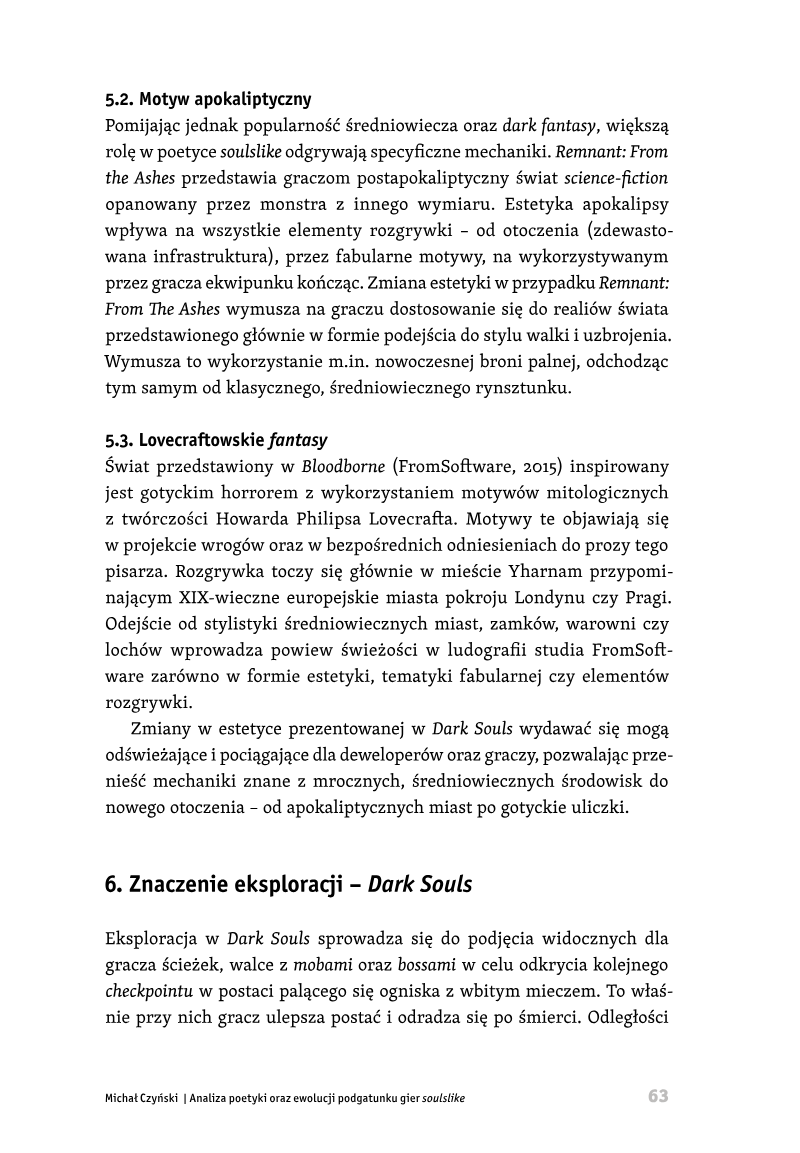
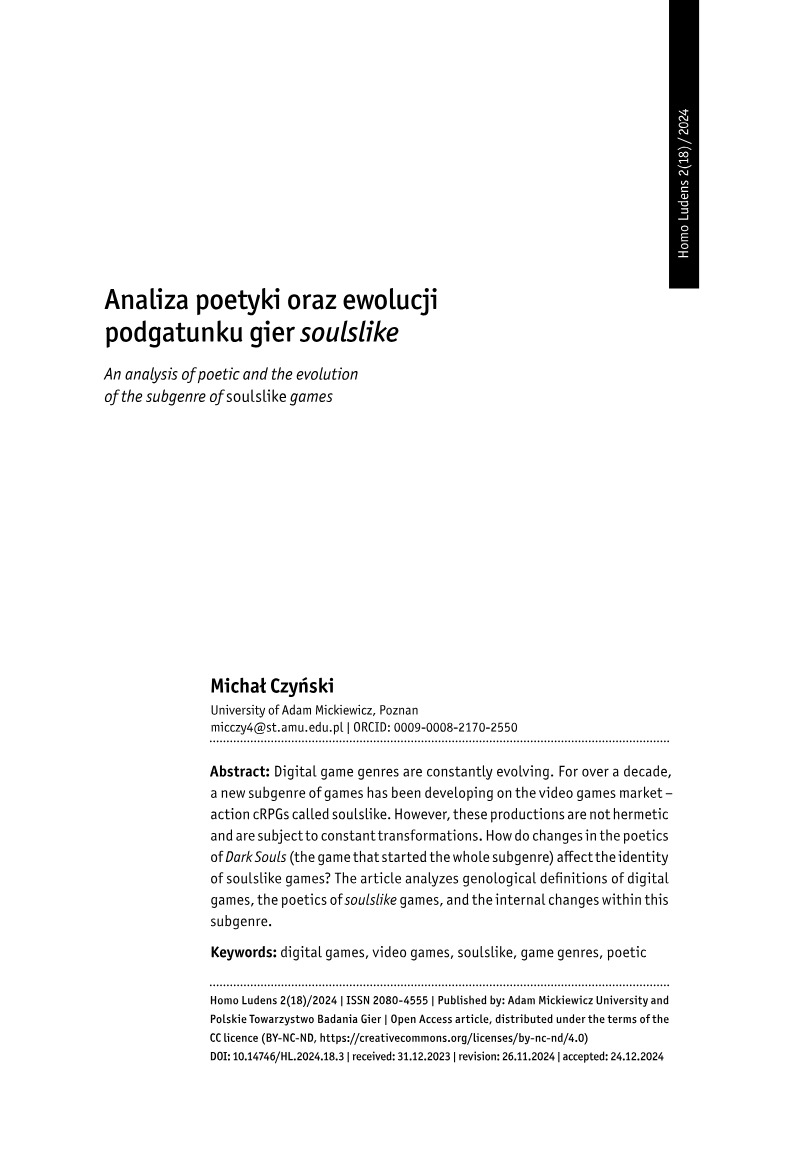
An Analysis of Poetic and the Evolution of the Subgenre of Soulslike Games
The analysis examines the soulslike subgenre of action role-playing games, tracing its development over more than a decade from its origin in Demon's Souls (2009) and its principal reference point, Dark Souls (2011).
- The soulslike subgenre originated with Demon's Souls (2009) and was shaped by Dark Souls (2011), and the study traces its development over more than a decade.
- The analysis uses Wittgenstein's family-resemblance model and Chandler's prototype model to treat soulslike games as a loosely connected group sharing core traits rather than a rigidly defined category.
- The subgenre's core poetics combine a punishing dark medieval-folklore aesthetic, demanding third-person combat, checkpoint and failure mechanics, and oblique narrative exposition.

Gamevironments Revisited: 10th Anniversary Issue
Ford's work, building on Radde-Antweiler's revised gamevironments concept, examines how digital games and datafication reshape community.
- Networks revealed by gamevironments, linking human and nonhuman actants such as data, hardware, and distant cobalt miners, are not necessarily experienced as connections or communities, so affordances of digital infrastructure determine which relationships people actually feel.
- Drawing on Benedict Anderson's 'imagined community,' the analysis argues that some communities must remain unimagined to sustain exploitative or unsustainable systems.
- Datafication produces alienation by abstracting digital subjects from real people, and networked technologies can isolate users even as they connect them, with internet connectivity coinciding with rising loneliness, though the effect depends heavily on how platforms are used.
Ludonarrative Dissonance and Metanarrative Dissonance: Case Studies of Selected Examples
Michał Figoń's article sets out to provide a coherent definition of ludonarrative dissonance, building on Clint Hocking's 2007 coinage, and to distinguish it from a new concept the author proposes, metanarrative dissonance.
- Ludonarrative dissonance describes a conflict between what a game's mechanics reward and what its story asks players to feel or believe, with BioShock's altruistic narrative clashing against its selfish, reward-driven combat as the foundational example.
- Metanarrative dissonance is proposed as a distinct concept in which a player's prior expectations, shaped by marketing promises, promotional material, or real-world knowledge of depicted locations, clash with what a game delivers, undermining immersion even when the internal logic is consistent.
- The article's central case study is CD Projekt RED's The Witcher adaptations, compared against Andrzej Sapkowski's novels, including altered characterizations of Triss Merigold and a redesigned gwint card minigame whose polished cards clash with the impoverished, war-torn economy of the source material.
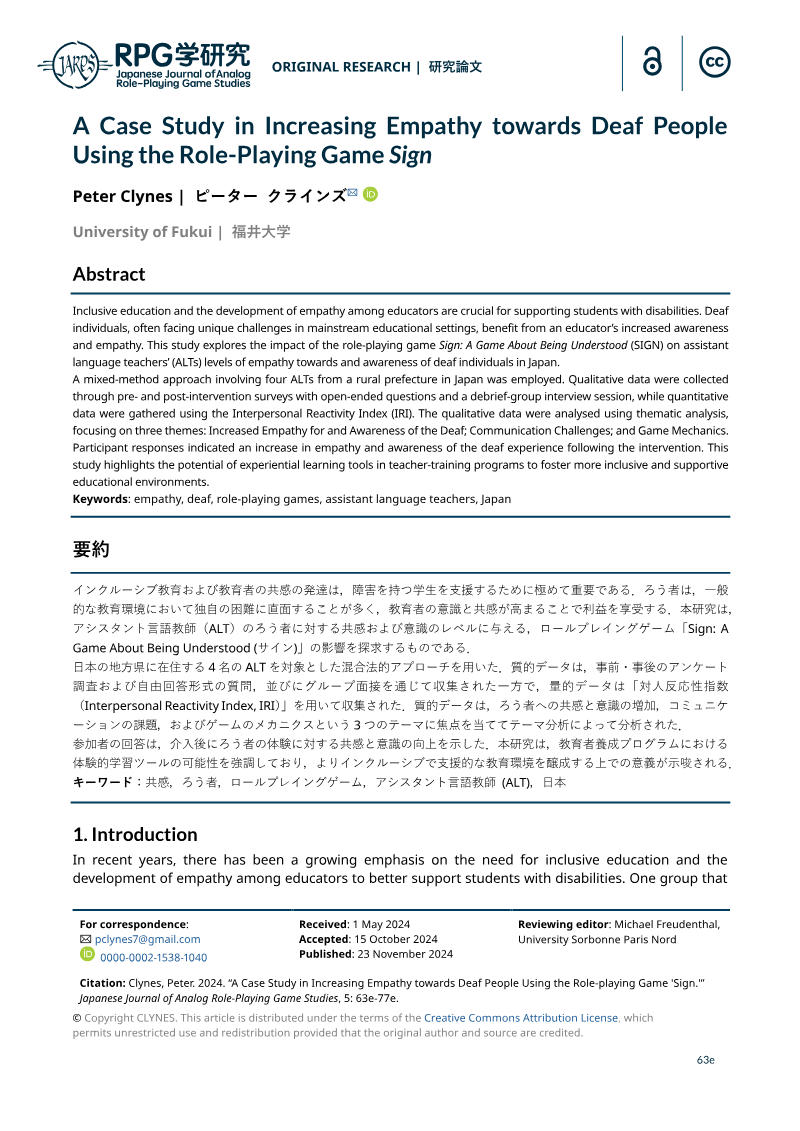
A Case Study in Increasing Empathy towards Deaf People Using the Role-Playing Game Sign: Japan
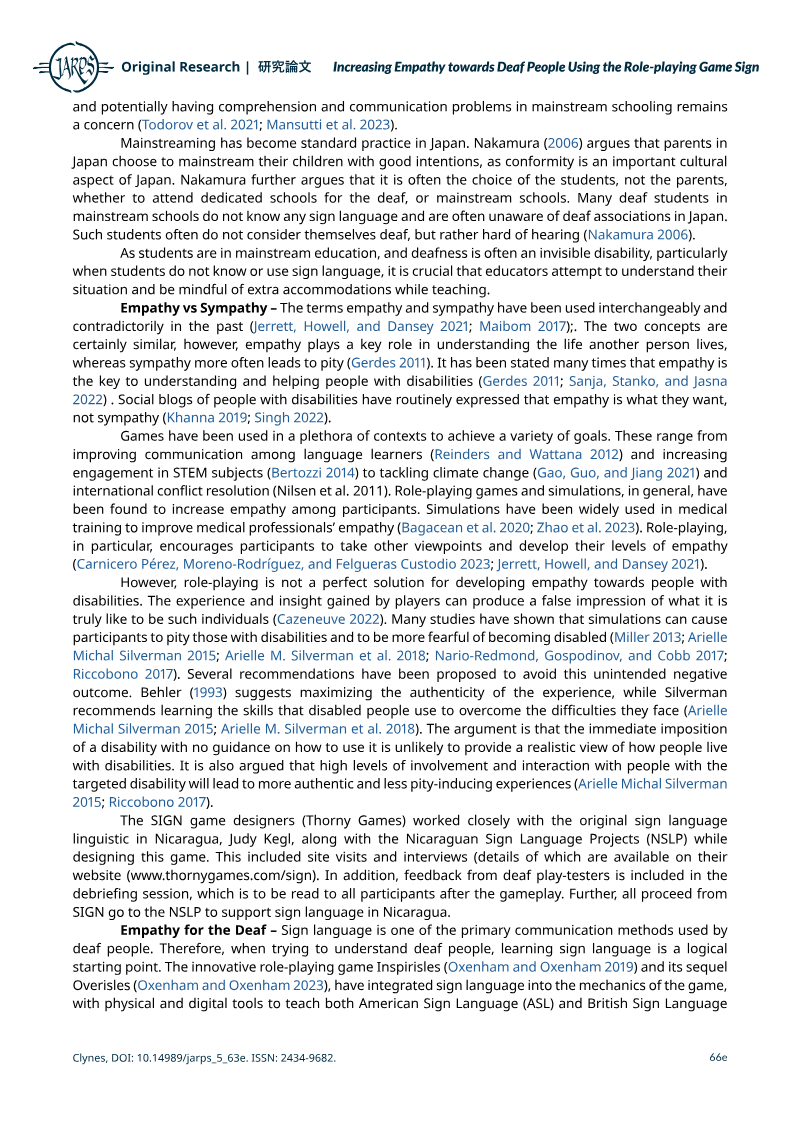
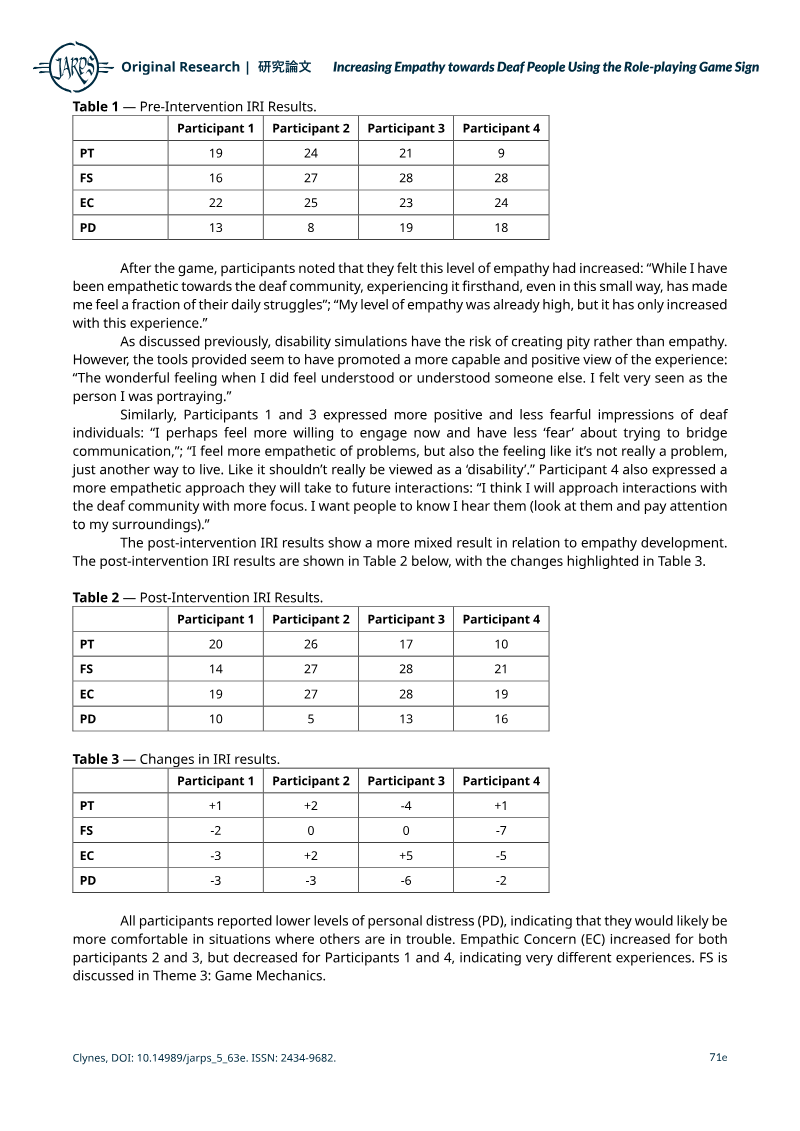
The role-playing game Sign serves as a potent pedagogical tool for fostering empathy and awareness toward the deaf experience among educators.
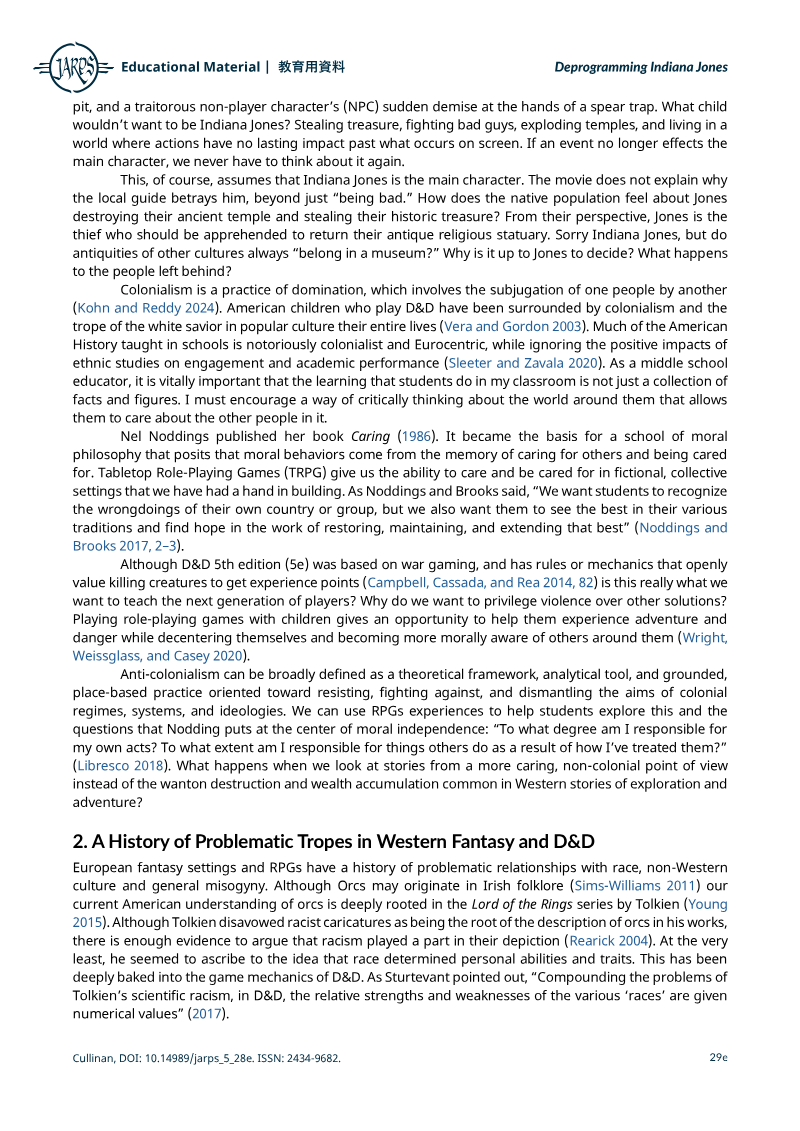
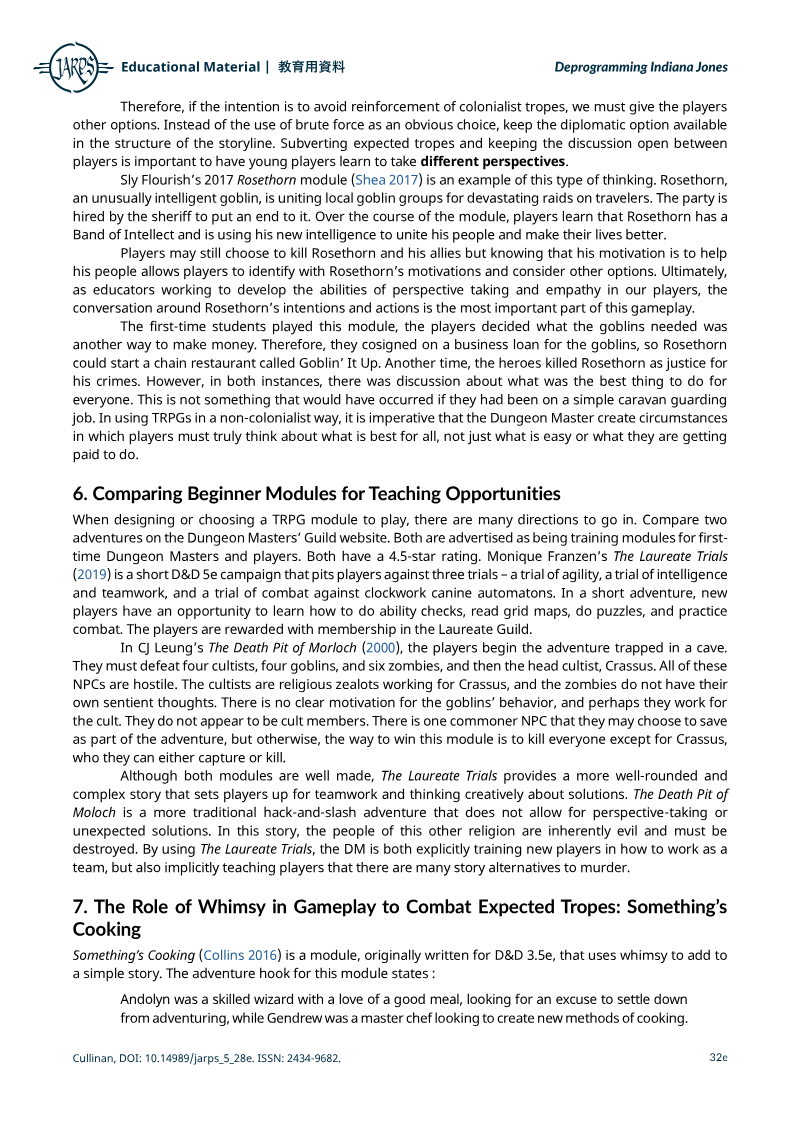
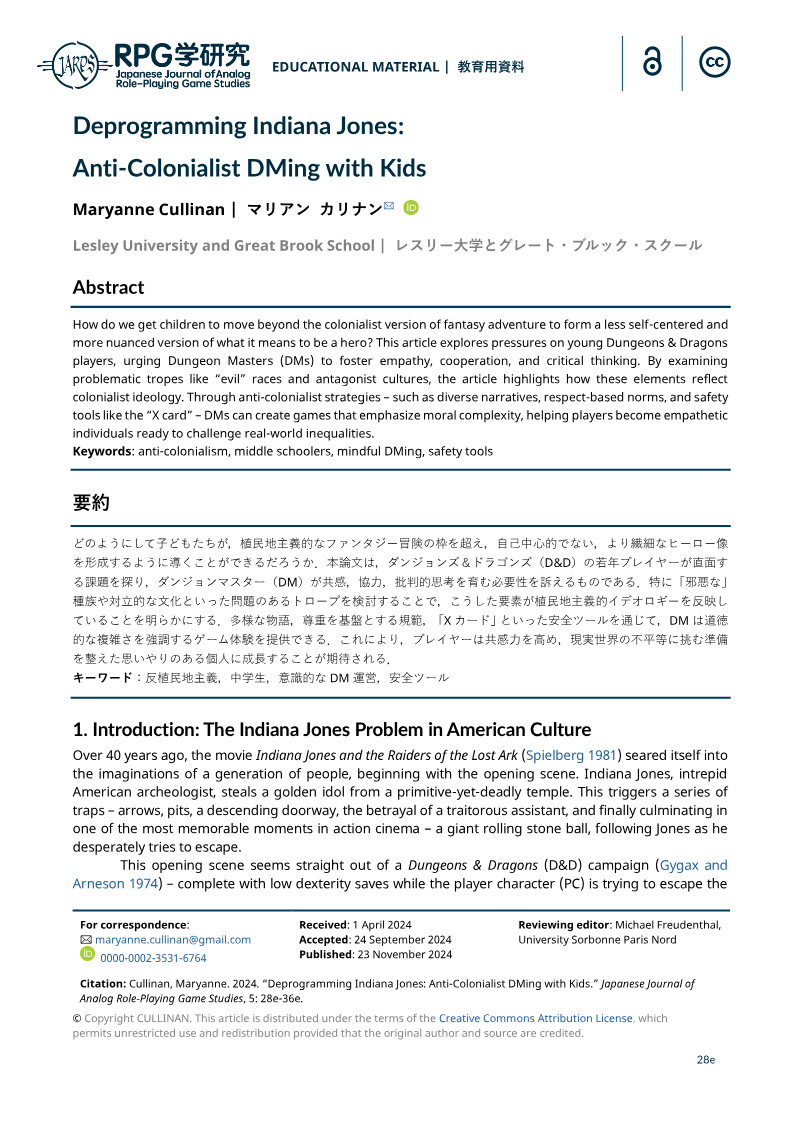
Deprogramming Indiana Jones: Anti-Colonialist DMing with Kids
Traditional tabletop role-playing games frequently perpetuate colonialist ideologies by relying on problematic tropes, such as the inherent villainy of specific races and the glorification of treasure-seeking violence.

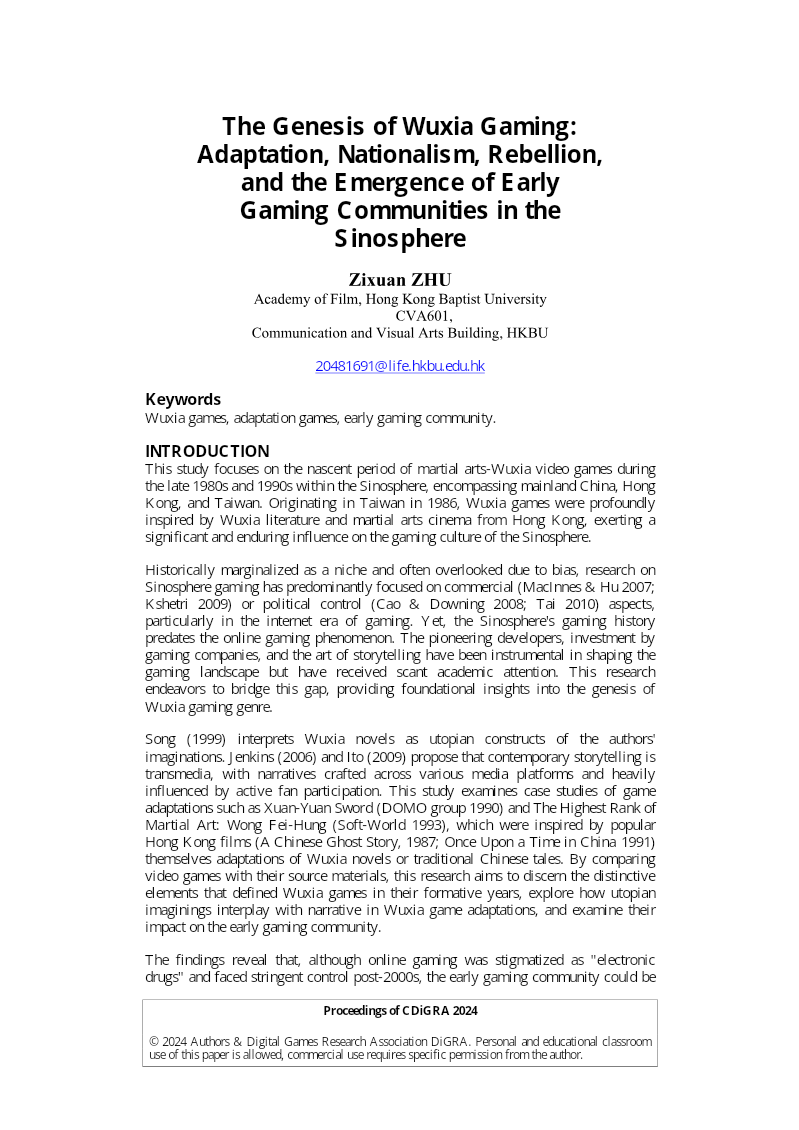
The Genesis of Wuxia Gaming: Adaptation, Nationalism, Rebellion, and the Emergence of Early Gaming Communities in the Sinosphere
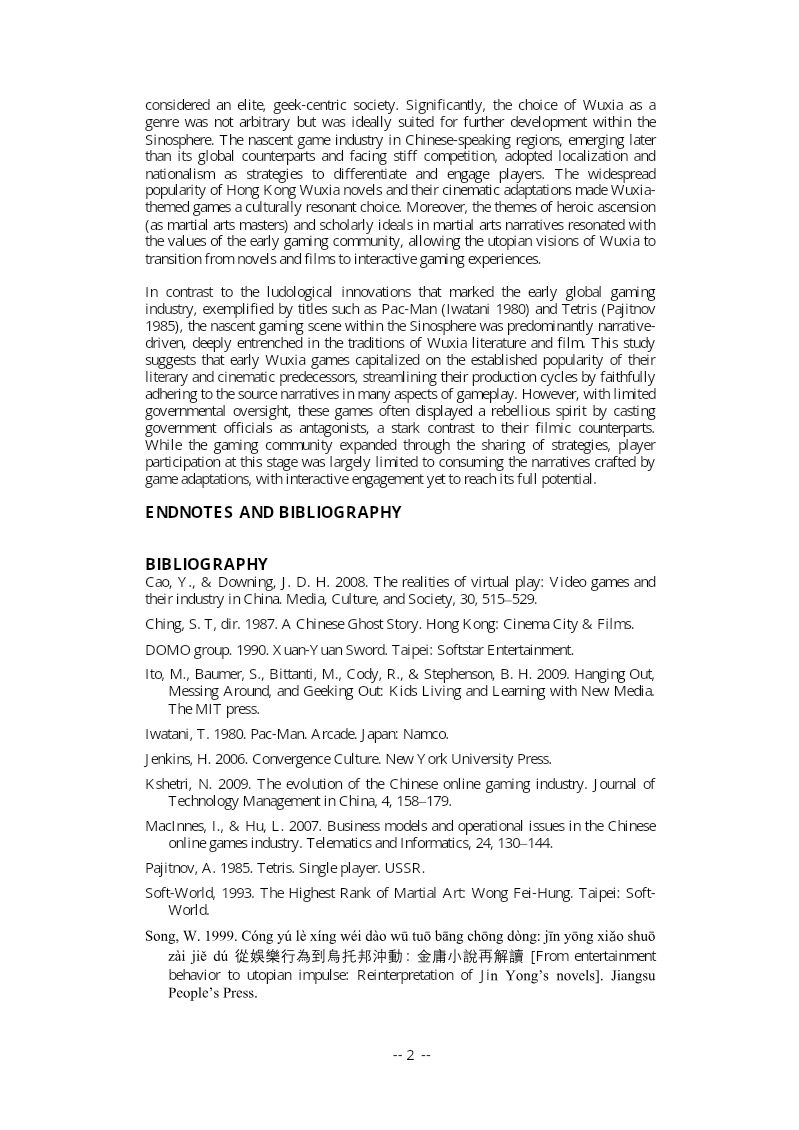
This study traces the origins of Wuxia video games in the Sinosphere, spanning mainland China, Hong Kong, and Taiwan, during the late 1980s and 1990s.
- Wuxia gaming in the Sinosphere is traced to Taiwan in 1986 and developed through the late 1980s and 1990s across mainland China, Hong Kong, and Taiwan, shaped heavily by Hong Kong Wuxia literature and martial arts cinema.
- Chinese-speaking developers chose the Wuxia genre deliberately, using localization and nationalism to differentiate their products from global competitors that entered the market earlier.
- The genre's cultural resonance came from the popularity of Wuxia novels and their film adaptations, and its themes of heroic ascension and scholarly ideals matched an early gaming community often viewed as elite and geek-centric.
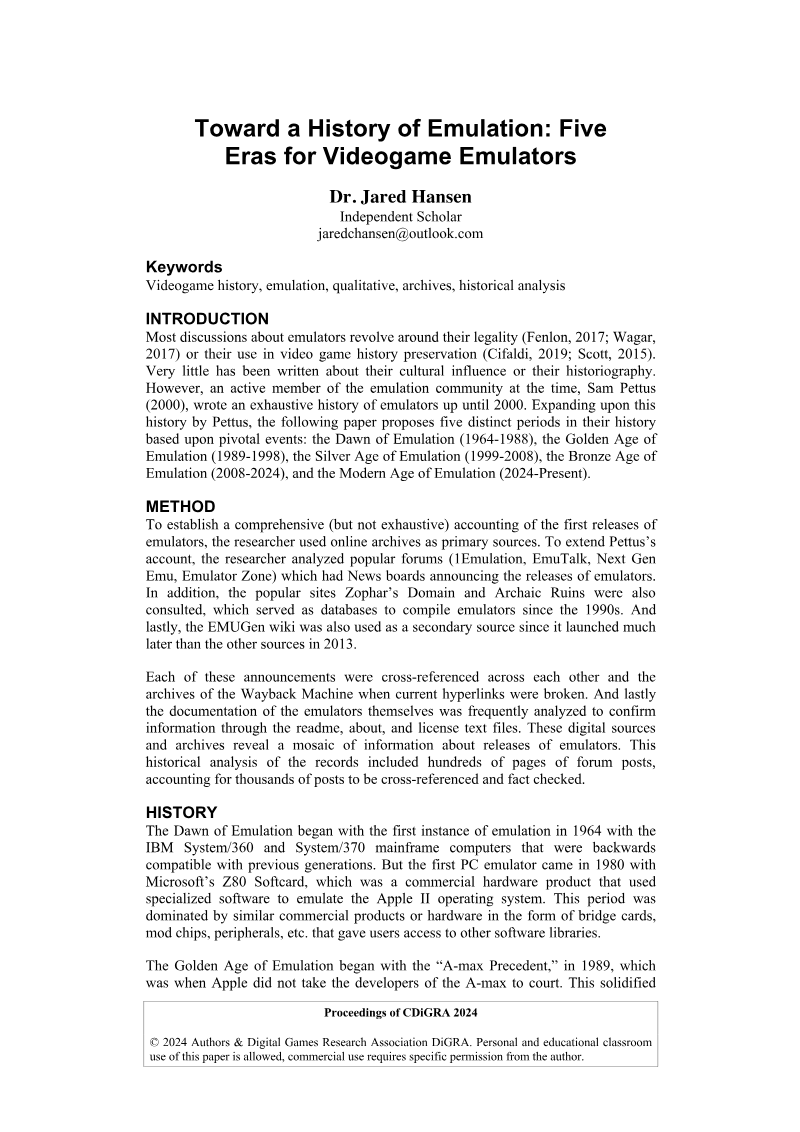
Toward a History of Emulation: Five Eras for Videogame Emulators
This paper proposes a periodization of videogame emulator history, extending Sam Pettus's 2000 account to the present.
- The paper argues that scholarship on emulators has focused overwhelmingly on legality and preservation while neglecting their cultural influence and historiography, and proposes a five-era periodization extending Sam Pettus's 2000 account to the present.
- The five eras are the Dawn of Emulation (1964–1988), Golden Age (1989–1998), Silver Age (1999–2008), Bronze Age (2008–2024), and Modern Age (2024–present), each anchored to a pivotal event such as the 1964 IBM System/360 or the Nintendo vs. Yuzu case.
- Emulator development shifted from commercial hardware and bridge cards in the Dawn era, to a proliferation of short-lived hobbyist projects in the Golden Age, to an underground focus on refining existing emulators after legal takedowns in the Silver Age.
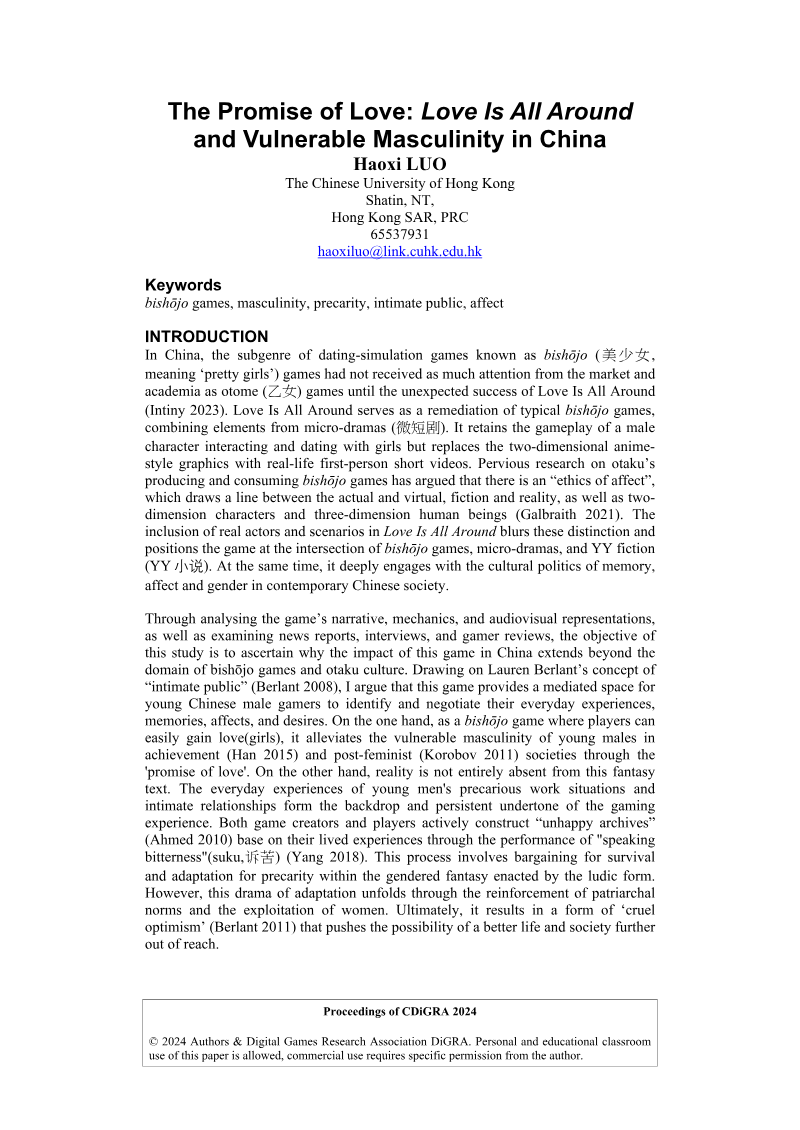
The Promise of Love: Love Is All Around and Vulnerable Masculinity in China
This paper examines Love Is All Around, a 2023 Chinese dating-simulation game by Intiny that remediates the conventions of bishōjo games by replacing anime-style graphics with live-action first-person video and drawing on micro-dramas and YY fiction.
- Love Is All Around (2023), a Chinese dating-simulation game by Intiny, adapts bishōjo game conventions by replacing anime graphics with live-action first-person video and drawing on micro-dramas and YY fiction.
- The paper argues the game's appeal extends beyond bishōjo and otaku fandom, offering young Chinese male players a mediated space to process precarious employment, intimate frustration, and gendered anxiety.
- The author's central concept, the "promise of love," describes how the game eases a sense of vulnerable masculinity shaped by competitive achievement culture and post-feminist social conditions, since players can readily win affection within its fantasy structure.
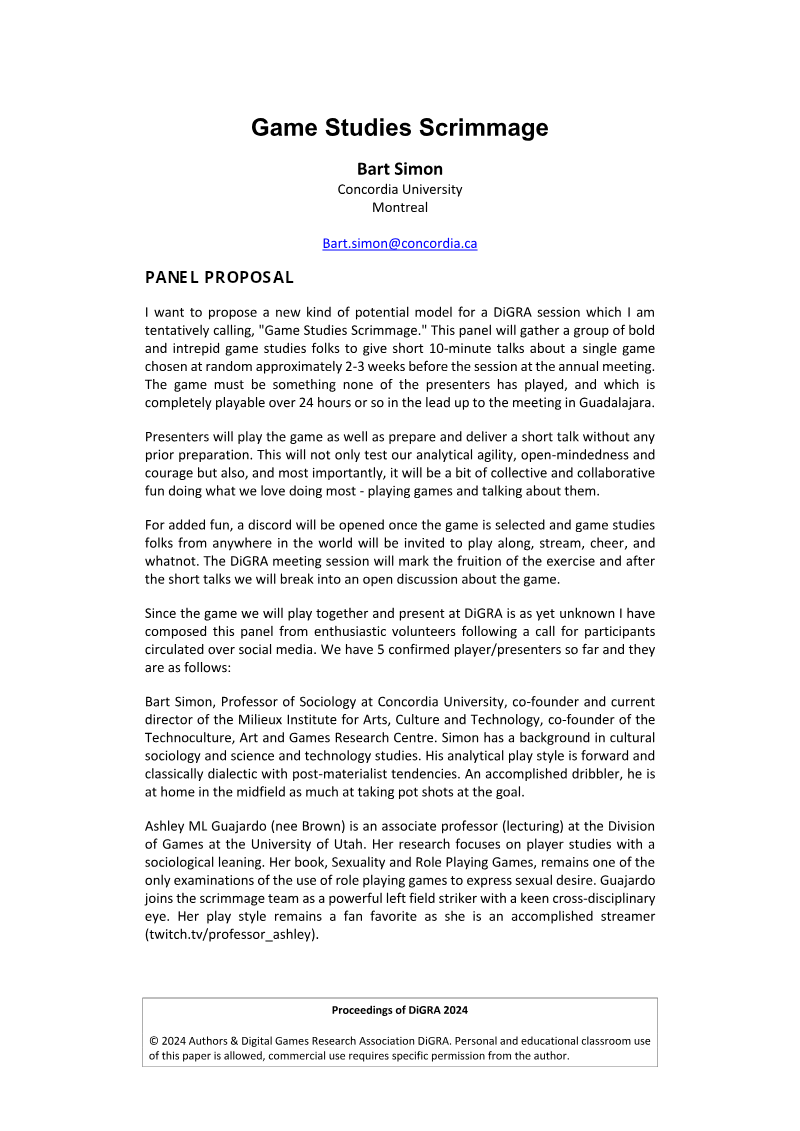
Game Studies Scrimmage
The document is a panel proposal submitted to DiGRA, the Digital Games Research Association, for an experimental session titled "Game Studies Scrimmage."
- The document is a DiGRA panel proposal for an experimental session called "Game Studies Scrimmage," in which scholars play an unfamiliar game and give ten-minute analytical talks, aiming to test analytical agility and foster collaborative enjoyment.
- A randomly selected game would be chosen two to three weeks before the annual meeting in Guadalajara and must be completable within about 24 hours.
- A Discord server would be opened so researchers worldwide can participate, stream, and comment on the session.