Key insights
4 slides
Who consults
Historical consultants are usually academics or enthusiasts hired per project.
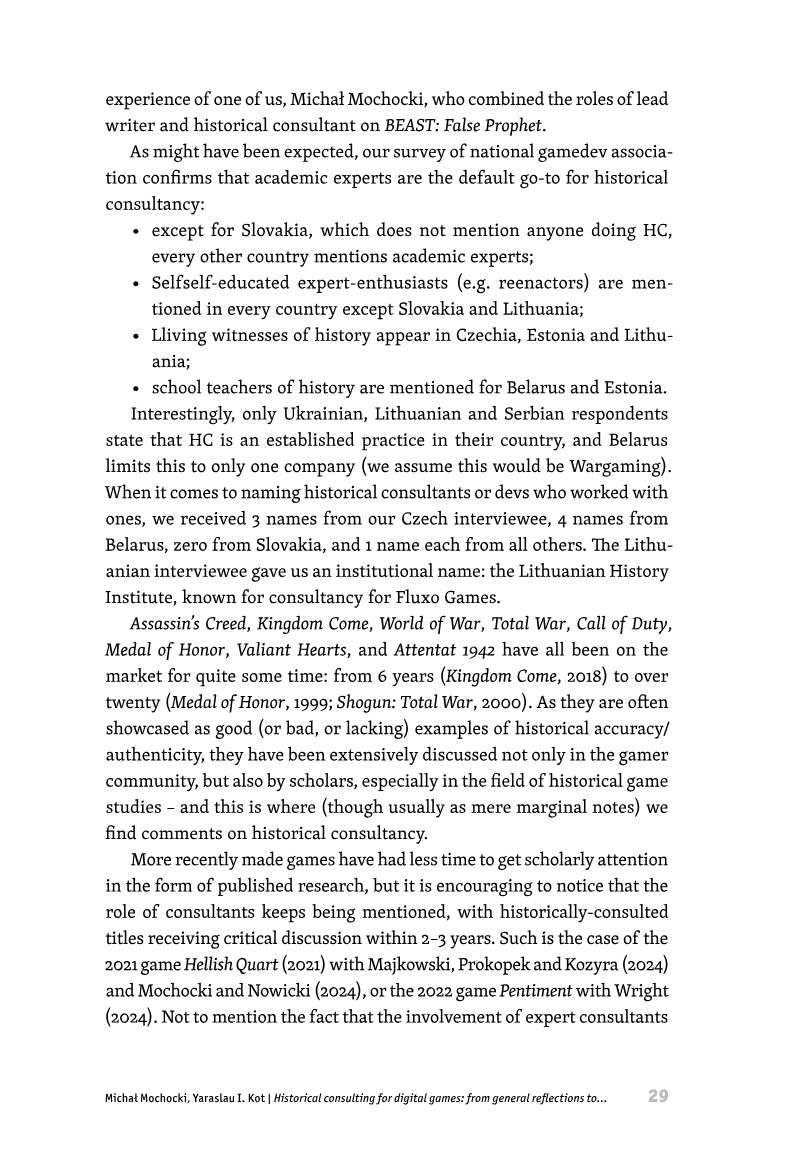
Consultants are typically hired temporarily for individual projects rather than employed full-time. Many also take on writing or design work.
1 / 4
- 01Historical consultancy in Central and Eastern European game development has matured into a distinct professional specialisation, and its value depends on clearly defined roles, early and continuous collaboration, and a deliberate balance between historical authenticity and gameplay.
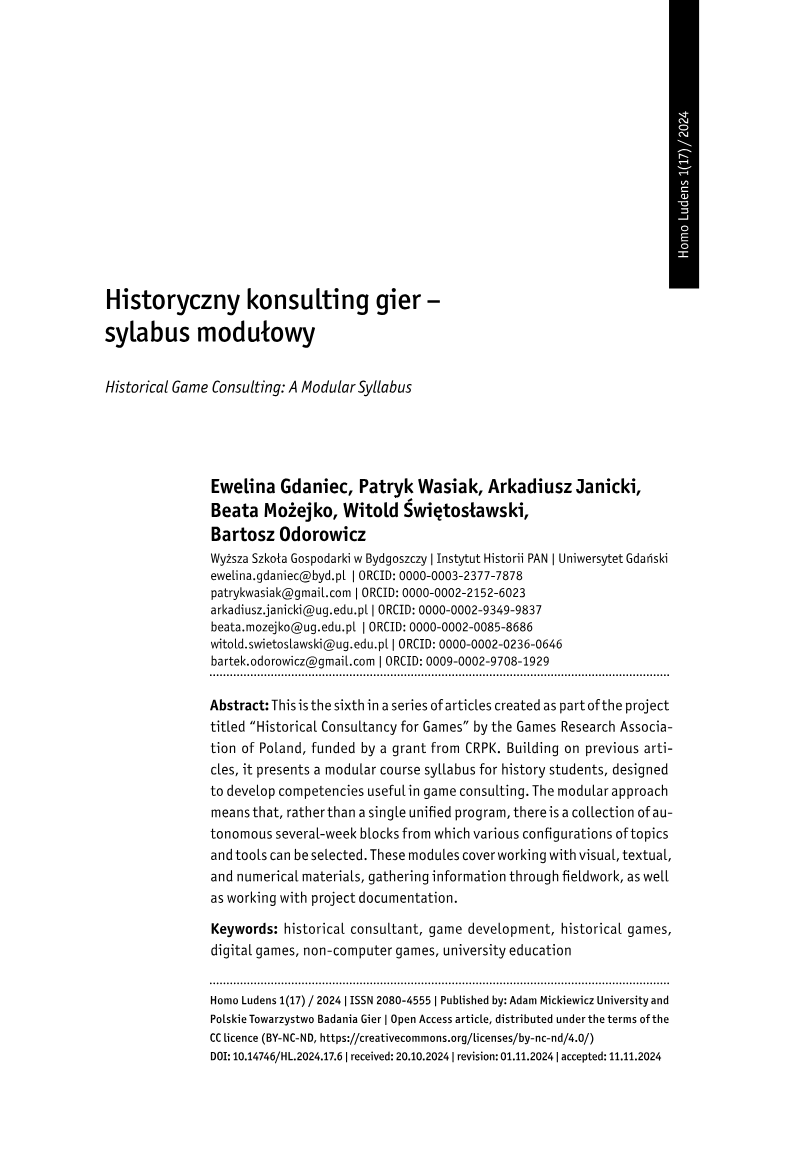
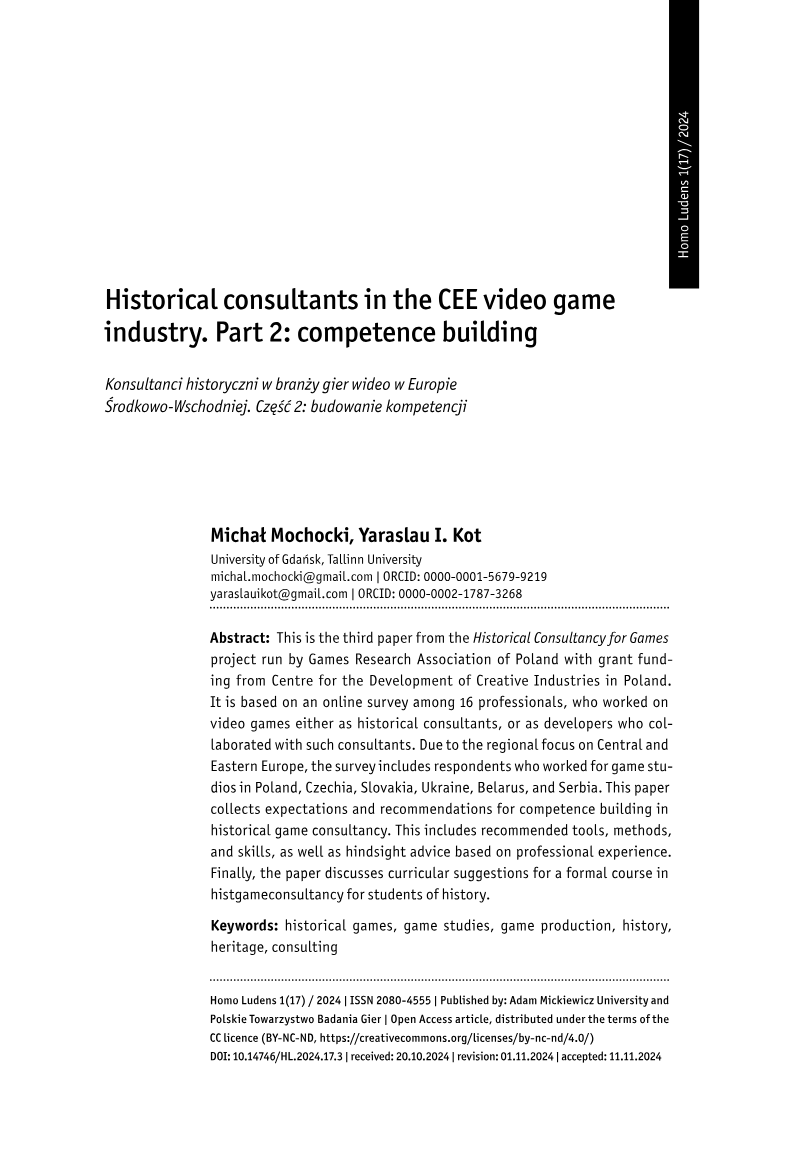
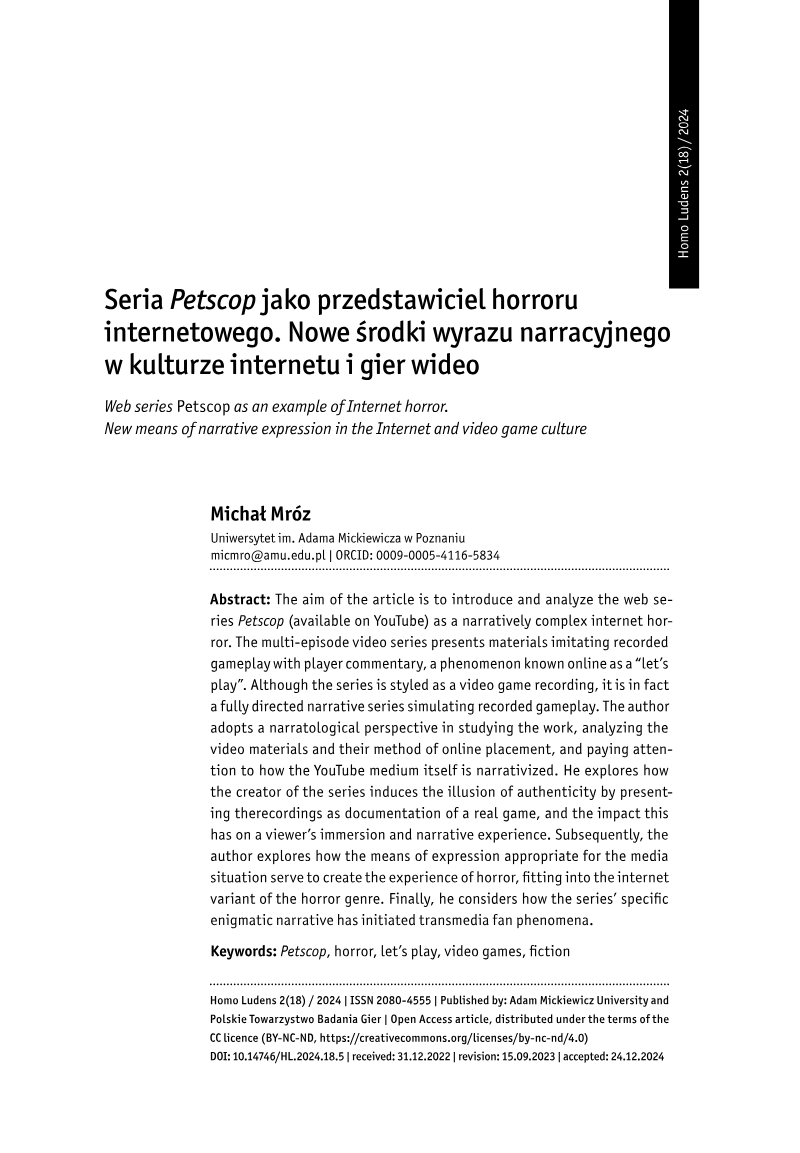
- 02The study is based on an online survey of 16 professionals working as historical consultants or alongside them at studios in Poland, Czechia, Slovakia, Ukraine, Belarus, and Serbia, and it was published in Homo Ludens by Mochocki and Kot in 2024.
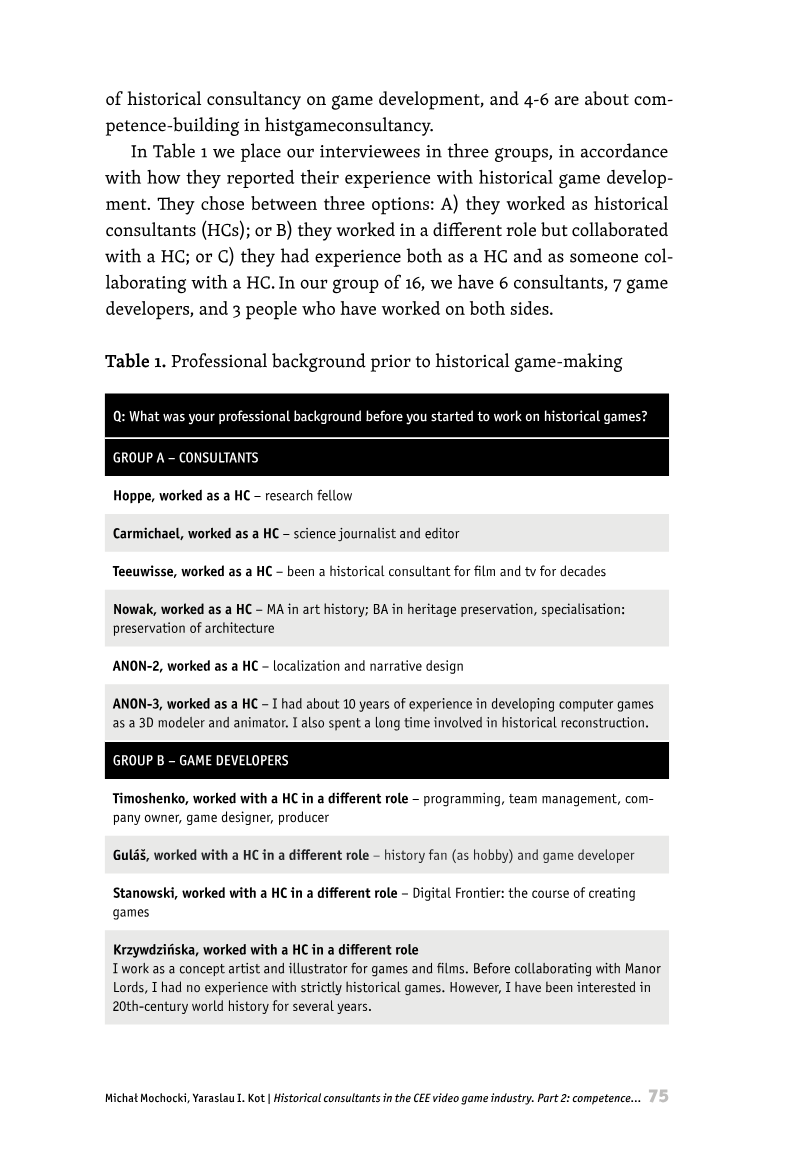
- 03Consultants are typically academics or enthusiasts hired temporarily per project, and their core duties include supplying reference material, teaching research methods to teams, and validating scripts, visuals, and mechanics for accuracy, often alongside productive writing or design work.
- 04Recurring weaknesses include consultants chasing detail players will never notice, studios using consultants mainly for marketing legitimacy while ignoring their advice, and academics delivering essay-length answers that developers cannot translate into game content.
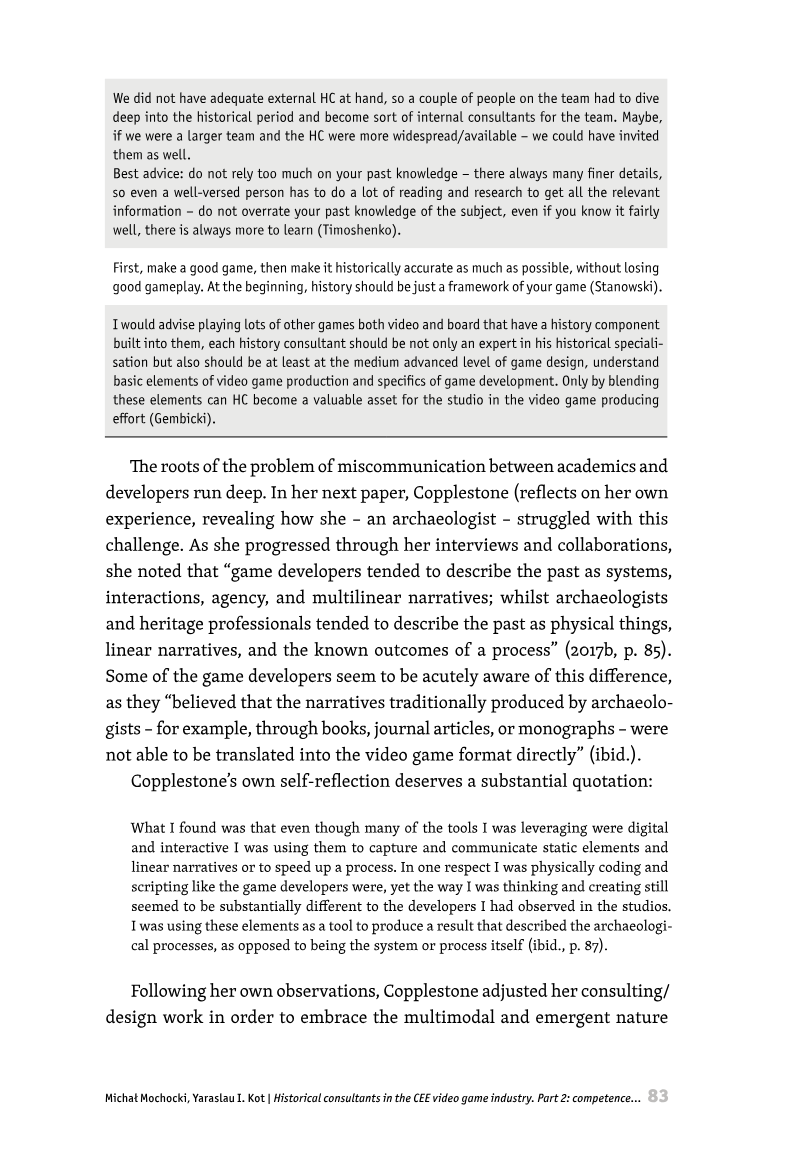
- 05Accuracy lapses still occur despite expert input, so the authors recommend pairing external consultants with some internal historical expertise; friction also arises from consultants lacking game design understanding, late engagement, vague briefs, and superficial research mixing incompatible eras and regions.
- 06Respondents agree the required accuracy depends on a game's purpose: most titles need basic accuracy balanced against entertainment, while history-focused games justify much deeper consultancy, with Kingdom Come: Deliverance, the Assassin's Creed series, and Total War cited as successful examples.
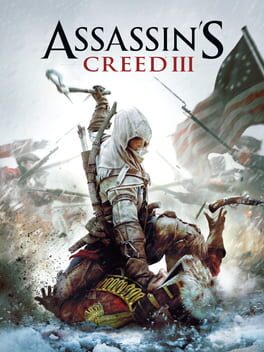
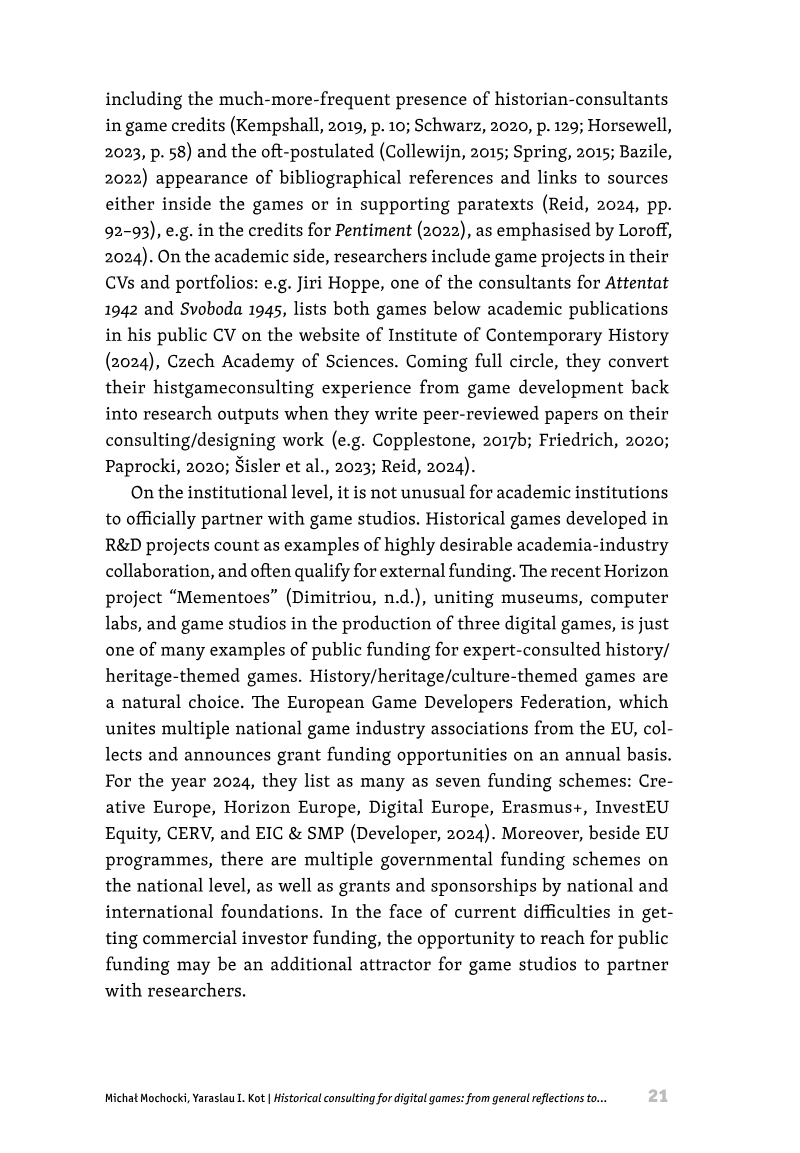
- 07The authors cite Assassin's Creed III's inclusion of Kanien'kéha consultants as an example of the credibility and risk-identification benefits that consultancy can bring when representing minority cultures.
Ask AI about this report
Summary
This study, published in Homo Ludens by Mochocki and Kot in 2024, examines how historical consultants shape video game development in Central and Eastern Europe. Its central thesis is that historical consultancy has matured into a distinct professional specialisation, and that its value depends on clearly defined roles, early and continuous collaboration, and a deliberate balance between historical authenticity and gameplay. The research draws on an online survey of 16 professionals who work as historical consultants or alongside them at studios in Poland, Czechia, Slovakia, Ukraine, Belarus, and Serbia, situating the findings within the regional industry rather than the global one.
Consultants in this context are typically academics or enthusiasts hired temporarily for individual projects rather than employed full-time. Their core responsibilities include supplying reference material, teaching research methods to development teams, and validating scripts, visuals, and gameplay mechanics for historical accuracy. Many also take on productive roles such as writing or design, usually as an added responsibility rather than a standalone position. The benefits respondents describe include improved accuracy, greater credibility, stronger educational value, and the identification of risks in representing sensitive or minority cultures, with the authors citing Assassin's Creed III's inclusion of Kanien'kéha consultants as an example.
The study also documents recurring weaknesses. Consultants sometimes pursue detail that players will never notice, studios occasionally engage them primarily for marketing legitimacy while disregarding their advice, and academics often deliver essay-length answers that developers cannot translate into game content. Accuracy lapses still occur even with expert input, which the authors cite as grounds for recommending some internal historical expertise alongside external consultants. Friction is also linked to consultants lacking an understanding of game design, to teams imposing unverified views, to late engagement or vague briefs, and to superficial research that mixes incompatible eras and regions.
Respondents agree that the appropriate level of accuracy depends on a game's purpose. Most titles require basic accuracy balanced against entertainment, while history-focused games justify much deeper consultancy. Successful examples cited include Kingdom Come: Deliverance, the Assassin's Creed series, and Total War. Overall, the authors conclude that growing academia-industry collaboration and emerging university programmes indicate that historical consultancy is now a recognised profession, though one whose effectiveness hinges on mutual understanding