Game Culture reports and market data
Documents
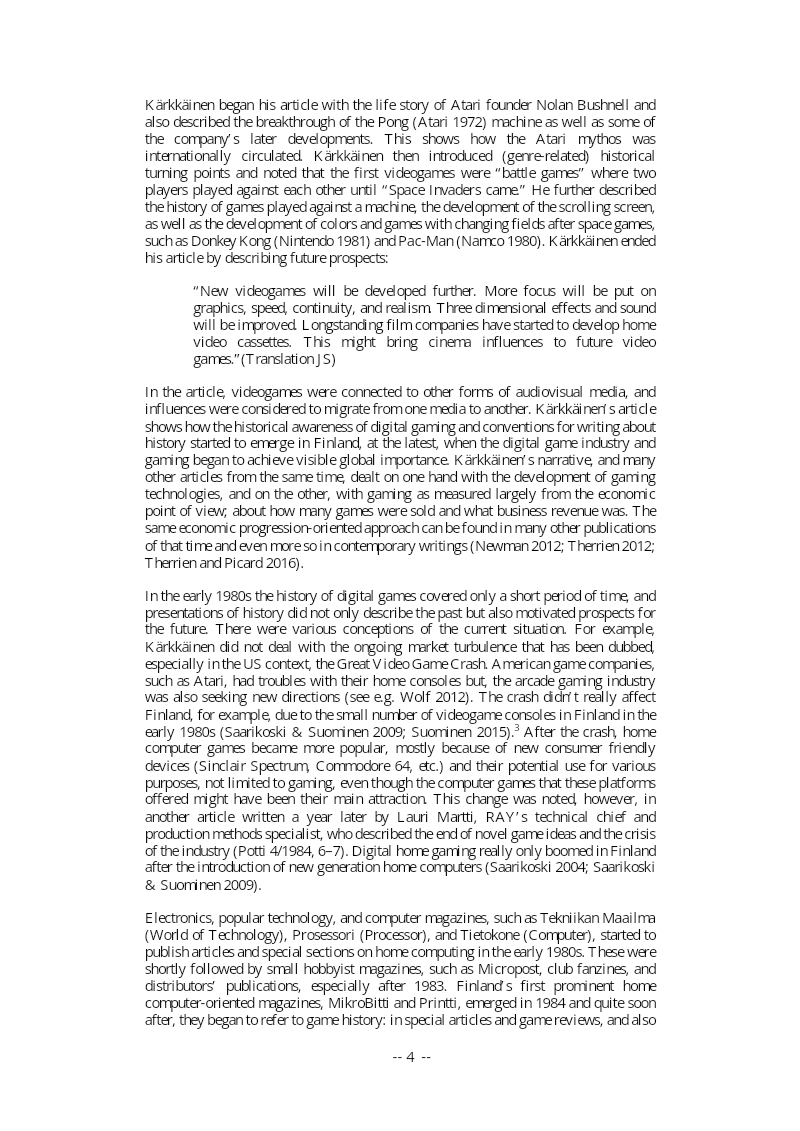
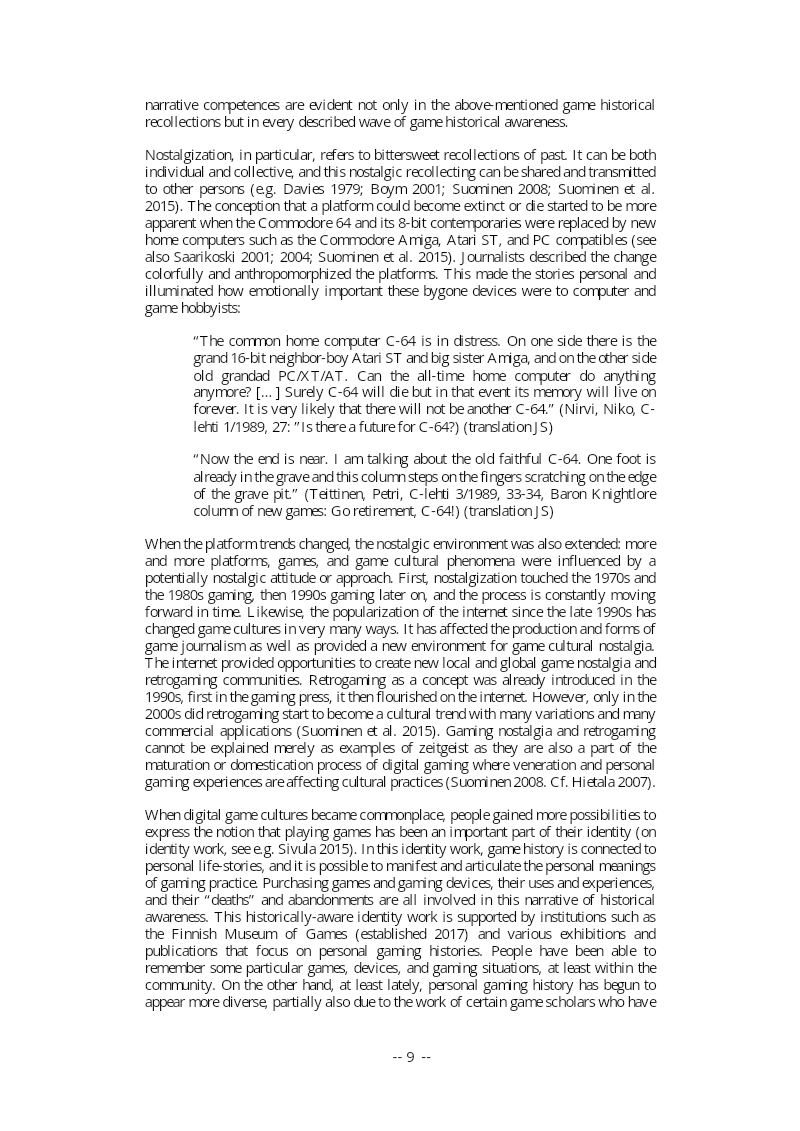
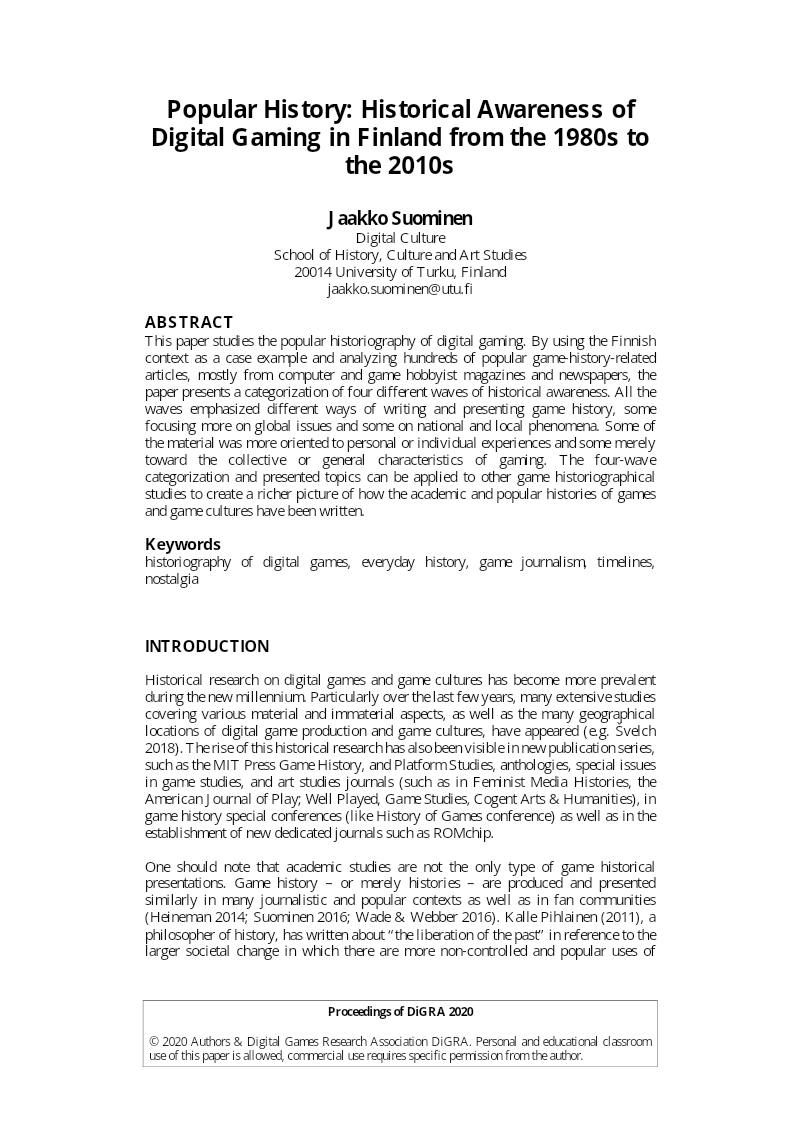
Popular History: Historical Awareness of Digital Gaming in Finland
Popular accounts of Finnish digital gaming history took shape in the 1980s, well before any academic historiography of games in Finland existed.
- The analysis draws on roughly 800 items from Finnish computer and hobbyist magazines such as Potti, MikroBitti, and Printti to trace how popular narratives of Finnish digital gaming history first took shape in the 1980s, before any academic historiography existed.
- Popular histories tend to canonize an official narrative built around an origin and turning point tied to commercial or technical success, which can overshadow personal and unorthodox recollections of gaming.
- Discourse across the periods studied is classified into four waves, moving from early-1980s popular articles through mid-1980s chronicles and nostalgic player accounts to a 2000s national narrative shaped by institutions such as Neogames and the Finnish Museum of Games, which opened in 2017.
Anthropocene Temporalities in Climate Change Video Games
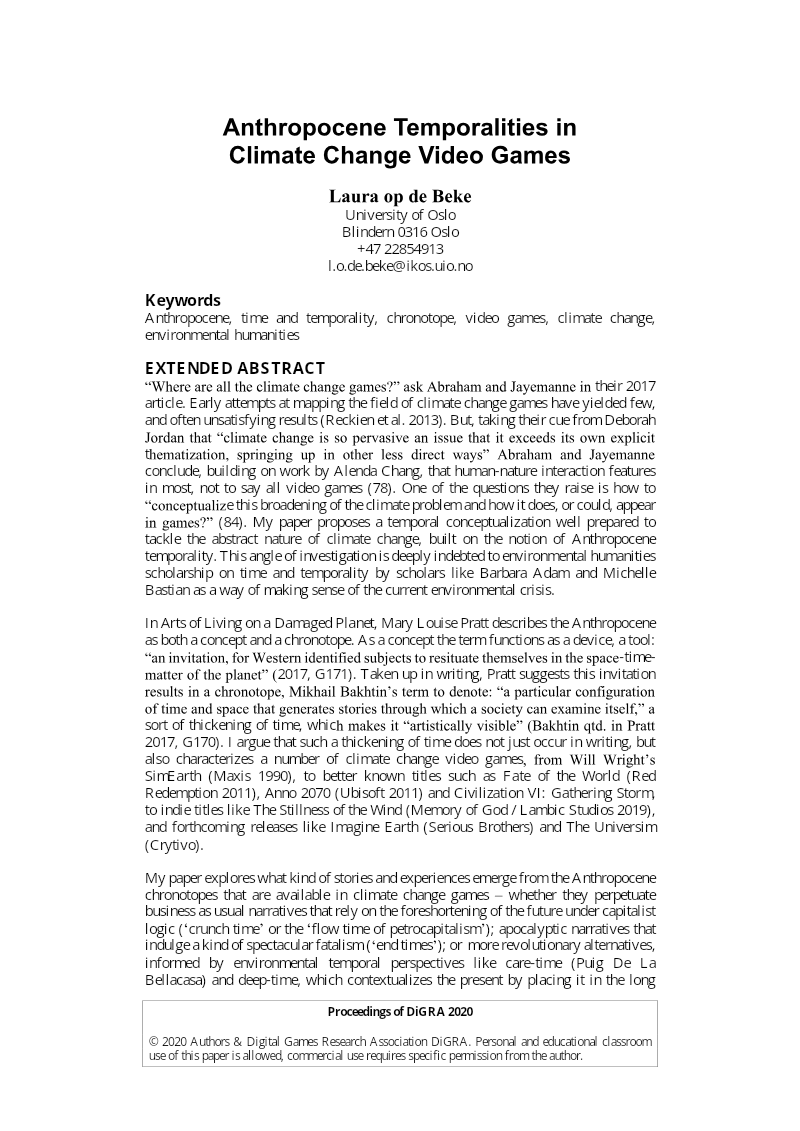
This extended abstract, presented at DiGRA 2020, proposes a temporal framework for analyzing climate change video games, arguing that the notion of "Anthropocene temporality" offers a productive way to understand how these games address the abstract and pervasive nature of climate change.
- The paper is a theoretical and conceptual proposal, not an empirical study, and reports no survey data, sample sizes, or quantitative findings.
- It uses the notion of 'Anthropocene temporality' as a chronotope, drawing on environmental humanities scholarship by Barbara Adam, Michelle Bastian, and Mary Louise Pratt, to analyze how climate change video games handle the abstract and pervasive nature of climate change.
- Its central argument is that climate change games produce a 'thickening of time', with examples ranging from SimEarth (1990) and Fate of the World, Anno 2070, and Civilization VI: Gathering Storm to independent works such as The Stillness of the Wind.

Disciplined Play: Finding Foucauldian Architecture in Virtual Worlds
This paper, by Lawrence May of the University of Auckland, examines how virtual architecture in videogames both reinforces and destabilizes ideological positions, drawing on Michel Foucault's writings on space, power, and governmentality.
- The paper argues that videogame spaces discipline players both inside and outside the game, with environments, rules, interactivity, and narrative working together as a discursive circuit rather than as separate elements.
- Through textual analysis of Red Dead Redemption 2 (2018), the author reads its late-nineteenth-century American frontier settings through Foucault's panopticon, arguing that invisible surveillance by programming and AI systems creates permanent visibility that regulates player conduct.
- The analysis suggests the game's spaces reinforce its thematic critique of a collapsing cowboy masculinity, linking architecture directly to the title's ideological content.
Cowboys, Outlaws, Ghouls and Spacefarers: The American Frontier within and without the United States
This paper examines how the American Frontier, understood as an ideologically charged trope, shapes the construction of national and non-national identities in video games.
- The paper's central thesis is that games set in the historical American Far West, post-apocalyptic Earth, and outer space share a common logic of space, power, expansion, and personal worth inherited from frontier mythology.
- The author argues this frontier logic is repurposed across time periods and settings, so wastelands, alien worlds, and historical landscapes reproduce similar discourses of conquest and moral agency.
- The study traces how Western tropes such as civilization versus savagery and the valorization of individual agency migrate into video game mechanics and storytelling.
Playing Disney: Experience and Expression in the Land of Curation
T.L. Taylor's paper examines how regular, everyday visitors to Disney theme parks transform heavily curated commercial spaces into sites of playful agency, self-direction, and social experience.
- Regular Disney park visitors develop their own forms of play that operate alongside and sometimes against the commodified structure of the parks, raising the question of whether this constitutes meaningful agency or play captured within a media company's economic framework.
- The study is based on qualitative fieldwork at multiple Disney parks worldwide, supplemented by analysis of online forums, archives, and interviews with attendees, rather than quantitative measurement of visitor behavior.
- Once novelty fades for repeat visitors, play modes include commercially dependent activities such as pin trading and the Sorcerers of the Magic Kingdom card game, alongside no-cost activities like locating hidden Mickey designs.
A Discipline is Always Born Twice: Is There Room for Interdisciplinary Humanities Methods in Game Studies Scholarship Today?
This paper, presented at DiGRA 2020 by Caroline Bem of the Université Saint-Paul, argues that game studies has grown distant from humanities disciplines such as literature, film, and art history, and that this distance limits the field's theoretical and methodological range.
- The paper argues that game studies has grown distant from humanities disciplines such as literature, film, and art history, and that this distance narrows the field's theoretical and methodological range.
- The author proposes a "humanistic sensibility" with three components: contextualizing objects within cross-disciplinary and cross-medial lineages, treating aesthetics and form as the primary carriers of a work's philosophical and affective positions, and acknowledging an interpretive element (drawing on Derrida's "supplement") that resists quantification.
- The paper positions this approach as a response to game studies' perceived overreliance on empirical methods, its handling of historicization, and the consolidation of a canon of games and scholarship.
Lichenia and Climate Crisis: Feeling Dark Rhythms in the Longue Durée
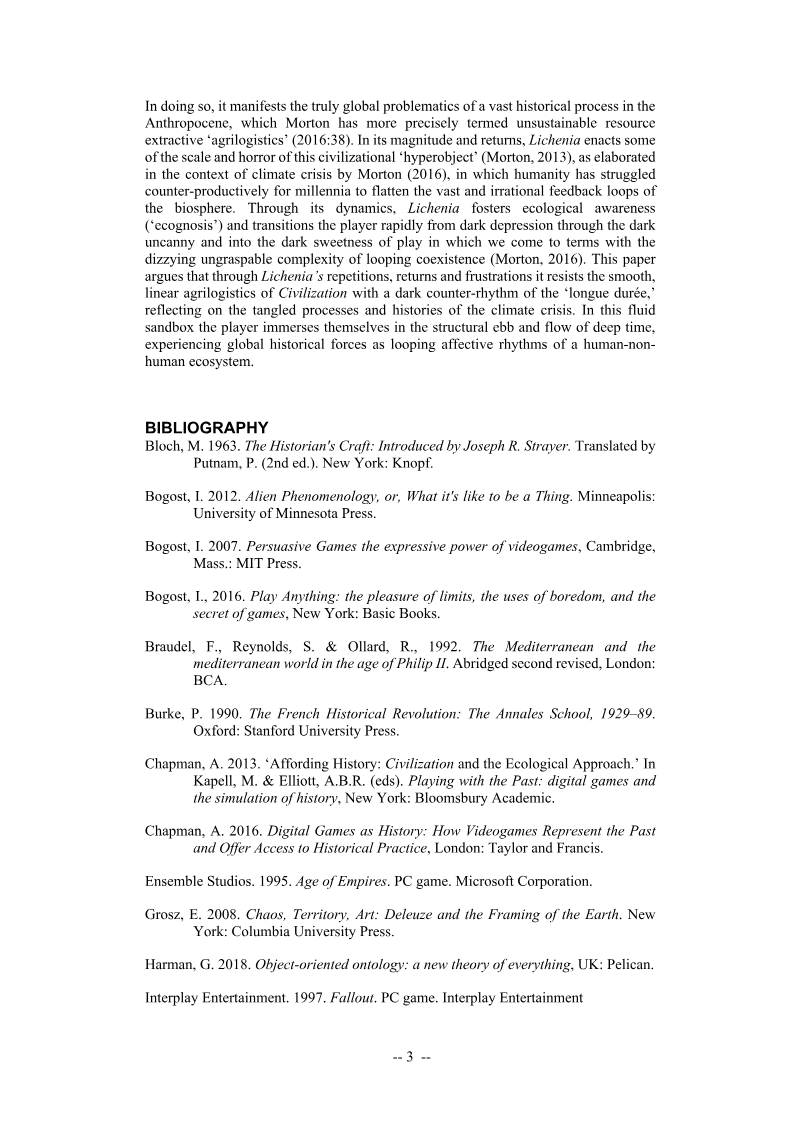
This paper offers a critical reading of Lichenia, a browser-based environmental strategy game by Molleindustria (2019), as a model of climate history grounded in dark ecology and object-oriented ontology.
- Lichenia (Molleindustria, 2019) is analysed as a browser-based environmental strategy game that rejects the linear, growth-oriented, and nationalist narratives of Age of Empires, SimCity, and Civilization in favour of looping rhythms of flood, drought, growth, and decay.
- The paper's theoretical framework draws on the Annales School's longue durée (Fernand Braudel's view of climate as a slow but omnipresent historical force), Henri Lefebvre's rhythmanalysis, and Timothy Morton's hyperobjects and ecognosis.
- Lichenia's procedural rhetoric restricts player power and foregrounds the unpredictable, opaque interactions among rain, fire, vegetation, and urban development, presenting infrastructure as perpetually vulnerable and ecosystems as capable of renewal.
Farting on the Front Lines: Playing with Flatulence during World War II
This paper by Jaakko Suominen and Elina Vaahensalo examines farting games played by Finnish soldiers during World War II, drawing on the "Dugout Tradition" archive, a collection of over 12,000 pages of veteran oral histories gathered in 1973 by the Finnish Literature Society.
- The study draws on the 'Dugout Tradition' archive, over 12,000 pages of Finnish WWII veteran oral histories collected in 1973 by the Finnish Literature Society, to argue that farting games were a neglected form of self-organized bodily and social play on the front lines.
- The archival evidence falls into three categories: Thursday pea soup meals that sparked loud farting contests, 'fart flames' in which a notable participant could ignite expelled gas, and timed or rhythmic competitions such as imitating machine gunfire, where the longest 'gunfire' won.
- Veterans treated fart humor as a coping mechanism for wartime hardship, alongside extreme pastimes such as heavy drinking and cold-weather races, and silent farts were disapproved of while top performers were remembered long after the war.
Bride, Demon or Alien? Undressing Stigma in Catherine: Full Body
This work-in-progress paper examines how digital games can foster affective engagement with characters in order to explore social stigma, focusing on the stigmatized theme of infidelity in romantic relationships.
- The paper argues that players' emotional responses to fictional characters are part of wider social practices, and that games can prompt reflection on stigma by letting players act on stereotypical notions of character traits.
- It uses a textual analysis of the 2019 Japanese game Catherine: Full Body, applying a reader-response framework adapted to games' ergodic structure, focusing on the stigmatized theme of infidelity in romantic relationships.
- The game's three female-presenting characters (Catherine, Katherine, and Rin) are examined through its "system of affection," which makes player choices visible as consequences of their engagement.
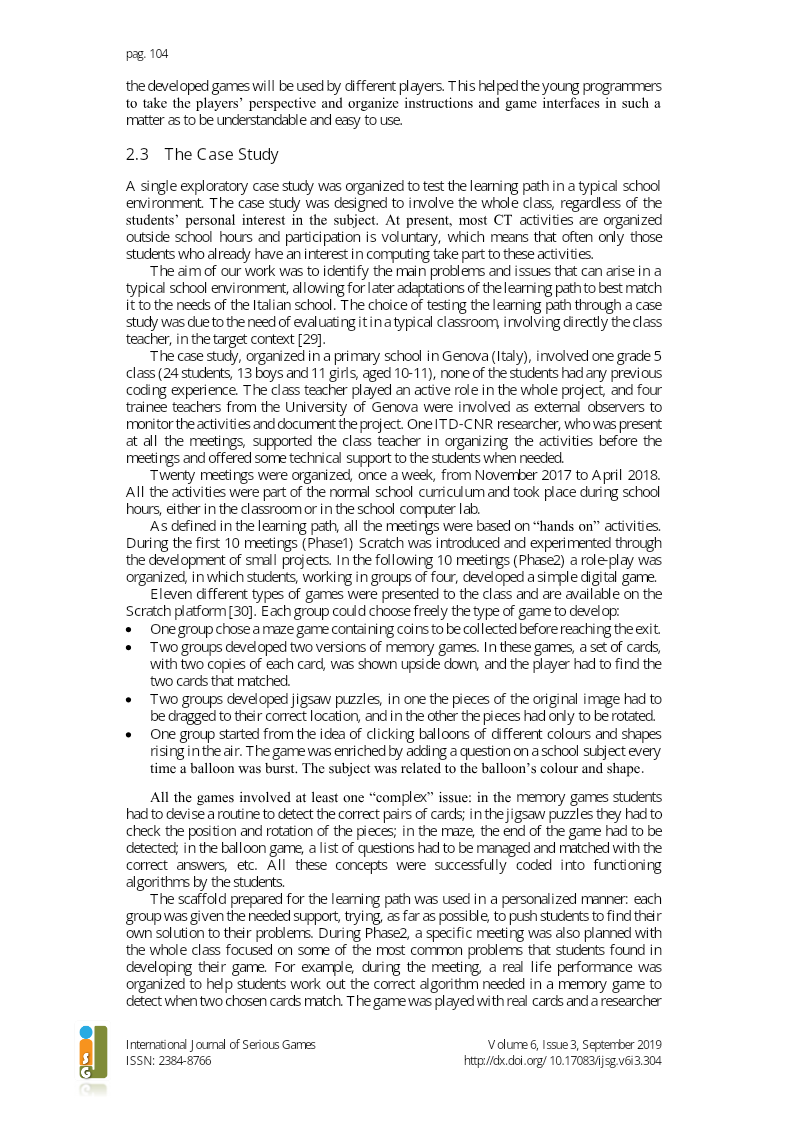
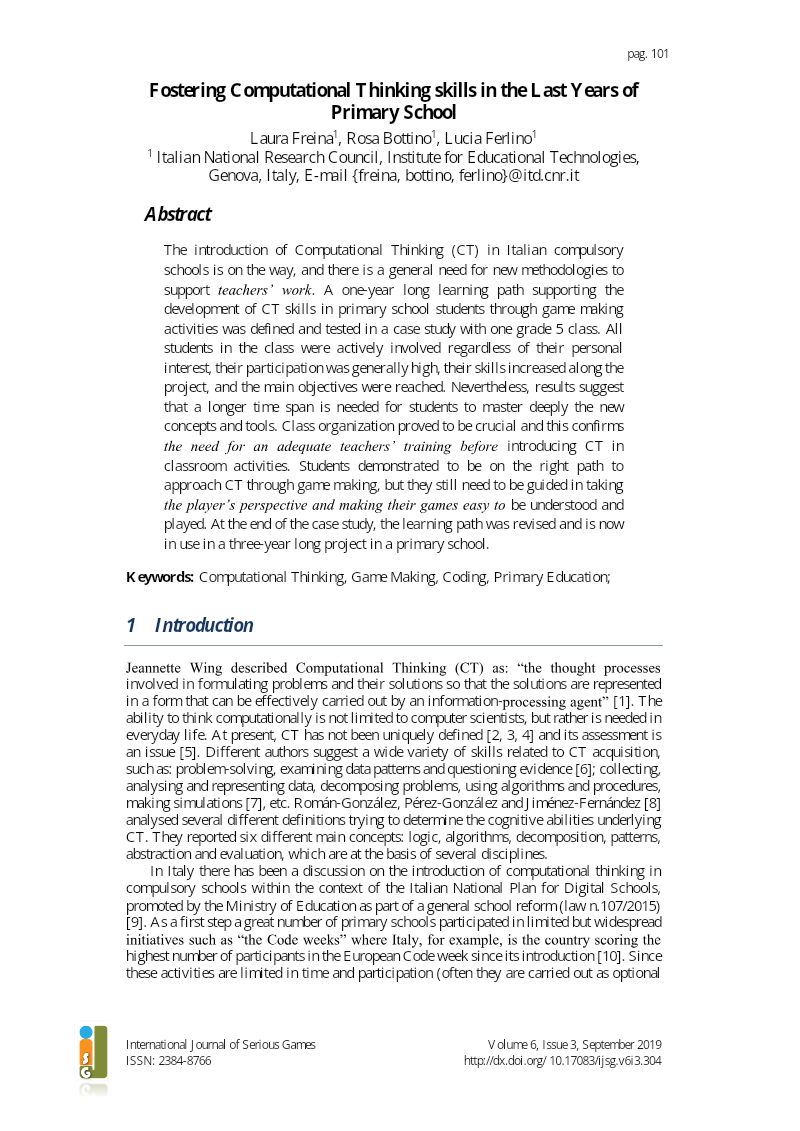
Fostering Computational Thinking Skills in the Last Years of Primary School: Italy
Integrating computational thinking into the Italian primary school curriculum through collaborative game-making in Scratch serves as a vital pedagogical strategy for fostering algorithmic proficiency and student engagement.
- A longitudinal, multi-year pedagogical model is required to achieve true computational literacy, as short-term interventions fail to bridge the gap between theoretical knowledge and practical problem-solving autonomy.
- The initial one-year, 20-session learning path proved insufficient for students to master independent project execution or adopt a player-centric design perspective.
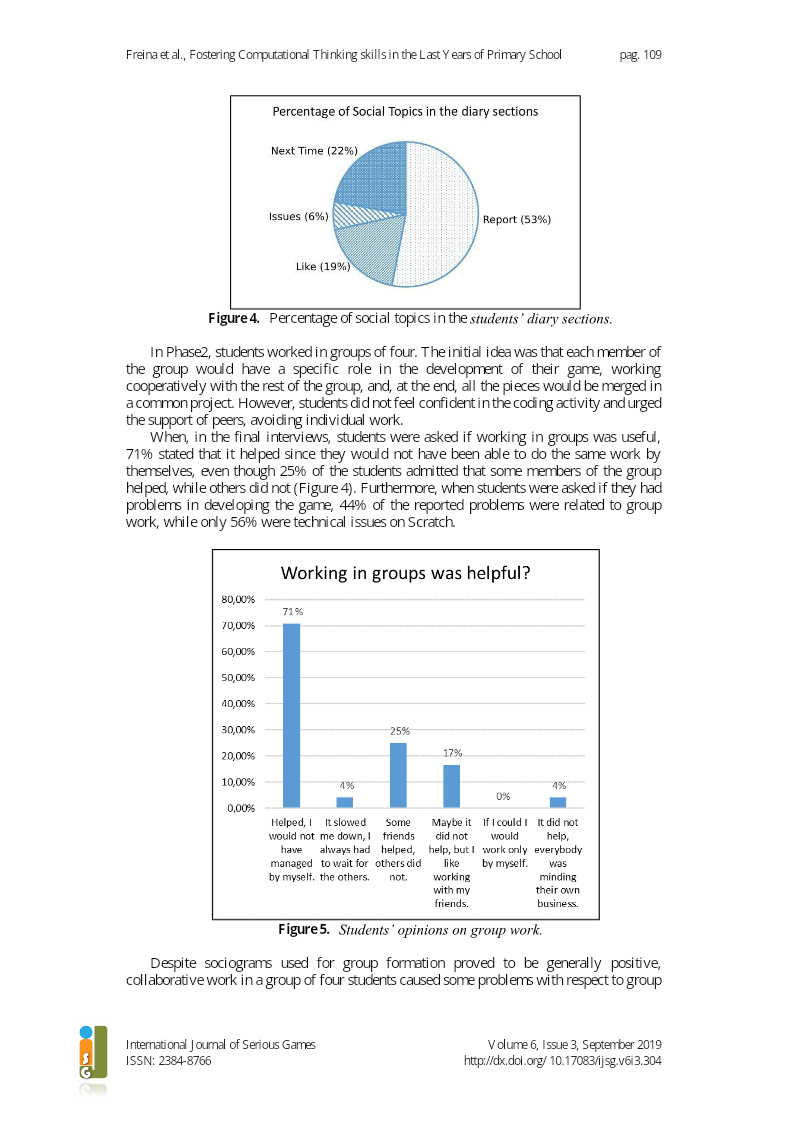
- Collaborative game-making in Scratch effectively increases student engagement and improves classroom social dynamics, though it often leads to group conflict and a high reliance on teacher intervention.
Forest Knights: A German Approach to Educational Larp in Youth Work
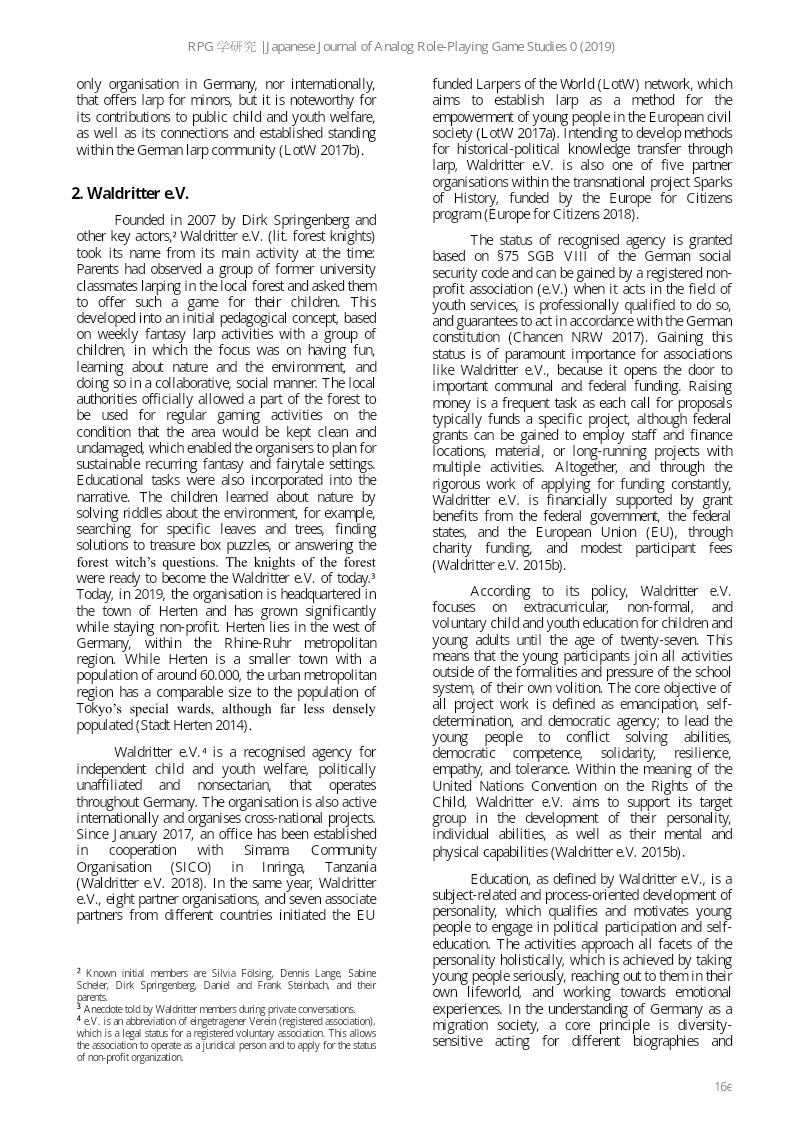
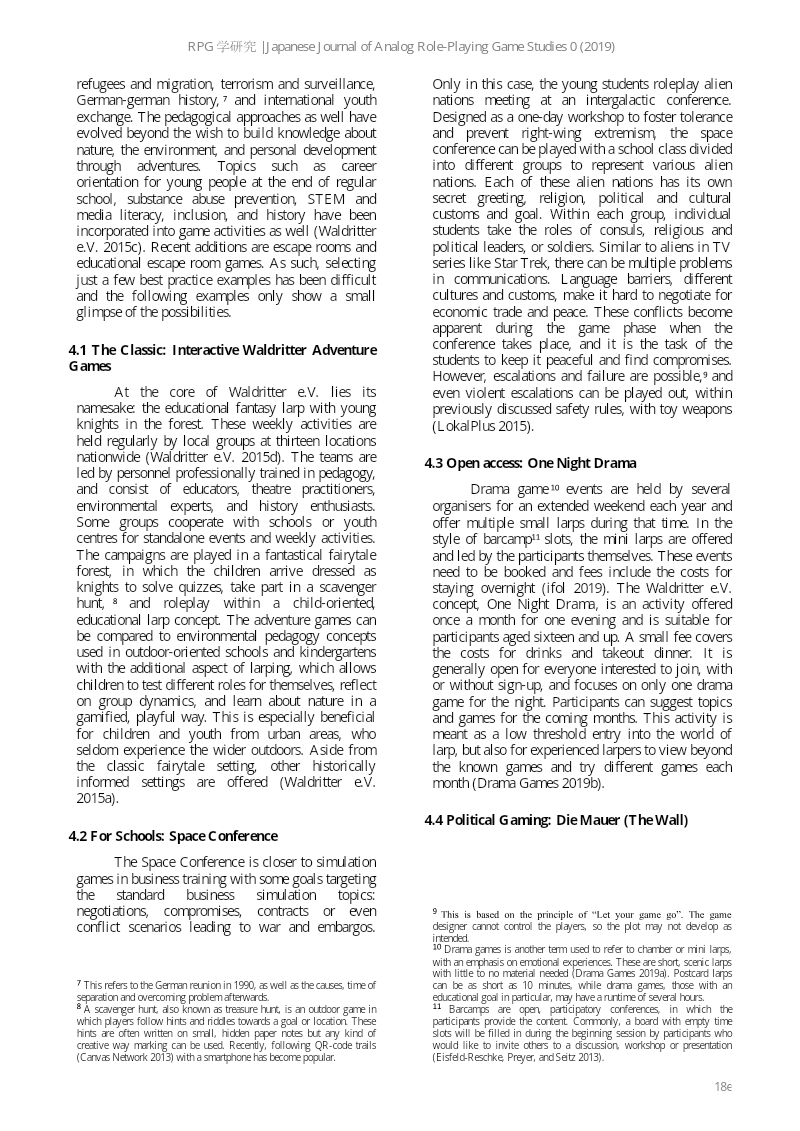
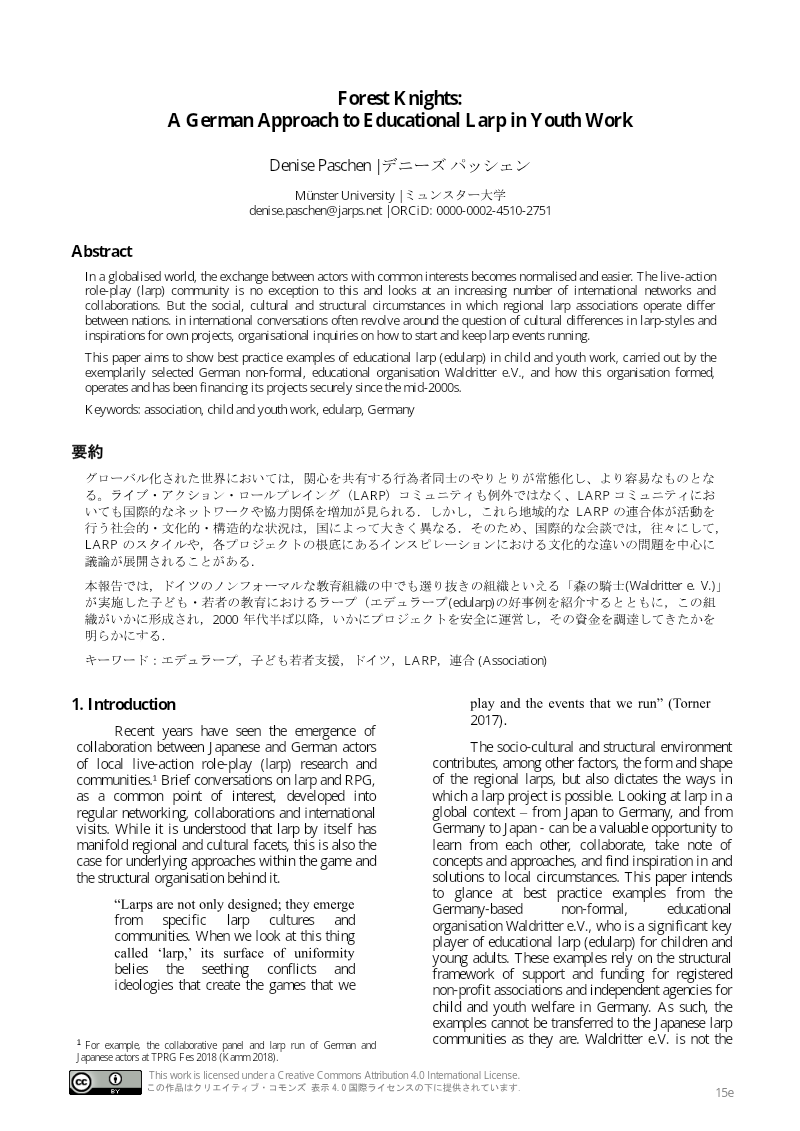
This analysis examines the operational model and pedagogical impact of Waldritter e.V., a prominent German non-profit organization specializing in educational live-action role-play (edularp) for children and young adults.

Decoding Fantasy Football: A Ludic Perspective
Fantasy Premier League, the fantasy football format built around the English Premier League, serves as the subject of this game studies inquiry into how players navigate the tension between skill and chance.
- The study is a game studies inquiry into Fantasy Premier League that frames fantasy football as a site where agon (skill and competition) and alea (luck and chance) intersect in everyday decision-making, using Caillois' typology.
- The research uses an ethnographic, qualitative design with interviews and co-playing sessions involving nine FPL players in Hyderabad, India, so its findings are drawn from a small sample.
- Participants were uniformly male, reflecting the low female representation typical of fantasy sports research, despite targeted recruitment efforts.