1 free read left. Create a free account for unlimited reading + AI research.
Create free accountWhitepaper Japanese Association for Role-Playing Game Studies (JARPS)
1 free read left. Create a free account for unlimited reading + AI research.
Create free accountWhitepaperJapanese Association for Role-Playing Game Studies (JARPS)
Distilling the key insights…
This analysis examines the operational model and pedagogical impact of Waldritter e.V., a prominent German non-profit organization specializing in educational live-action role-play (edularp) for children and young adults. Established in 2007, the organization leverages Germany’s robust framework for non-formal youth welfare to secure sustainable funding from federal, state, and European sources. By operating as a recognized agency under the German social security code, the organization maintains a professional, non-partisan, and non-sectarian structure that facilitates long-term project stability and community integration.
The organization’s methodology centers on holistic, process-oriented development, emphasizing democratic agency, conflict resolution, and social resilience. Programs are designed according to age-appropriate didactical phases, ensuring that narrative complexity and safety protocols align with the developmental stages of participants. Key offerings include fantasy-based adventure games, political simulations such as historical reenactments of the Berlin Wall, and alternate reality games (ARGs) that address contemporary issues like media literacy, environmental awareness, and the prevention of extremism. These activities are characterized by high levels of participation and are often scientifically evaluated to ensure educational efficacy.
Geographically focused on Germany with an expanding international presence, the organization serves as a best-practice model for integrating larp into extracurricular youth work. By bridging the gap between recreational gaming and formal pedagogical goals, the organization demonstrates how structured, narrative-driven play can foster empathy and critical thinking. While the specific success of this model is deeply rooted in the German socio-cultural and legal environment, the organization’s ability to professionalize edularp provides a significant framework for international practitioners seeking to establish sustainable, impact-oriented youth programs.
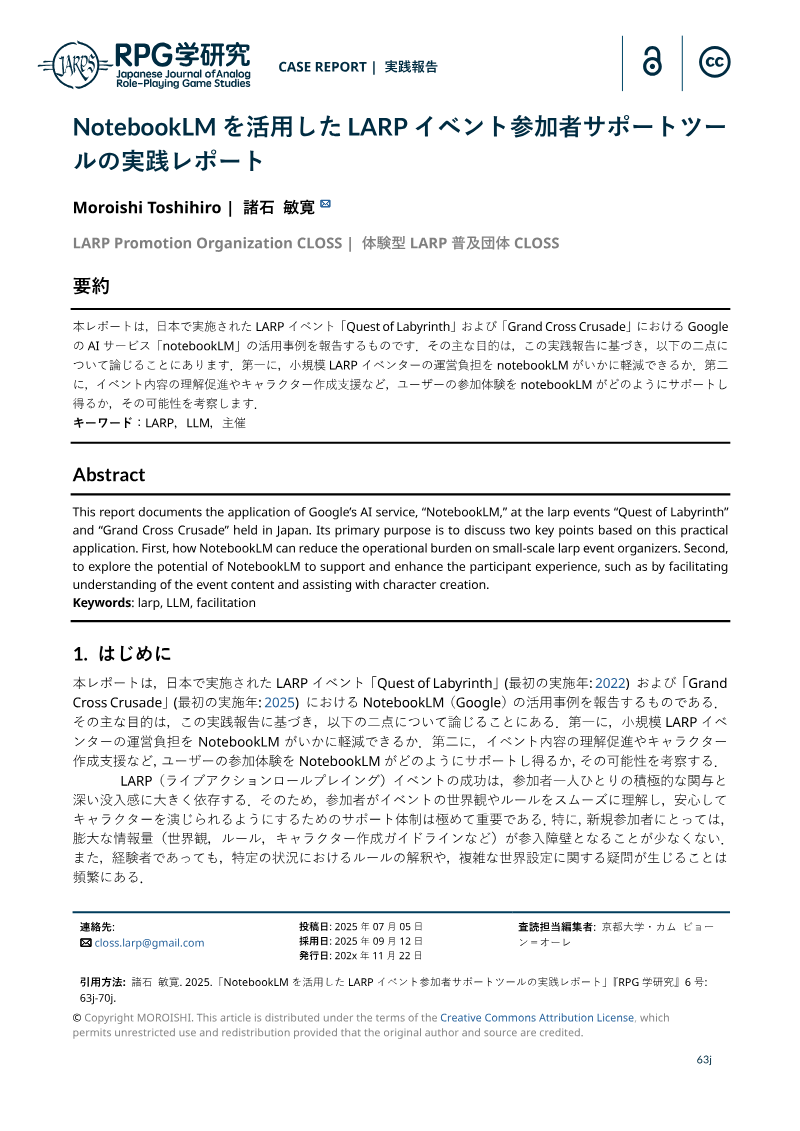
Japanese Association for Role-Playing Game Studies (JARPS) · 2025
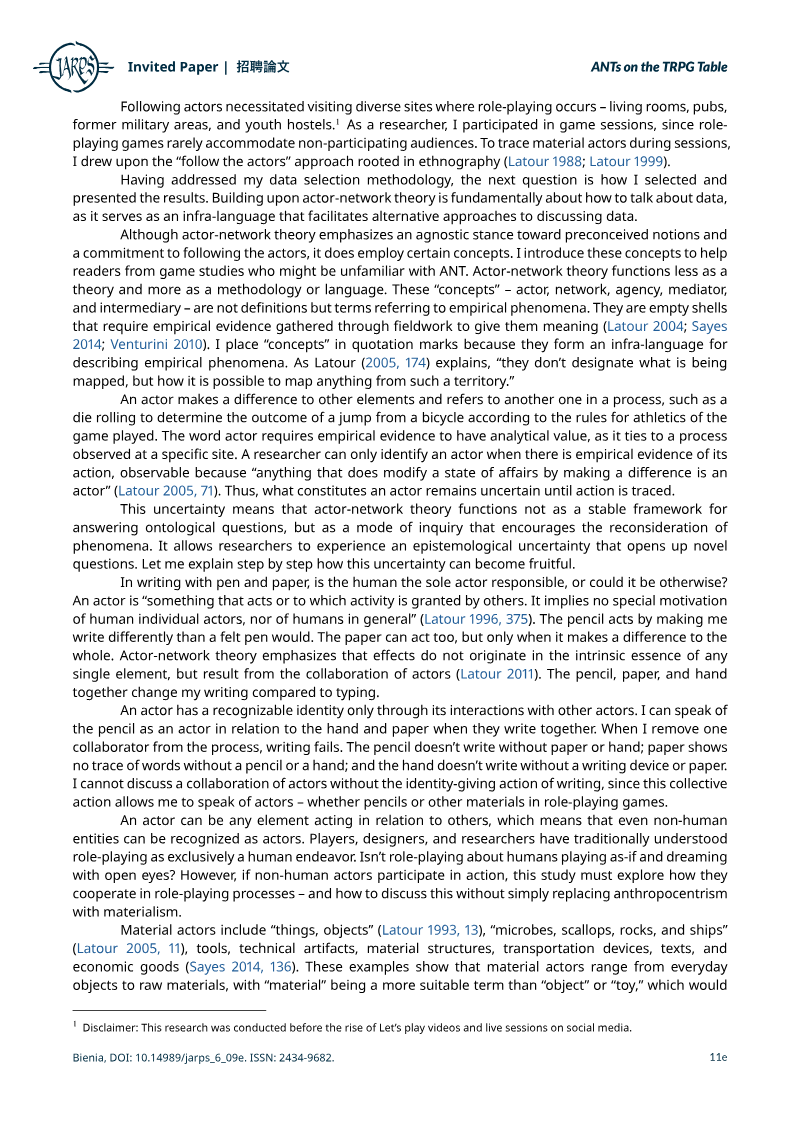
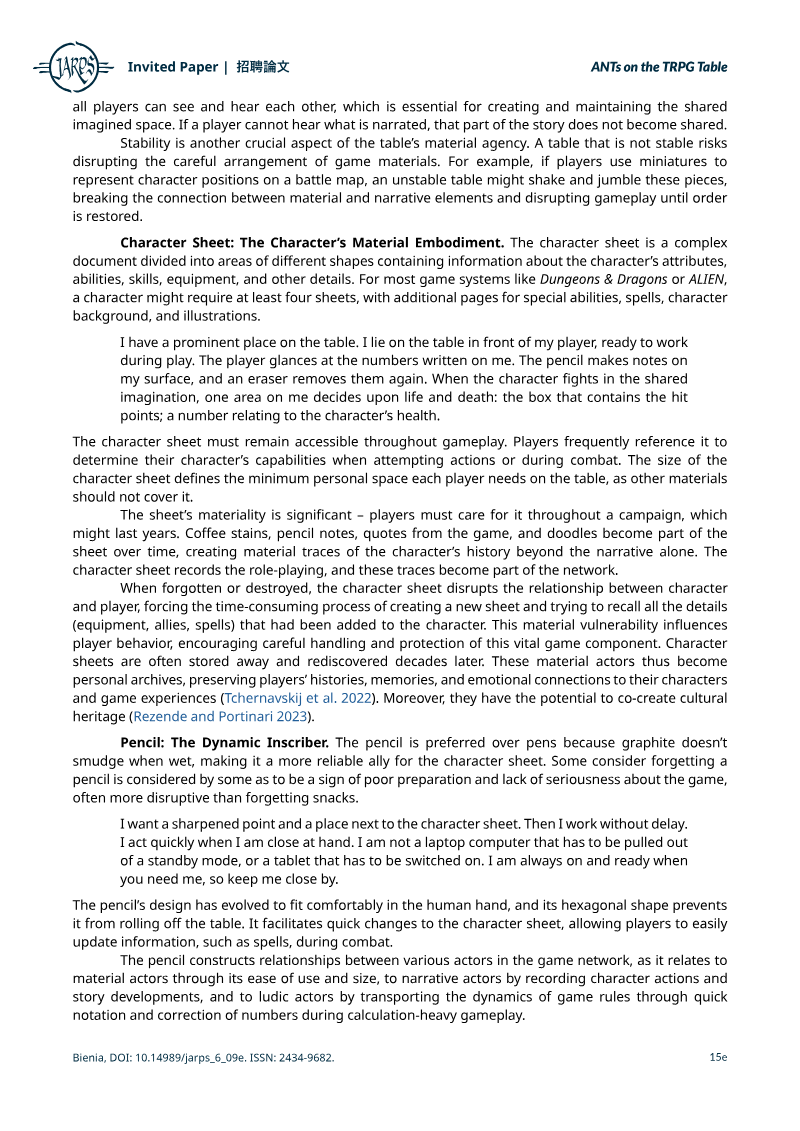
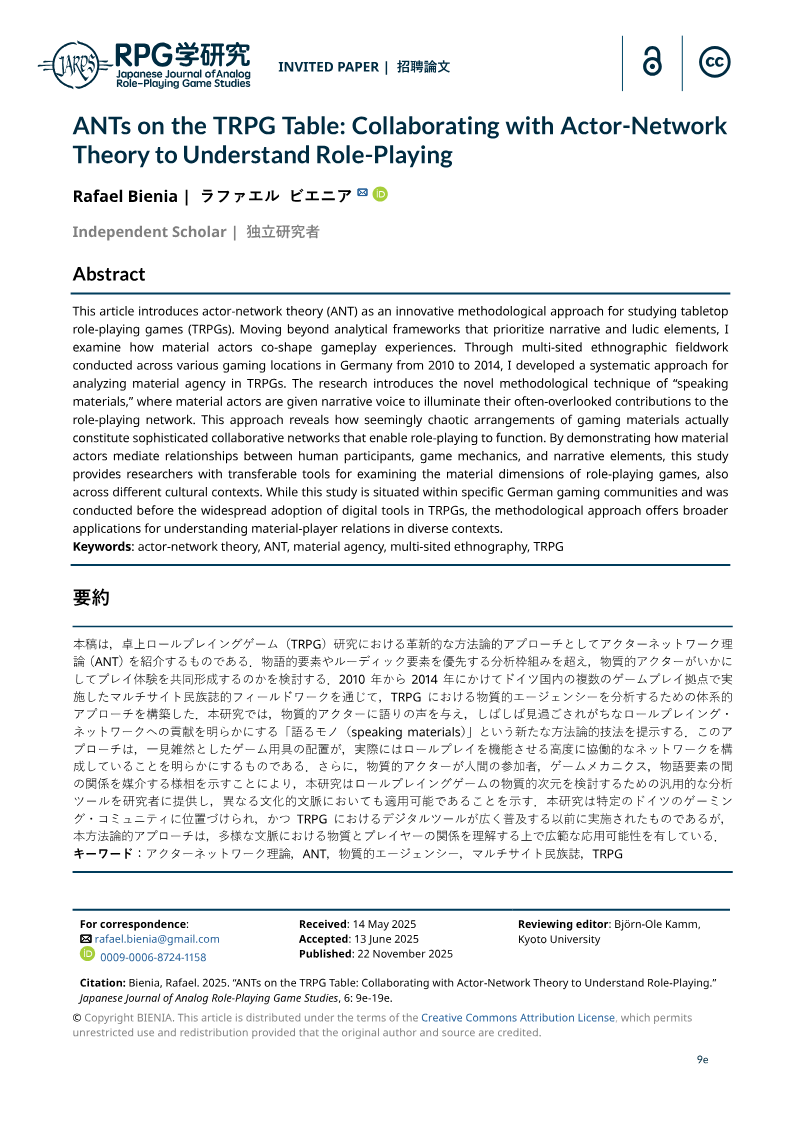
Japanese Association for Role-Playing Game Studies (JARPS) · 2025
Japanese Association for Role-Playing Game Studies (JARPS) · 2025
Japanese Association for Role-Playing Game Studies (JARPS) · 2024
Japanese Association for Role-Playing Game Studies (JARPS) · 2024
Japanese Association for Role-Playing Game Studies (JARPS) · 2024
Japanese Association for Role-Playing Game Studies (JARPS) · 2024
Japanese Association for Role-Playing Game Studies (JARPS) · 2024
Japanese Association for Role-Playing Game Studies (JARPS) · 2024
Japanese Association for Role-Playing Game Studies (JARPS) · 2024
Japanese Association for Role-Playing Game Studies (JARPS) · 2024
Japanese Association for Role-Playing Game Studies (JARPS) · 2024
DiGRA · 2009