1 free read left. Create a free account for unlimited reading + AI research.
Create free accountWhitepaper DiGRA
1 free read left. Create a free account for unlimited reading + AI research.
Create free accountWhitepaperDiGRA
The paper builds on Abraham and Jayemanne's observation that human-nature interaction runs through most video games. Climate change games sit within that broader pattern.
This extended abstract, presented at DiGRA 2020, proposes a temporal framework for analyzing climate change video games, arguing that the notion of "Anthropocene temporality" offers a productive way to understand how these games address the abstract and pervasive nature of climate change. Building on Abraham and Jayemanne's observation that human-nature interaction runs through most video games, the paper draws on environmental humanities scholarship on time, particularly the work of Barbara Adam, Michelle Bastian, and Mary Louise Pratt, whose concept of the Anthropocene as a chronotope, a configuration of time and space that generates stories, serves as the central analytical lens.
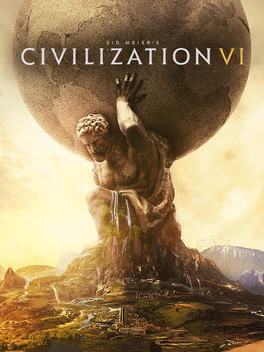
The author contends that this "thickening of time" appears across a range of titles, from early simulations such as SimEarth (1990) and strategy games like Fate of the World, Anno 2070, and Civilization VI: Gathering Storm, to independent works such as The Stillness of the Wind and forthcoming projects. The analysis identifies several temporal narrative modes these games may enact: business-as-usual stories shaped by capitalist "crunch time" or petrocapitalist "flow time," apocalyptic "end times" narratives that promote spectacular fatalism, and more revolutionary alternatives grounded in care-time and deep-time perspectives that situate the present within the long past and distant future of the planet.
The paper is a theoretical and conceptual proposal rather than an empirical study. It does not report survey data, sample sizes, or quantitative findings, and its scope is defined by a selection of commercial and independent climate-themed games rather than a systematic catalogue. Its stated contribution is an original angle within the emerging field of environmental video game studies, one that treats experiences of temporality as a route to understanding how thinking about the environment is grounded in conceptions of time.
Each row is a game or company this document names, each column a document, oldest first. A mark means that document names it. Select a row to see those documents.

DiGRA · 2026

DiGRA · 2026



DiGRA · 2026



DiGRA · 2026



DiGRA · 2026



DiGRA · 2026



DiGRA · 2026



DiGRA · 2026



DiGRA · 2026

DiGRA · 2026



DiGRA · 2026



DiGRA · 2026
International Journal of Role-Playing · 2026