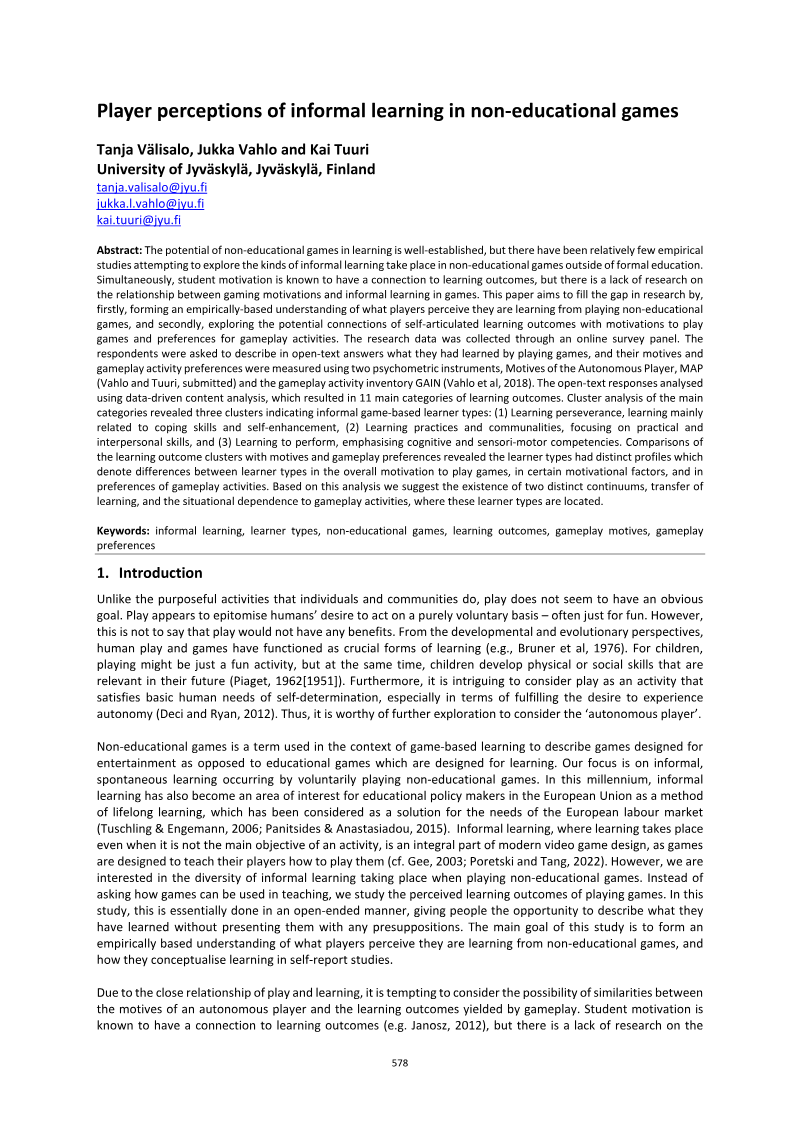
T.L. Taylor's paper examines how regular, everyday visitors to Disney theme parks transform heavily curated commercial spaces into sites of playful agency, self-direction, and social experience. Rather than treating theme parks solely as venues for directed, commercially designed experiences, the author argues that frequent attendees develop their own forms of play that operate alongside, and sometimes against, the commodified structure of the parks. The central question is whether these practices can be understood as meaningful expressions of agency or merely as play captured within a large media company's economic framework.
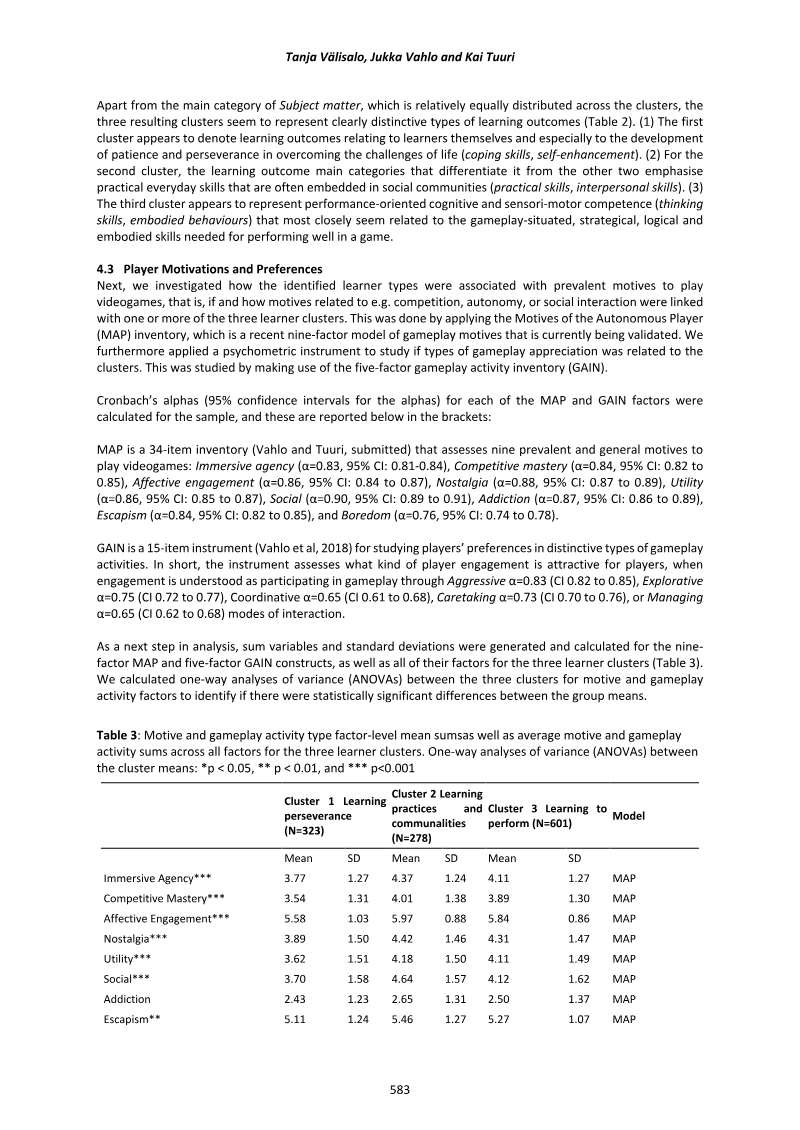
The study draws on fieldwork at multiple Disney parks worldwide, supplemented by analysis of online forums, archives, and interviews with attendees. Its findings describe a range of play modes that emerge once novelty recedes for repeat visitors. Some activities, such as pin trading and the Sorcerers of the Magic Kingdom card game, depend on the park's commercial ecosystem. Others, like locating hidden Mickey designs, require no additional expenditure. Patron-driven achievement systems, such as the "Parkeology Challenge" of riding every open ride in a day, coexist with social and expressive practices including drinking around the world at Epcot, fan-based social clubs, nostalgic engagement with sensory experiences, and the accumulation of insider knowledge about park history and quirks.
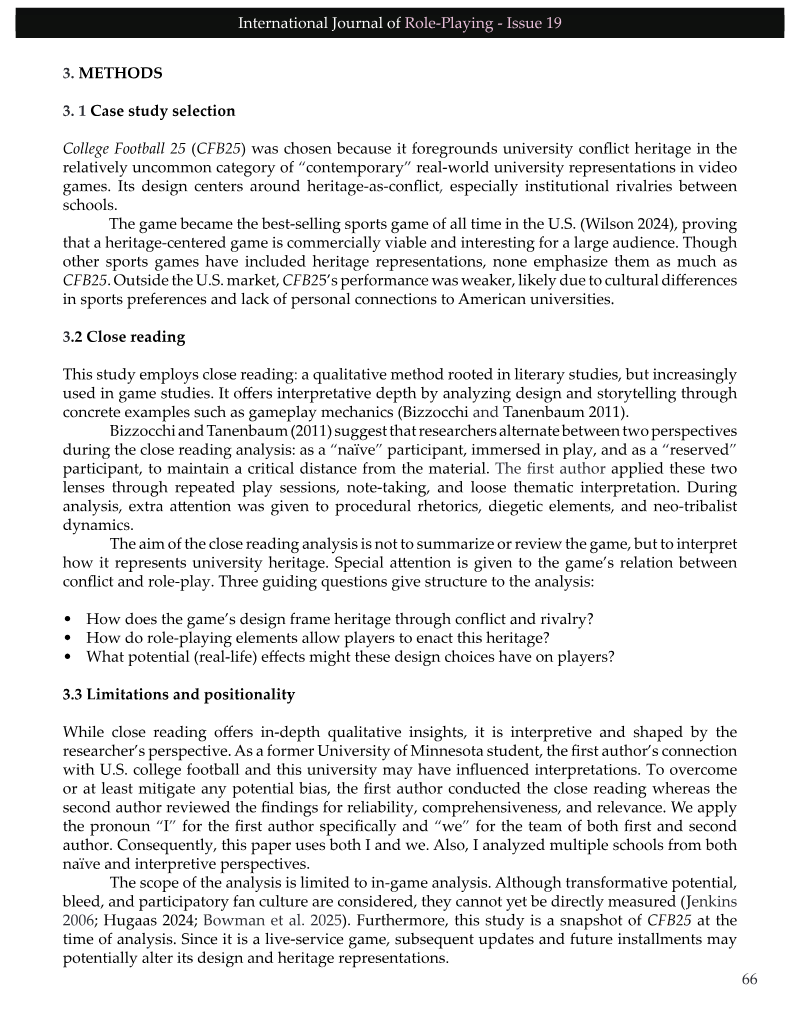
Methodologically, the paper positions itself at the intersection of theme park studies and game studies. It builds on established scholarship from Baudrillard, Fjellman, and Eco, as well as recent fan studies work by Williams, and extends early game-oriented analyses by Laurel and Pearce. The author presents the work as an abstract of a longer project, and the scope is primarily qualitative, emphasizing the lived experience of regular attendees rather than quantitative measurement of visitor behavior.