1 free read left. Create a free account for unlimited reading + AI research.
Create free accountWhitepaper DiGRA
1 free read left. Create a free account for unlimited reading + AI research.
Create free accountWhitepaperDiGRA
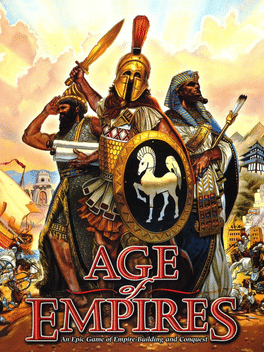
Lichenia is a browser-based environmental strategy game by Molleindustria, released in 2019. The paper reads it against Age of Empires, SimCity, and Civilization.
This paper offers a critical reading of Lichenia, a browser-based environmental strategy game by Molleindustria (2019), as a model of climate history grounded in dark ecology and object-oriented ontology. Its central argument is that Lichenia rejects the linear, growth-oriented, and nationalist narratives of conventional strategy games such as Age of Empires, SimCity, and Civilization, replacing them with looping, affective rhythms of flood, drought, growth, and decay that decentre human agency within a global human-nonhuman biosphere. The analysis draws on the Annales School's concept of the longue durée, particularly Fernand Braudel's view of climate as a slow but omnipresent historical force, as well as Henri Lefebvre's rhythmanalysis and Timothy Morton's notions of hyperobjects and ecognosis.
The author contends that Lichenia's procedural rhetoric restricts player power and foregrounds the unpredictable, opaque interactions among rain, fire, vegetation, and urban development. Rather than offering the player a fantasy of an empty landscape awaiting intervention, the game represents infrastructure as perpetually vulnerable and ecosystems as capable of renewal, moving players affectively from anxiety toward acceptance. The paper positions this design against existing scholarship on games as history, including the pedagogic visual-archive model of Levy and Dawson and the systems-based affordance approach of Adam Chapman, arguing that the latter still privileges player freedom in ways Lichenia deliberately resists.
The analysis is conceptual and interpretive rather than empirical. It is grounded in close reading of the game's mechanics, interface, and asset pipeline, supported by the author's own screenshots taken in November 2019, and it is situated within the proceedings of DiGRA 2020. Its scope is therefore theoretical and limited to a single indie title, with its broader claims about games as embodiments of philosophy of history presented as a programme for future research rather than as established findings.
Each row is a game or company this document names, each column a document, oldest first. A mark means that document names it. Select a row to see those documents.

DiGRA · 2026

DiGRA · 2026



DiGRA · 2026



DiGRA · 2026



DiGRA · 2026



DiGRA · 2026



DiGRA · 2026



DiGRA · 2026



DiGRA · 2026

DiGRA · 2026



DiGRA · 2026



DiGRA · 2026
International Journal of Role-Playing · 2026