Finland reports and market data
Documents

Week in Mobile Games E32 - Google Play's Judgement Day
The mobile gaming industry is currently navigating a period of intense regulatory scrutiny and strategic consolidation.
- A US antitrust ruling mandates that Google must allow third-party app stores and alternative payment systems on the Google Play Store for the next three years, potentially disrupting the $5.3 billion US mobile market.
- Roblox faces allegations from Hindenburg Research claiming the platform inflated its user engagement metrics by as much as 42% through bot activity.
- Epic Games has reached 70 million monthly active users on its store, signaling strong growth despite broader industry volatility.
Week in Mobile Games E31 - The Top 50 Mobile Game Makers 2024 revealed!
The global mobile gaming industry is currently navigating a complex landscape defined by economic volatility, shifting regulatory environments, and a strategic pivot toward sustainable growth.
- Scopely is the top mobile developer of 2024, driven by Monopoly GO! generating $3 billion in revenue within its first 15 months.
- Epic Games is aggressively competing for developer loyalty by reducing Unreal Engine royalty fees to 3.5% and offering 100% net revenue for new titles launched exclusively on its store.
- The mobile market is shifting from hyper-casual to hybrid-casual business models to prioritize long-term profitability and improved player retention.

two & a half gamers session #13 - Rovio making $2.6M/year more from ads & more efficient UA? Full...
Rovio faces a critical inflection point as its financial performance remains stagnant, with 2021 revenue reaching €286.2 million, a figure that fails to surpass historical highs from its initial public offering.
- Rovio’s 2021 revenue was EUR 286.2 million, representing flat growth with a 5% increase over 2020 but a 1% decline from 2019 levels.
- Revenue is heavily concentrated in IAP (80%), followed by Ads (15%), Licensing (3%), and other sources (2%), with 66% of total revenue originating from the USA.
- Rovio increased its ad revenue by 32% year-over-year in 2021, totaling EUR 41.6 million, despite a strategy of not requesting user consent for tracking on iOS.
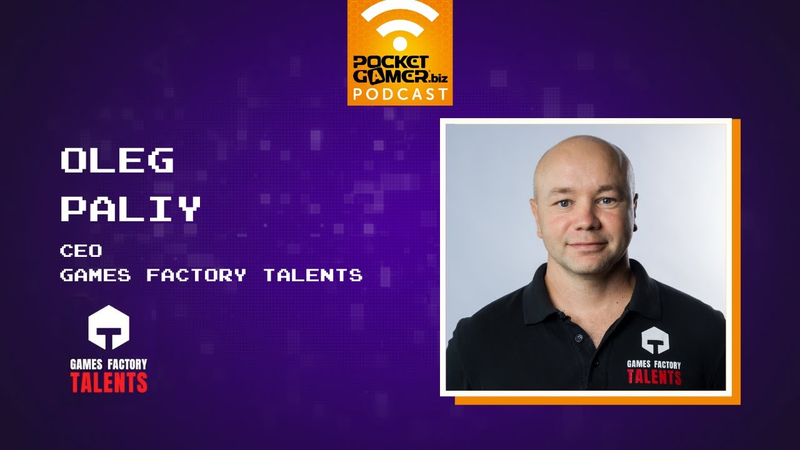
Games Factory Talents’ Oleg Paliy On How To Score The Job Of Your Dreams In 2024
The global gaming industry is currently navigating a period of significant transition following the widespread layoffs of 2023.
- Networking is the primary driver for career advancement in 2024, requiring active participation in industry events and the use of specialized matchmaking tools.
- Candidates must optimize their digital footprint by maintaining keyword-rich LinkedIn profiles and hosting tangible evidence of their work on platforms like ArtStation or GitHub.
- The 2024 job market is seeing a surge in startup activity as experienced professionals launch independent ventures following the industry-wide layoffs of 2023.

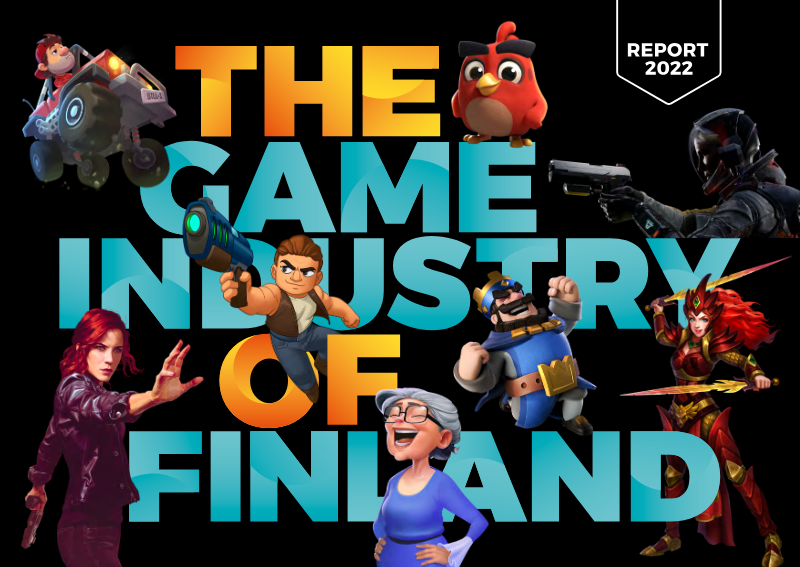
Finnish Game Industry Report: 2022
The Finnish game industry maintains a position of significant global influence, characterized by sustained financial resilience and a strategic pivot toward long-term operational stability.
- The Finnish game industry generated over €3 billion in annual turnover during the 2022 fiscal year.
- The sector is supported by a workforce of approximately 4,100 professionals distributed across 232 active studios.
- Finnish developers are shifting from a mobile-first focus toward diversifying into PC, console, VR, AR, and cross-platform social gaming.
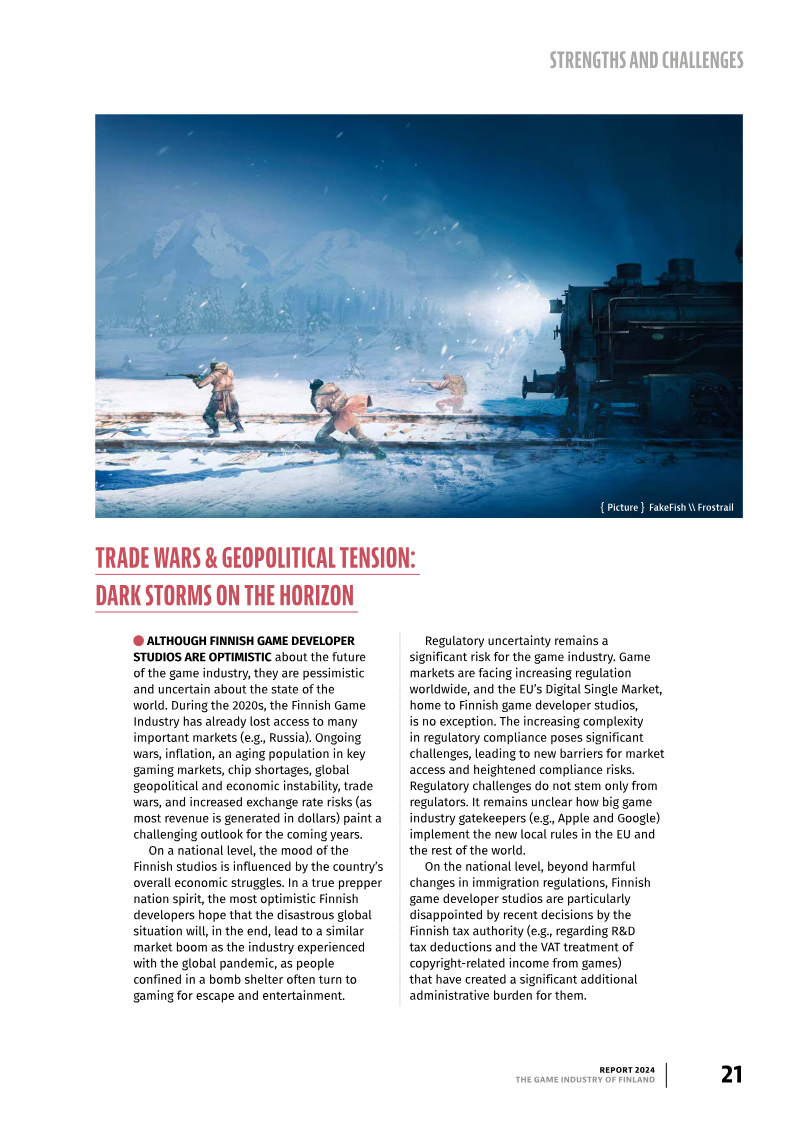
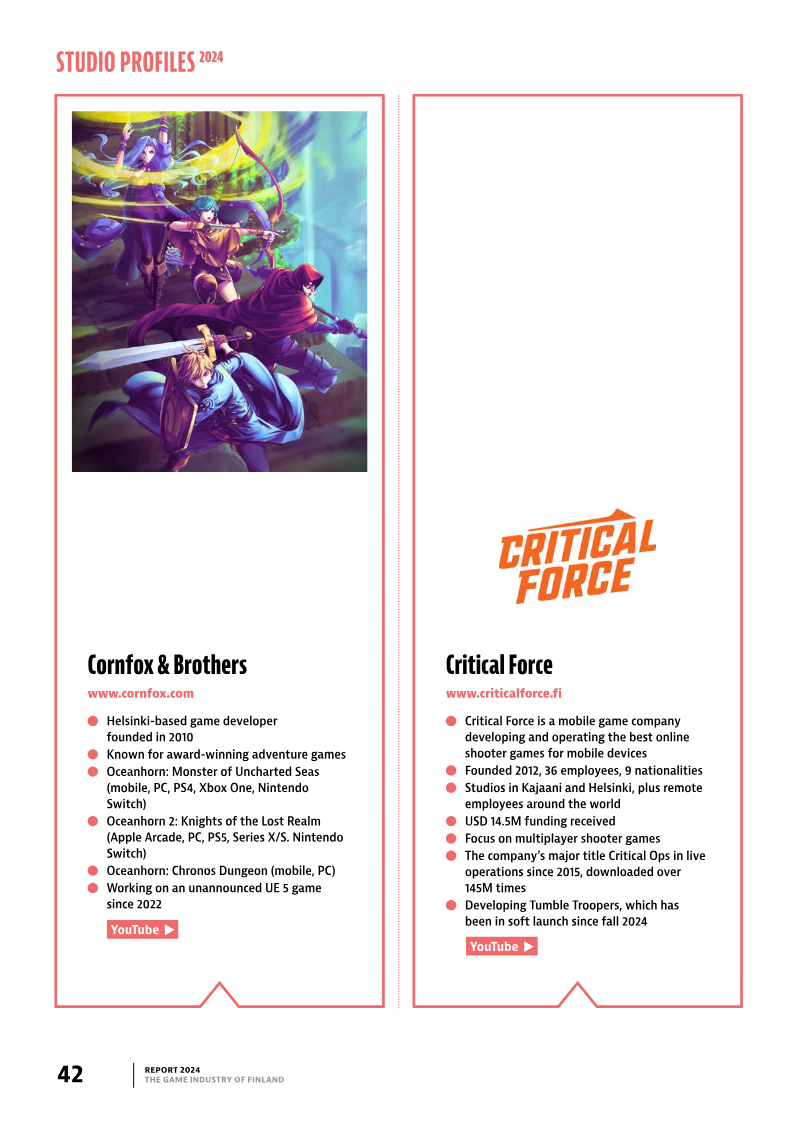
The Game Industry of Finland Report 2024
The 2024 overview of Finland’s game sector presents a comprehensive assessment of an industry that remains a global technology leader while confronting a tightening financing environment.
- Finland’s game industry currently employs approximately 4,300 individuals, representing about 3,800 full-time positions.
- A significant decline in private risk capital and publisher funding has forced studios to pivot toward B2B subcontracting, co-development agreements, and increased reliance on EU and national public R&D programs.
- The ecosystem remains anchored by major players like Supercell, which employs over 800 staff and has produced seven global hit titles, alongside diverse ventures like the mental-health game developer Soihtu DTx, which recently secured a $4.2 million seed round.
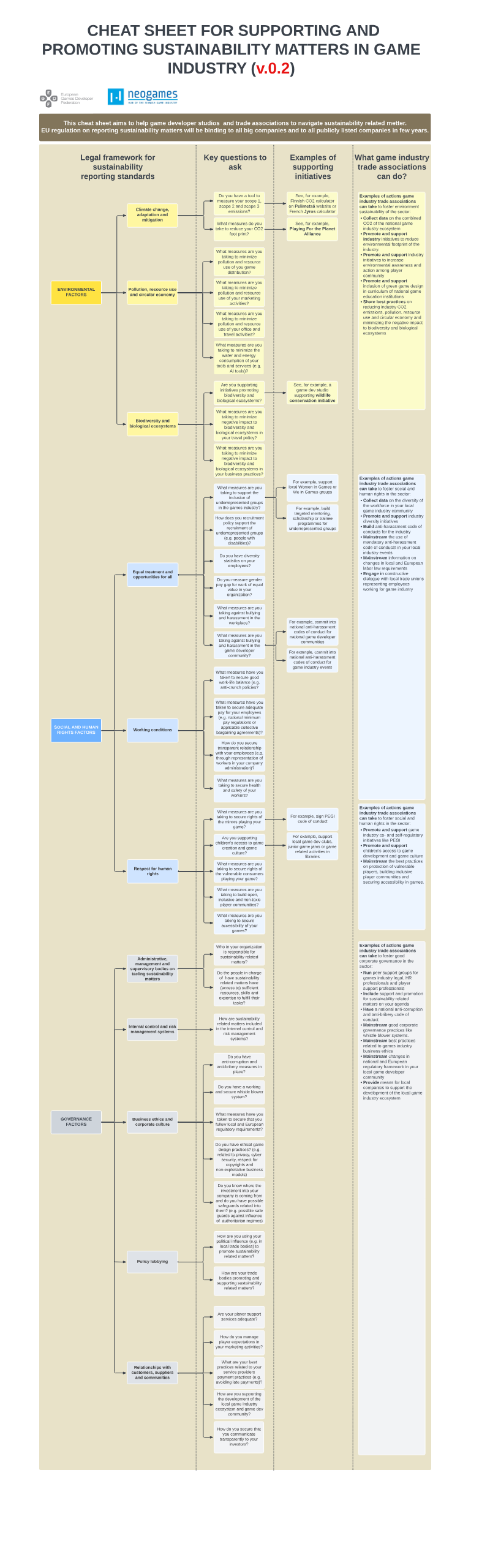
Cheat Sheet for Supporting and Promoting Sustainability in the Game Industry
The primary objective of this guide is to assist game development studios and trade associations in navigating the evolving landscape of corporate sustainability.
- Studios must prepare for mandatory sustainability reporting as EU regulations increasingly require large and publicly listed companies to adhere to strict environmental, social, and governance (ESG) criteria.
- Environmental compliance requires studios to track scope 1, 2, and 3 emissions using specialized calculators while addressing the high energy demands of modern digital tools like artificial intelligence.
- Social responsibility mandates include tracking workforce diversity statistics, implementing anti-harassment codes of conduct, and establishing formal policies to eliminate crunch and ensure fair compensation.

Supercell's Mo.co: First look! New game in closed beta - not even in soft launch yet
Supercell is currently testing Mo.co, an isometric, player-versus-environment action RPG that marks a strategic departure from the company’s traditional focus on competitive, player-versus-player titles.
- Supercell's Mo.co is a PvE-focused action RPG, marking a strategic departure from the company's historically PvP-dominant portfolio.
- The game utilizes a mission-based progression system where XP is gated exclusively by completing specific tasks, preventing players from grinding XP through general gameplay.
- Progression is heavily reliant on a gear-check mechanic where item upgrades are strictly tied to the player's character level, preventing the concentration of resources into a single piece of equipment.
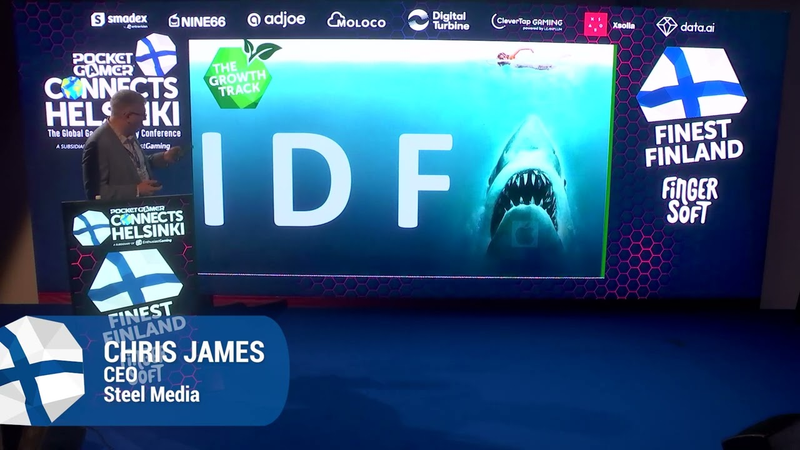
Introduction to Pocket Gamer Connects, Helsinki 2023 - Chris James, Steel Media Ltd.
Pocket Gamer Connects Helsinki 2023 serves as a central hub for the global games industry, emphasizing the importance of community, knowledge sharing, and networking.
- The Finnish games industry has become a major economic driver, generating $3.2 billion in annual revenue and employing over 4,100 professionals.
- Pocket Gamer Connects has facilitated over 100,000 meetings across 44 conferences, contributing to an estimated $1 billion in total industry deals.
- Despite a cooling in investment and M&A activity compared to the 2020–2021 peak, recent high-profile acquisitions indicate a potential resurgence in market confidence.

Chris James and Dave Bradley On Lucrative Gaming Markets And Branding Power At PGC Helsinki
The recent Pocket Gamer Connects (PGC) event in Helsinki served as a hub for industry professionals to evaluate current market trends, with a specific focus on navigating the challenges of the mobile gaming sector.
- The MENA region is the world's fastest-growing gaming market, with a projected 12% growth rate and an estimated 577 million players.
- Venture capital investment in mobile gaming has slowed due to rising user acquisition costs and ongoing data privacy challenges.
- Studios are increasingly adopting cross-platform development and subscription models to offset mobile market volatility and ensure long-term profitability.
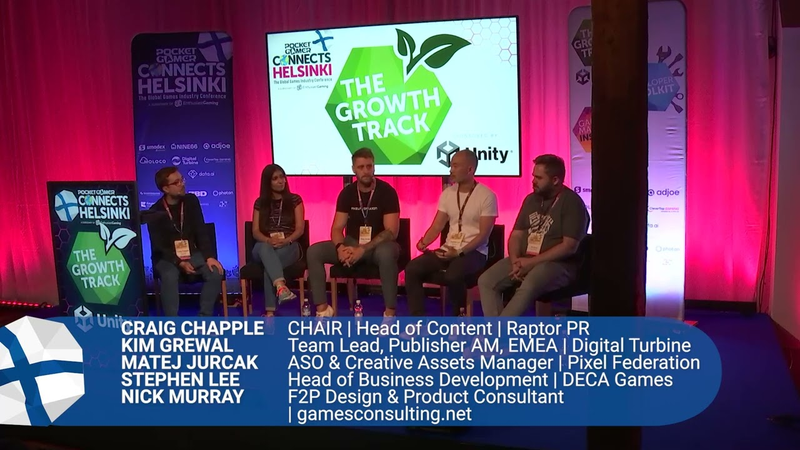
Panel: Beyond Acquisition: Lessons for Better Player Retention.
Long-term player retention in the modern gaming landscape relies on a strategic balance between structured progression and the prevention of player burnout.
- Long-term retention requires balancing structured progression with 'breathing room' to prevent player burnout and churn caused by relentless content treadmills.
- Monetization must prioritize non-intrusive models like season passes over aggressive mechanics or value-inflating economies to maintain player trust and long-term reputation.
- Marketing creatives must accurately reflect the actual gameplay experience to protect app store ratings and ensure positive player sentiment.
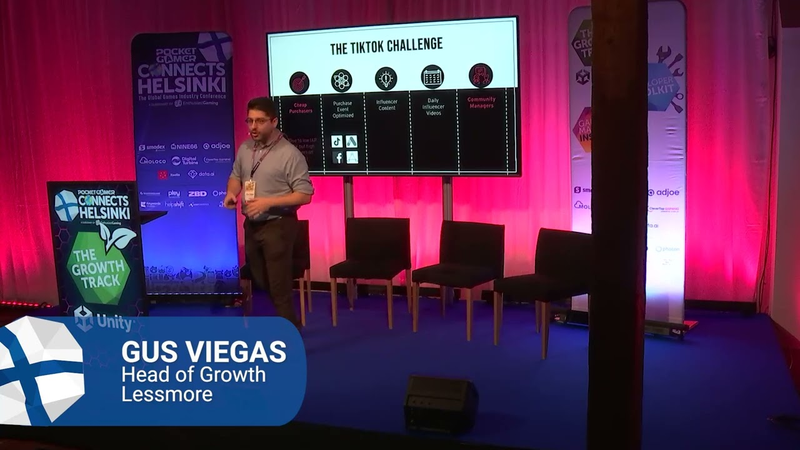
Building Growth Teams Around UA Algorithms Success Case From 2023 - Gus Viegas, Lessmore.
Building growth teams around user acquisition (UA) algorithms requires a strategic alignment between business objectives, technical data pipelines, and specialized human capital.
- Growth teams must align their organizational structure and skill sets directly with the specific requirements of the ad network algorithms they choose to leverage.
- Business objectives—such as maximizing low-cost purchasers, high-retention users, or ad-monetized scale—must dictate the choice of algorithm and the subsequent data signals fed into it.
- Ad networks require proactive input of post-install data, such as revenue events or early-session activity, to compensate for their limited visibility into user behavior.