Finland reports and market data
Documents
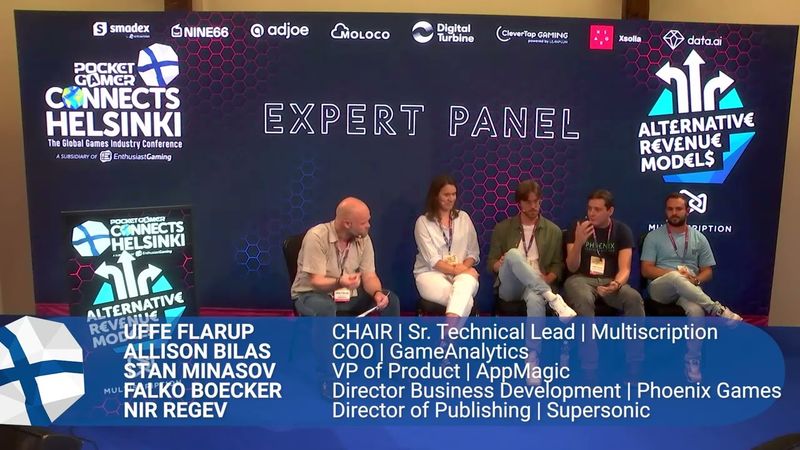
Curated Panel: The Keys to Monetisation in 2024
The mobile gaming industry is undergoing a fundamental transition toward hybrid monetization models, necessitated by the maturation of player behavior and the restrictive post-IDFA privacy landscape.
- Mobile game developers are shifting from hyper-casual frameworks to hybrid-casual models that combine in-app purchases with rewarded advertising to improve long-term retention and lifetime value.
- The post-IDFA privacy landscape has forced studios to integrate monetization into the initial development cycle rather than treating it as an afterthought.
- Direct-to-consumer web stores and subscription services are being adopted to secure predictable recurring revenue and bypass standard platform fees, though these are currently most viable for established studios.
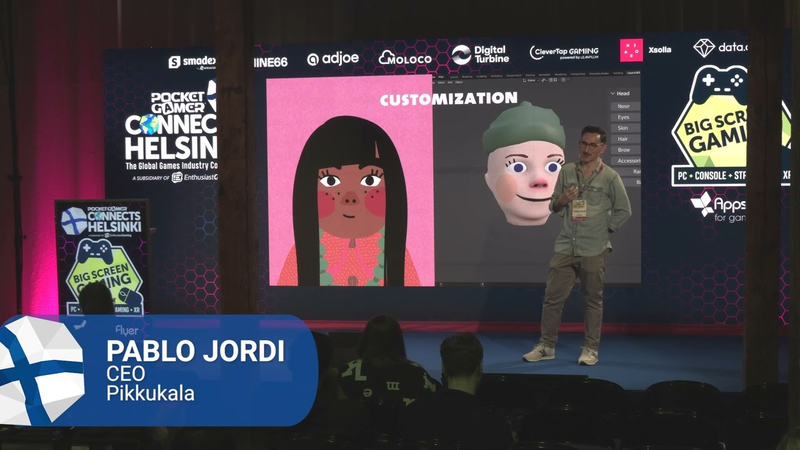
Animating to the Metaverse - Pablo Jordi, Pikkukala Oy.
Pikkukala Oy, an animation studio known for developing original intellectual property (IP) and working with established brands like Angry Birds, is transitioning its existing animated series, Fungi, into the Roblox metaverse.
- Pikkukala Oy is migrating its 'Fungi' animated series into the Roblox metaverse to extend the IP's lifecycle by targeting the 8-to-12-year-old demographic.
- The studio prioritizes established platforms like Roblox over blockchain or VR, accepting the platform's high revenue-share model in exchange for immediate access to a global user base and frictionless infrastructure.
- The transition strategy involves converting 2D animation assets into 3D gameplay, focusing on core mechanics such as exploration, currency collection, and social trading.
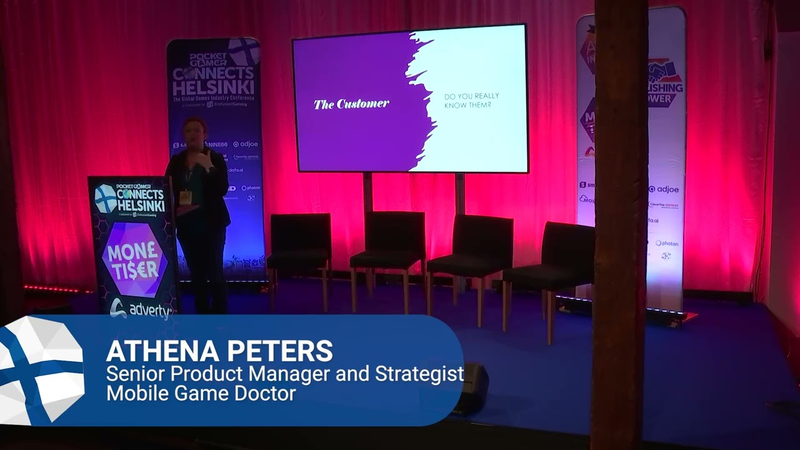
2 Mistakes you are Making With IAP & how to fix Them - Athena Peters, Mobile Game Doctor.
The primary objective of this analysis is to identify and rectify two critical errors commonly made by developers transitioning to or managing in-app purchase (IAP) models within the mobile gaming industry.
- Success in top-grossing mobile games relies on rapid, data-informed iteration cycles that continuously test and refine UI/UX elements.
- Developers must isolate variables by testing only one change at a time during A/B testing to ensure the validity of data regarding retention and conversion rates.
- Monetization should be optimized by segmenting the player base into detailed personas rather than relying on generic demographic data.
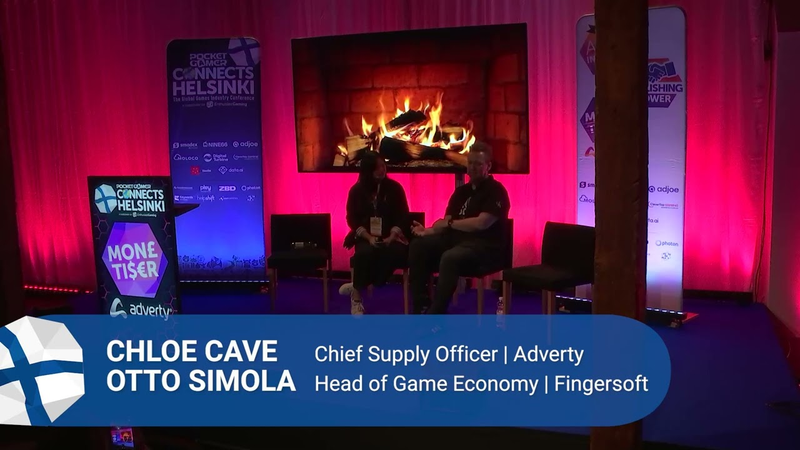
Fireside Chat: Learnings & Best Strategies for Unlocking Revenue Potential via In-Play Ads.
In-play advertising represents a strategic evolution in mobile game monetization, shifting away from intrusive interruptions toward integrated brand placements that preserve user experience.
- In-play advertising serves as an incremental revenue stream that preserves user retention by replacing intrusive, disruptive ad formats with integrated, non-functional environmental assets like billboards.
- Successful implementation requires seamless aesthetic integration using shaders and creative placement logic, such as drones or balloons, to ensure ads feel like natural components of the game world.
- Technical integration is efficient, typically requiring only a few days of development time, though long-term profitability depends on rigorous, iterative A/B testing of placement strategies.
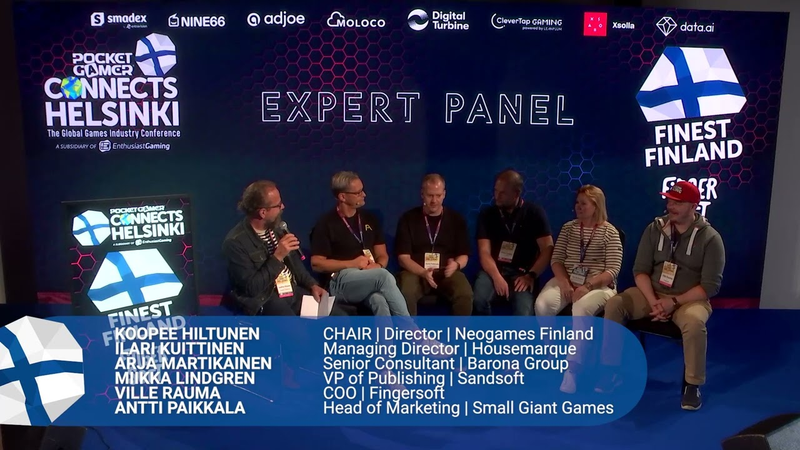
Panel: Nordic Gaming - State of Play.
The Nordic gaming ecosystem has evolved into a highly interconnected and collaborative hub, characterized by a unique blend of flat organizational structures, professional trust, and a commitment to work-life balance.
- The Nordic gaming industry has grown from 3,000 employees and €250 million in annual turnover to 15,000 employees generating €7 billion in revenue over the last two decades.
- Regional specialization is converging, as the historical divide between Finland’s mobile-focused market and Sweden’s console-dominant sector shifts toward cross-platform development.
- The ecosystem relies on a 'success breeds success' culture where established studios prioritize nurturing local talent and professional networks over aggressive poaching.
Game Jam Culture at the Workplace - Teemu Kokkonen, Finnish Game Jam.
The integration of game jam culture into the professional workplace serves as a powerful mechanism for fostering creativity, rapid prototyping, and team cohesion.
- Workplace game jams should be strictly voluntary and internally motivated to prevent employee burnout and maintain morale.
- Managers must implement 'time-boxing' to isolate creative sessions from daily operational tasks, which minimizes the latency between initial idea generation and actionable feedback.
- To ensure sustainability, companies should avoid 'crunch' culture by providing compensation, such as flexible working hours, for the extra effort invested in jam activities.
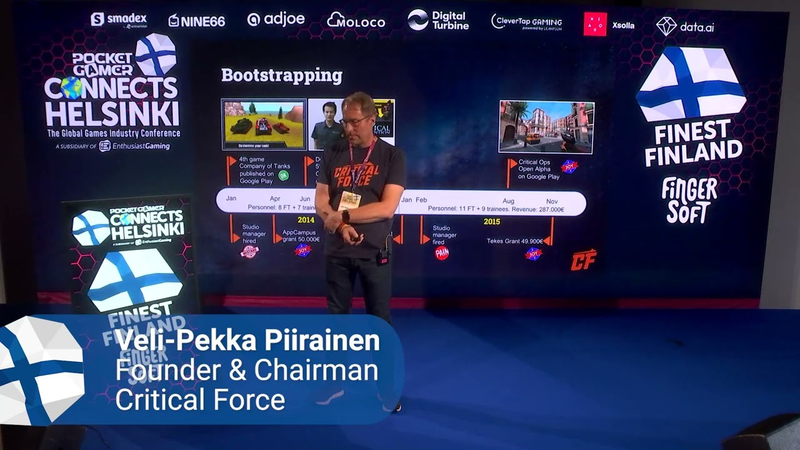
The Story of Critical Force: Over ten Years of joy & Pain - Veli-Pekka Piirainen, Critical Force.
Critical Force, a Finnish game development studio founded in 2012, has navigated a decade of significant volatility, scaling from a small startup to a 70-employee organization.
- Rapid, unvetted hiring between 2016 and 2018 caused the studio's workforce to quadruple, resulting in severe operational inefficiencies, cultural misalignment, and communication breakdowns.
- External competition from major titles like Fortnite Mobile and PUBG Mobile in 2018 caused Critical Force to lose half of its player base and revenue, nearly forcing the company into bankruptcy.
- Critical Force successfully transitioned its business model from premium-priced mobile games to free-to-play, eventually driving its flagship title, Critical Ops, to 130 million downloads and $40 million in revenue.
Building a Game Studio: The Blueprint for Purpose and Balance - Jaakko Kylmaoja, Fingersoft
The blueprint for building a sustainable and successful game studio centers on balancing high-performance product development with a caring, employee-centric organizational culture.
- Fingersoft achieved over two billion global downloads for its Hill Climb Racing franchise by prioritizing sustainable productivity over industry-standard burnout cycles.
- Operational efficiency experiments revealed that a six-hour workday model is more productive than a four-day workweek.
- The studio supports professional development through a dedicated educational budget of 4,000 Euros per employee every two years.
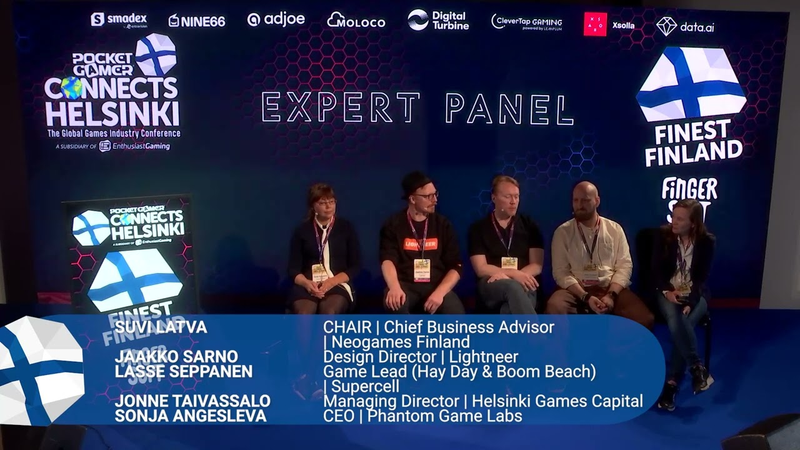
Panel: Finnish Gaming 3.0 - The Next Big Thing.
The Finnish gaming industry is currently undergoing a strategic evolution, transitioning toward a phase defined as Gaming 3.0.
- The Finnish gaming industry is transitioning to 'Gaming 3.0,' a model that leverages artificial intelligence to enable smaller teams to produce high-quality, complex content.
- Approximately 40 new studios have emerged recently, accounting for nearly 20 percent of the total Finnish gaming landscape.
- Despite technological shifts, success remains dependent on core fundamentals: robust game design, significant marketing investment, and the development of original intellectual property.
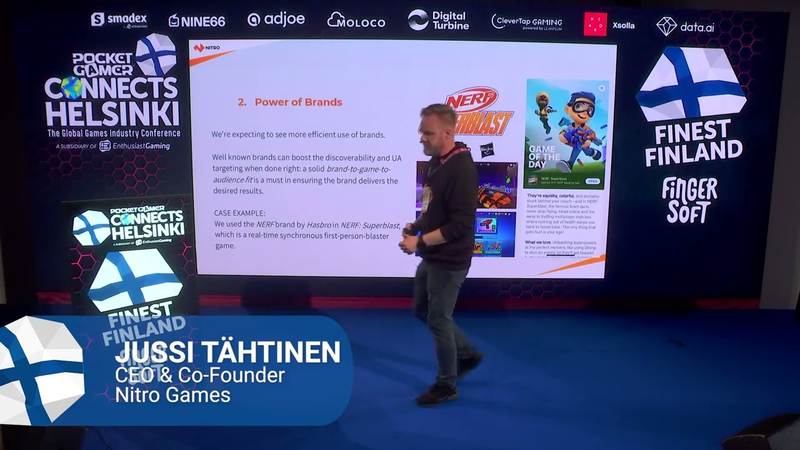
Nitro Games & the Next Wave of Games From Finland - Jussi Tahtinen, Nitro Games.
Nitro Games, a Helsinki-based mobile gaming studio with over 80 employees, specializes in the action and shooter genre.
- Nitro Games, a Helsinki-based studio with over 80 employees and 15 years of experience, utilizes a full-lifecycle development model that manages titles from initial concept through live operations.
- The studio identifies cross-platform and cross-play integration as a primary strategic pillar to overcome hardware limitations and reach wider audiences across mobile, PC, and console.
- Leveraging established intellectual property, such as the studio's partnership with the Nerf brand, is a critical tactic for mitigating rising user acquisition costs.
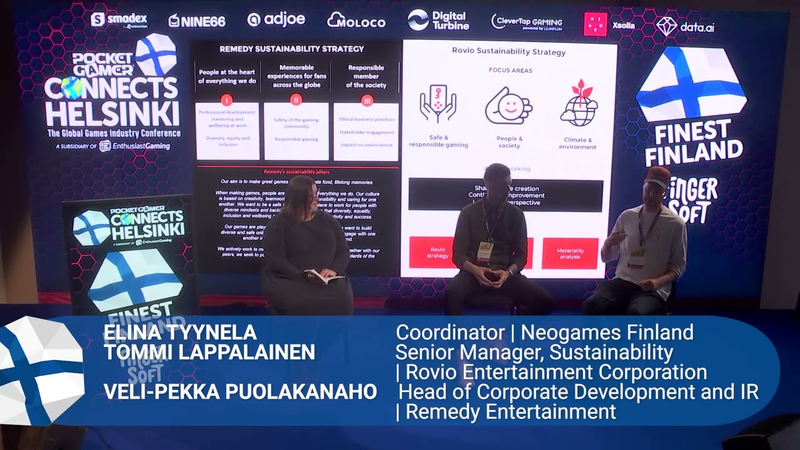
Fireside Chat: Steps Towards Sustainability – Cases Remedy & Rovio
This discussion outlines the sustainability strategies of two major Finnish game developers, Rovio Entertainment and Remedy Entertainment, emphasizing the transition of the gaming industry toward formalized environmental, social, and governance (ESG) frameworks.
- Rovio Entertainment and Remedy Entertainment have formalized their sustainability strategies around three core pillars: responsible gaming, people and society, and environmental impact.
- Both companies utilize materiality analyses, which involve direct engagement with stakeholders and employees, to identify and prioritize their specific sustainability focus areas.
- Rovio implements inclusive game development through accessibility playbooks and maintains player safety policies to effectively moderate user-generated content.
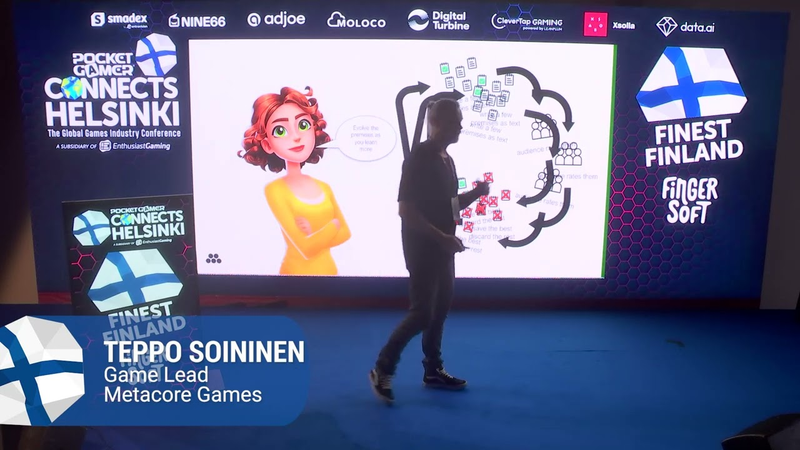
You Need to Know who is Going to Play Your Game - Teppo Soininen, Metacore Games
Concept testing serves as a critical risk-mitigation strategy in mobile game development, allowing studios to validate ideas before committing significant time and capital to production.
- Concept testing acts as a primary risk-mitigation strategy by validating game ideas during pre-production to avoid committing capital to unviable projects.
- Developers should prioritize the core 'fantasy' or entertainment promise of a game, ensuring mechanics, art, and narrative align with specific audience preferences before full production.
- Initial validation should utilize low-cost, text-based premises distributed to target audiences via platforms like PlaytestCloud to identify recurring themes and discard weak concepts early.