1 free read left. Create a free account for unlimited reading + AI research.
Create free accountReport European Games Developer Federation
1 free read left. Create a free account for unlimited reading + AI research.
Create free accountReportEuropean Games Developer Federation
Large and publicly listed companies in the game industry must prepare to adhere to strict environmental, social, and governance (ESG) criteria.
The primary objective of this guide is to assist game development studios and trade associations in navigating the evolving landscape of corporate sustainability. As European Union regulations increasingly mandate sustainability reporting for large and publicly listed companies, the industry must proactively address environmental, social, and governance (ESG) criteria. The framework serves as a strategic roadmap for organizations to assess their current operations, identify gaps in compliance, and implement best practices to ensure long-term viability and ethical responsibility.
Environmental sustainability focuses on measuring and mitigating carbon footprints, resource consumption, and pollution. Studios are encouraged to utilize specialized calculators to track scope 1, 2, and 3 emissions while integrating green design principles into educational curricula and development processes. Beyond carbon reduction, the guidance emphasizes the protection of biodiversity and the minimization of negative impacts stemming from office operations, travel, and the energy demands of modern digital tools like artificial intelligence.
Social and human rights factors center on workforce equity and player protection. Key recommendations include tracking diversity statistics, implementing anti-harassment codes of conduct, and establishing policies to prevent crunch and ensure fair compensation. Furthermore, the framework highlights the importance of protecting vulnerable players, promoting accessibility, and fostering inclusive, non-toxic communities. These efforts are supported by industry-wide initiatives such as PEGI codes of conduct and local mentorship programs.
Governance and business ethics form the final pillar, requiring robust internal controls, whistle-blower systems, and transparent communication with investors. Organizations are urged to adopt ethical game design practices, maintain awareness of investment sources to prevent undue influence, and ensure compliance with evolving regulatory frameworks. By leveraging trade associations to share best practices and engage in policy lobbying, the game industry can collectively improve its corporate culture and contribute positively to the broader economic ecosystem.


Video Games Europe · 2026


European Games Developer Federation · 2026
European Games Developer Federation · 2025
European Games Developer Federation · 2025

European Games Developer Federation · 2025
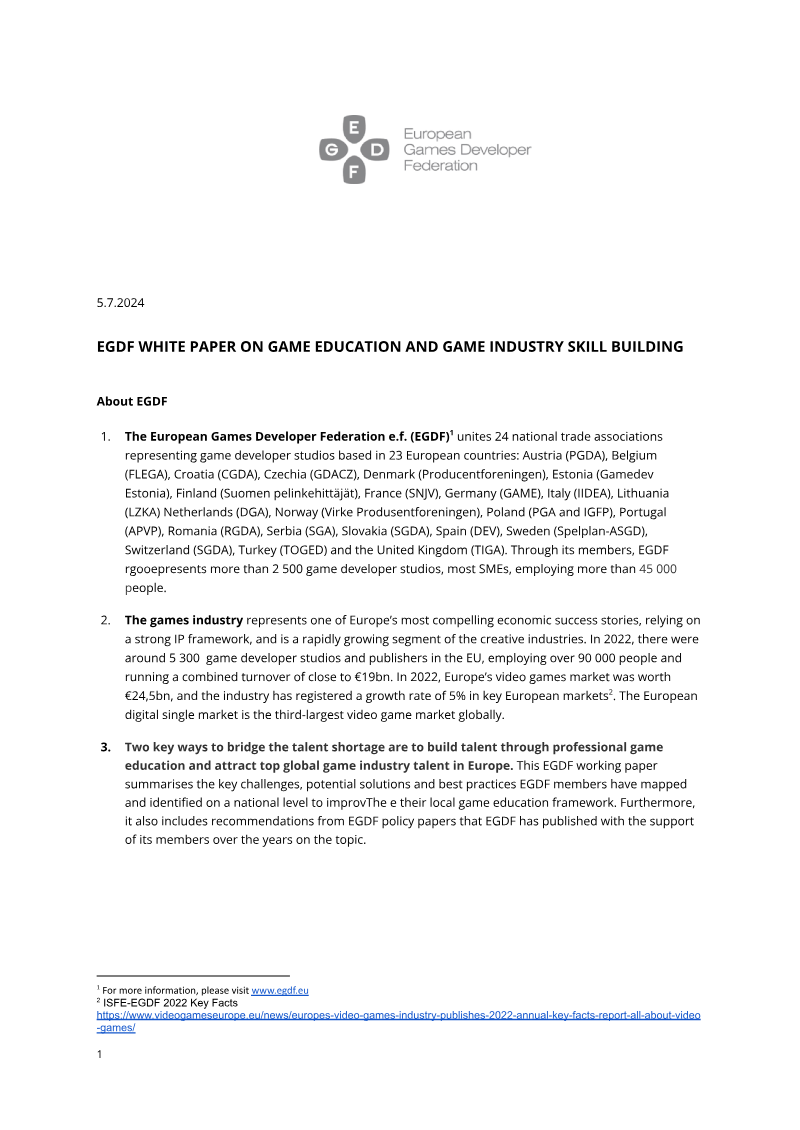
European Games Developer Federation · 2024

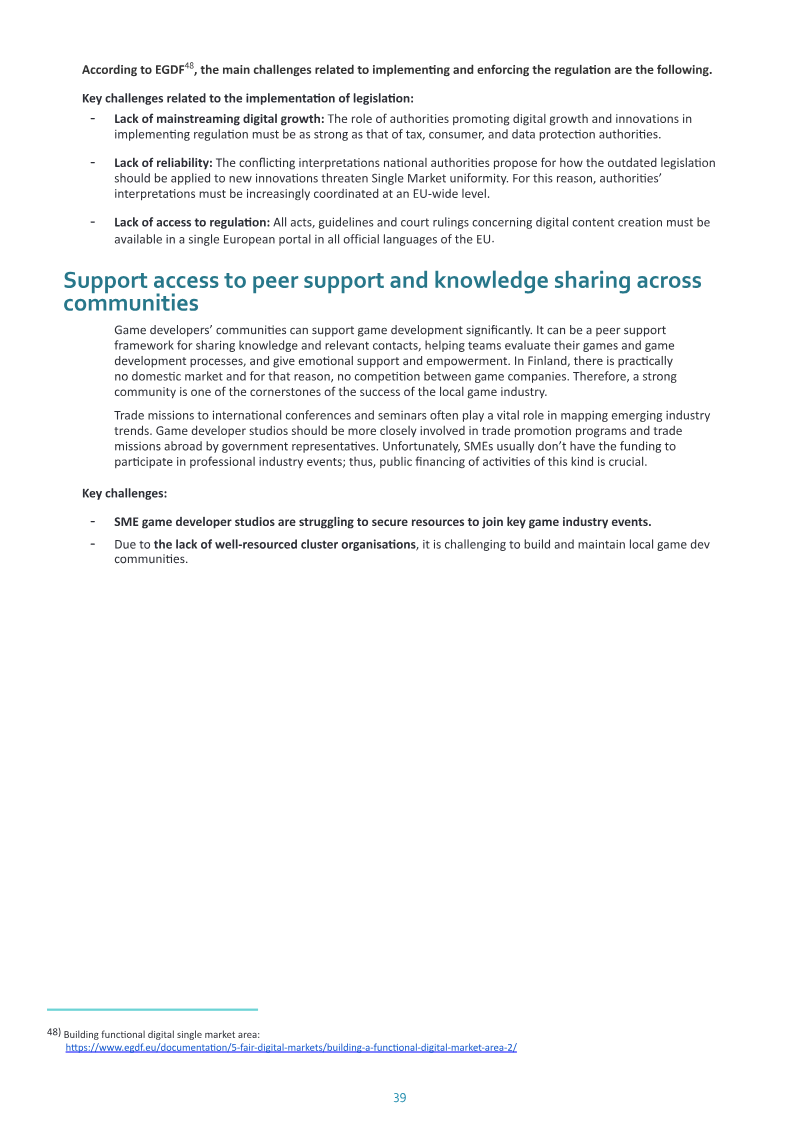

Neogames Finland · 2024

European Games Developer Federation · 2024

European Games Developer Federation · 2024
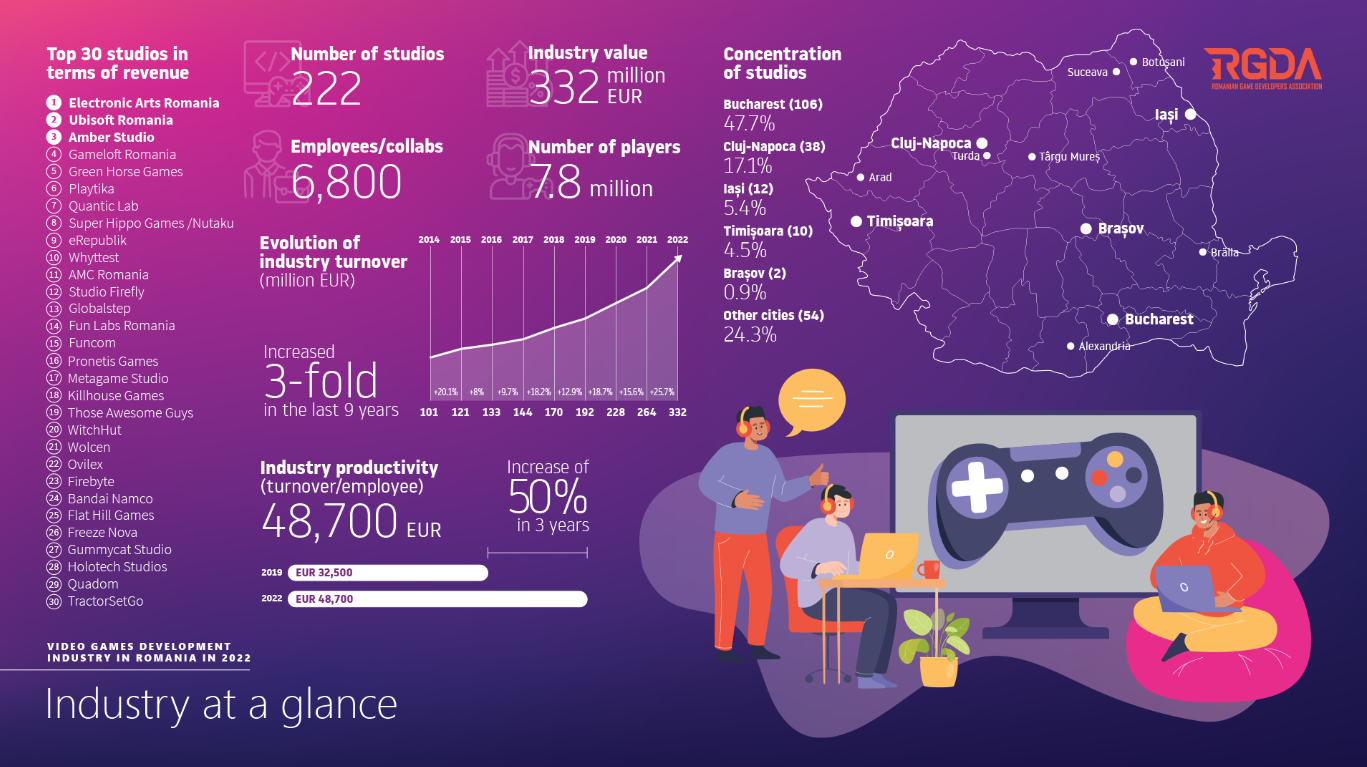
European Games Developer Federation · 2024


NeoGames · 2024
European Games Developer Federation · 2024
PocketGamer.biz · 2024